Cool Summer hair color (True Summer): your levels, and what to ask for
Hair color is the one thing on your head that has a number, and saying that number is most of the job. Your range is wider than either of the other two summers - level 10 down to level 2, platinum to graphite - and what is fixed is not the depth but the tone. Here is the whole ladder, what to ask a colorist for, and how far you can push blonde, red and gray.
- Levels 10 to 2
- Blonde, red and gray
- What to say at the chair
Your range, in salon levels
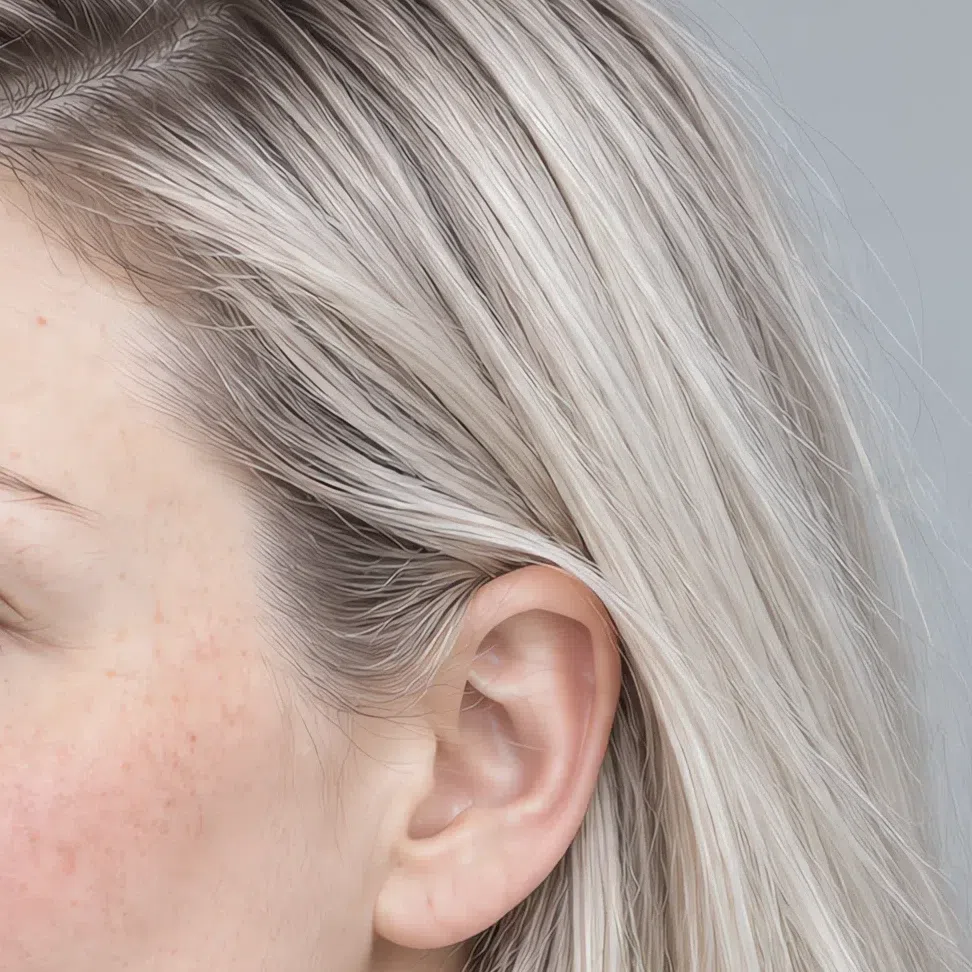
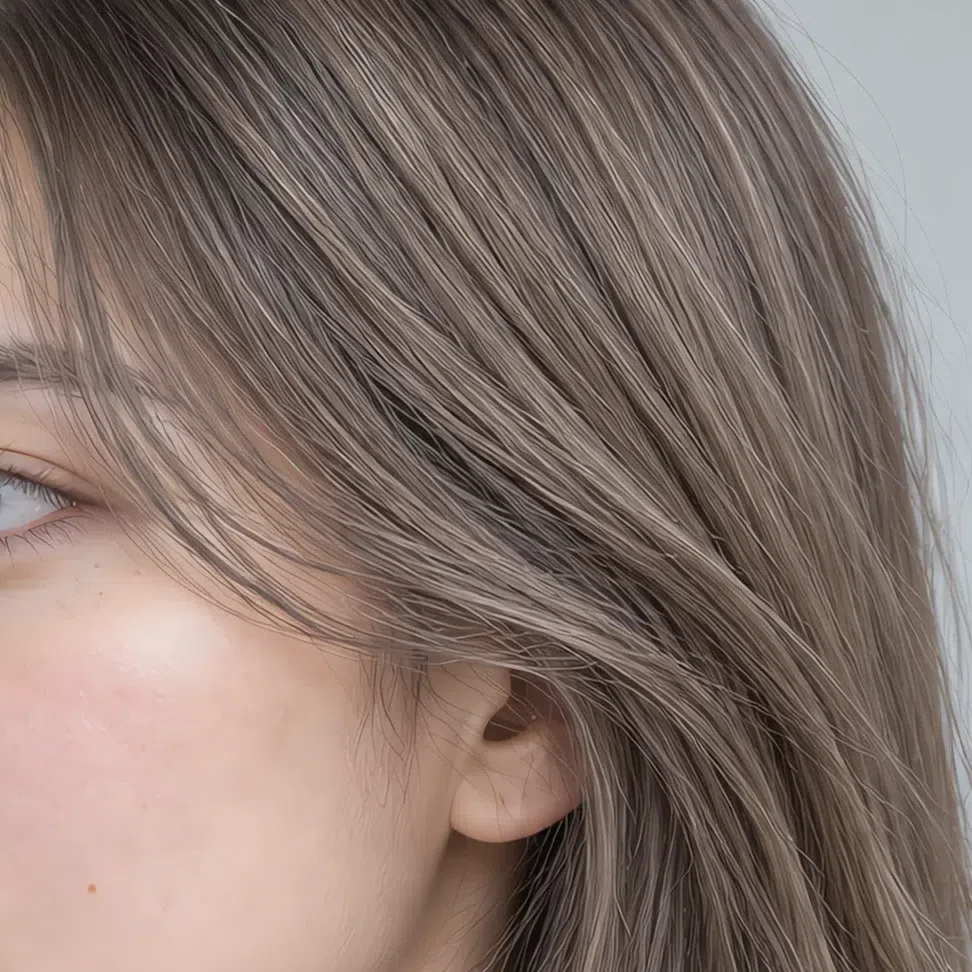
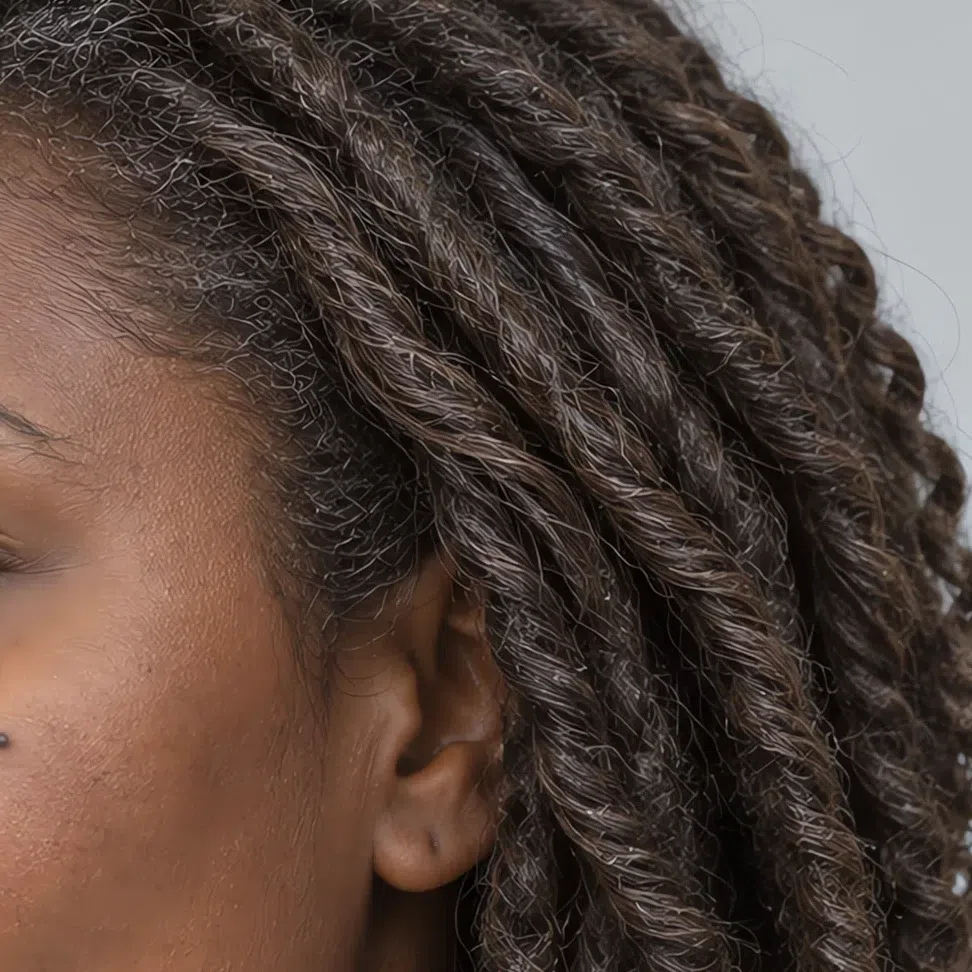
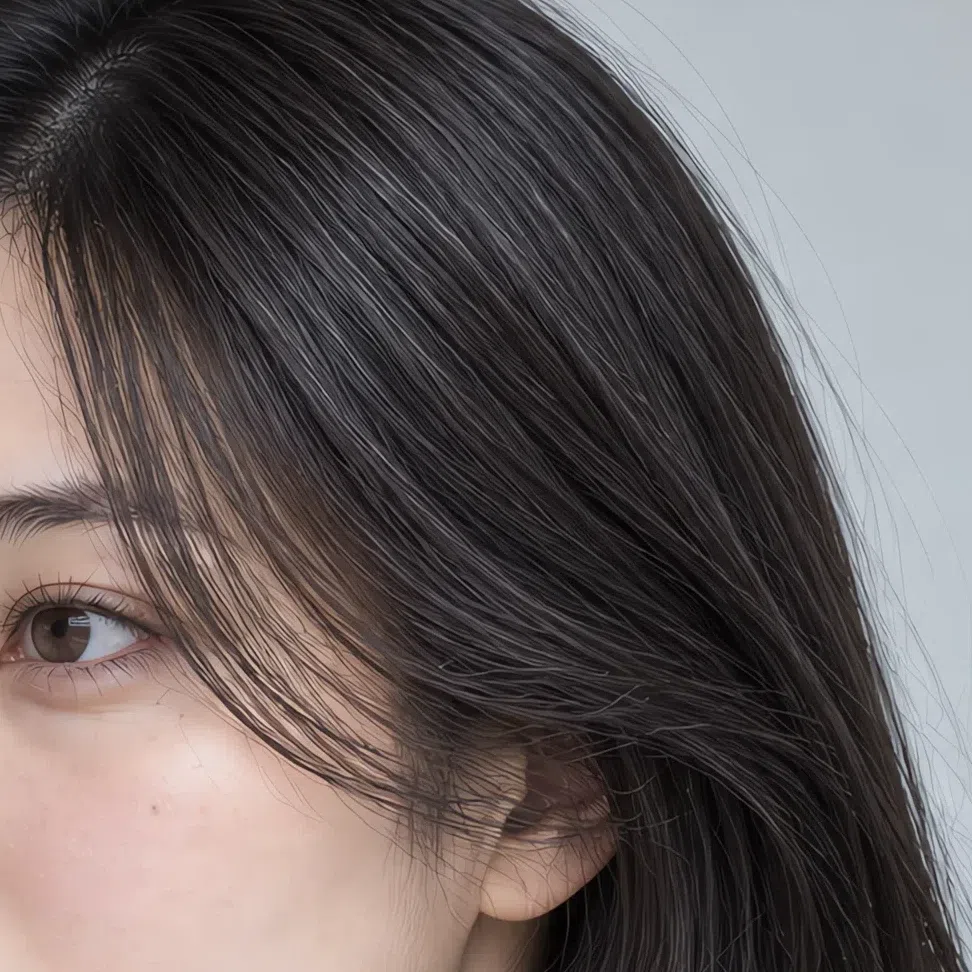
Start here
You are a Cool Summer. Here is what to dye it.
Every hair color has a number, and on this page the number does most of the work. Colorists count in levels - 1 for black, 10 for the palest blonde on the shelf - and the level is the one word in the whole conversation that means the same thing to you and to the person mixing the bowl. Ash is a hope you hand over. Level 6 is something they can mix.
Cool Summer, or True Summer where that name is used, gets a wider run of the ladder than either of the other two summers: your palette names a shade at level 10 and at level 2, and at nearly every rung in between. That is the unusual part, and it is the opposite of the warning most people are handed. Nobody needs to tell you how light you can go. What is fixed here is not depth but temperature - of the eight shades on your palette page, every one is ash, pearl, smoke or graphite, and not one of them is golden, copper or red.
Move about two levels from your natural depth - three at the very most - and then stop worrying about the number, because this palette has a cool shade waiting at nearly every rung. What does not move is the tone: ash, pearl, smoke or violet, kept multi-tonal. Warmth costs you exactly as much at level 10 as it does at level 2.
The salon scale, and your part of it
- L10 lightest
- L9
- L8
- L7
- L6
- L5
- L4
- L3
- L2 deepest
- L1
Lit cells are the levels your palette names a shade at - eight of the ten, where the other two summers light five each. The two flat cells are not warnings. Level 8 is a gap between shades rather than a refusal: three of your ramps pass straight through it, so a level 8 exists for you, it just has no name of its own on the palette page. Level 1 is the one rung left empty on purpose. True black draws a hard line under a summer face and takes the light out of the eyes with it; graphite at level 2 is what replaces it, and it reads as dark hair without the hardness.
What is on this page
- What to ask for How to say a level out loud, the words that get you ash, and the ones that quietly get you gold.
- Can you be blonde? Yes - platinum included, which is rare. But only the icy end of it, and only if you are willing to tone it.
- Red A cool rose-brown cast worn quietly, and that is the whole of it. Copper and auburn belong to another season.
- Going gray Silver is already in your palette. This is the one change on the page that costs nothing to keep.
- Keeping it Why ash turns brassy in three weeks, and the four things that actually stop it.
- What goes wrong Seven shades in two groups, and the two different ways they go wrong on this face.
- The level list Every shade with its number, in one block. Screenshot it and show them.
What to ask for at the chair
The level is the part you get to choose. The tone is the part you have to say out loud, because it is the one thing a colorist cannot read off a photograph - two pictures of the same lightness can be four digits apart. Here is the whole conversation, starting with the sentence itself.
Jumps to the color chart further down. Pick your natural depth and it marks the levels and the tone that are yours.
Depth is given a whole number from 1 to 10, where 1 is the darkest hair colour (black), and 10 is the lightest (lightest blonde).
Say thisI am about a level 6 naturally. I would like to stay cool - an ash, a 7.1, or your .2 if it is a violet rather than a matt - and keep it multi-tonal with a soft root rather than one flat block.
Swap in your own two numbers. The digit after the point is the part that does not change, whichever rung you are standing on.
The three things you are actually saying
-
How light
The level. 1 is black, 10 is the lightest blonde, and your palette names a shade at eight of those ten rungs - so this number is genuinely yours to pick. Give both of them, where you are and where you want to be, because the distance between the two is what decides whether this is one appointment or three.
“I am about a 6 now, I would like to be a 7.” -
Which direction
The tone, written after the point. Ash is .1 and it means blue-based - the one digit that means the same thing in every brand. There is a second worth asking about: .2 is violet in some systems, which is where your pearl blonde comes from, and matt-green in others, which is a different shade entirely. It is one question and it is worth the ten seconds.
“Ash - a 7.1. Is your .2 a violet or a matt?” -
How it is placed
The technique. A cool shade shows a flat application sooner than a warm one does, because there is no gold sitting underneath to break the surface up - so ash laid on in one block leaves the light nothing to do. Ask for fine variation and a soft regrowth line rather than a solid sheet. It costs nothing extra and almost nobody asks.
“Multi-tonal, with a root smudge rather than a line.”
Reading the number on the tube
Salon colors are written level.tone - the digit before the point is how light, the digit after is which direction it leans. All four photographs below are the same woman at the same level 7. Only the digit after the point moves.
-
 7.1 Ash
Yours, and the starting point rather than a correction.
7.1 Ash
Yours, and the starting point rather than a correction.
-
 7.2 Pearl
Also yours - in the brands where .2 means violet.
7.2 Pearl
Also yours - in the brands where .2 means violet.
-
 7.0 Natural
The base warmth left exactly where lifting put it.
7.0 Natural
The base warmth left exactly where lifting put it.
-
 7.3 Gold
One digit over, and the whole face changes temperature.
7.3 Gold
One digit over, and the whole face changes temperature.
- 7.1 Ash The digit you want, and the one piece of salon numbering that is the same in every major system. Blue-based, so it cancels the warmth a light base keeps producing on its own. On most colorings ash is a correction. On this one it is the starting point.
- 7.2 Pearl, or matt The one code on this page worth a question rather than a rule. Violet in some brands - that is where your pearl blonde comes from, and a violet .2 is arguably the prettiest thing this coloring can wear. Matt-green in others, which takes the life out of the same face. Ask which one they mean before you agree to it.
- 7.0 Natural No tone correction at all. It reads as the safe option on the chart and comes out warmer than it looks, because a .0 removes none of the warmth that lifting exposes - it simply leaves it where it is.
- 7.3 Gold One digit over from natural, and the first shade on the row your skin has no answer for. Gold beside a cool complexion pulls up whatever redness is already in it, and the face reads tired before anyone notices the hair changed.
- 7.4 Copper Further along the same road, and worth knowing by sight - it is what sun-kissed, caramel and warm honey usually resolve to once the bowl is mixed.
The .1 and .2 swatches are your palette’s own ash and pearl at level 7, and the photographs above are those values on hair, so the chip and the render cannot disagree. The .0, .3 and .4 swatches are this season’s own avoid hues moved to the same lightness, so the only thing changing across the row is the digit. Numbering past .1 varies between brands: say the word as well as the number and you are covered either way.
The whole chart, and the part of it that is yours
A salon color chart is one big grid: how light the color is down the side, which direction it leans across the top. Below is that grid with only Cool Summer plotted on it.
The outlined column is the answer, top to bottom: one tone digit, at whatever depth you naturally are. It is filled at nine consecutive levels, which is the widest ash column on this site - a Cool Summer at a level 10 and a Cool Summer at a level 2 ask for the same thing and get a different number. Which is why the request is always your level plus .1, and never a shade name off a poster.
Three honest notes. The swatches are our values, not a brand’s - a code is a slightly different color in every manufacturer’s range, which is the whole reason this page keeps telling you to say the word as well as the digit, so no chart can print one true hex per code. The second column is the interesting one here: those four squares are the pearl ramp this palette publishes, and you get them in the brands where .2 means violet - in the brands where it means matt-green you get something else entirely, which is why .2 is drawn as a question rather than an answer. And the grid stops at level 2 by choice rather than for want of a swatch: this palette declines to name a true black at level 1, and graphite at level 2 is what it offers instead. If your own hair is a natural level 1, the same ash column still applies at your own number.
And how it is placed
The same level 7 ash, the same woman, with only the placement changing. The first pair is what happens along the length. The second is what happens where the color meets your own hair, photographed at a three-level gap so there is a line to see at all.
-
 One flat block
What you get if you say nothing. Identical from scalp to ends, and on an ash shade that is the point where hair stops reflecting and starts reading as a surface.
One flat block
What you get if you say nothing. Identical from scalp to ends, and on an ash shade that is the point where hair stops reflecting and starts reading as a surface.
-
 Multi-tonal
Ask for this. Several close ash shades at once, the way light actually falls through hair - depth without contrast, which is the only kind this face takes.
Multi-tonal
Ask for this. Several close ash shades at once, the way light actually falls through hair - depth without contrast, which is the only kind this face takes.
-
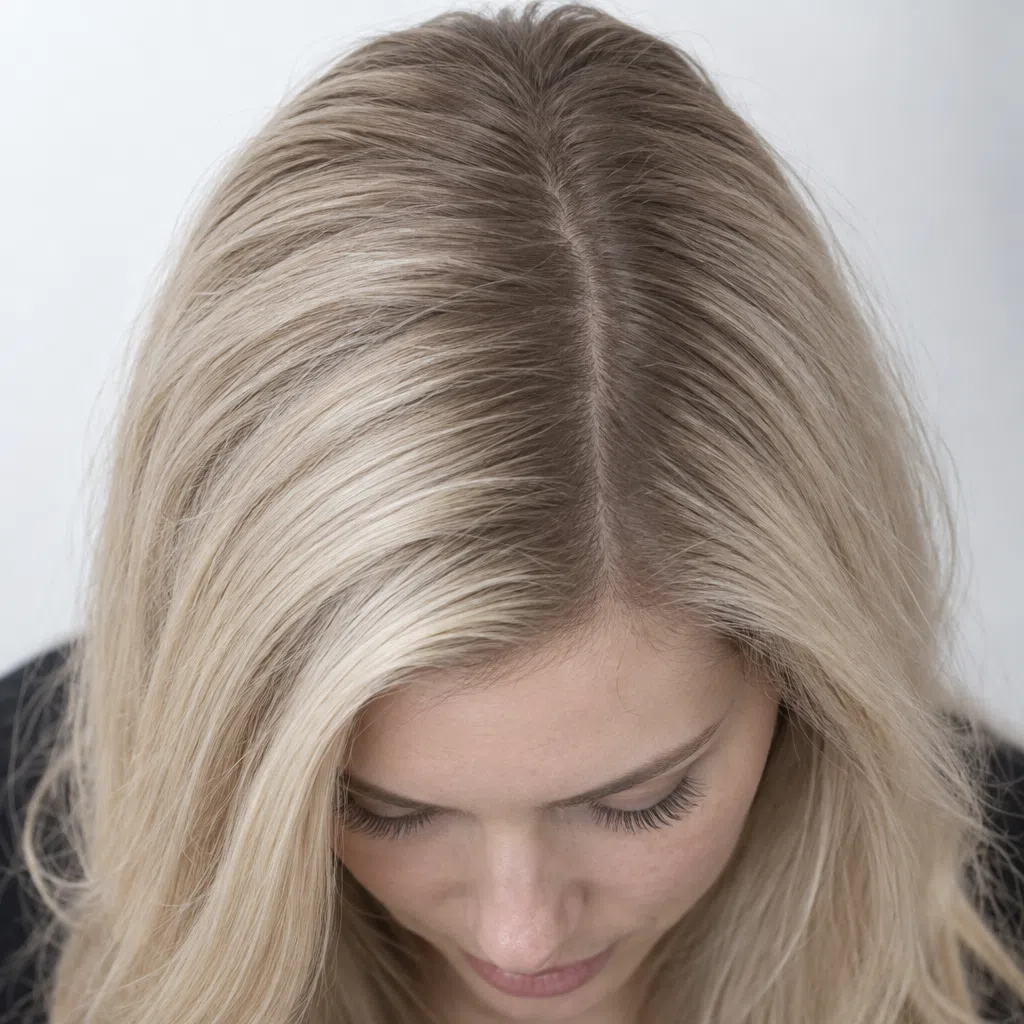 A hard regrowth line
Three weeks after a flat application taken straight to the scalp. The band is your own hair, and it arrives on a schedule.
A hard regrowth line
Three weeks after a flat application taken straight to the scalp. The band is your own hair, and it arrives on a schedule.
-
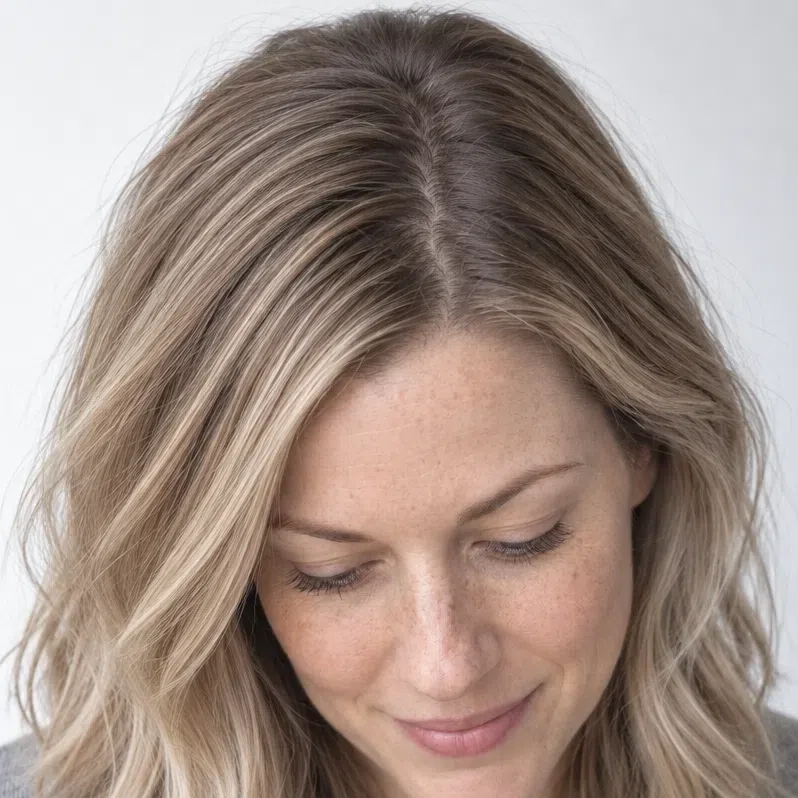 A root smudge
The same three weeks and the same gap, with your natural depth left in at the scalp on purpose. It reads as a shadow instead of an edge, and it is worth about a month.
A root smudge
The same three weeks and the same gap, with your natural depth left in at the scalp on purpose. It reads as a shadow instead of an edge, and it is worth about a month.
And what the distance costs you
The quiet argument for the rule at the top of this page. Regrowth is a distance problem rather than a technique one - how far the color sits from what grows out of your head. One woman, a level 6 natural, three weeks after two different appointments, photographed at the parting.
-
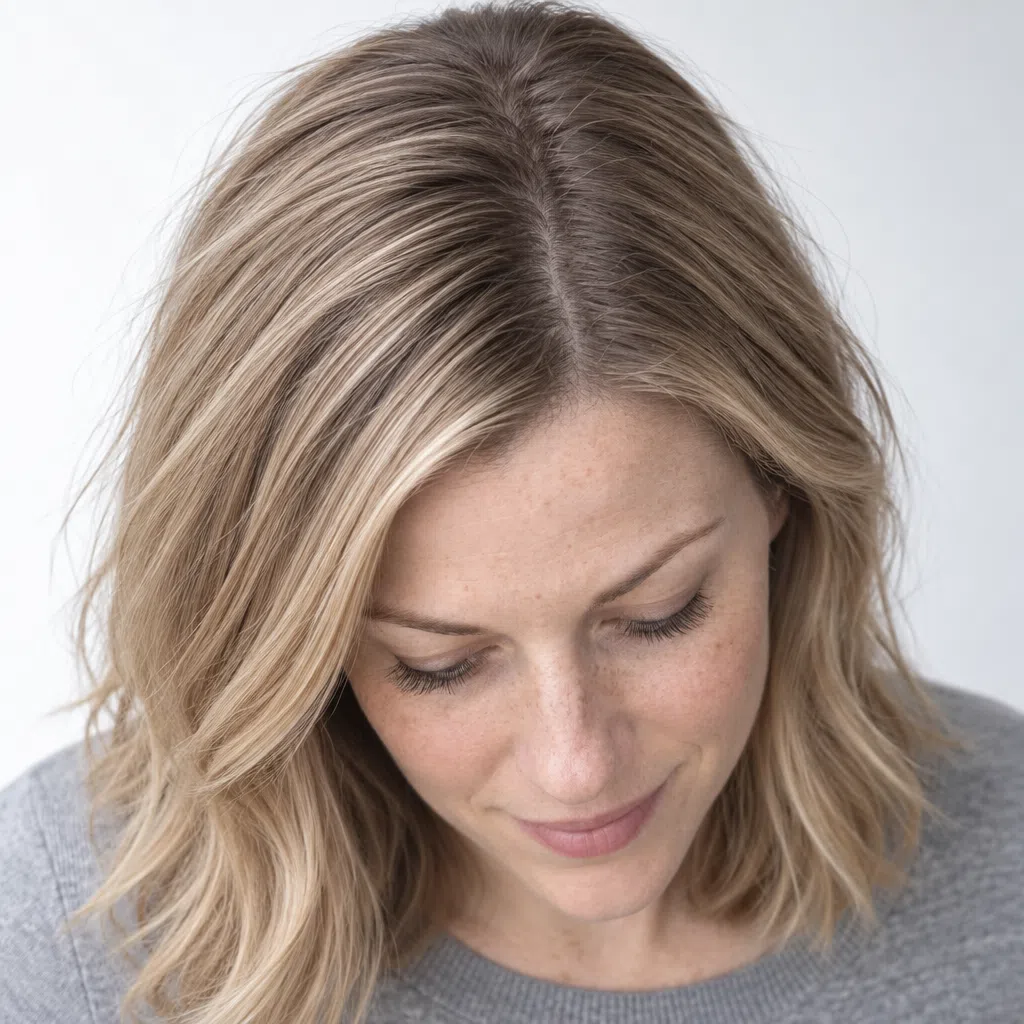 Two levels from natural
Three weeks in, and there is barely a line to find because there is barely a difference to see.
Two levels from natural
Three weeks in, and there is barely a line to find because there is barely a difference to see.
-
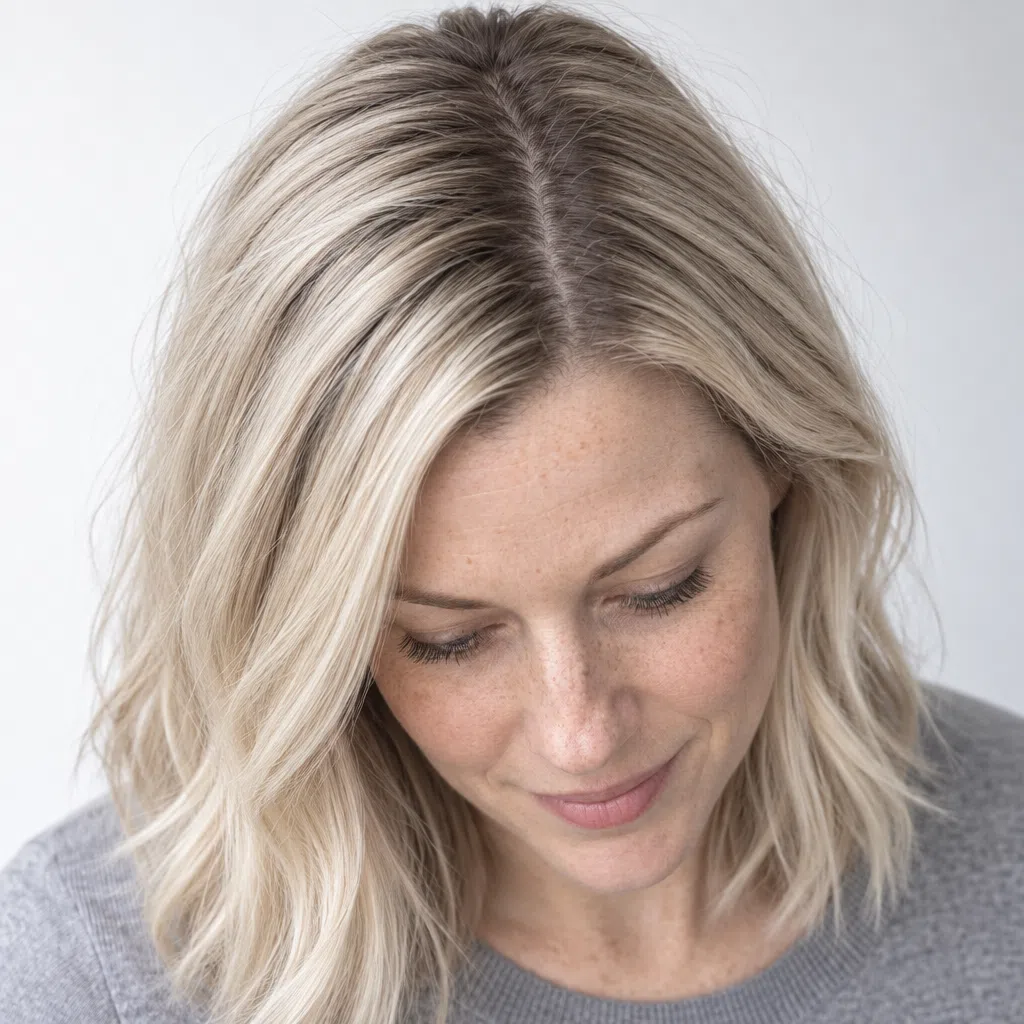 Four levels from natural
The same three weeks, in the direction this coloring is most tempted by. Platinum genuinely is on your palette - it is simply four rungs from where your hair starts, and this band is what those four rungs cost you every three weeks.
Four levels from natural
The same three weeks, in the direction this coloring is most tempted by. Platinum genuinely is on your palette - it is simply four rungs from where your hair starts, and this band is what those four rungs cost you every three weeks.
The phrasebook
Say this
- “Level 7, ash”
- A number and a direction, with nothing left for anyone to interpret.
- “Is your .2 a violet or a matt?”
- The one question that finds the best shade in the room, in the brands that have it.
- “Cool at the root as well as the length”
- Roots lift warmer than the length does - scalp heat sees to that - and a colorist who is not asked will often leave that warmth in and call it natural depth.
- “A root smudge, not a line”
- Regrowth that reads as a shadow rather than an edge, which is worth about a month between appointments.
And what these get you
- “Sun-kissed”
- A mood rather than an instruction, and every brand on the shelf resolves it warm.
- “Caramel, honey, bronde”
- Three shades named after their own warmth. On a palette that contains no warm shade at all, they are the same wrong answer three times.
- “Just a bit warmer, I look washed out”
- The wrong fix for a real problem. A cool color looks flat when it is laid on in one block, not because it is cool - so warming it keeps the flatness and adds a temperature your skin then has to argue with.
- “Black, please”
- The one rung your palette leaves empty. Graphite at level 2 gets you the same idea of dark hair without the hard line black draws under the face.
Two numbers and one word will get you further than any photograph, and staying near your own level is what buys the eight weeks between appointments. Which leaves the question this coloring always arrives with - the one the word summer has been promising the whole time.
Can a Cool Summer be blonde?
The word summer does a great deal of promising, and this is the page where it gets checked. Your palette genuinely does contain a platinum - and it is the only one of the three summers that also contains a near-black - so the answer was never going to be about the shade. It is about the distance between that shade and your own head.
Yes - and platinum is on your palette, which is not true of most colorings. But the ceiling is yours rather than the palette’s: about three levels above your own natural. A Cool Summer who starts at level 6 can stand under a level 9. A Cool Summer who starts at level 3 cannot, and it is not the shade that stops her - it is the six levels in between.
Starting from a level 6 natural - the cool light brown your palette calls the safest shade it has. The tone stays cool and ashy the whole way up; the only thing changing across the four is how light it goes.
-
 Her natural, L6
Where she starts, with no color on it at all - and already a shade off the palette page.
Her natural, L6
Where she starts, with no color on it at all - and already a shade off the palette page.
-
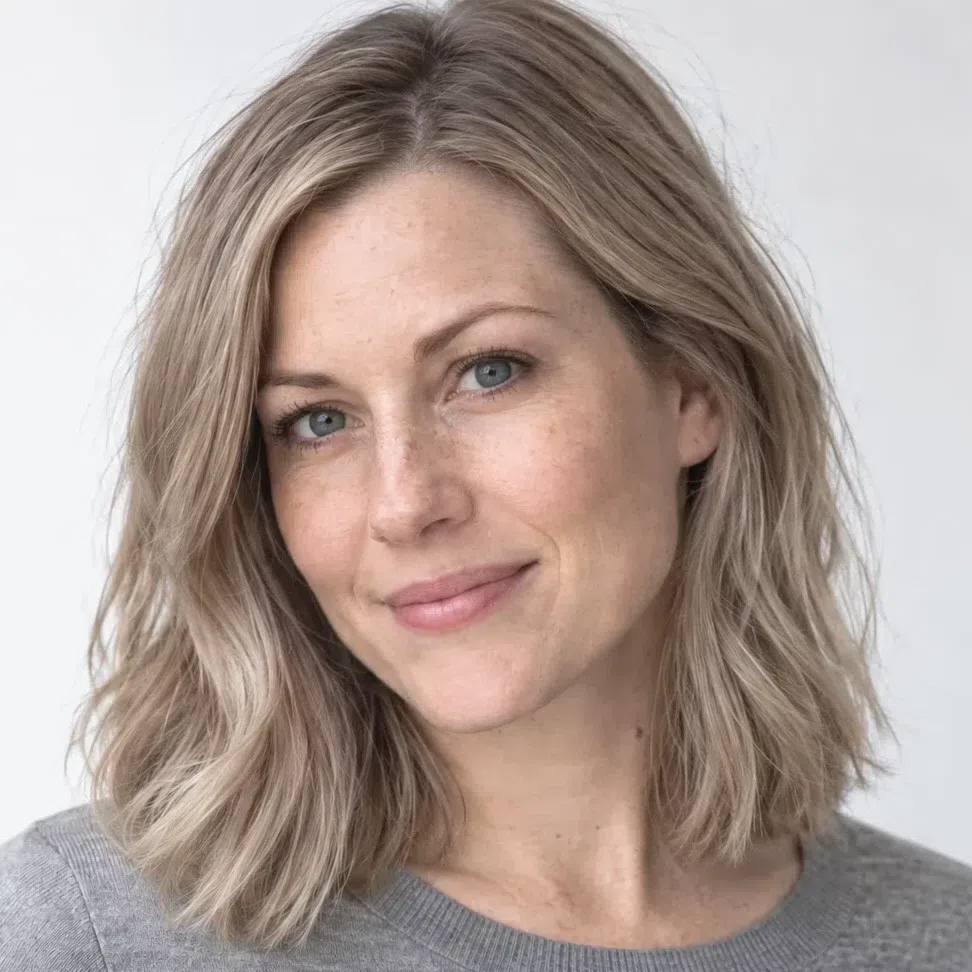 Two levels up, L8
Comfortably blonde, and still recognizably her.
Two levels up, L8
Comfortably blonde, and still recognizably her.
-
 Her lightest, L9
Her ceiling. Pale, and still holding a silver-gray cast rather than a yellow one.
Her lightest, L9
Her ceiling. Pale, and still holding a silver-gray cast rather than a yellow one.
-
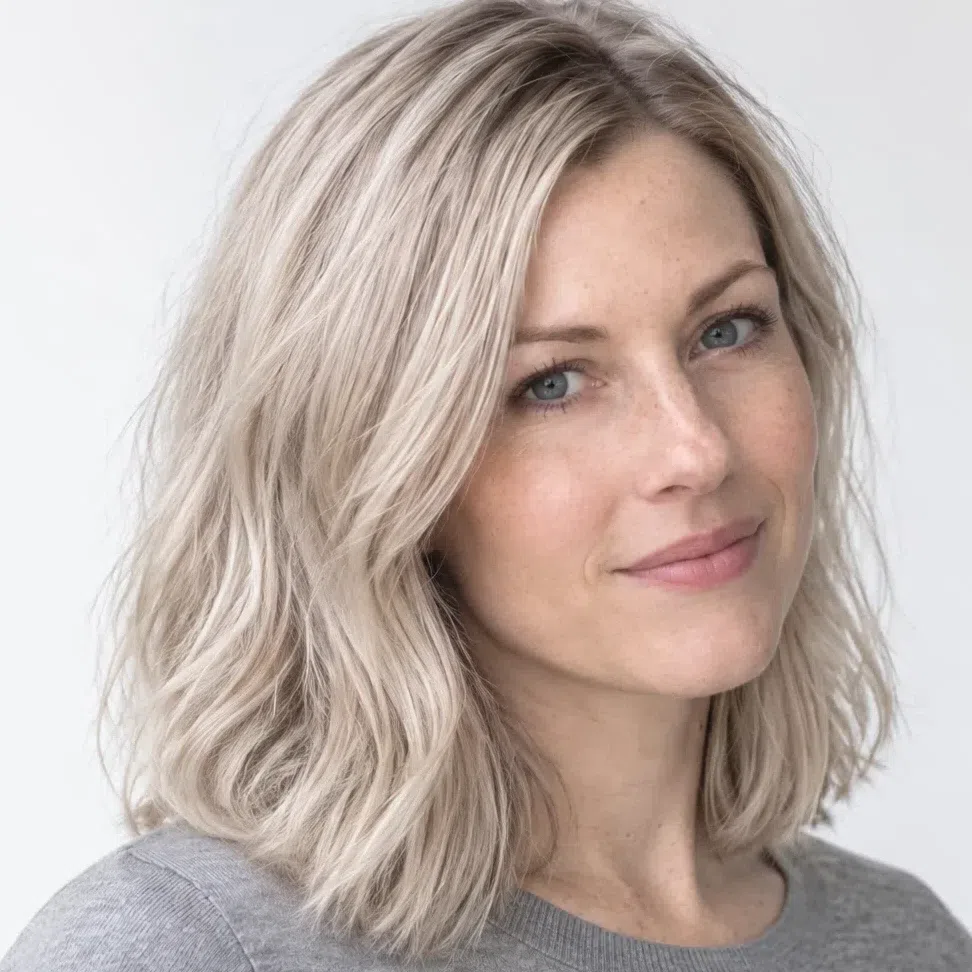 Past it, L10
Four levels up. Nothing is wrong with the platinum - it is printed on your palette page. What is wrong is the four levels between it and her roots.
Past it, L10
Four levels up. Nothing is wrong with the platinum - it is printed on your palette page. What is wrong is the four levels between it and her roots.
And the same climb from a level 3 natural, which is every bit as much a Cool Summer - the dark ash brown and the platinum are printed on the same palette page. Same rule, same tone, different numbers.
-
 Her natural, L3
Where she starts. Deep, cool, and a palette shade before anyone touches it.
Her natural, L3
Where she starts. Deep, cool, and a palette shade before anyone touches it.
-
 Two levels up, L5
Two levels, and the place most people should stop. Lighter, and still hers.
Two levels up, L5
Two levels, and the place most people should stop. Lighter, and still hers.
-
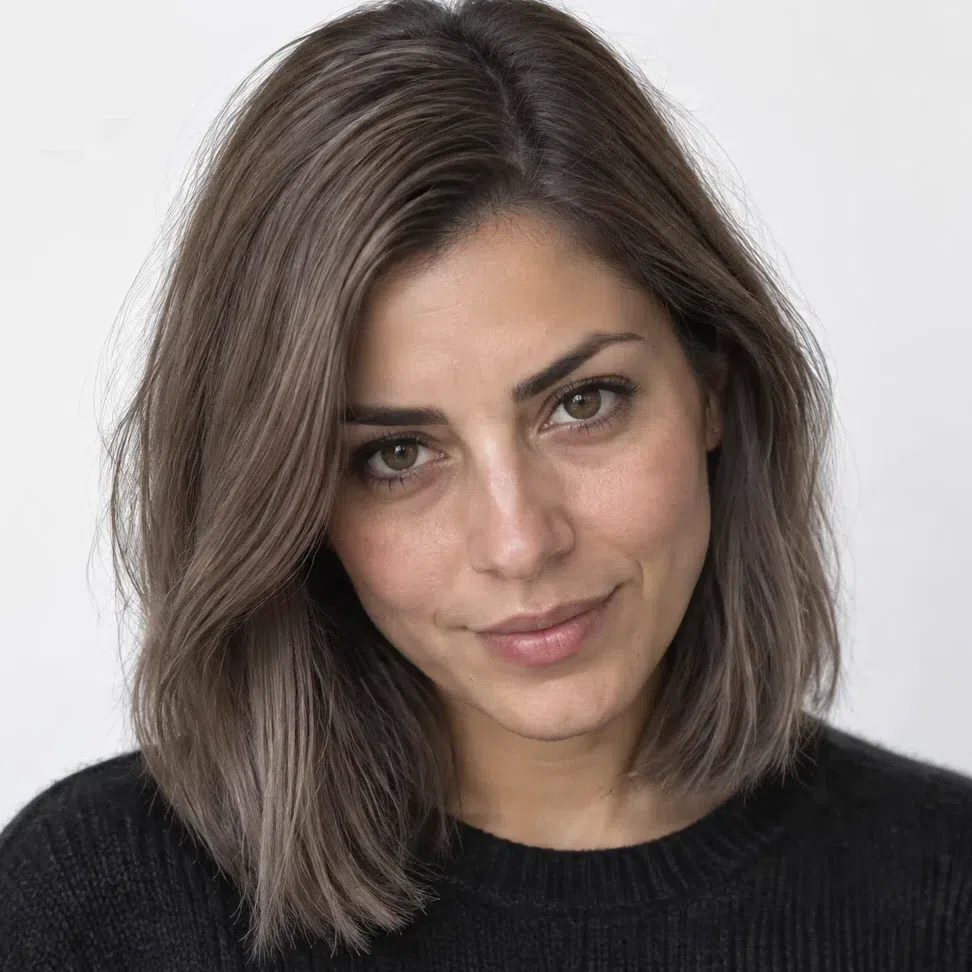 Her lightest, L6
Her ceiling - and the first woman’s uncolored hair, three appointments away.
Her lightest, L6
Her ceiling - and the first woman’s uncolored hair, three appointments away.
-
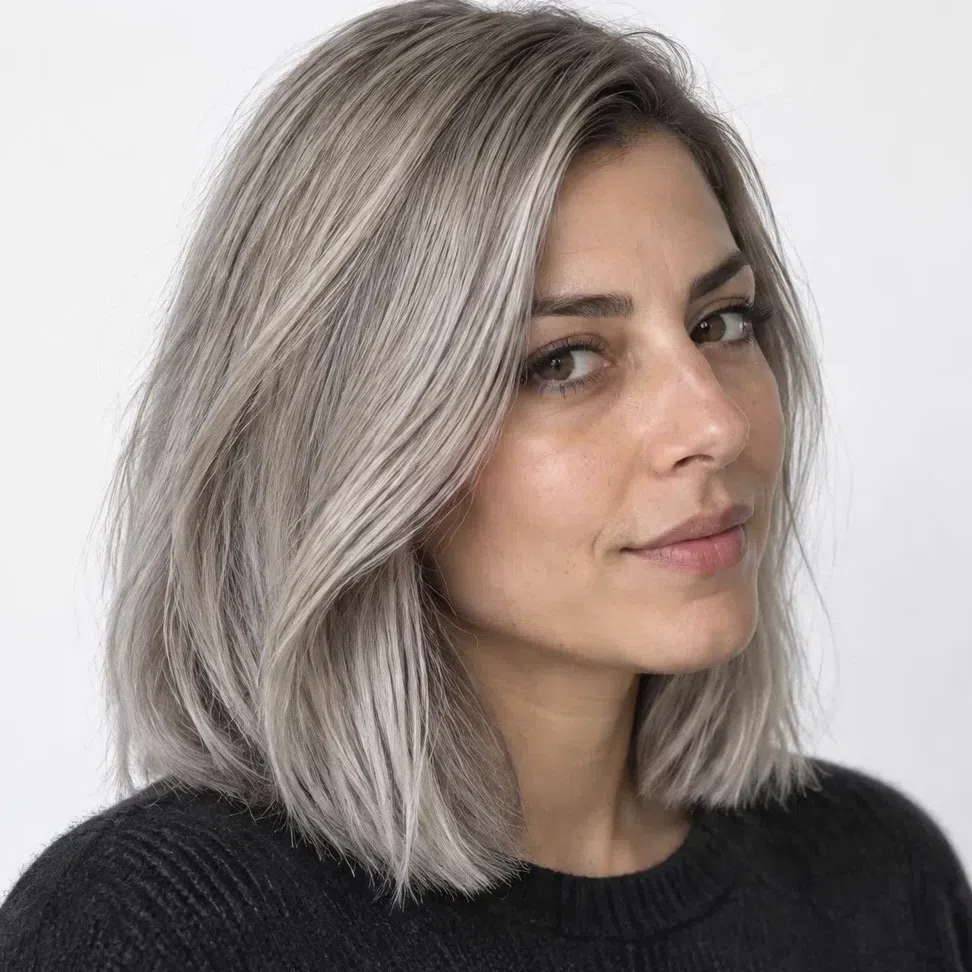 Past it, L9
Six levels up. The same rung the first woman calls her ceiling, and here it reads as something applied to her rather than something she grew.
Past it, L9
Six levels up. The same rung the first woman calls her ceiling, and here it reads as something applied to her rather than something she grew.
Two frames are shared between the rows, and they are the whole argument. Level 9 is the first woman’s ceiling and the second woman’s overshoot. Level 6 is the second woman’s ceiling and the first woman’s uncolored hair. Neither rung is right or wrong in itself - what changes is how far it sits from the head it is sitting on. The number that decides this page is the distance, not the level.
Notice what does not change as either row climbs. Every frame stays cool; nobody drifts toward gold on the way up. That is not a preference, it is the mechanism - lifting hair uncovers its warmth in a fixed order, red first and then orange and then yellow, so a blonde that is not deliberately toned arrives warm whether anyone asked for it or not. Going lighter is the easy half. Holding the tone while you go is the appointment.
Then look at what the gap does to the rest of the face. On this coloring the features sit close together in depth - the brows, the eyes and the skin are all within a few steps of each other - so hair that jumps out of that band stops being part of the face and becomes the first thing in the room. It is the same reason the palette hands you a graphite instead of a black: not because dark is wrong, but because a hard edge is.
Which is why the blondes that hold up here are the ones that are already the color of something - pewter, oyster, mushroom, wet sand. Not a blonde turned down, which is the advice a warm season gets, and not a blonde defined by how much has been stripped out of it. A blonde with a color of its own.
Blonde turned out to be a question about distance rather than shade. The next one is the other way round: the distance barely matters, the shade is the entire question, and the honest answer is narrower than anyone wants it to be.
Red, and how far you can take it
This is the question on the page where the honest answer is narrowest, and it is narrow for a reason that has nothing to do with how dark your hair is or how far you are willing to go.
Only as a cast, never as a color. A cool rose laid over an ash base reads brown first and rose second, and that is the whole of what this coloring carries. Rosewood is the edge of it. Mahogany and copper are already printed on your palette page - in the list of shades to skip.
One woman at a level 4 throughout - the darkness never changes across these four frames. The only thing moving is how much red is in the dye and how plainly it reads.
-
 A rose cast
Brown first, and the rose only turns up where the light crosses it. That is the whole job, done.
A rose cast
Brown first, and the rose only turns up where the light crosses it. That is the whole job, done.
-
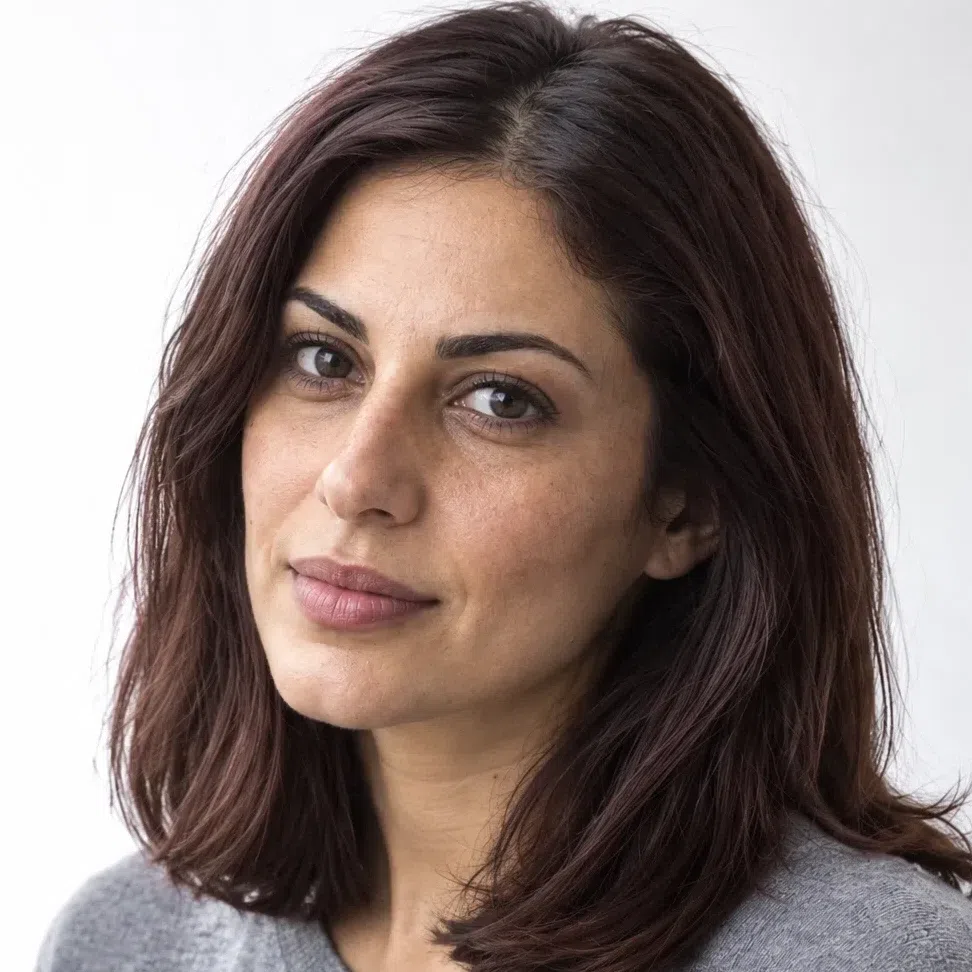 Rosewood
The edge. Still brown before it is red, and about as far along this row as the coloring reaches.
Rosewood
The edge. Still brown before it is red, and about as far along this row as the coloring reaches.
-
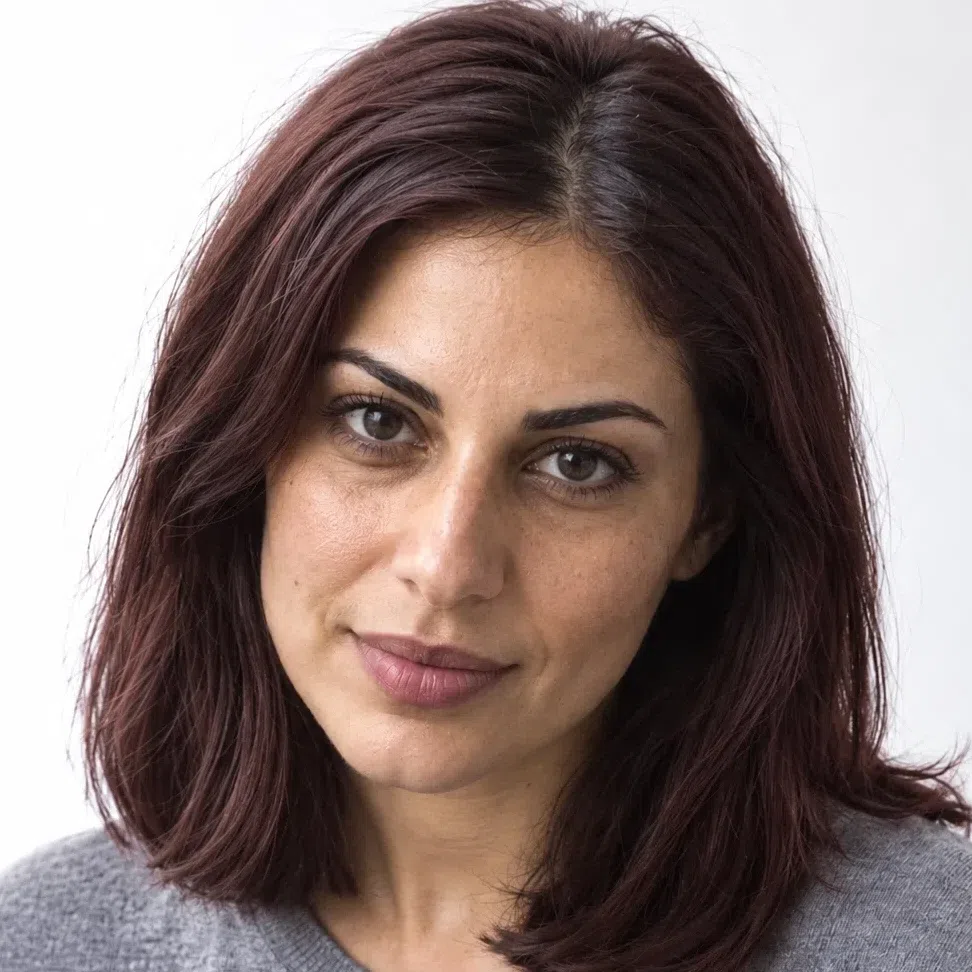 Mahogany
Now the hair is red rather than brown with red in it, and her eyes have gone quiet behind it.
Mahogany
Now the hair is red rather than brown with red in it, and her eyes have gone quiet behind it.
-
 Copper
The warmth arrives in the room before she does, and every bit of redness in her skin comes up to meet it.
Copper
The warmth arrives in the room before she does, and every bit of redness in her skin comes up to meet it.
The same four shades at the same level 4, on a deeper complexion. Nothing in the sequence has been adjusted for her.
-
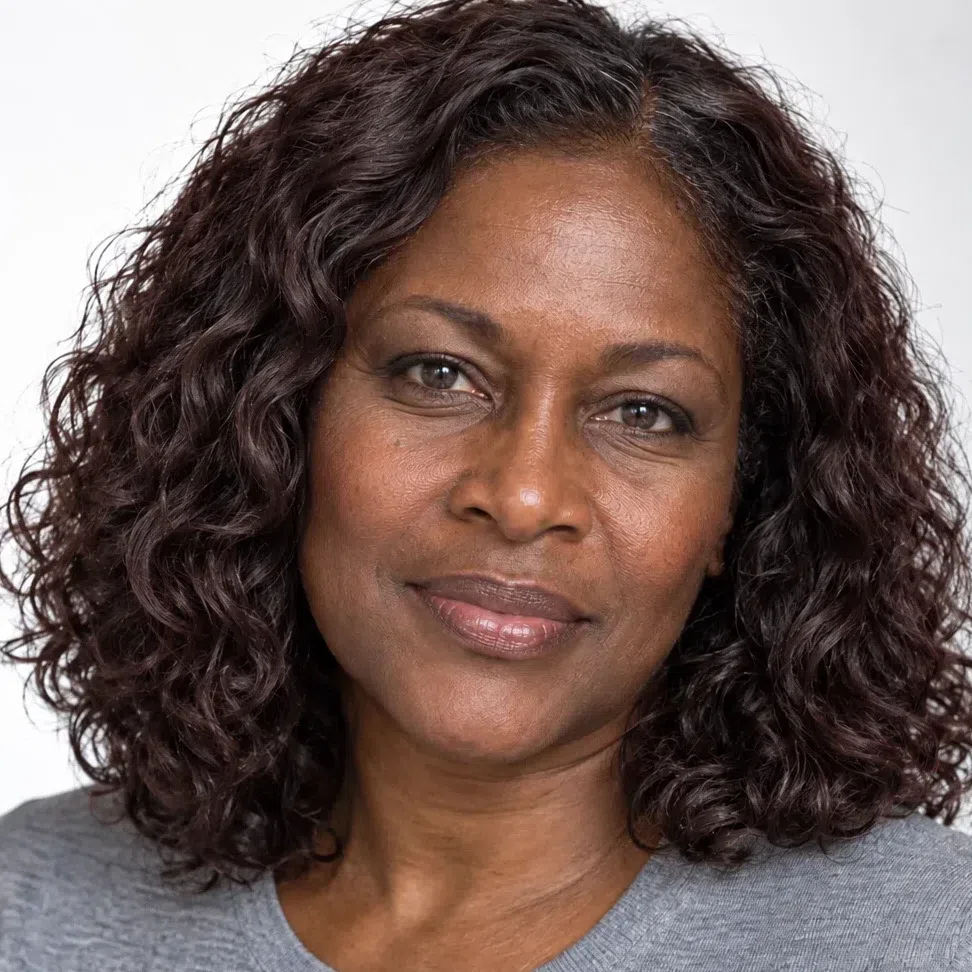 A rose cast
Brown first here too, with the rose showing in the curl where the light turns.
A rose cast
Brown first here too, with the rose showing in the curl where the light turns.
-
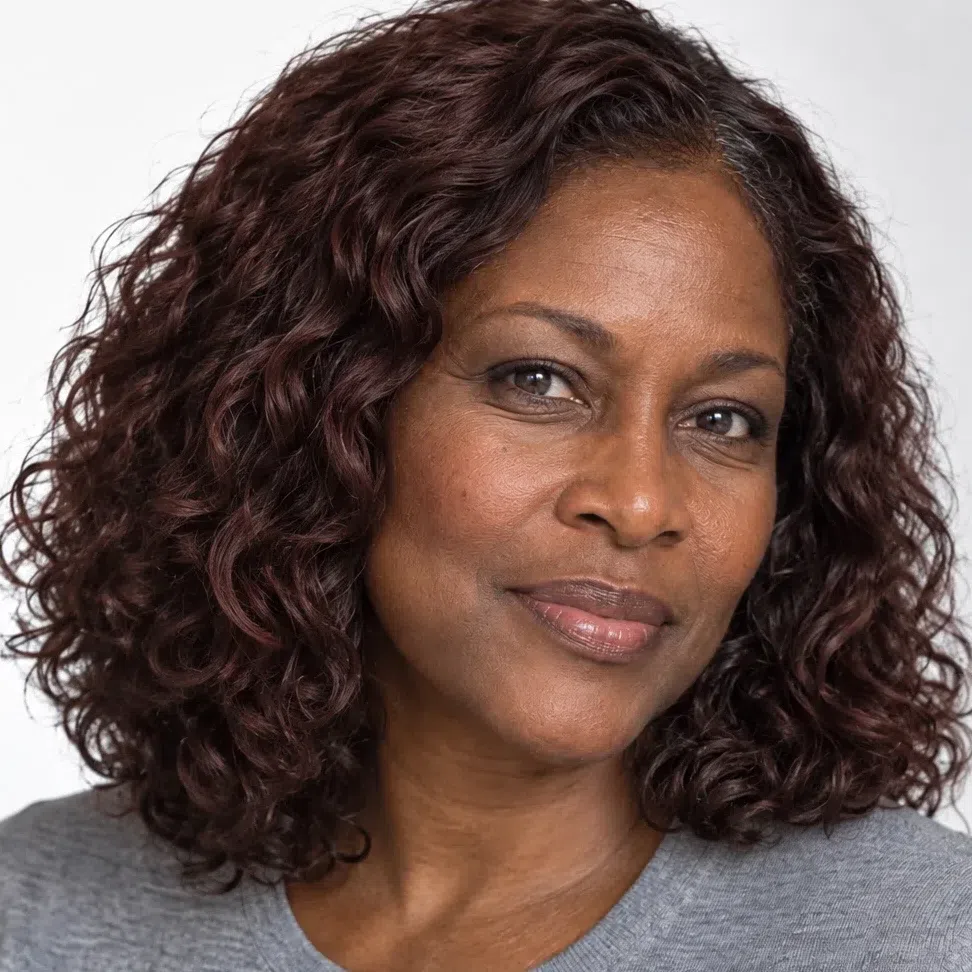 Rosewood
The same edge, and it falls in the same place.
Rosewood
The same edge, and it falls in the same place.
-
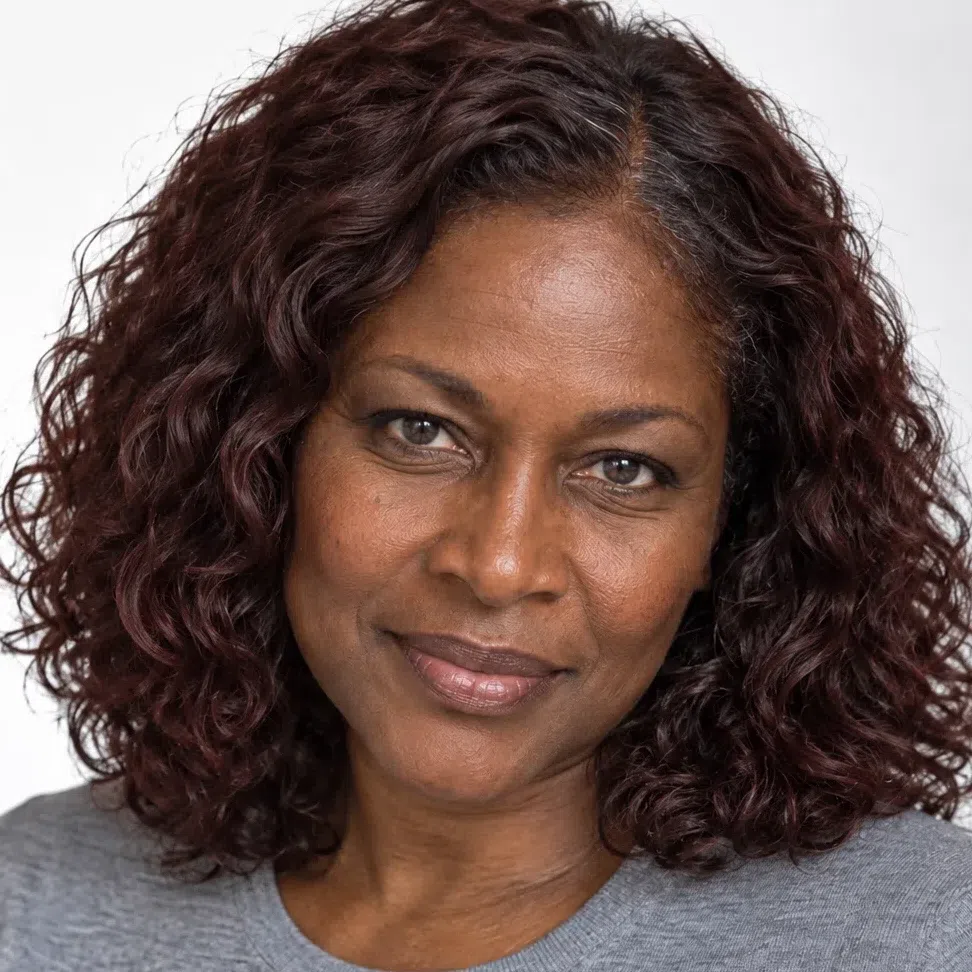 Mahogany
The red has taken the frame over, and the face is working to stay in it.
Mahogany
The red has taken the frame over, and the face is working to stay in it.
-
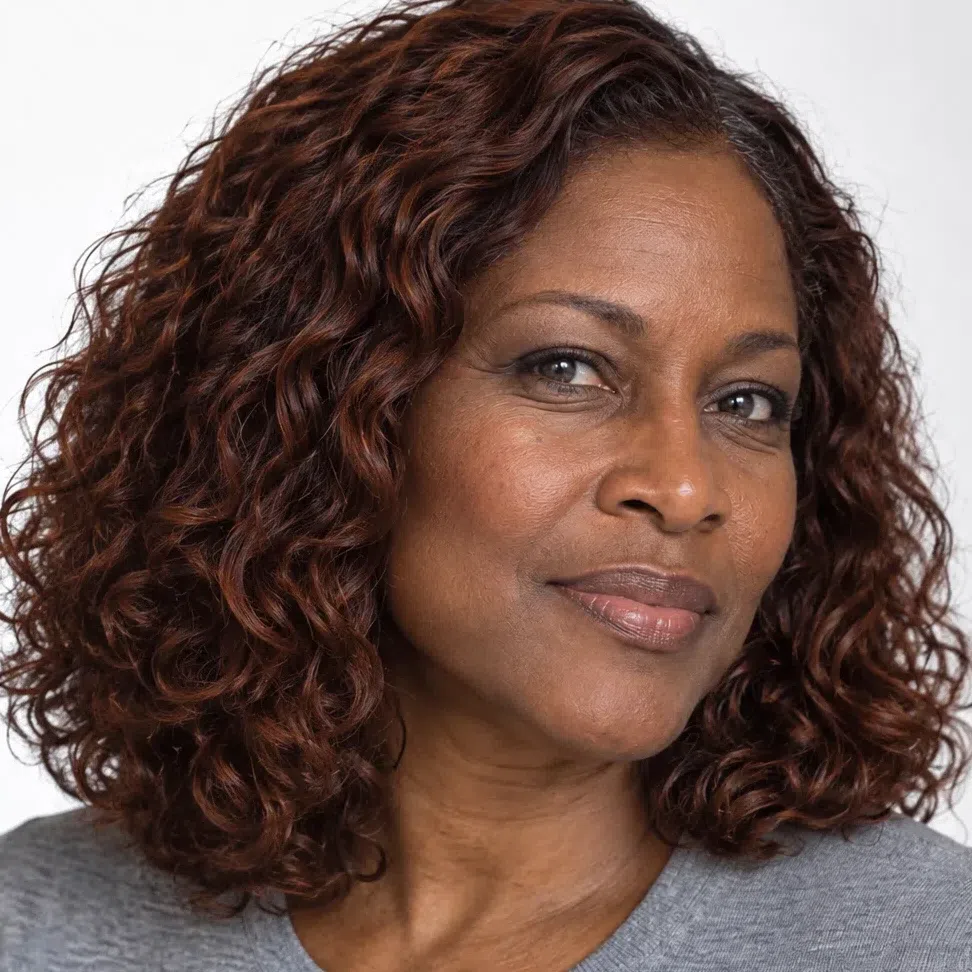 Copper
Warm, bright, and pulling against the coolness in her skin exactly as it did in the row above.
Copper
Warm, bright, and pulling against the coolness in her skin exactly as it did in the row above.
Two complexions, the same four shades, the same depth - and the door shuts in the same place in both rows. That is what separates this question from the blonde one. Blonde had a ceiling that moved with the reader, because the ceiling was a distance. Red has a fixed door, because clarity is a property of the dye rather than of the skin standing behind it.
The reason is on the palette page rather than in anyone’s opinion. Your eight shades are ash, pearl, mocha, smoke and graphite - even the one named ash chestnut is described there as having no hint of red or gold in it - and the two red-browns that come closest, mahogany and copper, are both sitting in the avoid group. Cool seasons are usually allowed one red. This one is not, and pretending otherwise would be the kindest way to get you a bad appointment.
What the first frame of each row actually is: not a red dye at half strength, but a violet-leaning toner over an ash base. That is why it survives here when a red does not - the color underneath is still yours, and the rose is a bloom sitting on top of it. Ask for it as a gloss or a toner rather than a permanent color and it fades out quietly instead of growing out in a line.
And the reason copper is the loudest frame in both rows is not really the hair. A cool complexion carries its redness in the skin already - around the nostrils, across the cheeks, at the chin - and a warm red overhead does not sit beside that, it recruits it. The face goes ruddy, and the hair looks like the reason.
Which leaves the change most people put off the longest - and the one place this palette is quietly ahead of the others, because the color it is asking you to be is already printed on it.
Going gray on purpose
Everywhere else on this page you have been trying to buy something at a salon. Here it grows out of your head for nothing, and the only real decision is what to do about it.
Better than yes. Silver arrives cool, quiet and low in contrast, which is - word for word - the brief the rest of this page has been trying to get a colorist to mix for you. And your palette does not merely put up with it: the icy near-white at level 10 and the steel cast on the graphite at level 2 are the two ends of the same description.
One woman in her fifties, a level 5 natural with the silver well started. Four decisions rather than four shades - none of this is about which tube, it is about what to do.
-
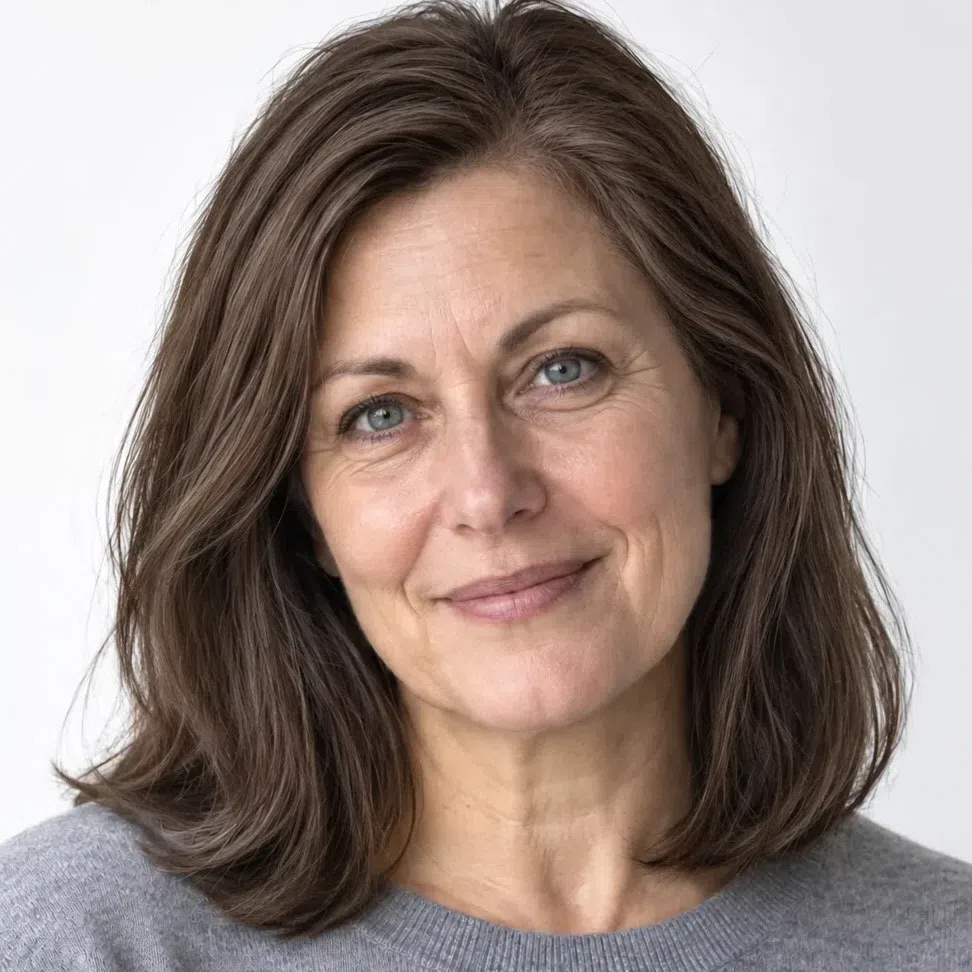 Covered
Every strand covered, and it does work. It is also a decision she has to make again in four weeks, and then again four weeks after that.
Covered
Every strand covered, and it does work. It is also a decision she has to make again in four weeks, and then again four weeks after that.
-
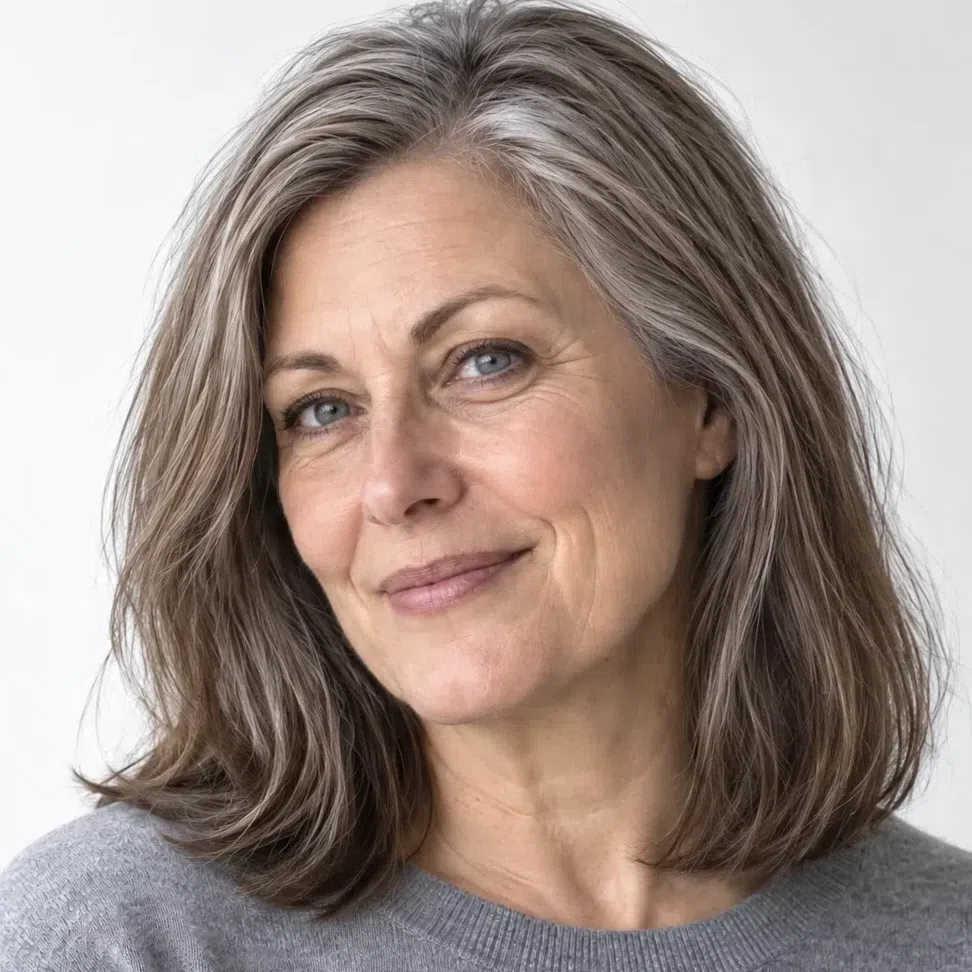 Blended
The silver kept and lit - two close ash levels woven through it, so it reads as light in the hair rather than as a second color arriving.
Blended
The silver kept and lit - two close ash levels woven through it, so it reads as light in the hair rather than as a second color arriving.
-
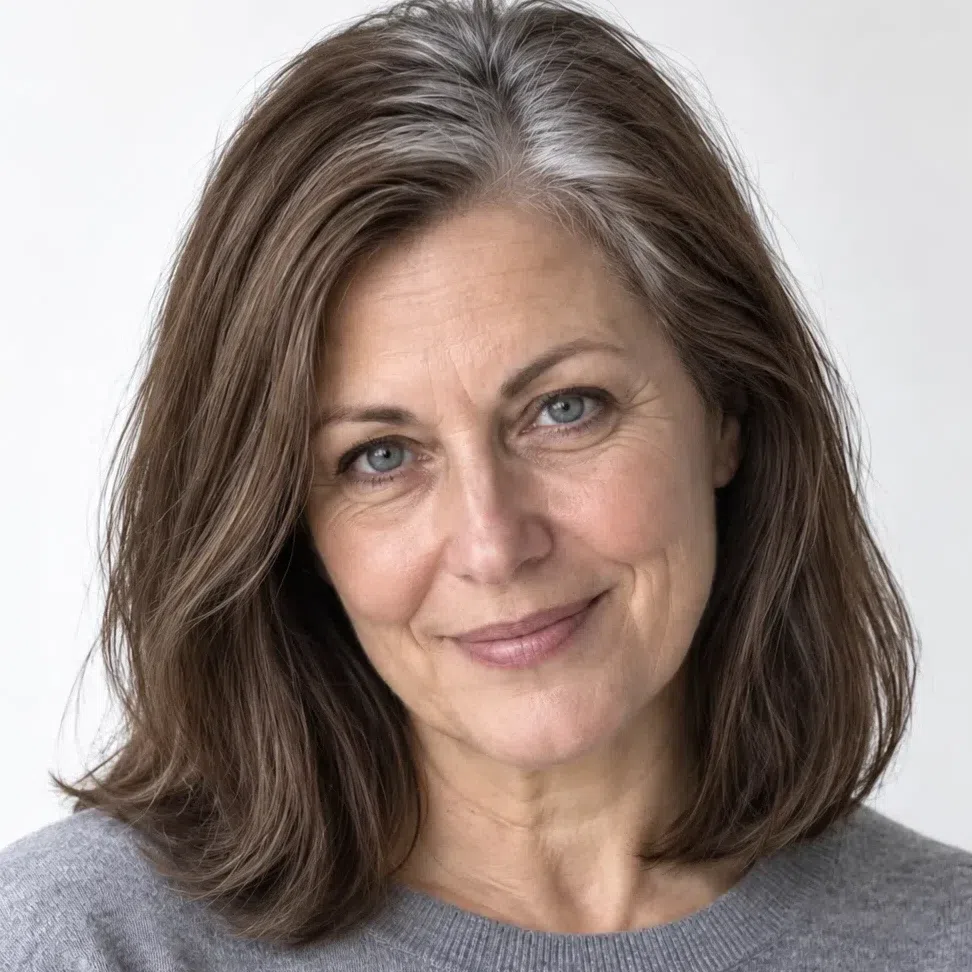 Growing it out
The transition, done deliberately. The band is cool against cool here, so what would be a line on a warm head is a change of weather on this one.
Growing it out
The transition, done deliberately. The band is cool against cool here, so what would be a line on a warm head is a change of weather on this one.
-
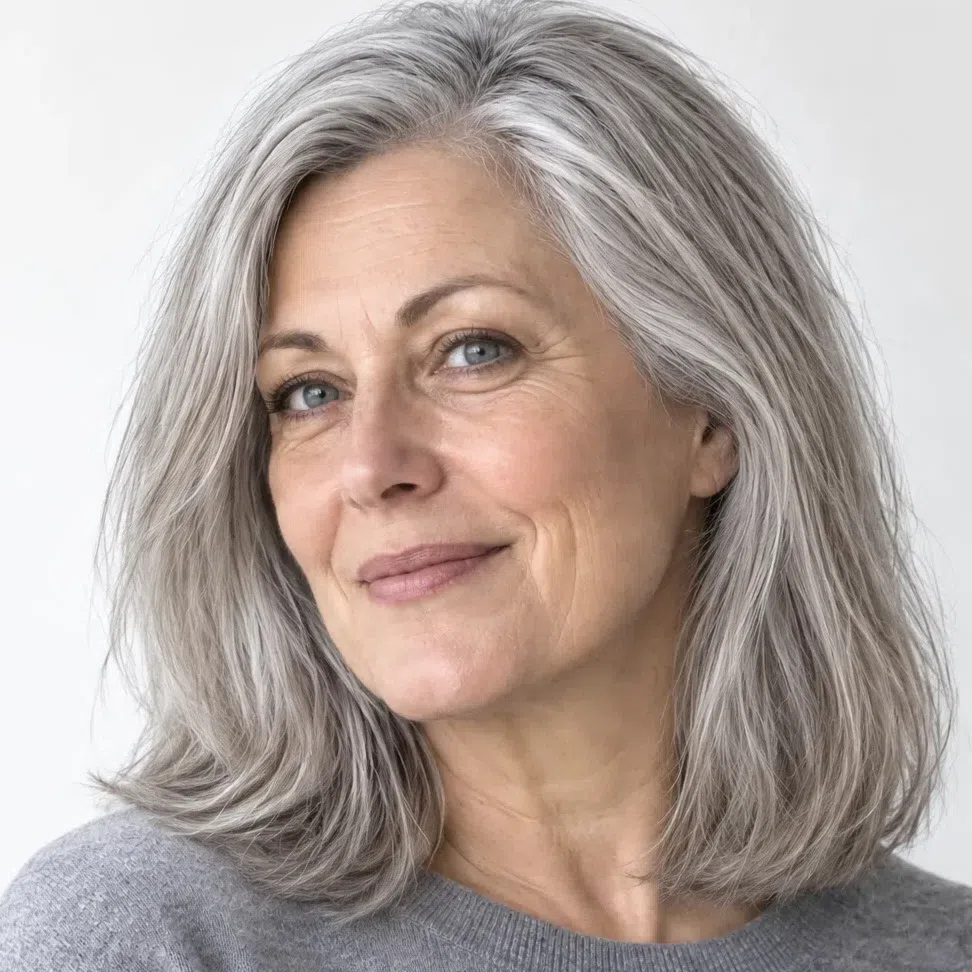 Full silver
Cool, clean, and sitting inside her own range of light and dark. Nothing else on her face has to compete with it.
Full silver
Cool, clean, and sitting inside her own range of light and dark. Nothing else on her face has to compete with it.
The same four decisions on a deeper complexion, a level 3 natural. Three of them land the same way. The fourth does not, and it is the only place on this page where the lower row tells a different story from the one above it.
-
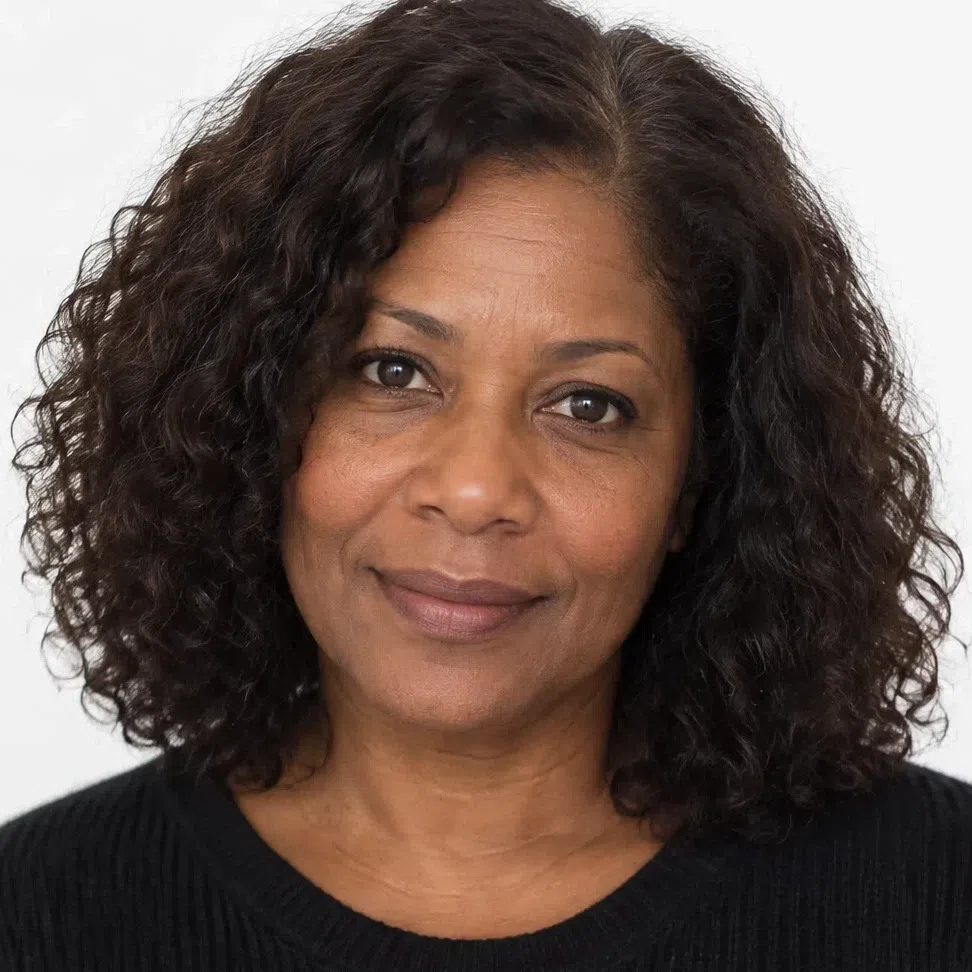 Covered
The same working answer, and the same standing appointment.
Covered
The same working answer, and the same standing appointment.
-
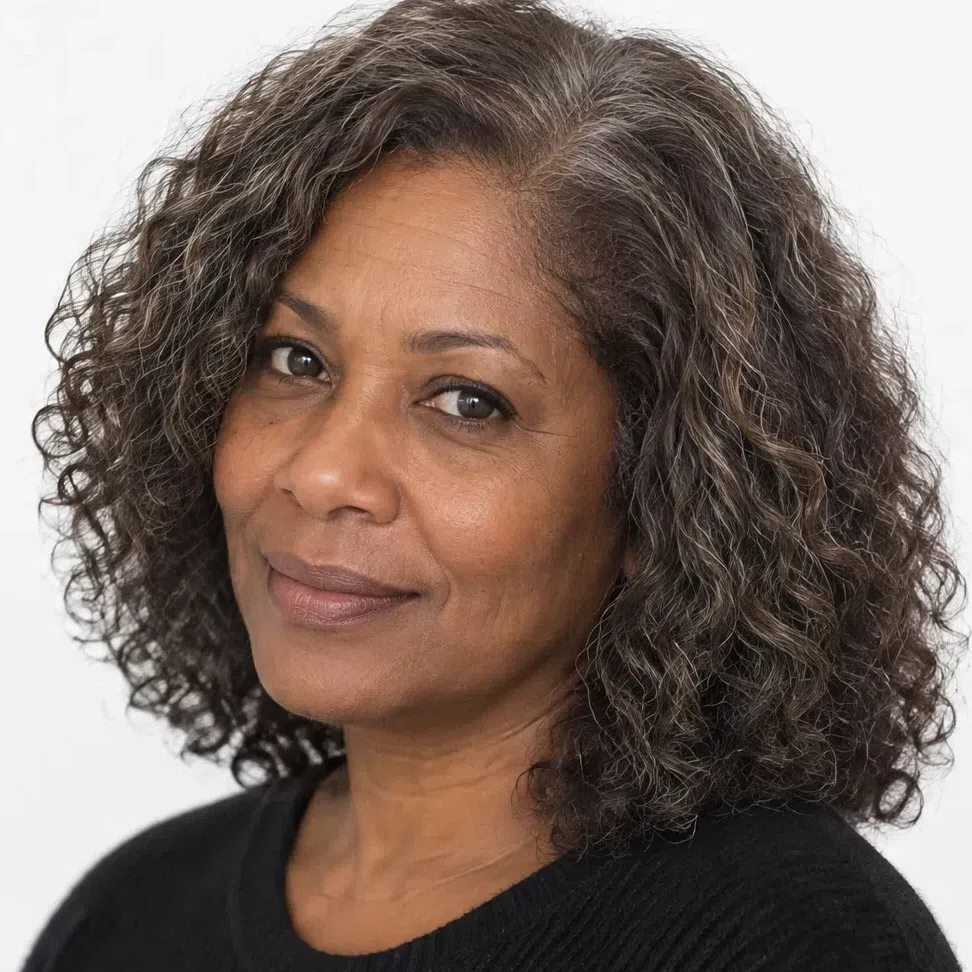 Blended
Silver caught in the curl and lit from inside it. This may be the best single result anywhere on the page.
Blended
Silver caught in the curl and lit from inside it. This may be the best single result anywhere on the page.
-
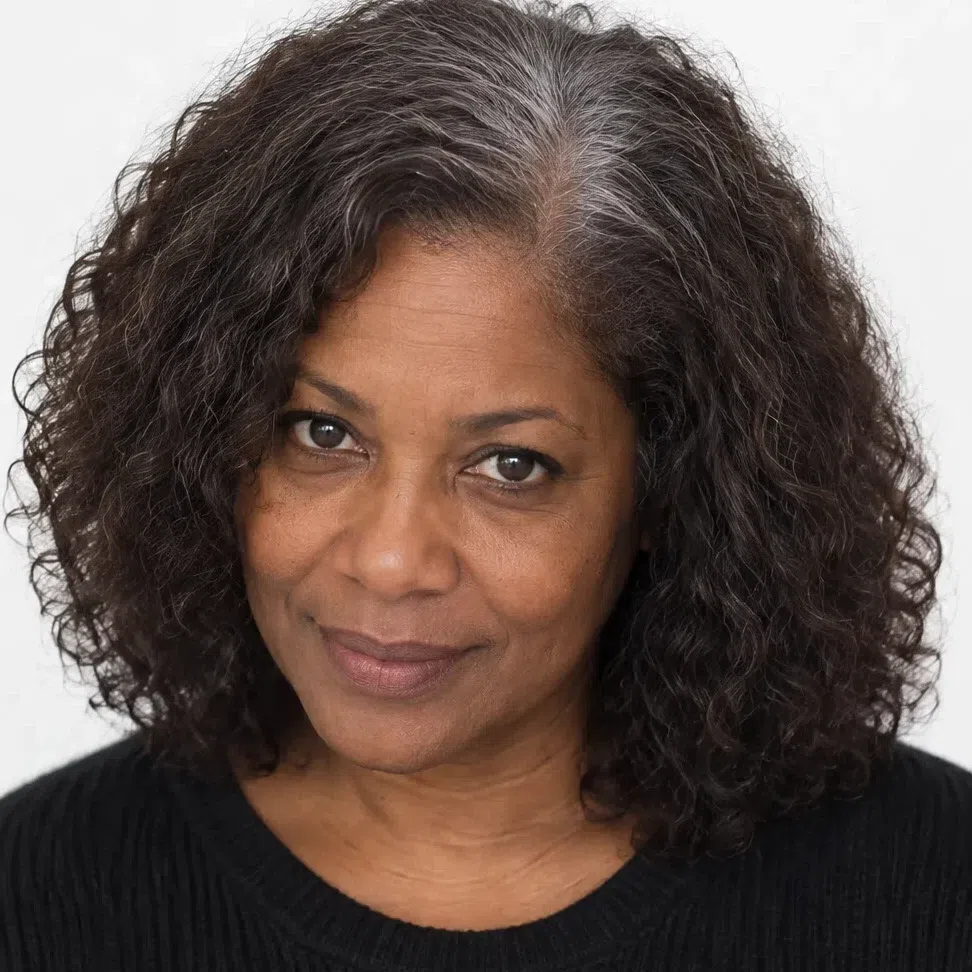 Growing it out
Cool against cool again, so the band arrives as depth rather than as neglect.
Growing it out
Cool against cool again, so the band arrives as depth rather than as neglect.
-
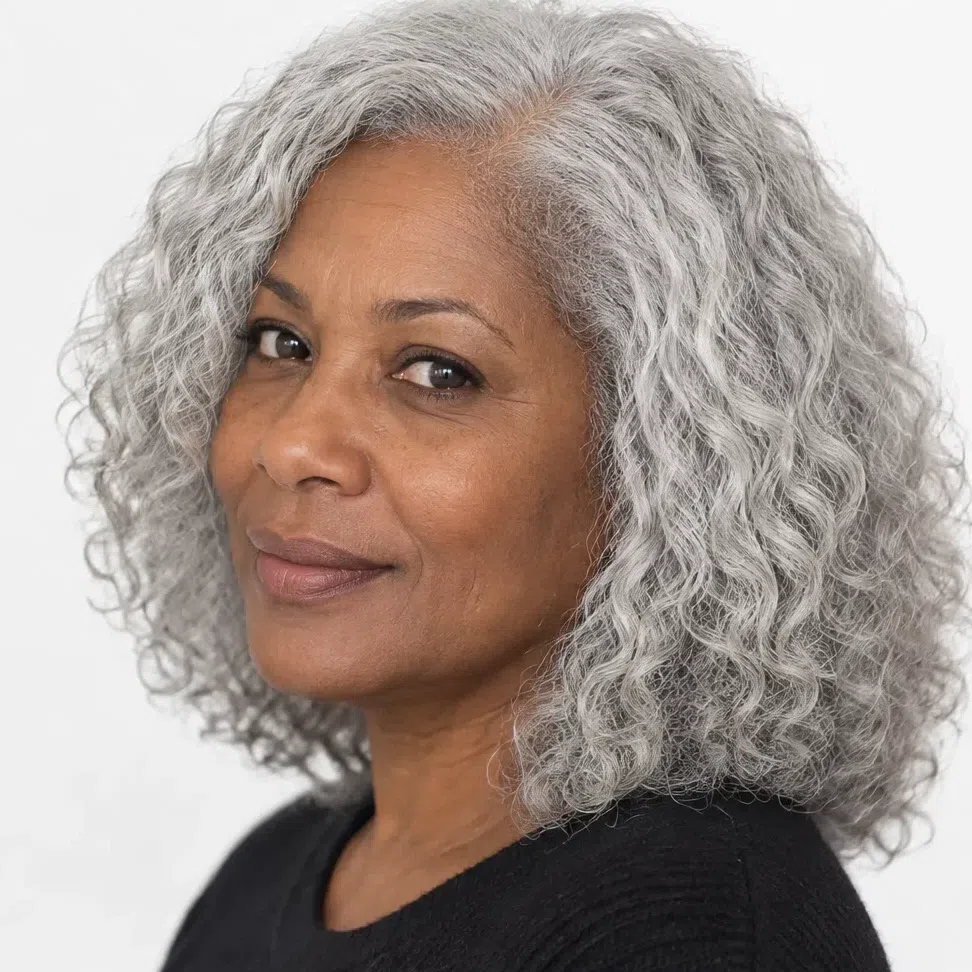 Full silver
Hers as well - but it is now the lightest thing on her face by a wide margin. A statement rather than a disappearance.
Full silver
Hers as well - but it is now the lightest thing on her face by a wide margin. A statement rather than a disappearance.
Compare the last frame of each row. On the lighter complexion, full silver sits inside her own range of light and dark - it is quiet, and it asks nothing of the rest of her face. On deeper skin the same silver becomes the brightest thing in the frame by a distance. Neither is wrong, and the second is arguably the most striking photograph on this page - but only one of them is low contrast, and low contrast is what this coloring is built out of. If you want the silver without the announcement, the blended frame is the one to take to a colorist.
There is a question underneath this one that people rarely ask out loud: does going gray make you look older? On this coloring the honest answer is that the gray is not the variable - the contrast is. The common reflex is to go darker, on the theory that dark reads younger. What a level 2 actually does on a Cool Summer is introduce the one thing this face has never been able to carry, which is a hard edge. The same woman in a clean silver keeps everything on her face within a few steps of everything else, and that is the arrangement this coloring reads best in at any age at all.
If you are choosing between the four, the useful question is not which one photographs best but how often you are willing to sit in a chair. Covered is every four weeks, indefinitely. Blended is every eight to twelve, and it never has a bad week in between. Growing it out is one deliberately awkward year that ends in the cheapest hair you will ever have. Full silver costs nothing to keep and can cost a great deal to reach, if what you are starting from is years of box color.
What threatens all four of them is yellow. Silver has no pigment left in it to defend itself, so it takes warmth on from everything it meets - minerals in the water, sun, the heat of a dryer, some shampoos - and it does so faster than colored hair does. A silver that has gone warm is the one version of this that genuinely does read older, and it is almost entirely preventable.
The melanocyte stem cell (McSC) system fails earlier than other adult stem cell populations, which leads to hair greying in most humans and mice.
All four of those frames are held with the same three or four habits, and without them the cool goes out of every one of them inside a month. Which is the next section, and it is the shortest one on this page.
Keeping the color
Every other section of this page ends at the salon door. This is the eight weeks after it, and it is the part that decides whether any of the rest of it held.
Your color is not fading. It is losing its cool - the ash was a toner laid over warmth that was underneath the whole time, and as the toner washes out the warmth comes back up. The hair stays exactly as light as it was; only the temperature moves. That matters more here than almost anywhere, because on this palette the tone was the whole of what made the color yours. The level was never the part you were paying for.
One woman, one appointment, four points across ten weeks. Every frame is the same level 7 - nothing in this row goes lighter or darker at any point. Watch the temperature and nothing else.
-
 Day one
The 7.1 you asked for. Cool, quiet, and doing exactly what the rest of this page said it would.
Day one
The 7.1 you asked for. Cool, quiet, and doing exactly what the rest of this page said it would.
-
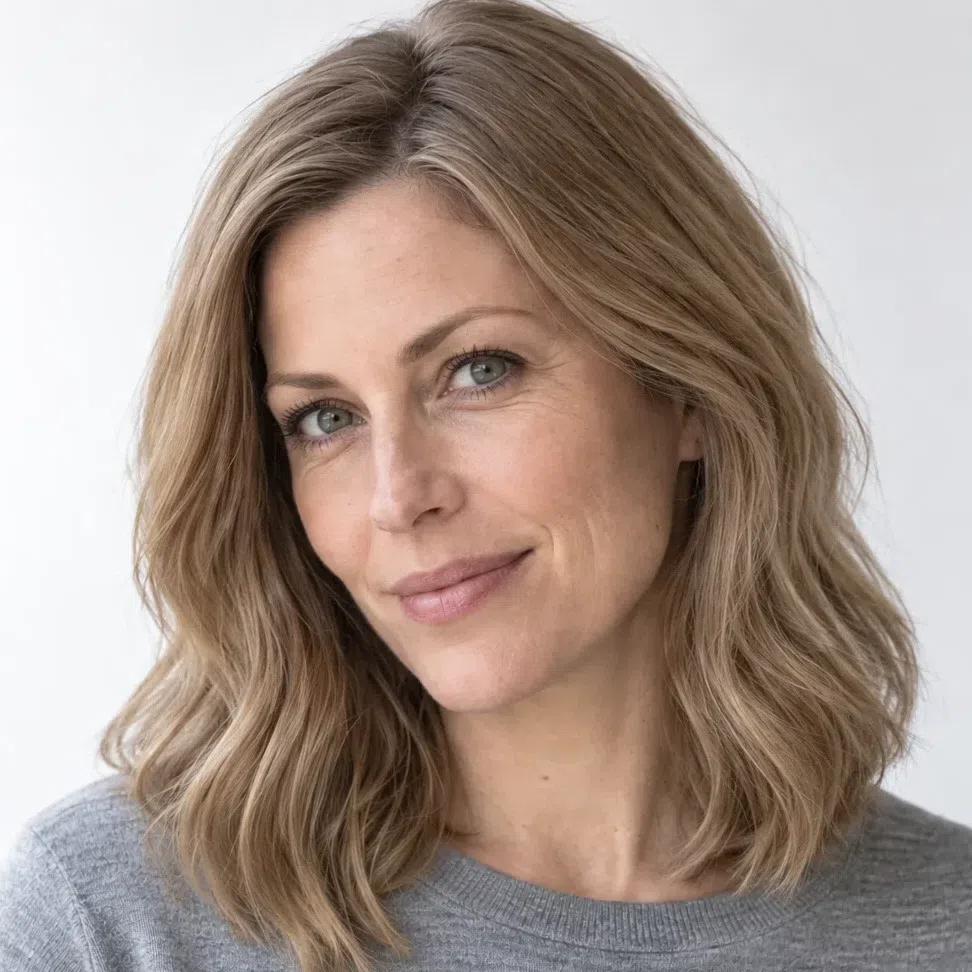 Three weeks
The cool has started to leave. Not one shade lighter than the frame beside it.
Three weeks
The cool has started to leave. Not one shade lighter than the frame beside it.
-
 Six weeks
Openly warm now, and still the same level 7. Nothing has lifted; something has left.
Six weeks
Openly warm now, and still the same level 7. Nothing has lifted; something has left.
-
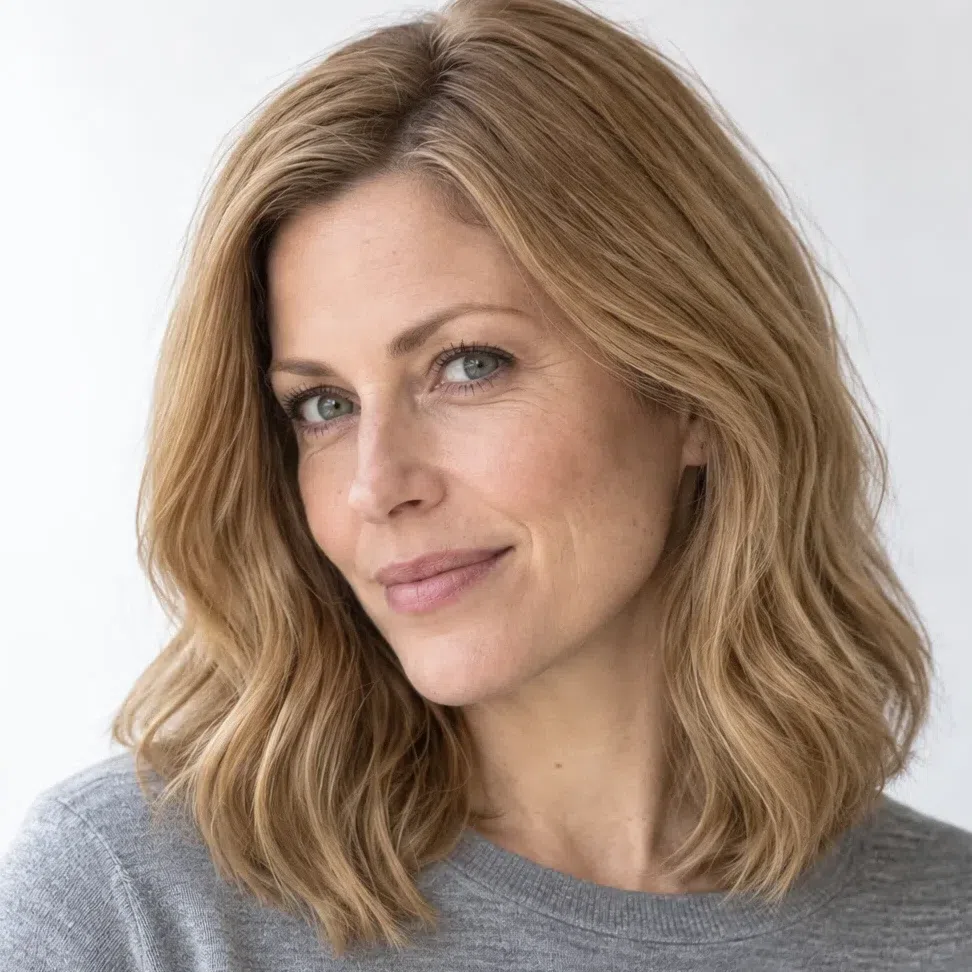 Ten weeks
This is your own palette’s 7.3. Ten weeks has taken you from the digit you asked for to the digit the phrasebook warns about, and nobody touched your hair to do it.
Ten weeks
This is your own palette’s 7.3. Ten weeks has taken you from the digit you asked for to the digit the phrasebook warns about, and nobody touched your hair to do it.
All four of those frames are the same lightness - the same number, mixed from the same level. If the last one looks like a different hair color, it is; it is simply not a different level. Which is why the instinct at week ten - book a full color, go a bit darker, start again - buys the expensive fix for the cheap problem. What left was the toner. What puts it back is a toner.
Ash is the only tone on the chart that is working against something. A gold has pigment that simply sits in the hair; an ash is a blue-based toner cancelling the warmth that lifting exposed, and a cancellation is a temporary arrangement by its nature. It washes out in the order it went in, and what is waiting underneath is the reddish-brown pigment your hair was carrying before anyone opened a tube.
This is also the one section where the width of your palette stops being an advantage. A Cool Summer at level 8 and a Cool Summer at level 4 both lose their cool, but they lose it toward different colors - a pale base comes back yellow, a deep base comes back orange - and the bottle that fixes one does nothing at all for the other. It is the commonest mistake in this entire routine, and it is one shelf wide.
Ten weeks is not a failure either. It is the design: a toner is not built to last, and the permanent color underneath was never the thing carrying your tone. Put a gloss in the diary for week five and the row above never gets past its second frame.
This diversity arises mostly from the quantity and ratio of the black-dark brown eumelanin and the reddish-brown pheomelanin.
The four things that hold it
-
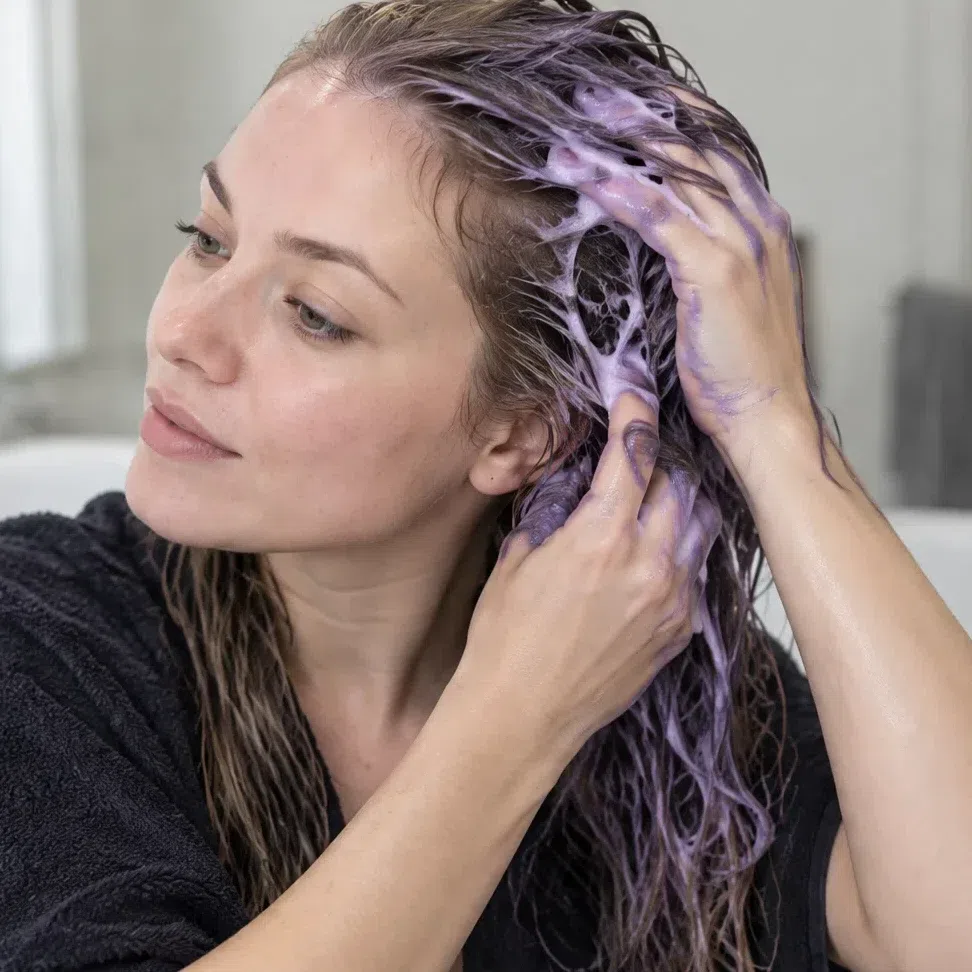 Tone it at home
A toning shampoo once a week, matched to what is coming back rather than to the name of your shade. Purple cancels yellow, which is what a light base produces. Blue cancels orange, which is what a deep base produces. Your palette runs from level 10 to level 2, so unlike almost every other coloring you genuinely have to check which half of it you are standing in.
Level 7 and up → purple. Level 6 and below → blue. -
 Rinse cooler
Heat opens the cuticle and the toner leaves through it. Taking the last rinse cool does more than most of what is on the shelf, and it costs nothing.
-
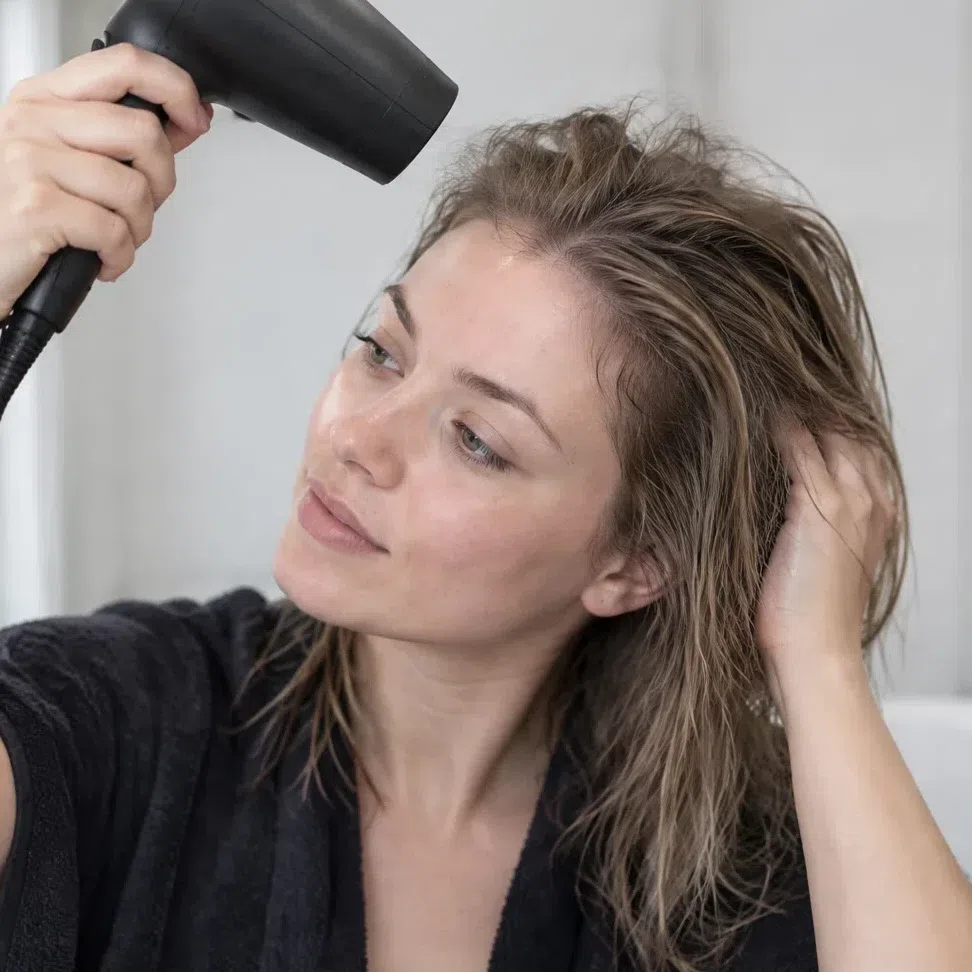 Keep heat off the ends
The ends are the oldest hair on your head and the least able to hold a toner, which is why the warmth always shows there first. Dry the roots, hold the dryer away, and leave the ends alone wherever you can.
-
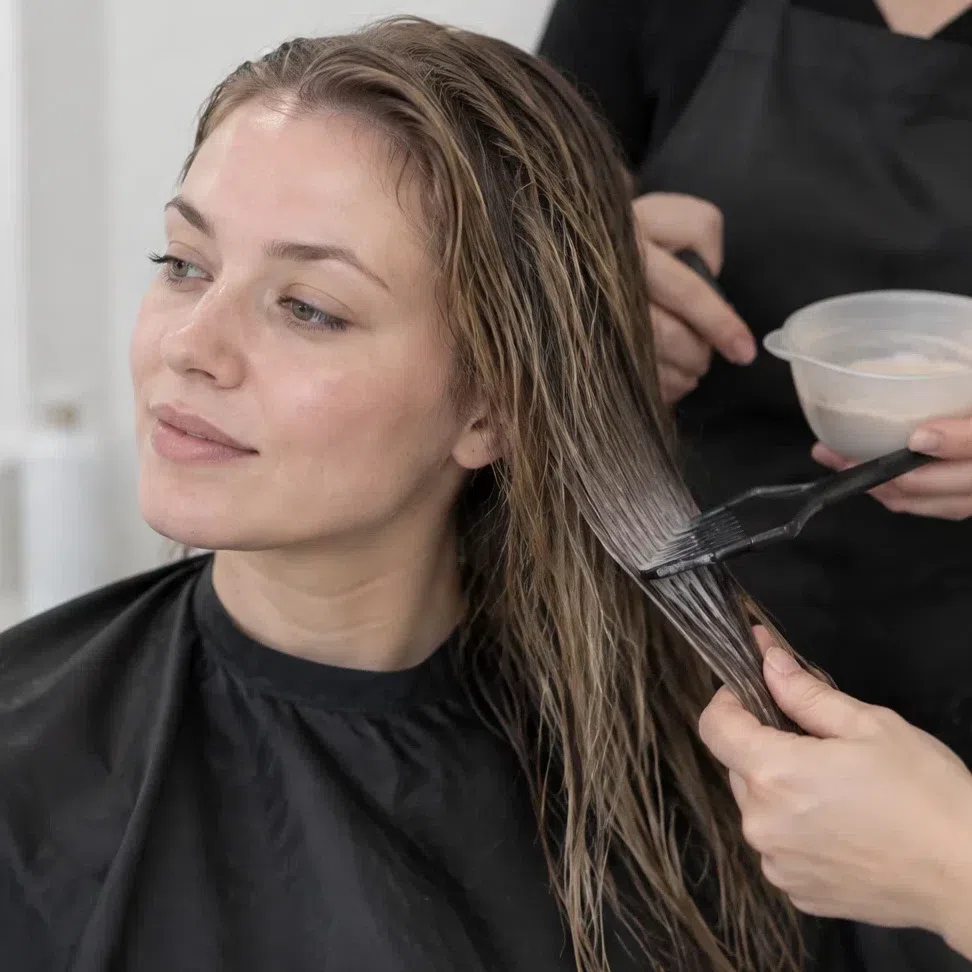 A gloss at week five
A clear or ash gloss halfway between appointments - twenty minutes, and a fraction of what a full color costs. It is the difference between the second frame above and the fourth.
That is the whole routine, and it is shorter than the list of things that go wrong when it is skipped. Which is the next section: two ways a color goes wrong even when the shade was right, and then the shades that go wrong whatever anyone does with them.
When the color does not work
Everything above this was about getting it right. This is the section you come back to later, when something is off and you cannot put a name to it: two ways a Cool Summer color goes wrong even when the shade was right, and then the shades that go wrong whatever anyone does with them.
Two ways it goes wrong
The hair wears you
- What it looks like
- People compliment the color before they say anything about you. In a photograph your eye lands on the hairline first, and the face reads harder and a little older than it does in your own mirror.
- Why
- The gap between your hair and your skin is now wider than any gap your face makes on its own. Your features sit within a few steps of each other and the color does not, so it stops reading as your hair and starts reading as something you put on.
- Fix
- Keep the family and close the distance. One or two levels nearer your own, or the same shade knocked back with a toner, deals with nearly all of it. The instinct is to go looking for a different shade, and the shade is almost never the problem.
It went flat, and you look tired
- What it looks like
- You leave the salon looking about the same, or slightly duller. The hair reads as one solid sheet, the ends look dense, and nothing in it moves when you do.
- Why
- Cool got mistaken for uniform. An ash laid on at a single level has no gold underneath it to break the surface up, so there is nothing for the light to catch and nothing for the face to work against.
- Fix
- Hold the level and add dimension rather than brightness. Fine lowlights a level or two deeper, or a low-contrast balayage, put the movement back without raising the contrast. The instinct here is to go lighter, and it is the wrong one - lighter takes away the last of the depth that was doing the work.
And the shades that never work
Twelve shades on one woman, photographed on the same street in the same flat overcast daylight, bare-faced. She is deliberately not one of the women from the sections above: a studio portrait makes almost any hair color look good, which is exactly the wrong thing to hand you when the point is that these do not work. Every one of them fails for one of three reasons.
Warm and golden
-
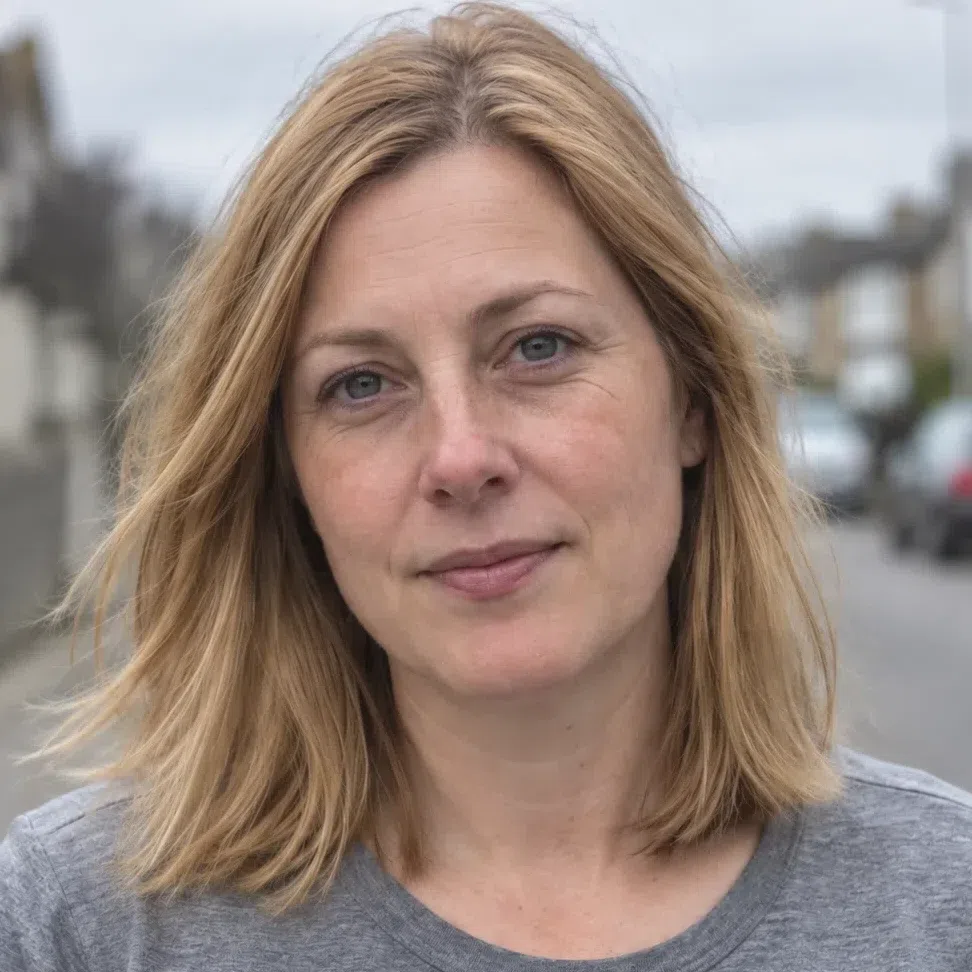 Golden blonde
warm
Golden blonde
warm
-
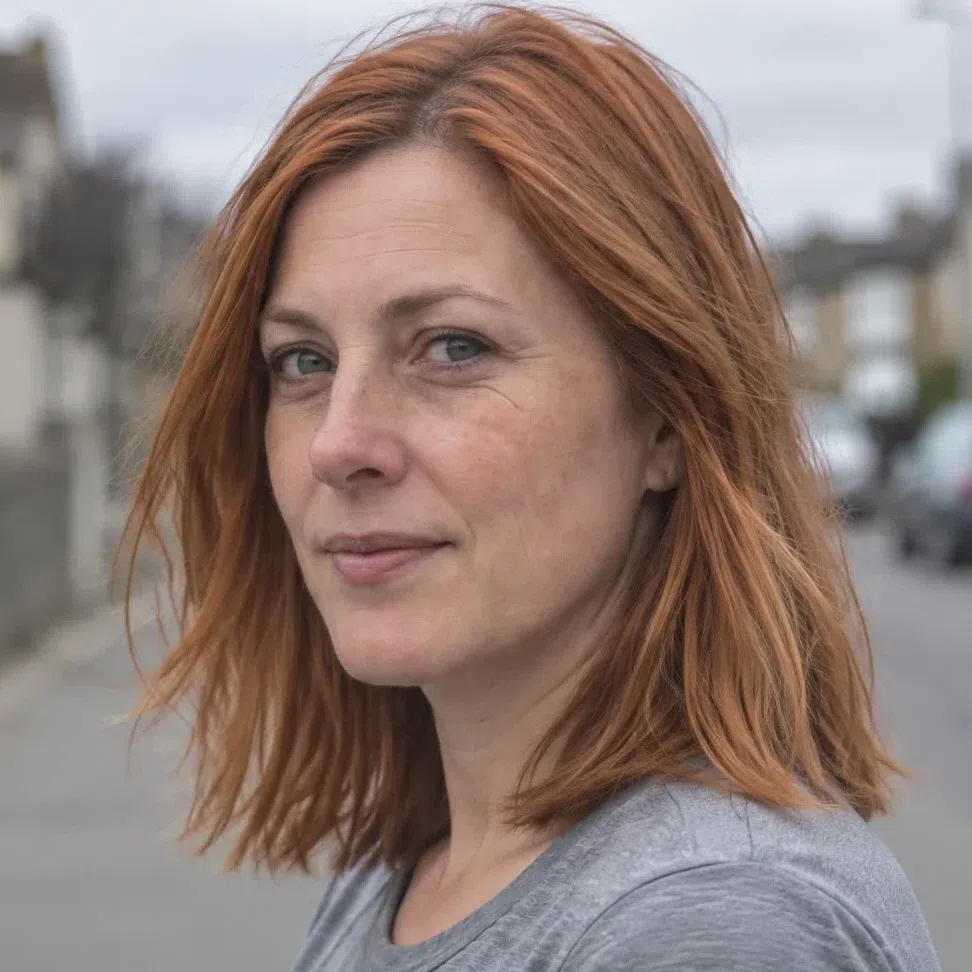 Copper
warm
Copper
warm
-
 Caramel blonde
warm
Caramel blonde
warm
-
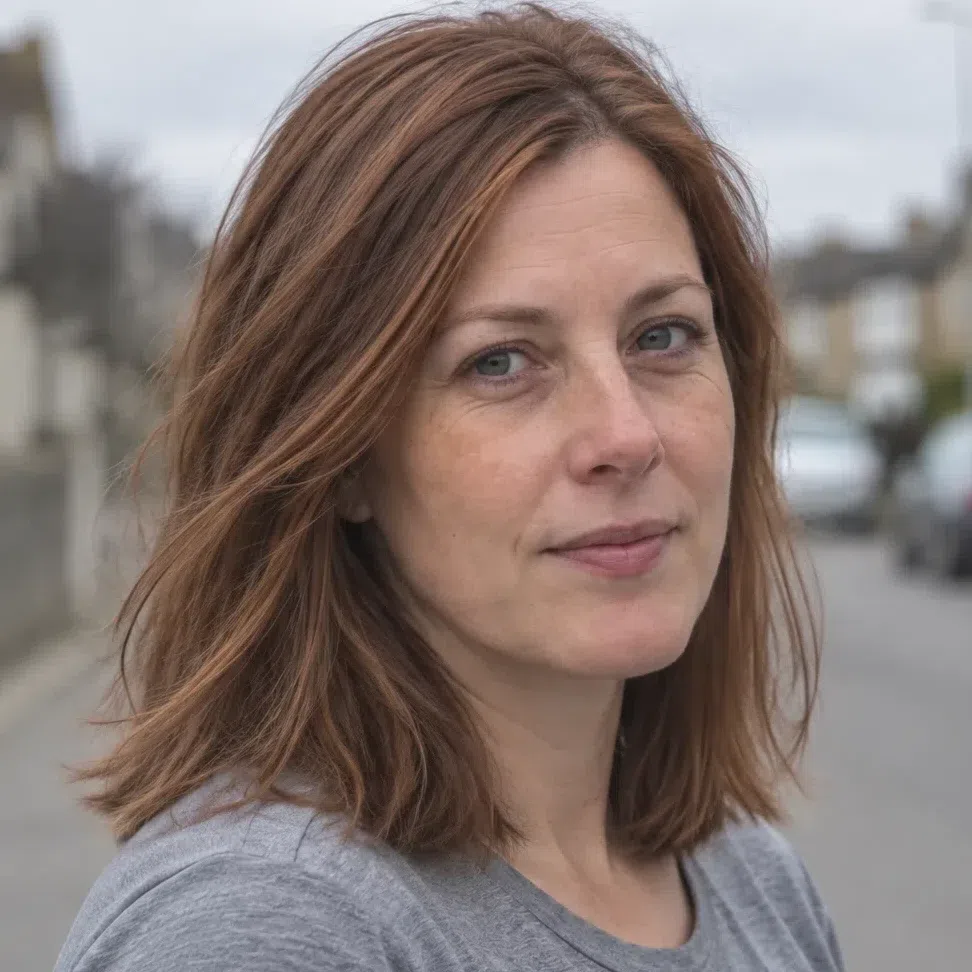 Warm chocolate
warm
Warm chocolate
warm
The commonest mistake by a wide margin, because warmth is what most people mean when they say they want to brighten it up. On this skin it does the opposite - it pulls every trace of redness up to the surface and leaves the rest of the face sallow behind it. Watch what happens around her nose and her eyes rather than what happens to the hair.
Very dark and very bright
-
 Blue-black
hard
Blue-black
hard
-
 Mahogany
clean
Mahogany
clean
-
 Bright eggplant
clean
Bright eggplant
clean
-
 Vivid cherry red
clean
Vivid cherry red
clean
These fail at the hairline. Depth is not the problem - your palette runs to level 2 and says so - a hard edge is, and blue-black is precisely the black your palette page leaves out on purpose. The other three are clear at full strength, and nothing anywhere in your coloring is.
Cool, and still wrong
-
 Platinum, four levels above your own
hard
Platinum, four levels above your own
hard
-
 Steel blue-gray
clean
Steel blue-gray
clean
-
 Pastel lavender
clean
Pastel lavender
clean
-
 Graphite, four levels below your own
hard
Graphite, four levels below your own
hard
The useful group, because these are the four you will be told are safe. Cool is necessary and it is not sufficient - and here the lesson is sharper than on any other page of this kind, because the first and last chips in this row are lifted straight off your own palette page. The platinum is yours. The graphite is yours. Four levels above and four levels below a level 6 natural, neither of them is, which is the argument of this whole page in two photographs. The middle two fail differently: a steel blue-gray has no gray in it in the sense that matters, because your silver is greige rather than blue, and lavender is cool and completely clean.
Why each one fails
- cleanToo clean
- Full saturation, nothing gray in it. Every shade your palette names has gray mixed through it, so a clean dye never looks as though it grew out of your head.
- warmToo warm
- Gold, copper, caramel. Your undertone is cool at every level of the scale, and warmth laid on top of it reads as sallow rather than as sunny.
- hardToo hard
- On this palette this one is not a shade at all, it is a distance - the far end of the scale from where your own hair starts. Platinum and graphite are both yours; four levels from your natural, neither of them is.
Two of the three tags are about the dye and one is about the distance, and on this coloring the distance does most of the work: most bad Cool Summer hair color is not the wrong color, it is the right color at the wrong distance. The hexes here are representative examples of each mistake rather than values off a tube - except the two taken from your own palette page, which are exact. What is left is the part worth keeping on your phone.
Your shades, and the numbers to say
The whole page in one block, so you can stop reading and go and book it. Screenshot it and take it with you - the number beside each shade is the part to say out loud, and it is the part nobody can argue with.
The shades, with the level to ask for
- Platinum blonde L10 #EDE9E6
- Pearl blonde L9 #E6DED4
- Dark ash blonde L7 #AFA193
- Natural cool brown L6 #948477
- Smoky ash brown L5 #7E7068
- Cool mocha L4 #6A5A52
- Ash chestnut L3 #52423F
- Graphite L2 #3E3D41
The numbers
- Ash 7.1 #AFA193
- Pearl 7.2 #B8B0A6
- Natural 7.0 #B6A38C
- Gold 7.3 #CBAF77
- Copper 7.4 #D79E6B
Only 7.1 is a request. The other four are here so that you recognize what you are being offered - 7.2 means two different things in two different brands, and 7.3 and 7.4 are the directions this coloring has no room for at any level. The digit in front of the dot moves with your own hair; the one after it does not. A 9.1 and a 3.1 are the same tone at different depths, and your palette names a shade at both.
The sentence, if you want one ready: “I am about a level 6 naturally. I would like to stay cool - an ash, a 7.1, or your .2 if it is a violet rather than a matt - and keep it multi-tonal with a soft root rather than one flat block.”
The full Cool Summer palette →
Questions people ask
What hair color looks best on a Cool Summer?
What color hair makes an older woman look younger?
What hair colors should a Cool Summer avoid?
Can a Cool Summer have blonde hair?
Can a Cool Summer go red?
Should a Cool Summer cover gray hair?
What should I ask for at the hair salon?
Why does my hair color keep going brassy?
Which box dye is best for a Cool Summer?
Where this came from
The sources behind the factual claims on this page - salon numbering, what the two pigments in hair are and what lightener does to them, why complementary colors cancel, and what is actually happening when hair goes gray.
-
International Colour Charts for Hairdressing (opens in a new tab)
Hair & Makeup Artist Handbook, 2023
The level and tone numbering used throughout the salon section - a trade convention, so a trade source. It is also where the .2 question on this page comes from: “Not all hair brands follow the ICC numbering system for tones. Therefore, it is important to know how that particular brand labels its tones.” That matters more here than on most pages, because a violet .2 is one of the best shades this coloring has and a matt .2 is not. Note what the charts do not publish: any color values at all. They tell you what the digits mean and cannot tell you what they look like, which is why every swatch on this page comes from the palette instead.
-
Diversity of human hair pigmentation as studied by chemical analysis of eumelanin and pheomelanin (opens in a new tab)
Ito & Wakamatsu, Journal of the European Academy of Dermatology and Venereology, 2011
Behind the claim in keeping the color that lightening exposes warmth that was already in the hair. Color comes from the quantity and ratio of two pigments - black-brown eumelanin and reddish-brown pheomelanin - measured chemically across black, brown, blond and red hair, with a trace but constant level of pheomelanin in all of it. It is also why this page needs two toning bottles rather than one: the ratio that surfaces at level 8 is not the ratio that surfaces at level 4, so a palette running from 10 to 2 runs past yellow and into orange.
-
Mechanistic insights into the bleaching of melanin by alkaline hydrogen peroxide (opens in a new tab)
Smith, Garrett, Naqvi et al., Free Radical Biology and Medicine, 2017
What lightener actually does: alkaline hydrogen peroxide degrades melanin through reactive oxygen species, and the study maps which ones do the work. Lightening is destruction of pigment rather than replacement of it, which is the mechanism under the blonde section’s two rows. The platinum is the same tube in both of them; what differs is how much pigment has to be destroyed to arrive at it, and that is the distance the section is really measuring.
-
The Art of Color: the subjective experience and objective rationale of color (opens in a new tab)
Itten, Reinhold (Internet Archive), 1961
Behind the rule that neutralizing works on color-wheel opposites - violet against yellow, blue against orange. Most color seasons only ever need one half of that rule. This one needs both halves on a single page, because a Cool Summer at level 9 and a Cool Summer at level 3 are cancelling two different colors with two different bottles.
-
Dedifferentiation maintains melanocyte stem cells in a dynamic niche (opens in a new tab)
Sun, Lee, Hu et al., Nature, 2023
Behind the gray section. Hair loses color because melanocyte stem cells stop moving between compartments of the follicle - the study shows them toggling between states in a mobile niche and accumulating as stranded cells that no longer make pigment. Gray is not a color the hair turns, it is the absence of the one it was making, and it arrives with nothing left in it to resist warmth. On this coloring that absence happens to be a palette shade already.
-
Color Me Beautiful (opens in a new tab)
Jackson, Ballantine (Internet Archive), 1980
Background on the four-season system this whole site rests on. Color Me Beautiful (1980) built on earlier work by Johannes Itten, Belle Northrup and Harriet Tilden McJimsey, and put seasonal analysis into general use.
One honest distinction. The numbering, the pigment chemistry, the color theory and the biology above are sourced. Which shades suit a Cool Summer, where the blonde ceiling sits, how far red can be taken, and the claim this page is built on - that the level is nearly free while the tone is not - are our own analysis, drawn from the palette on the parent page rather than from any of these references. So is the answer in the gray section about looking younger: research on facial contrast and age exists, but it is about eyes and lips against skin rather than about hair, so we have reasoned from this coloring instead of borrowing a study that was not asking our question. Nobody has published work on any of it, and we would rather say so than dress an opinion up as a citation.