Bright Winter makeup: saturated, cool shades and how to wear them
Bright Winter makeup - Clear Winter, in the older naming - means cool color worn saturated: ruby, hot magenta or shocking pink lipstick, icy lids for the day and jewel green or French blue for the night, black lashes, and blush you can actually see. What it cannot carry is dust, and after that, gold. Below are sixteen complete faces on four skin depths, every product in the order it goes on, and a single list of all 41 shades.
- Four steps, in order
- Four complexions
- Everyday and evening
The order you apply it in
Start here
You are a Bright Winter. This is your makeup.
One fact drives everything below: your coloring is clear. The undertone is cool, sometimes with a little olive, the hair dark, and the eyes bright - often the clearest thing on your face - against clean whites. Contrast is high, and it is sharp rather than soft.
So your makeup is the saturated, cool end of your palette, worn with clean edges, and it misses in two ways. Soft makeup - dusty rose, mauve, taupe-brown - loses to your eyes and reads as tiredness. Warm bright makeup - coral, orange red, bronze - is clear enough and still turns the skin yellow.
Wear every shade clear and cool, and let one feature at a time go to full strength.
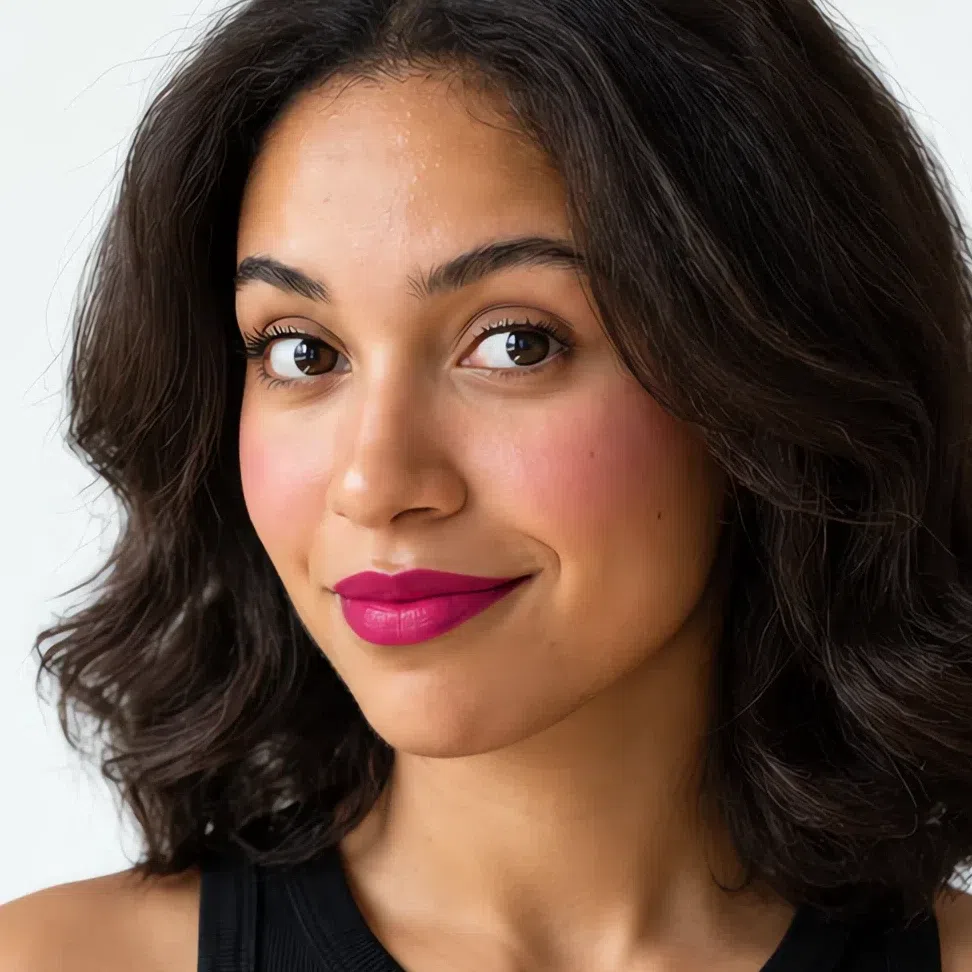
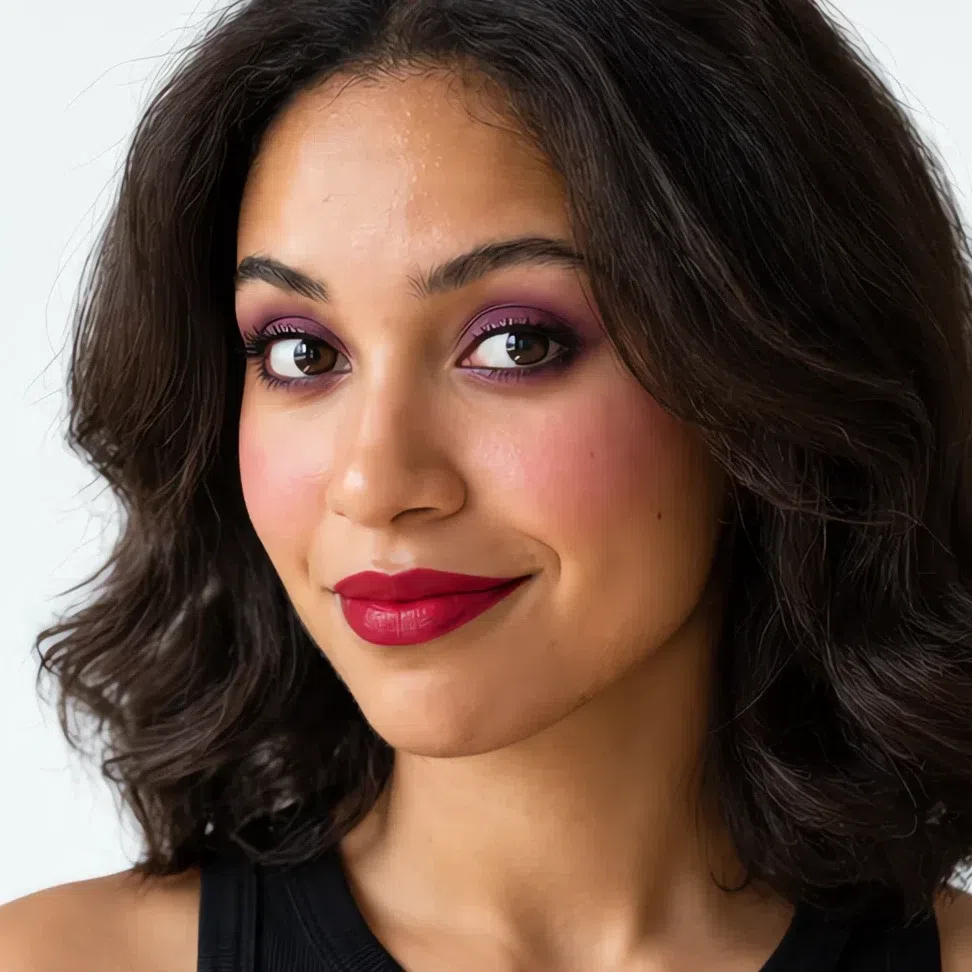
The same woman, medium tan skin, at the quiet end and the loud end of this coloring. From the first frame to the second the eye gains color and the lipstick trades magenta for ruby; nothing turns soft or golden. The fair, light and deep women are in the section just below.
What is on this page
- Sixteen finished looks Office, dinner, wedding and a five-minute face on four complexions, with the shade on every part written beside the photo.
- Why these shades Four swaps, set against the soft or golden version most Bright Winters already own.
- How to build it The day face product by product - base, cheeks, eyes, lips - and a close-up of every shade.
- When you need more Jewel eyes and dark berry lips: the same woman by day and by evening at each depth.
- How to buy it The jaw test, the label words that hide a soft or golden shade, and your square on the foundation grid.
- The shade list All 41 shades with hexes on one screen.
Sixteen finished looks
The faces first: four women, four occasions each, and beside every photo the shade on each part of the face. Find the woman whose skin is closest to yours and read across her row. Her first card is already a bright mouth - on this coloring that is the quick version, not the bold one - and her last is the most it carries: a gunmetal or plum eye with ruby or magenta lips.
If you have fair skin:
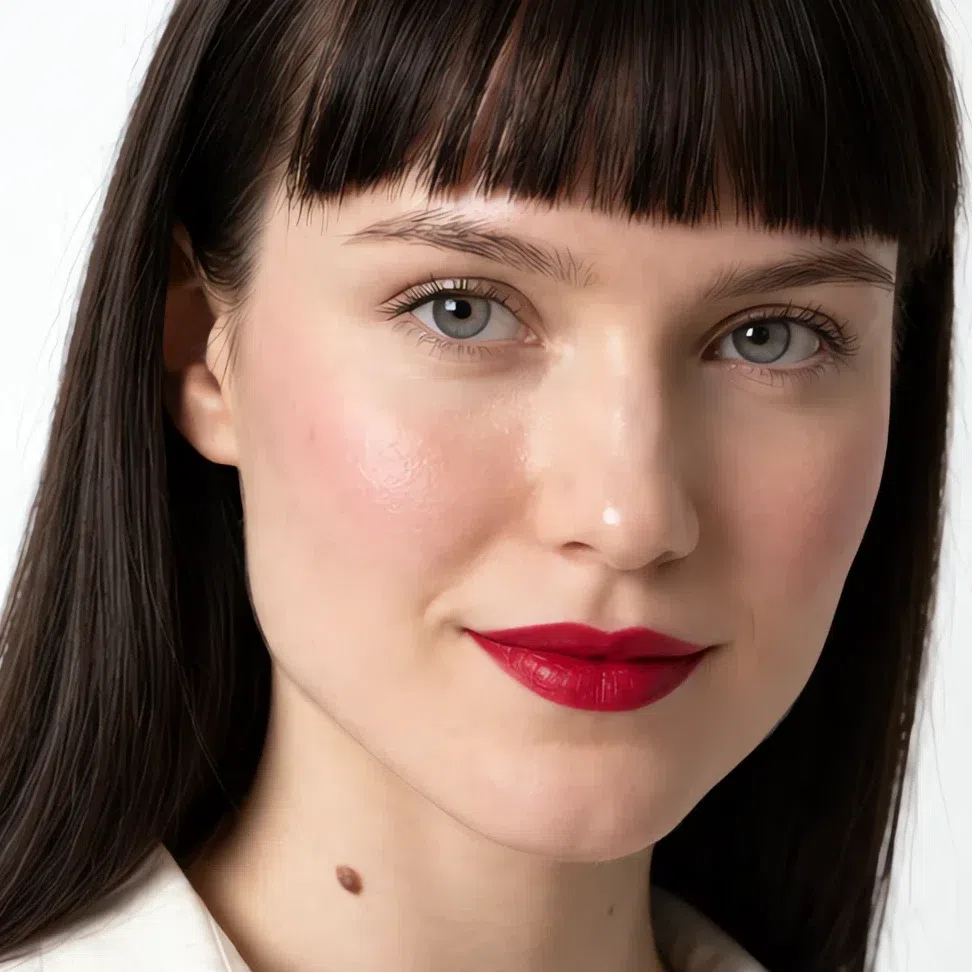
- Base Fair - cool porcelain
- Blush Cool pink
- Lips Ruby
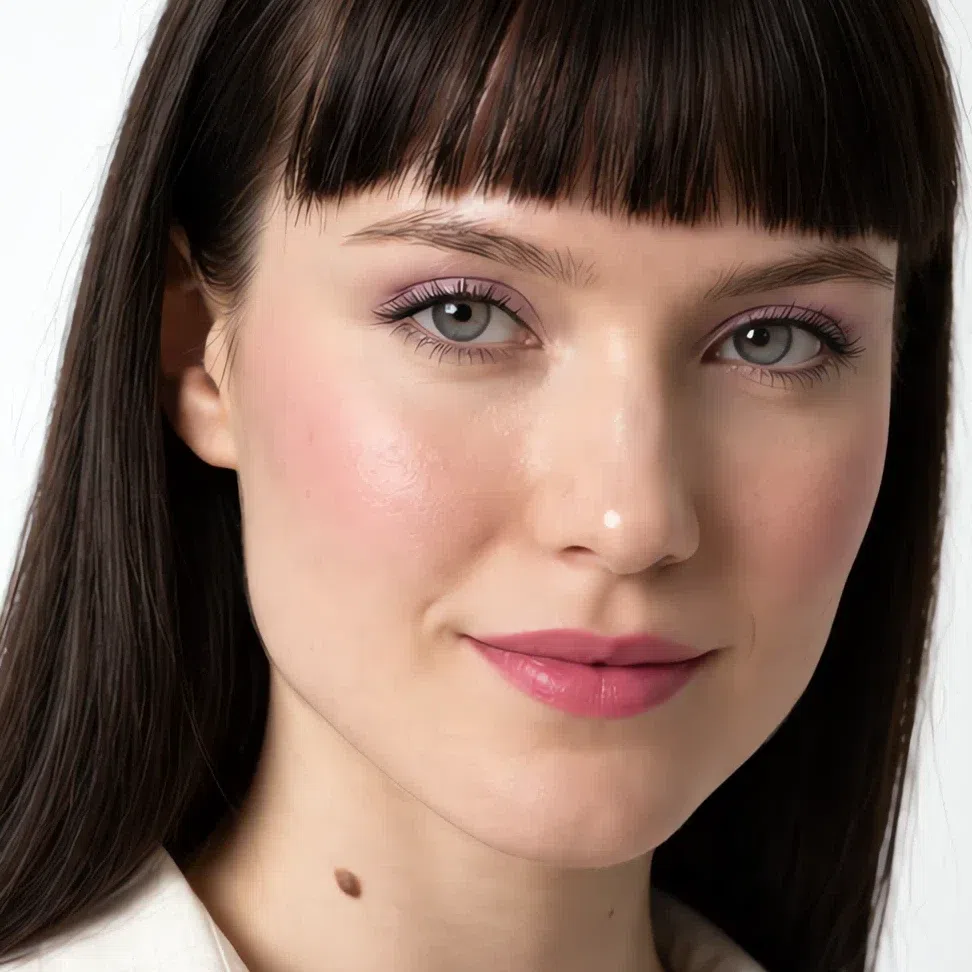
- Base Fair - cool porcelain
- Blush Cool pink
- Eyes Icy rose
- Liner Charcoal
- Lips Cool pink nude
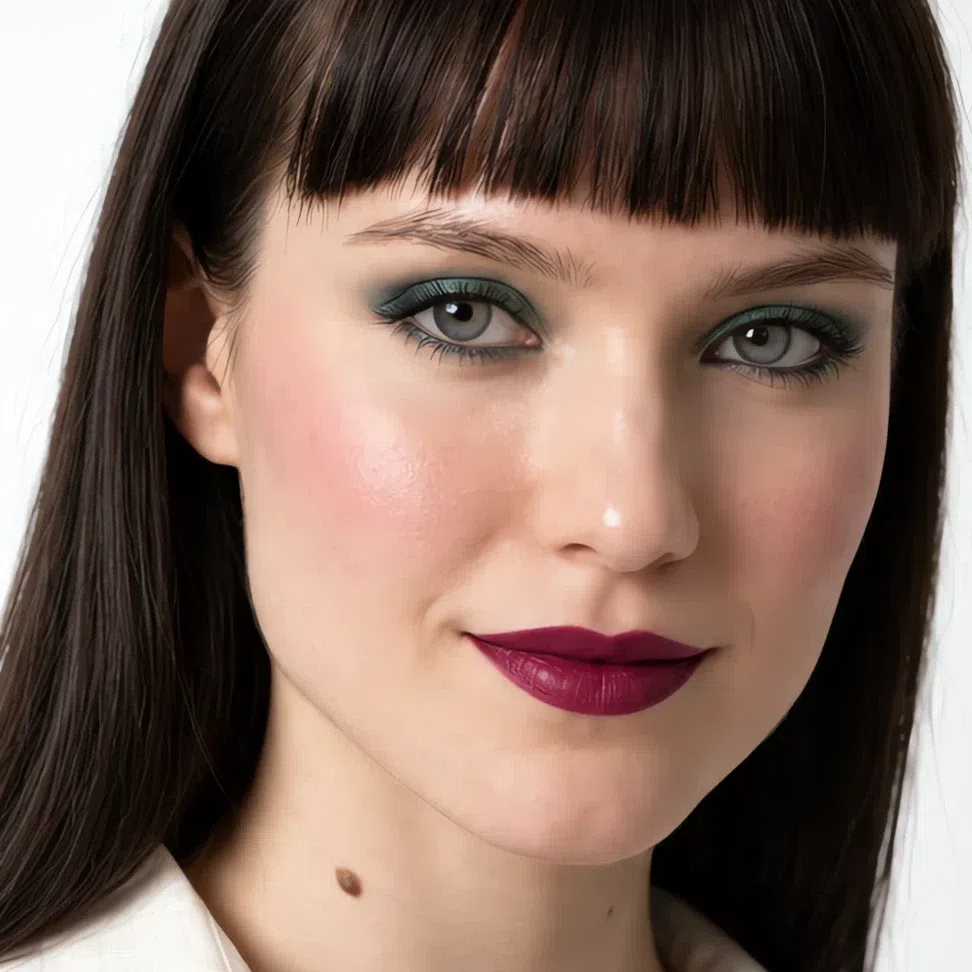
- Base Fair - cool porcelain
- Blush Raspberry pink
- Eyes Jewel green
- Liner Jet black
- Lips Deep plum lip
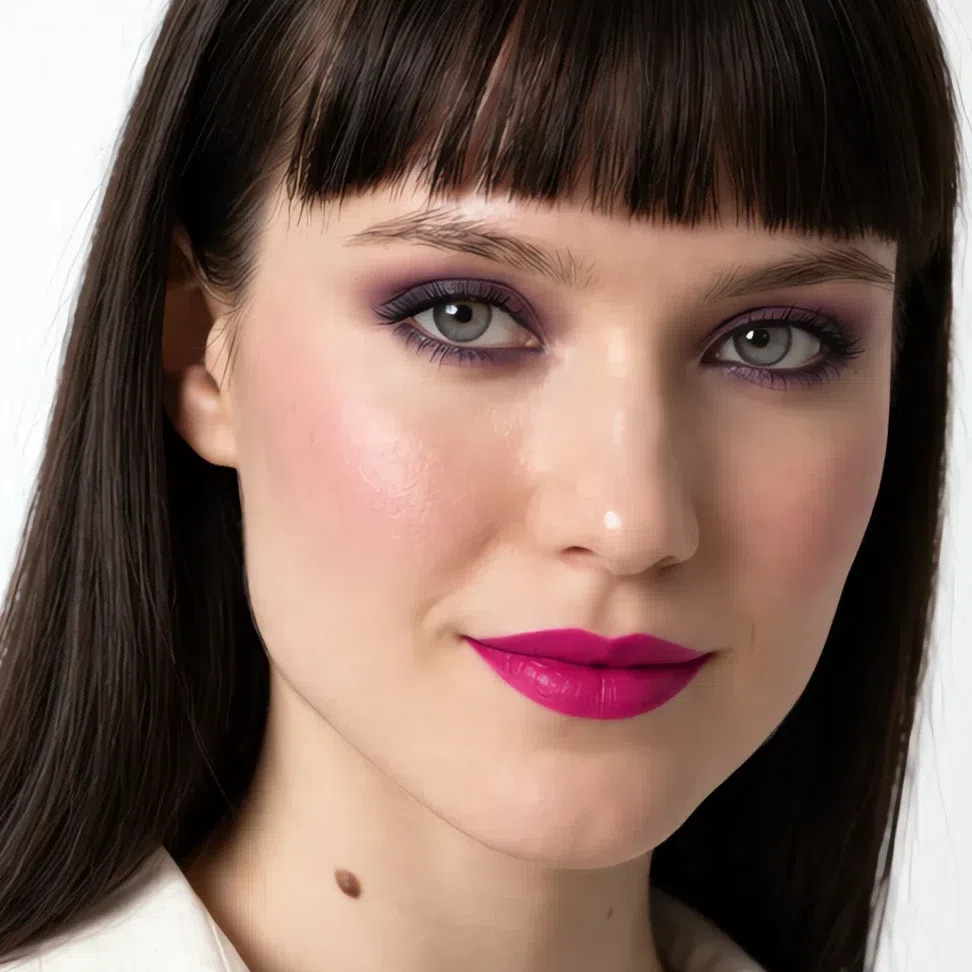
- Base Fair - cool porcelain
- Blush Raspberry pink
- Eyes Plum lid
- Liner Jet black
- Lips Hot magenta
If you have light skin:
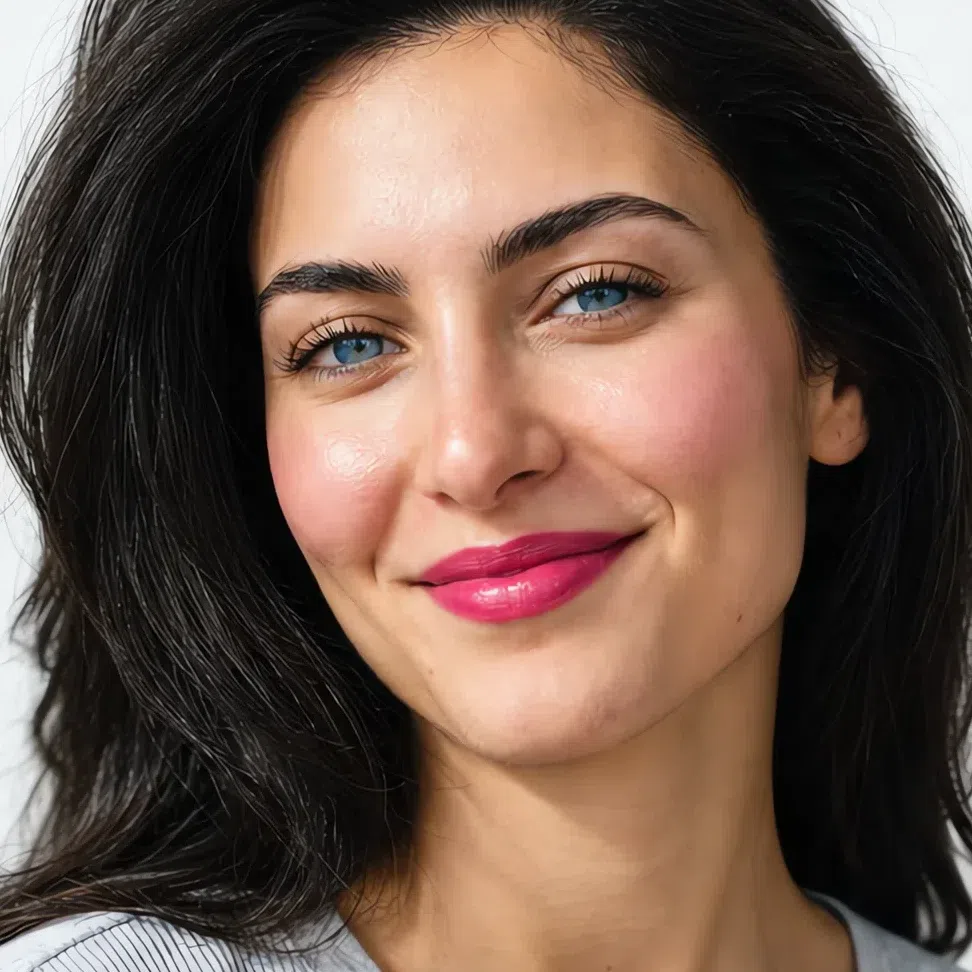
- Base Light - cool olive beige
- Blush Raspberry pink
- Lips Shocking pink
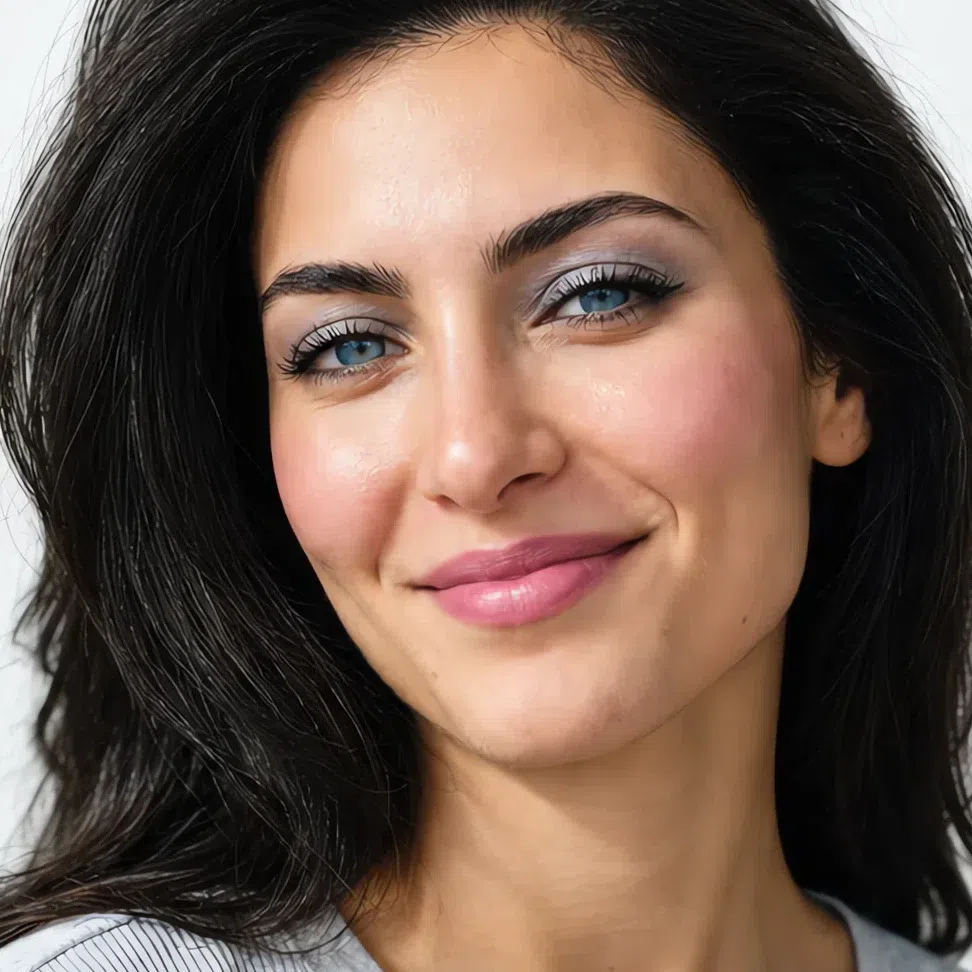
- Base Light - cool olive beige
- Blush Raspberry pink
- Eyes Frost gray
- Liner Jet black
- Lips Orchid nude
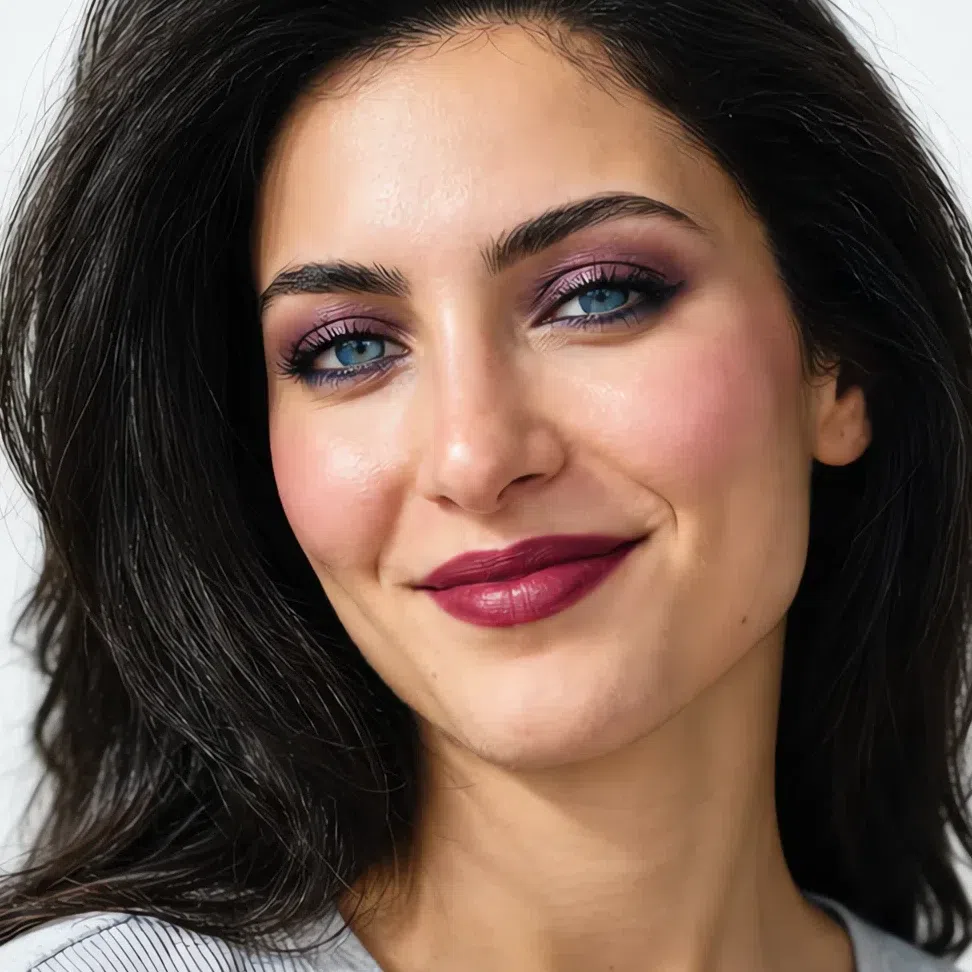
- Base Light - cool olive beige
- Blush Plum pink
- Eyes Plum lid
- Liner Midnight
- Lips Cool wine lip
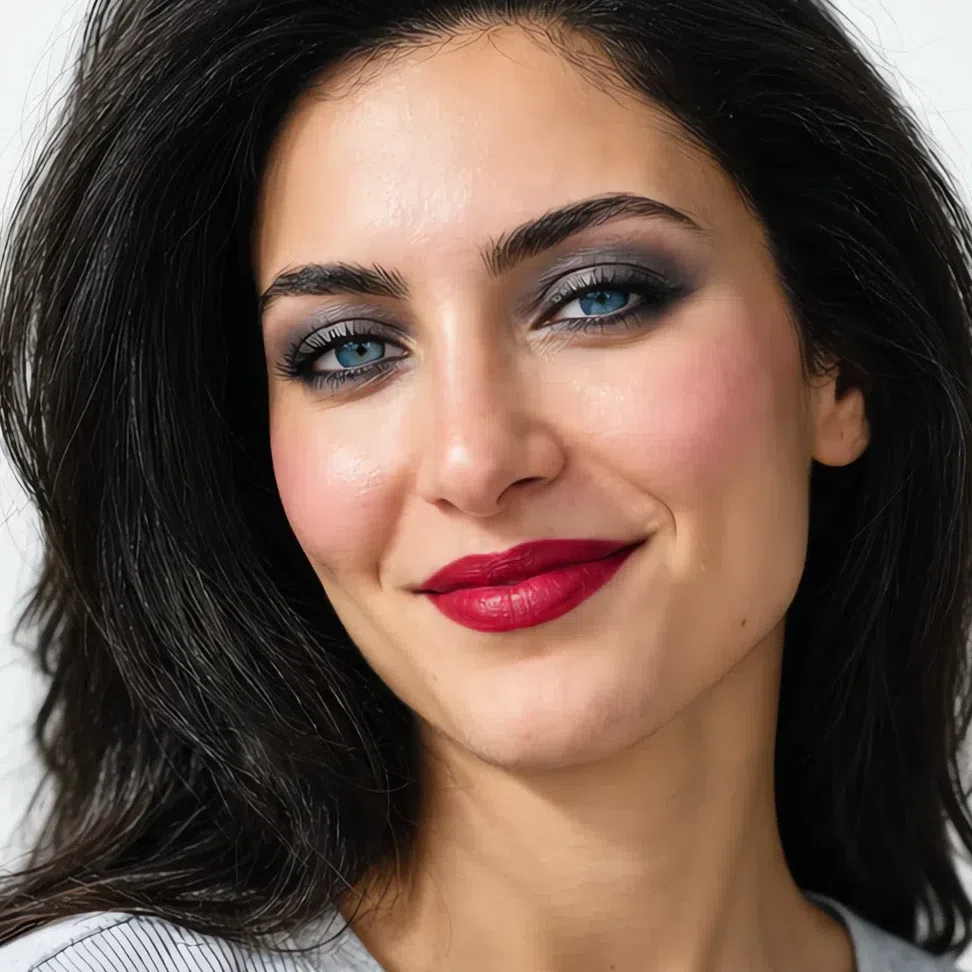
- Base Light - cool olive beige
- Blush Plum pink
- Eyes Gunmetal
- Liner Jet black
- Lips Ruby
If you have medium skin:
- Base Medium - cool tan
- Blush Plum pink
- Lips Hot magenta
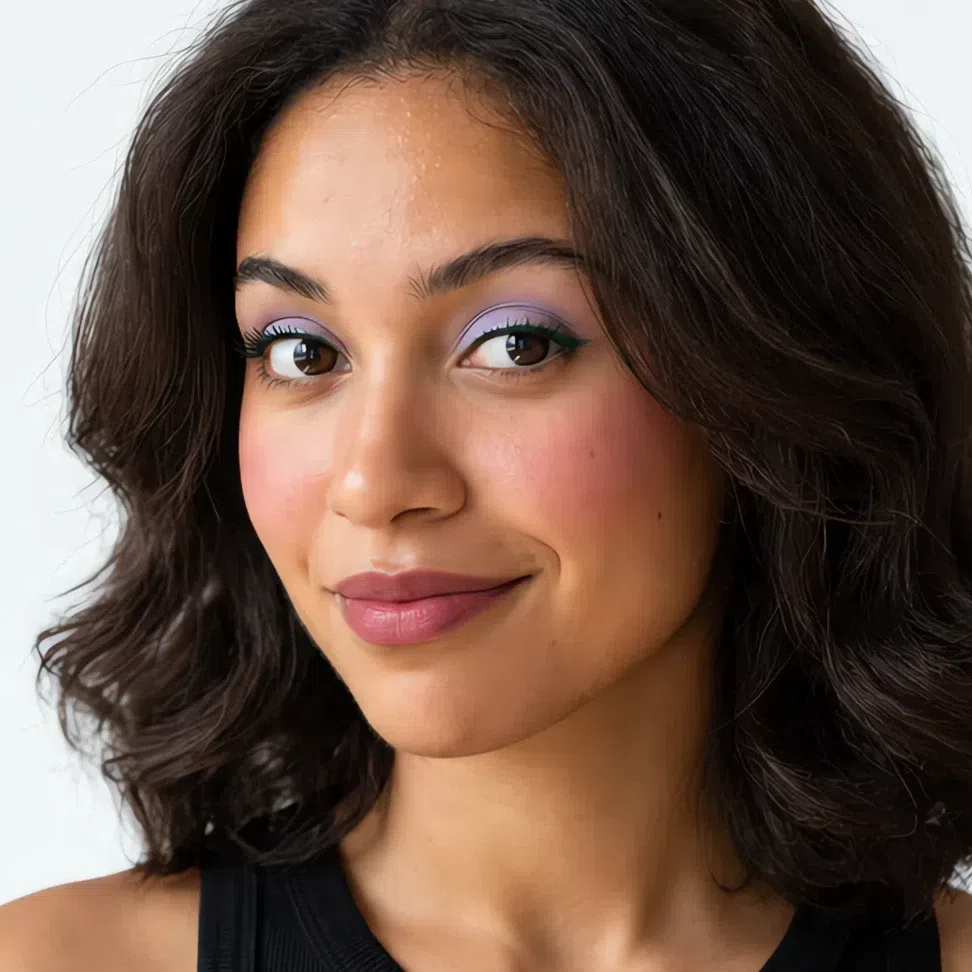
- Base Medium - cool tan
- Blush Plum pink
- Eyes Icy lilac
- Liner Jewel green
- Lips Berry nude
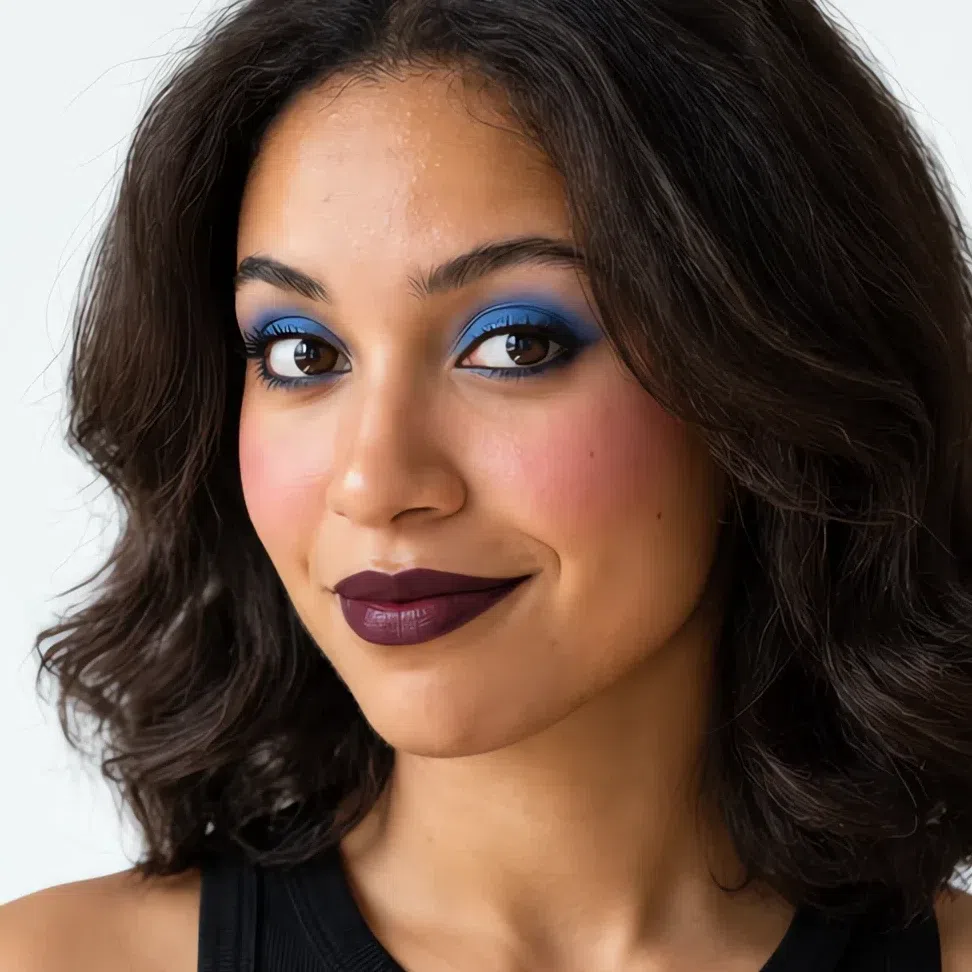
- Base Medium - cool tan
- Blush Dark berry
- Eyes French blue
- Liner Jet black
- Lips Blackberry lip
- Base Medium - cool tan
- Blush Dark berry
- Eyes Plum lid
- Liner Jet black
- Lips Ruby
If you have deep skin:
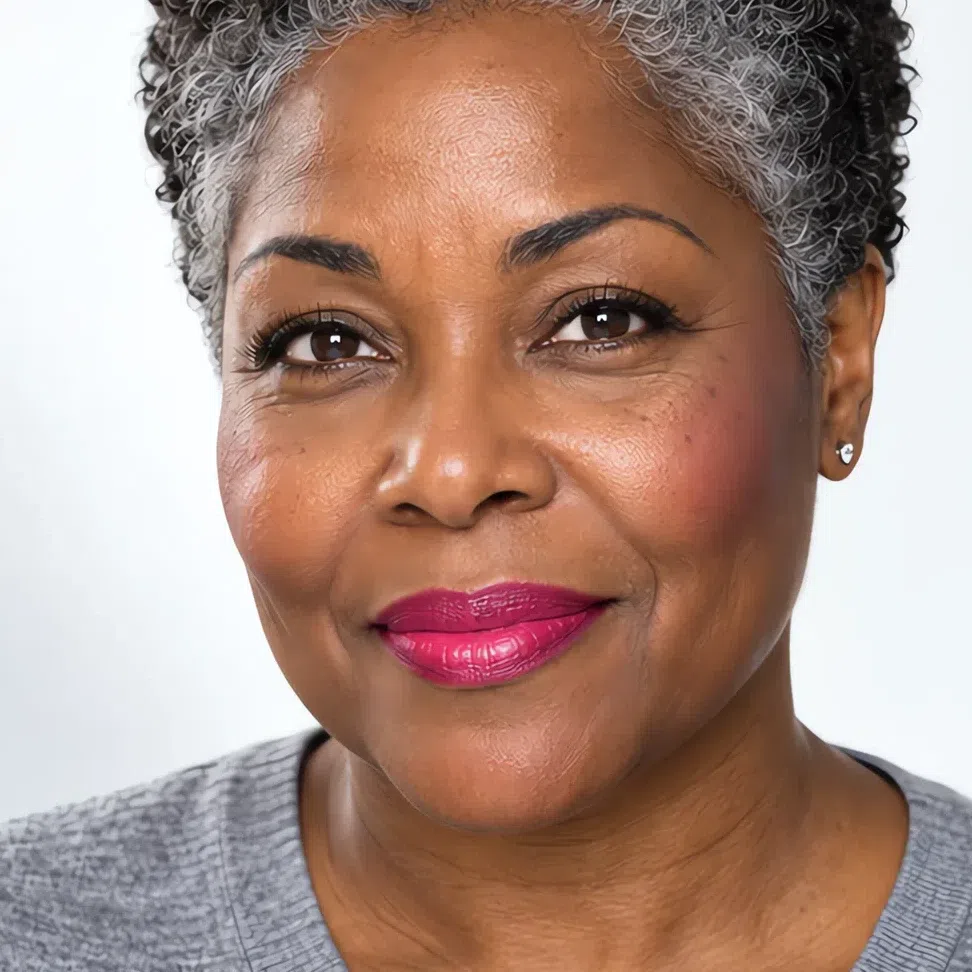
- Base Deep - cool espresso
- Blush Dark berry
- Lips Shocking pink
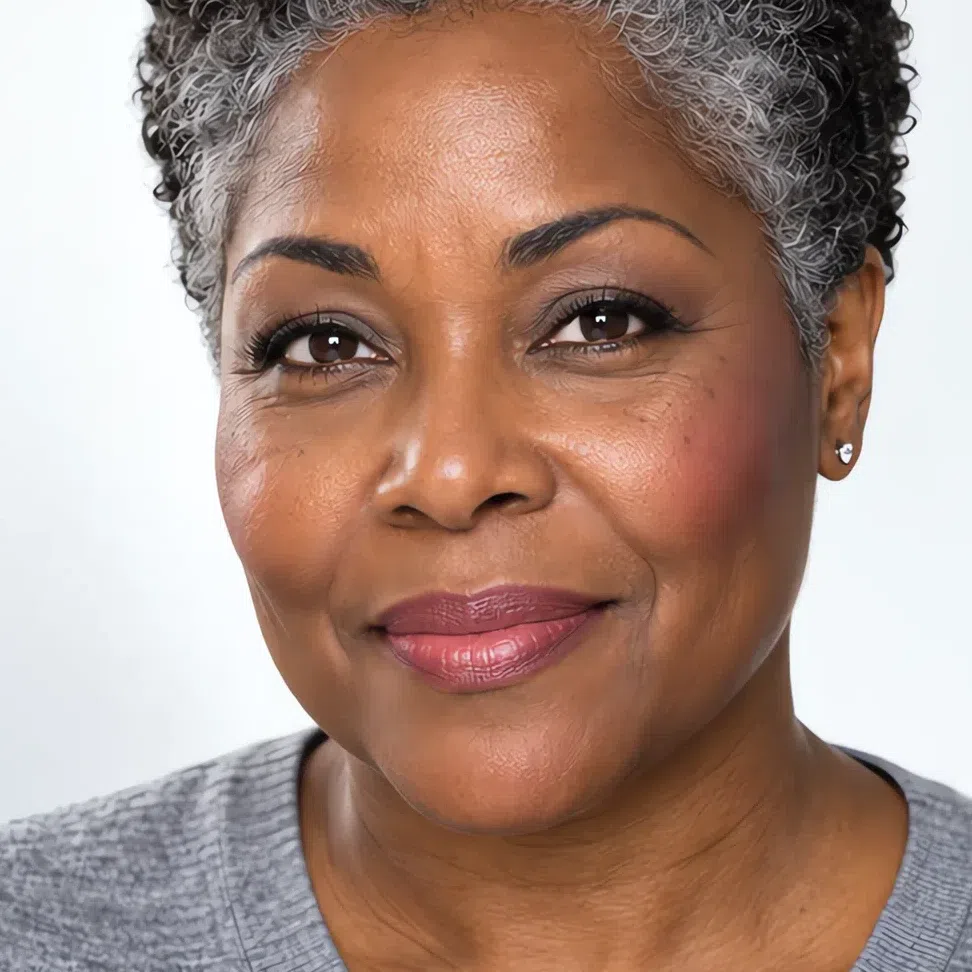
- Base Deep - cool espresso
- Blush Dark berry
- Eyes Gray taupe lid
- Liner Jet black
- Lips Berry nude
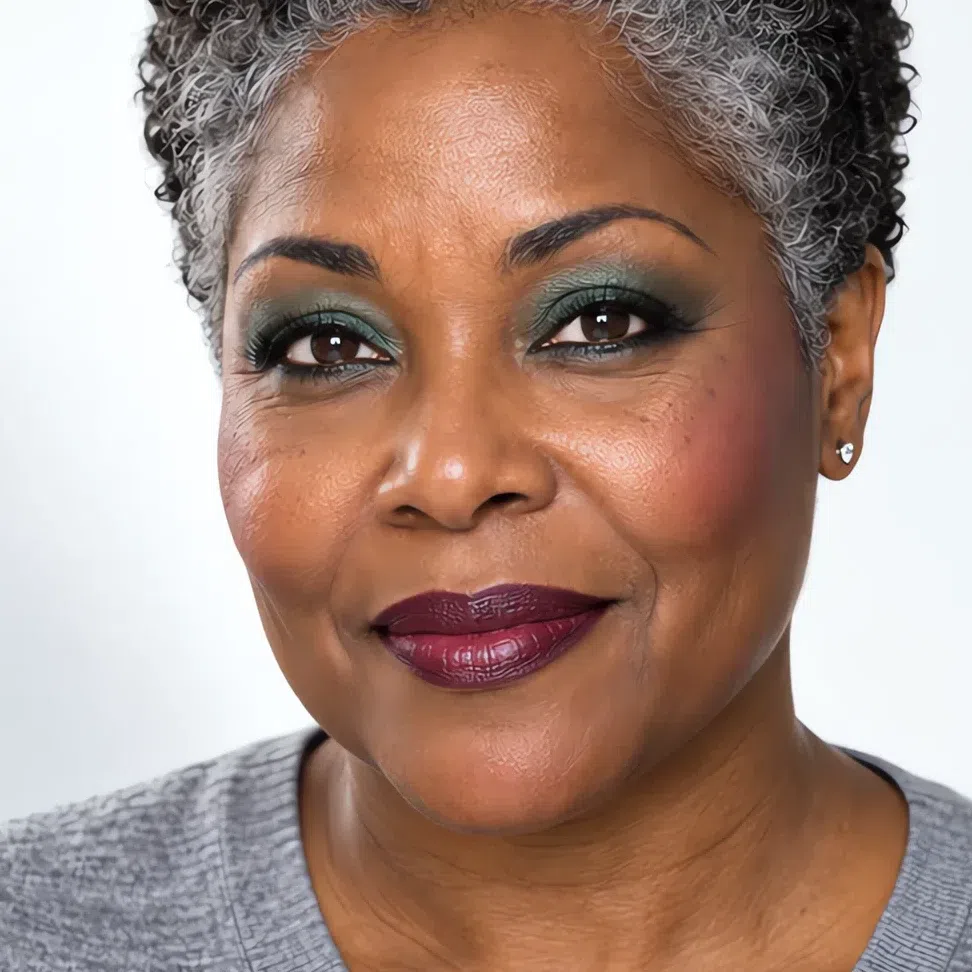
- Base Deep - cool espresso
- Blush Dark berry
- Eyes Jewel green
- Liner Jet black
- Lips Blackberry lip
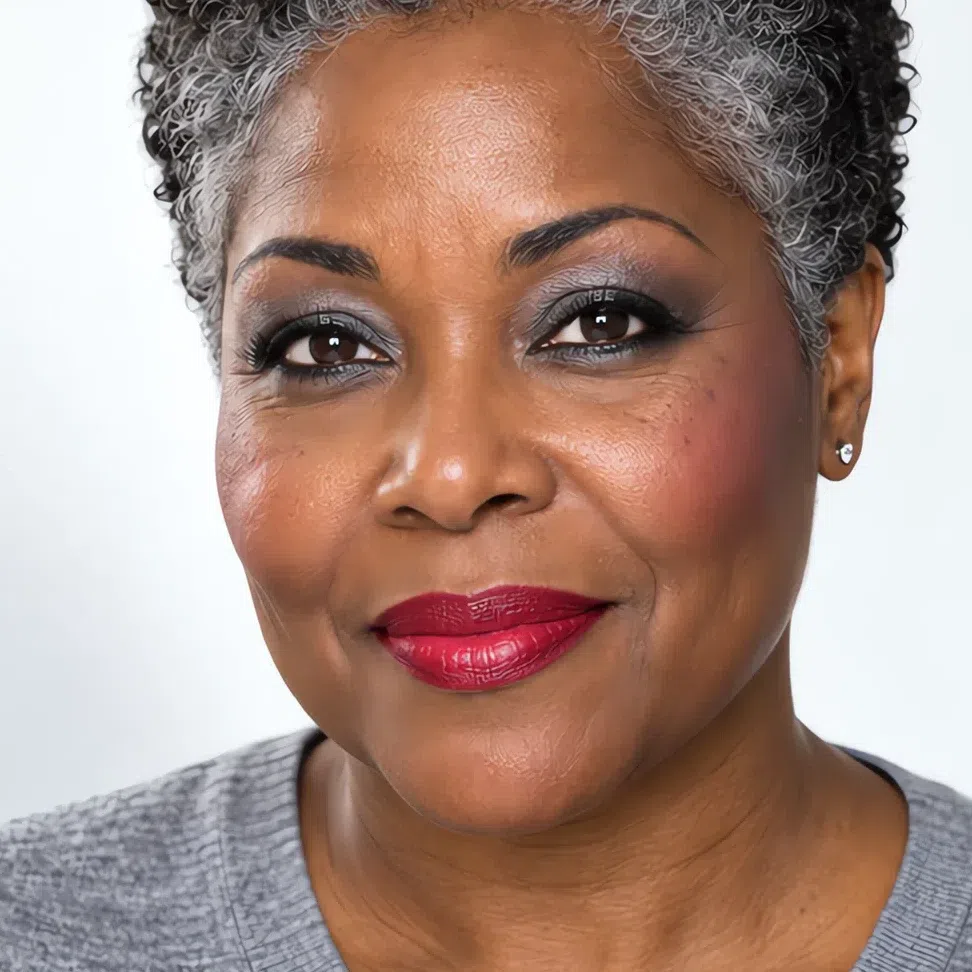
- Base Deep - cool espresso
- Blush Dark berry
- Eyes Gunmetal
- Liner Jet black
- Lips Ruby
Read down a column and the occasion holds while the blush name changes: clear cool pink on porcelain skin, raspberry on light olive, plum pink on tan, dark berry on deep brown - the same flush, pitched to the skin under it. The lipsticks barely move. A saturated ruby or shocking pink is clear enough to register at every depth, which is unusual among the twelve colorings. Why those shades, and not the softer ones most makeup bags are built on, comes next.
Why these shades, and not the ones you own
Take the sixteen faces apart and four swaps are doing most of the work. Each one is below, next to what a Bright Winter usually has in the drawer already: a soft brown pencil, a bronze palette, the dusty rose blush sold as "natural", and the orange red she bought the day someone told her she could wear bright color.
Why these shades and not those
Tap a productBrown liner is sold as the gentle option. Around a bright eye under dark hair it does one thing: it lowers the contrast between the iris, the white of the eye and the lash line, which is the contrast this face is built on. Black keeps it, and midnight or jewel green do the same job with color.
Bronze and copper fill the best-selling neutral palettes. On a cool lid they read as a muddy, faintly orange shadow, and next to clear eyes the difference is obvious. An icy shade gives the lid light, and a gray taupe gives it depth, with no gold in either.
The "natural" blush in most kits is a rose with gray in it. It is cool enough; it is not clear enough. Beside bright eyes a grayed cheek looks like tiredness rather than color, where a clean pink or berry at the same strength looks like a flush.
The over-correction. Told she can wear bright color, a Bright Winter often buys the brightest red on the stand, and that is usually an orange red: the right saturation, the wrong temperature. It is Bright Spring’s red. A blue-based ruby of the same brightness sits on her mouth; the orange one sits in front of it.
On the left, blush and eyeshadow change as the skin deepens - clear cool pink for a fair cheek, dark berry for a deep one - which is why no single hex fits everyone and the cheat-sheet lists yours. Liner and lipstick do not change: black and a blue-based ruby read on all four complexions. On the right nothing changes either, because dust and gold are faults of the shade, not the skin. Those right-hand swatches illustrate the mistake; they are not measured products.
Two of the four miss on clarity and two on temperature, and the second pair is easy to fall into from the first. Bright Winter is the clearest of the winters: your palette is saturated color with no gray mixed in, and your eyes are usually the brightest thing on your face. A soft or dusty shade loses to them. A bright but golden one - coral, orange red, copper - is clear enough and still fights a cool undertone.
So much for what goes in the bag. Where each product lands on the face, and how hard to press it, comes next, in the order you put it on.
How to build it, step by step
The four swaps again, now in the order your hands reach for them. Picking the shade gets you halfway; the rest is application. On a face this clear, a crisp edge and enough color to see are what make makeup look like part of you rather than something that wore off.
-
Base
Clear skin, a thin layer, cold light on top
Your base shades, by depth
The season sets the undertone - cool, sometimes with a little olive, never golden. Your own skin sets the depth.
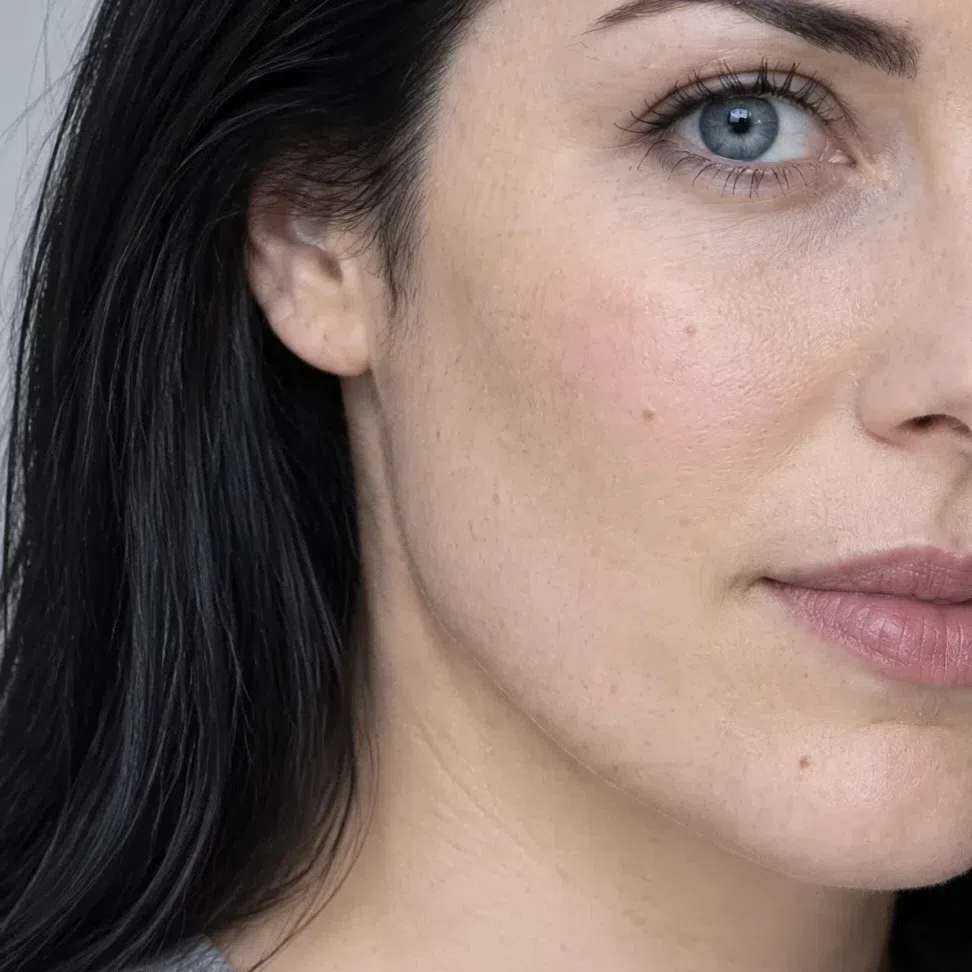
Fair - Foundation Fair - cool porcelain #F2E2E0
- Highlighter Fair - icy champagne #EDE3D6
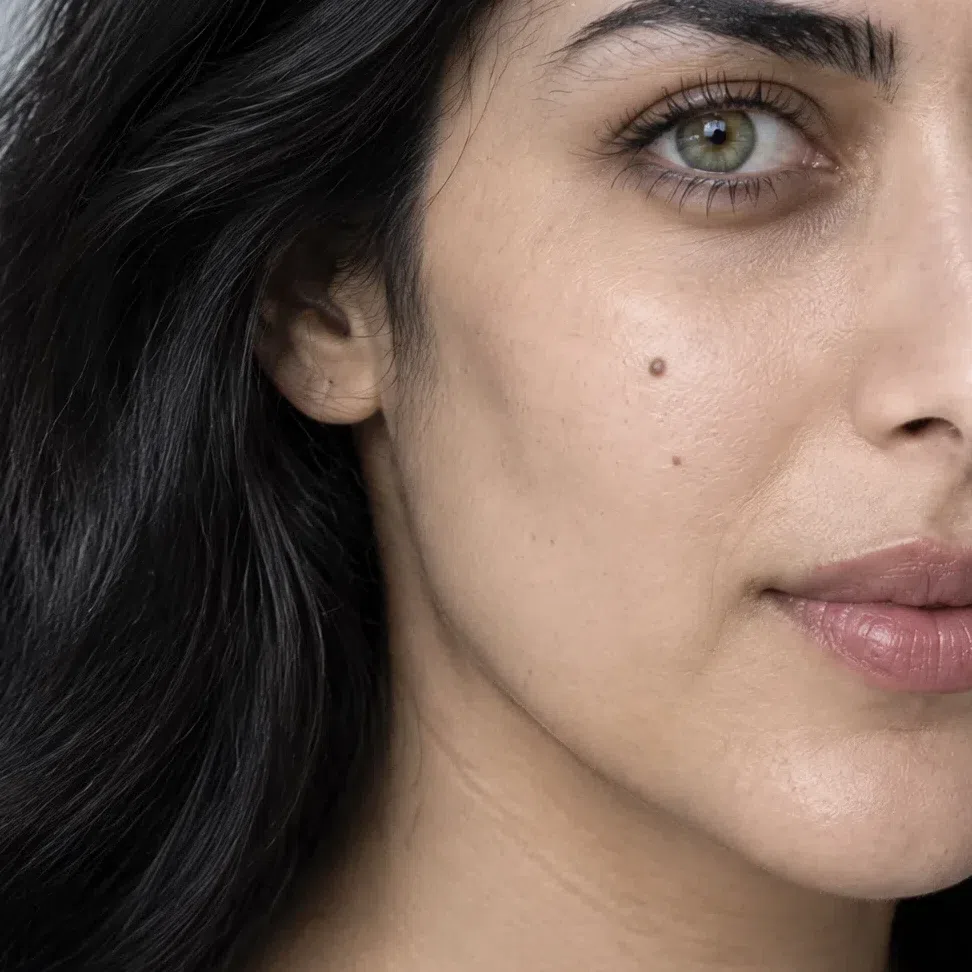
Light - Foundation Light - cool olive beige #DEC4AC
- Highlighter Light - silver pearl #D8DCE0

Medium - Foundation Medium - cool tan #C19A80
- Highlighter Medium - pearl pink #F0D6DC
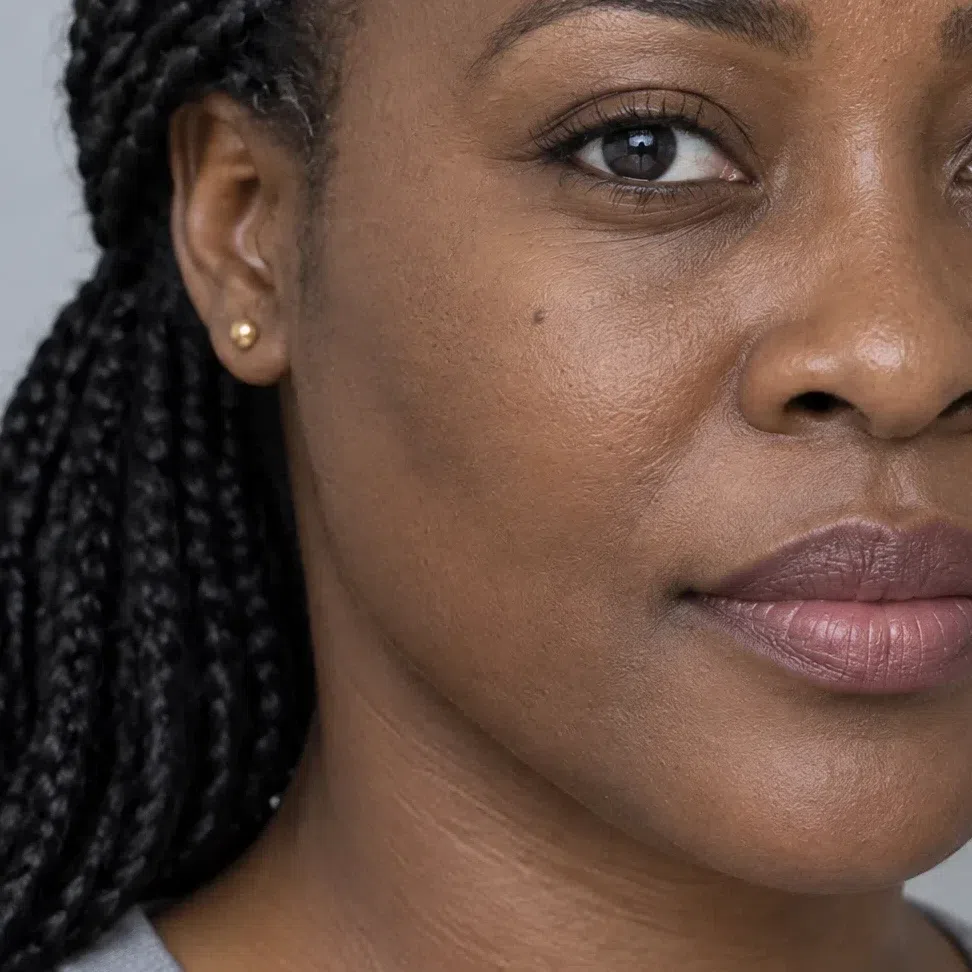
Deep - Foundation Deep - cool espresso #5E4336
- Highlighter Deep - lilac pearl #DCD2EA
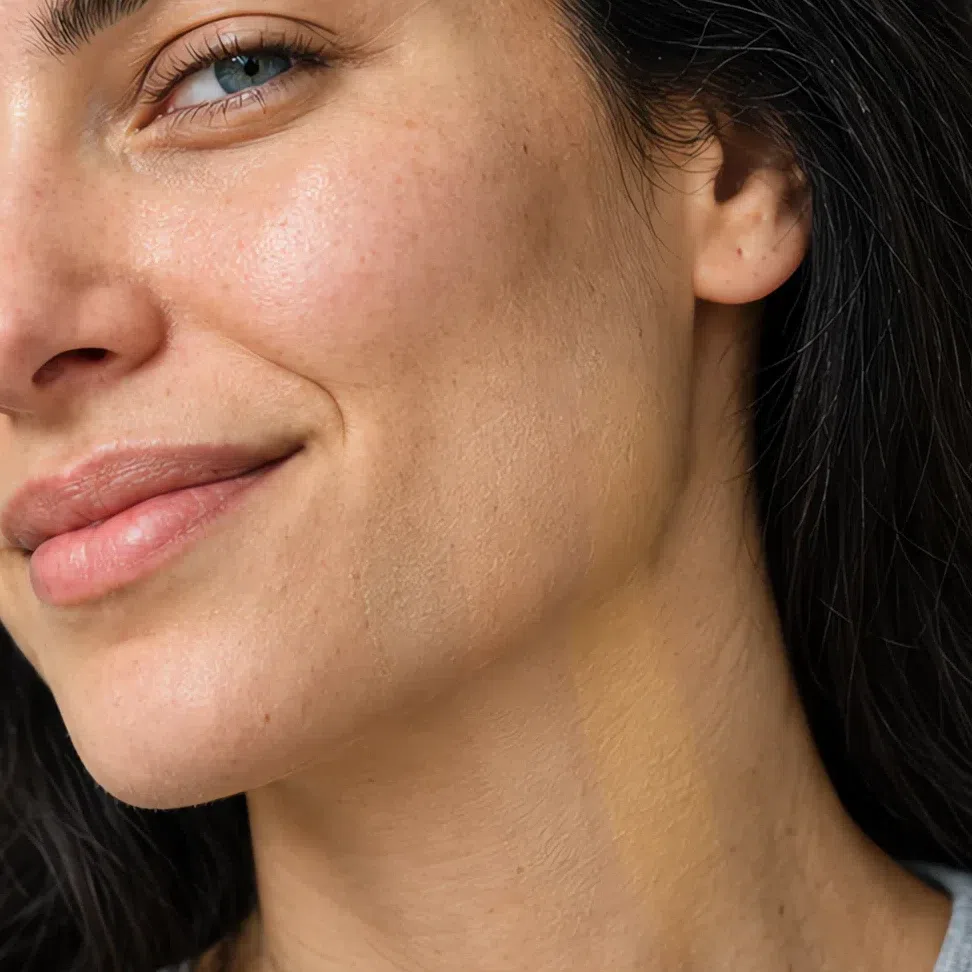
A Bright Winter face usually looks clear and slightly luminous without help, and a thick, flat base is the quickest way to lose that. Use a thin satin foundation, press it where the skin is uneven - around the nose, the chin, any redness - and let it thin out toward the edges. The shade has to vanish at the jaw in daylight; a golden one shows as a stripe, however well it is blended.
Skip bronzer. If you want shape, the cool taupe contour goes lightly into the hollow under the cheekbone on fair to medium skin and blends upward until it is only shadow; on deep skin, leave it out. Then one sweep of an icy champagne, silver, pearl pink or lilac pearl along the top of the cheekbone. This face runs on contrast, not on sculpting.
Contour
One cool shade, used lightly or not at all.
- Cool taupe contour #9C8878
Tip Put the base on by a window. Warm indoor light hides a golden cast that daylight shows at once.
-
Cheeks
Color you can name, placed high
Do the cheeks before the eyes: once the blush is on, you can judge how much eye the face needs. Bright Winter wants a flush that registers as a color - pink, raspberry, plum pink, berry - not a hint of one. Press a cream onto the top of the cheekbone, sweep it up and back toward the temple, and add a second layer if it disappears beside your eyes. Aim for a cheek someone could name the color of.
Blush matched to your depth
One clear, cool shade per complexion, from clear pink on the fairest skin to dark berry on the deepest. Each photo shows the shade on the depth it was chosen for.
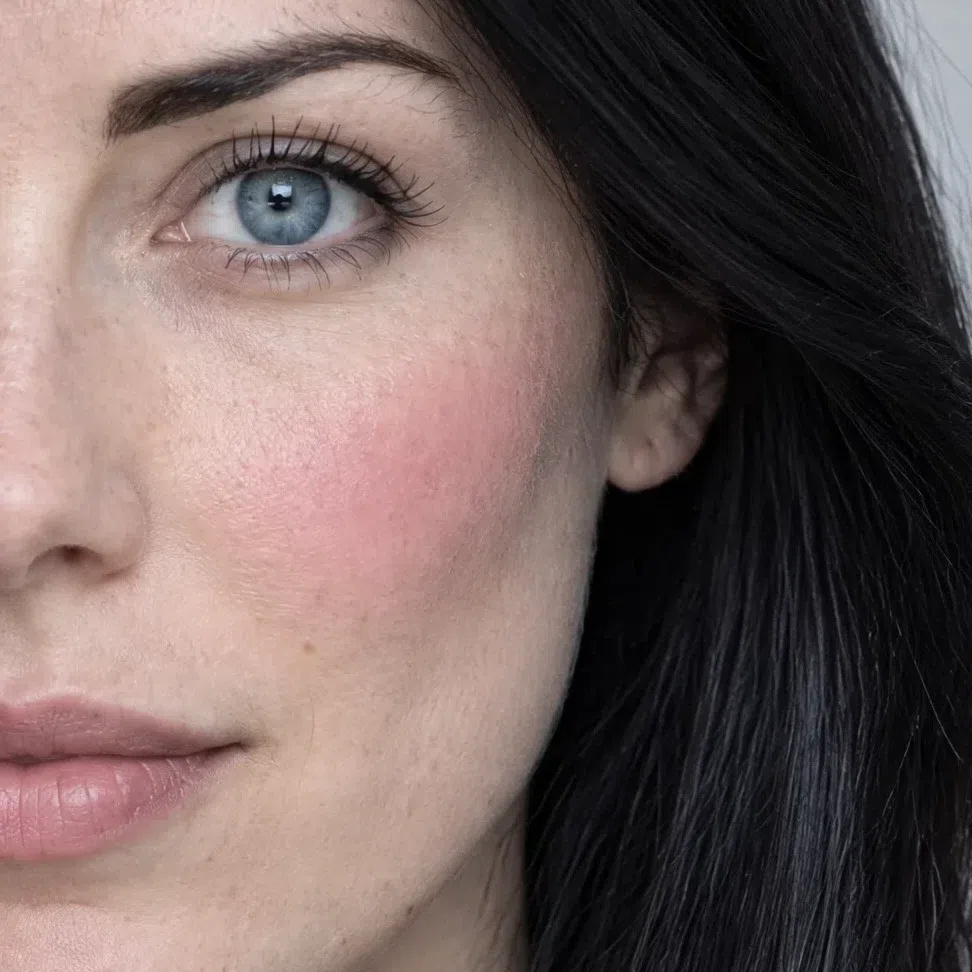
Fair - cool pink #E8809B 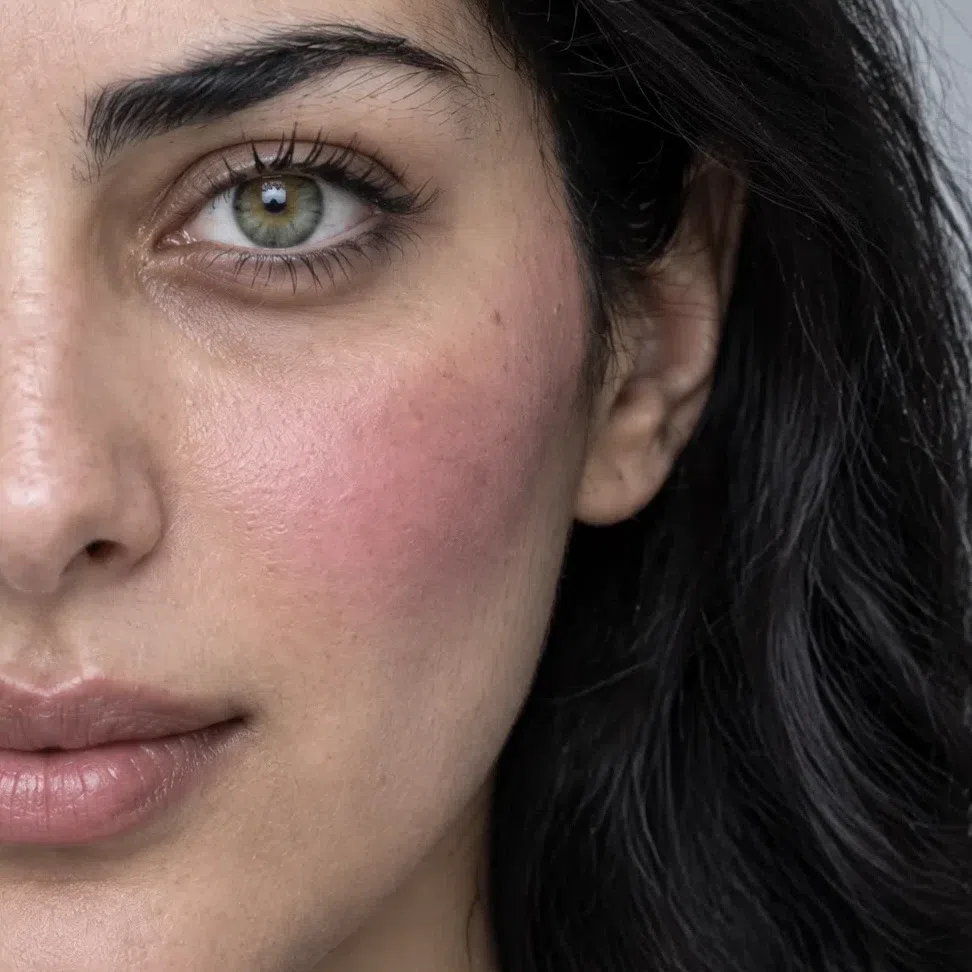
Light - raspberry pink #D6336C 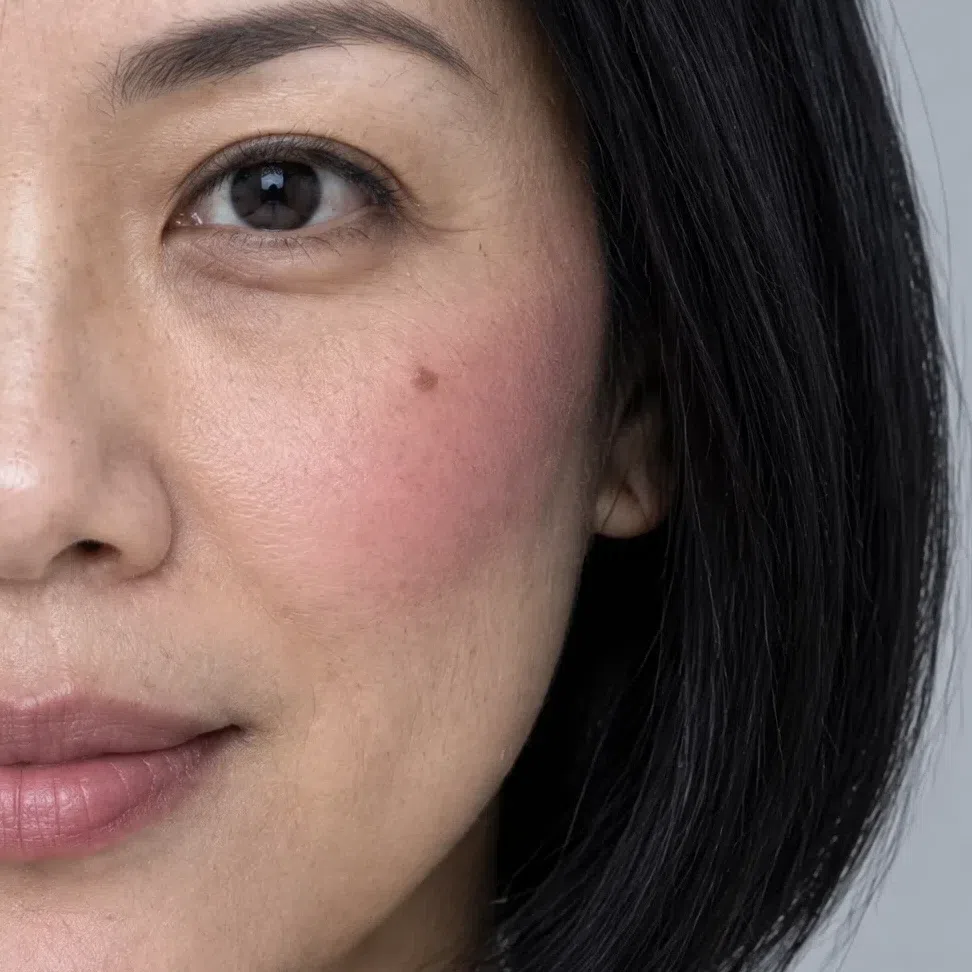
Medium - plum pink #C06A8E 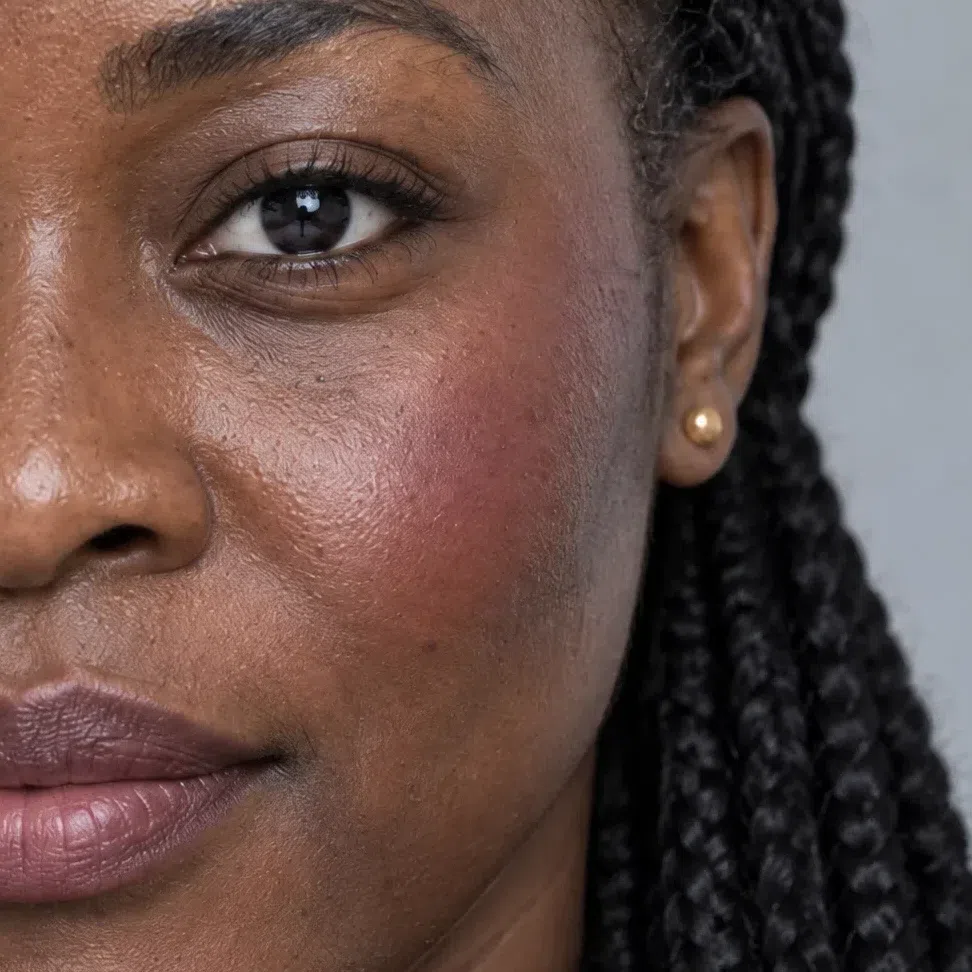
Deep - dark berry #9E2F5A Tip If the blush has faded by lunch, reach for a more saturated shade, not a heavier hand. More of a soft color only looks like more of a soft color.
-
Eyes
Defined brows, a clean lid, black at the lashes
Brows first: brush them up and fill the gaps in a cool shade matched to your hair, keeping the shape clear but the color soft. Then one icy shade across the lid for the day - rose, frost gray, lilac or a gray taupe - blended to the crease. Then the part that matters most on this face: a black line pressed right into the upper lash roots and black mascara from root to tip. Clear eyes with dark lashes around them are the whole point.
Brows
Four cool shades chosen by your hair, not your skin: soft black for black hair, cool dark brown for dark brown, ash taupe or dark ash once gray comes in.
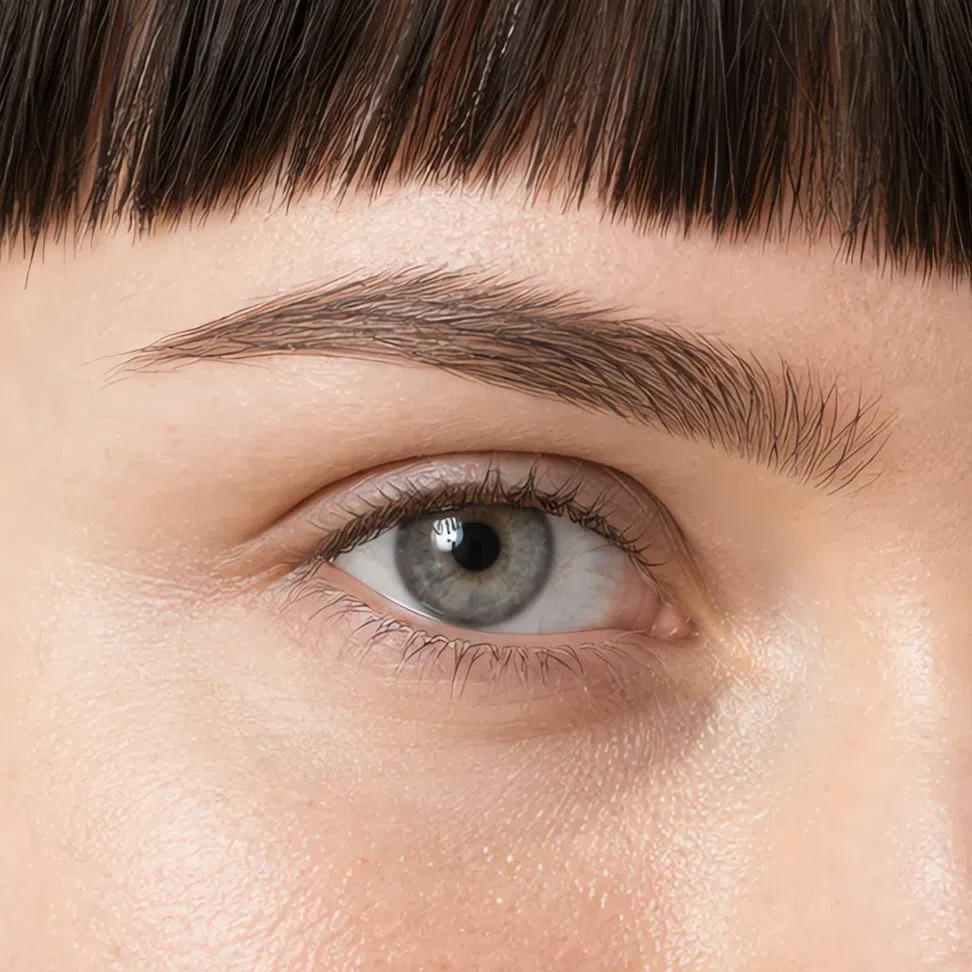
Ash taupe brow #6B5A50 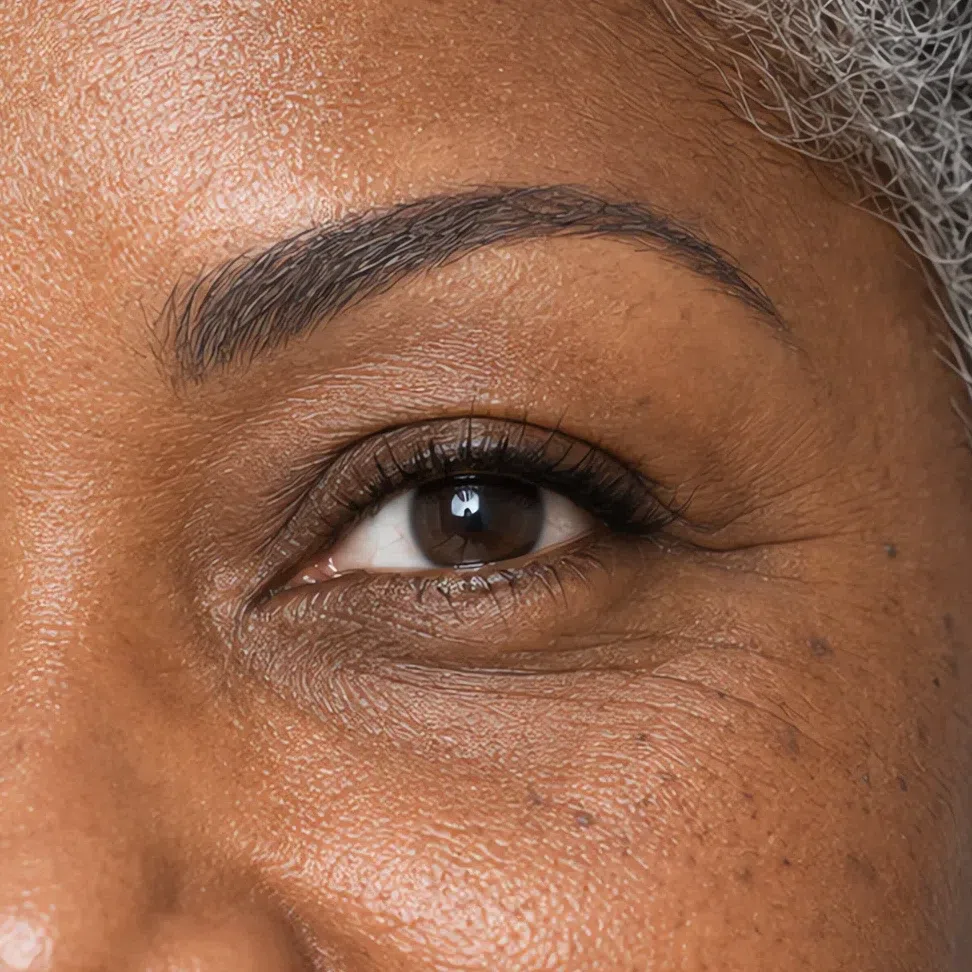
Dark ash brow #4F4A45 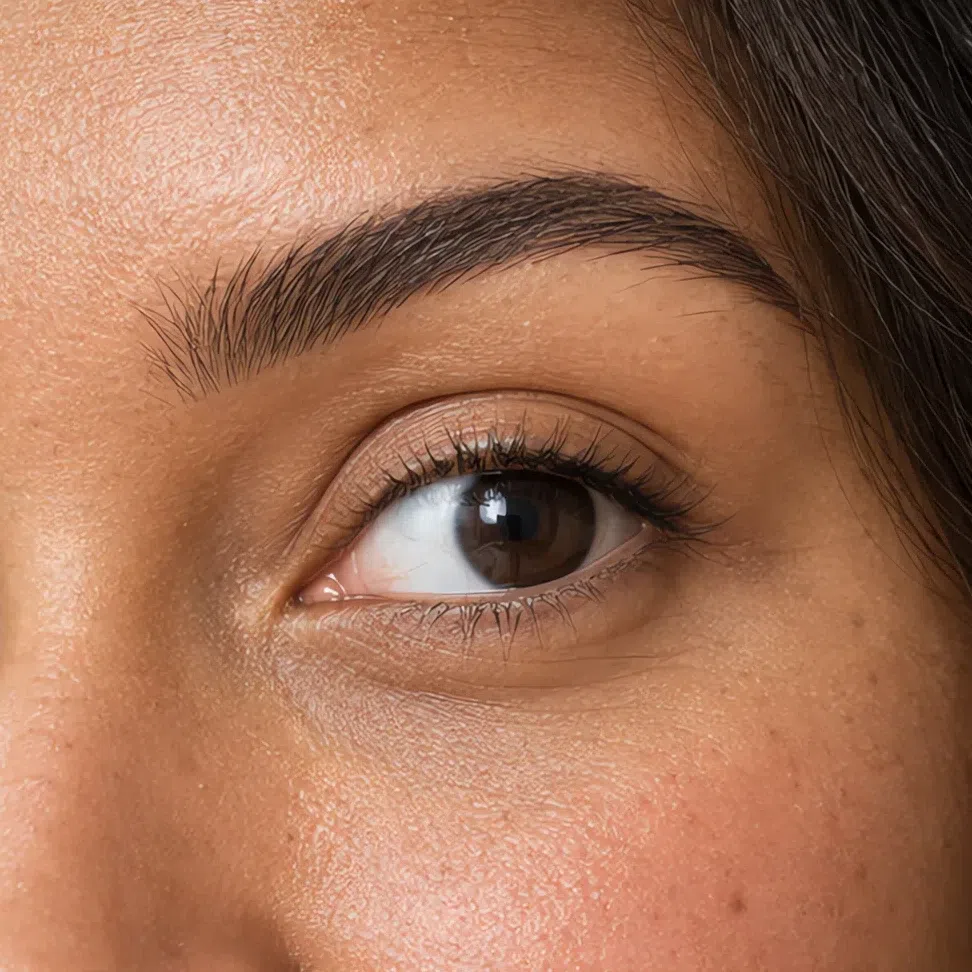
Cool dark brown brow #4A3A32 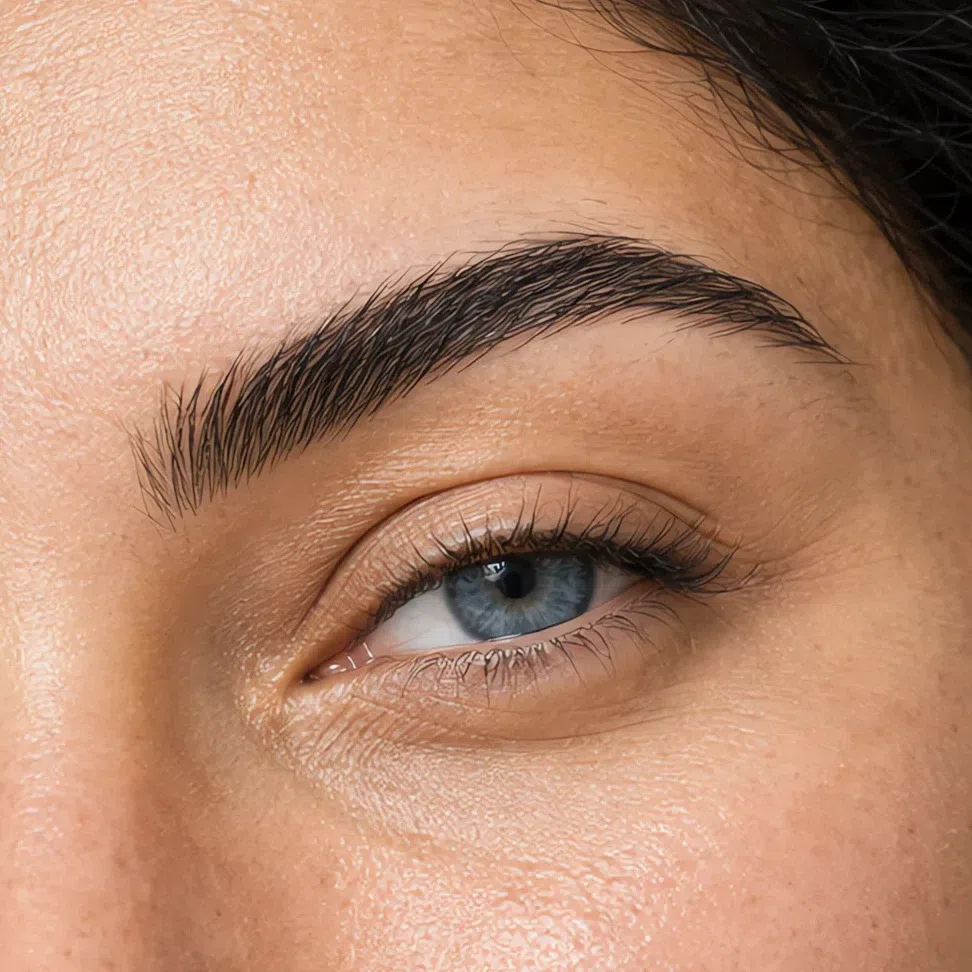
Soft black brow #241F1E Everyday eyeshadow
The day lid. Icy rose and lilac brighten blue and gray eyes; frost gray and gray taupe give brown eyes depth without warming them. One shade, up to the crease, clean edge.
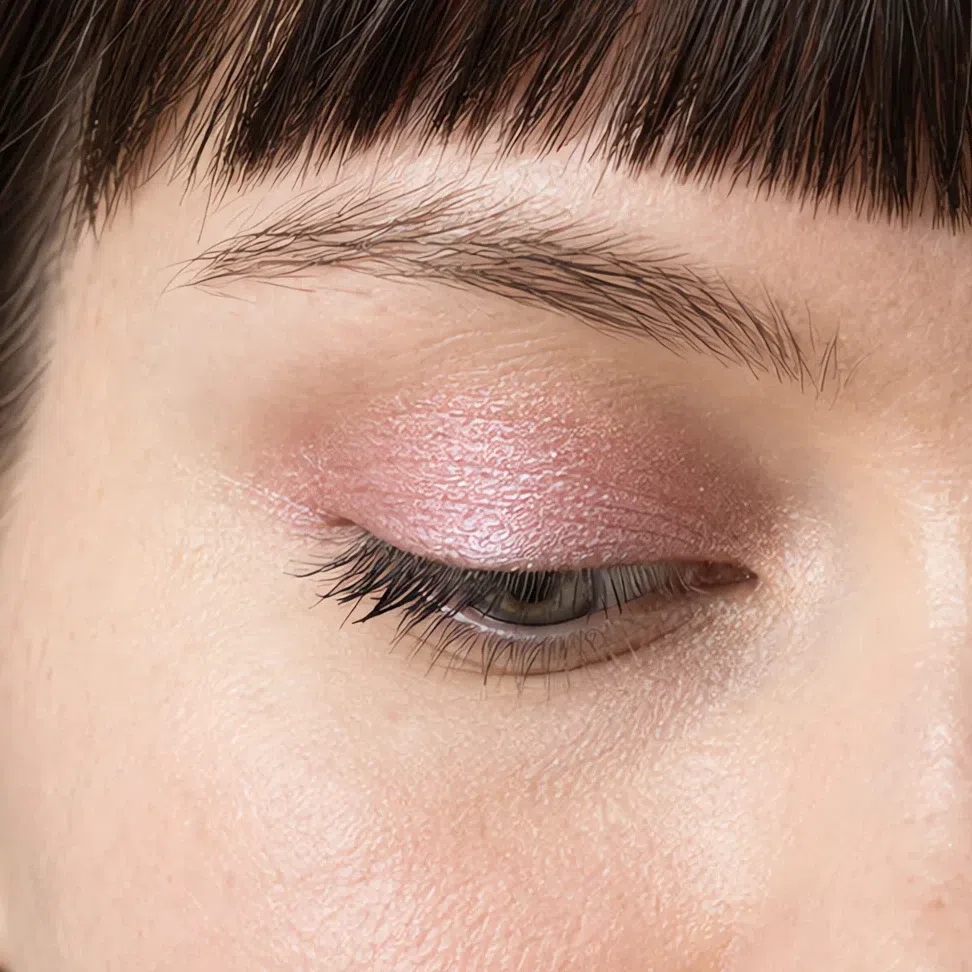
Icy rose #FDE9F4 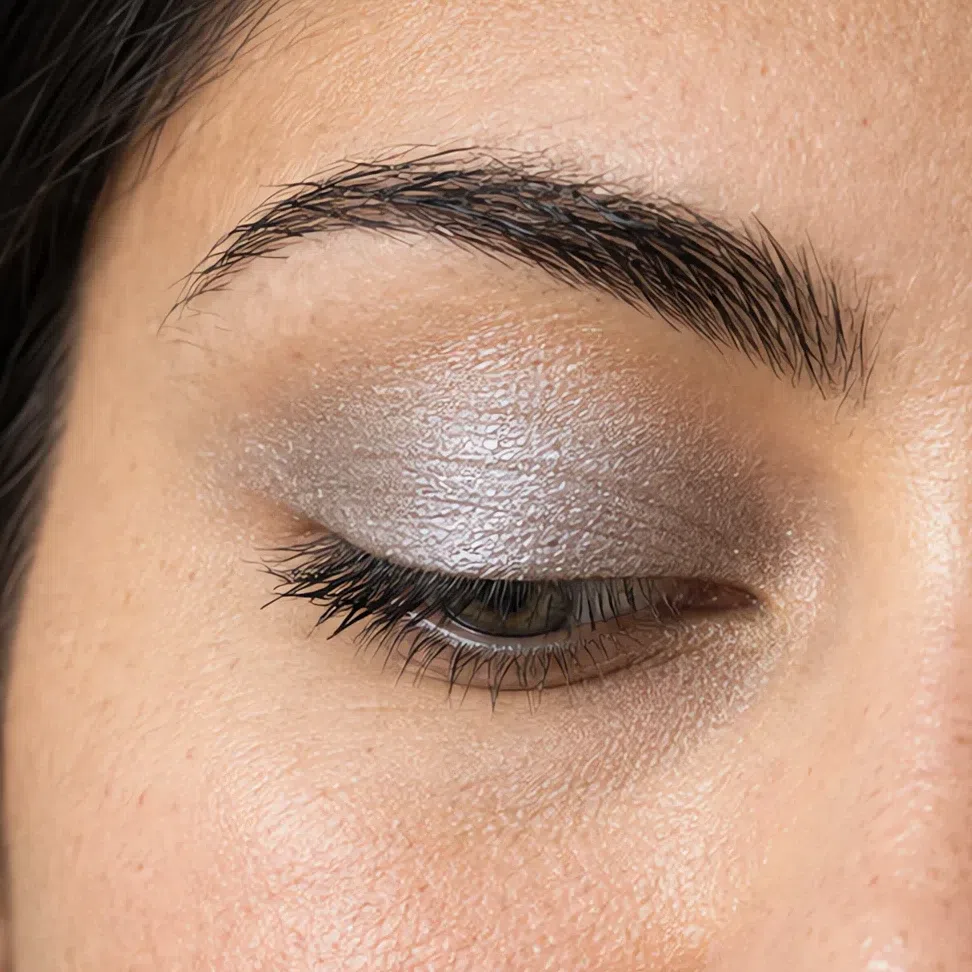
Frost gray #C7CDD4 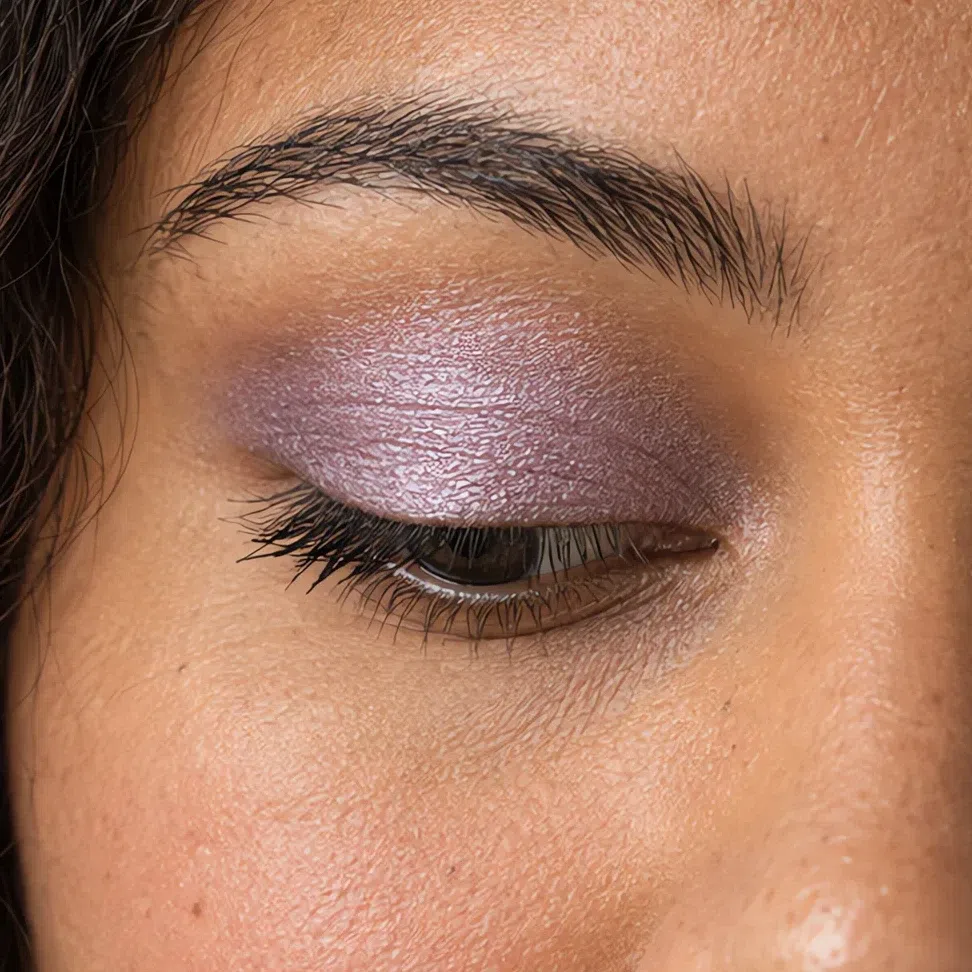
Icy lilac #CFC7E8 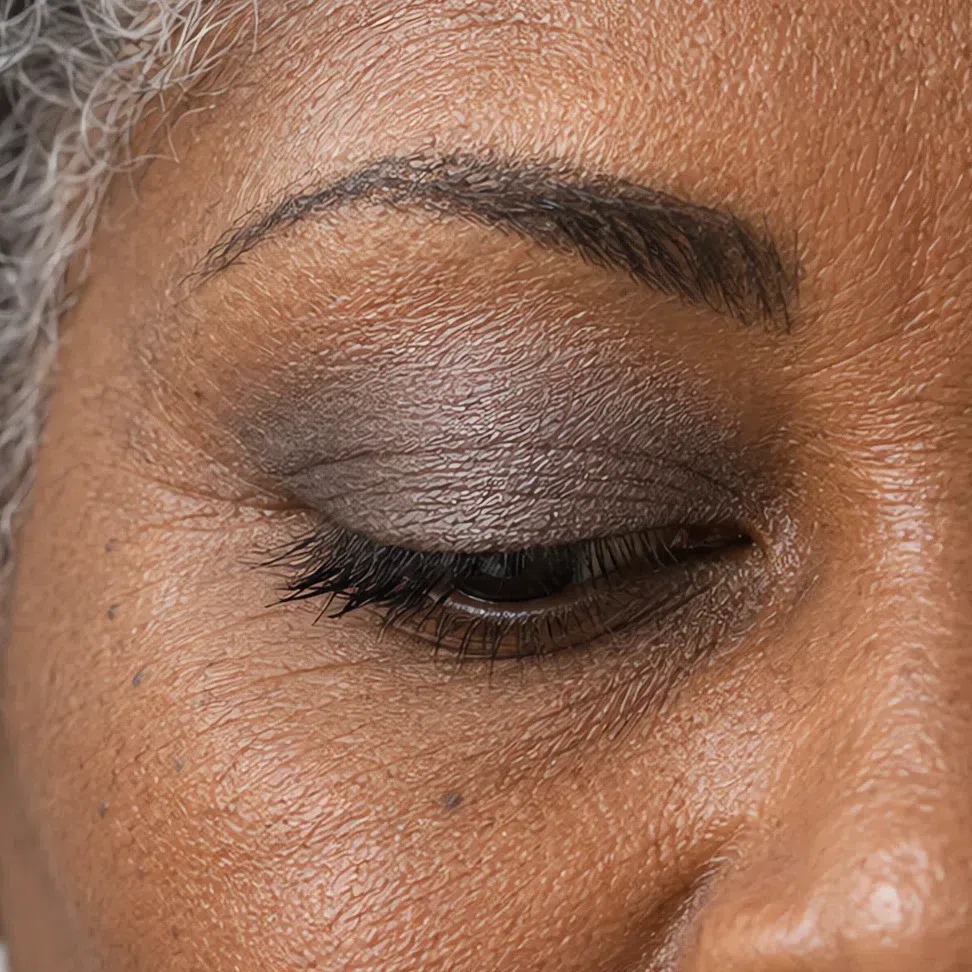
Gray taupe lid #A69B92 Evening eyeshadow
Kept here so you can see all four, and saved for later in the day. Each goes on the outer third over the day shade, not edge to edge - the evening section below shows how far.
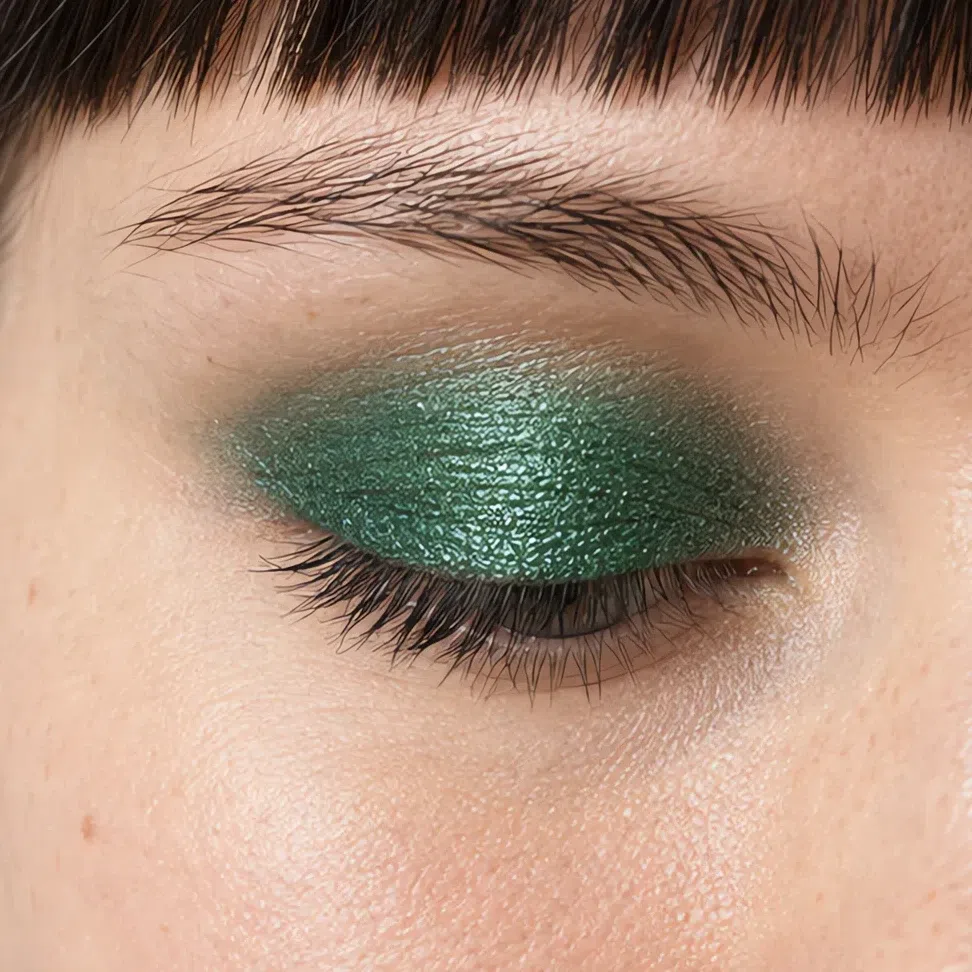
Jewel green #009B77 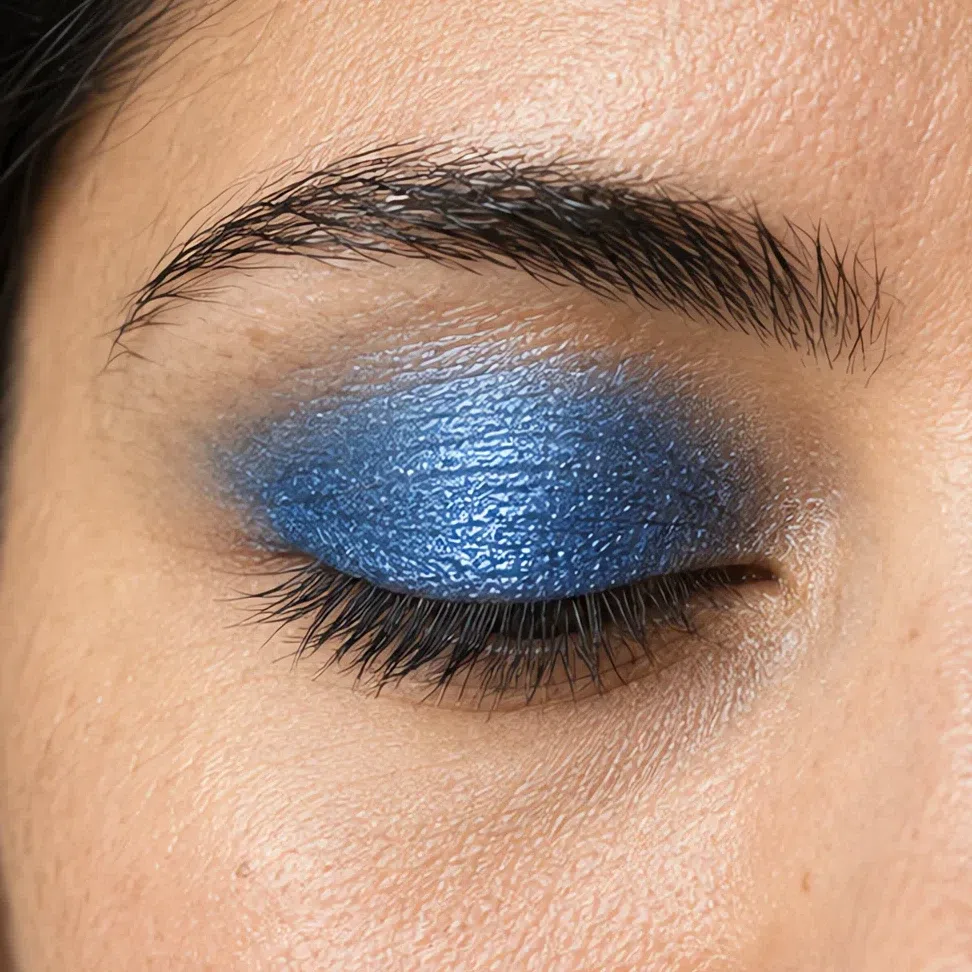
French blue #1B7FC4 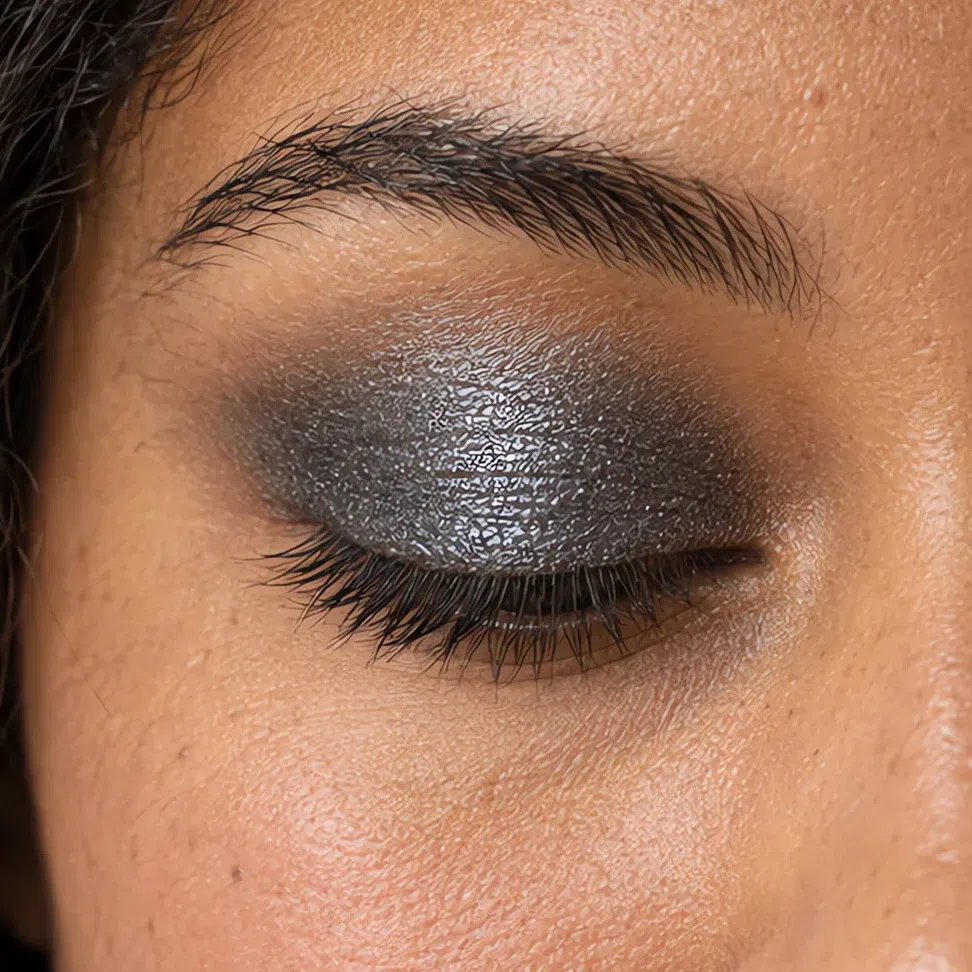
Gunmetal #555B66 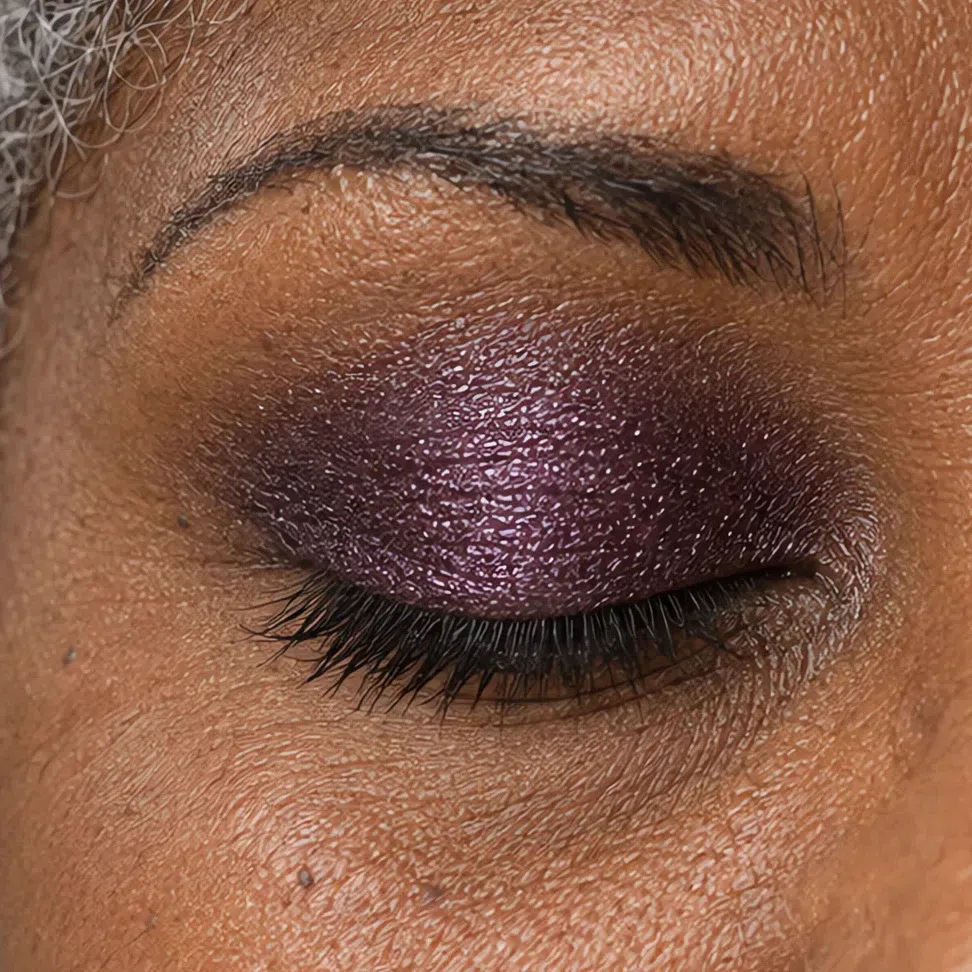
Plum lid #6B3560 Eyeliner
These are four colors, not a depth ladder, so any complexion can use any of them. Black is the daily line; midnight and jewel green make the whites of the eyes look whiter; charcoal is the gentler choice on a fair face in daylight.
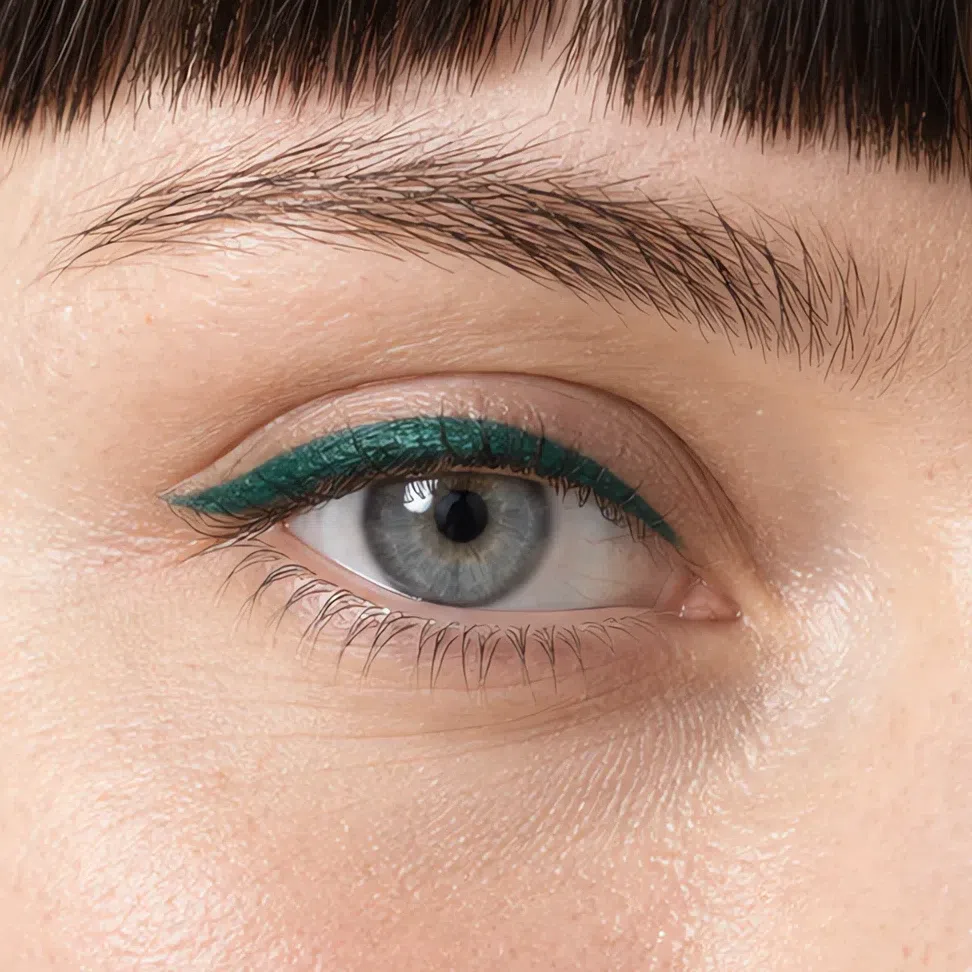
Jewel green #009B77 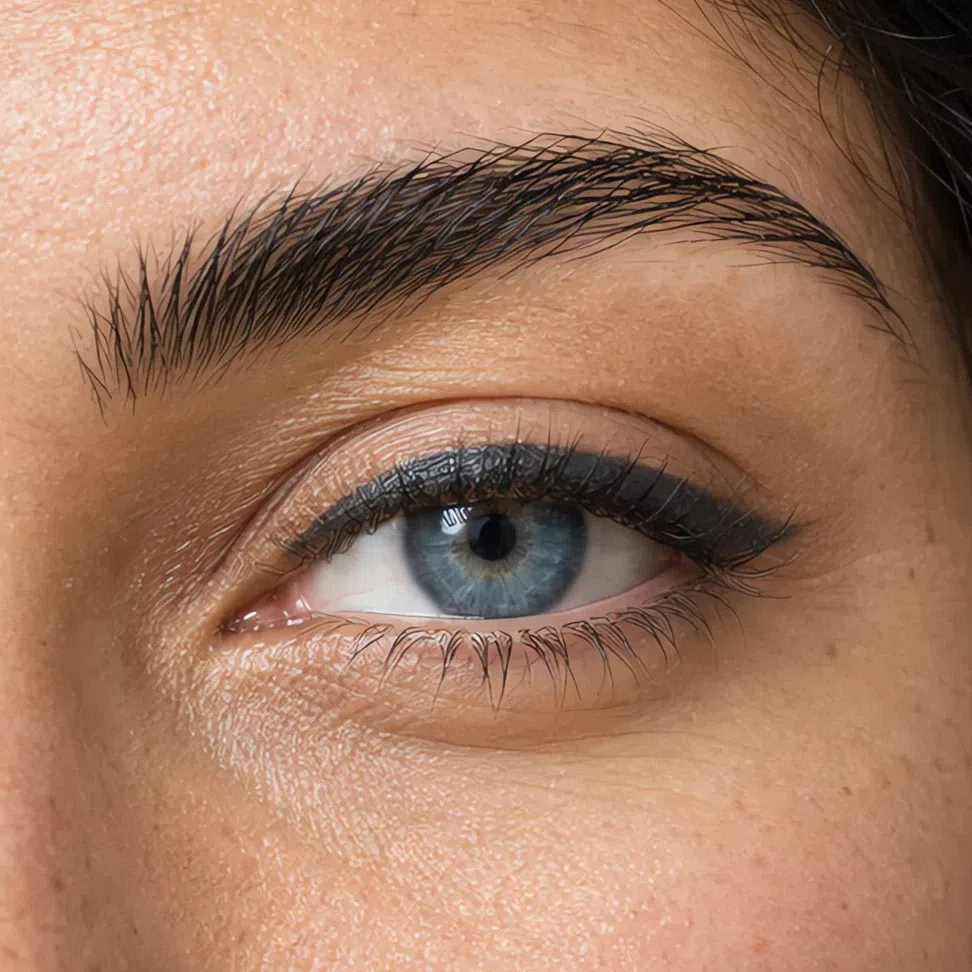
Charcoal #3F4448 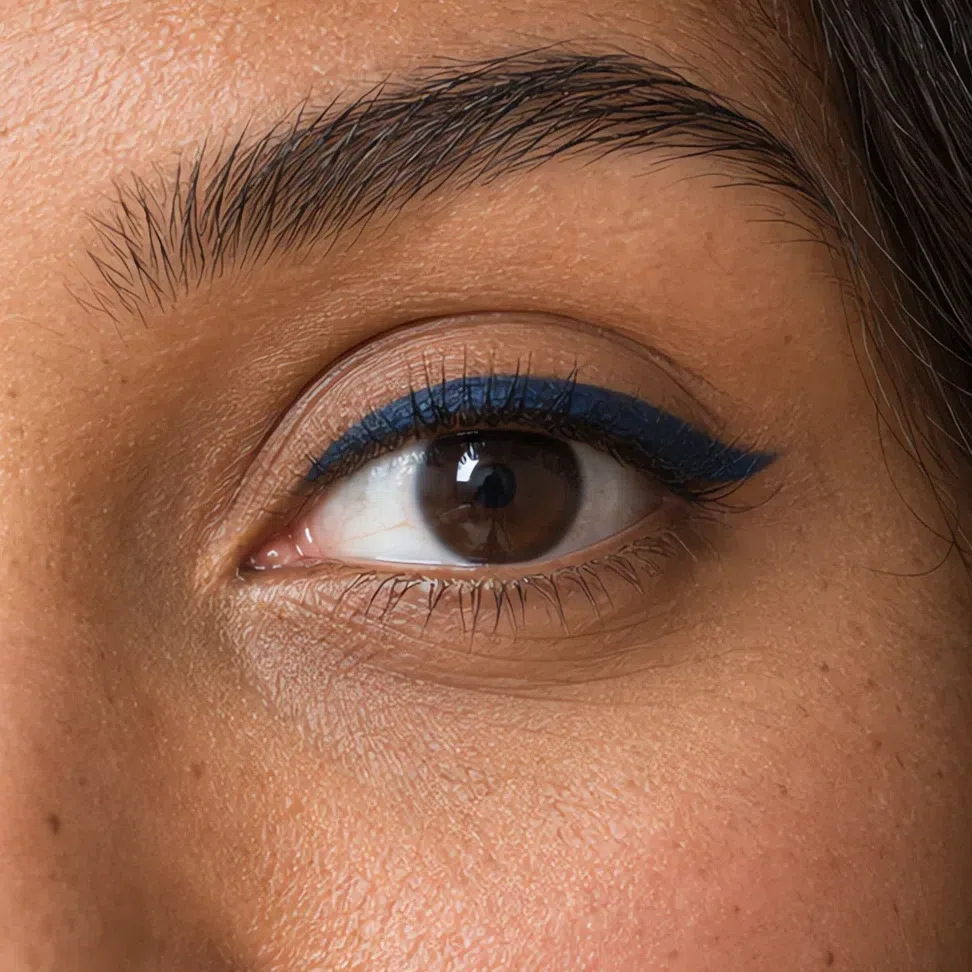
Midnight #1B2A4A 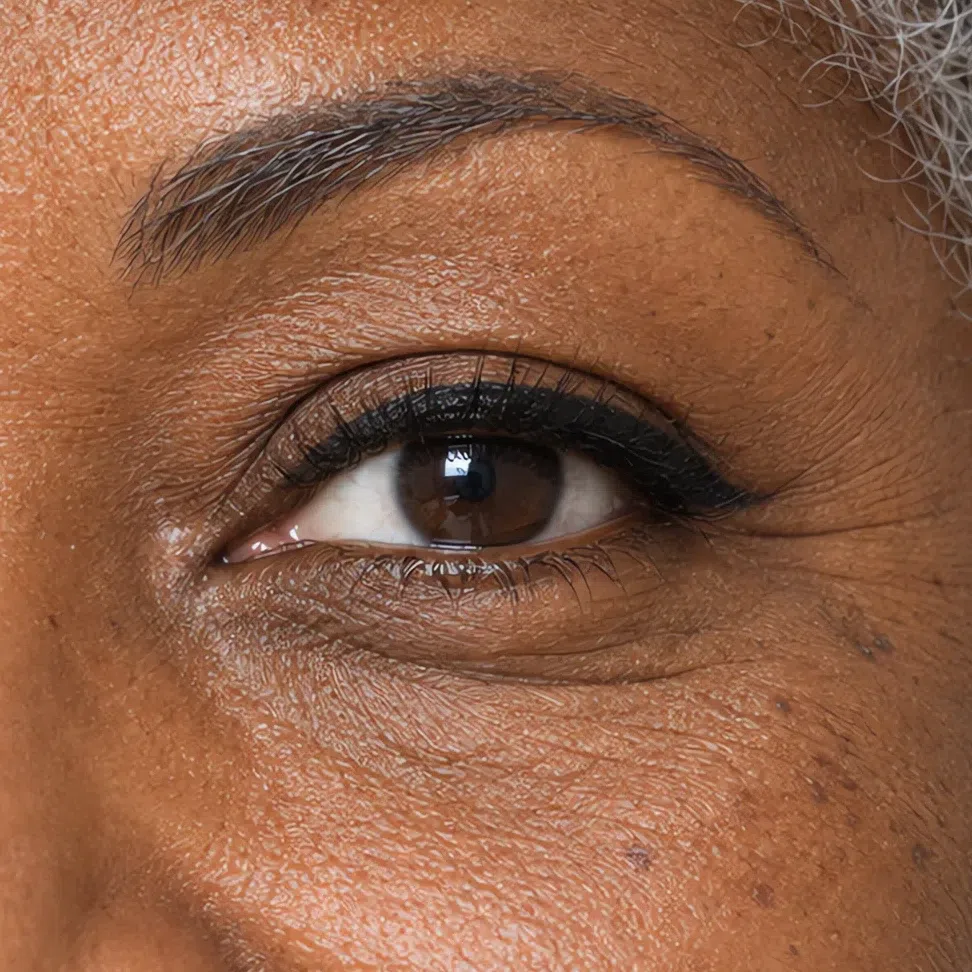
Jet black #141414 Mascara
Black on everyone. Midnight is the one alternative worth having - on blue eyes it makes the iris look bluer - and charcoal is for a fair face that finds black too much before noon.
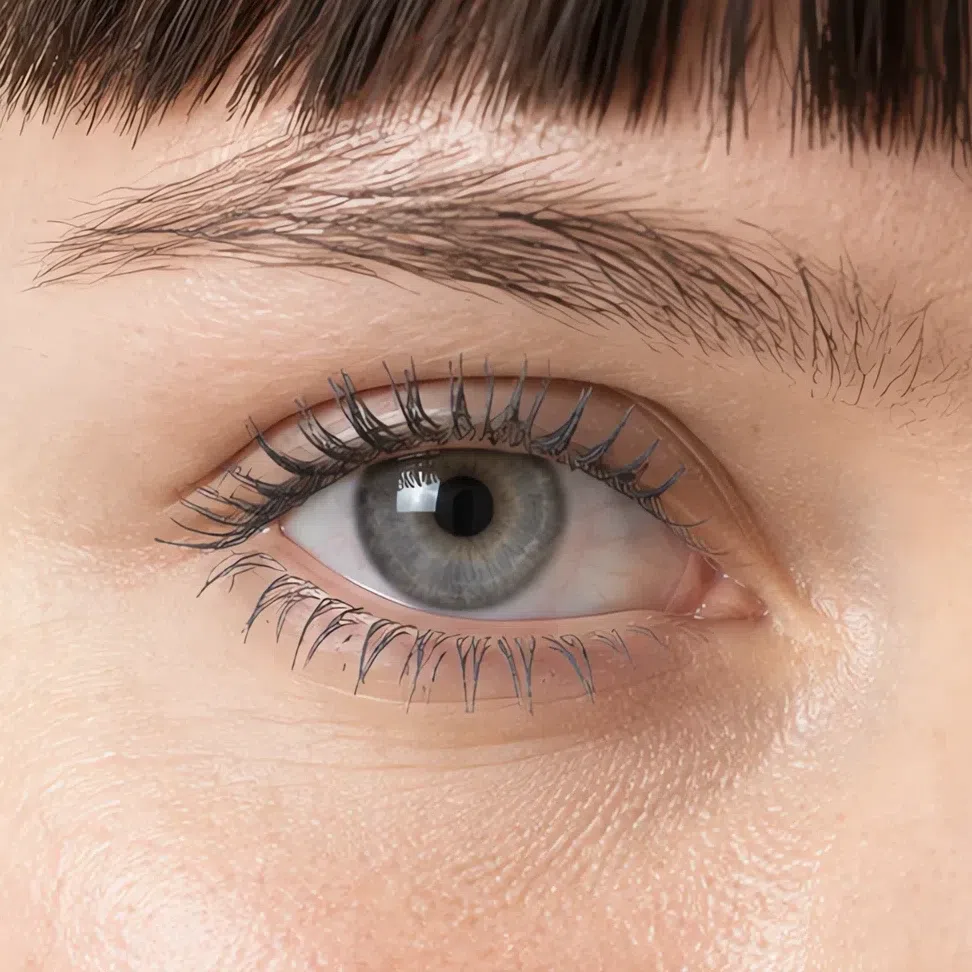
Charcoal #3F4448 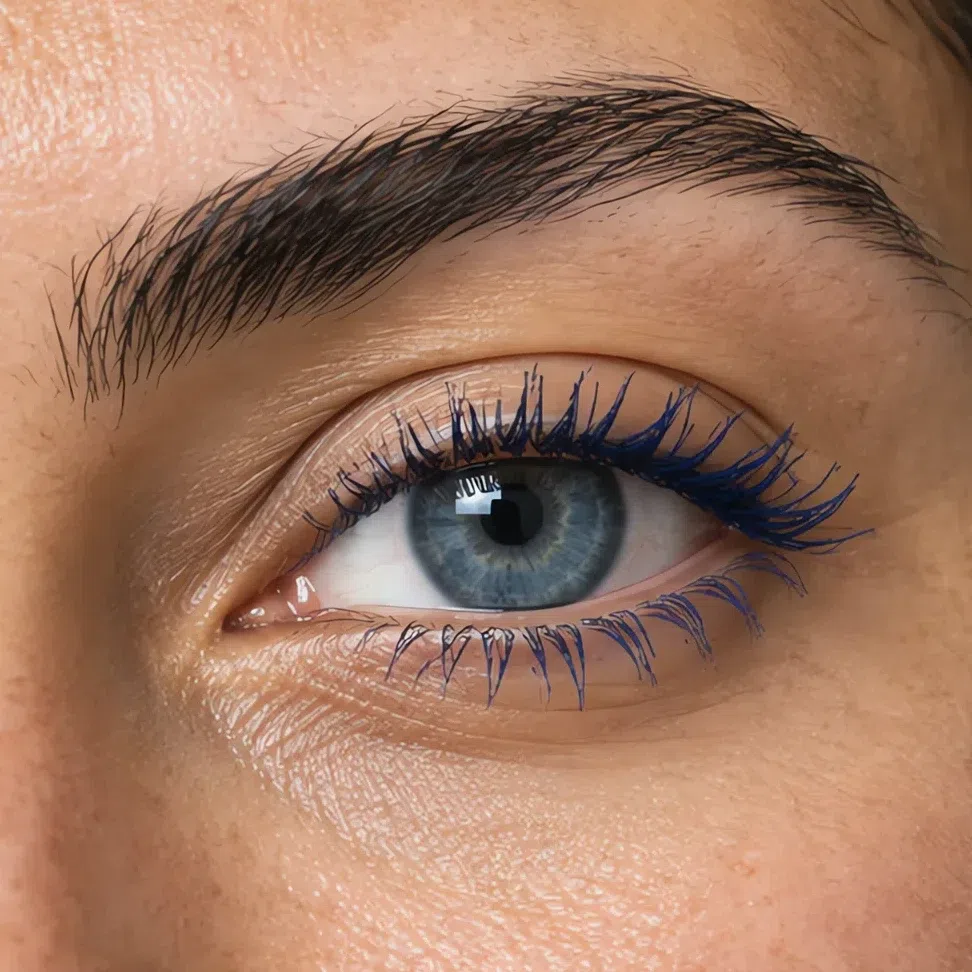
Midnight #1B2A4A 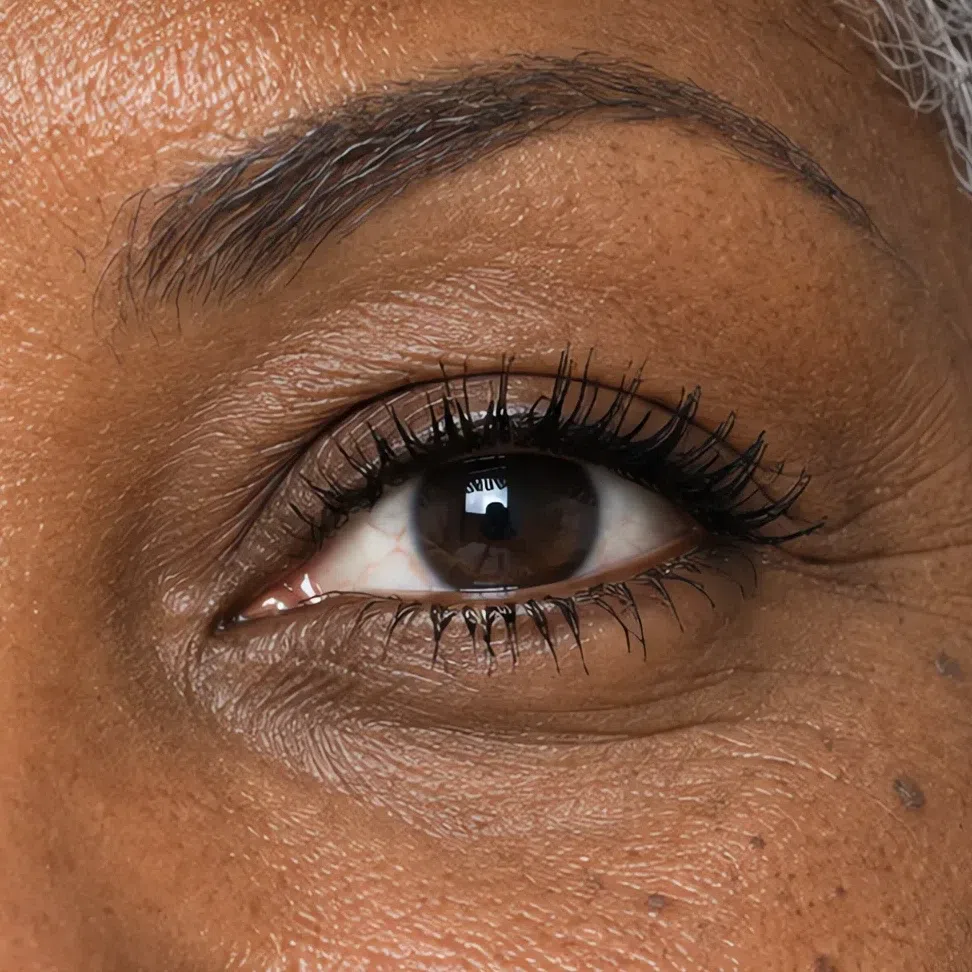
Jet black #141414 Tip Tightline the upper waterline with black even on a bare-lid day. It adds contrast without looking like eye makeup, which is exactly the trade this coloring wants.
-
Lips
A cool nude, or the bright one
Bright Winter is one of the few colorings that can wear a saturated lipstick to the office, so the lip step has two routes. The nude route is a cool pink, orchid or berry, clearer than your lips but close to them. The bright route is ruby, hot magenta or shocking pink, and on that day the rest of the face stays quiet. Either way, apply from the bullet or a brush and keep the edge crisp: a blurred, pressed-in stain looks unfinished on a face this clear.
Nude lips
Cool pink nude suits the fairest mouths and berry nude the deepest. Choose the one that looks like your lips with the color turned up slightly.
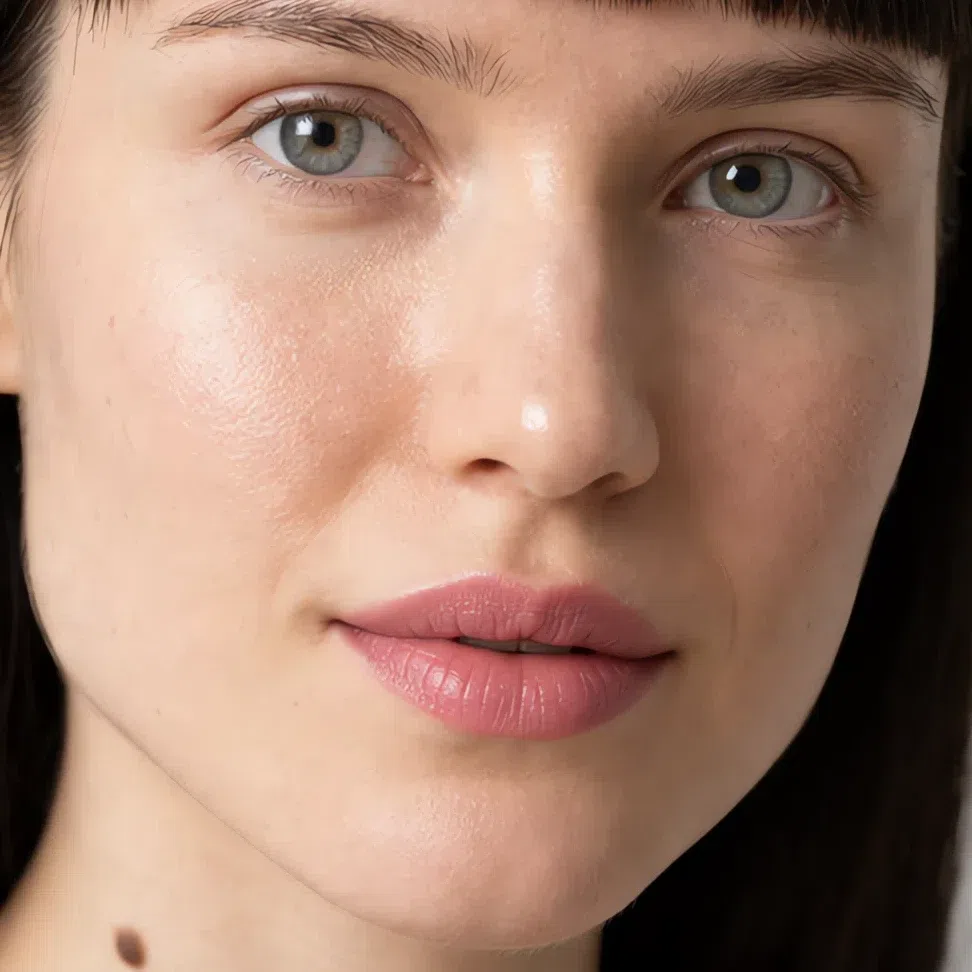
Cool pink nude #D98BA0 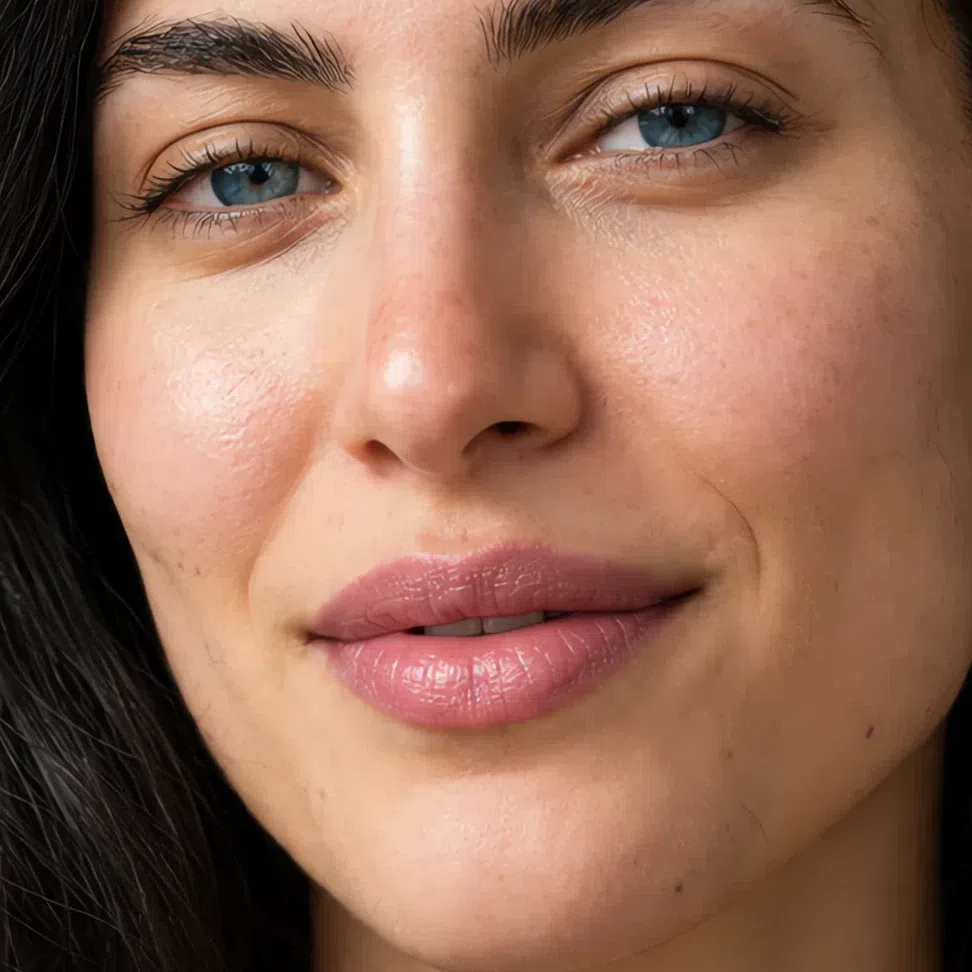
Orchid nude #B98CA0 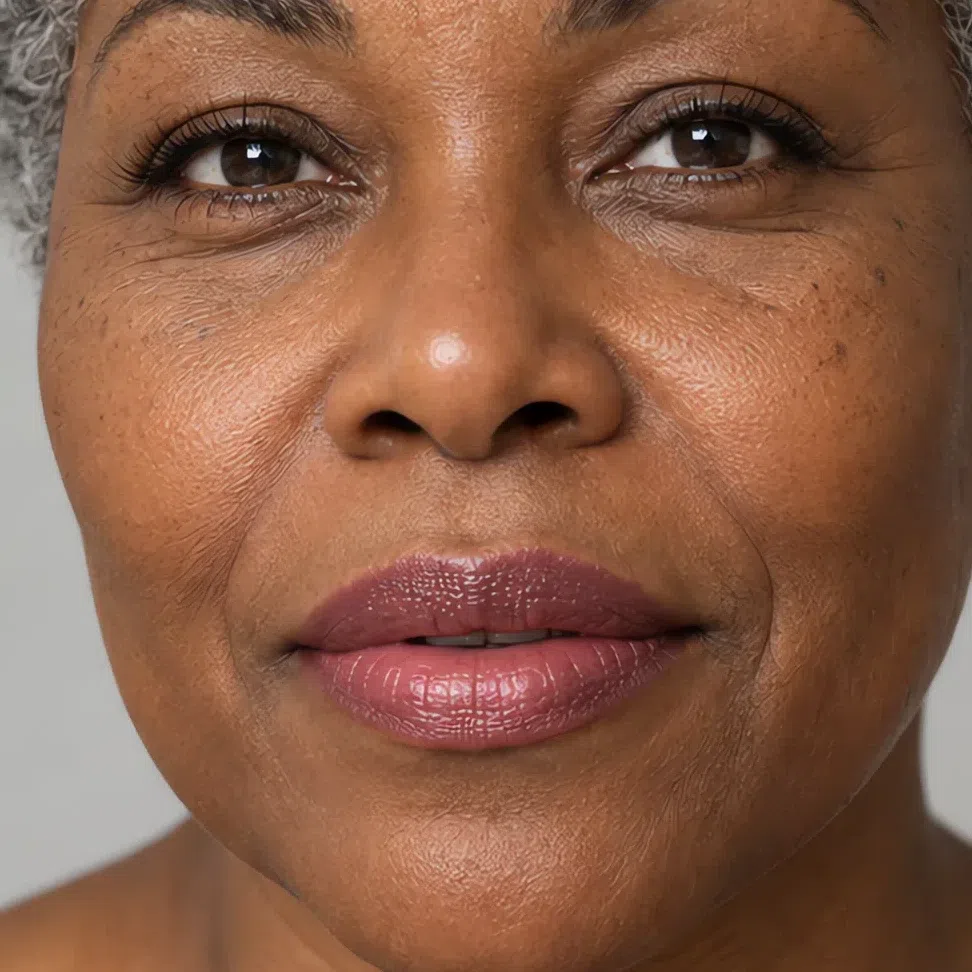
Berry nude #A85C74 Bright lips
The signature family, and the same three on every complexion: saturated enough to read on fair and deep skin alike.
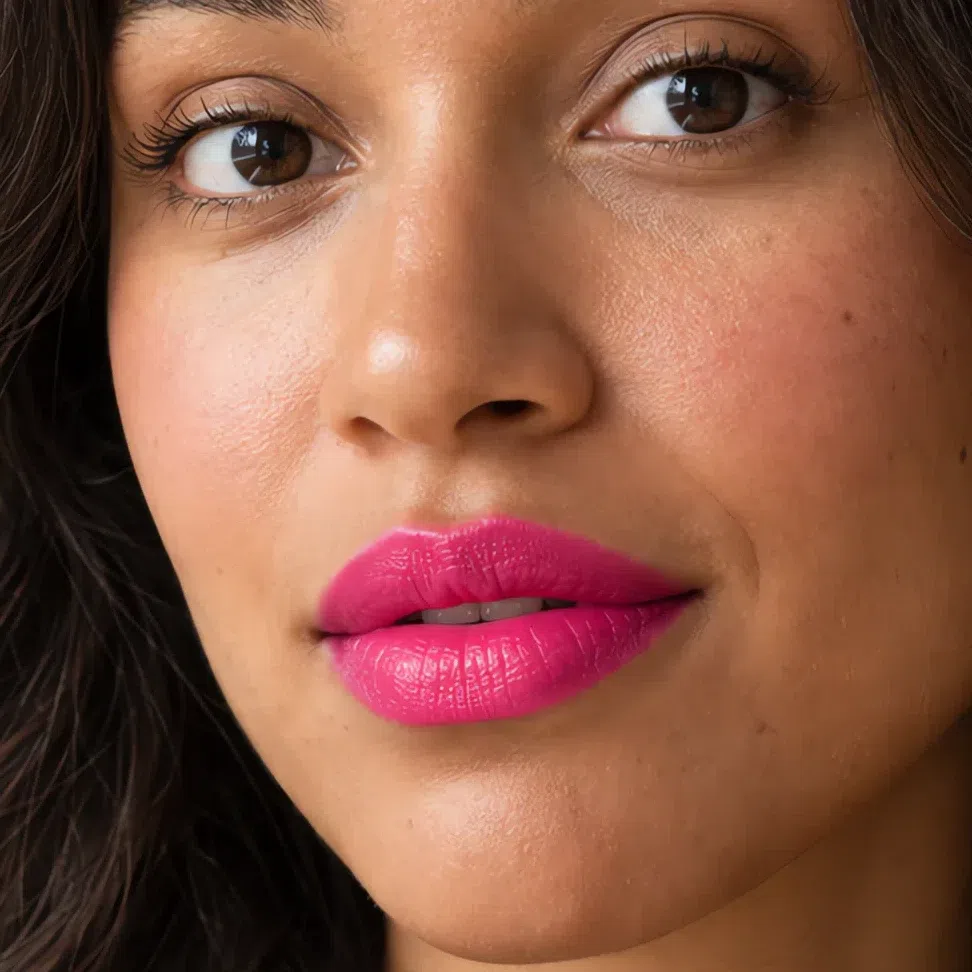
Shocking pink #E5007D 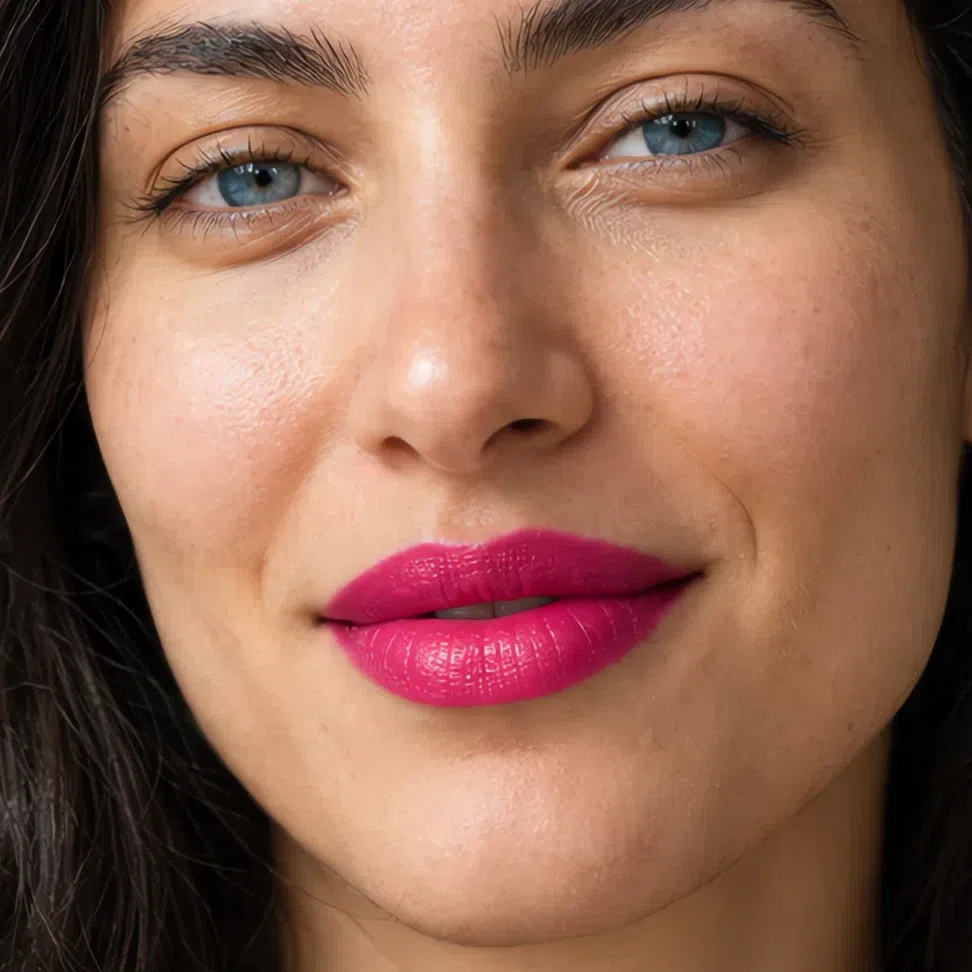
Hot magenta #D62598 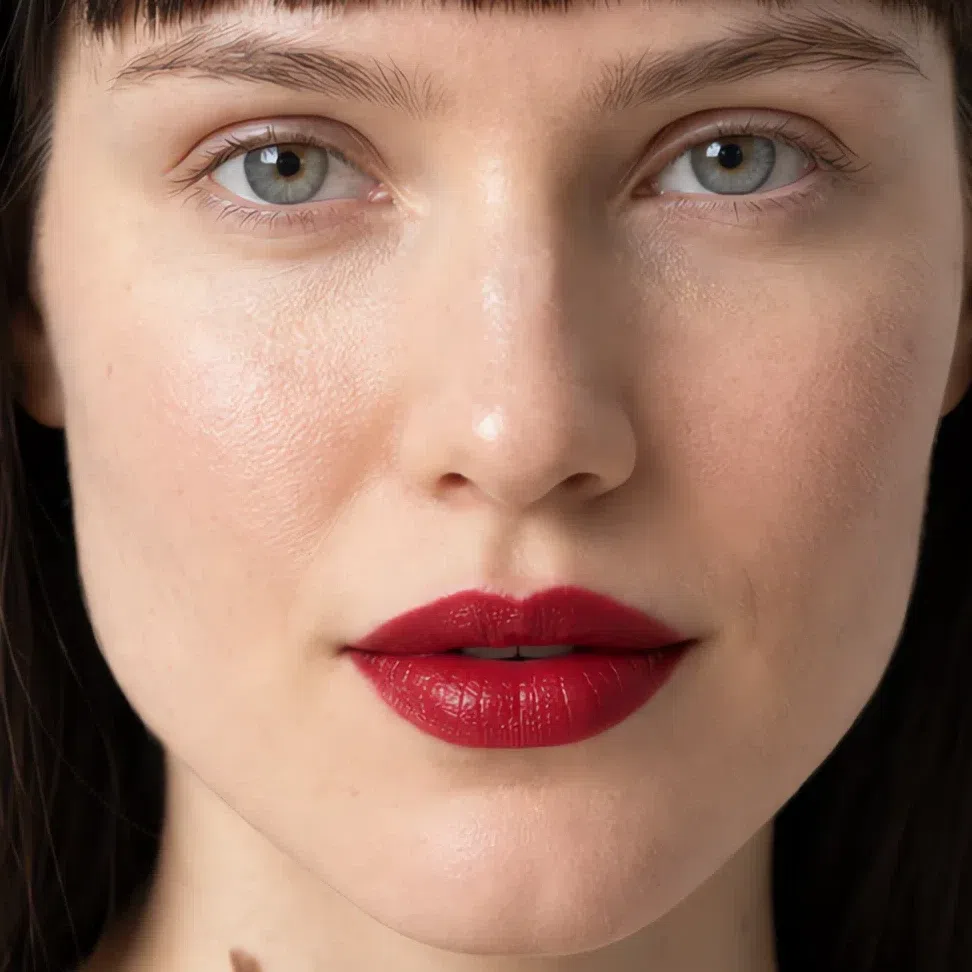
Ruby #C8102E Dark lips
For evenings: near-black plum, wine and blackberry. Line first, fill with a brush, blot once - a dark lip with a soft edge looks like a stain rather than a choice.
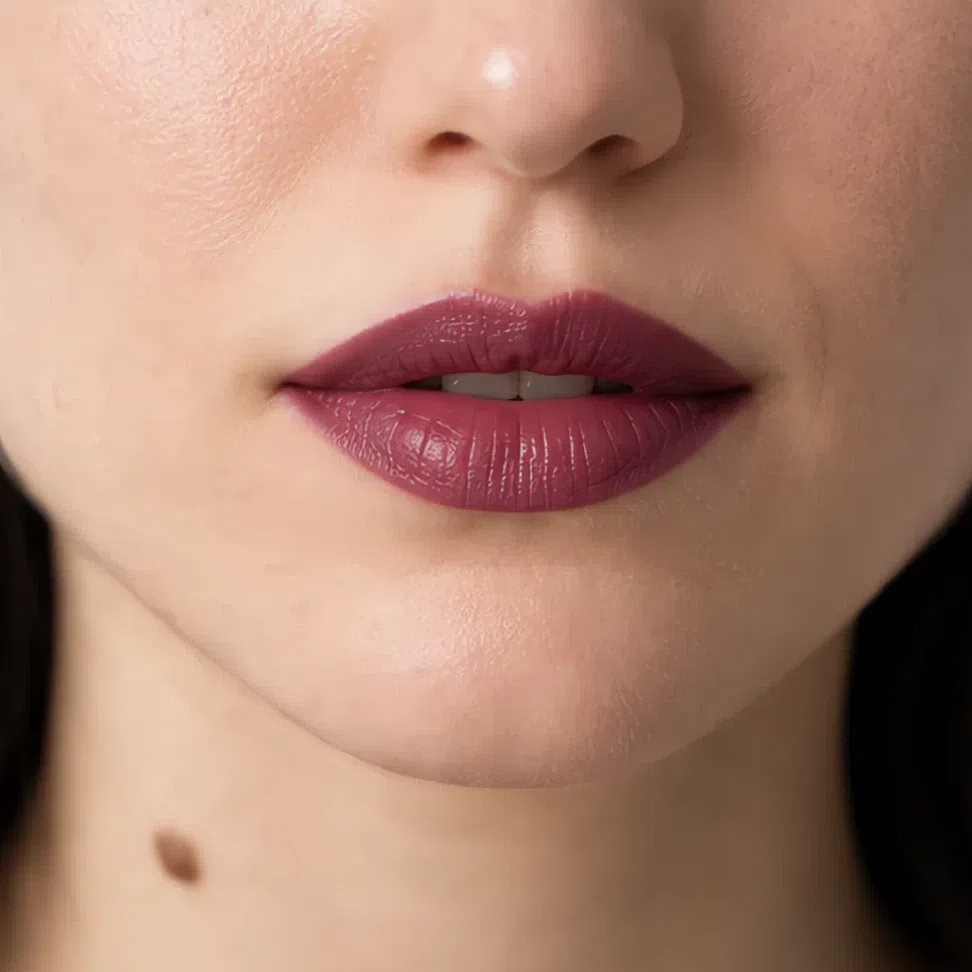
Deep plum lip #6B2350 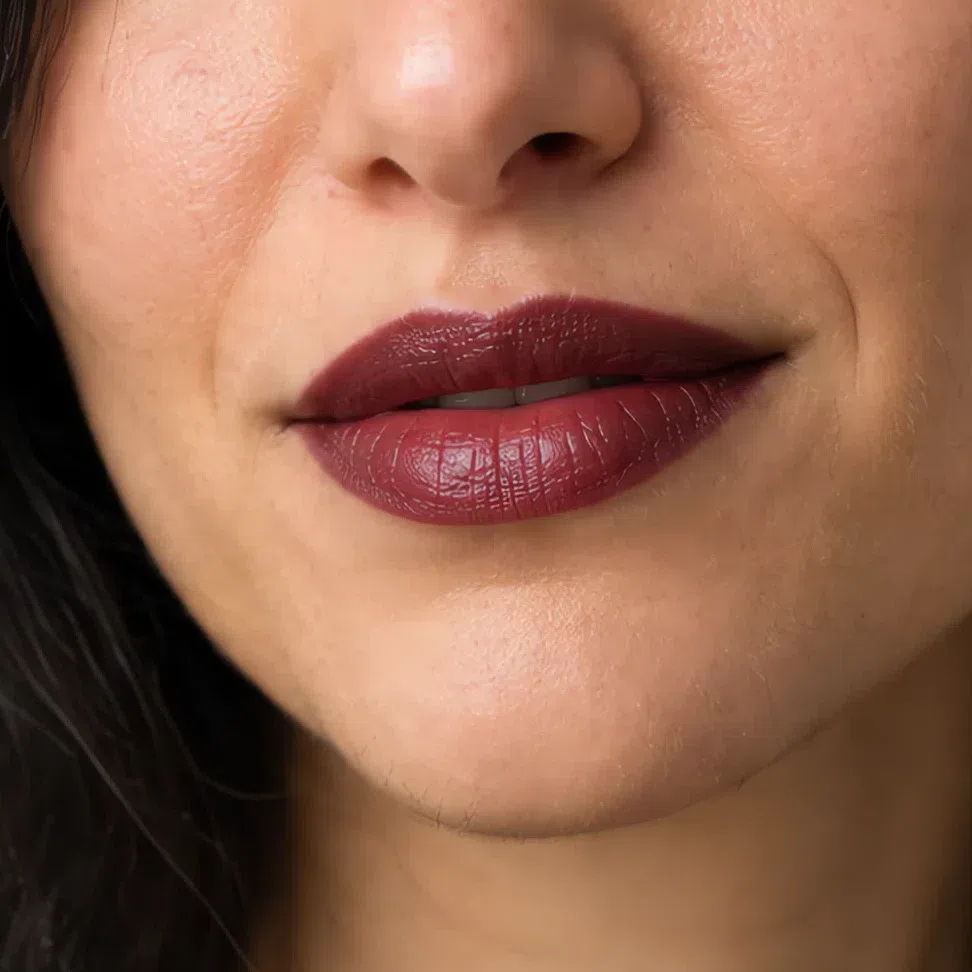
Cool wine lip #6E1A34 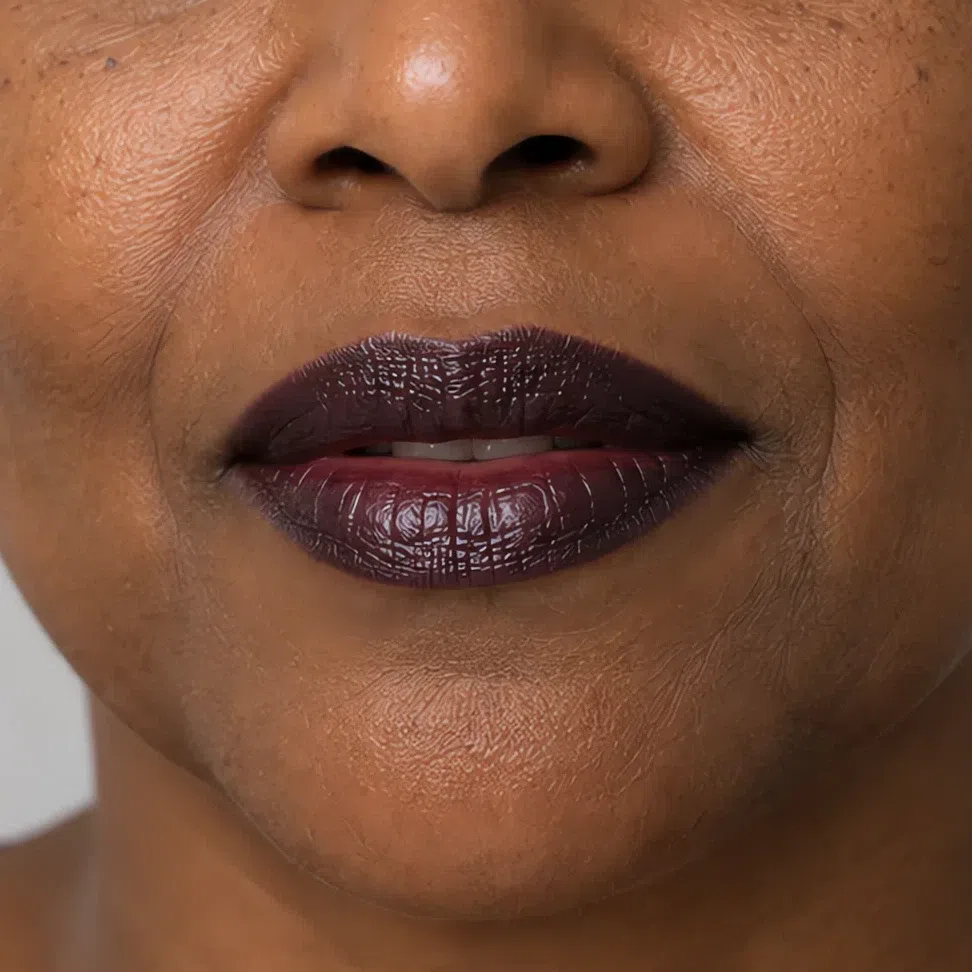
Blackberry lip #4A1F3D Tip Teeth looking yellow under a nude means the nude has peach in it. Swap it for one that is pinker or clearer, not one that is paler.
That is the day face: icy on the eyes, clear on the cheeks, sharp at the lashes. After dark, two parts of it move and the rest stays put - the next section shows which.
Your evening face: what changes, and what must not
After dark the Bright Winter face can carry as much color as its coloring, and still only two parts change: a saturated shade takes the outer eye, and the lip darkens from a cool nude to a berry, wine or plum. The rest stays exactly as it was at nine in the morning. Each depth appears twice below, the same woman in both frames.
Eyes
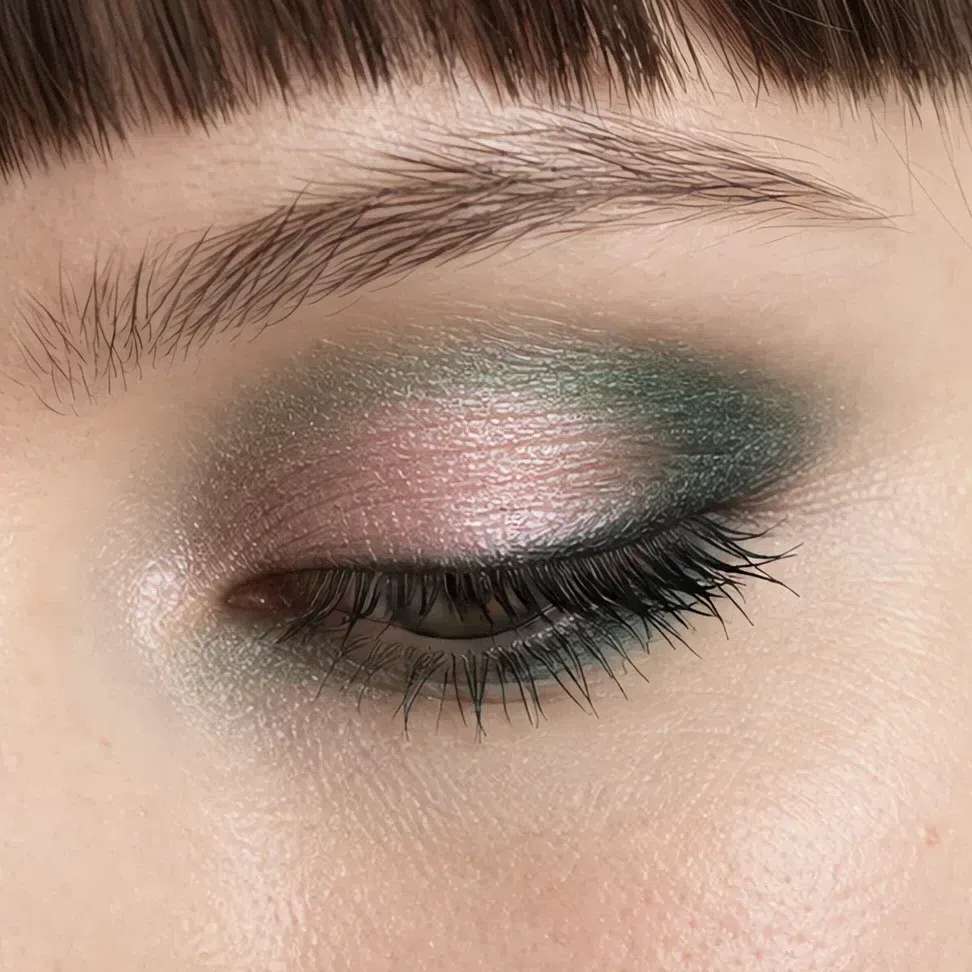
At night the icy day shade stays on the inner lid and one saturated color takes the outer third: jewel green, French blue or plum, from the crease down under the outer lower lashes. On this coloring the evening eye gets more saturated, not just darker - a jewel shade beside a clear iris does more than a brown smoke ever could.
- Keep the icy day shade across the lid.
- Press the saturated shade into the crease and over the outer third.
- Run a thin trace beneath the outer half of the lower lashes, and no further in.
- Leave the inner lid pale so the eye stays open and bright.
- Line the upper lash roots in black or midnight, then tightline.
The rule More saturated, never dustier. A soft brown or bronze smoke is the one evening eye that dims this face; a jewel shade of the same depth is the one that belongs to it.
Icy rose stays on the lid and jewel green takes the outer corner and the outer half of the lower lashes, with a black line in the lash roots. Green beside gray-blue eyes makes them look bluer, and on porcelain skin under dark hair it reads as deliberate rather than loud.
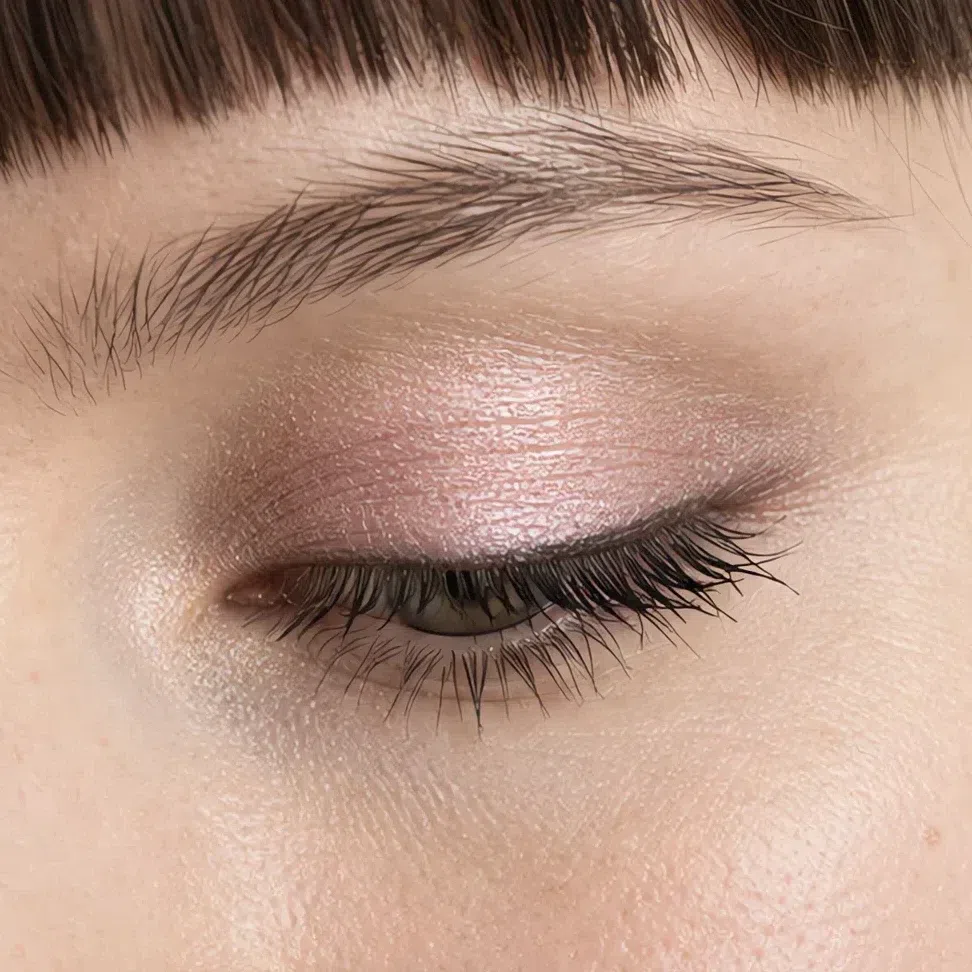
 Deepest at the outer corner
Inner lid keeps the day shade
Under the outer lashes only
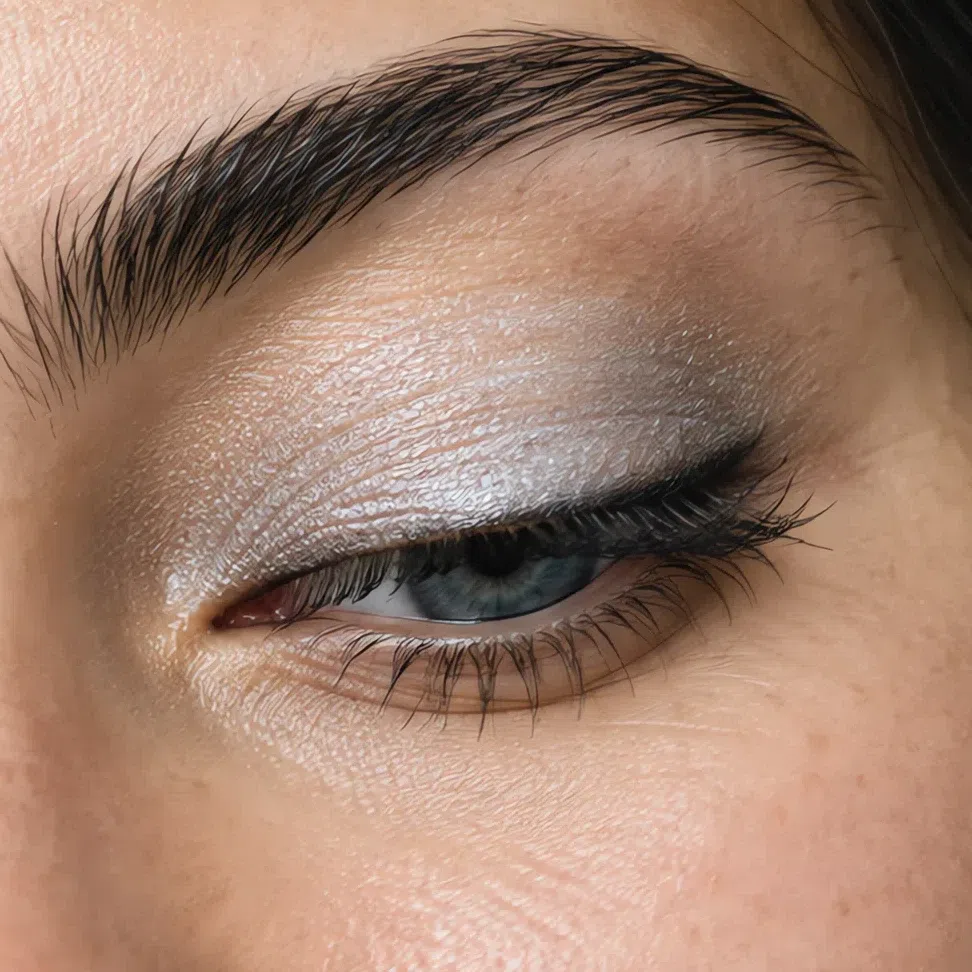
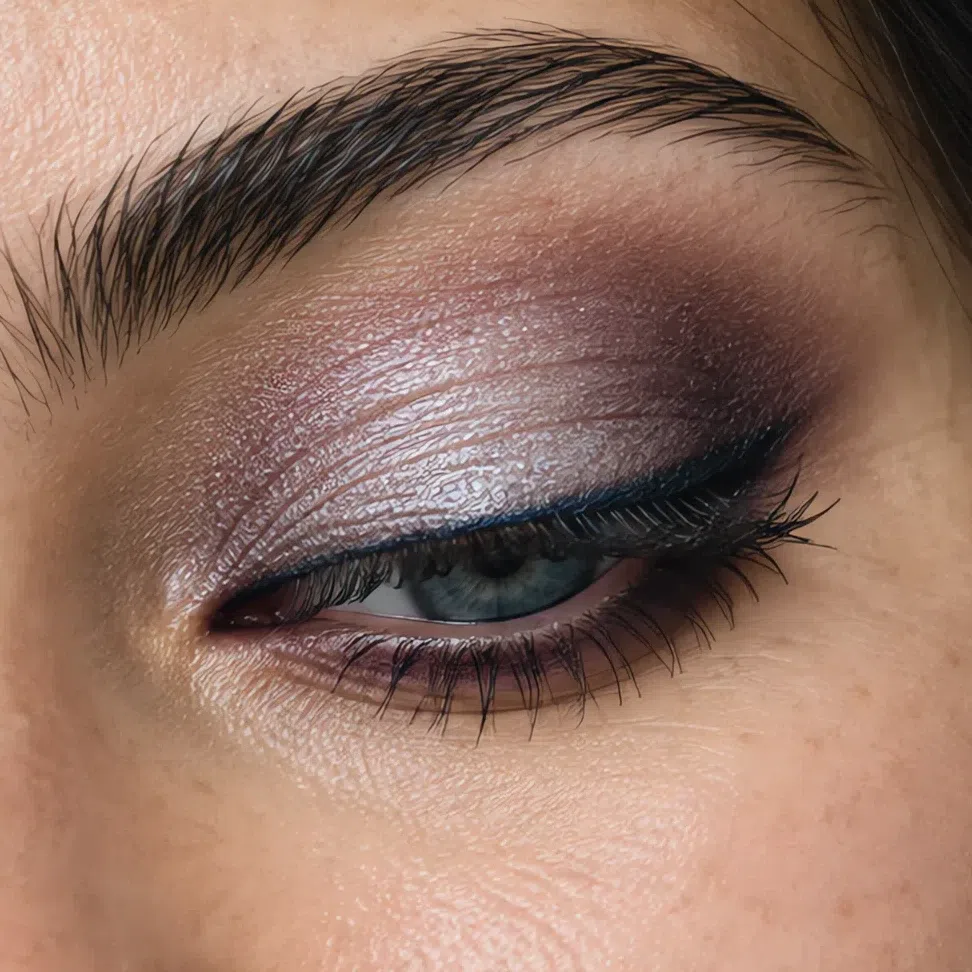
Frost gray on the lid, plum through the crease and past the corner, a midnight line at the lashes. Plum is the opposite of blue on the color wheel, which is why it makes bright blue eyes look brighter still.
 Deepest at the outer corner
Inner lid keeps the day shade
Under the outer lashes only
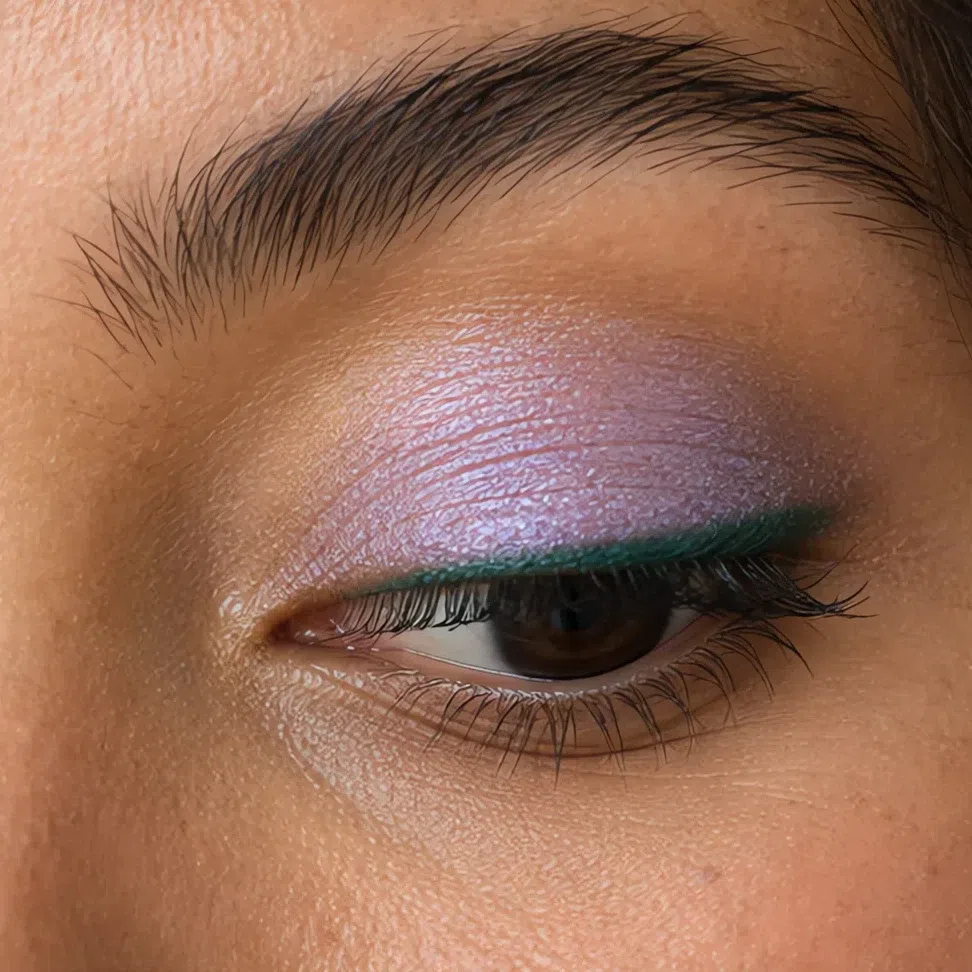
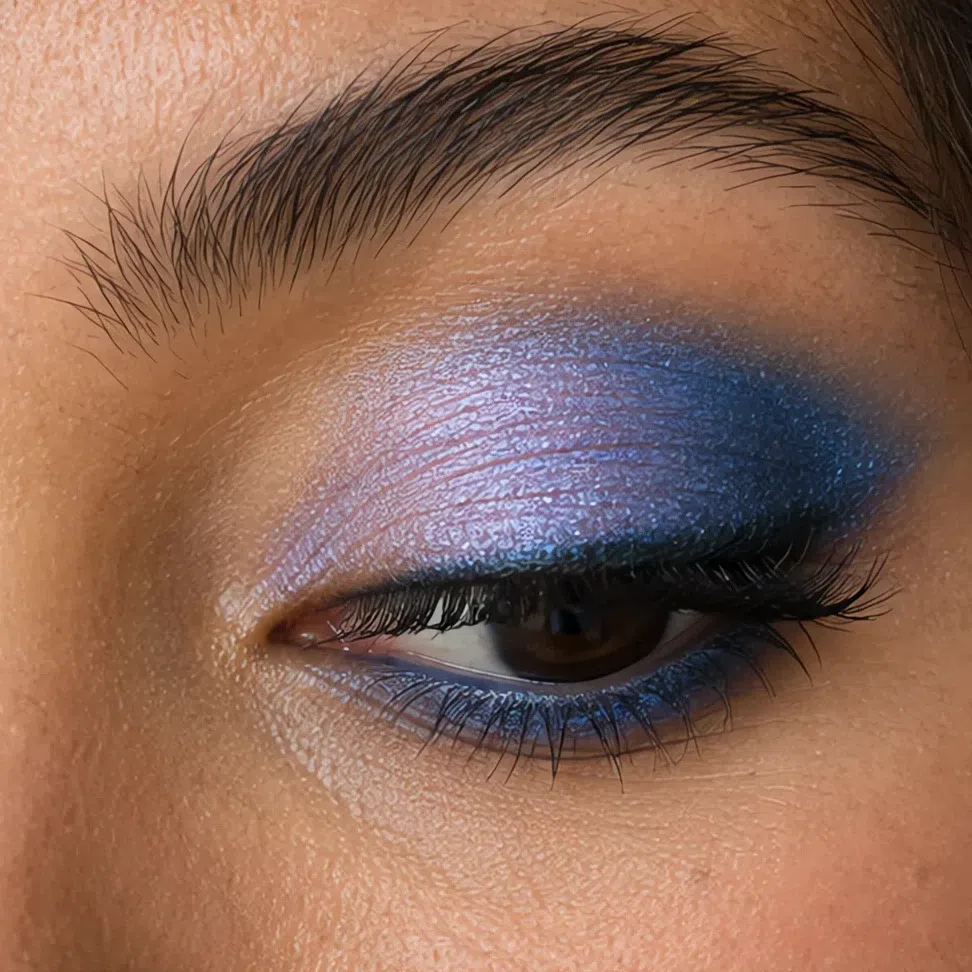
Icy lilac by day, French blue at night - here carried over most of the lid, with the lilac left only at the inner corner. A saturated blue beside dark brown eyes makes the whites look whiter, and on tan skin it stays clean instead of turning gray.
 Deepest at the outer corner
Inner lid keeps the day shade
Under the outer lashes only
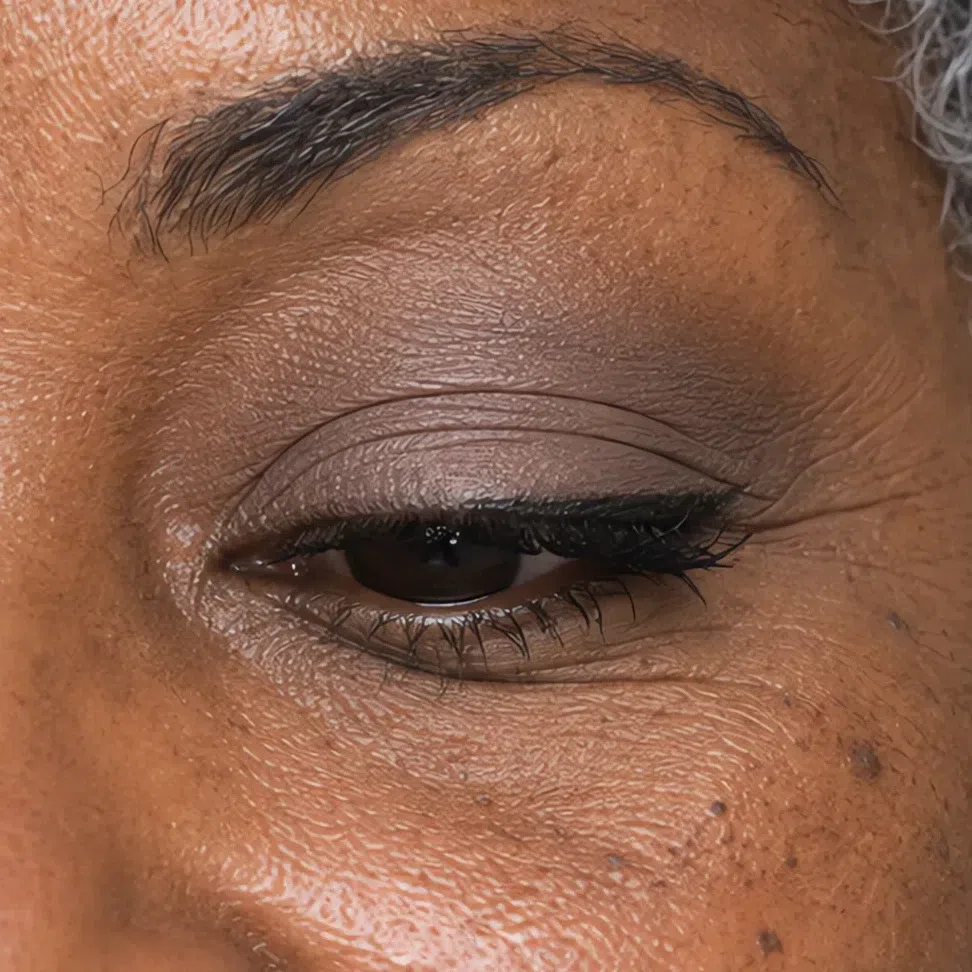
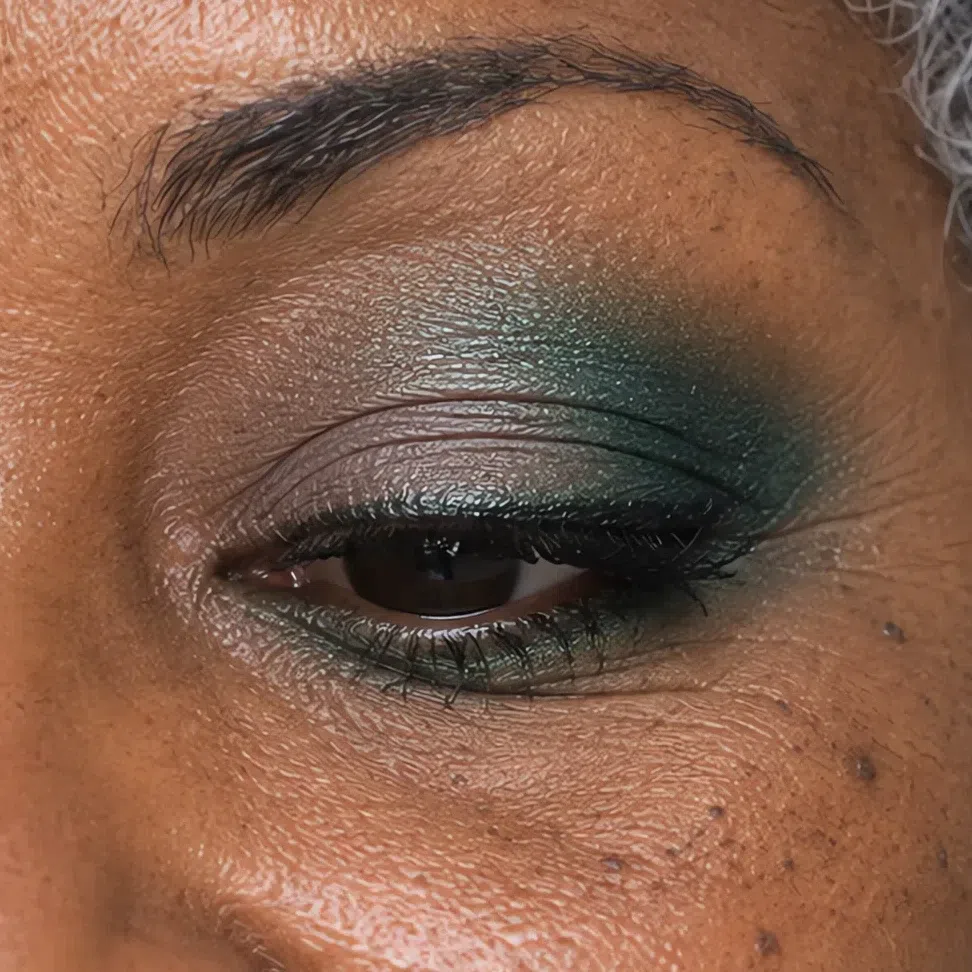
Gray taupe on the lid, jewel green worked into the outer corner, a black line underneath. On deep brown skin a green shimmer catches the light the way a matte dark shade does not, so the eye stays bright even at its darkest.
 Deepest at the outer corner
Inner lid keeps the day shade
Under the outer lashes only
Lips
The day nude and the evening lip come from one cool family - pink to plum, orchid to wine, berry to blackberry - so choosing the evening shade is choosing how dark. If the evening calls for the bright route instead, it is the ruby or magenta from the day lipstick step, worn with a quieter eye.
- Line the mouth in a pencil the color of the lipstick.
- Fill with a brush and blot once.
- Press a second coat into the middle of both lips, then clean up the edge.
- A clean line suits a clear coloring - follow your own lip line.
The rule Your depth chooses the nude; the evening only decides how dark it goes.
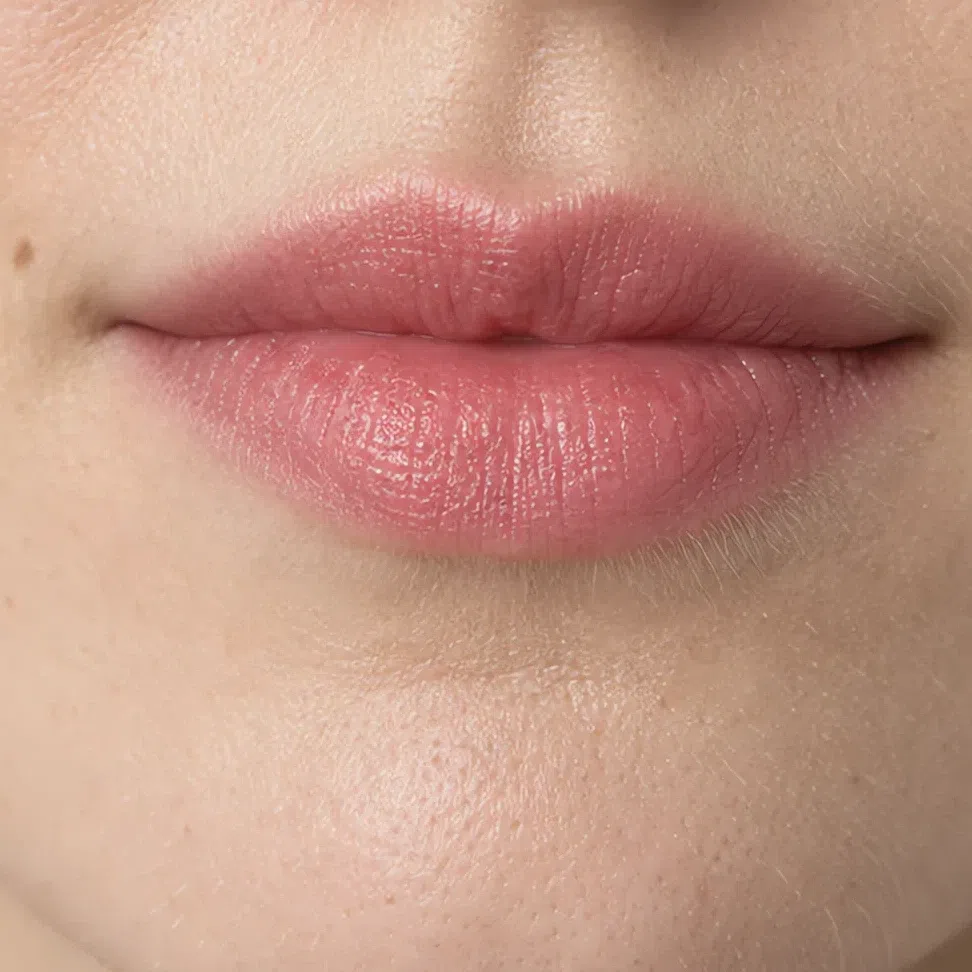
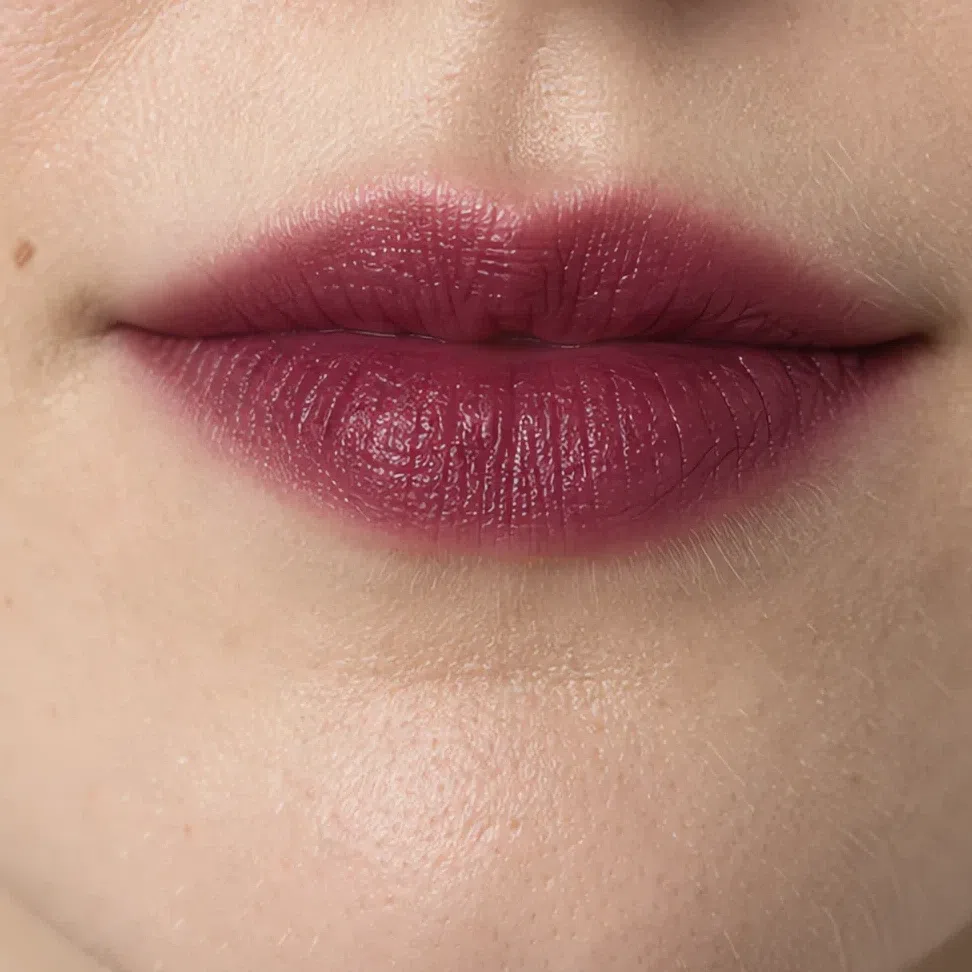
Cool pink nude by day, deep plum after dark. On porcelain skin a near-black plum is dramatic; keep the eye to one jewel shade and it looks intended.
 Line it first
Fill and blot once
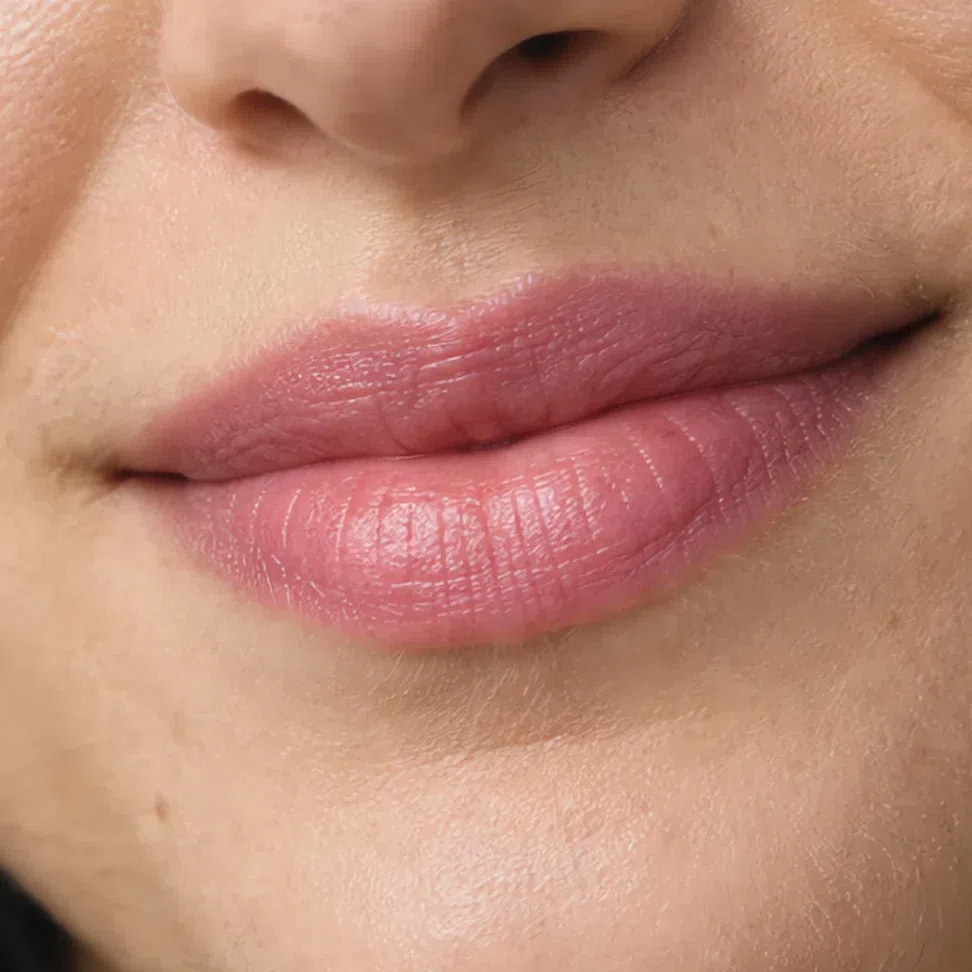
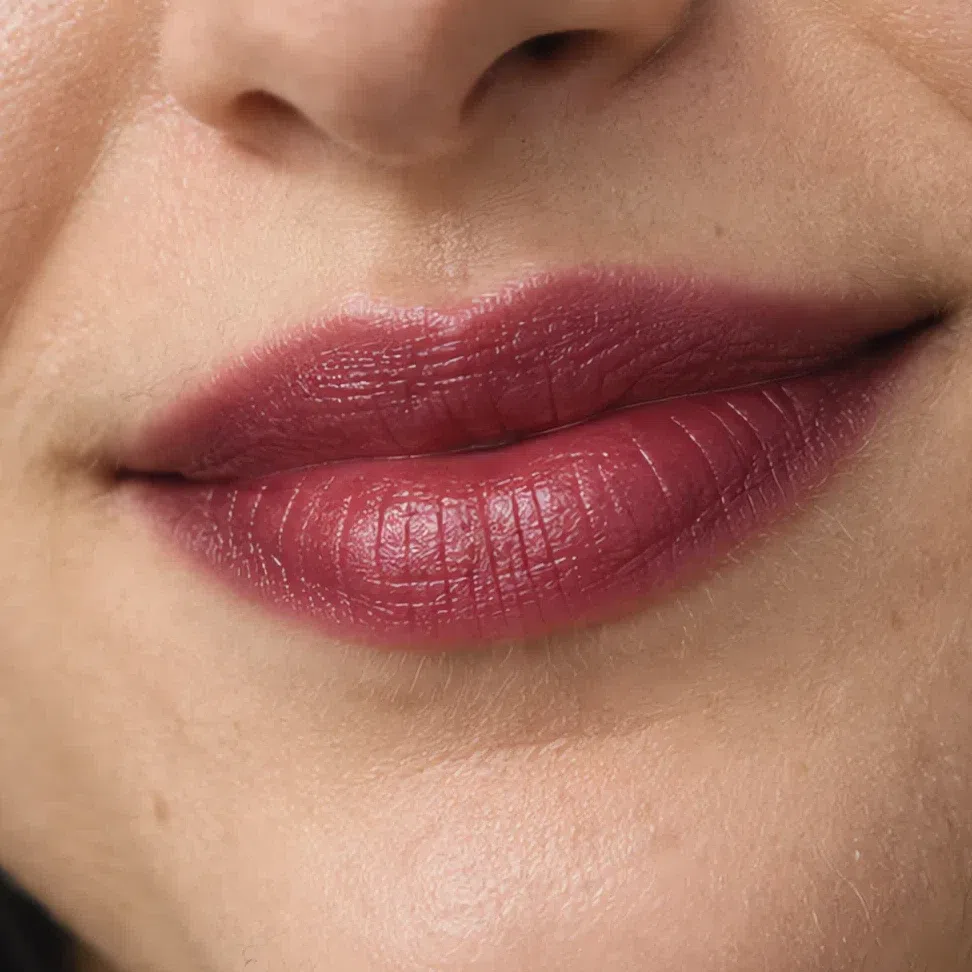
Orchid by day, cool wine after dark. A wine with blue in it deepens the mouth without muddying it, and it stays cool beside olive skin.
 Line it first
Fill and blot once
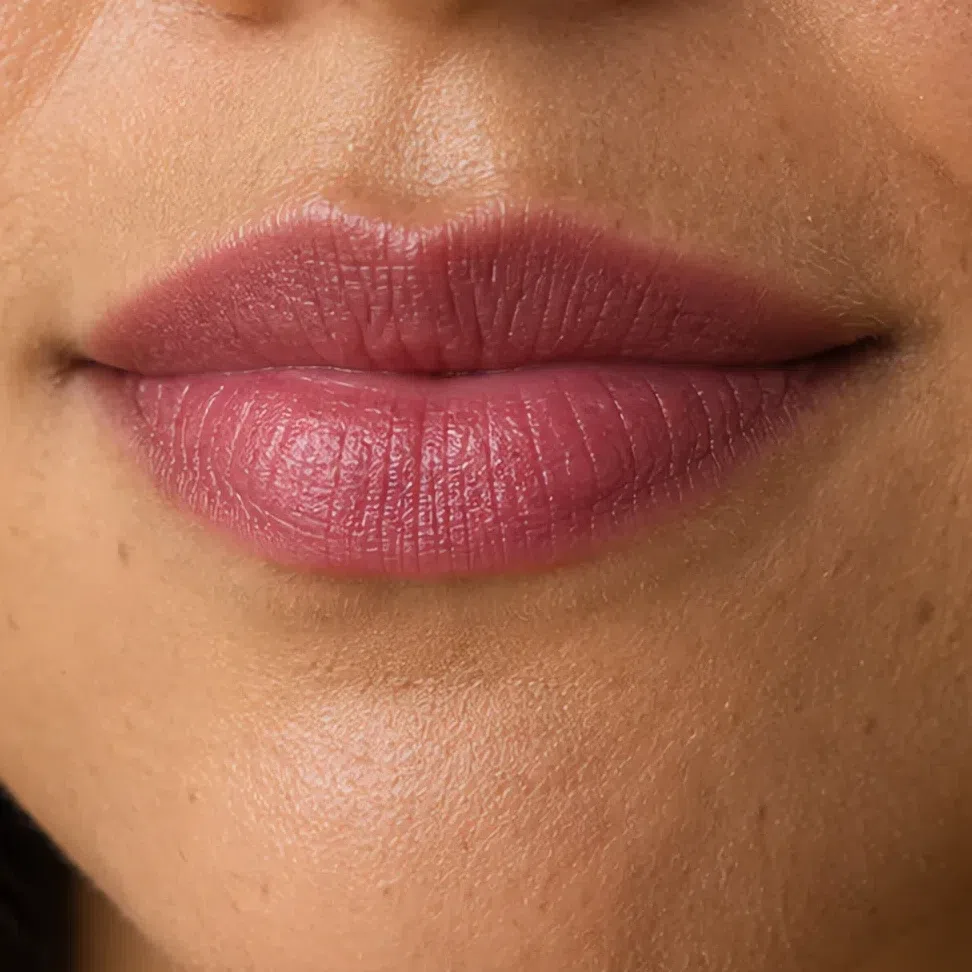
Berry nude by day, blackberry after dark. The step is large, which is the point: a dark mouth on tan skin needs the full move to look chosen.
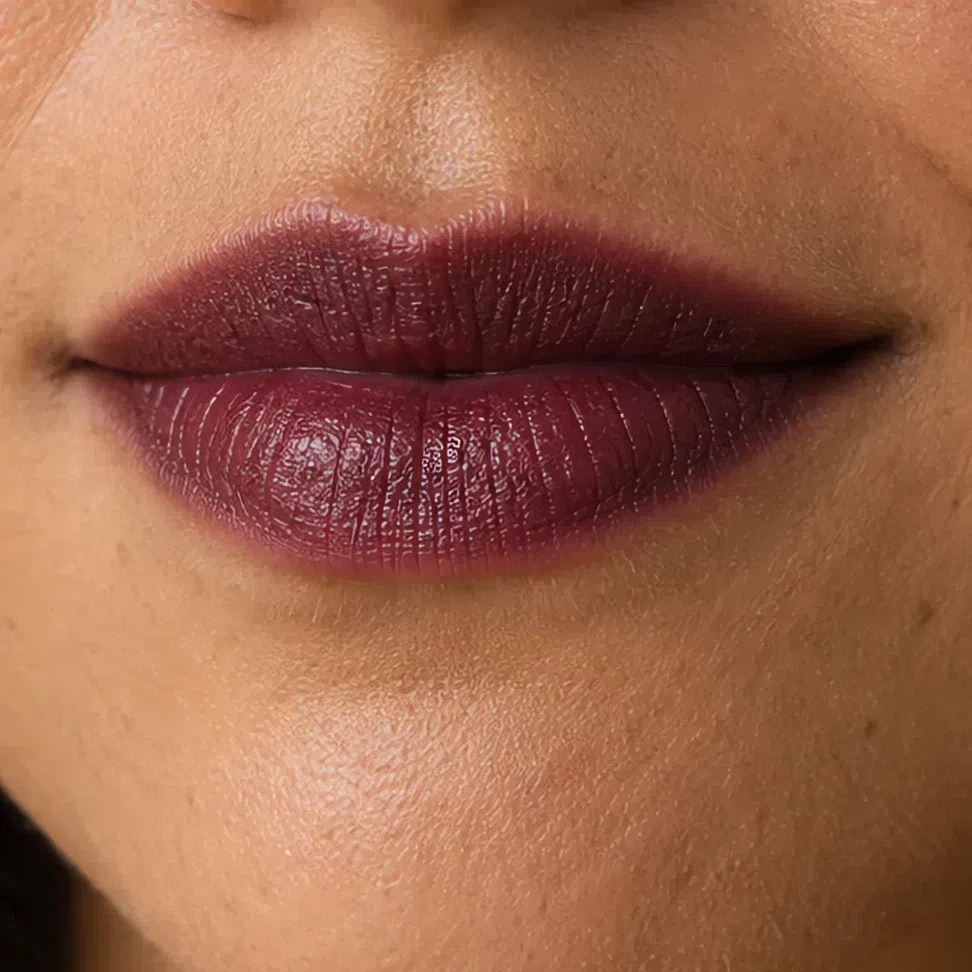 Line it first
Fill and blot once
Berry nude by day, blackberry after dark. On deep brown skin the blackberry reads as rich color rather than as a dark lip, and it keeps its edge in low light.
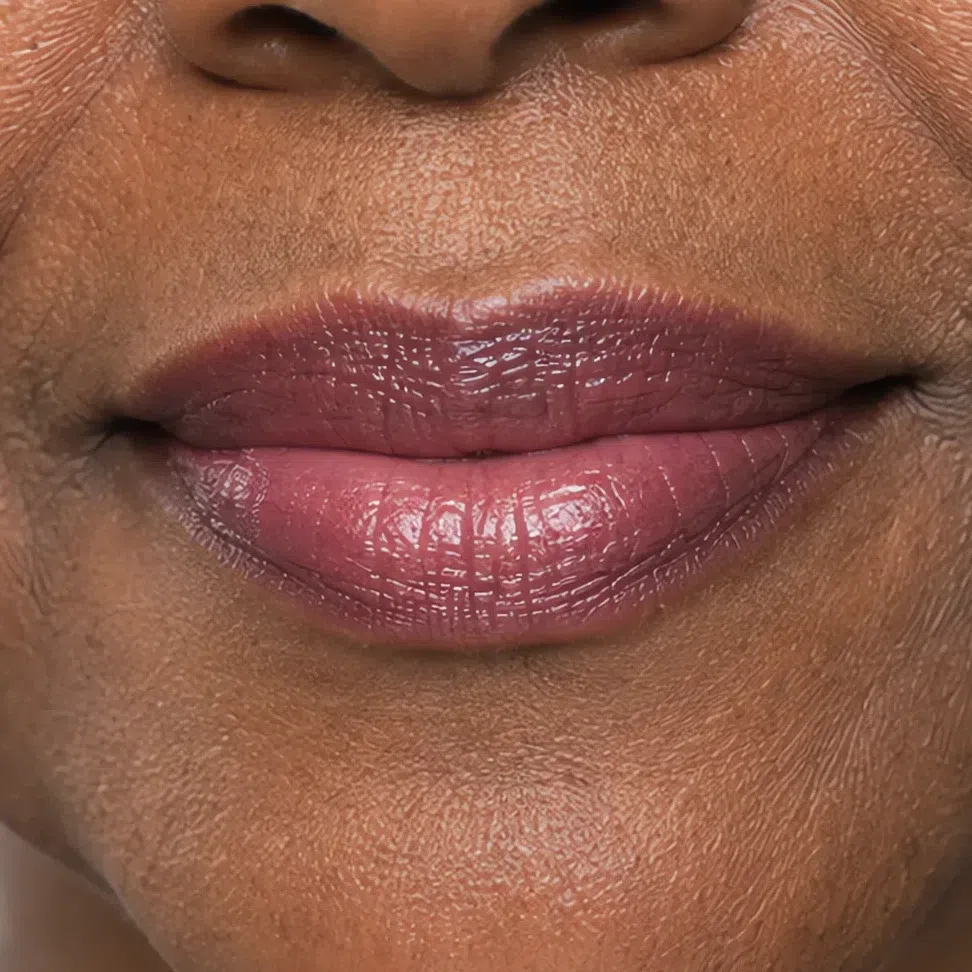
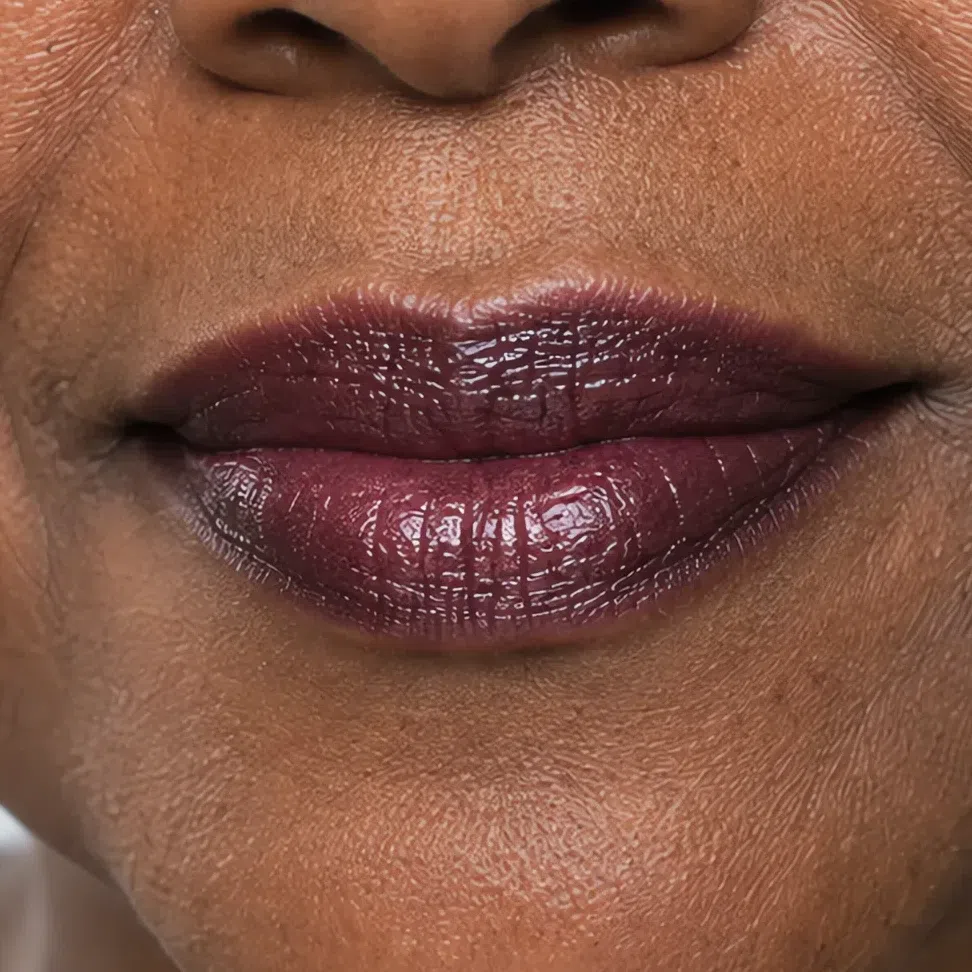 Line it first
Fill and blot once
What must not change
It keeps the icy day shade. Saturated color edge to edge shrinks the eye; at the outer third it frames it.
Same clear pink or berry, same amount. A dark mouth and a stronger cheek at once start to look like a costume.
Keep the daytime shape and color. Heavier brows pull attention away from the eyes, which are what the evening shade is there to light up.
Leave it thin and satin. Extra powder flattens the clarity of the skin, and under flash a matte base next to a jewel eye looks chalky.
In short: at night go more saturated and darker, never softer or warmer. Whether a product actually does that depends partly on its color and partly on its surface, which the label barely describes.
Why the right shade can still look wrong
Sometimes the shade is right and the face still looks wrong, and the finish is the reason. A lipstick or a blush is two things at once - a color and a surface - and the surface, meaning how much light it reflects and what that light looks like, is the part labels skip. The photos below keep one ruby on one mouth and change only the surface.
One shade, four finishes
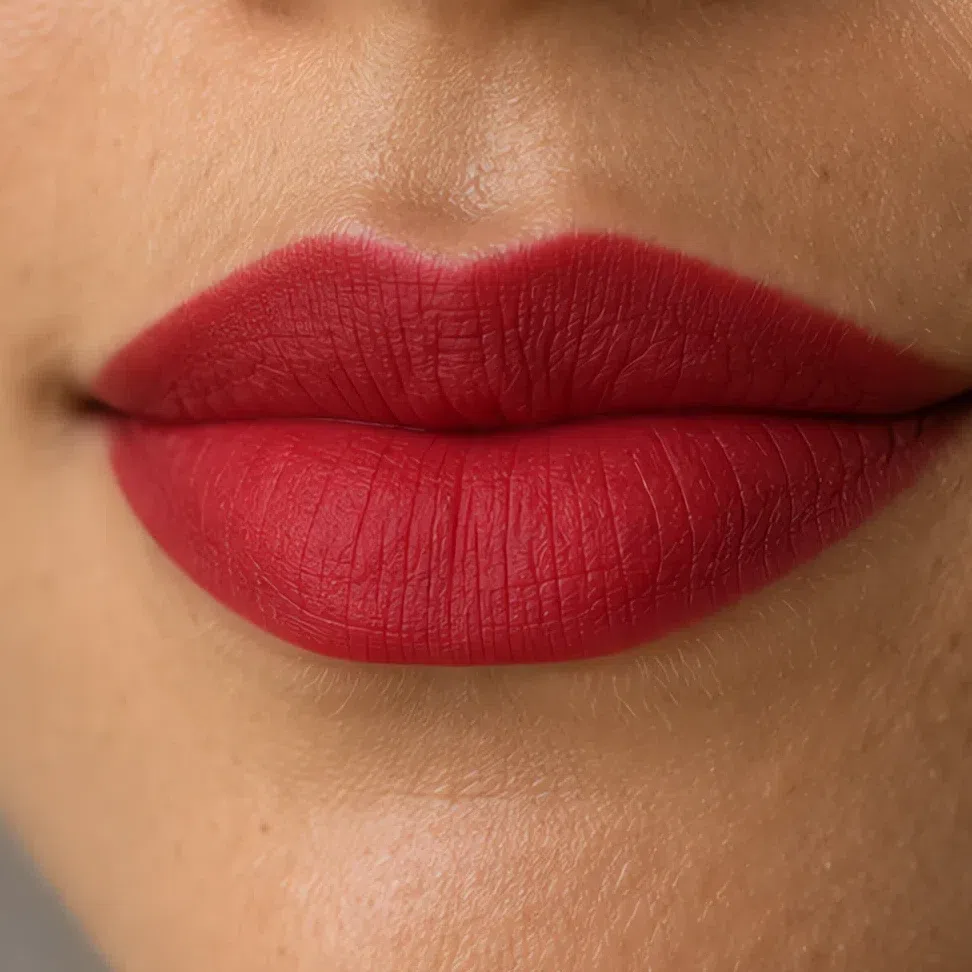
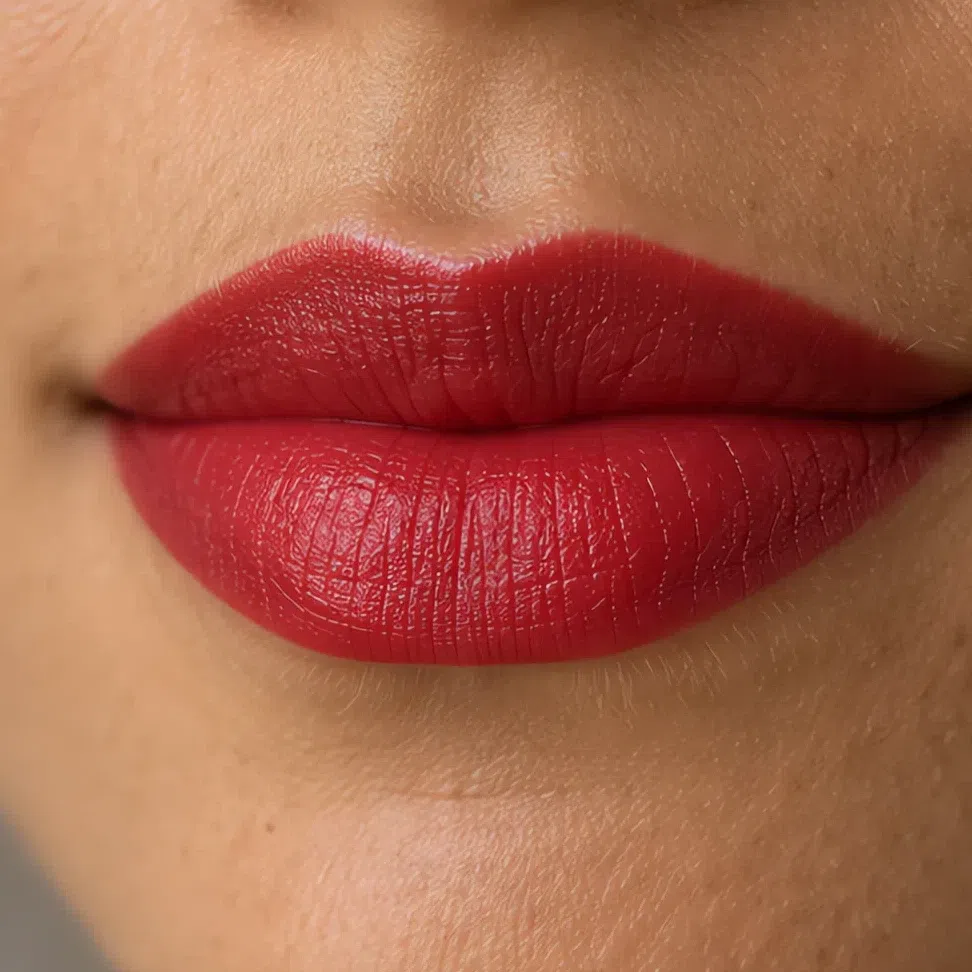
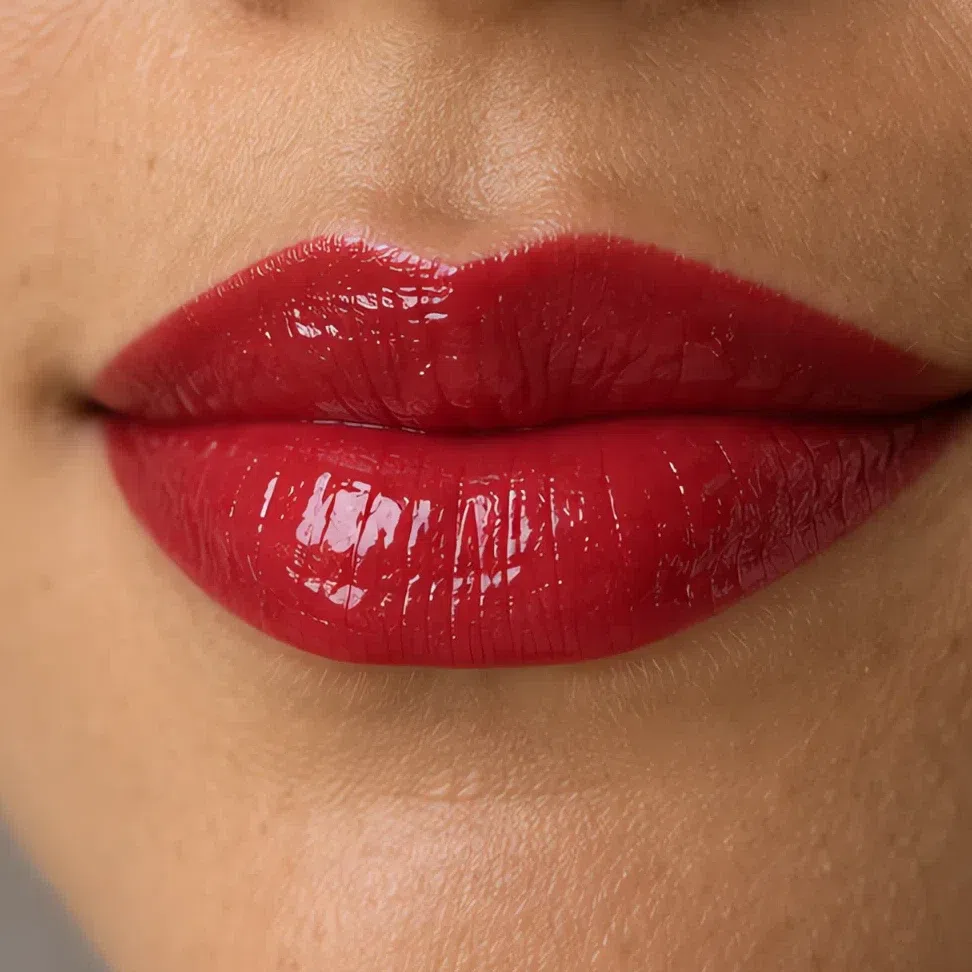
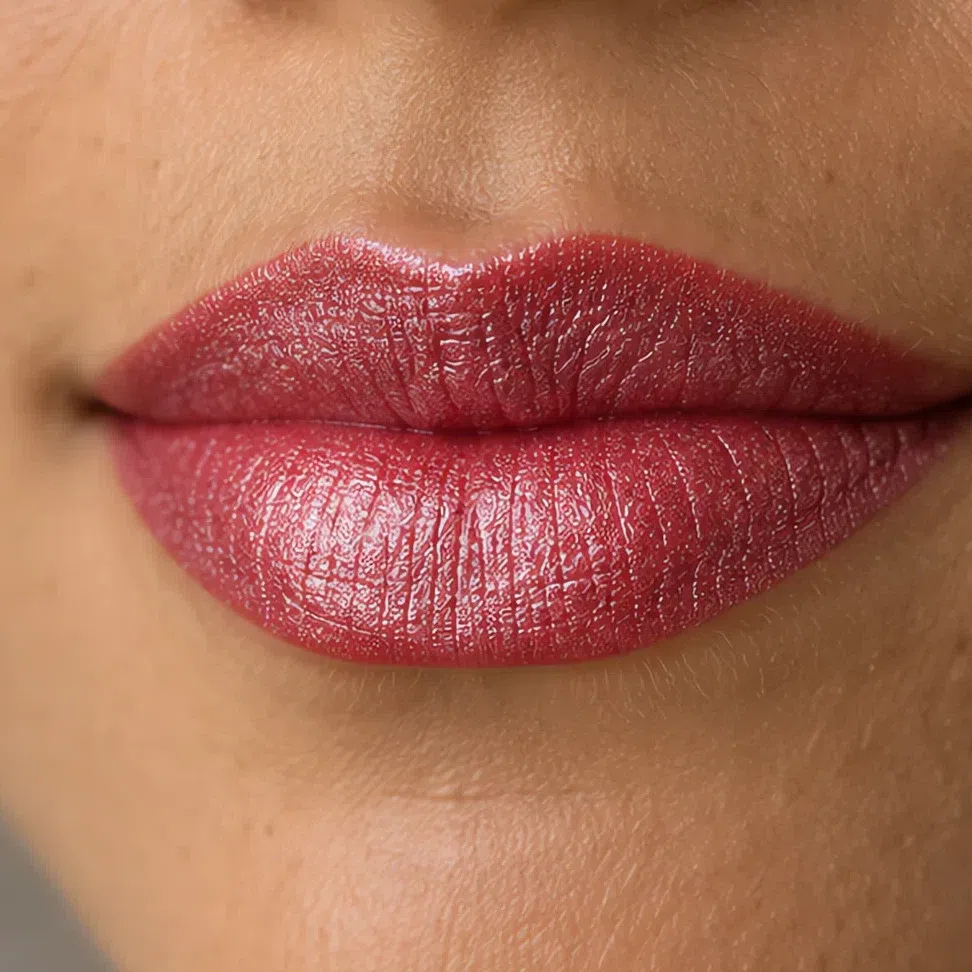
Across the four photos the reflection is what moves. Matte gives none back; satin spreads a soft band of it; gloss pulls it into one bright specular highlight, the mirror-like spot a smooth surface throws off; and frost breaks it into pale shimmer over the whole mouth.
The second is what the shine is made of, and on a Bright Winter that decides more than it does on any other coloring, because clarity is the whole point. Clear gloss is pure light and keeps a saturated color saturated. White and silver pearl are cold, so they are yours on the lid and cheekbone, but laid over a bright color they gray it. Gold shimmer warms whatever it touches. In the shop, tilt the product under the light: a clear or silver flash belongs to you, a gold one does not.
The same question, on skin
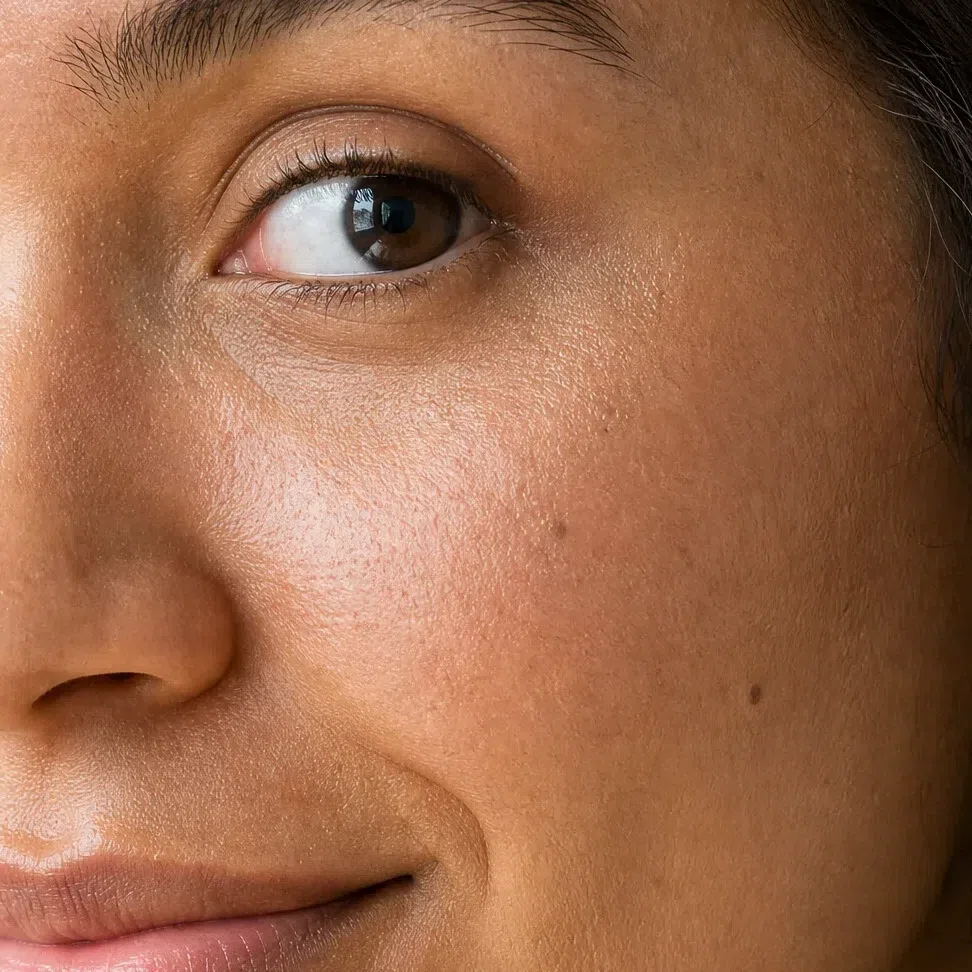
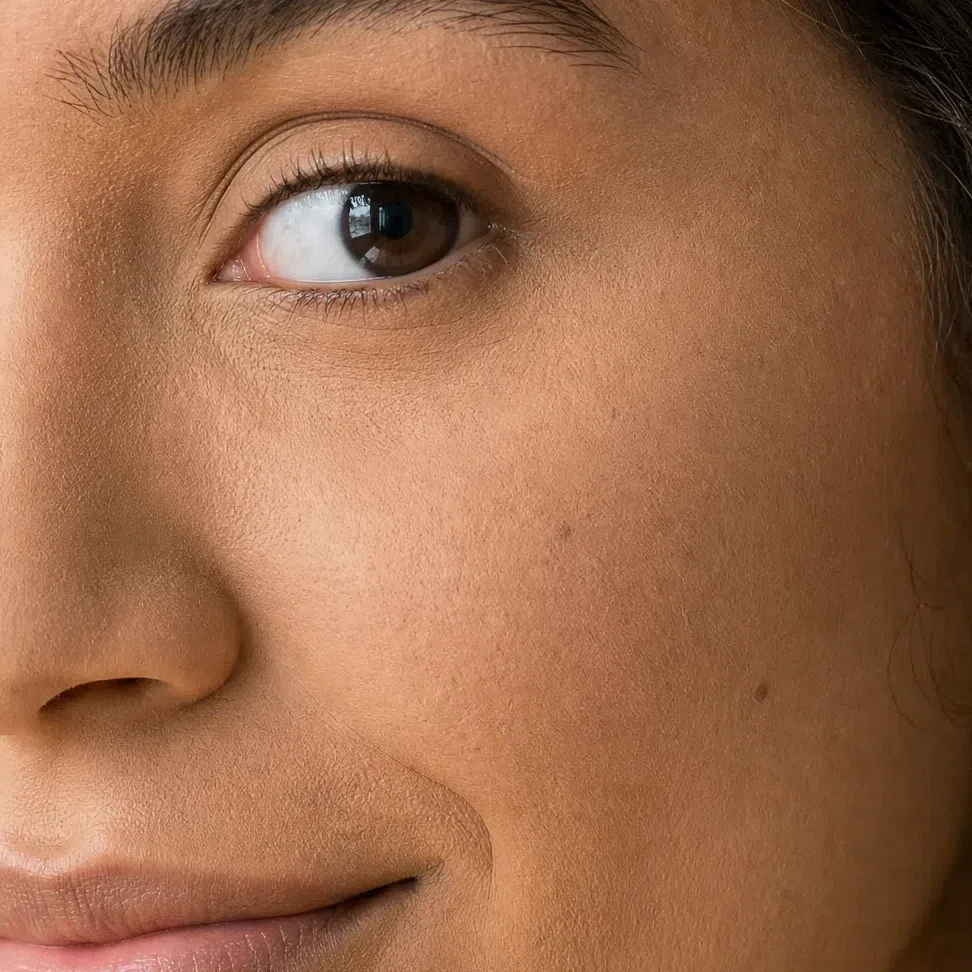
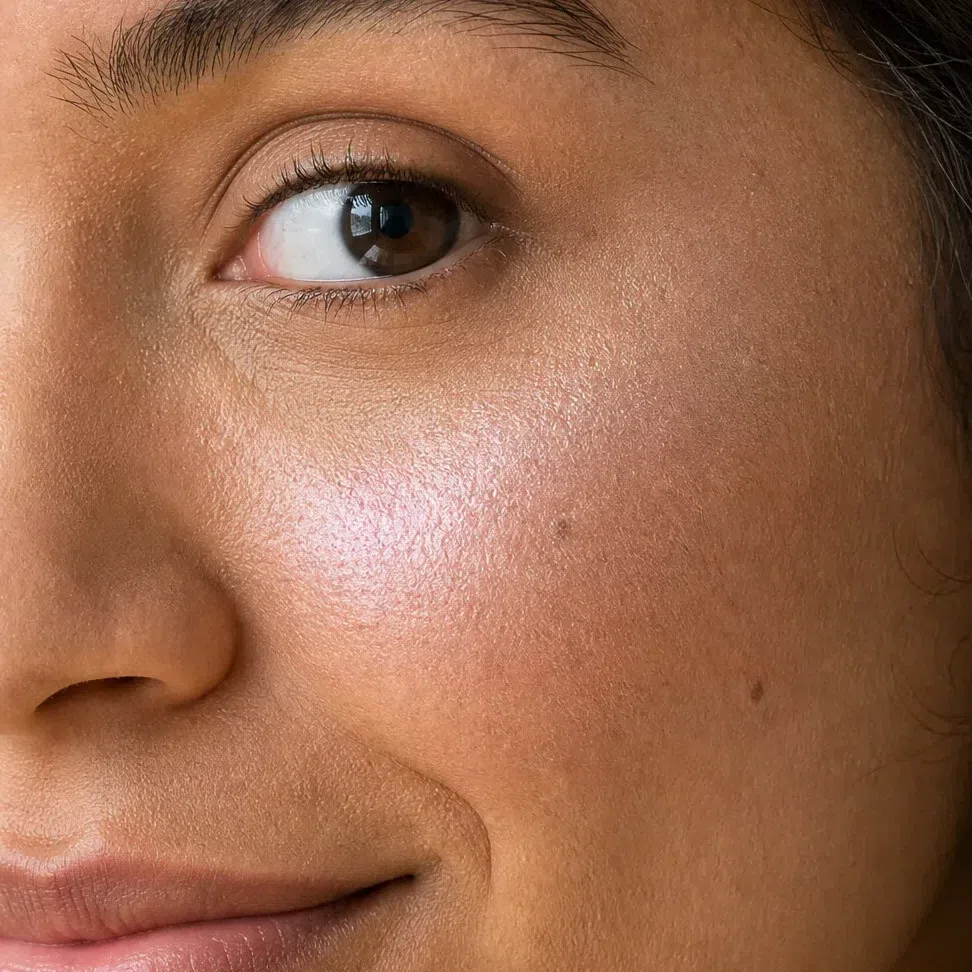
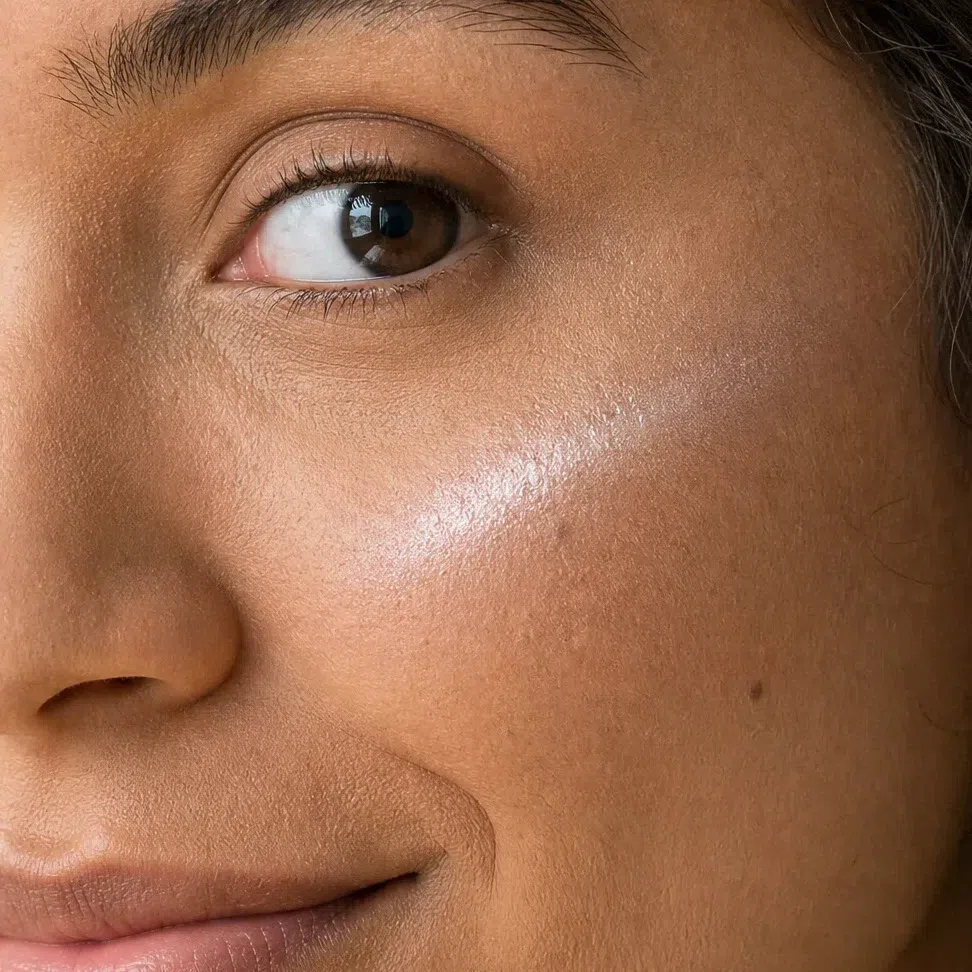
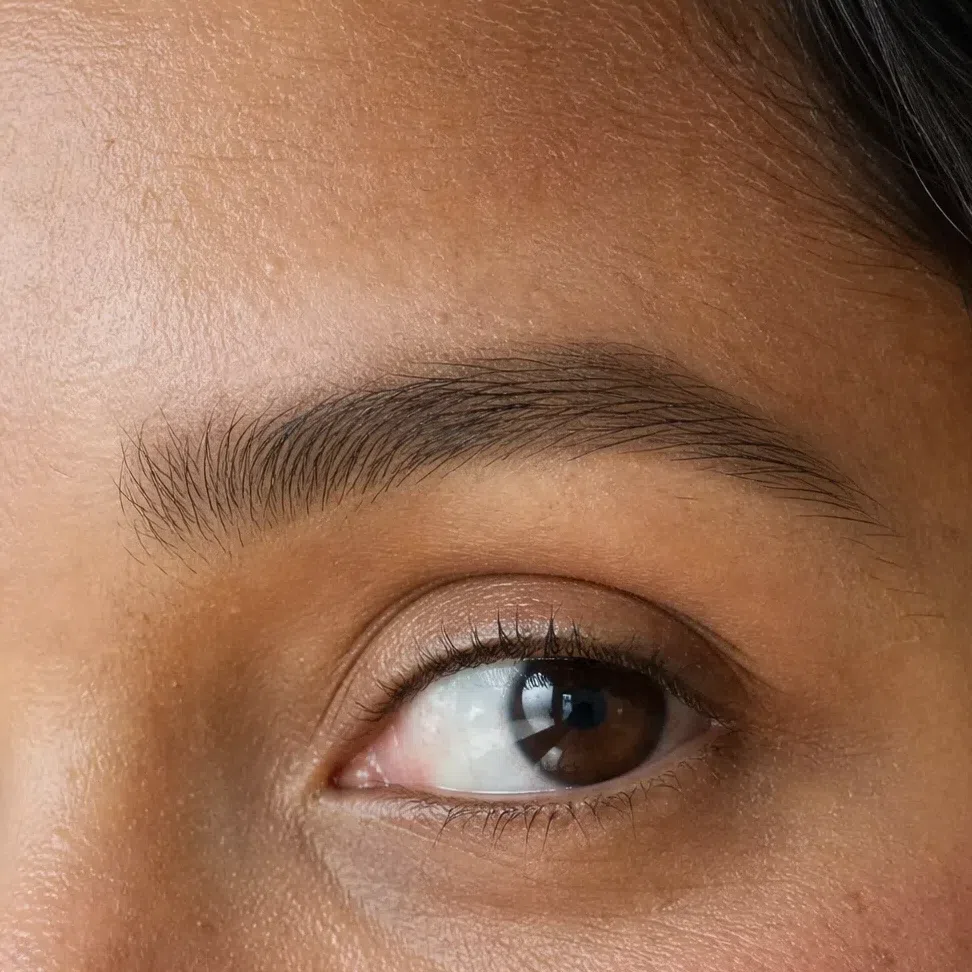
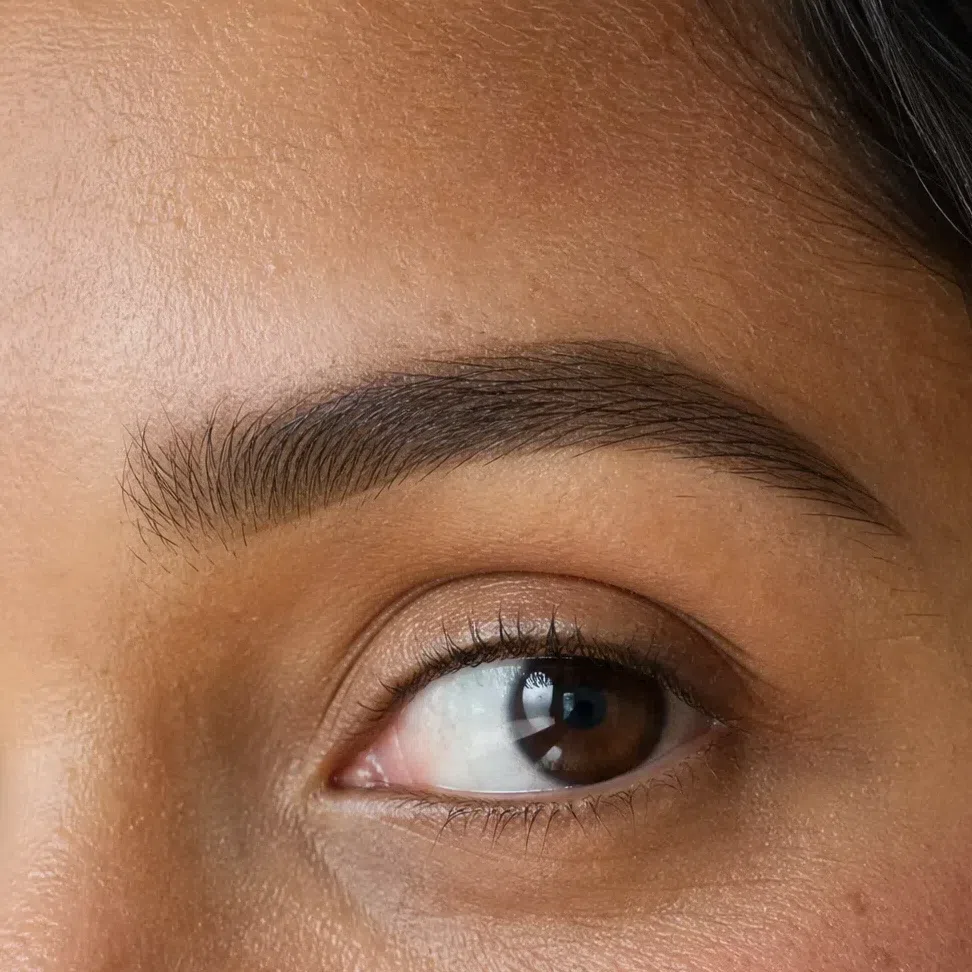
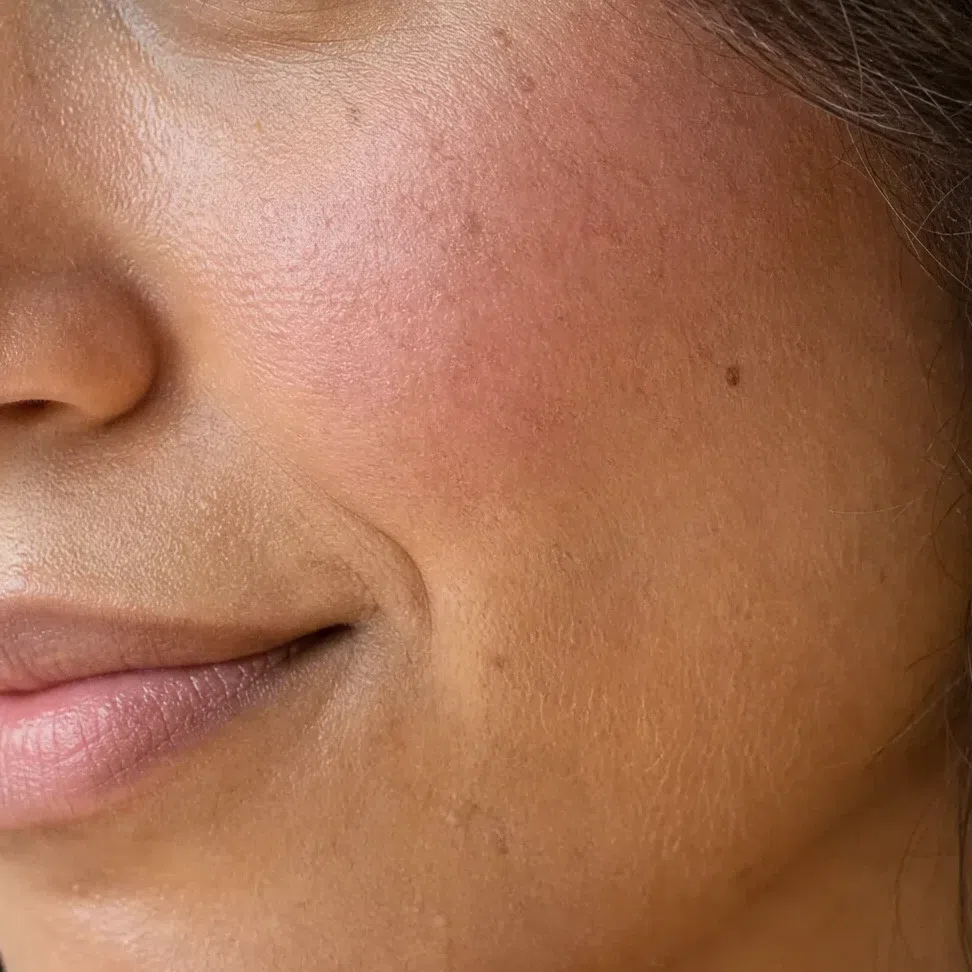
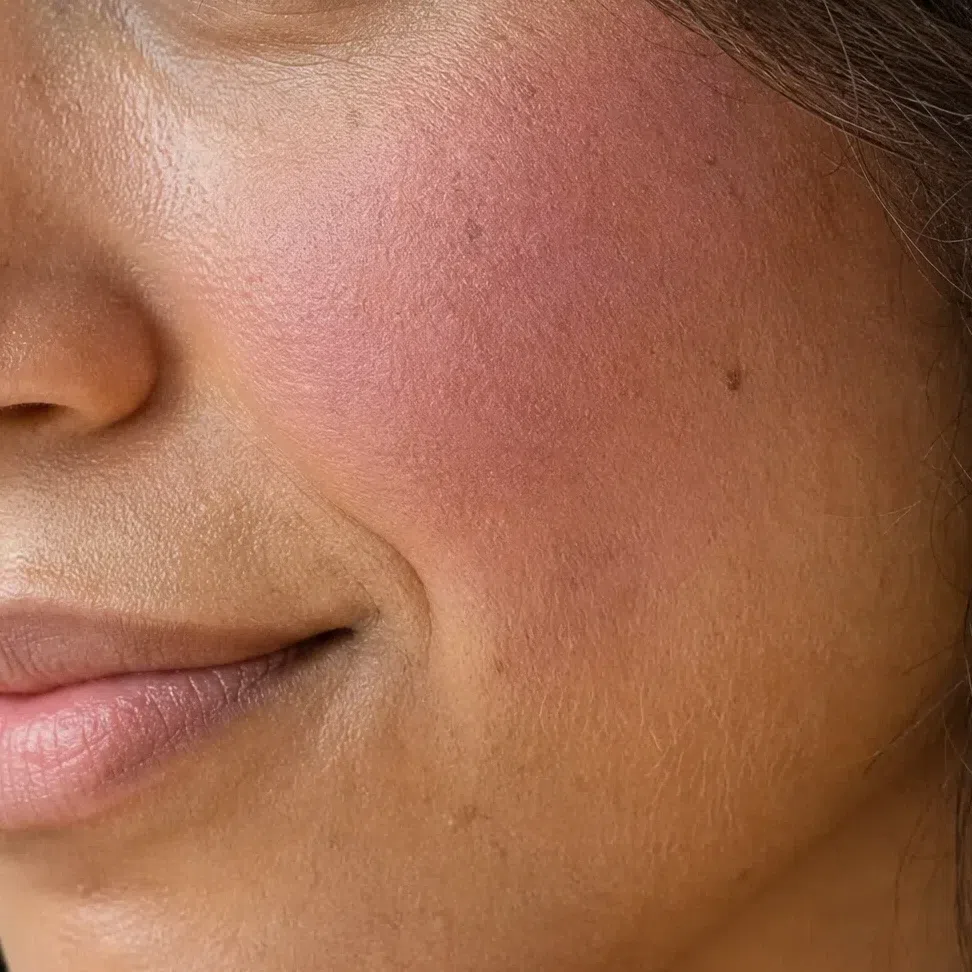
On skin a finish does more than on the mouth, because skin has its own texture to keep or to cover. In each pair, look at how much of it survives.
What that means, product by product
- Base
- Thin satin or natural in a cool or cool-olive shade. Powder only where you shine.
- Blush
- Cream or powder in clear pink, raspberry, plum pink or berry, strong enough to see.
- Eyeshadow
- Satin and frost in the icy shades by day; jewel shimmer and gunmetal at night. Pass on bronze, copper and gold.
- Brows
- Powder or tinted gel in a cool shade matched to your hair.
- Lips
- Satin or gloss first, soft matte second. Frost stays on the eyes.
- Highlighter
- Icy champagne, silver, pearl pink or lilac pearl - diffuse or a crisp line, never gold.
Control the shine where it starts and nowhere else: a translucent powder on the forehead, the sides of the nose and the chin, blotting papers at midday, and the cheekbones left alone. A face powdered flat all over loses the clarity that makes ruby, magenta and black look natural on you.
How to get the right one home
None of the above helps until the right shade is in your bag, and that step is what shade lists leave out: a test you can run at the counter, the words on a label that signal a soft or golden product, and the reason a stripe on the back of your hand proves nothing.
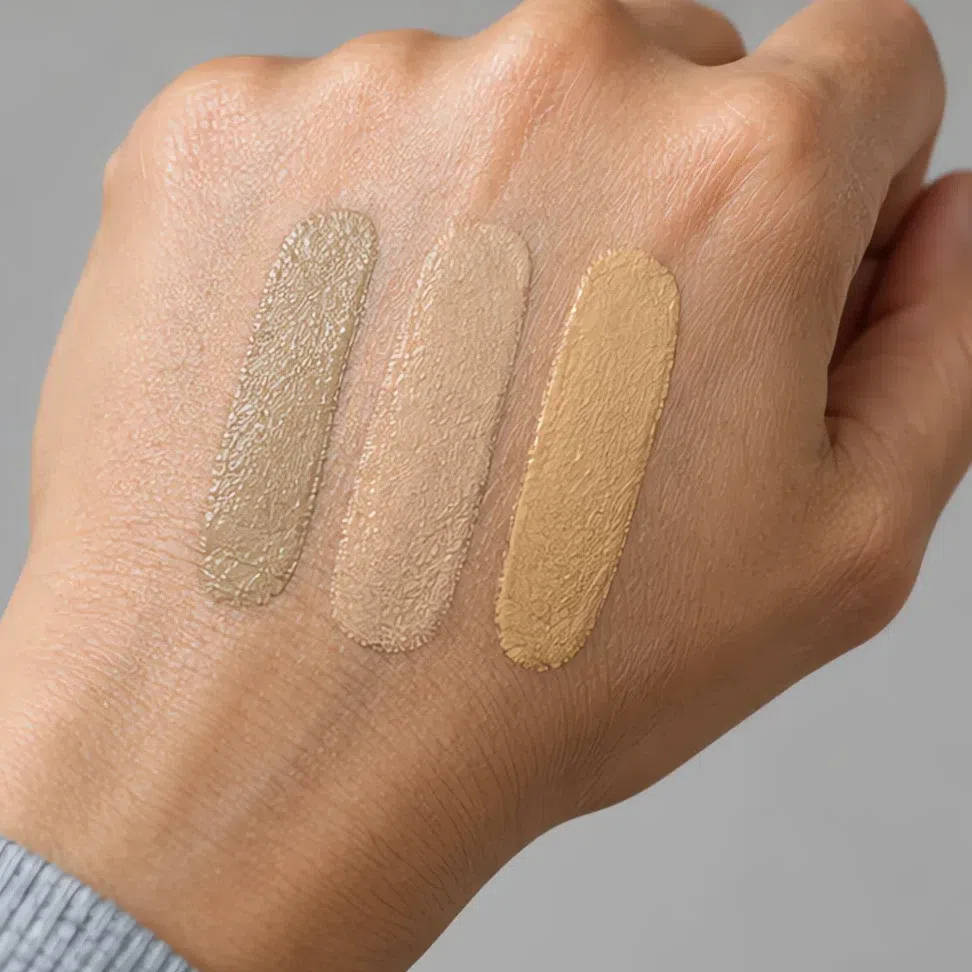
The jaw test
- Paint three candidates from the jawline down onto the neck - not the wrist, not the hand.
- Blend all three.
- Walk them to a window. Shop light is warm, and it makes a golden base look neutral on cool skin.
- Buy the stripe that has vanished, not the one that looks nicest.
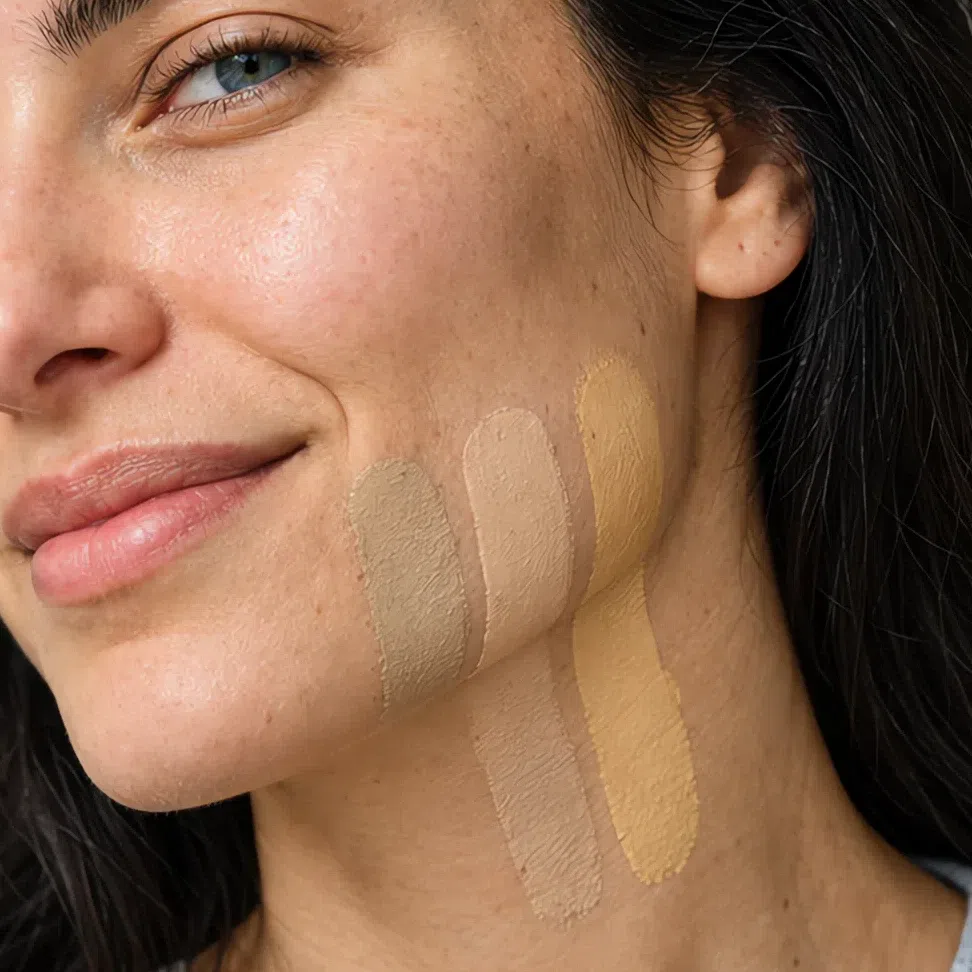
Where you sit on the foundation grid
Behind every foundation stand is one grid: depth down the side, undertone across the top. Here it is with the Bright Winter squares outlined, one per depth, all in the cool column, with olive as the one neighbor worth a test.
Whatever your depth, you are asking for the same thing: your number, in a cool letter. Porcelain and espresso Bright Winters differ only in the number, so name your depth and cool rather than a shade from an ad.
Treat this as orientation, not as an order form. The outlined squares are values from this site, not from any brand: each range draws its letters slightly differently and a depth number means nothing outside its own brand. The neutral, olive and golden squares are for recognition - your cool shade shifted warmer and labeled the way a shelf would label it. Olive is the one worth testing on this coloring: the palette’s own Light base is a cool olive beige, and on skin with a slight green cast it can pass the jaw test. Neutral tends to look flat next to bright eyes, and golden looks yellow.
Reading a shade name
Two traps, and the second catches the readers who have escaped the first. The first is the soft default: natural, soft, dusty, muted, mauve, the language of the "wearable" shelf, and on this coloring it reads as tired. The second is the warm bright: coral, tangerine, poppy. Those are saturated enough, and they belong to Bright Spring. What you want is both at once - clear and cool - and the label words that promise it are the jewel names and the blue ones: ruby, fuchsia, magenta, blue-red, icy.
What the finish words on a label actually mean
- Satin, natural, skin-like
- The base finish to look for.
- Gloss, vinyl, lacquer
- Clear shine is the most flattering lip finish for this coloring - over ruby or magenta it looks polished, not wet.
- Radiant, luminous, glow
- Tilt it under a lamp: a silver, pink or lilac flash is yours, a golden one is not.
- Metallic, foil, chrome
- Gunmetal, silver, jewel green or blue foil on the lid is some of the best evening makeup this coloring has. Gold, bronze and copper foil are the exception.
- Frost, pearl, iridescent
- Icy frost is one of your shades on the eyelid. Over a bright lipstick it chalks the color down - keep it off the mouth.
- Blurring, soft-focus, velvet
- Usually a soft matte. Fine in a saturated shade; in a pale one it can look powdery next to bright eyes.
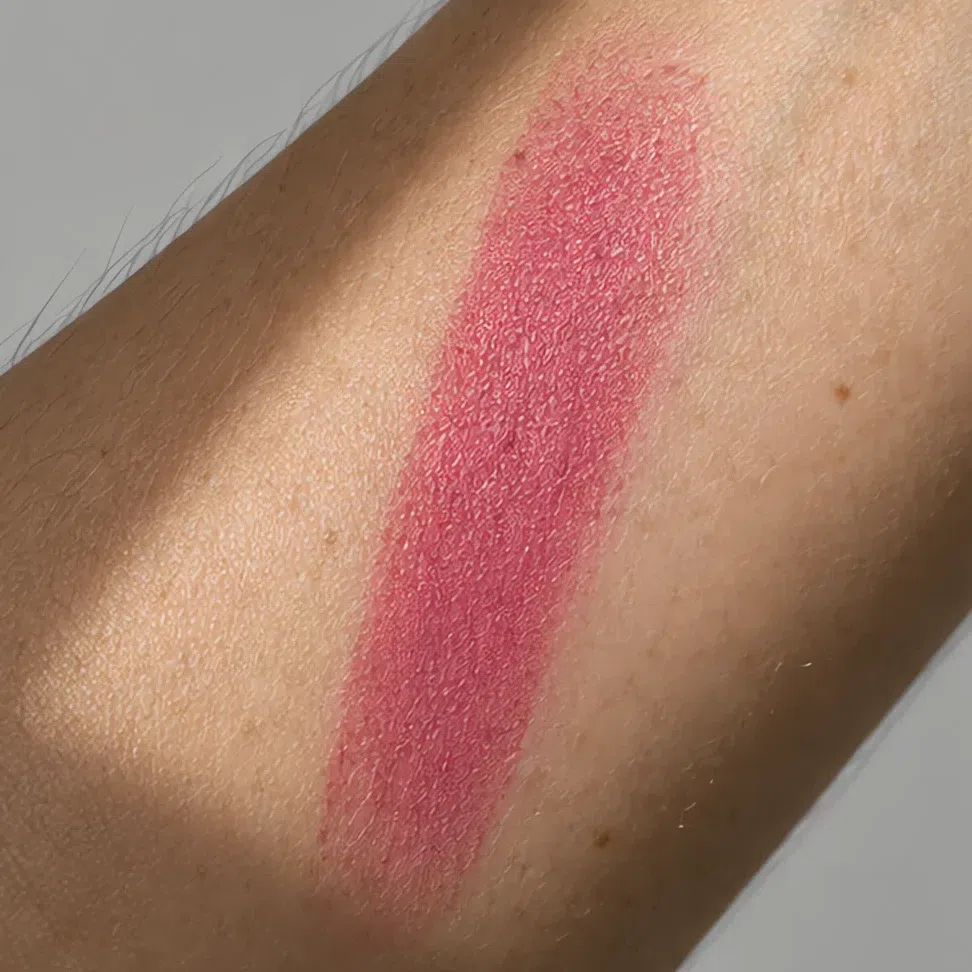
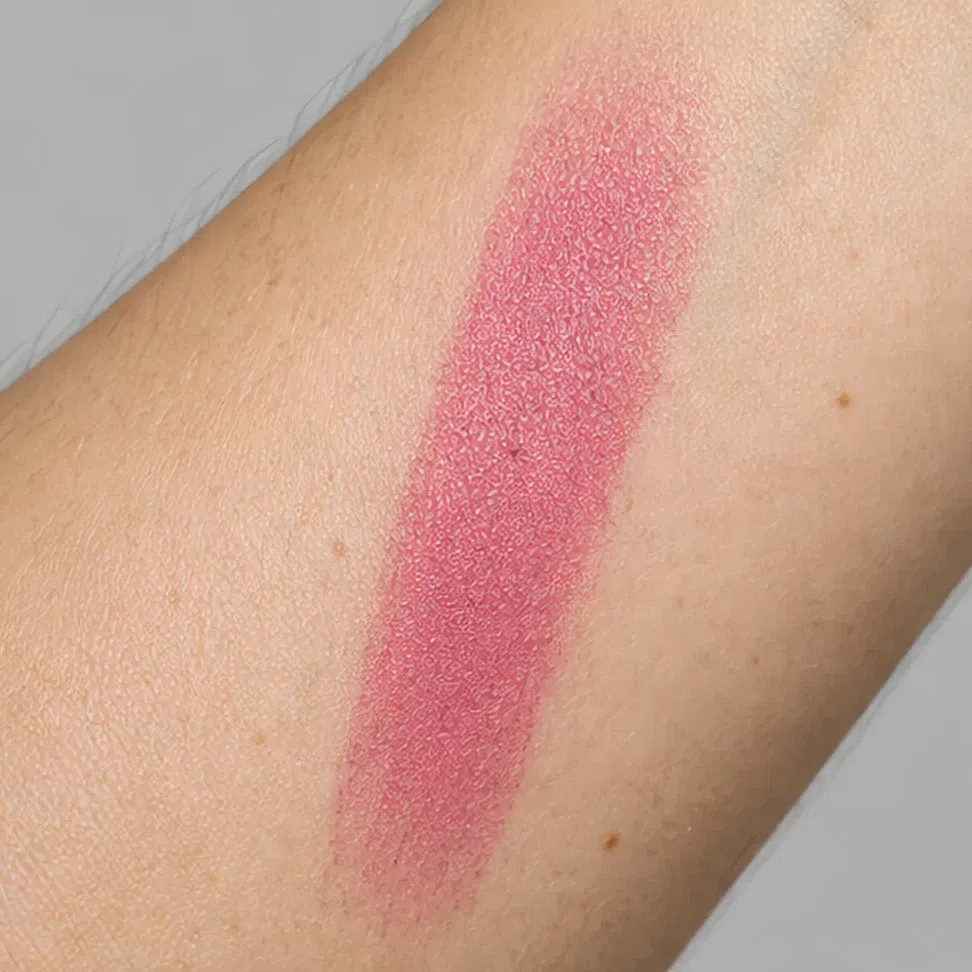
Judging a swatch photo online
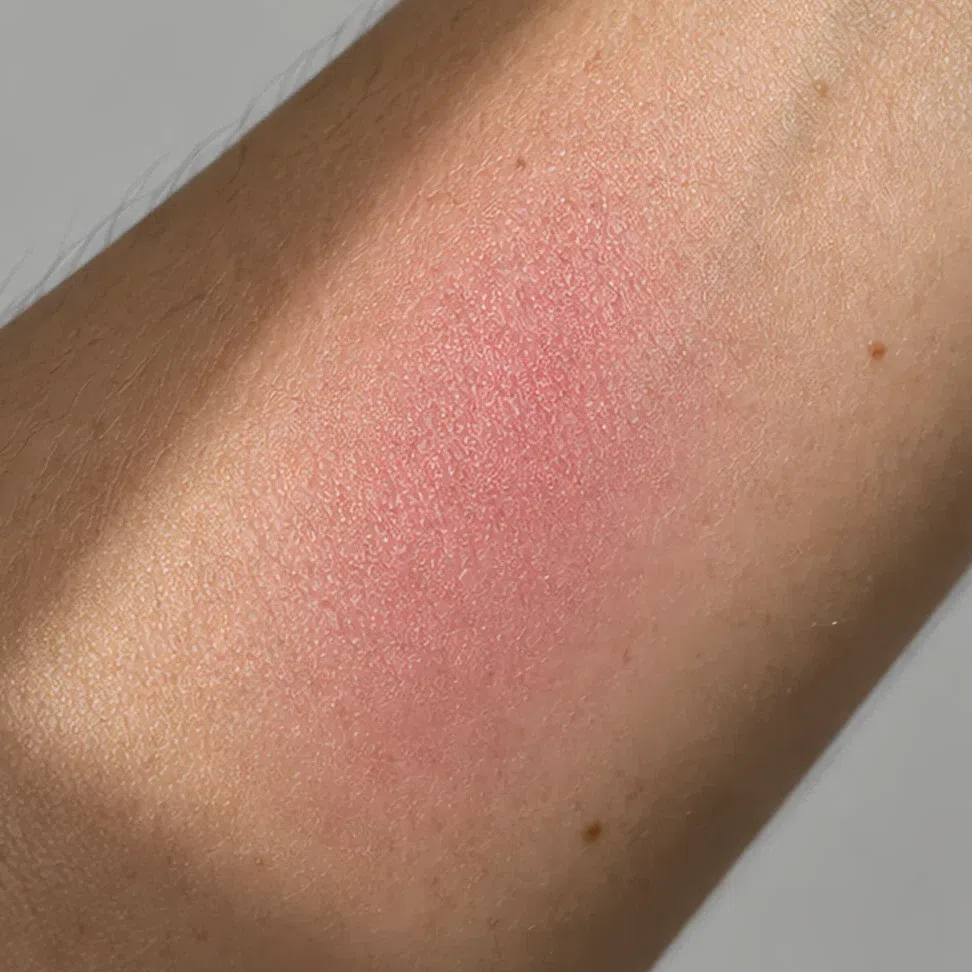
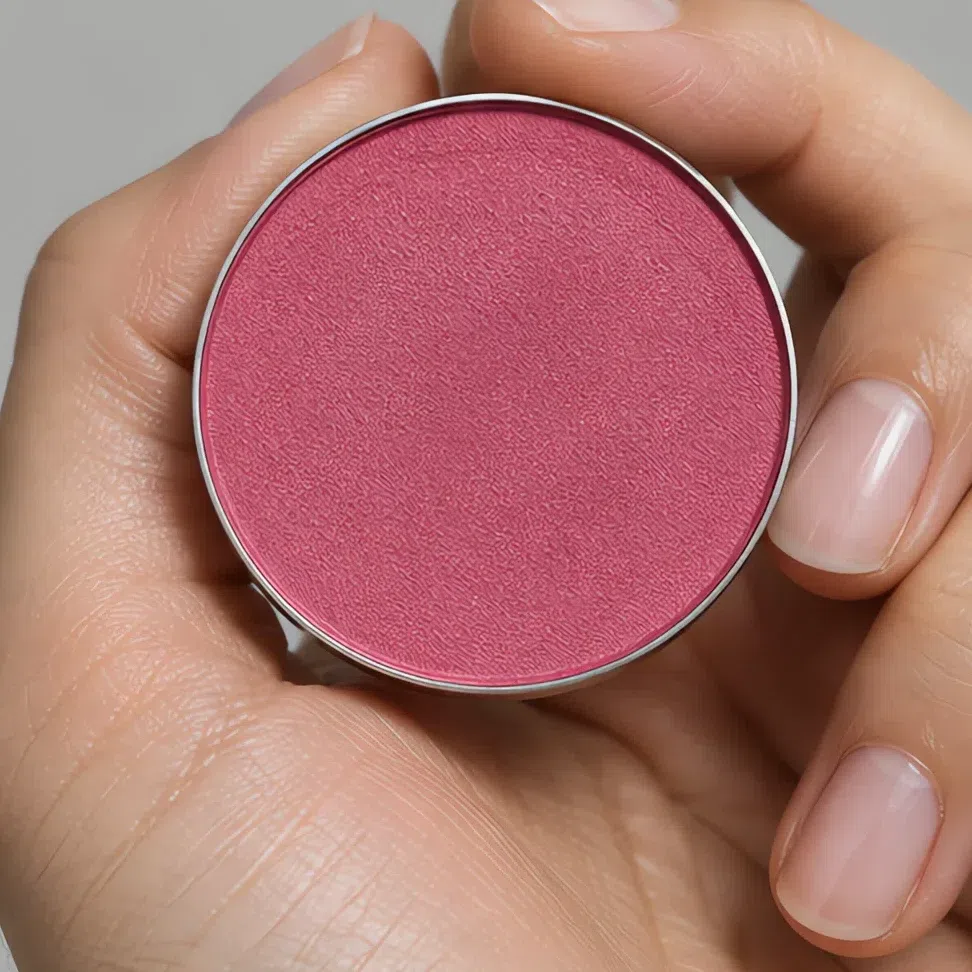
Brands light their product shots brightly, evenly and a shade warm, and that particular light erases exactly the difference a Bright Winter shops for. A clear cool pink looks gentler than it is, a warm one looks neutral, and fuchsia and coral pink start to resemble each other. Prefer a swatch on skin to a picture of the pan, and a photo with a shadow across it to a flat, evenly lit one: undertone shows up where the light fades.
Formulas change, shade names change and whole lines disappear from one season to the next, so a list of products would be wrong within months, and every wrong recommendation is money out of a reader’s pocket. The hexes, the label vocabulary and the jaw test do not expire; they work in any store and on brands that do not exist yet.
When it does not work
You have the shades, the order they go on and a way to test them before you pay. This last part is for the day something looks wrong in the mirror and it is not obvious which product did it.
Two ways it goes wrong
The makeup fades and you look tired
- What it looks like
- Everything is on, and the first thing anyone sees is still your eyes. The mouth disappears by noon, the cheeks look gray rather than flushed, and in photos the skin looks flatter than it does without makeup.
- Why
- The shades are soft: dusty rose, mauve, taupe-brown, a beige nude - the "natural" default most makeup is sold as. Bright Winter eyes and hair are clearer than any of it, so a soft shade does not read as subtle. It reads as fatigue.
- Fix
- Go clearer, not darker. Raspberry instead of dusty rose, frost gray instead of taupe-brown, ruby or a cool pink nude instead of beige, and a black line at the lash roots. Each looks strong in the pan and like your own face in the mirror.
The makeup arrives before you do
- What it looks like
- Photos show a jewel eye, a bright cheek and a magenta mouth, and the face between them is hard to find. It looks like makeup for a stage rather than for the day you are having.
- Why
- Every feature at full saturation at once. This coloring can carry a saturated lip or a saturated eye on an ordinary day, which is rare, but three saturated points compete with each other and with the eyes.
- Fix
- Keep one point at full strength and bring the others down to icy or nude. A ruby mouth with black mascara and a clear cheek, or a jewel green eye with a cool pink nude. The colors stay as clear as before; there are simply fewer of them.
And the shades that never work
Sixteen shades that go wrong, each tagged with why. Dusty is the most frequent reason here. Once the three reasons are familiar you can test a shade that appears nowhere on this page: either it commits one of them or it is fine.
Base and glow
- Golden beige foundation warm
- Full matte powder finish dull
- Bronzer warm
- Gold highlighter warm
Cheeks
- Dusty rose blush dull
- Soft mauve blush dull
- Peach blush warm
- Brick blush heavy
Eyes
- Taupe-brown smoke dull
- Sage green dull
- Bronze shimmer warm
- Chocolate brown liner all round heavy
Lips
- Beige nude dull
- Rosewood dull
- Orange red warm
- Brown lip liner and lipstick heavy
Why each one fails
- dullToo dusty
- Mauve, rosewood, sage, taupe-brown, beige nude, a flat powder finish. Often the right temperature, but grayed or flattened. Next to clear eyes the gray shows as tiredness, and this is the mistake a Bright Winter makes most, because these shades are sold as the safe ones.
- warmToo warm
- Golden, peach, coral, orange red, bronze. Some are bright enough, which is the trap: saturation is right and temperature is wrong, and on cool skin they read as yellow or orange.
- heavyToo dark and brown
- Brick, chocolate, brown lip liner, dark brown ringed all round the eye. Darkness itself is fine - blackberry and black are on the palette - but darkness with brown in it muddies the one quality this coloring is named for.
Read the tags, not the swatches: every hex here stands for a type of mistake, not for a product anyone measured. If the warm brights below suit you better than this page expects, Bright Spring is the warm coloring with the same clarity. If the very darkest shades beat the brightest ones on you, try Deep Winter.
Your shades, in one block
All 41 shades from this page on one screen, to hold up at a makeup counter. Foundation, blush and highlighter are listed by depth, so you read your row and stop. The other families run from the palest shade on the left to the deepest on the right - except the rows that are colors rather than depths, which the note under the table names.
Base: foundation, blush, glow and contour
- Fair - cool porcelain Fair #F2E2E0
- Light - cool olive beige Light #DEC4AC
- Medium - cool tan Medium #C19A80
- Deep - cool espresso Deep #5E4336
- Fair - cool pink Fair #E8809B
- Light - raspberry pink Light #D6336C
- Medium - plum pink Medium #C06A8E
- Deep - dark berry Deep #9E2F5A
- Fair - icy champagne Fair #EDE3D6
- Light - silver pearl Light #D8DCE0
- Medium - pearl pink Medium #F0D6DC
- Deep - lilac pearl Deep #DCD2EA
- Cool taupe contour #9C8878
Eyes: shadow, liner, mascara, brows
- Icy rose #FDE9F4
- Frost gray #C7CDD4
- Icy lilac #CFC7E8
- Gray taupe lid #A69B92
- Jewel green #009B77
- French blue #1B7FC4
- Gunmetal #555B66
- Plum lid #6B3560
- Jewel green #009B77
- Charcoal #3F4448
- Midnight #1B2A4A
- Jet black #141414
- Charcoal #3F4448
- Midnight #1B2A4A
- Jet black #141414
- Ash taupe brow #6B5A50
- Dark ash brow #4F4A45
- Cool dark brown brow #4A3A32
- Soft black brow #241F1E
Lips: cool nudes, brights and darks
- Cool pink nude #D98BA0
- Orchid nude #B98CA0
- Berry nude #A85C74
- Shocking pink #E5007D
- Hot magenta #D62598
- Ruby #C8102E
- Deep plum lip #6B2350
- Cool wine lip #6E1A34
- Blackberry lip #4A1F3D
Some rows are colors rather than depths. Eyeliner and mascara: anyone can wear jewel green, midnight or charcoal, and jet black is the default for both. The four evening eyeshadows: accents that suit every depth. Bright lips and dark lips: three shades each, identical for everyone, because they are strong enough to show on fair and deep skin alike. Brows are matched to hair, not skin - soft black, cool dark brown, or ash taupe and dark ash as gray appears. Contour is a single cool taupe, used sparingly or skipped. The palette page adds the base on four complexions and the clothing colors behind all of it. The full Bright Winter palette →
Questions people ask
What is the best lipstick for a Bright Winter?
What blush colors suit a Bright Winter?
What foundation suits a Bright Winter?
Silver or gold highlighter for a Bright Winter?
What eyeshadow colors suit a Bright Winter?
Is Clear Winter makeup the same as Bright Winter makeup?
Bright Winter or Cool Winter makeup - what is the difference?
Where this came from
Six sources, each next to the claim it supports: that makeup works through facial contrast and that how much of it suits you depends on the face; what a healthy flush looks like; why depth and undertone are separate choices in a foundation; how the eye reads gloss; and why shop lighting hides a golden base.
-
Aspects of facial contrast decrease with age and are cues for age perception (opens in a new tab)
Porcheron, Mauger & Russell, PLoS ONE, 2013
Behind the whole page. Facial contrast - how far the eyes, brows and mouth stand out from the skin - can be measured, makeup increases it, and people read it as a cue to age. A Bright Winter face starts with high contrast and unusually clear eyes. Makeup that keeps that contrast looks like the face; makeup that lowers it - a soft brown liner, a dusty blush, a beige nude - reads as tiredness.
-
Differential effects of makeup on perceived age (opens in a new tab)
Russell, Batres, Courrèges et al., British Journal of Psychology, 2019
Behind the two ways it goes wrong. In controlled photographs, makeup made women in their forties and fifties look younger and women of twenty look older. How much a face can carry depends on the face, which is why the fix for the costume look is fewer saturated points, not softer ones.
-
Skin blood perfusion and oxygenation colour affect perceived human health (opens in a new tab)
Stephen, Coetzee, Law Smith & Perrett, PLoS ONE, 2009
Behind the cheeks step. Asked to make faces look as healthy as possible, people add the color of oxygenated blood under the skin. On cool skin that flush is a clear pink or berry, which is why raspberry reads as color from inside and a peach or a dusty rose reads as a layer on top.
-
Non-invasive measurements of skin pigmentation in situ (opens in a new tab)
Stamatas, Zmudzka, Kollias & Beer, Pigment Cell Research, 2004
Behind the two axes of the shade grid. Skin color carries two signals: melanin sets the depth - your row - and hemoglobin adds its own, and the two have to be separated to measure either. That is why undertone is a column you choose at your own depth, and why a lighter or darker golden shade never fixes a yellow cast.
-
The dark side of gloss (opens in a new tab)
Kim, Marlow & Anderson, Nature Neuroscience, 2012
Behind finishes. We judge gloss from specular highlights and their dark counterparts, and the impression vanishes when they are blurred. That is the case for a clear gloss on a ruby: it adds a sharp highlight and nothing else, where a frost scatters the light across the mouth and grays the color under it.
-
CIE 13.3-1995: Method of measuring and specifying colour rendering properties of light sources (opens in a new tab)
International Commission on Illumination (CIE), 1995
Behind the jaw test in how to shop. Light sources are rated on how faithfully they render the colors under them, and shop lighting rates low. Warm store light makes a golden foundation look neutral on cool skin, so the test belongs at a window.
Where the line falls. The contrast research, the skin biology, the gloss perception and the lighting standard above are sourced. Which shades belong to a Bright Winter, which suits which depth, and where saturated turns into costume on this coloring are our own analysis, built from the palette on the parent page. No study covers that, and we would rather say so than borrow a citation that does not.