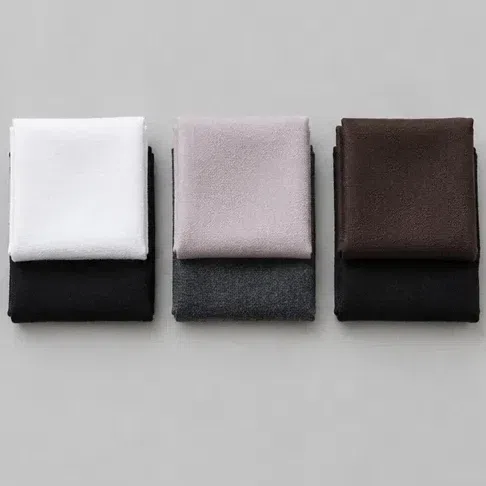
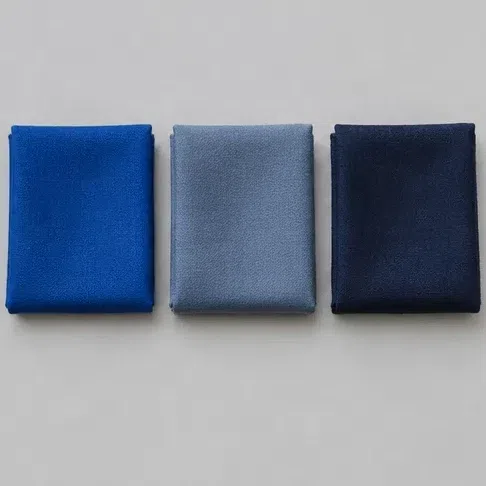
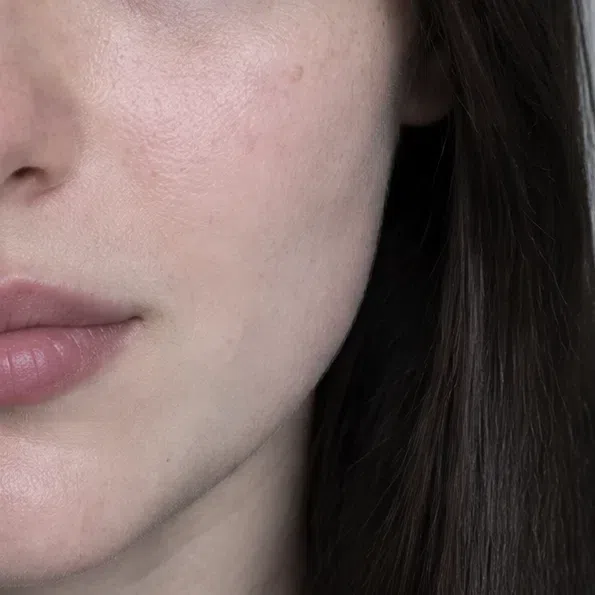
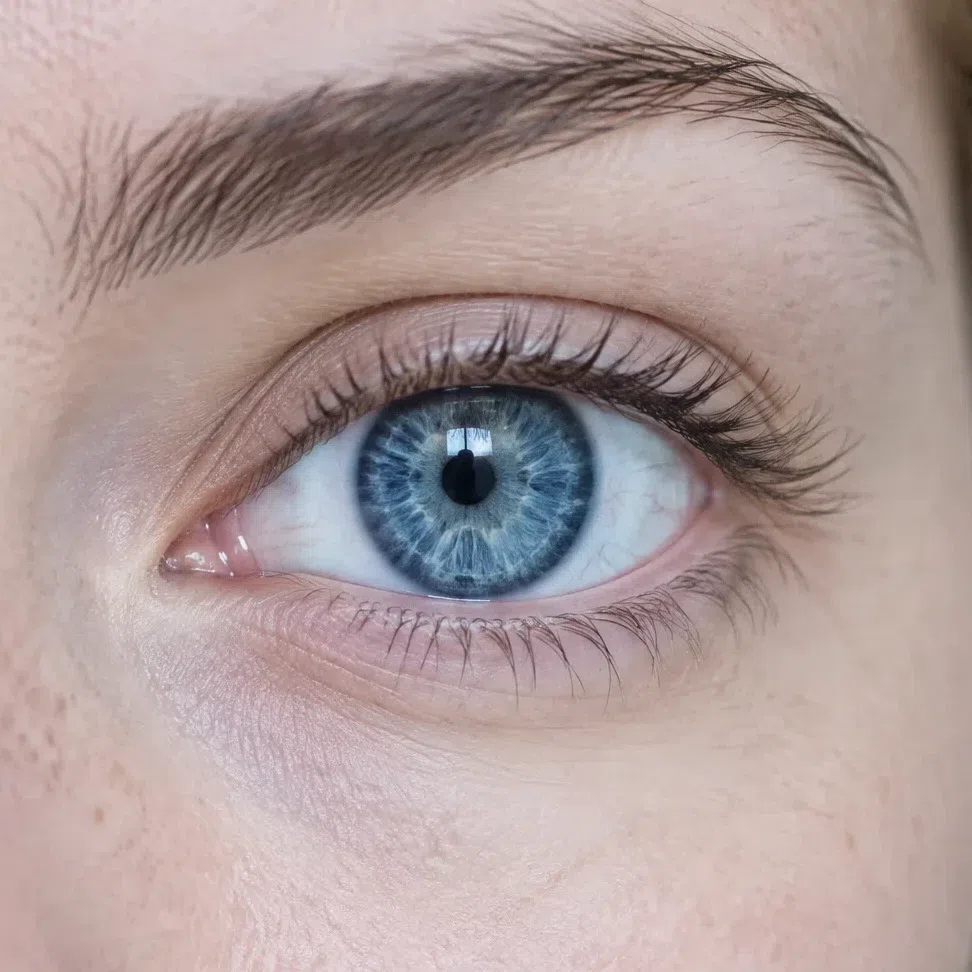
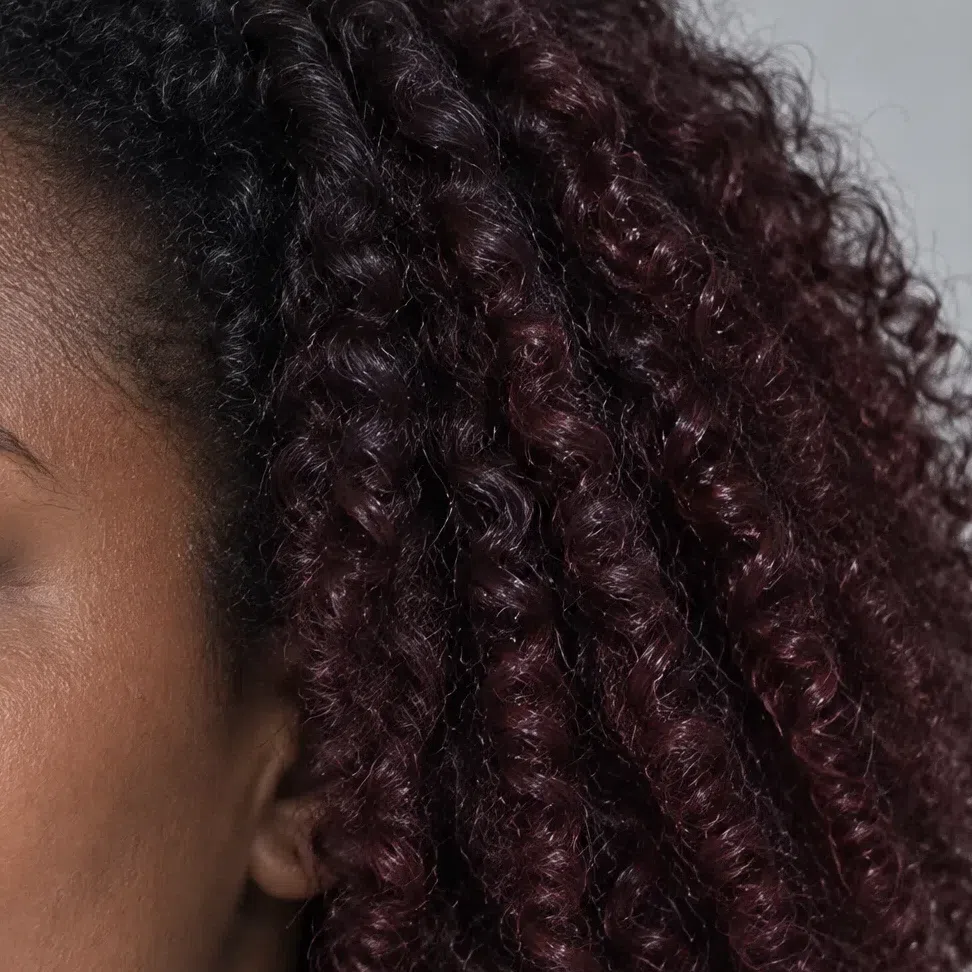
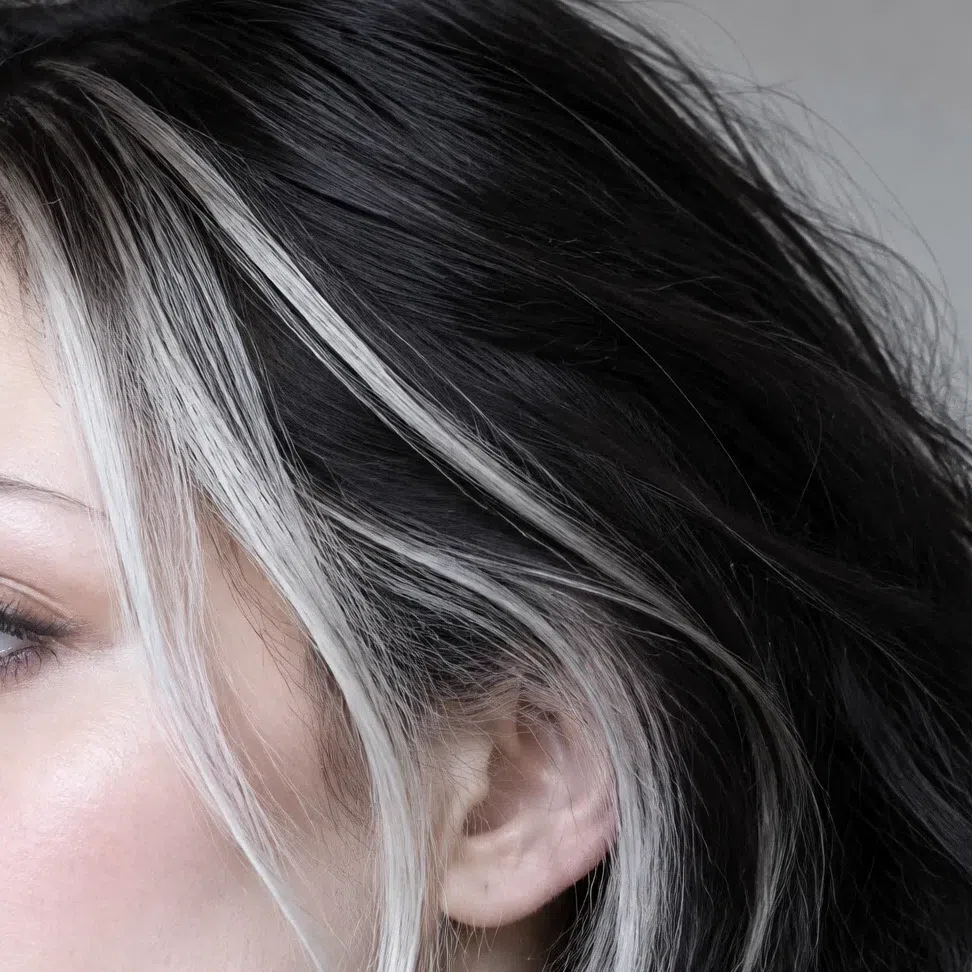
Winter color palette: are you a Deep, Cool or Bright Winter?
Cool, clear and high in contrast, on porcelain and deep brown skin alike. Check whether you are a Winter, find out which of the three you are, and see the jewel tones, icy pastels and cold neutrals every Winter wears - plus the warm shades that make the skin sallow - on a real face.
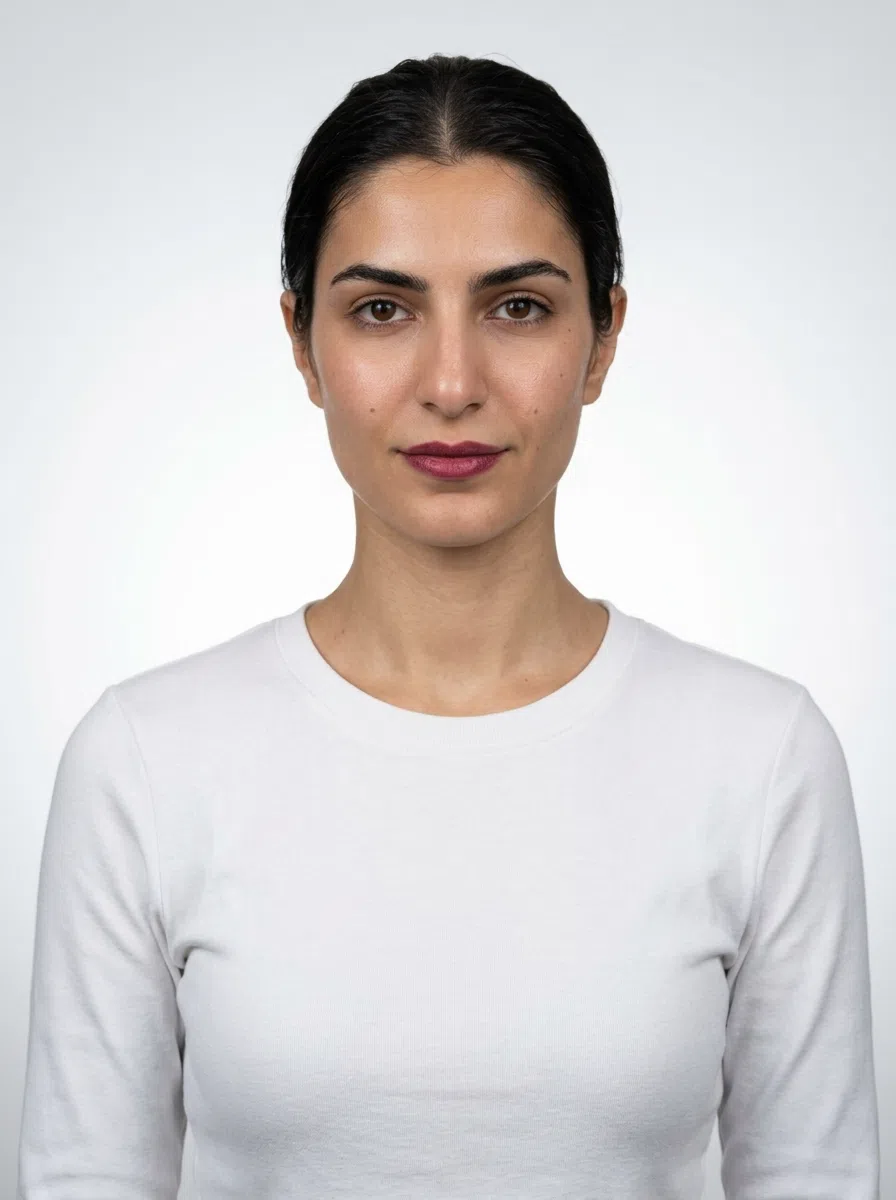
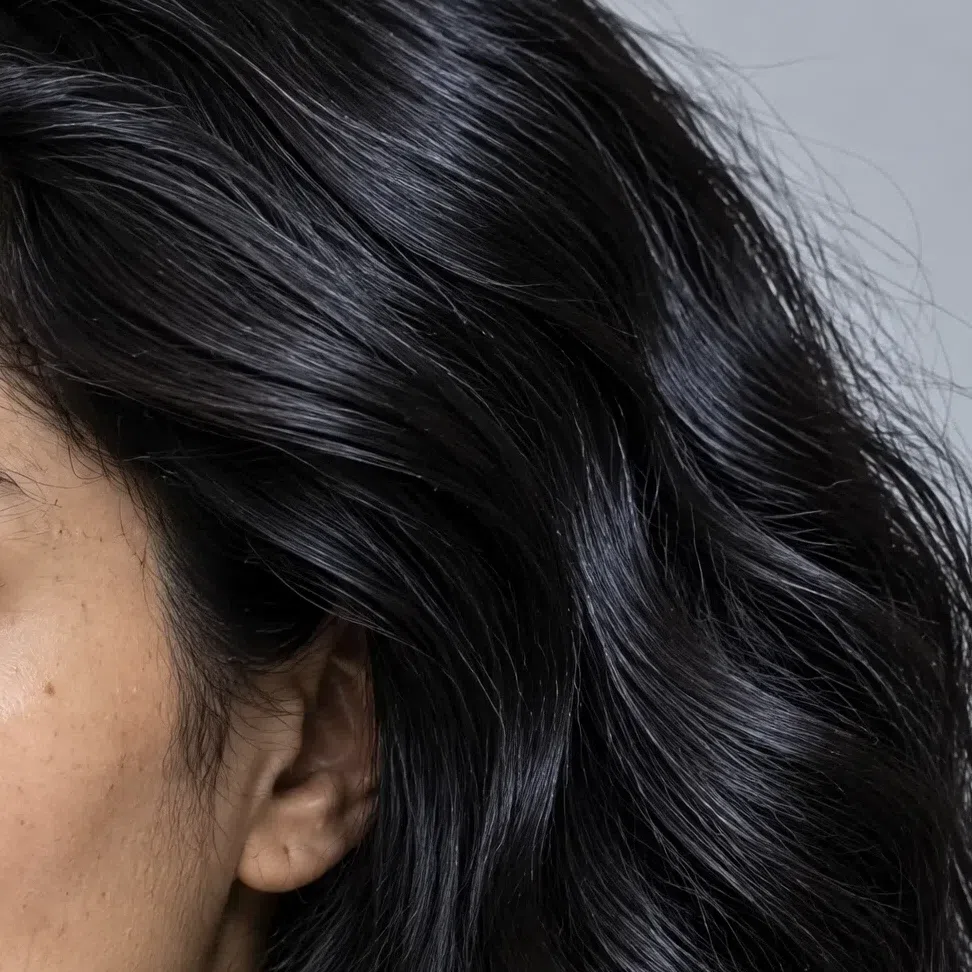
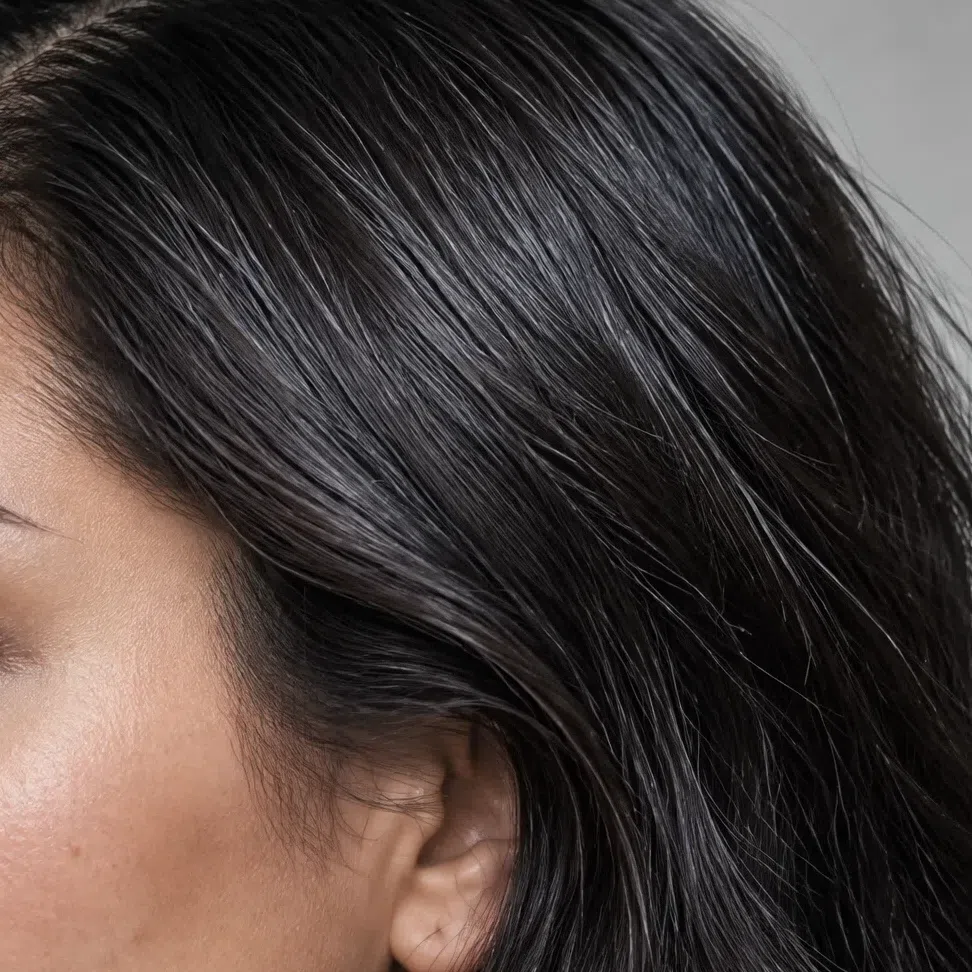
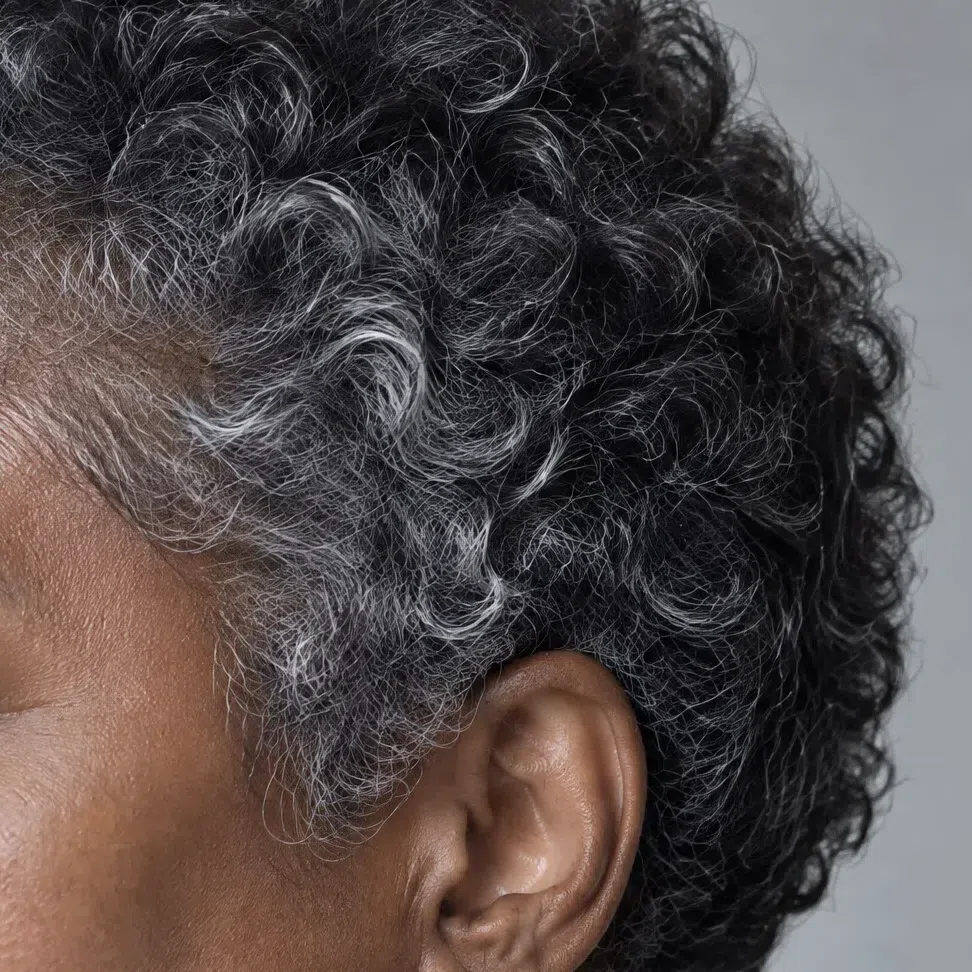
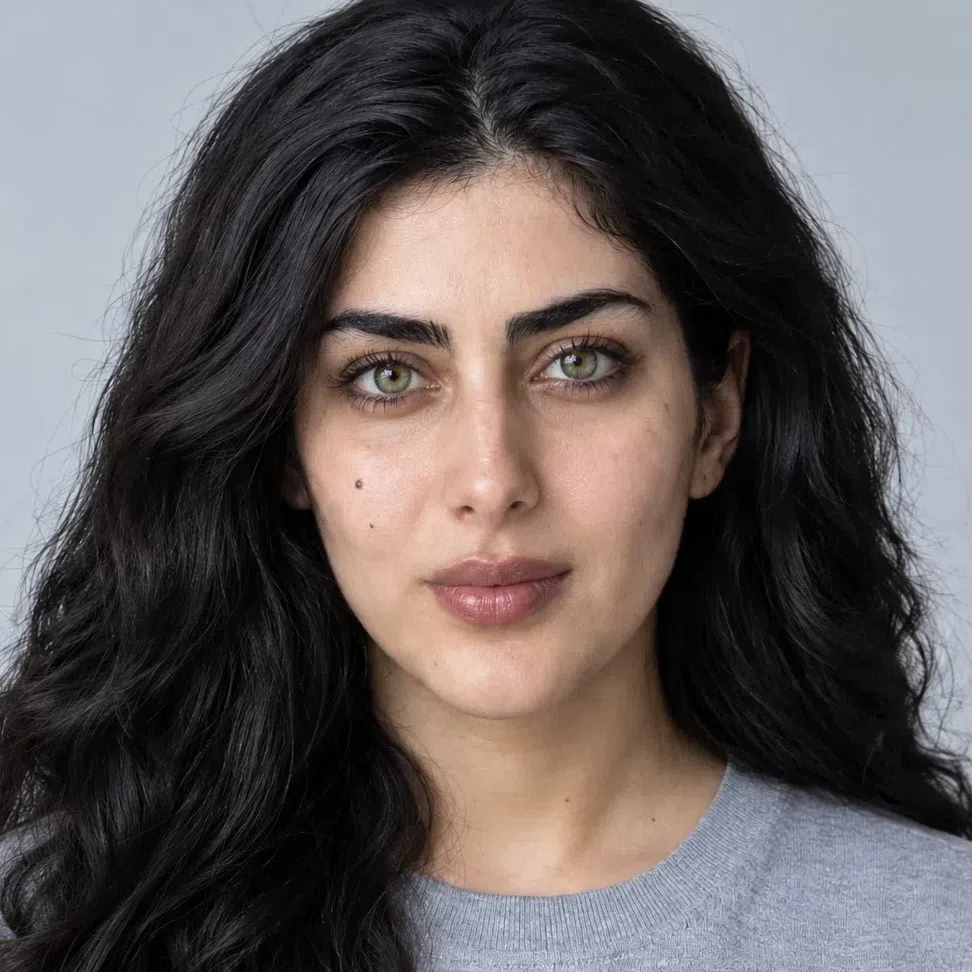
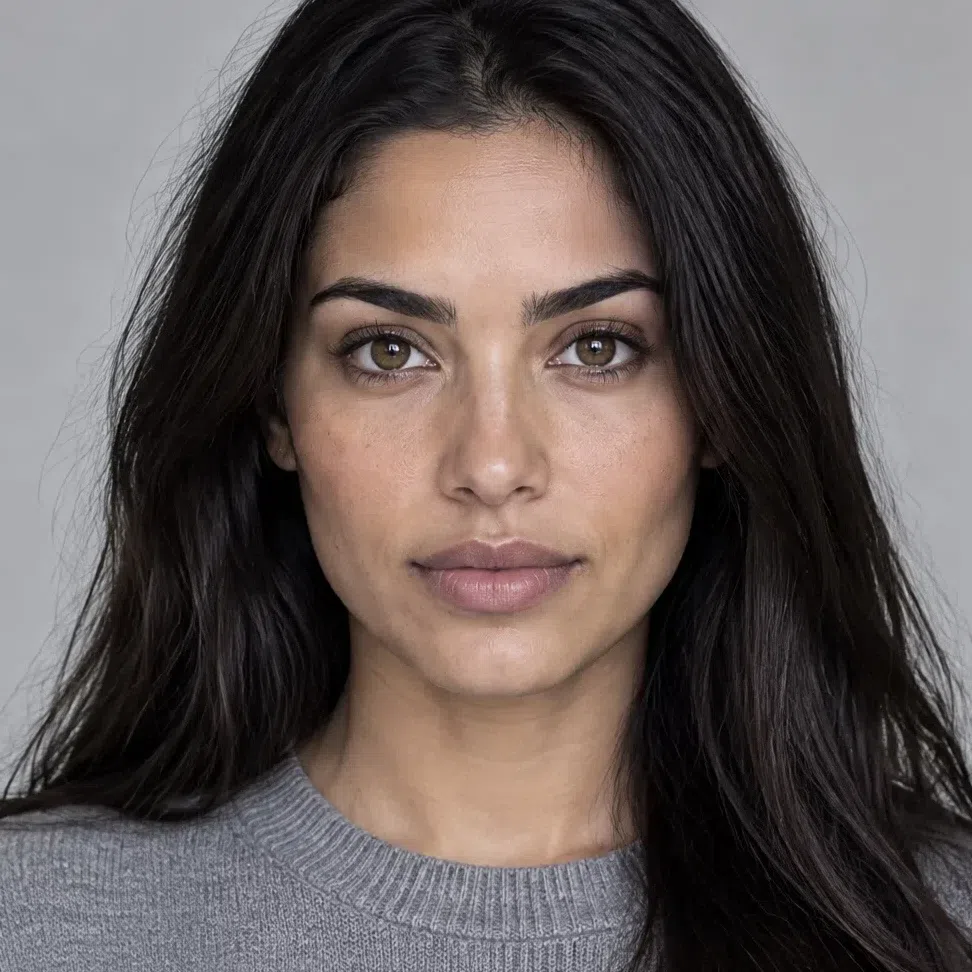
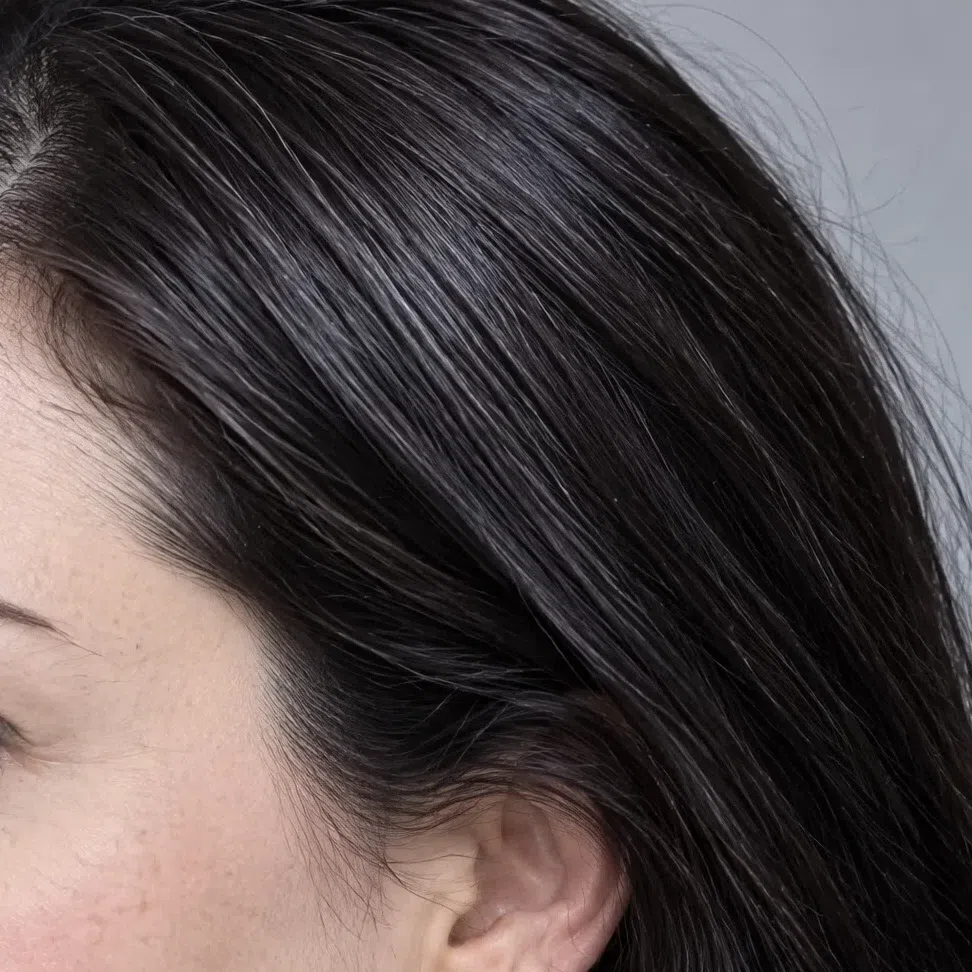
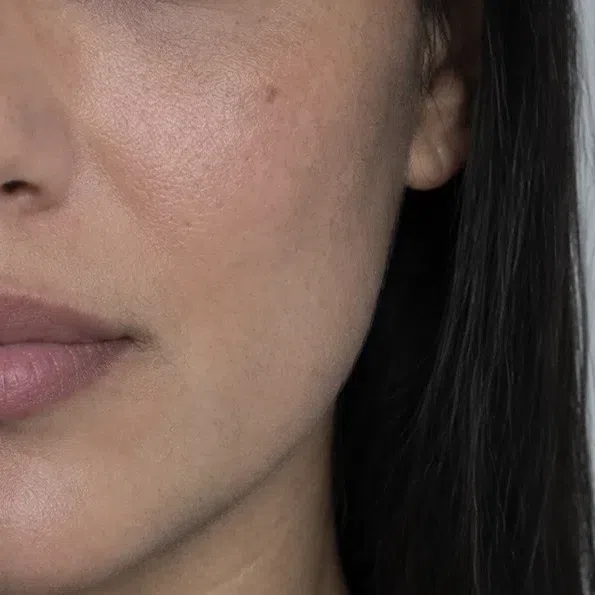
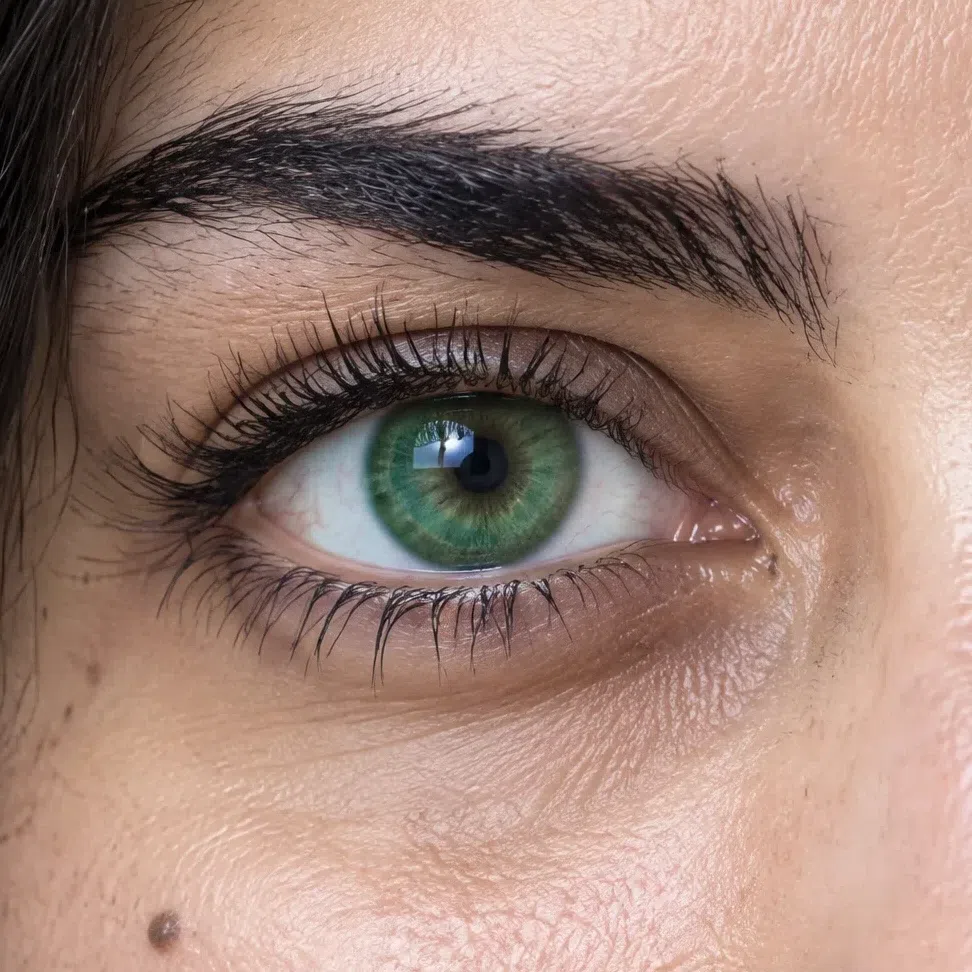
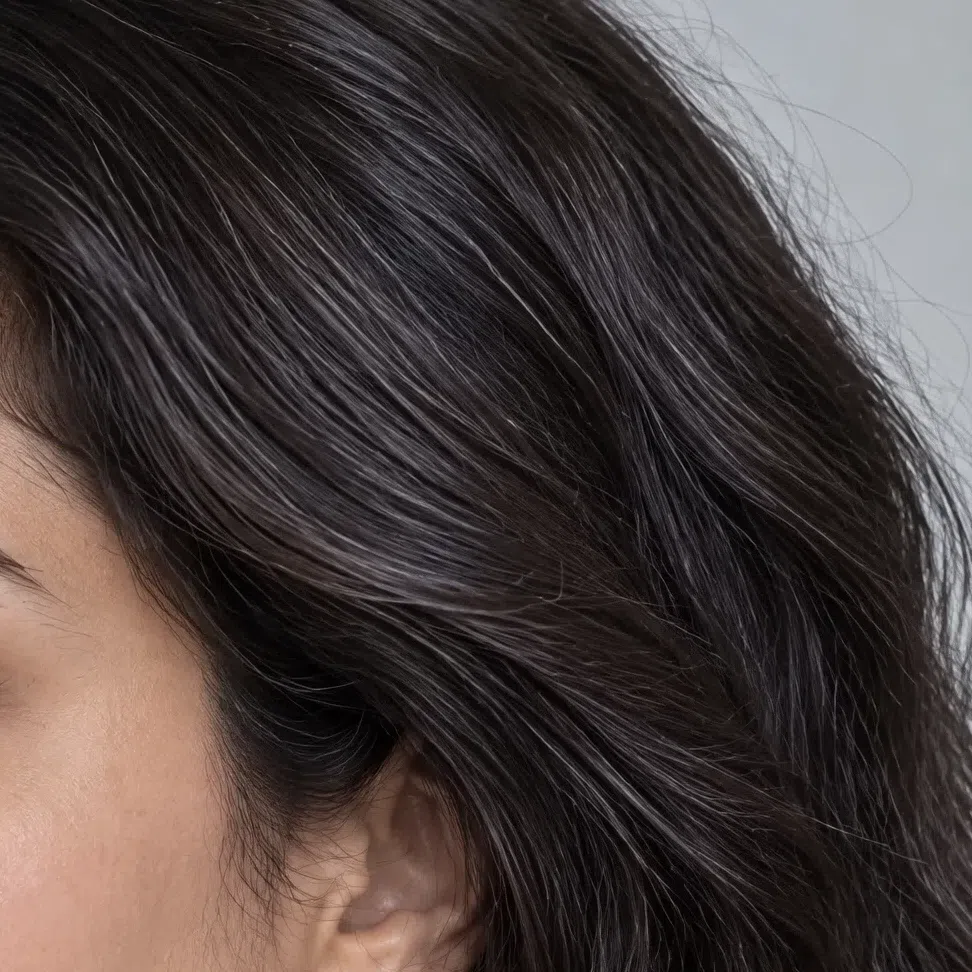
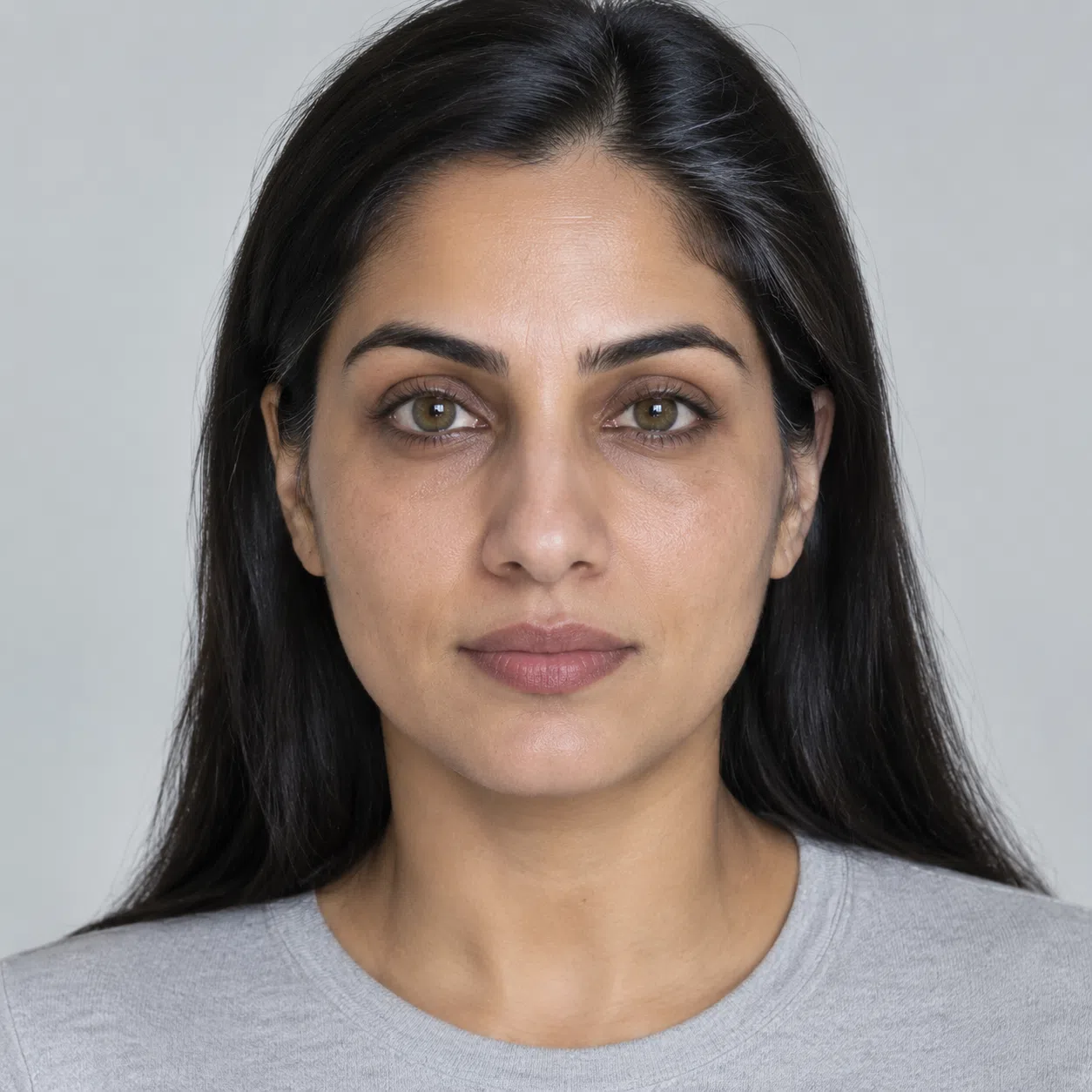
Every Winter is cool, clear and high in contrast: color with blue at its base and nothing dusty or golden in it. Her complexion is deep, and she leads the page for a reason - the shades that keep her skin clean and her eyes bright are the same ones a medium and a porcelain Winter wear. The faces beside her swap the model without changing a single circle. The first six circles run from optic white to jet black, the next two are icy pastels, and the last four are jewel accents at full strength. Start with Jet black, the color most advice keeps away from the face, and watch her jawline and the whites of her eyes: on a Winter both get sharper, never heavier. Then compare Ruby with Ice pink to see that she carries the loud end and the pale end equally well, as long as neither one is warm.
Every Winter is cool and high in contrast - blue or pink beneath the skin, a sharp step between hair, eyes and face - and wears color clean, never dusty. What varies is the lean: Deep Winter tips toward dark, Cool Winter stays purely cold, Bright Winter tips toward vivid, and skin from porcelain to deep brown can carry any of the three.
Skin
Pink, blue-red or cool olive undertone at any depth; never golden or peach.
Eyes
Near-black, dark brown, icy blue, gray or cool green, set in very white whites.
Hair
Black, blue-black or dark ash brown, graying to clean silver rather than yellow.
Contrast
Medium-high to high; on deep skin it lives in the eyes, brows and hair.
Metal
Silver first, then platinum and hematite. Yellow gold and bronze make the skin sallow.
Subtypes
Deep Winter leans dark, Cool Winter is the coldest, Bright Winter the most vivid.
Season core:
Optic whiteJet blackMidnightRubyJewel greenIcy blue
Wear with care:
BeigeOld goldRustDusty pink
The one thing to keep: warm and dusty shades are what dim a Winter, never dark or vivid ones - black beside the face is a strength on this season, not a risk. To find out which Winter you are, go to Which Winter?; if you still can't tell, a photo analysis decides.
Am I a Winter? Five ways to tell
What to look for by a window, one check at a time
Three things hold on every Winter and one does not. The undertone is cool, the coloring is clean rather than dusty, and there is a clear step between hair, eyes and skin. Depth is the free one: a Winter may be porcelain-pale or deep brown, and depth decides which of the three Winters you are, never whether you are one. Winters are seldom mistaken for Springs. They get filed under Summer, which shares the cool undertone but softens it, or under Autumn, which shares the darkness but warms it. Work through the checks from the top; the first one rules out half the seasons, the last one confirms what is left.
Your season is decided by undertone and contrast, not by the depth of your skin. Winters exist from porcelain to deep brown; the common ground is a cool base, color without dust, and features set crisply apart.
11. Skin: a cool undertone at any depth
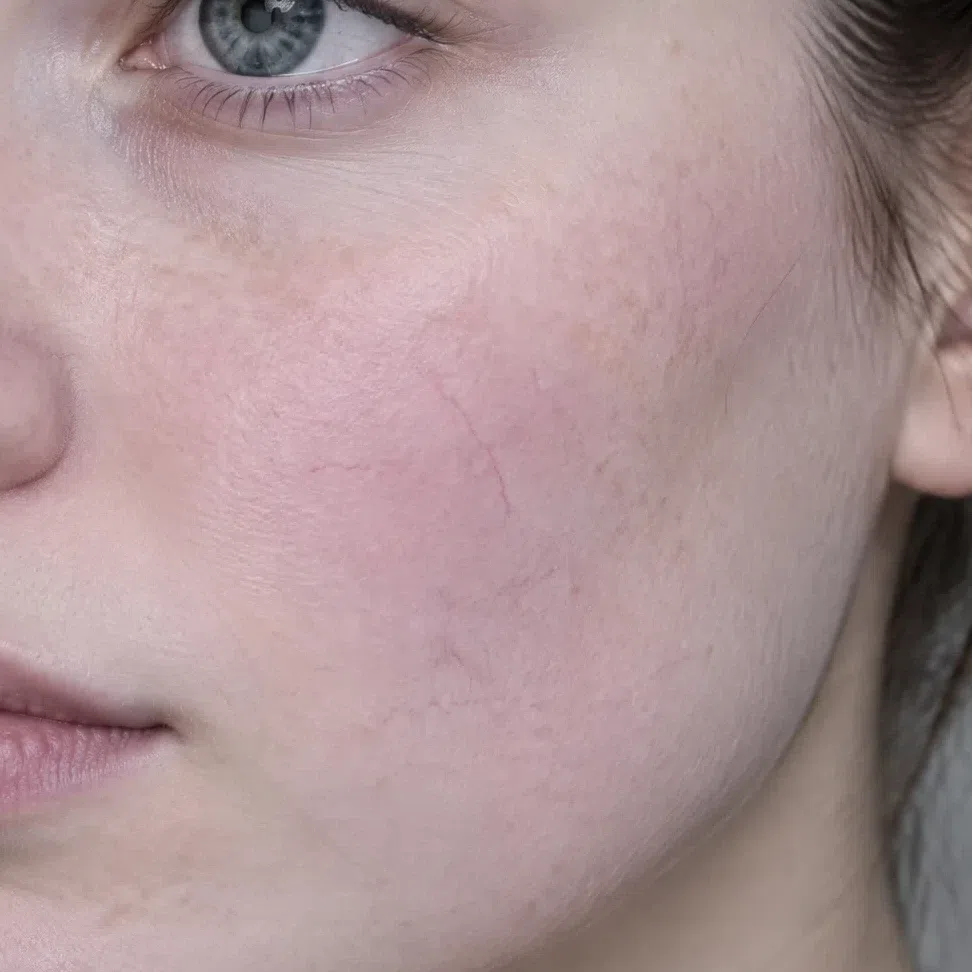
Look under the surface color, not at it. Every Winter has pink, blue or blue-red beneath the skin, whether that skin is porcelain, rose-beige, olive or deep brown, and none of them has a golden glow.
On fair Winter skin the cool shows as a milky, almost translucent white with a bluish or rosy light at the temples. Rose-beige skin carries pink with no yellow mixed in, and tends to redden in the sun before it browns. Olive Winter skin reads gray-green rather than golden, and it tans to a deep bronze with no copper in it. On deep skin the undertone sits as a blue-red or plum depth across the cheekbones instead of a warm, amber glow. A flush, where it comes, is a cold pink, never peach or coral.
What sends you elsewhere: a tan that turns gold, freckles that come up ginger, or skin that looks warmer the longer you study it. The tests below check the undertone directly; the complexions section further down shows it at four depths side by side.
Three checks for the undertone
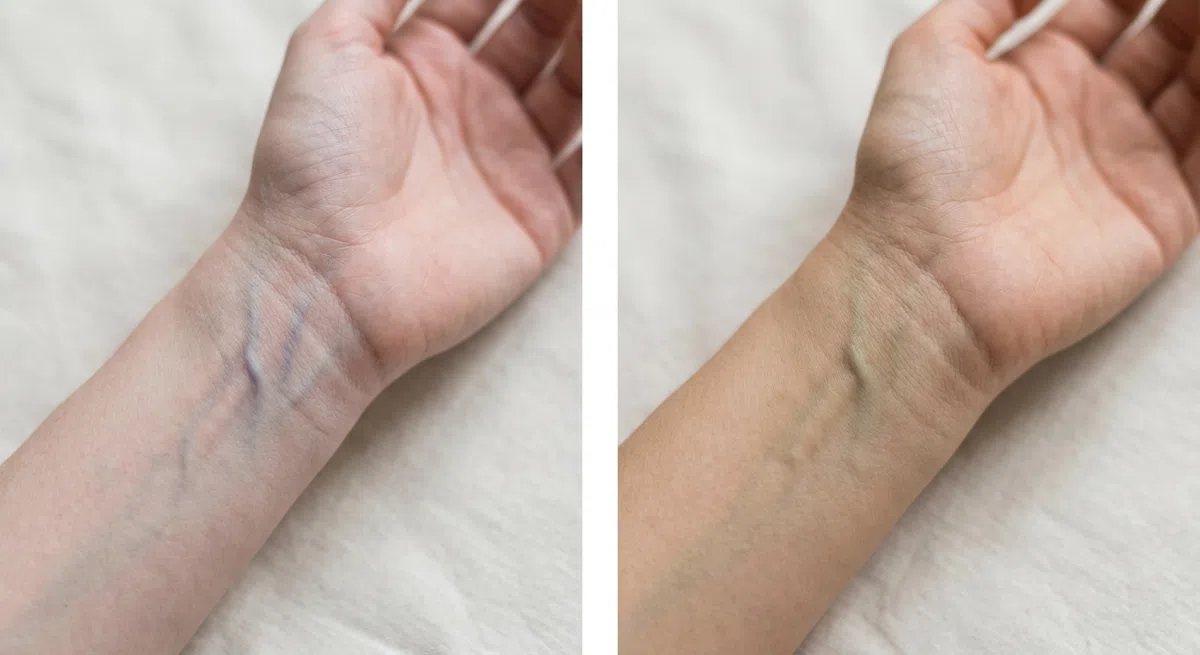
Test 1Veins at the inner wrist
Use daylight by a window. Indoor bulbs push the reading yellow and cold LEDs push it blue, so skip artificial light entirely. Read the veins together, as one color.
Blue or violet - cool. Winter and Summer both stay in play.
Green or olive - warm, which points toward Spring or Autumn.
Can't decide - neutral, or the veins barely show. The next two tests settle it.
Caveat: on thin, pale skin the veins exaggerate toward blue, and on deep skin they may not show at all. Use it as a first hint only.
Test 2A white sheet beside the face
Makeup off and hair back, by a window. Put true white printer paper against your jaw; off-white stock brings its own yellow and tilts the result. Glance at the line where the page touches your skin.
The skin goes pink or bluish - a cool undertone, the Winter answer.
A golden or peach cast appears - a warm undertone.
Gray, flat skin - most often neutral-olive. Many cool olive Winters read this way; let the metals decide.
Caveat: this reads the same on every depth of skin, which makes it more reliable than the veins. After time in the cold, give the flush ten minutes to fade, since windburn mimics a pink undertone.
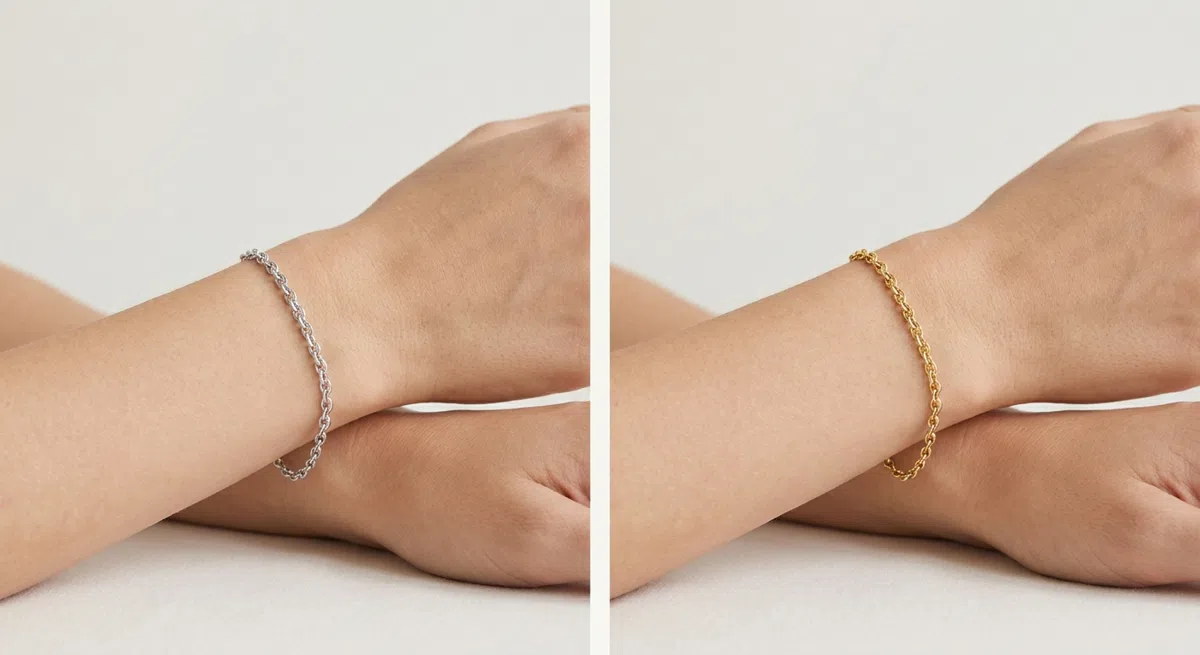
Test 3Silver against yellow gold
Two plain pieces of jewelry, one silver and one gold-colored, about the same size. Lay each on your wrist in turn; what matters is the skin beside the metal, never the metal's own shine.
Silver, platinum or white gold wins - the skin looks smoother and cleaner. On a Winter, this test says the most.
Yellow gold wins - the face warms and lights up. A warm coloring.
Both look fine - neutral. Your season will be named by something other than temperature.
Caveat: a wide band outshines a thin one by area alone, so match the widths. On deep skin both metals can look striking at first; judge the skin an inch from each - silver should leave it even, gold should make it look dustier.
If the paper and the silver both say cool, the warm seasons are out. That leaves Winter or Summer, and contrast, the fourth check, is what separates them.
Fair - porcelain with a blue-pink lightOlive - gray-green, no goldMedium - beige-brown with cool roseDeep - brown over a blue-red undertone
22. Eyes: clear color and bright whites
Winter eyes are defined before they are colored. The edge of the iris is sharp, the whites are very white, and whatever the color is, it reads as one clean shade rather than a blend.
The range is wide: near-black and deep chocolate brown with no amber in it, icy or electric blue, steel gray, and emerald or pine green. Light eyes do occur, most often on Cool Winters, and they are never soft - an icy blue with a crisp ring is a Winter eye, a gray-blue that melts into the white is a Summer one. What the season does not have is a golden fleck near the pupil or a smoky, muddied iris.
Check the whites and the rim of the iris before the color. Crisp and bright puts the eye in Winter, whether it is black-brown or ice blue.
Steel blueEmerald greenVery dark brownNear-black
33. Hair: dark, with no red or gold
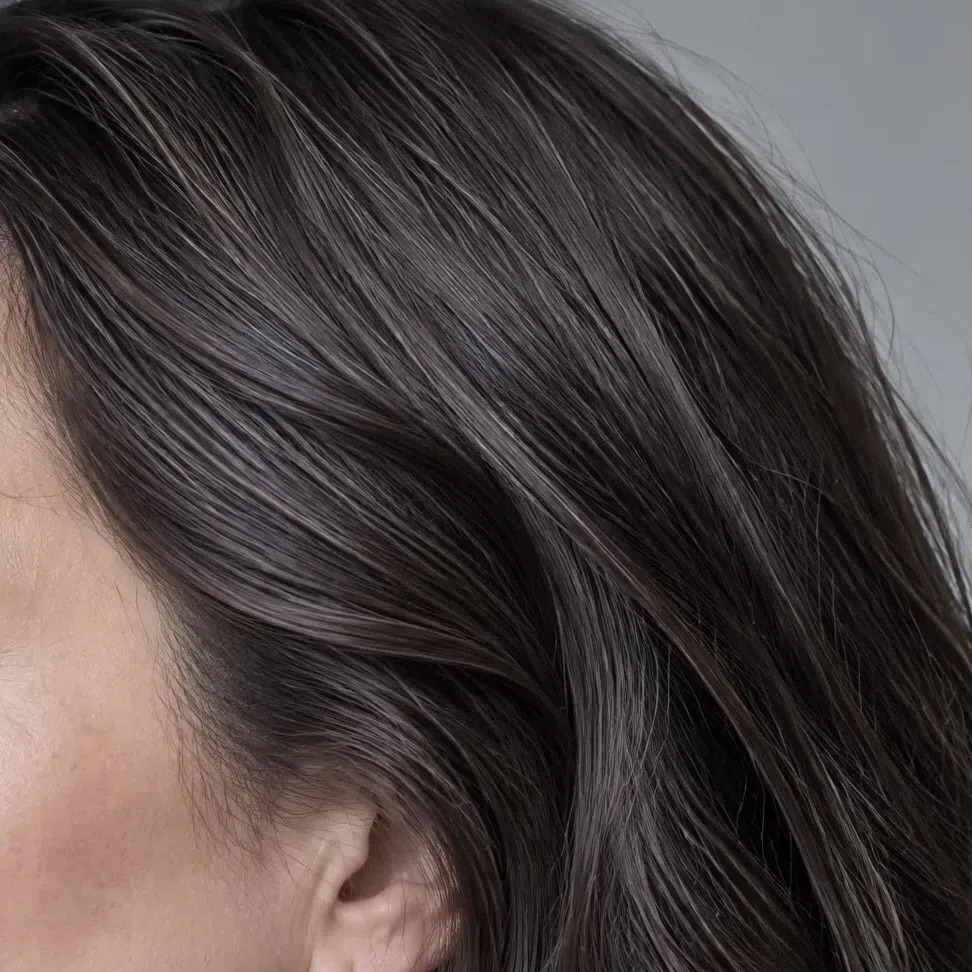
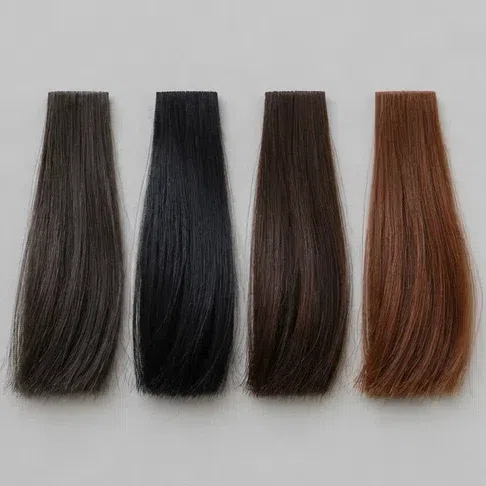
Natural Winter hair sits at the dark end - black, blue-black, dark ash brown, cool dark chocolate - and carries an ashy, graphite or blue sheen rather than copper or honey.
The sign is the absence of warmth. Sun does not bleach Winter hair toward red or gold, and a strand held to a window shows ash, graphite or a blue glint. It goes gray to a clean silver or salt-and-pepper, not to yellow. The rare light-haired Winter is platinum or ash, never golden. On deep complexions the hair is almost always very dark, and the check is the same: look at the ends and the hairline in sunlight for any copper cast.
Dyed hair tells you nothing, so read the roots or an old photo.
Hold a strand to the light: ash, graphite or a blue glint qualifies at any darkness, and a single copper thread does not.
Dark ash brownJet blackBlack-brownBlack going silver
44. Contrast: a clear step between features
This is the check that separates a Winter from a Summer, because the two share the cool undertone. On a Winter, hair, brows and eyes sit well apart from the skin in lightness; on a Summer they sit close together.
Each Winter builds its contrast differently. A Bright Winter has the most: very dark hair against noticeably light skin and a vivid eye. A Cool Winter gets there through cold, with steely or blue-black features against a pink-toned face. A Deep Winter gets it through overall depth rather than pale skin, and so it holds on deep complexions just as firmly. What they share is that nothing blurs - features read as if drawn with a sharp pencil rather than a soft one.
How high the face sits on the ramp is depth; how far apart hair and skin sit is contrast. A deep Winter sits low on the ramp and still keeps a wide gap.
Do it with your own photo
Take a daylight photo of yourself without makeup, then switch it to black and white. On a Winter the hair and brows fall far toward the dark end while the skin stays well above them, and the whites of the eyes still stand out. A face that settles into neighboring grays points to Summer if the undertone was cool, or to Autumn if it was warm.
Fair - blue-black against porcelainLight olive - black hair, bright eyesBeige-brown - dark hair set well apartDeep - a wide step at a low depth
The black-and-white test, shown
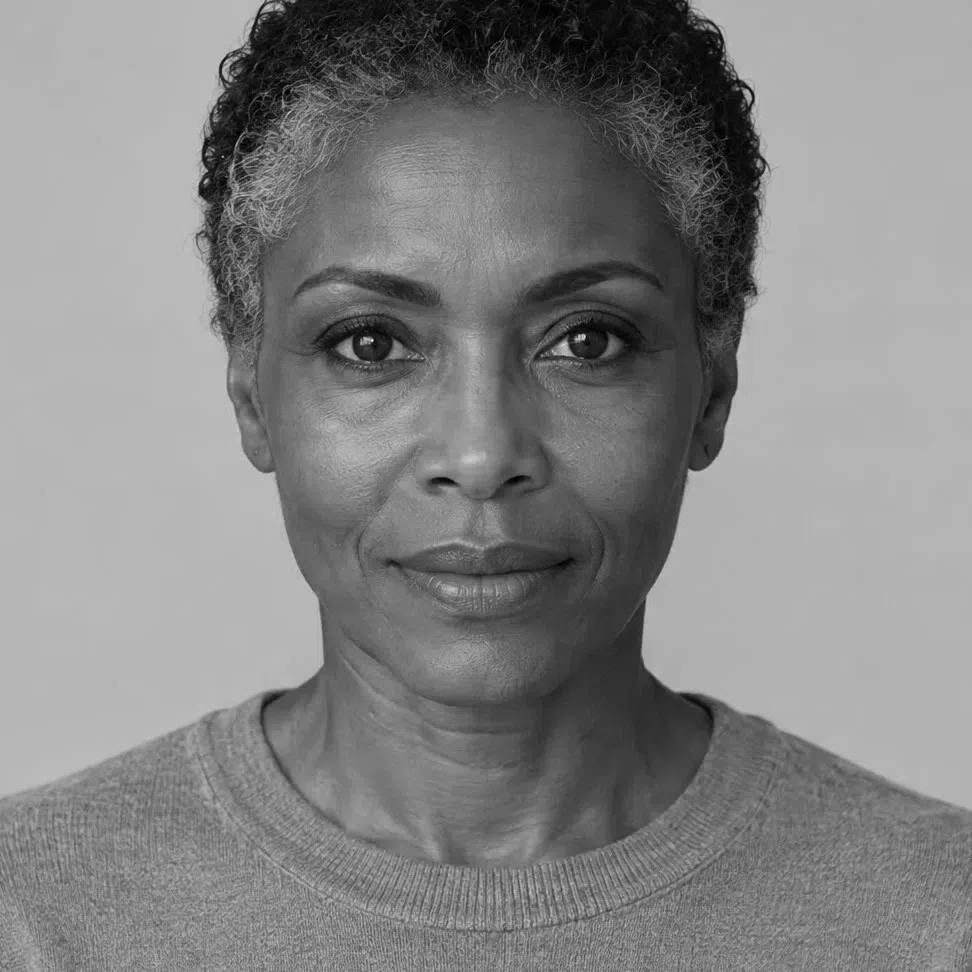
Left, a Winter photographed in color. Right, that frame with every hue stripped out, so lightness is all there is to judge - and her hair falls to the dark floor as her skin holds high on the scale.
In colorThe same frame, hue removed
Winter, fairHair at black, skin close to whiteWinter, deepSkin at mid-scale, hair still at blackCool SummerJust as cool, far shorter step
HairSkinRamp runs black to white
Read one ramp at a time. The height of the pair is depth; the space between the markers is contrast - a darker face starts lower with less headroom, so the spacing says nothing about which face has more contrast. The deep Winter's skin drops to the middle, yet her hair remains at the dark floor. The Cool Summer is included because her undertone is just as cool; in gray her hair never reaches the floor, and the whole face softens.
55. The drape test: color held under the chin
The last check turns the theory into something you can see. Bare-faced, in daylight, hold one color after another just below the chin, then judge your skin, never the cloth.
A Winter shade makes the skin look even and clean, sharpens the brows and eyes, and takes the shadow out from under them. The warm, muted shades do the opposite - the skin yellows, the features blur, and the face looks tired. Expect the result to feel backwards: the pure, saturated colors that seem too much on a hanger are the ones that look effortless on a Winter, and black at the face, the color most advice warns against, is one of the best of all.
Beige is the telling one. It is sold as the safe neutral, and on a Winter it takes away exactly the contrast the face depends on. Swap it for gray, silver or pure white and see the difference.
Shades that bring a Winter face into focus
When these even the skin and sharpen the features, you are looking at your season:
Jet black
Optic white
Hot magenta
Ultramarine
Jewel green
Ruby
Icy blue
Ice pink
Shades that blur it
When these turn the skin sallow or tired, they belong to a warmer season:
Terracotta rose
Burnt orange
Beige
Old gold
Rust
Khaki
Winter vs Spring vs Summer vs Autumn
Two axes set the four seasons. Temperature puts Winter and Summer on the cool side and Spring and Autumn on the warm one; clarity puts Winter and Spring on the clear side and Summer and Autumn on the soft one. Of the four, only Winter sits on the cool side and the clear side at once - read those two rows before the rest.
Cool porcelain, rose-beige, gray olive, blue-red brown
Golden, peach, apricot
Pink, rosy, cool beige
Golden-olive, bronze
Eyes
Near-black, dark brown, icy blue, steel gray, emerald
Aqua, clear green, amber, warm brown
Gray-blue, gray-green, soft brown
Warm brown, olive green, hazel
Hair
Black, blue-black, dark ash brown
Gold, honey, copper, warm chestnut
Ash blonde, ash brown, no red
Copper, auburn, chestnut, warm dark brown
Metal
Silver, platinum, white gold
Yellow gold, copper
Silver, white gold
Bronze, antique gold
Still torn between two columns? Reread Temperature, then Clarity. A Winter passes both as cool and clear; a Summer is cool and soft, a Spring warm and clear, an Autumn warm and soft. Which of the three Winters you are is the next section.
Three Winters
Which Winter are you: Deep, Cool or Bright
All cold, all high in contrast - three different leading axes
Winter splits three ways. All three are cool and all three carry contrast, yet the shade that sharpens a Bright Winter can look thin on a Deep Winter and not quite cold enough for a Cool Winter. What separates them is the property that leads: depth on a Deep Winter, temperature on a Cool Winter, clarity on a Bright Winter. Find the one that leads for you, and every section after this one turns into a single column you can read as your own.
Porcelain, olive or deep brown, cool to neutral-cool
Porcelain to deep brown, pink or blue, never olive
Clear porcelain through cool olive to deep brown
Eyes
Deep brown, near-black, dark cool green
Icy blue, steel gray or black-brown
Vivid blue, emerald, bright dark brown
Hair
Black-brown, soft black, cool dark chocolate
Blue-black, ashy dark brown, cool chestnut
Black or blue-black, often beside light skin
Metal
Silver, platinum, white gold
Silver, white gold, platinum
Silver, platinum
The test color
Deep wine - the eyes look deeper
Clear cold blue - the face pulls together
Ruby - the features sharpen
What misses
Pale pastels fade out beside it
A trace of gold sallows the skin
Muted shades switch the face off
Still stuck between two columns? Set the detail aside and pick the word a stranger would reach for first about your face: dark, cold or vivid. That word is your Winter.
The darkest Winter, and the one that borders Deep Autumn. Depth is in charge: rich, weighty color anchors this face, and a pale pastel at the collar looks like an accident. Many systems call it Dark Winter; the coloring is the same.
Skin any depth from porcelain to deep brown, cool or neutral underneath and never golden
Eyes deep brown, near-black or a dark cool green, with bright whites
Hair black-brown to soft black, free of red or copper
The reference Winter, called True Winter in older systems, and the neighbor of Cool Summer. Temperature is the only axis that leads here, so this coloring notices a warm note in any shade at once, however dark the shade is.
Skin pink or bluish undertone from porcelain to deep brown, with no olive
The most saturated Winter, and the only one that touches Bright Spring. Clarity leads: a muted shade dims it faster than a warm one does, so ruby, jewel green and electric blue look natural here, with icy pastels as the counterweight.
Skin clear skin with a pink or blue base, from porcelain through cool olive to deep brown
Eyes gem-bright - icy blue, emerald or a glinting dark brown
Hair black or blue-black, the contrast with the skin plain to see
Optic whiteLemonShocking pinkTurquoise blueUltramarineIcy mint
The one rule: Clarity first. Toning the palette down to play it safe costs this face its edge; it needs clean color, not quiet color.
One axis per question. Answer by a window with no makeup on, and treat what comes out as a lead to follow up - self-testing is least reliable right where two Winters meet.
Question 1 of 4
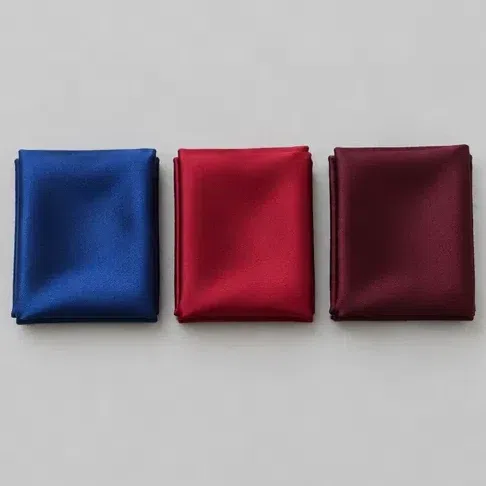
Drape a clear cold blue, a ruby red and a deep burgundy below your face, one after another. Which one works best?
Your hair as it grows, without color treatment:
Put your hair, eyes and skin on one light-to-dark scale. How far do they spread?
Swap a pure blue for a dusty blue-gray. What happens?
Your likely subtype
Looks like Deep Winter
Depth is your leading axis - heavy, rich color steadies your face, and pale pastels wash out on it. Many systems call this Dark Winter - the same coloring.
A golden, copper or red glint in natural hair points to a warm coloring, and none of the three Winters has one. Compare Winter with the other seasons further down, then see how all four seasons fit together on the color analysis hub.
A short quiz narrows the field but never measures a face. A photo analysis does, and close calls between two Winters get resolved there.
Other names for the Winters
The Winters go by different labels depending on whether a system counts twelve seasons or sixteen, and three names people search for have no Winter behind them once you move to the twelve-season system this page follows. Here is the Winter, or the neighbor, that each of them really describes.
True WinterCool Winter palette
The older name for Cool Winter - the Winter led by temperature alone. One coloring, one palette, two labels.
Cool Winter →
Dark WinterDeep Winter palette
Another name for Deep Winter - depth leads, then coolness. The two names describe one coloring and one palette.
Deep Winter →
Clear WinterBright Winter palette
The older name for Bright Winter - clarity leads and contrast is the sharpest of the three. One coloring, one palette, two labels.
Bright Winter →
Soft WinterCool Winter + Cool Summer
A sixteen-season name for a cool, fairly dark coloring whose colors read a notch softer than a typical Winter's. A twelve-season system has no soft Winter, because Winter is clear by definition: start with Cool Winter if your colors still look clean, and check Cool Summer if the softness is real.
Cool Winter →
Light WinterBright Winter + Light Summer
A sixteen-season name for a cool, clear coloring with lighter hair or eyes than most Winters. That is Bright Winter while the contrast holds - fair skin with dark brows and vivid eyes - and Light Summer once everything sits in the light register.
Bright Winter →
Warm WinterDeep Winter + Deep Autumn
A sixteen-season name for a dark, high-contrast coloring with a neutral or slightly warm undertone. Real warmth rules Winter out, so this points to Deep Winter when the undertone is neutral-cool, and to Deep Autumn when it is plainly warm.
Deep Winter →
Korean personal color analysis names two Winter tones, Winter Cool Bright and Winter Cool Deep; they correspond to Bright Winter and Deep Winter here, and a Cool Winter usually lands in whichever of the two sits nearer. This site keeps three Winters because a drape test separates three: one leading axis each, and every cool, clear coloring falls into one of them.
Winter on every complexion
Four depths of skin, one cool base underneath
The stock picture of a Winter is snow-white skin and jet-black hair, and that face is a Winter - but it is one of four. What every depth shares is a cool undertone and a clear step between the features; what changes is where on the scale the whole face sits. Each block below shows one depth through a portrait, then its skin, eyes and hair photographed close, mixed across the three Winters so a depth is never tied to a single subtype. Every photograph here shows a woman; for men, read the same signals at the brows, beard shadow and hairline - the palette below does not change.
Fair: porcelain with a cold light
At the fair end the cool undertone is easy to see. Pink or a faint blue shows through the skin itself, and against dark brows and hair the contrast is obvious from across a room.
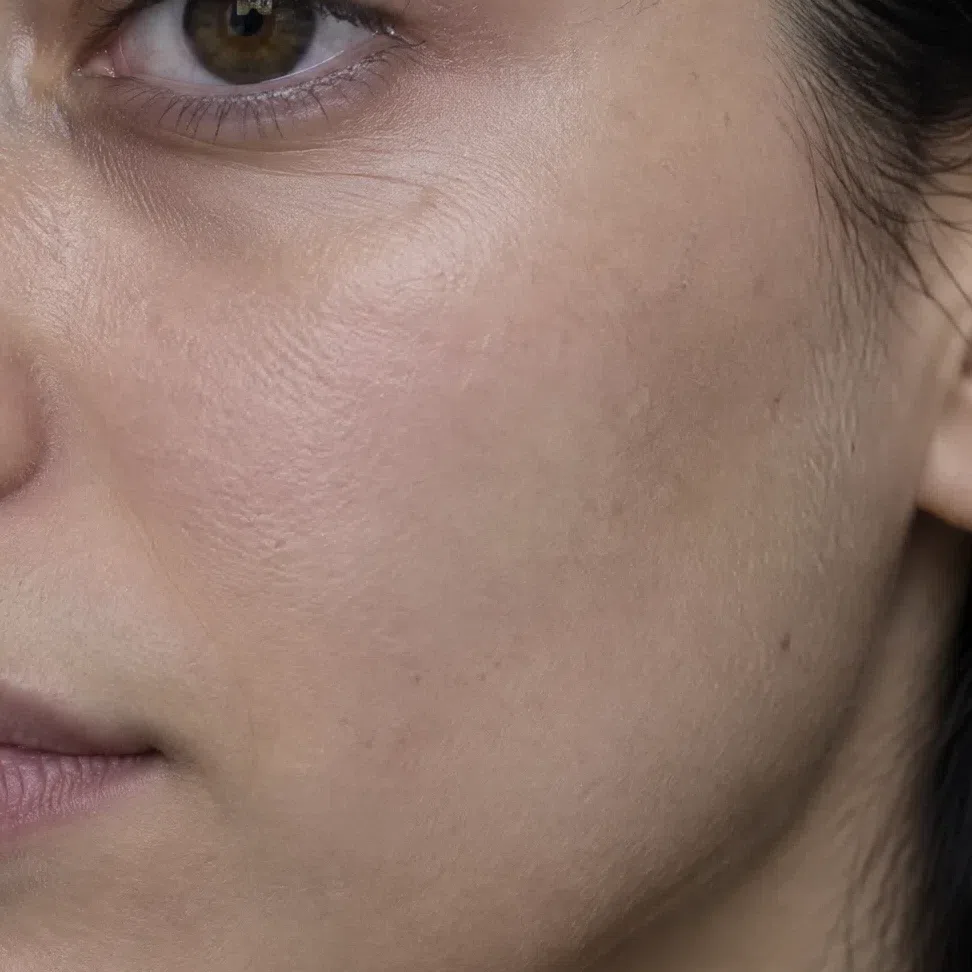
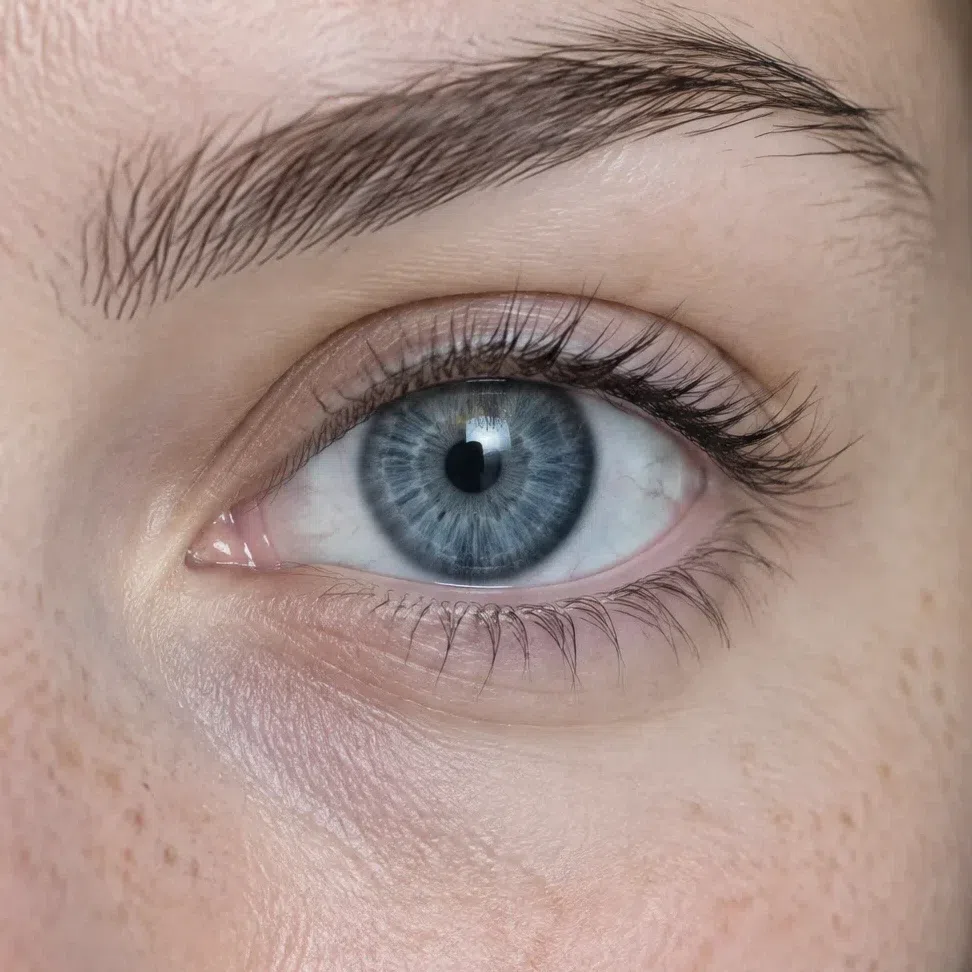
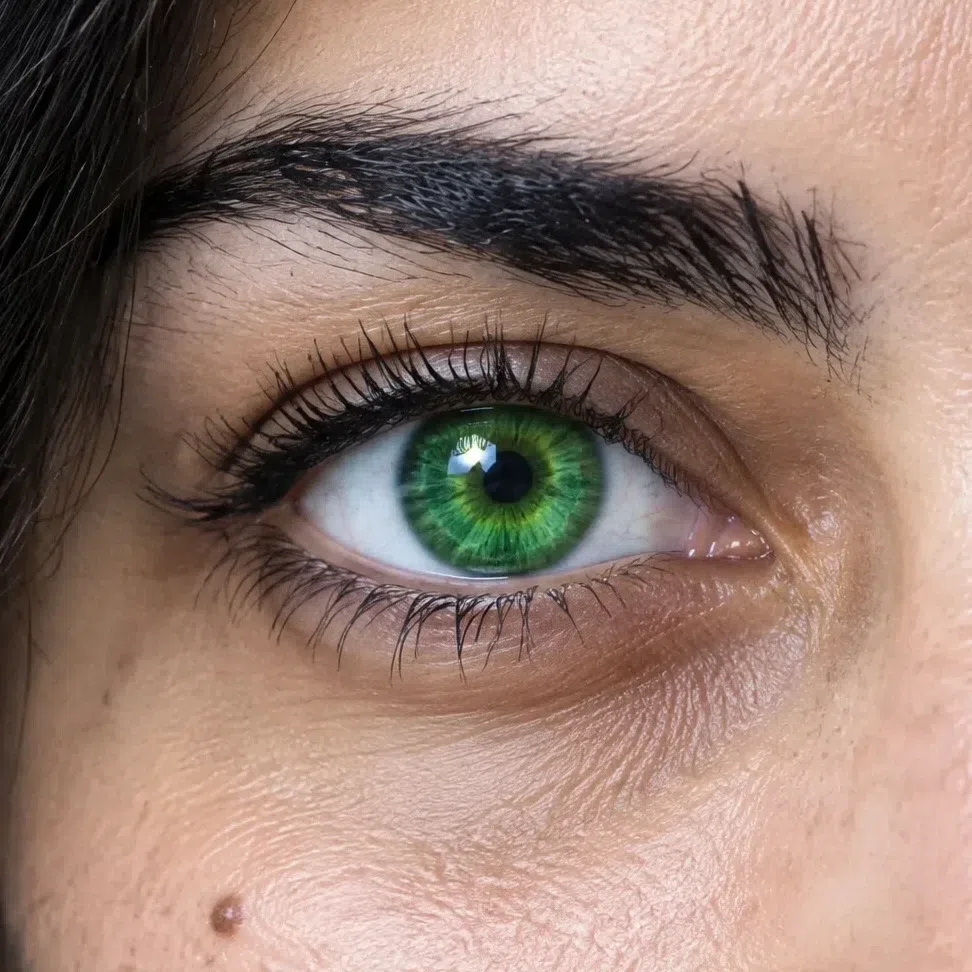
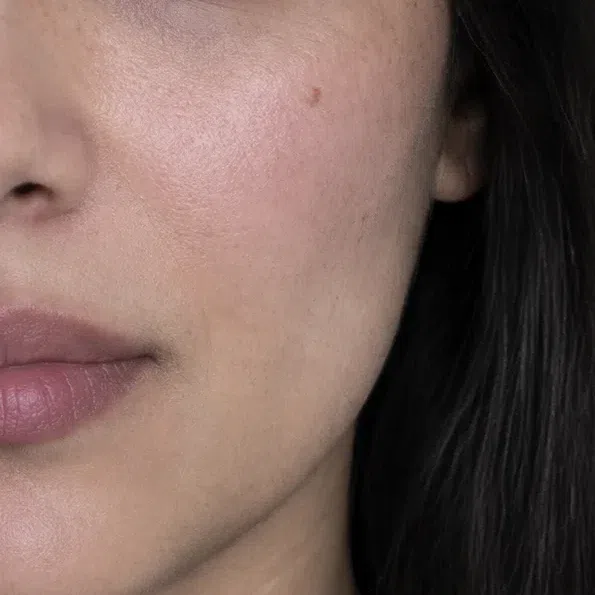
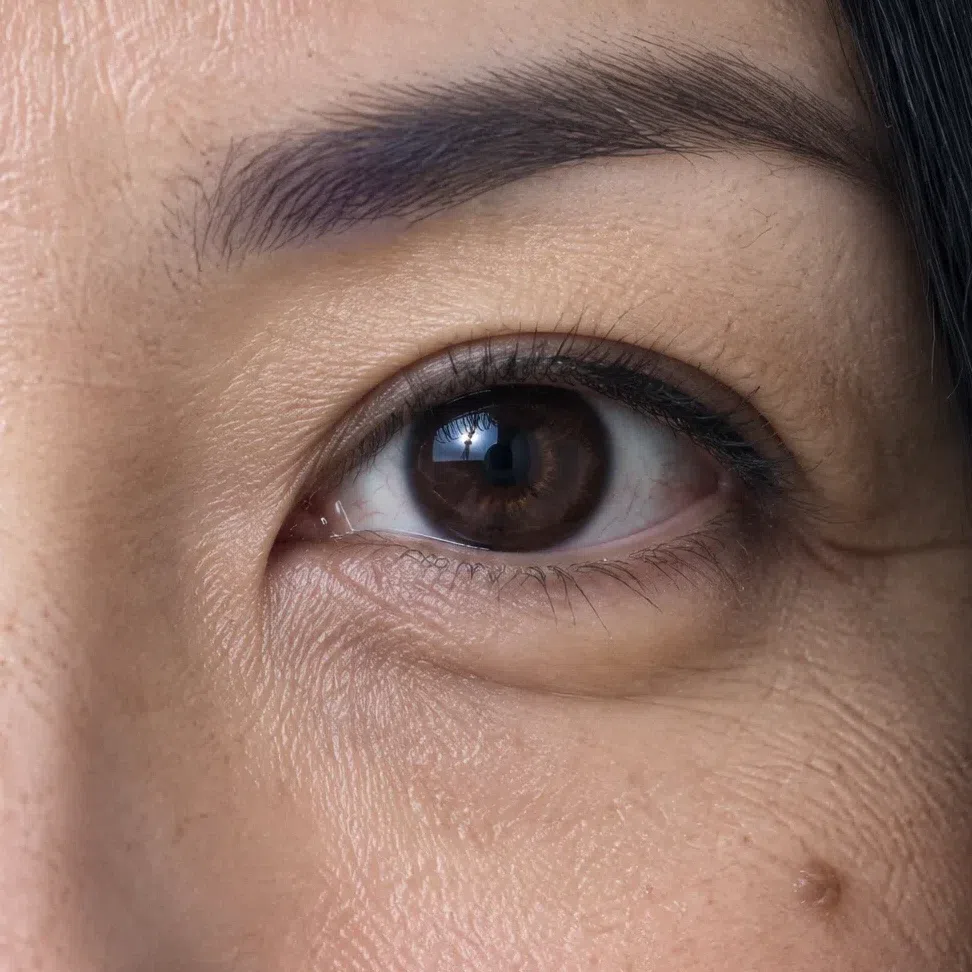
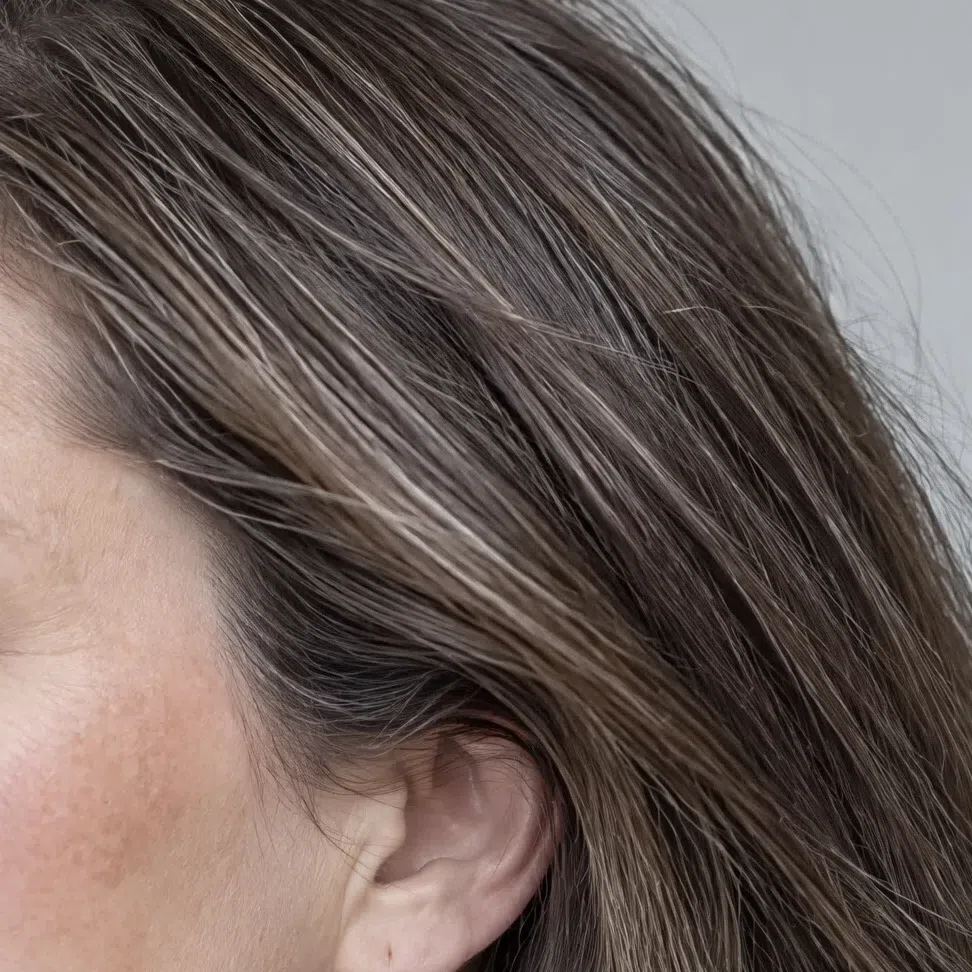
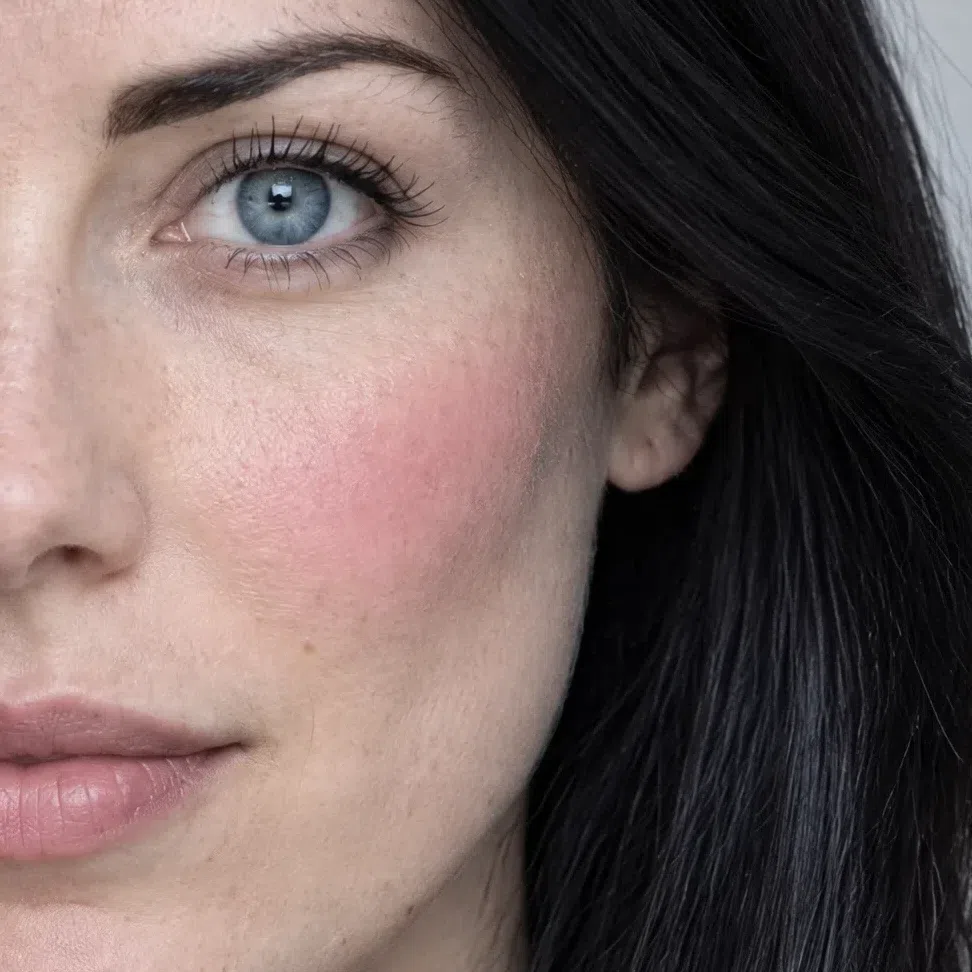
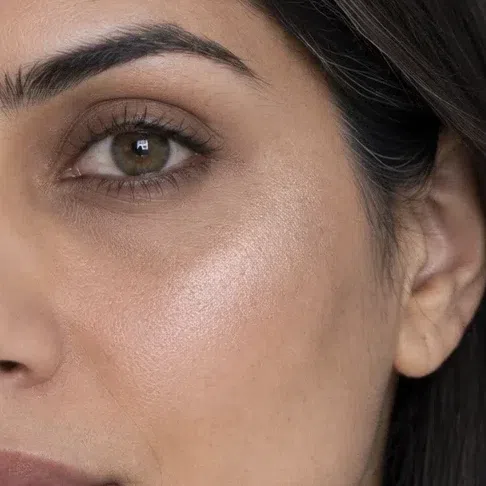
The portraitA Cool Winter: pink-toned porcelain, ink-dark hair past the shoulders, cool gray-blue eyes. The classic snow-and-ink face, and still only one kind of Winter.SkinPorcelain with pink in it and a trace of blue along the jaw. It reddens in the sun rather than turning gold.EyesIcy blue with a dark, crisp ring. On a fair Winter the eye reads bright and cold at once.HairCool dark brown with an ash base - a long way down the scale from the skin beside it.
Is pale skin with dark hair always a Winter?
Often, but not automatically. Dark hair on pale skin gives contrast; the season also needs a cool undertone and clean color. If the hair is a soft ash brown and the eyes are gray and gentle, the face may be a Cool Summer with a darker-than-usual head of hair. If the hair or skin carries gold, look at Bright Spring. The black-and-white photo test is the quickest way to tell a Winter step from a Summer one.
Fair Winters land most often in Bright Winter if vivid eyes meet near-black hair, and in Cool Winter when the coldness is what you notice first.
Olive: gray-green over a cool base
Olive is the depth where Winter gets missed. The green-gray surface makes people assume a warm or muted season, when underneath it the undertone is neutral-cool and the features around it are sharply defined.
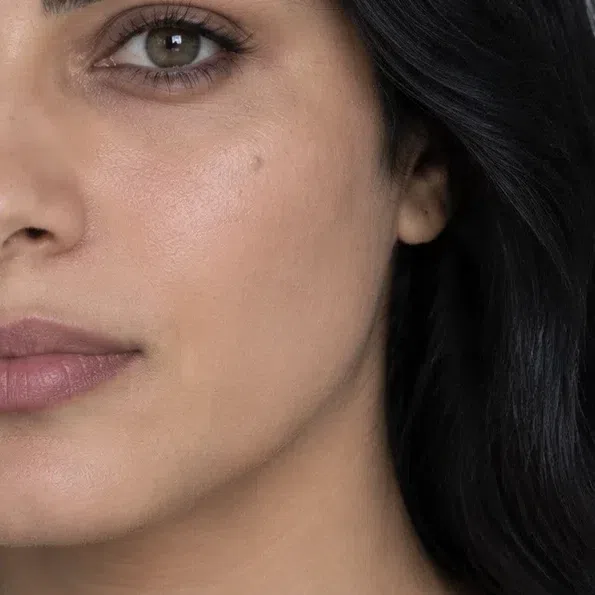
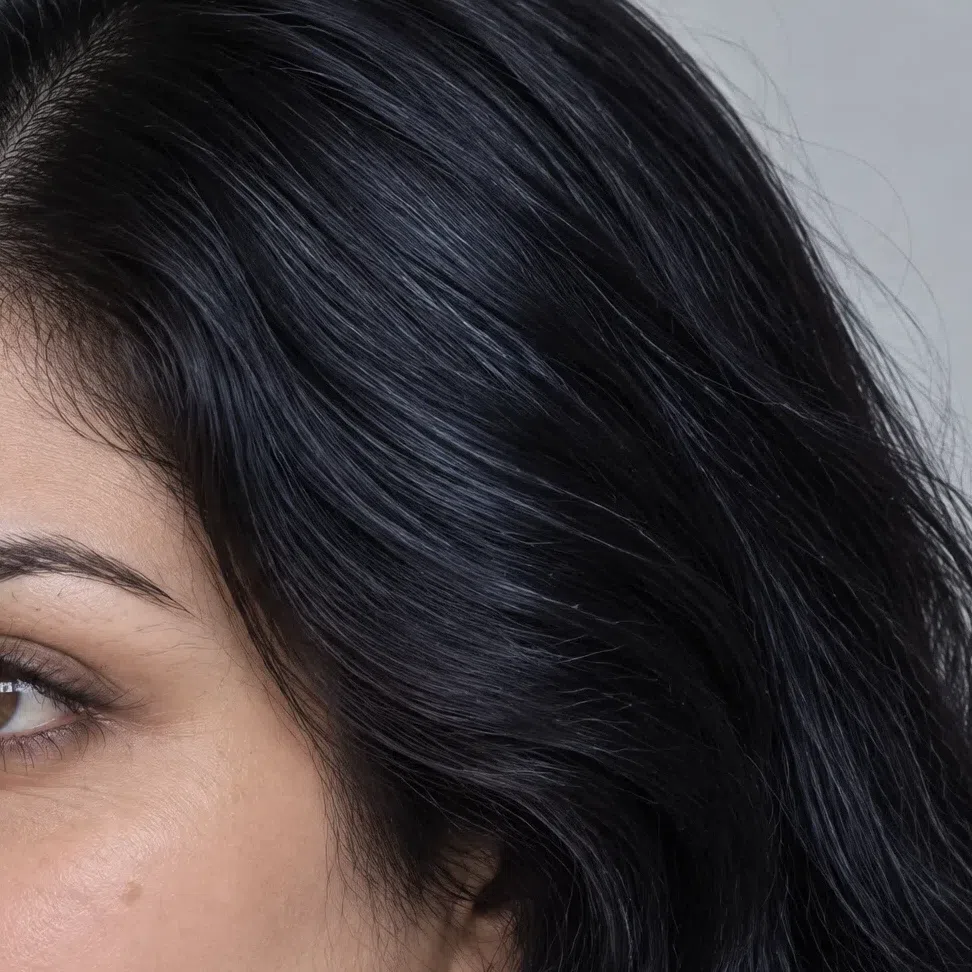
The portraitA Deep Winter with light olive skin, blue-black waves and cool green-hazel eyes. The olive is plain to see, and so is the contrast.SkinAn olive surface with a cool gray-green cast. It tans to a deep, cool bronze with no copper or orange in it.EyesA saturated emerald with a blue note. On olive Winters a green or hazel eye frequently reads cleaner than the skin that frames it.HairCool dark chestnut with an ashy sheen, deep enough to frame the face without any red in the light.
Can olive skin be cool?
Yes. Olive is the gray-green surface cast, and it sits over warm and cool undertones alike. On a Winter it reads cleaner next to silver, jewel green and ruby, and goes sallow beside mustard, khaki and warm beige. If the same skin brightens under gold and terracotta, the season is more likely Deep Autumn. At this depth trust the metals test over the veins.
Olive Winters land most often in Deep Winter, where the olive surface and dark hair sit naturally, and in Bright Winter when the eyes are vivid green or blue. Cool Winter is the least likely here - its own guide describes skin with no olive in it.
Medium: beige-brown, cool underneath
At medium depth the skin has enough color to hide the undertone at first glance. The Winter signal is that the color stays cool and clean - beige-brown with a berry or rose flush, not a Spring's gold tan or an Autumn's bronze.
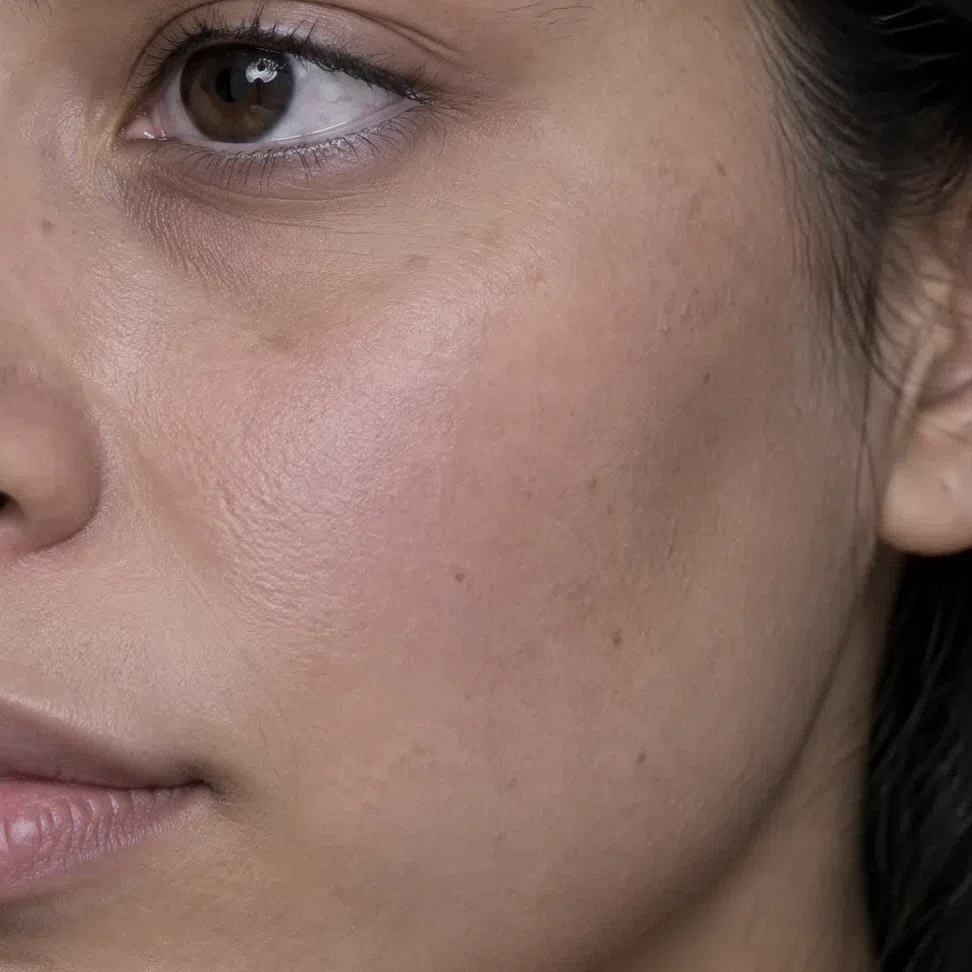
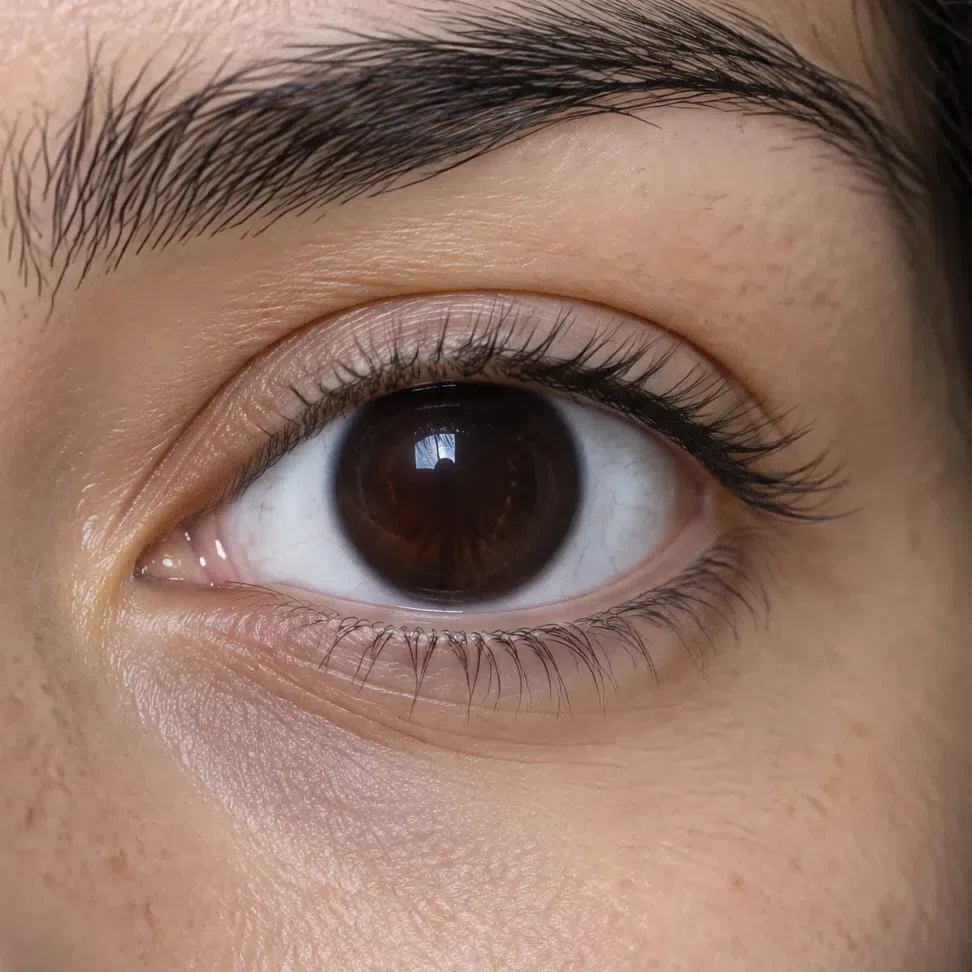
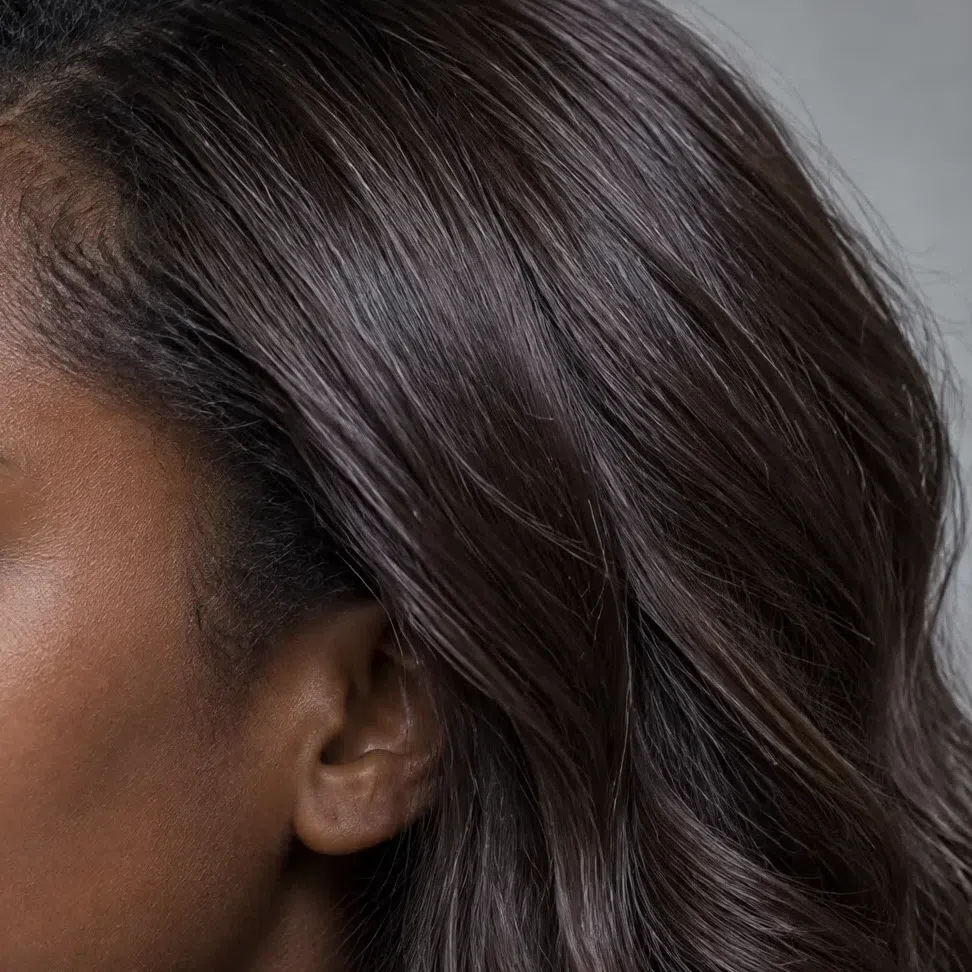
The portraitA Deep Winter with medium beige-brown skin, black-brown hair touched with silver and dark eyes. Hair and skin sit closer together than on porcelain, yet the gap is still easy to read.SkinNeutral-cool beige; the flush is berry and the freckles are ashy brown, never ginger.EyesDark, cool brown with faint pale streaks near the center, framed by very white whites.HairCool chestnut with gray-beige strands in it - the lighter edge of Winter hair, still with no gold.
I tan easily. Can I still be a Winter?
Yes. How readily you tan tells you how much pigment the skin makes, not which way the undertone leans. Olive and medium Winters often tan fast and deep - the tan simply comes up cool bronze instead of gold. Read the undertone in the months when you are least tanned, on the inner arm, and let the drapes rather than the tan decide.
Medium Winters split between Deep Winter and Cool Winter. Dark, dense features point to Deep; a face where the coldness is sharper than the darkness - ashy hair, steel or cool green eyes - points to Cool.
Deep: brown with a blue-red depth
On deep skin the cool undertone shows as a plum or blue-red depth across the cheekbones, and the contrast moves into the eyes, the brows and the hair. It is as much a Winter as the porcelain face at the top of this section.
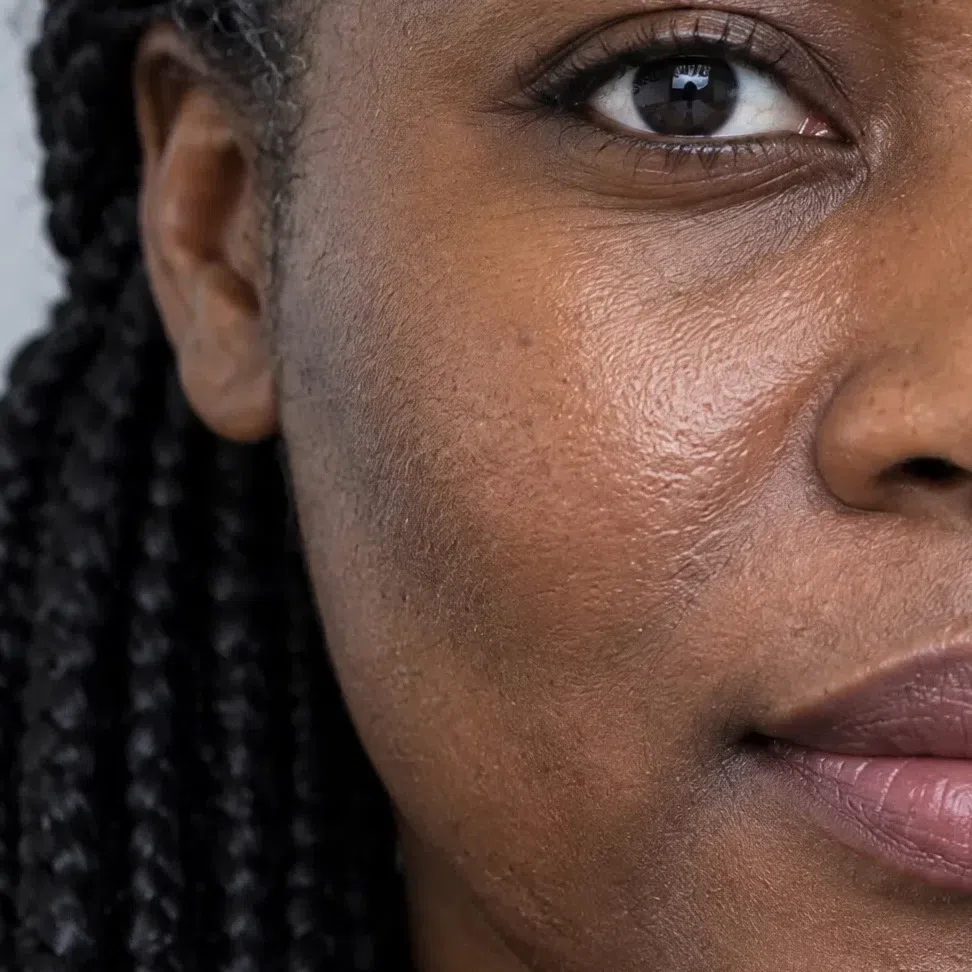
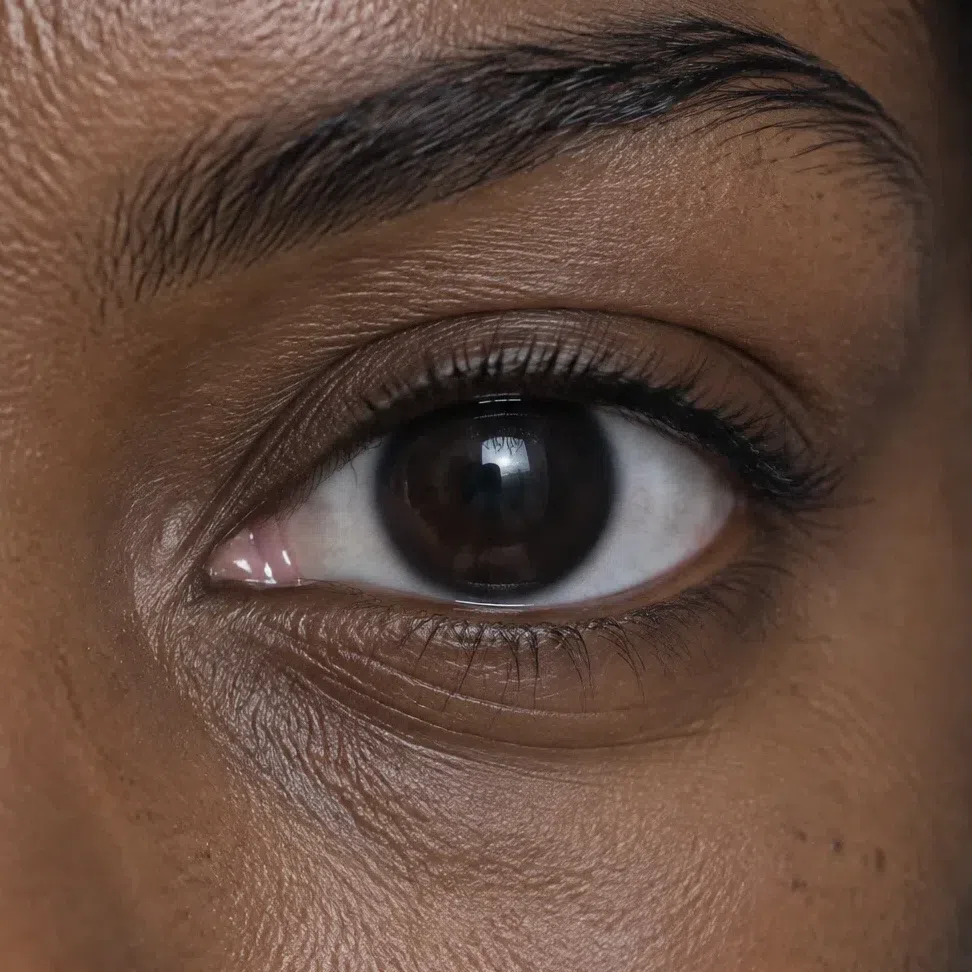
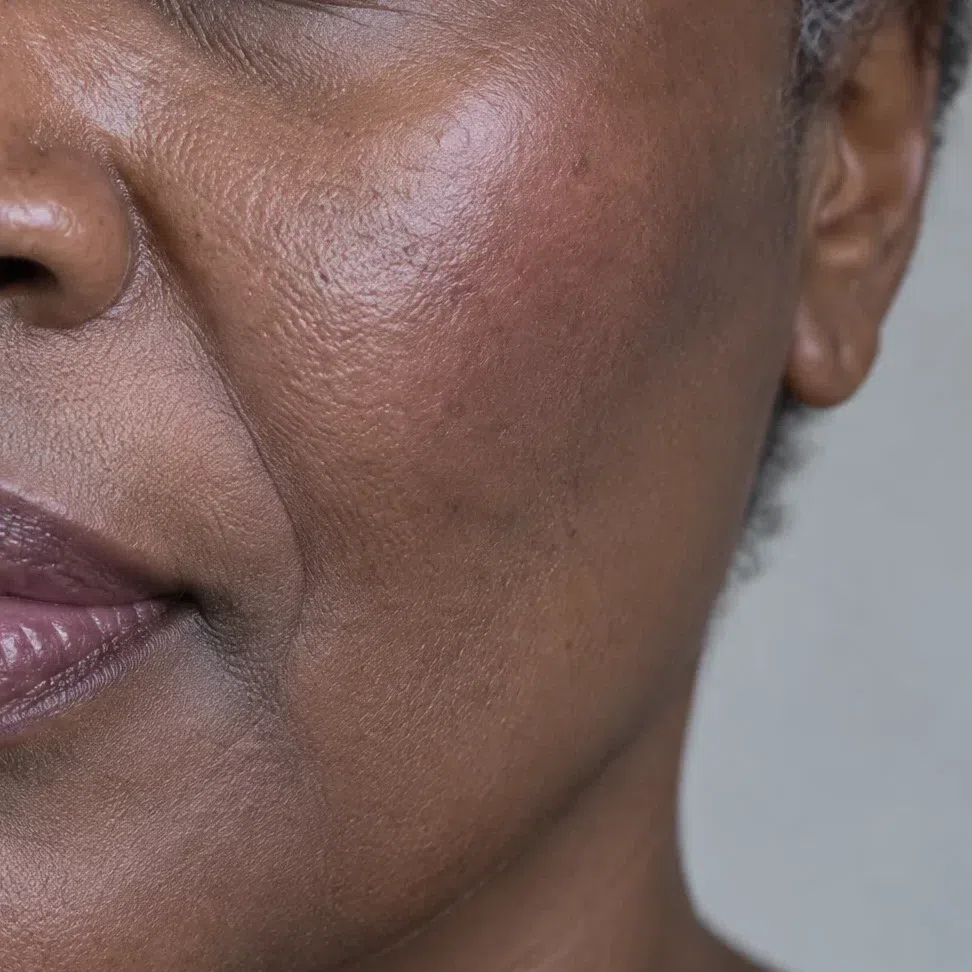
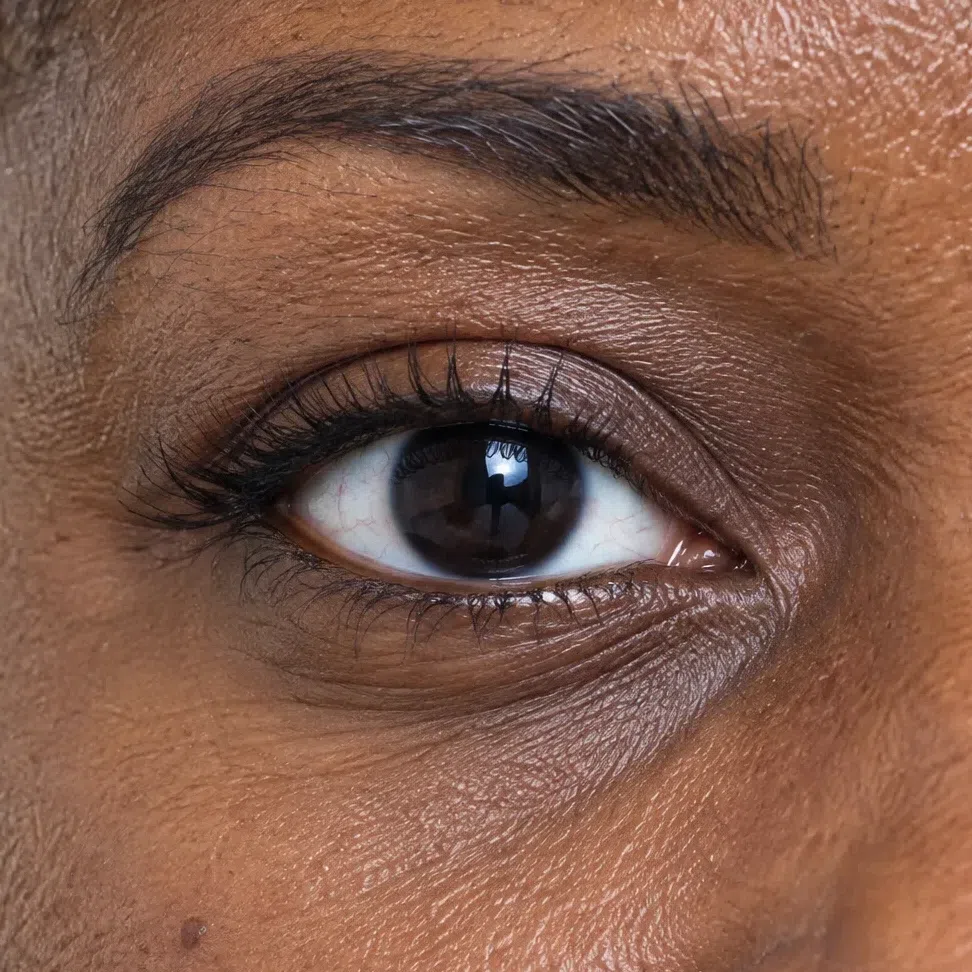
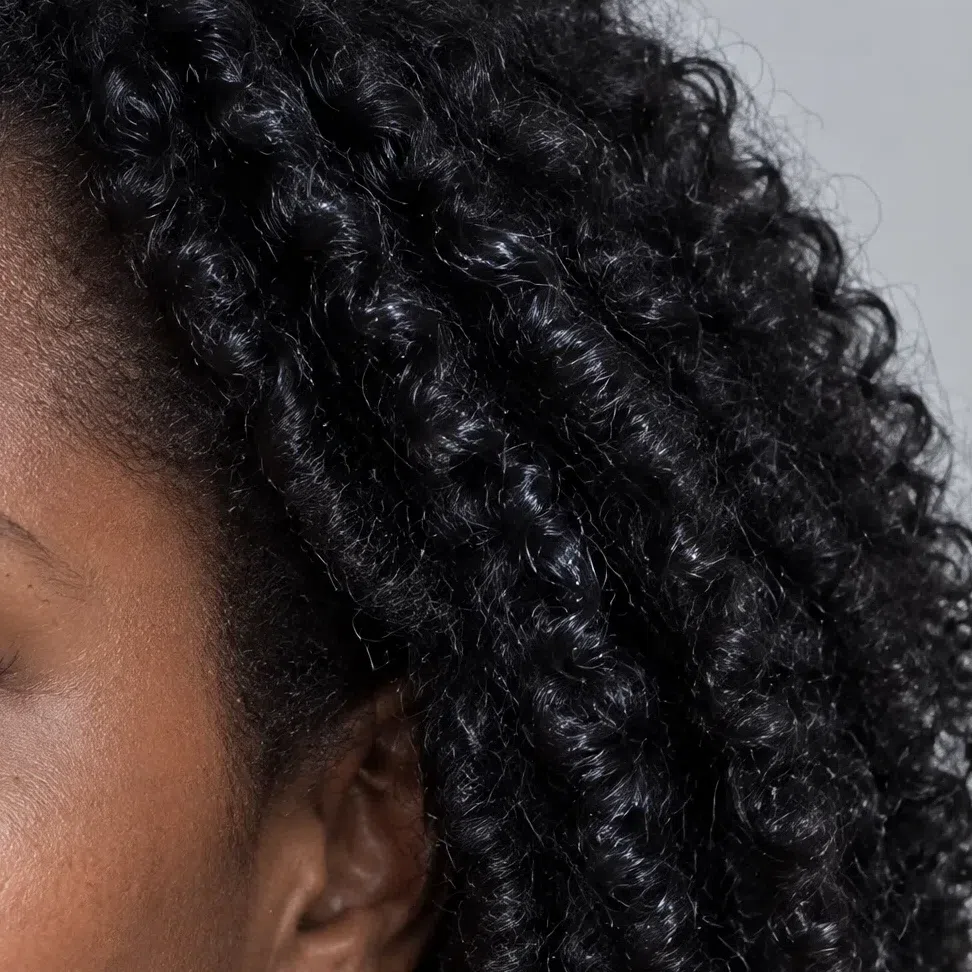
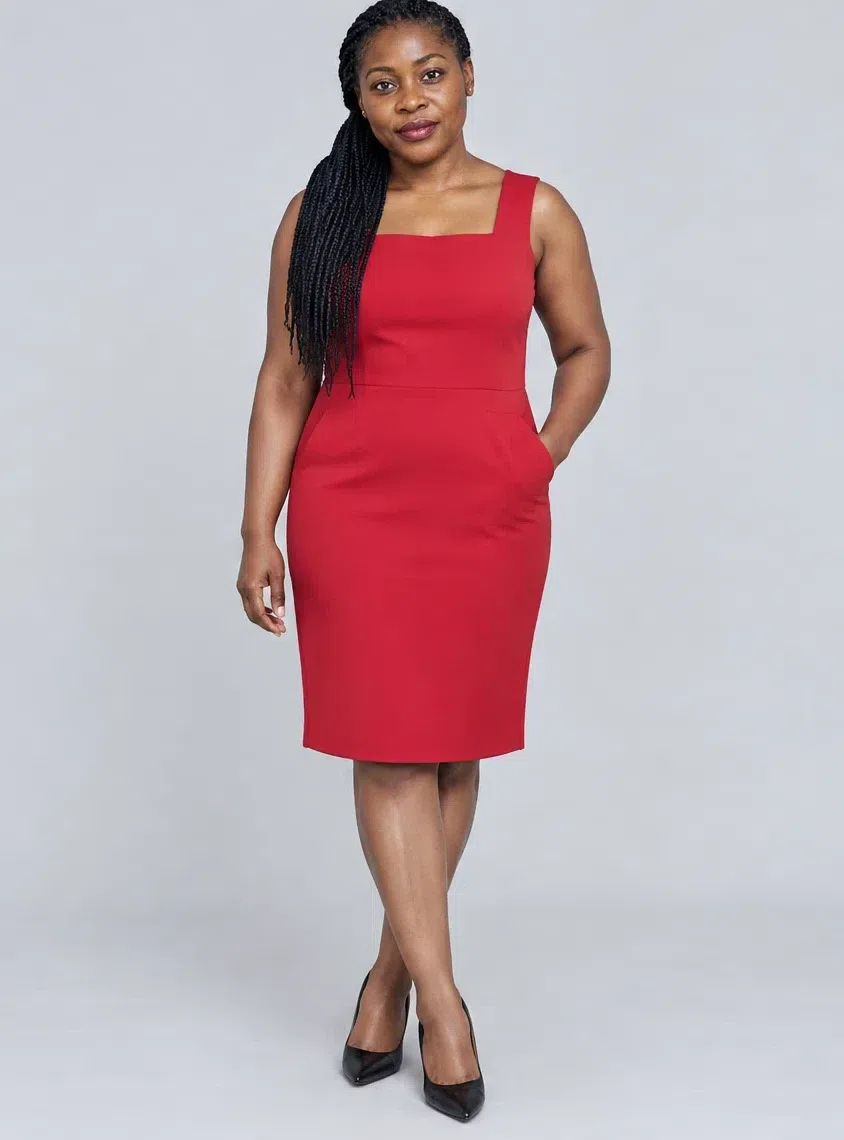
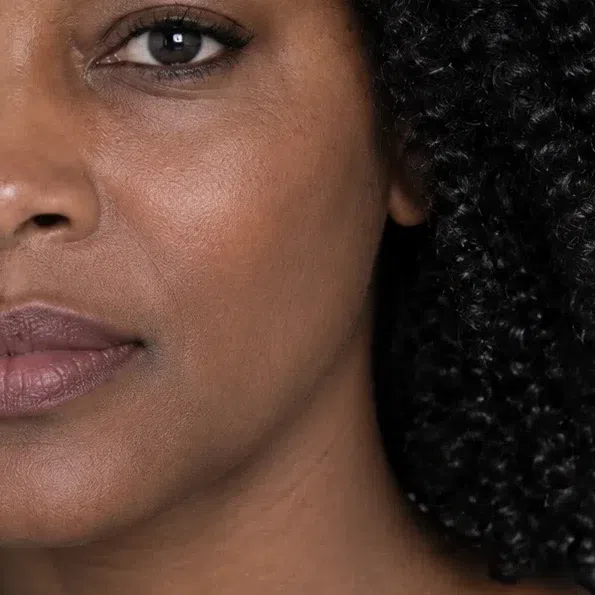
The portraitA Bright Winter with deep cool brown skin, black braids and near-black eyes against very white whites. Her contrast comes from eyes and hair, with no pale skin involved.SkinDeep brown, flushed plum rather than coral at the cheekbone. In daylight it stays rich and never turns ashy or orange.EyesGlossy near-black in a brilliantly clean white - the deep Winter eye, and the strongest contrast on the face.HairBlue-black coils with a blue-violet shine. At this depth the check is the same: no copper cast at the ends.
Can you be a Winter with dark skin?
Yes, and deep complexions land in Winter often. Undertone and contrast set the season, and skin depth changes neither of them. Deep brown skin whose undertone runs blue-red, very white eye whites and dark cool hair is a Winter, and the palette behaves the same on it: black, ruby and jewel colors make it glow, warm beige and mustard make it look dusty. The model in the try-on near the top of this page is exactly that: a Winter at this depth.
Deep Winters land most often in Deep Winter when everything reads dark and dense, and in Bright Winter when the whites of the eyes and vivid colors are what stand out. A deep Cool Winter shows the plainest blue-red undertone and grays to a clean silver.
The Winter palette on a real face
Nineteen shades to wear and eight to skip, every one tried on the same woman
Nineteen shades that hold across all three Winters, ordered the way you would shop: six neutrals as the backbone, three icy pastels for the neckline, and ten saturated accents for the pieces that are meant to be seen. Then eight shades that fight the coloring, every one with its replacement, and six outfits to borrow.
Asked for only three, the top 3 Winter colors are Jet black, Optic white and Ruby. Black and pure white are the two shades the other seasons struggle with and every Winter wears well, and ruby is the red the three subtypes agree on - Deep Winter simply takes it a step darker. Together they are the whole season in one outfit: maximum contrast, no warmth, full clarity.
What you see here is common ground. Every subtype adds its own shades on its own page - darker on one, colder or brighter on the others: the Deep, the Cool and the Bright Winter palette.
Each card reuses the try-on photograph from the top of the page and changes nothing but the color of her top, so what you see is the effect of a shade on deep, cool skin rather than a paint chip. Before most groups sits a row showing one shade on a Deep, a Cool and a Bright Winter side by side - the place where the three subtypes start to pull apart. Optic white is the one card that looks unchanged, because the top was photographed white.
Base colors: the pieces a Winter wardrobe is built on
Nine shades carry the everyday load. The six neutrals go into what you keep for years - coats, suits, trousers, knitwear - and the three icy pastels are for shirts and knits worn right under the chin.
Neutrals: black, white and the cold grays
This is the only season whose neutrals include jet black and optic white at the face, and the only one whose grays run cold without apology. Can Winters wear navy blue? Yes - Midnight is the Winter navy, and on the days black feels too severe it gives the same depth without a single step down in contrast. What stays out of this group is anything beige, cream or camel: warm neutrals are where a Winter wardrobe usually goes wrong.
Gunmetal on the three Winters
Deep WinterSits evenly, and next to her depth it can even read denser than it is.Cool WinterHer home register: the cold in the fabric matches the cold in her skin.Bright WinterFine as a base, provided a vivid shade sits somewhere near it.
Gunmetal is safe for every Winter. Give a Bright Winter something vivid next to it; let a Deep Winter wear it heavier.
Optic white
#FFFFFFPure cold white, the keeper no other season can match. Against Winter skin it evens the complexion instead of sharpening it.
Frost gray
#C7CDD4The light base, taking over the job warm beige does in other closets.
Steel gray
#979CA4A mid gray with blue in it, and the most adaptable neutral on the page.
Gunmetal
#555B66Dark cold gray: the weight of black in a suit, a notch softer at the face.
Midnight
#1B2A4AThe Winter navy. The one alternative to black that gives up nothing in depth.
Jet black
#141414The black the other seasons envy. On a Winter it neither ages the face nor weighs it down.
Six neutrals, four ways to wear them
The signature pair. Jet black and Optic white together make the defining Winter pairing - a contrast most people borrow and a Winter simply owns.
Monochrome in gray. Frost gray, Steel gray and Gunmetal layered from pale to deep read as deliberate - the temperature never changes from one piece to the next.
A softer black. Midnight or Gunmetal in place of black for daytime and office pieces keeps the depth and loses the formality.
One jewel on top. Any neutral here as the base with a single saturated shade over it - Ruby, Jewel green, Ultramarine - is how the palette is designed to be worn.
Icy pastels for the collar
A Winter can wear light colors, as long as they are icy rather than milky: the cold in them matters more than how pale they are. Next to a Summer's powdery pastels these look almost frosted, and on a Winter face that decides whether the skin looks rested or gray. The Winter pink is Ice pink and the Winter green is Icy mint - both with no warmth in them at all.
Icy blue on the three Winters
Deep WinterThe riskiest of the three: beside her depth a light shade fades unless something dense sits next to it.Cool WinterHer version of light - the cold survives even at this paleness.Bright WinterWorks as the counterweight to a bright accent rather than on its own.
Icy pastels suit the whole season, but a Deep Winter should wear them with a dark or saturated piece nearby.
Icy blue
#D7EFFFThe pastel with the most Winter in it. Ice, not milk: cold before it is light.
Ice pink
#F7C8DCCool light pink, standing in for the warm powder pink that dims a Winter.
Icy mint
#D6F5EAA light green with no drop of warmth, fresh in a way sage never is on this coloring.
Accent colors: jewel tones at full strength
Ten saturated shades, then the metals. Strength is never the problem for a Winter; warmth and dullness are.
Ten accents, worn as a scarf
Here the color goes on the scarf rather than the top, deliberately: a shade that runs from collar to hem stops being an accent and simply becomes the outfit. The top underneath stays Optic white. Ruby and Merlot are the reds, light to deep; Jewel green and Forest green the greens; Ultramarine, French blue and Indigo blue the blues; Hot magenta is the pink only a Winter owns.
Ruby on the three Winters
Deep WinterSuits her, and she may want it deeper still - closer to Merlot.Cool WinterWorks because there is blue in it, not because it is bright.Bright WinterHer color in its purest form: the features sharpen at once.
Ruby is the red every Winter shares. What changes between the three is how deep it goes, not the hue.
Ruby
#C8102ERed with blue underneath - the red for a Winter, where warm tomato misses.
Merlot
#800020Cold wine. The deep red that takes the place of warm bordeaux.
Hot magenta
#D62598Cold fuchsia at full strength, a shade almost no other coloring can hold.
Royal violet
#7B3FB5Saturated cold violet that holds the face on its own.
Ultramarine
#2A4FD8Clean, bright blue with no gray in it: contrast without heaviness.
French blue
#1B7FC4A clear mid blue with a gem-like quality, good in a coat or jacket.
Indigo blue
#3D3B8EDark blue-violet, for when you want depth as a color rather than a neutral.
Turquoise blue
#00B0C4Cold turquoise on a blue base; Deep Winters take it darker, toward teal.
Jewel green
#009B77Cold, saturated green and one of the most flattering shades at a Winter face.
Forest green
#006400The same cold green at Deep Winter depth - evergreen rather than emerald.
Metals: silver, platinum, hematite
Should Winters wear gold or silver? Silver. Silver is the everyday metal for every Winter, platinum is its lighter and colder partner, and hematite is the dark metal for when you want weight. Yellow gold, bronze and brass put a yellow cast next to cool skin. The discs are drawn as gradients, since polished metal is never one flat tone.
SilverIf you own a single metal, make it this one. At the face it works the way a well-chosen fabric does - it repeats the cool in the skin rather than fighting it.
PlatinumLighter and a touch colder than silver. Fine chains, thin rings, delicate frames.
HematiteA dark, cool metallic that replaces bronze and brass in buckles, hardware and statement pieces.
Putting the metals to work
Jewelry. Silver and white gold as the everyday metals, platinum for fine pieces, hematite for weight. Keep yellow gold away from the ears and throat.
Stones. Cold, transparent stones - sapphire, emerald, amethyst, clear crystal - behave the way the jewel-tone fabrics do on this palette.
Bags and shoes. Jet black leather as the default, Midnight or Gunmetal for a softer day, and one Ruby or Hot magenta piece as the statement.
Glasses. Black, silver, gunmetal or crystal-clear frames. A tortoiseshell or honey frame puts warmth right beside the eyes.
Winter colors to avoid
Eight shades, all failing for the same reason: warmth or dust. Every card pairs the miss with its replacement, drawn from the shades above.
Warm and muted
Almost every Winter mistake is here, and none of them looks loud. These are the shades sold as safe and easy - beige, cream, camel-adjacent golds, earthy greens - so they pile up in a Winter's wardrobe without anyone questioning them.
Old gold on the three Winters
Deep WinterBeside her depth it reads dull and accidental.Cool WinterThe gold in the fabric argues with the blue in her skin, and the face turns yellow.Bright WinterThe muting puts her out even faster than the warmth does.
The Winter mistake is almost never too bright - it is too warm. Compare Icy mint above: just as light and soft, but cold, and the face comes back.
Beige
#D9C7A8Sold as the safe neutral, and for a Winter it is the worst one: the skin yellows on contact.Wear insteadFrost gray#C7CDD4
Cream
#F3E7D3A warm white. On the hanger it is close to optic white; at the face the difference is obvious.Wear insteadOptic white#FFFFFF
Old gold
#C4A23FGolden yellow pushes cool skin toward a sallow, unwell cast.Wear insteadIcy mint#D6F5EA
Rust
#B85820Orange-brown, the opposite of this palette on temperature and clarity at once.Wear insteadMerlot#800020
Terracotta rose
#C96F5EA warm red-orange. Ruby does the same job with blue beneath it.Wear insteadRuby#C8102E
Khaki
#8A8B5CA muted warm green that flattens the contrast the whole coloring depends on.Wear insteadJewel green#009B77
Dusty pink
#C08081Warm and dusted at once; Ice pink or Hot magenta is the cold answer.Wear insteadIce pink#F7C8DC
Burnt orange
#D2691EThe warmest shade in the spectrum, and the one no Winter subtype can rescue.Wear insteadRuby#C8102E
Why warm and muted fails
They carry gold. A shade with yellow or orange under it, placed against a blue or pink undertone, reads as a yellow cast on the skin - sallow rather than warm.
They take the contrast away. A Winter face is defined by the distance between its features. Muted, mid-toned shades close that distance, and the features blur.
They look harmless. Nothing here is loud on a rail, so these collect in a closet by default - the trouble only shows when the piece is at the collar.
Winter color combinations
Six ready outfits using only the shades above; chips run in dressing order.
Six outfits
Most follow one pattern: a cold neutral or two, then one clean, saturated shade. Learn the pattern and the list stops being necessary.
Jet black
+
Optic white
The classic contrast
A Jet black dress or suit with Optic white at the collar or in the accessories - or the other way round. The pairing Winter is named for.
Midnight
+
Silver
Business
A Midnight suit with a silvery blouse and silver jewelry: formal, cool and quietly sharp.
Gunmetal
+
Hot magenta
+
Optic white
A bright weekday
A Gunmetal coat, a Hot magenta sweater and Optic white trousers - bold, but every piece is cold.
Jewel green
+
Jet black
Evening
A Jewel green dress with Jet black shoes and bag. Rich, dramatic, and entirely in the season's register.
Merlot
+
Frost gray
The office, softened
A Merlot skirt with a Frost gray blouse: contrast that reads refined rather than stark.
Ultramarine
+
Optic white
Summer
An Ultramarine T-shirt with Optic white jeans. The simplest Winter outfit there is, and one of the freshest.
What the six share: a Winter builds contrast out of dark against light and clean color against a cold neutral. Black beside white, jewel green beside black, ruby beside frost gray. A single warm or dusty piece is what breaks an outfit; silver is what ties two strong shades together.
Wardrobe, makeup and hair color: the Winter rules
The season-wide rule, then how each Winter bends it
Clothes, makeup and hair color get one rule apiece here, because the full treatment is already written three times over - once for each Winter. The Deep, Cool and Bright Winter pages each carry an eight-piece capsule shot on four skin depths, the makeup shades worth buying, and the hair colors worth dyeing toward. Read the rule, then follow the link to the version that fits you.
The wardrobe and hair color rules hold for men word for word.
Wardrobe
The rule: Build on black, white and cold grays, then bring clean, saturated color up to the face.
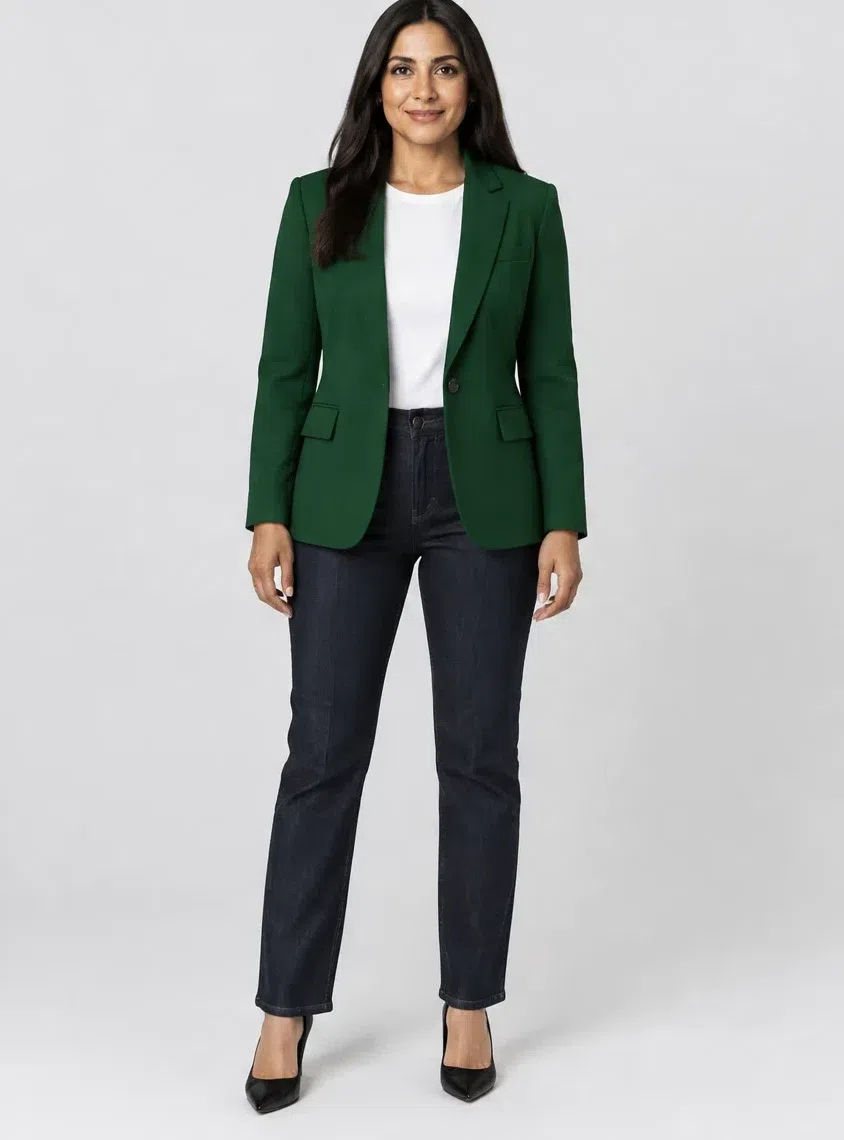
Jet black, optic white, gunmetal and midnight navy do the structural work, so the base of the closet already matches a cool, high-contrast coloring before any color arrives. Saturated shades then earn their place near the face - a blazer, a dress, a knit - where their clarity repeats the clarity of the features. The four looks below are that rule on four complexions and three subtypes.
Each Winter leans on a different part of it. A Deep Winter dresses heaviest, in black, wine and forest green, and can go dark from head to toe. A Cool Winter reaches for navy, crimson and cold jewel tones, with silver-gray in place of beige. A Bright Winter pairs crisp white with ruby, ultramarine and shocking pink at full strength, and uses icy pastels as the counterweight.
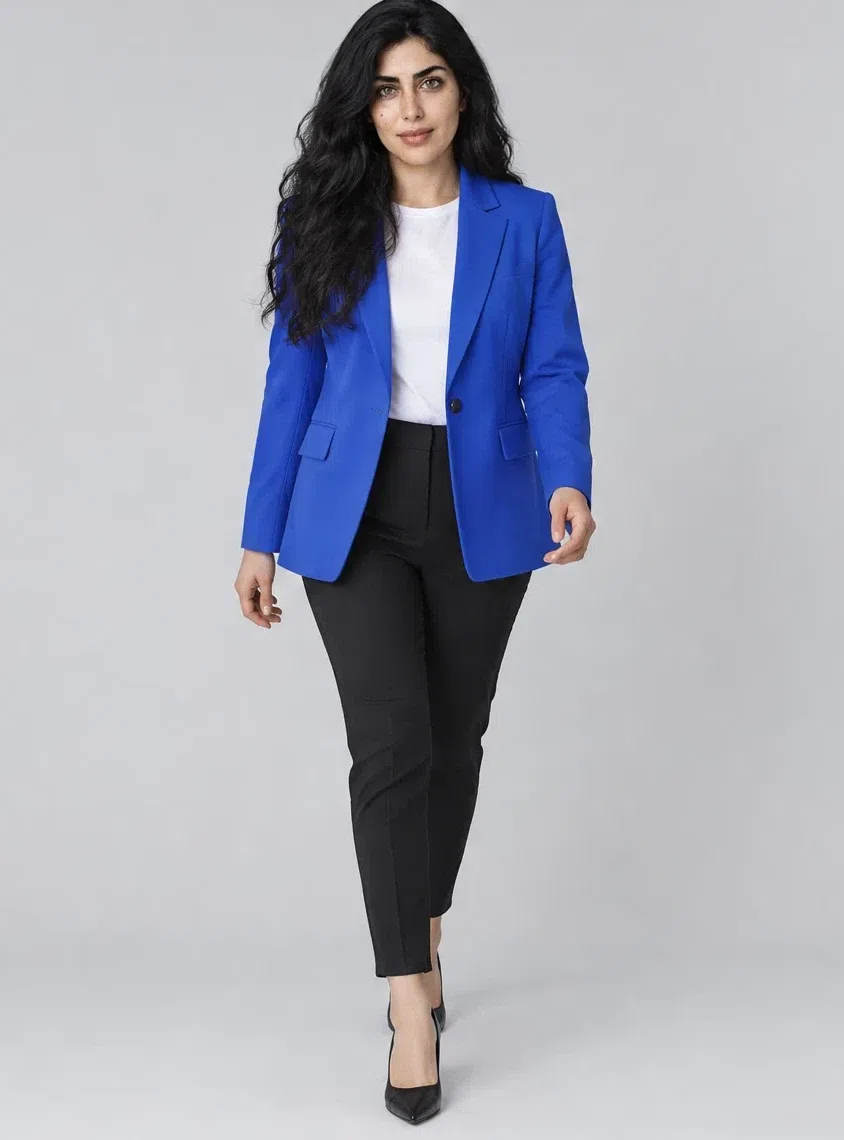
Cool Winter, fair: a midnight navy trouser suitBright Winter, olive: an ultramarine blazerDeep Winter, medium: a forest green jacketBright Winter, deep: a ruby sheath dress
The rule: A cool base and blue-based color - true red, berry, plum and cool pink. Nothing peach, orange or golden.
Foundation should match the pink or neutral-cool base of the skin; a golden formula shows as a yellow line at the jaw and blurs the contrast the face depends on. Blush runs from cool pink to berry, sculpting is done with a cool taupe rather than bronzer, and highlight is icy, pearl or champagne-silver. Lips carry the season best: a blue-red, a berry or a fuchsia. Eyes take gray, graphite and black liner by day, and jewel shades at night.
The strength is what changes. A Deep Winter wears the richest version - wine, plum and a darker berry lip. A Cool Winter keeps everything visibly cold, with cool pink cheeks and a clean blue-red. A Bright Winter can wear the most saturated lip of the three, a true fuchsia or ruby, and a bright icy highlight.
The rule: Keep it dark and cool. Never warm it with gold, copper or caramel.
Winter hair color works by holding the distance between hair and skin: blue-black, cool espresso and ash dark chocolate all keep it. Caramel highlights, copper glazes and golden balayage do the opposite - they warm the frame and close the gap, and the face loses its definition. Gray is the exception that helps: a Winter going gray usually turns a clean silver, and leaving it is often more flattering than covering it with a warm brown.
The range narrows by subtype. A Deep Winter owns the darkest cool shades - blue-black, bitter chocolate, violet black and a black-cherry tint. A Cool Winter looks best in ash browns and blue-black, and is the one most likely to suit natural silver. A Bright Winter can keep a dark base and add a bold cold accent, such as a platinum streak or a sapphire light.
Deep Winter: blue-blackBright Winter: ash dark chocolateDeep Winter: black cherry on coilsBright Winter: platinum streaks
One principle sits under all three: cold and clear in, warm and dusty out - on the hanger, in the makeup bag and at the salon. Still unsure which Winter you are? The side-by-side table and the quiz narrow it down, and a photo analysis gives the answer.
Winter vs Summer, Autumn and Spring
Where each neighbor overlaps with Winter, and the axis that pulls them apart
Winter is the one season that is both cool and clear, and each neighbor borrows a piece of that. Summer has the same cool undertone but softens every color. Spring has the same clarity but runs warm. Autumn shares neither axis, yet at its darkest it has the same depth, and dark hair on olive skin is where the two get confused. Each block below isolates the one axis that separates Winter from that neighbor, and ends with a drape test that changes nothing else.
Clear and saturated. Color at full strength, with no haze over it.
Contrast
High. Features stand well apart from the skin.
Colors
Hot magenta, Ultramarine, Icy blue, Jet black - clean and cold.
Temperature
Cool, the same as Summer - which is why this pair is the hardest to split.
Overall impression
Graphic and striking, like frost on a dark window.
Summer
Clarity
Soft and muted. Every shade looks as if a little gray or smoke went into it.
Contrast
Low to medium. Gentle, blended steps between features.
Colors
Lavender, ash rose, gray-blue, soft plum - cool and powdery.
Temperature
Cool as well: rosy or bluish skin, hair with an ashy cast.
Overall impression
Delicate and calm, like a misty morning.
The test: royal violet against dusty lavender Both fabrics are cool purples, so temperature is held still and only clarity moves. Drape a saturated royal violet under your chin, then a dusty lavender. On a Winter the violet sharpens the brows and brightens the whites of the eyes, while the lavender makes the face look faded and a little gray. A Summer gets the reverse: the lavender sits in harmony and the violet looks like it is wearing her. It is the single most useful test on this page, because Cool Winter and Cool Summer can match on almost everything else.
Cool, or neutral-cool with a gray-olive cast. No gold under the skin.
Contrast
High, with a crisp edge where dark hair meets the face.
Colors
Merlot, Forest green, Ruby, Optic white - jewel tones with a cold base.
Black
A keeper. Black at the face sharpens a Winter and makes the color around it look richer.
Overall impression
Dramatic and polished, like a night sky.
Autumn
Temperature
Warm. Golden or golden-olive beneath the skin, copper in the hair.
Contrast
Medium or softer, with blended edges even when the coloring is dark.
Colors
Terracotta, mustard, khaki, bronze - earthy and warm.
Black
Heavy. Near the face it ages an Autumn and looks borrowed.
Overall impression
Rich and grounded, like a harvest field.
The test: black against dark chocolate Two very dark fabrics, so depth is held still and only temperature and edge change. Put on something jet black at the neckline, then a dark chocolate brown. On a Winter the black looks crisp and deliberate, the skin clears, and the brown looks muddy by comparison. On an Autumn the black drags the face down and settles into the under-eye area, while the chocolate looks warm and natural. If both look good, look at the jaw in the black: a Deep Winter's stays clean-edged, a Deep Autumn's goes shadowy.
Cool. Blue or pink under the skin; hair with ash or a blue glint.
Contrast
High and graphic. Dark hair against a clearly lighter face.
Colors
Ruby, Jewel green, Hot magenta, Frost gray - vivid and icy.
Hair
Dark and cool - blue-black, espresso, ash brown, never red.
Overall impression
Crisp and cold, like a clear winter night.
Spring
Temperature
Warm. Peach or golden skin, and hair that shines gold in daylight.
Contrast
Soft to medium, never a hard cut.
Colors
Coral, peach, turquoise, golden yellow - vivid and sunny.
Hair
Warm at every level - golden blonde, honey, copper, warm chestnut.
Overall impression
Light and lively, like early sunshine.
The test: ruby against tomato red Two reds at the same strength, so clarity is held still and temperature is the only thing that changes. Hold a blue-based ruby under your chin, then an orange-based tomato red. A Winter's features sharpen in the ruby, and the tomato red makes the skin look yellowish and a little flushed. A Spring glows in the tomato red, while the ruby turns her faintly gray around the mouth. This is the pair that separates Bright Winter from Bright Spring, the two closest colorings across the cool-warm line.
If none of the three settled it, the test that felt closest is your clue: it names the border, and the subtype page on either side of it goes through that border in depth. A photo analysis reads the same three axes directly from your face.
FAQ
Winter color season: questions people ask
How do you tell if you're a Winter?
Check for three things together: a cool undertone, colors that read clean instead of muted, and features that stand far apart from the skin in lightness. The quickest home checks are white paper held at the jaw (skin goes pink or bluish), silver against yellow gold (silver wins), and a grayscale selfie (the hair falls far below the skin). Skin depth is not one of the signs - Winters run from porcelain to deep brown. Am I a Winter? walks through all five checks.
What are the four types of Winter?
Most systems name three, and some add a fourth. The twelve-season model used here has Deep Winter (also called Dark Winter), Cool Winter (True Winter) and Bright Winter (Clear Winter), each taking its name from its strongest trait. Sixteen-season systems add a softer variant, usually called Soft Winter, and online you will also meet Light Winter and Warm Winter. None of those three exists in a twelve-season wheel; each points to a Winter or to a neighboring season, as the name map shows.
Which Winter am I: Deep, Cool or Bright?
Find the property that stands out first in your coloring. Darkness first - deep hair and eyes, a dense look overall - usually means Deep Winter. If it is coldness, with ashy hair and steely or icy eyes, a Cool Winter. If it is vividness - very light skin against very dark hair, or gem-bright eyes - a Bright Winter. Holding a deep burgundy, a clear cold blue and a ruby to your face usually confirms it. Which Winter? has a comparison table and a short quiz for exactly this.
Should Winters wear gold or silver?
Silver. Silver, platinum and white gold repeat the cool in a Winter's skin and keep the face clean-looking; yellow gold, brass and bronze put a yellowish cast next to it, which shows most near the earlobes and neck. For heavier hardware, dark hematite does the job bronze would do elsewhere. If you own gold pieces you love, wear them at the wrist or on a ring, away from the face. The metals are shown as gradients in the palette section.
What colors look best on a Winter?
Clear, saturated, cool colors - and the extremes of black and pure white. The core of it is black, optic white and a blue-based ruby, supported by jewel tones such as Jewel green, Ultramarine, Hot magenta and Royal violet, cold grays like Gunmetal and Frost gray, and icy pastels such as Icy blue and Ice pink. What they have in common is blue underneath and no dust on top. The palette shows all nineteen on a face.
Can Winters wear navy blue?
Yes - navy is one of the best neutrals a Winter has. A deep, cold navy such as Midnight gives the same depth as black with a touch less severity, which makes it the natural choice for suits, coats and office pieces. The navy to avoid is a dusty, grayed one, which dulls the contrast. Deep Winters can take the darkest, inkiest navies; Bright Winters look best when the navy sits beside a clean white or a vivid accent.
Can a Winter wear black at the face?
Yes - Winter is the season black suits best. On most colorings a black collar deepens shadows and ages the face. On a Winter the black repeats the darkness already in the hair and brows, so the skin looks clearer beside it and the features sharper. It is still worth checking how it lands in daylight: a Deep Winter wears black effortlessly, while some Cool and Bright Winters prefer Midnight or Gunmetal for daytime. Winter vs Autumn uses black as its test.
Winter or Summer: how do I tell them apart?
Look at clarity and contrast, because the undertone will not separate you - both seasons are cool. A Winter's colors are clear and saturated and the features read sharply against the skin; a Summer's are softened, as if a little gray were mixed in, and the features blend. Try a saturated royal violet against a dusty lavender: a Winter sharpens in the violet, a Summer looks more natural in the lavender. Winter vs Summer covers the rest.
Am I a Deep Winter or a Deep Autumn?
Temperature decides it, because both colorings are dark. A Deep Winter has a cool or neutral-cool undertone and hair with no copper in the light; a Deep Autumn has golden or golden-olive warmth and a red or bronze glint. Jet black at the neckline is a clear tell: it looks crisp on a Deep Winter and heavy on a Deep Autumn, whose face looks better in dark chocolate brown. The Deep Winter guide works through this border in detail.
What is the rarest color season?
Nobody knows, and claims otherwise are guesses. There is no reliable population study counting color seasons, and different schools draw the borders between seasons in different places, which is why two analysts can place one person in different seasons. You will read that Winter is the rarest season and also that it is among the most common; neither has data behind it. What is true is that Winters exist at every skin depth, from porcelain to deep brown.
Can someone with deep brown skin be a Winter?
Yes, and deep complexions often land in Winter. Undertone and contrast place a person in a season; skin depth does not. Brown skin with a plum or blue-red undertone, bright eye whites and dark, ash-free hair belongs in Winter, and ruby, black and jewel shades light it up exactly as they do on pale skin. The model used in the page’s color widget has this coloring; the complexions section puts her depth next to three others.
Does color season analysis work for men?
Yes, with no changes. The three things being judged are properties of a face, whoever it belongs to. For men, read them off skin, eyebrows, stubble and hair, and a Winter man wears the same palette: black, white, charcoal and navy as the base, a clean jewel color in a shirt or tie, and silver or steel for a watch. The wardrobe and hair color rules in the guide section apply to men unchanged.
What hair color suits a Winter?
Dark, cool shades that keep the distance between hair and skin. Espresso, blue-black, violet black and an ashy dark chocolate all hold that gap, while caramel ribbons, copper gloss or a golden balayage soften it and the face loses definition. Bright Winters can also carry a single icy streak. When a Winter goes gray, the gray is usually a clean silver that suits the coloring well. Each Winter’s own range is one click away from the guide above.
What makeup suits a Winter?
Cool underneath, blue-based on top. Choose foundation with a pink or neutral-cool undertone at your depth, blush from cool pink to berry, a cool taupe instead of bronzer, and an icy or pearl highlight. Lips carry the season: true blue-red, berry, fuchsia or plum. Avoid peach, coral, orange and golden shimmer. The strength is the subtype question - richest on a Deep Winter, most saturated on a Bright Winter. The makeup rule links to each subtype's shades.
Does a Winter stay a Winter as they age?
The season rarely changes; the contrast within it does. The undertone stays the same for life, but hair lightens or grays and facial contrast tends to soften as people get older, which research on faces has measured. Many Winters find that stark black at the collar starts to feel harsh over the years and move toward Midnight, Gunmetal or a jewel tone near the face, while silver hair often suits them better than a dyed dark brown. When a favorite shade stops working, run the drape test again by a window.
Is a Winter color palette the same as a winter design palette?
No - they are different things with the same name. Search for a winter color palette and you will find design palettes of icy blues and snowy whites built for websites and graphics. Here Winter names a kind of coloring, not a month on the calendar: a Winter wears the same palette in July as in January, and it includes ruby, magenta and jewel green as well as the icy shades. The palette on this page is the one for dressing a Winter face.
Sources
Nearly everything above is a styling judgment that research cannot confirm or refute. The exceptions - how room light shifts color, why veins mislead on deep skin, what a grayscale photo keeps, how facial contrast changes with age, and where the season names came from - are listed here, each with a note on which passage it supports and how far that support goes. All six were read in full for this page.
Where the four-season idea started. Jackson’s Color Me Beautiful (1980) grouped winters and summers as the seasons with blue undertones and advised winters to wear “rich saturated colors such as black, white, true red, fuchsia, and cobalt blue” - the same core as The Winter palette on a real face. The article traces her method to three earlier color teachers. Splitting Winter into Deep, Cool and Bright is a later refinement it does not cover.
Behind Other names for the Winters and the FAQ answers on the types of Winter and the rarest season. The article describes seasons as “to some degree, arbitrary”, notes that someone can sit on the cusp of two, and quotes Jackson calling the season names a more poetic label than “Type A” or “Type B”. It gives no figures for how common any season is.
The reason every check on this page, from the white sheet to the drapes, asks for window light. The article lists an ordinary incandescent bulb at roughly 2,400 K, a long way below daylight, which means a lamp has already warmed the skin before you look at it.
Backs two points: the vein-test caveat in Am I a Winter?, and the case made in Winter on every complexion that skin depth and undertone are two independent properties. According to the article, pale skin owes much of its color to blood near the surface, while darker skin is colored mainly by melanin - which is why veins read clearly on one and hardly at all on the other. Seasons are outside its scope.
Explains what the gray version of a selfie in the contrast check actually shows. Converting to grayscale stores a single intensity per pixel, so hue drops out entirely and hair and skin can be compared on lightness alone.
Supports the FAQ answer about getting older. Measuring photographs of adult women, the authors found that the difference in lightness between lips, eyes and brows and the skin around them shrinks over the years, and that lower-contrast faces look older to observers. Every participant was a Caucasian woman, and nothing in the study concerns clothing or seasons.
No source here says which shades flatter a Winter. The nineteen keepers, the eight misses, the Deep, Cool and Bright split, the name map, every metal, makeup and hair call, and the violet, black and ruby drape tests come from our own analysis - drapes held against real faces, not published studies. Other color analysts divide the seasons differently, and no shared standard decides between them.
What is color analysis, how do you find your season, and what are the 12 types?
The main guide covers all of it - the four axes your season is built from, all twelve subtypes side by side, and a free quiz that places you in about a minute.