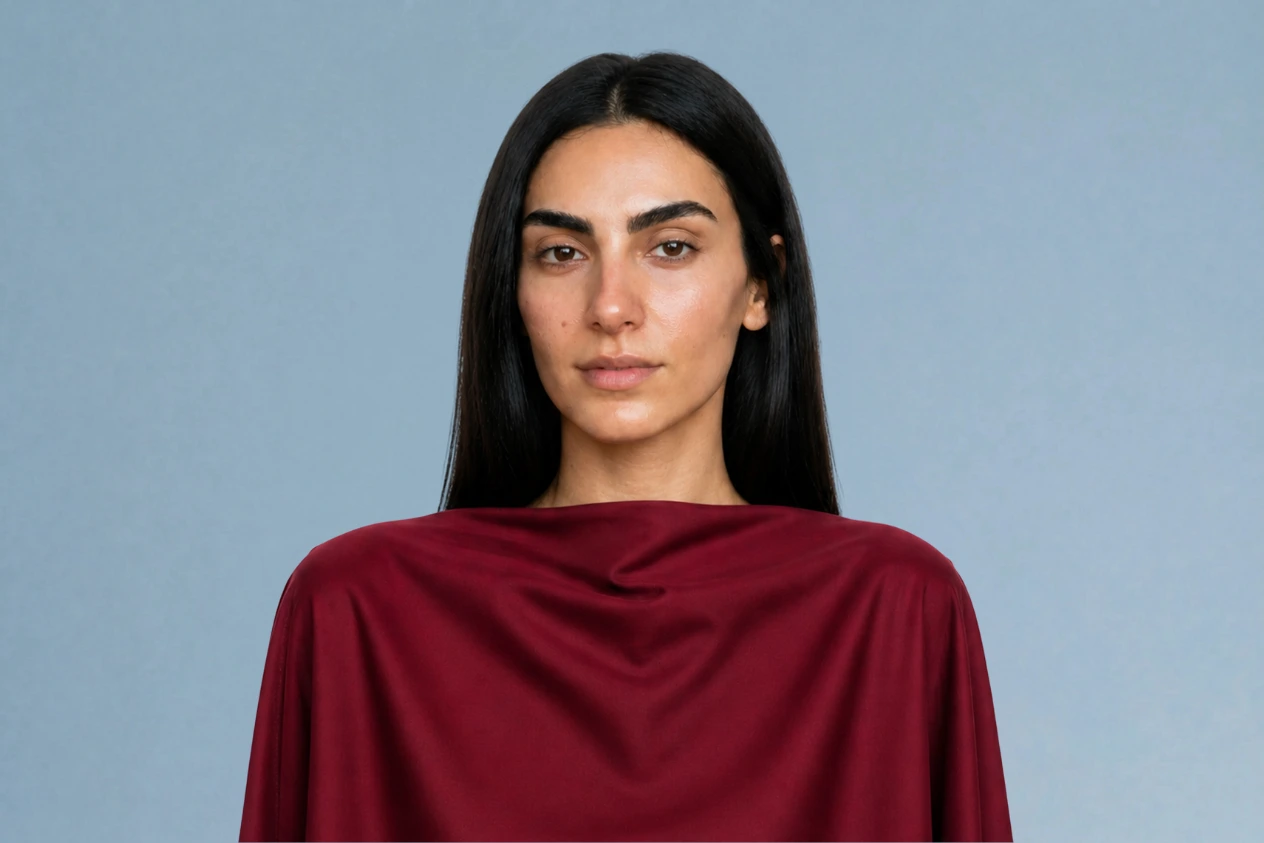
Deep Winter color palette (Dark Winter): clothing colors to wear and avoid
Deep Winter is the darkest of the winters: a cool to neutral-cool undertone, dark hair and eyes, and high contrast that black and jewel tones match. Below: 18 shades to wear, 7 to avoid, and how to tell it from Deep Autumn.
Deep Winter colors, tried on a Deep Winter face
Twelve shades for the pieces worn closest to the face: six neutrals and six rich base colors. Ten of them are dark, and that is the point. Most advice warns that dark clothes drag a face down, but on this coloring it runs the other way - Jet black and Merlot make her brows and eyes look more defined, while the problems on this page come from warm and dusty shades. Compare the two light ones as well: Optic white against Icy gray shows how much contrast she can carry. Keep an eye on the shadows under her eyes rather than on the top.

Deep Winter in 30 seconds
Deep Winter, often called Dark Winter, is the darkest of the three winters: cool to neutral-cool underneath, saturated rather than electric, and high in contrast. Depth leads and coolness follows. The Deep Winter color palette runs on black, clean white and jewel tones - wine, bottle green, inky violet - with silver in place of yellow gold. Dark colors are not the risk here. Warm and dusty ones are.
| Skin | Porcelain to olive to deep brown, always cool or neutral, never golden. |
|---|---|
| Eyes | Dark and intense - deep brown, near-black or cool dark green, with bright whites. |
| Hair | Blue-black to cool dark brown. No red, copper or gold in it. |
| Contrast | High: dark hair and eyes stand out sharply against the skin. |
| Metal | Silver, platinum and white gold. |
Wardrobe base:
Careful with:
If you remember one thing: pick the deeper, cooler version of any color. Torn between this and Deep Autumn, Cool Winter or Bright Winter? A photo analysis decides it.
Deep Winter or not? Five checks that decide it
Start with undertone - it rules out the most
Deep Winter is the darkest and most dramatic of the winter subtypes. It sits on the border with Deep Autumn, sharing that season's depth while keeping a cool winter base. That makes temperature the first thing to settle: a dark coloring can belong to either season, and only the undertone decides which. Work through the five checks in sequence; each one narrows the field for the next.
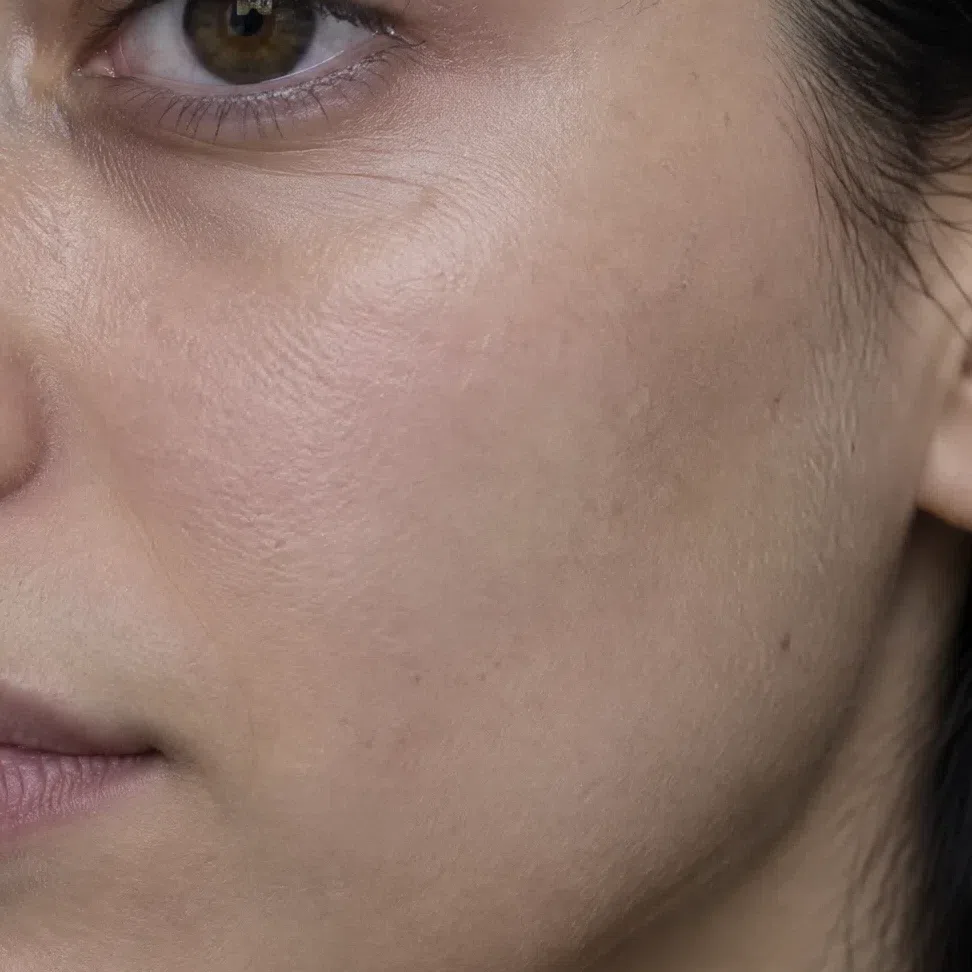
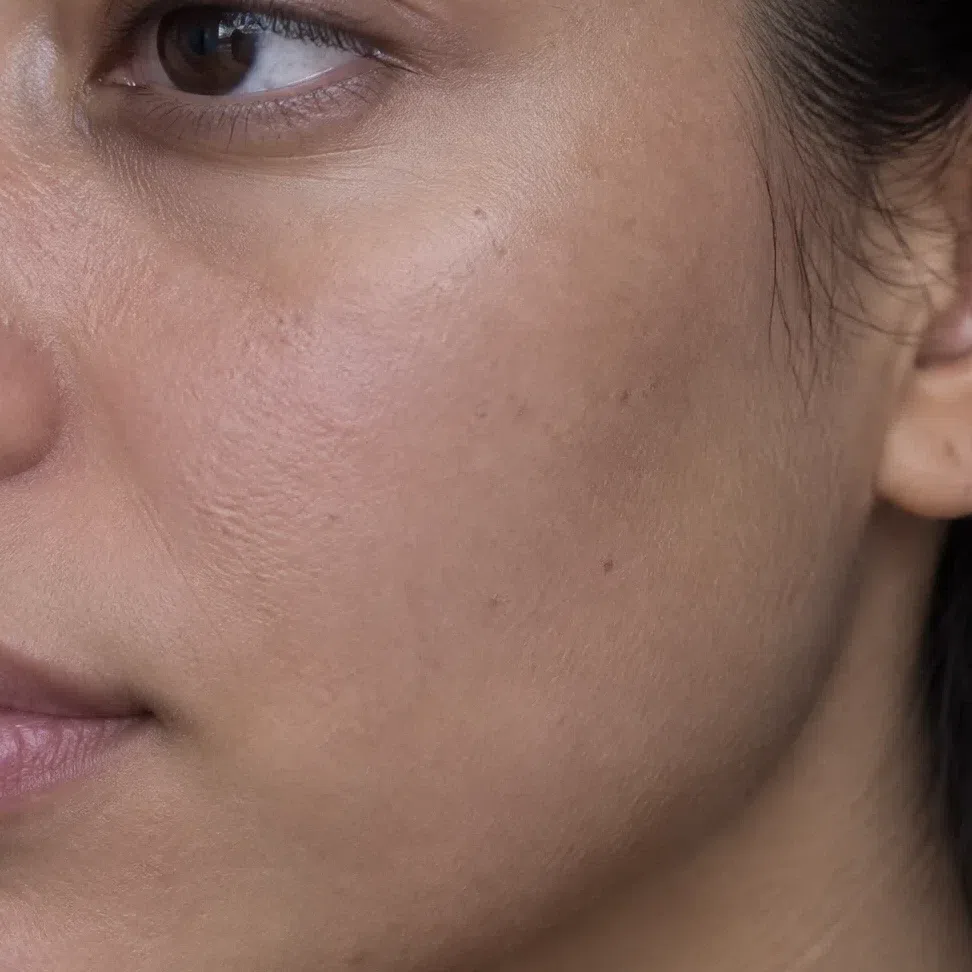
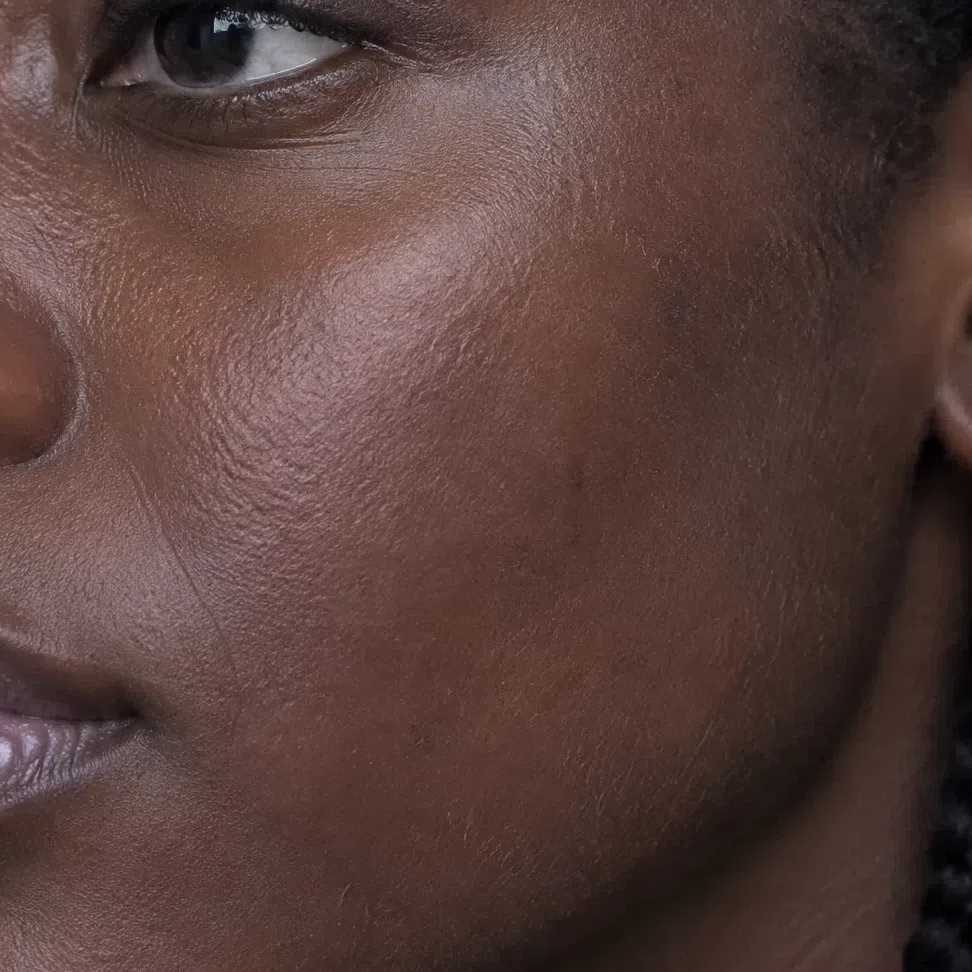
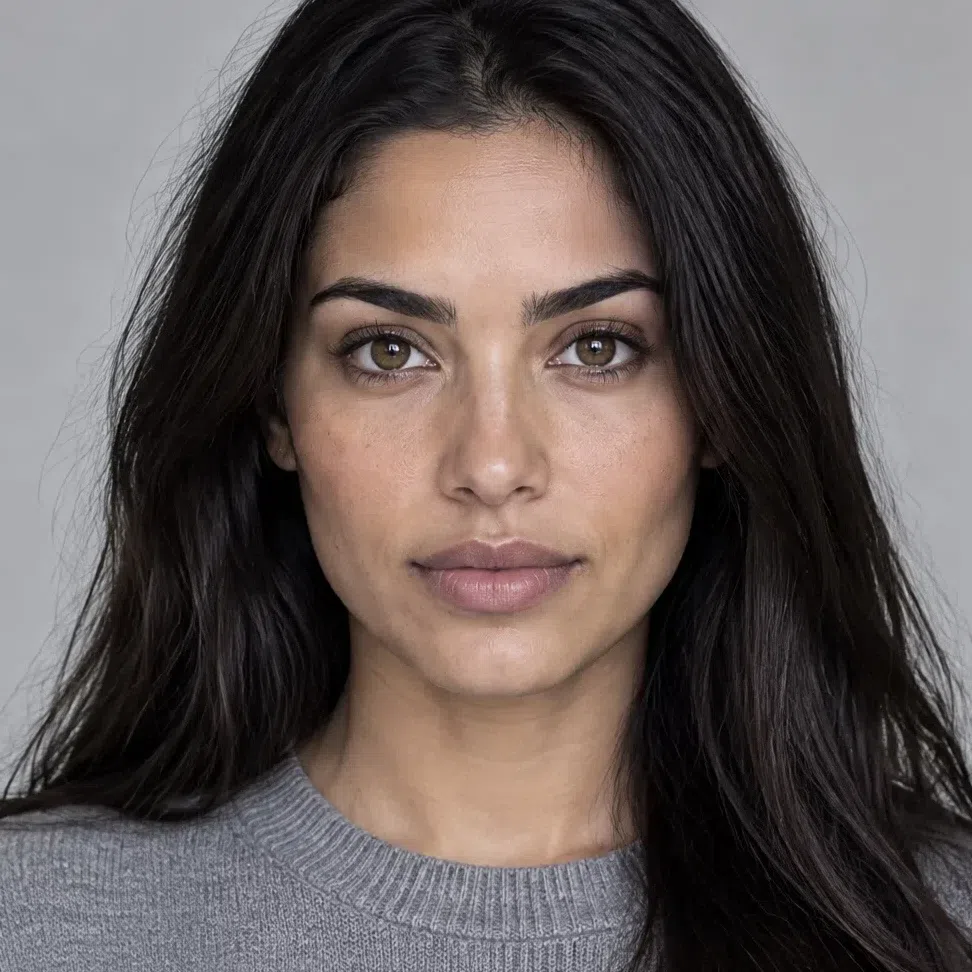
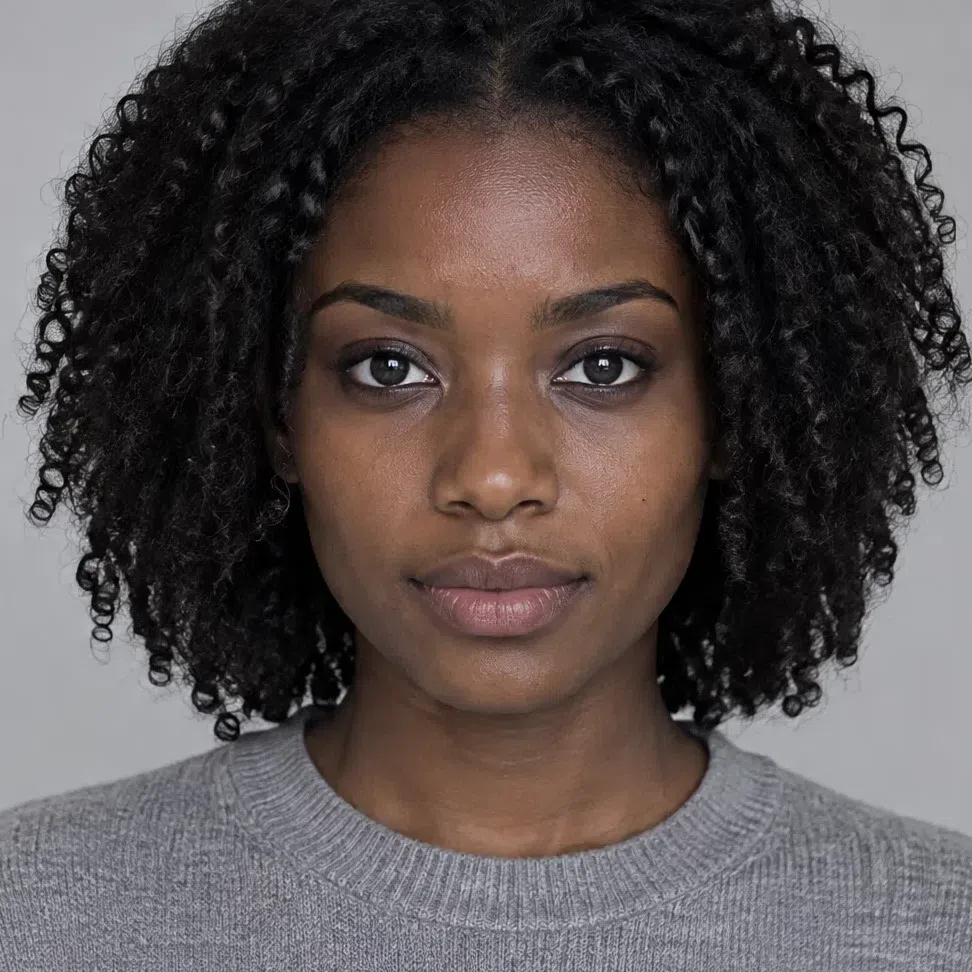
Undertone and contrast decide a season, not the depth of your complexion. Deep Winters appear on porcelain, olive, beige and deep brown skin alike, and the four women pictured below share three things: a cool undertone with no golden glow, rich rather than dusty color, and dark features set well apart from the skin.
11. Skin: cool underneath, even when it looks neutral
Deep Winter skin is among the hardest to read on yourself, because it rarely announces that it is cool. The thing to look for is an absence.
At every depth the undertone is cool or neutral-cool: rosy or faintly blue on porcelain, a gray-green cast on olive, a quiet beige with no yellow in it, a blue-red depth on dark brown. Next to the pink porcelain of a Cool Winter it can look slightly muted - that is the pull of the neighboring autumn - but it never carries a golden or peachy glow, and that missing glow is the most reliable marker this skin gives you.
Three at-home undertone tests
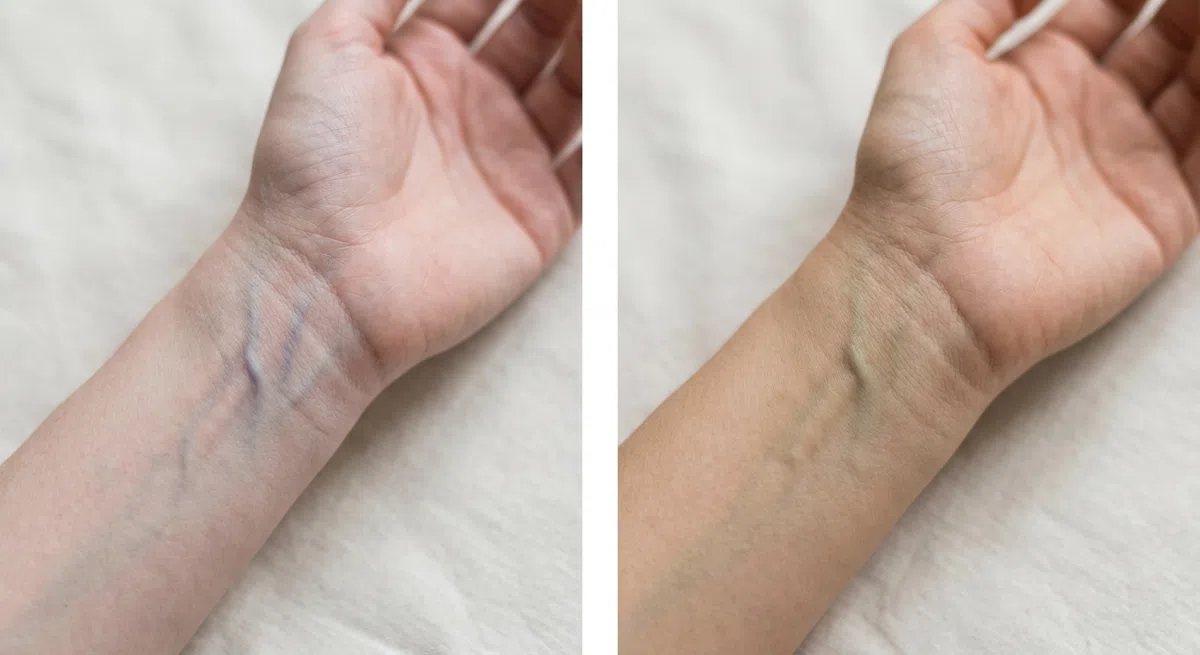
Midday light at a window, wrist turned up. Room lighting skews this in both directions - a warm bulb greens the veins and a cold LED blues them - so it only counts in daylight. Judge the general color of the veins together rather than the single most visible one.
- Blue or violet - cool undertone, the reading that fits Deep Winter and the other cool colorings.
- Green or olive - warm undertone; the autumns and springs are the pages to read.
- Impossible to call - neutral, which is common here. Let the next two tests decide.

No makeup, hair pulled off the face, a window in front of you. Hold a sheet of bright white paper right under the chin and look only at the strip of skin beside it. Off-white or cream paper is warm itself, so it would tilt the answer before you start.
- Skin shifts pink or bluish - cool undertone, consistent with this page.
- A golden or peach sheen appears - warm undertone.
- Skin looks slightly gray - neutral, often with an olive note, which a Deep Winter can have.
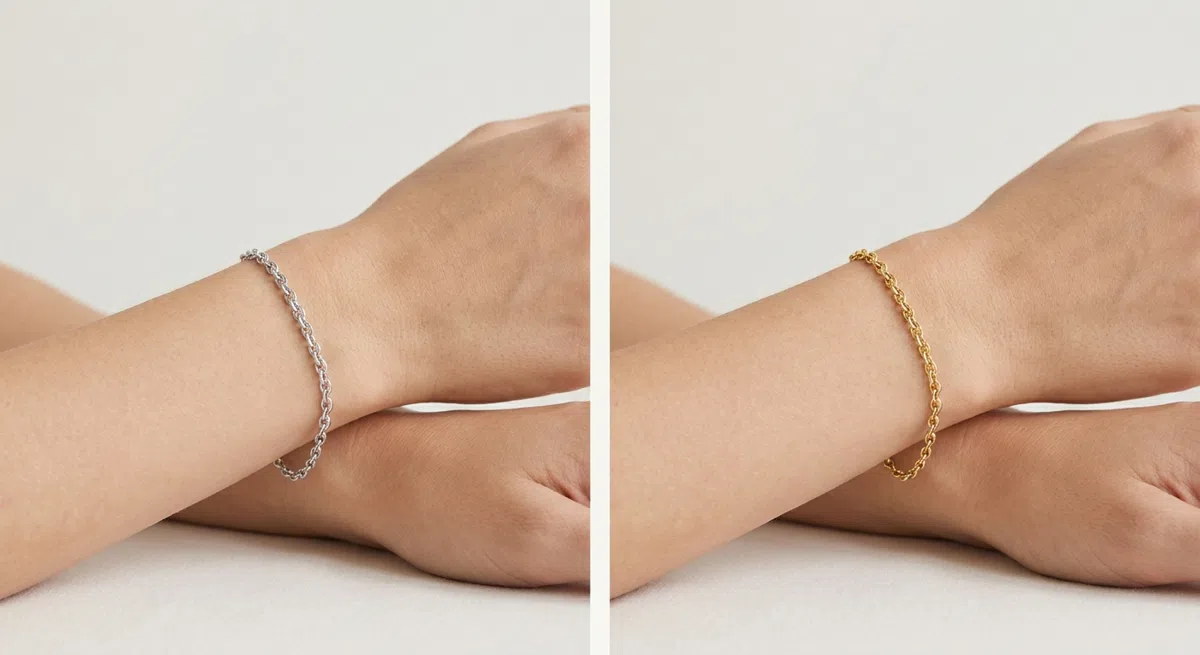
Bare wrist, no shimmery lotion, daylight. Lay a silver piece against the skin, then swap in a gold one, and compare the skin rather than the jewelry: next to which metal does it look smoother and less tired?
- Silver wins - it evens out the skin beside it. Cool undertone.
- Gold wins - warm undertone, which rules this coloring out.
- Neither clearly wins - neutral. Go back to the first two tests.
A face that looks neutral but never golden, whatever its depth, is a Deep Winter skin. A golden glow in daylight points to Deep Autumn instead.
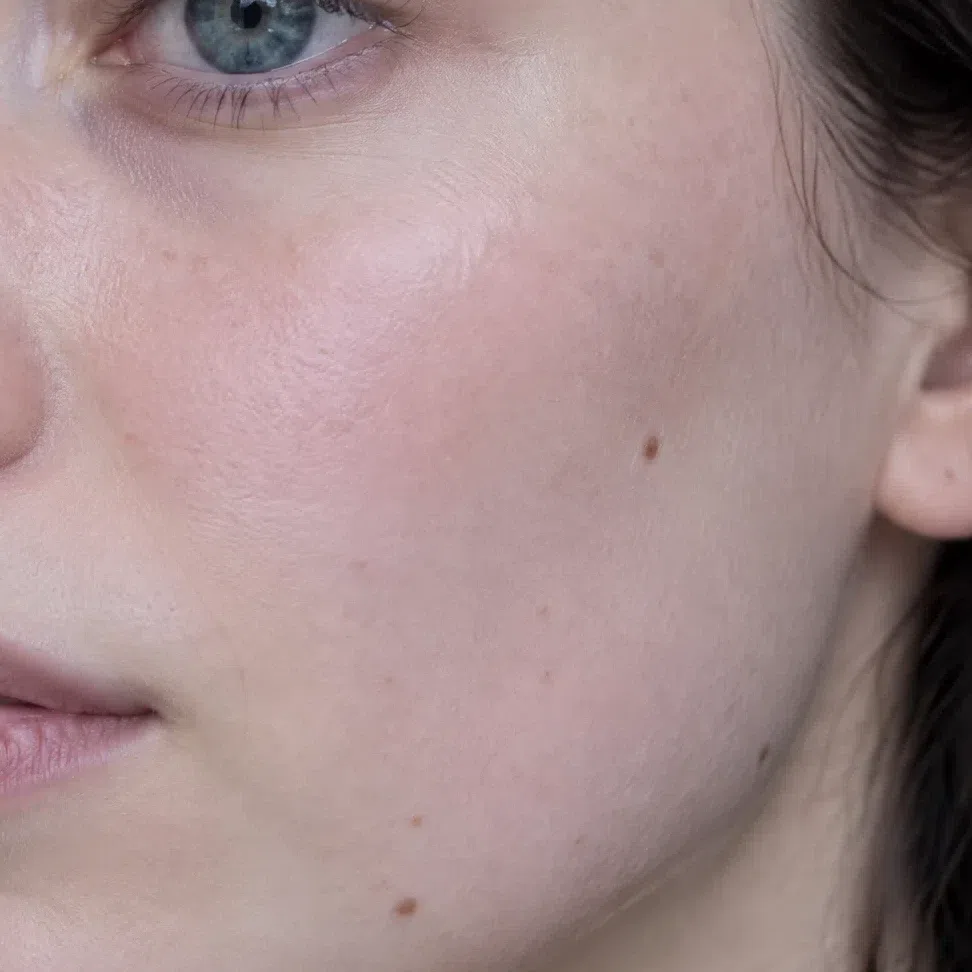
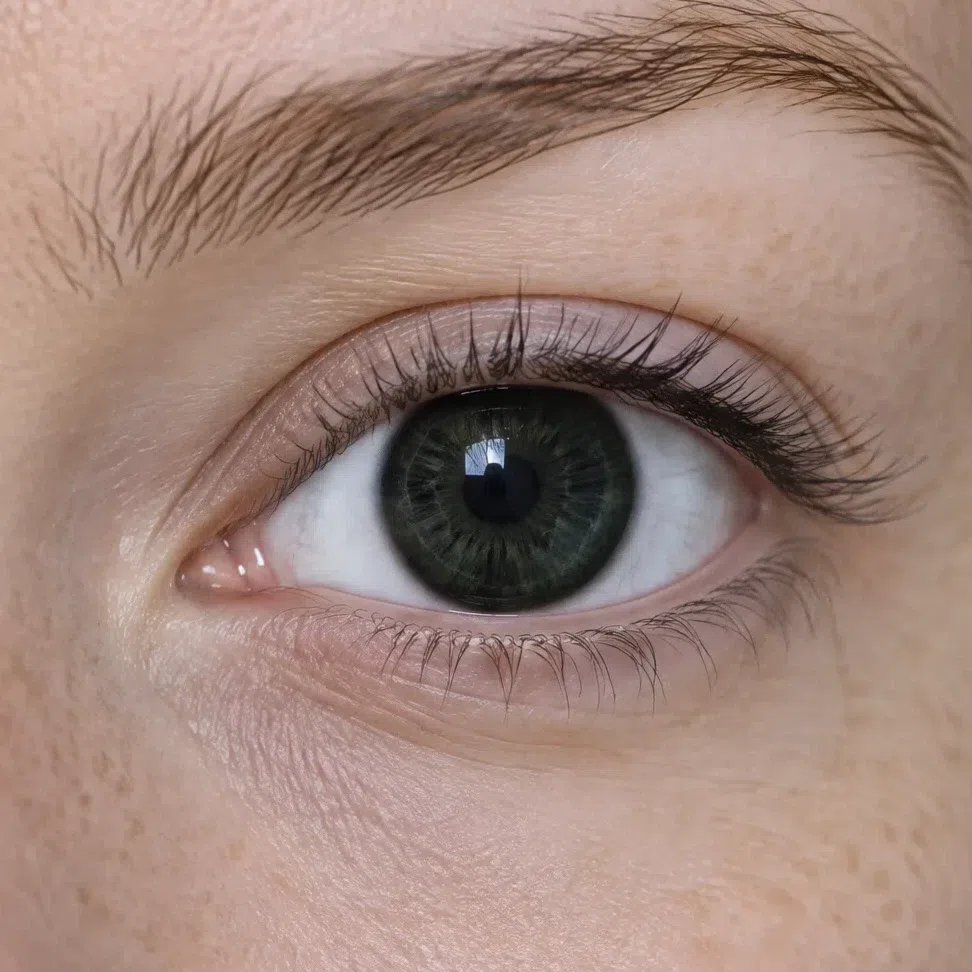
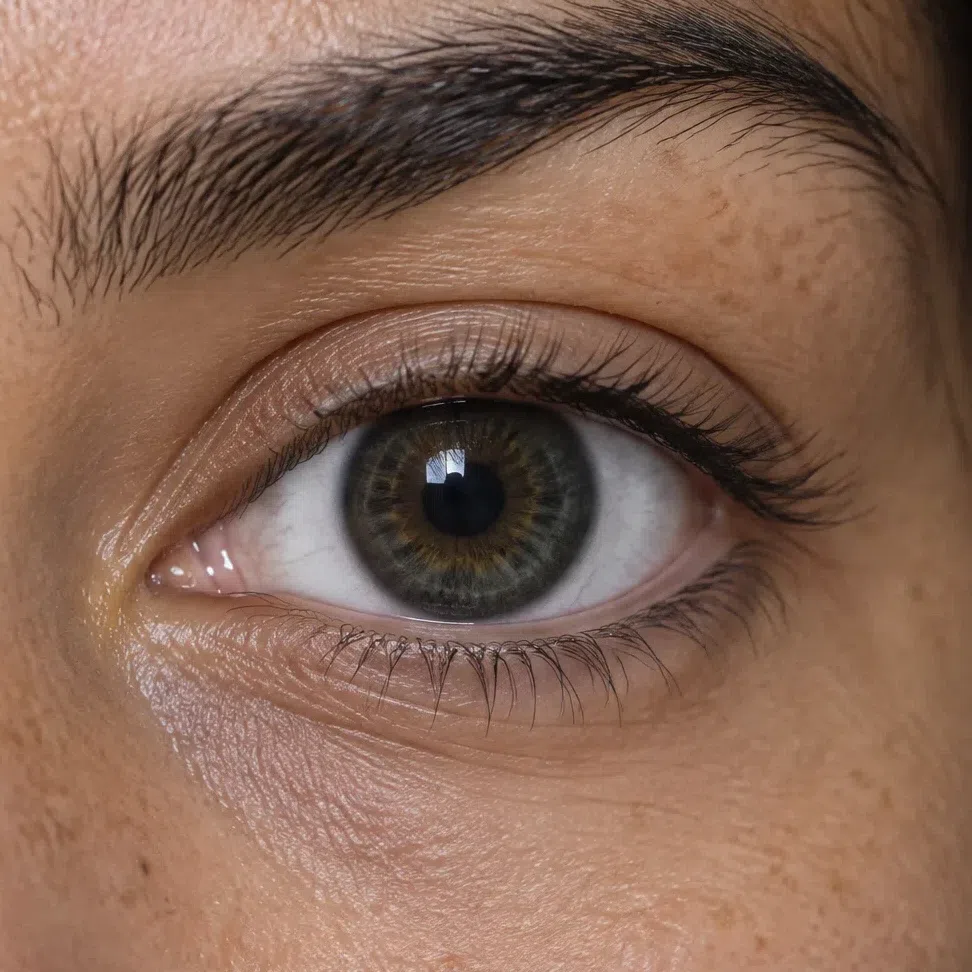
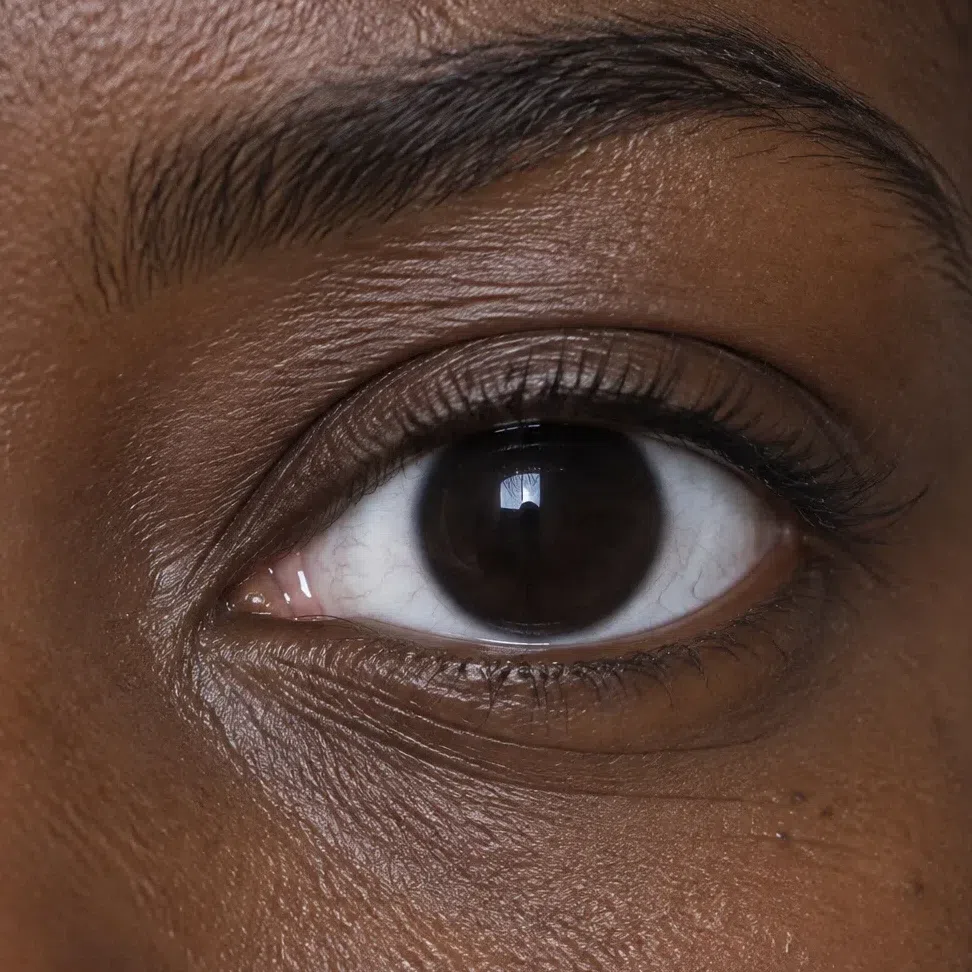
22. Eyes: dark, deep and ringed
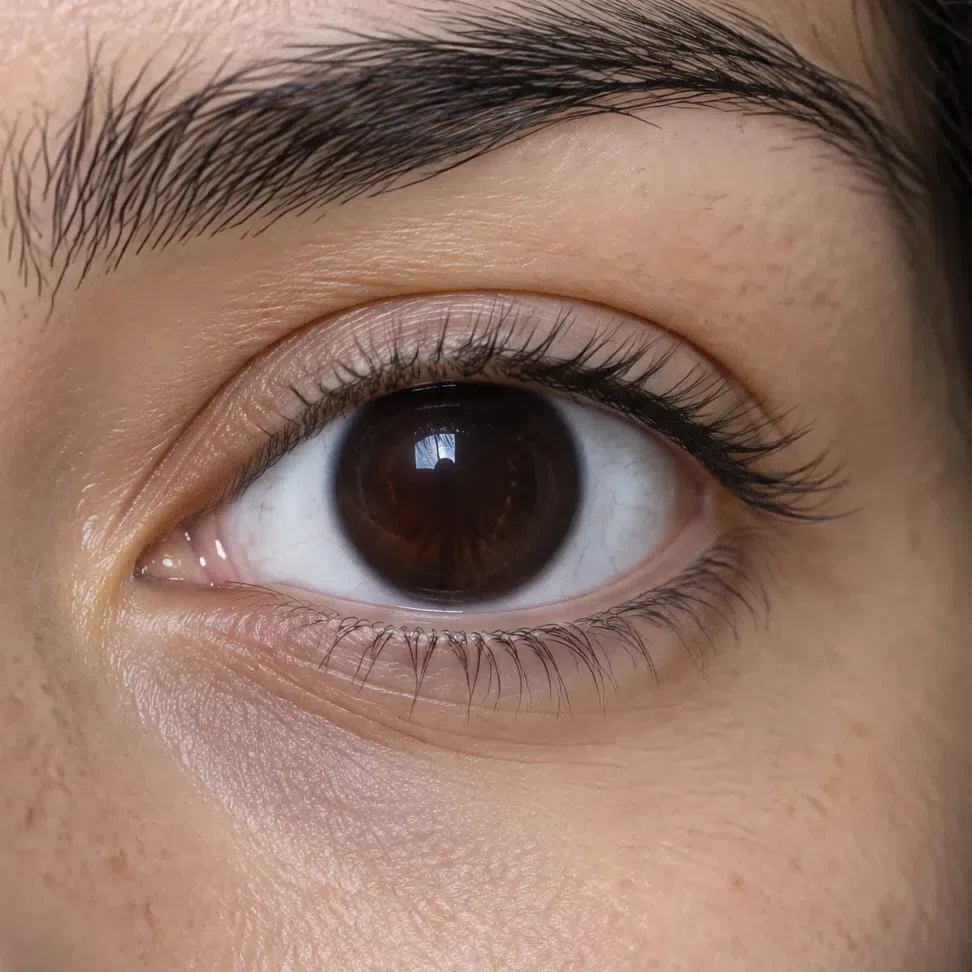
The eyes are one of the clearest signs this coloring gives. They are always dark, and the white around them is bright enough to make the darkness look intentional.
Most often the iris is deep brown or brown so dark it reads black. Close behind come a deep hazel with cool gray-green streaks, a dark cool green like bottle glass, and occasionally an inky steel blue or violet-blue. Even eyes that look black from across a room show a layered color up close in good light. What they rarely show is warmth: gold or honey flecks near the pupil are uncharacteristic.
The rim of the iris is crisp and dark, and the whites are very clean. That pairing gives the gaze its intensity and is a piece of the face's contrast in its own right - on deep skin it often does more of the work than the hair.
Light blue, pale green and amber eyes are close to ruled out. Depth of color is what defines this subtype, so dark hair with light eyes usually points to Bright Winter or one of the autumns.
Dark iris, crisp rim, bright white, no gold at the pupil. If your eyes are light, look at Bright Winter before you look further here.
33. Hair: dark, cool and glossy
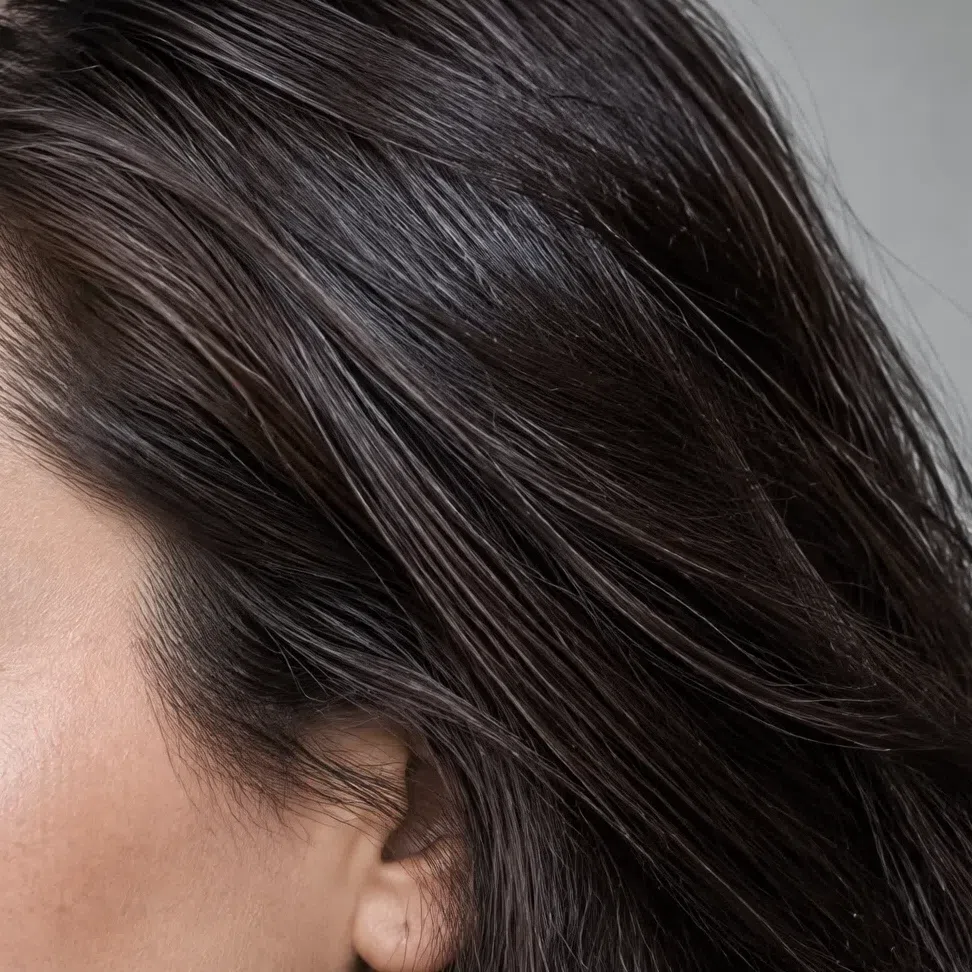
Natural Deep Winter hair is never lighter than a medium-dark brown, and it has no red in it at any depth.
The range runs from cool dark chestnut through bitter chocolate and black-brown to blue-black. It tends to be thick and to shine on its own. Sun can lift it a little, but the lift is ashy or silvery, never golden - which is the single most useful way to tell it from the dark red-browns of Deep Autumn.
Colored your hair for years? Look at childhood photos, at the regrowth at the root, and at your brows, which almost always match the natural shade. Salons often warm up dark hair with caramel balayage or chestnut glosses, and that one change can make a Deep Winter photograph like an autumn for as long as it lasts.
Dark with a cool sheen: stay here. Dark with gold or copper coming through in daylight: check Deep Autumn.
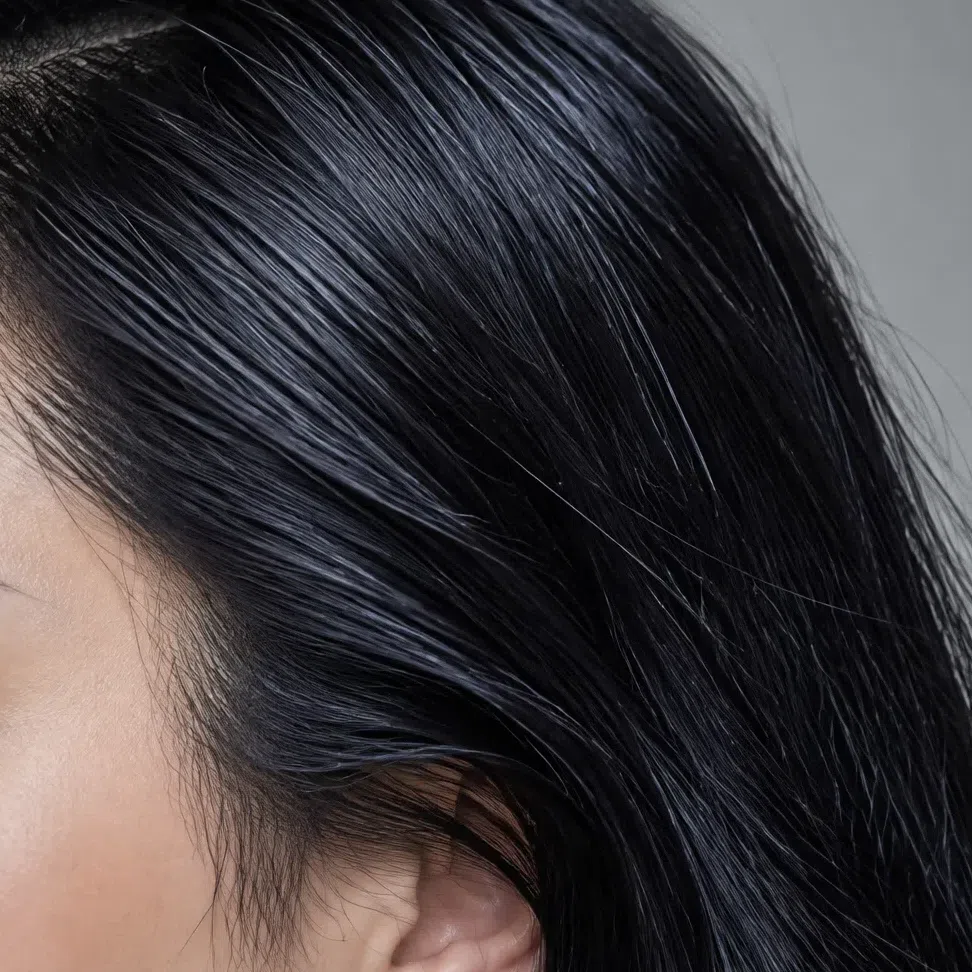
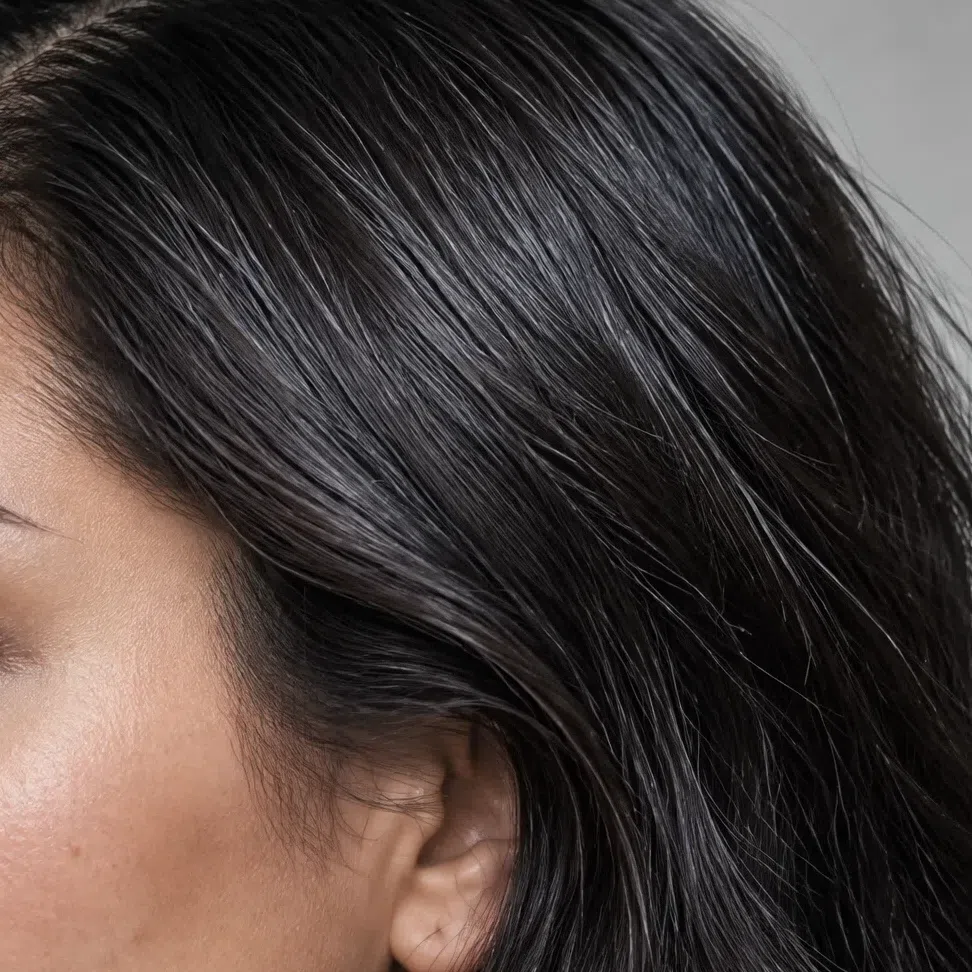
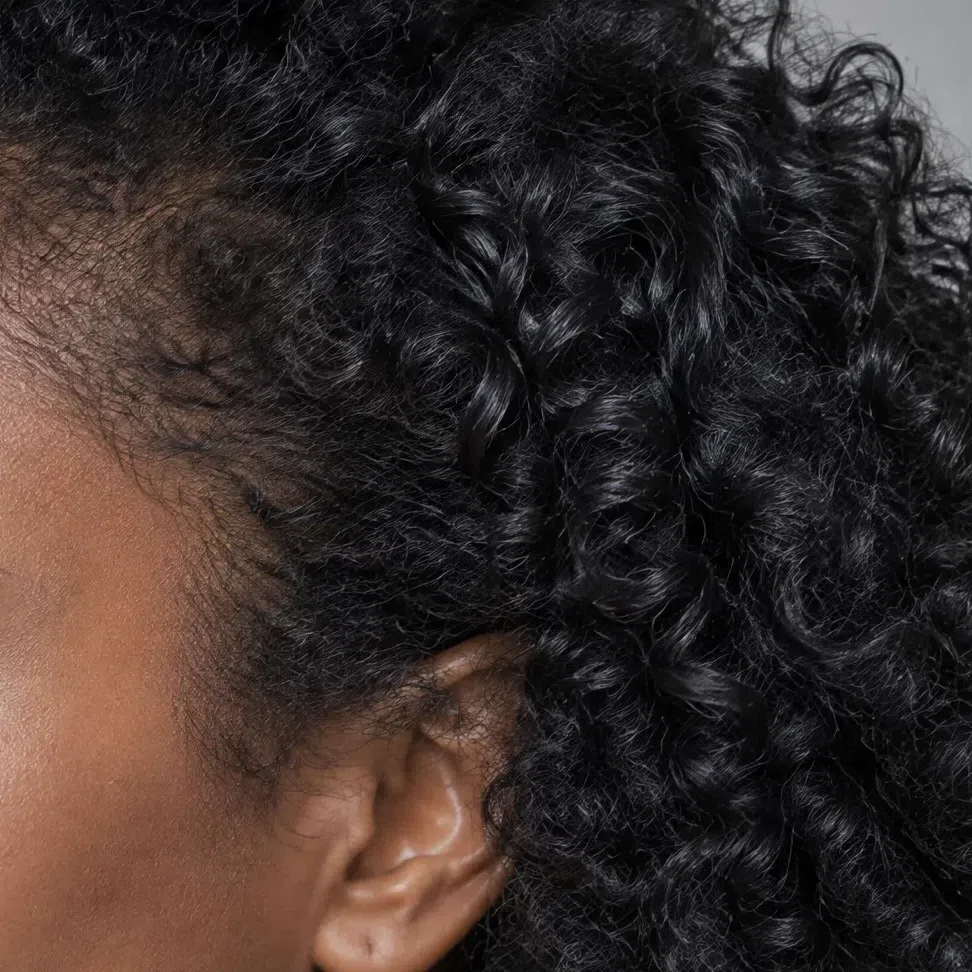
44. Contrast: high, and carried by depth
Dark hair, dark eyes, dark brows, and a clear gap between them and the skin. This is the drama the coloring is known for.
The gap shows up in three places: hair against skin, the iris against the white of the eye, and the lips against the face. On fair and olive skin the first one is obvious. On deep skin the hair and skin sit closer in lightness, and the contrast lives in the eyes and brows instead - which is still high contrast, and still this page.
That gap is what separates a Deep Winter from the soft summers and muted autumns, whose features blend into each other. It is also why pastel and watercolor shades look faded on this face, while black with white looks natural rather than severe. The same holds for prints: bold graphic patterns suit it; blurred ones get lost.
Among the winters the difference is in what builds the contrast. Here it is depth. On a Cool Winter it is icy clarity, and on a Bright Winter it is color at full saturation - the most extreme contrast of all twelve subtypes.
High contrast plus a cool undertone makes a winter. The contrast being built from darkness rather than brightness makes it this one.
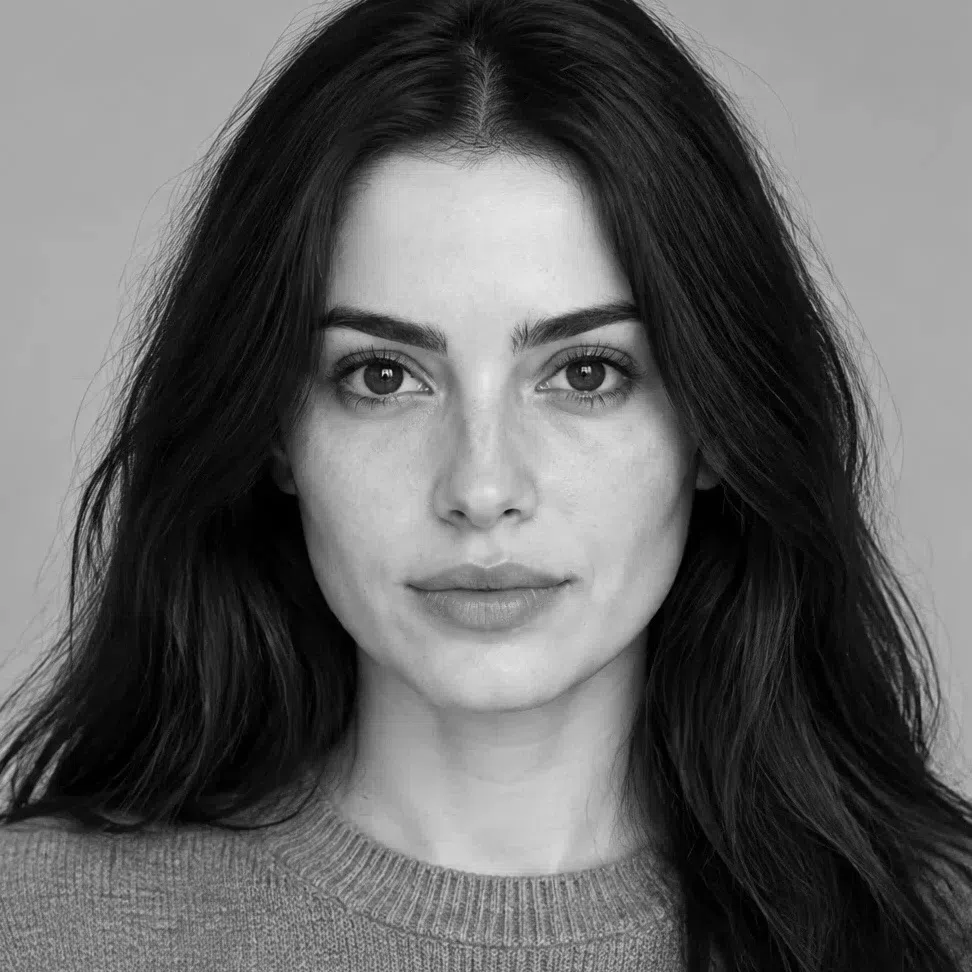
- Take a daylight photo with no makeup and turn it black and white. Clear edges between hair, skin and eyes - hair close to black, skin a lighter gray, whites near white - mean high contrast. If everything melts into similar grays, a softer season is more likely.
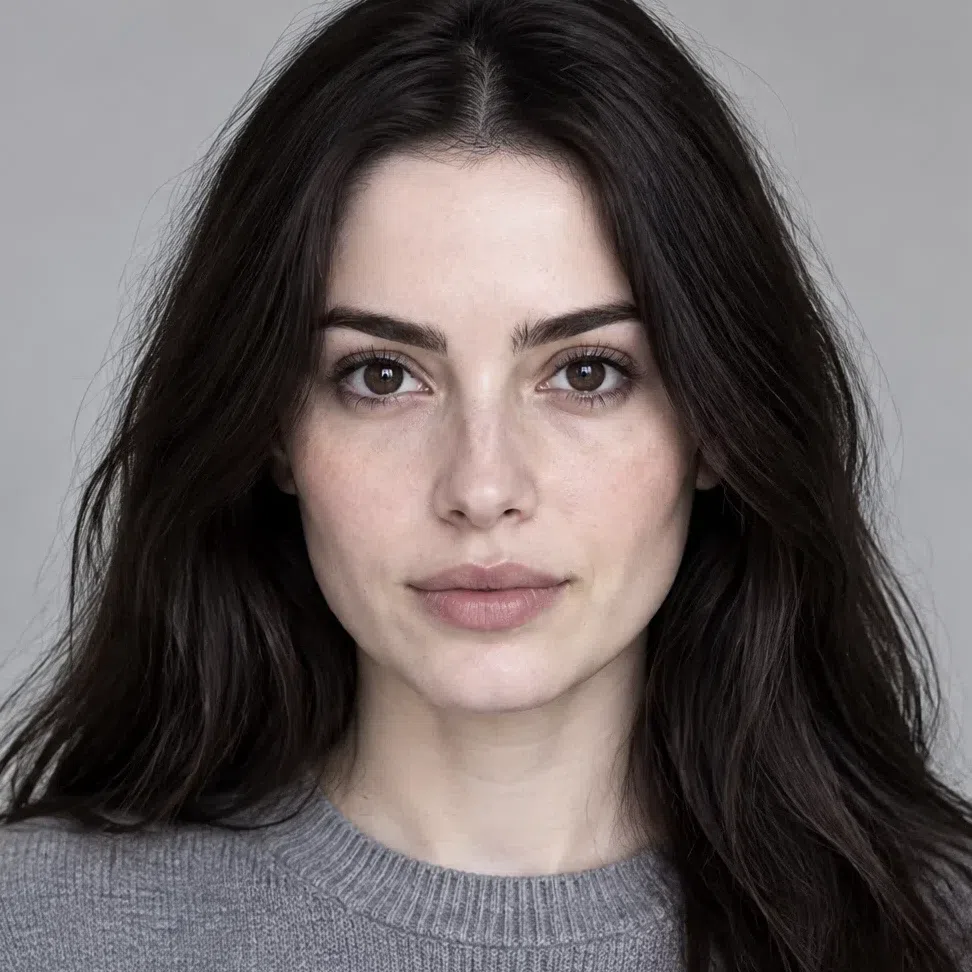
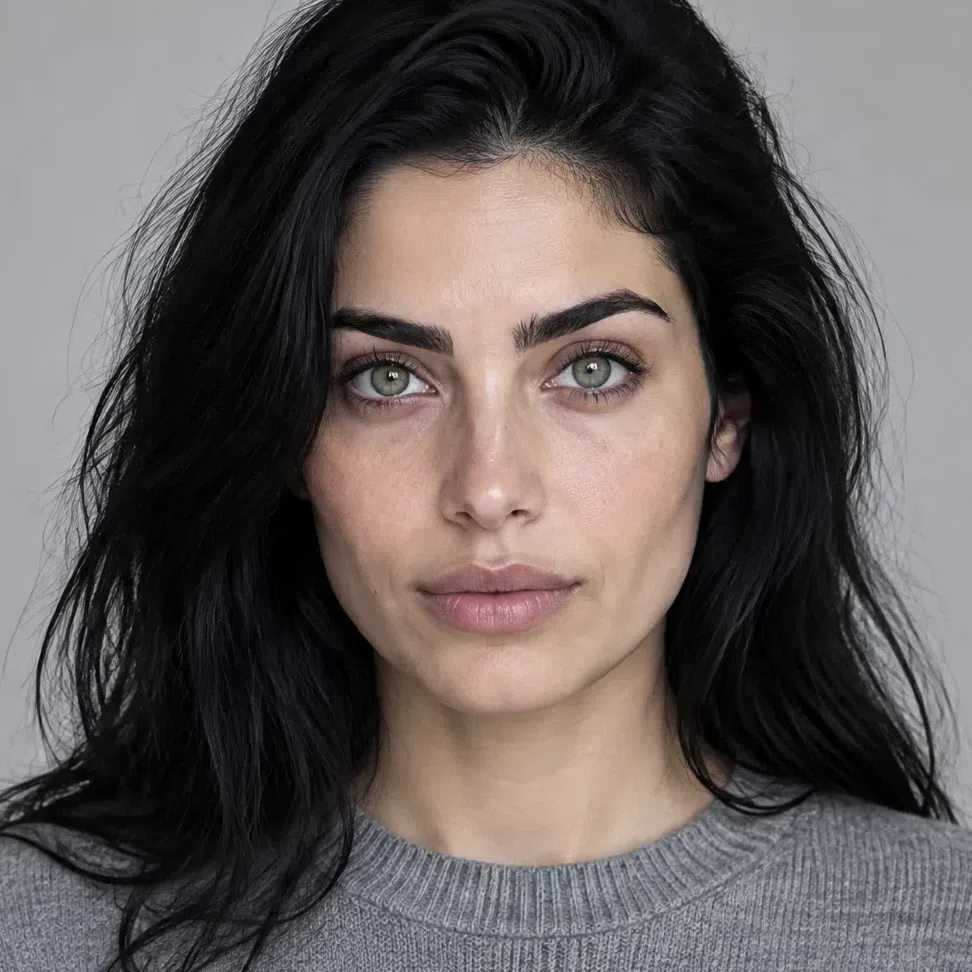
On the left, the fair Deep Winter from the strip above as she was photographed. On the right, the same frame with every trace of hue removed. What is left is lightness alone - and her hair falls almost to pure black while her skin holds high up the gray scale.
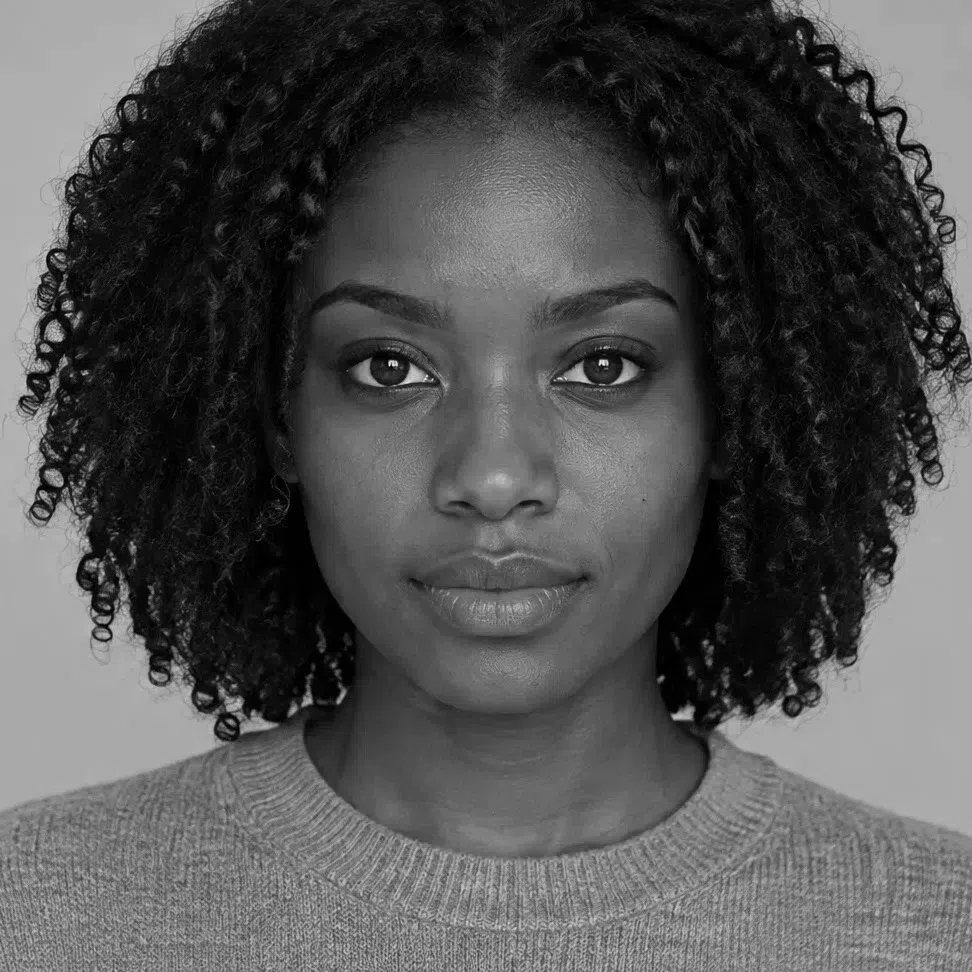

Hair Skin Ramp runs black to white
Each ramp describes one face. Where the pair sits is depth; the space inside the pair is contrast - and because a deeper face has less room above it, do not rank one face against another by that distance. The deep portrait's skin sits much lower, yet her hair still lands at black and her eye whites stay bright. The Light Summer shares the cool undertone and has almost no distance at all.
55. The drape test: color at your face
The final check needs no interpretation. You simply see your face change.
Pull your hair back, take off makeup and sit facing a window. Bring scarves or tops of different colors up under your chin, swapping between them, and keep your eyes on the skin rather than the fabric. The right shade makes the face look rested and the eyes brighter. The wrong one brings out tiredness, shadows under the eyes and a sallow tone.
People are often surprised by which side the pale shades land on. Pastels are sold as universally flattering, but next to this much natural depth they look washed out and make the face look tired. The shades that work are deep and saturated.
Shades that bring the face to life
If these make your skin look fresher and your eyes darker, you are very likely a Deep Winter:
- Merlot
- Bottle green
- Blackberry
- Navy
- Magenta
- Optic white
Shades that dim it
If these leave the skin dull and the features blurred, they are outside your palette. None of them is dark - they are warm, pale or dusty:
- Peach sorbet
- Honey mustard
- Dark khaki
- Faded rose
- Tangerine
Deep Winter vs Cool Winter vs Bright Winter
All three winters are cool and high in contrast, so the same person can be typed as each of them. What sets them apart is the leading trait: each winter is named for the axis that dominates it, and for this one that axis is depth. On naming: Deep Winter is also called Dark Winter, Cool Winter is often called True Winter, and Bright Winter is sometimes called Clear Winter.
| Deep Winter | Cool Winter | Bright Winter | |
|---|---|---|---|
| Leading axis | Depth. Dark first, cool second | Temperature. The coldest palette of all | Clarity. Pure, electric color first |
| Temperature | Neutral-cool, with a trace of autumn depth | Fully cool, with no warmth anywhere | Neutral-cool, bright rather than icy |
| Depth | Deep - the darkest winter | Medium to deep | Medium to deep, lifted by bright eyes |
| Clarity | Rich and saturated, never neon | Clear and icy | Maximum - clean, vivid, almost neon |
| Contrast | High, built from dark hair and eyes | High, built from cold purity | Extreme - the highest of all twelve subtypes |
| Skin | Cool, neutral-cool or olive, porcelain to deep brown | Plainly cool: rosy, porcelain, blue-pink | Neutral: porcelain or beige, very clear |
| Eyes | Dark brown, near-black, deep cool hazel | Blue, gray or cool brown, no warmth | Bright and clear: blue, green, violet |
| Hair | Dark chestnut to blue-black | Ash brown or black with a blue sheen | Dark brown or black against very light skin |
| Metals | Silver, platinum, white gold | Silver, platinum | Silver, platinum, bright stones |
Still split between two columns? Skip the detail rows and answer the first one. Ask which word a friend would use for your coloring at a glance - dark, icy or vivid. If it is dark, you are in the right place.
What Deep Winter coloring looks like up close
The range the label covers, photographed
The checks above tell you whether this is your season. This section shows how much variety sits inside it - twelve close-ups of skin, irises and natural hair, spread across four women of different depth. You will not match any one of them exactly. The point is to find yourself somewhere inside the range.
Deep Winter skin: four complexions, one cool base
The range is wider than for almost any other subtype - from nearly translucent to espresso. Here is how the same cool base looks at each end and in between.
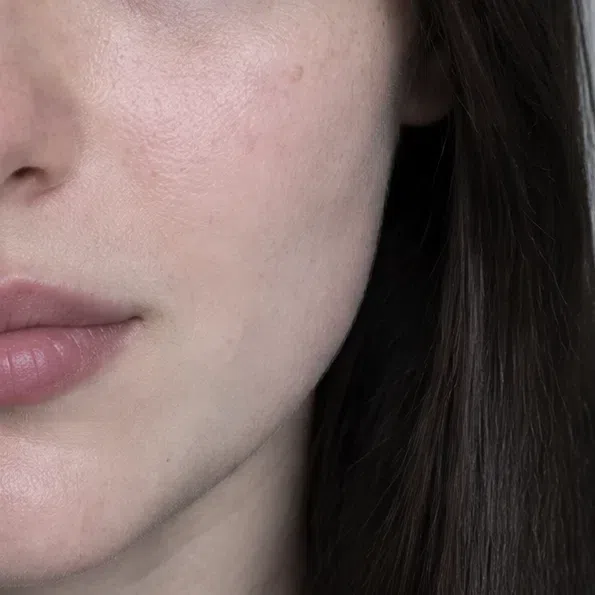
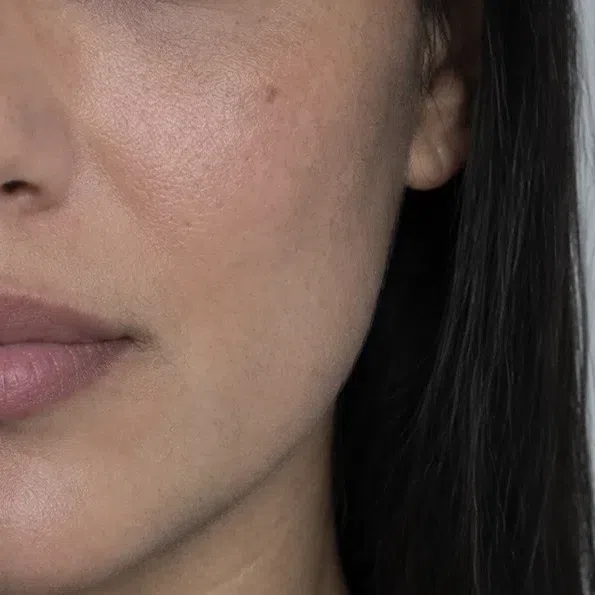
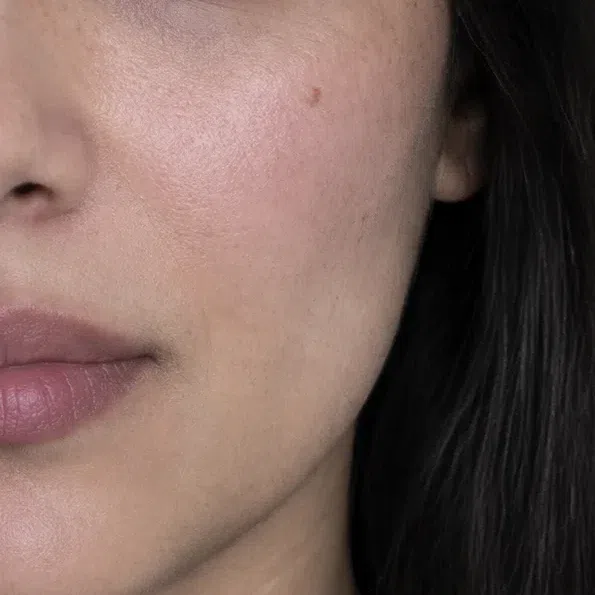
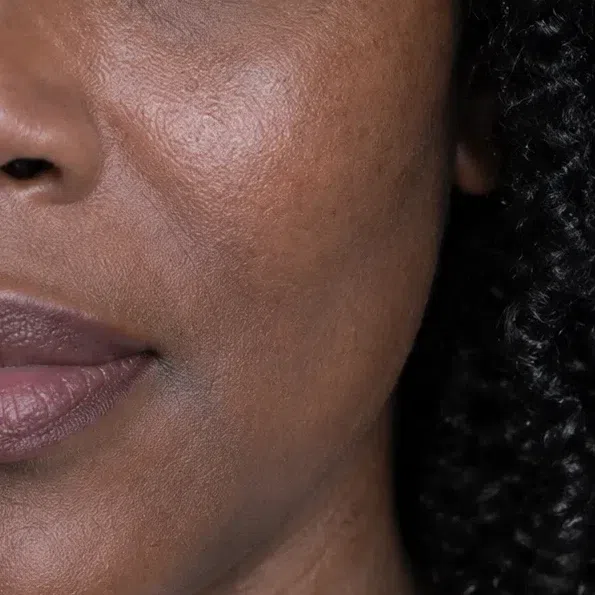
Often, yes. Artificial light pushes almost any olive toward yellow, so judge it by a window. A Deep Winter olive reads gray-green or khaki-gray in daylight and tans without turning golden. If it glows warm gold in daylight too, compare yourself with the Deep Autumn palette before settling on this one.
The cool undertone is what explains the rest of the page: why berry lipsticks and sapphire blues sit so naturally on this skin, and why coral and orange near the face make it look sallow or tired.
Deep Winter eyes: four dark colors
The eyes are usually the first thing people notice. Four colors turn up, and all four are deep enough to hold their own against dark hair.
The four iris colors
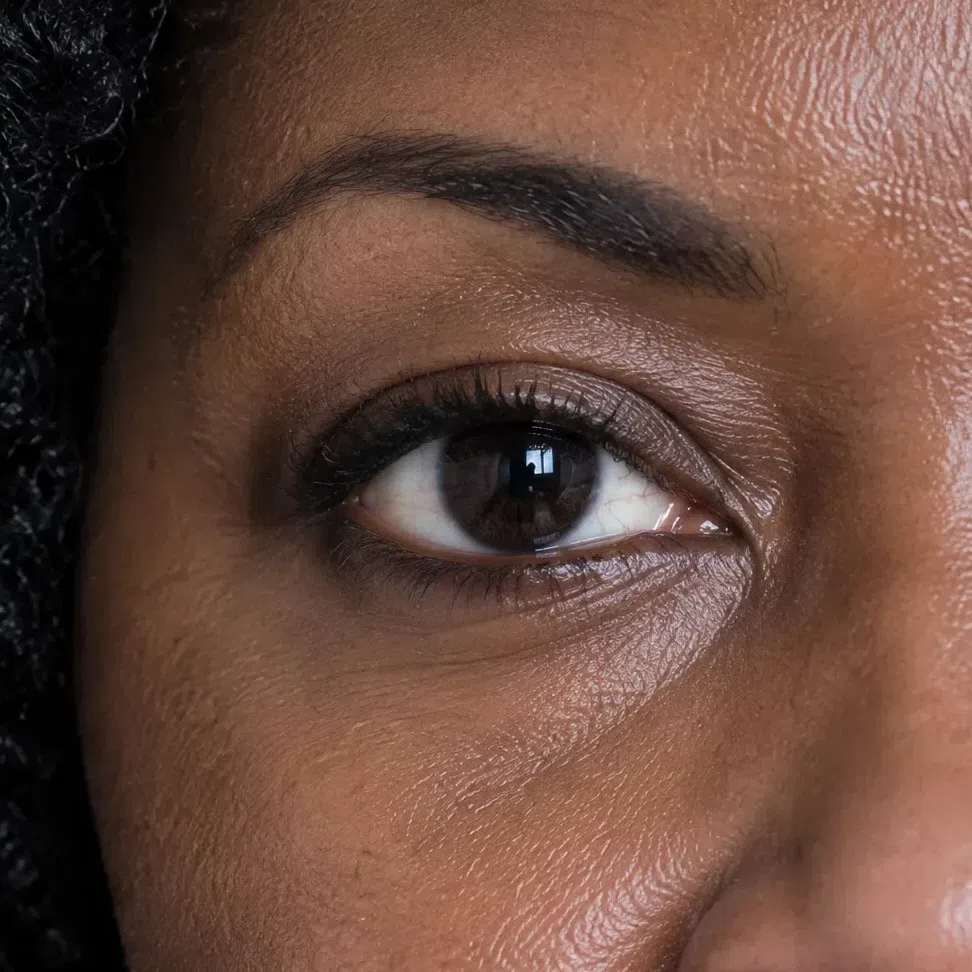
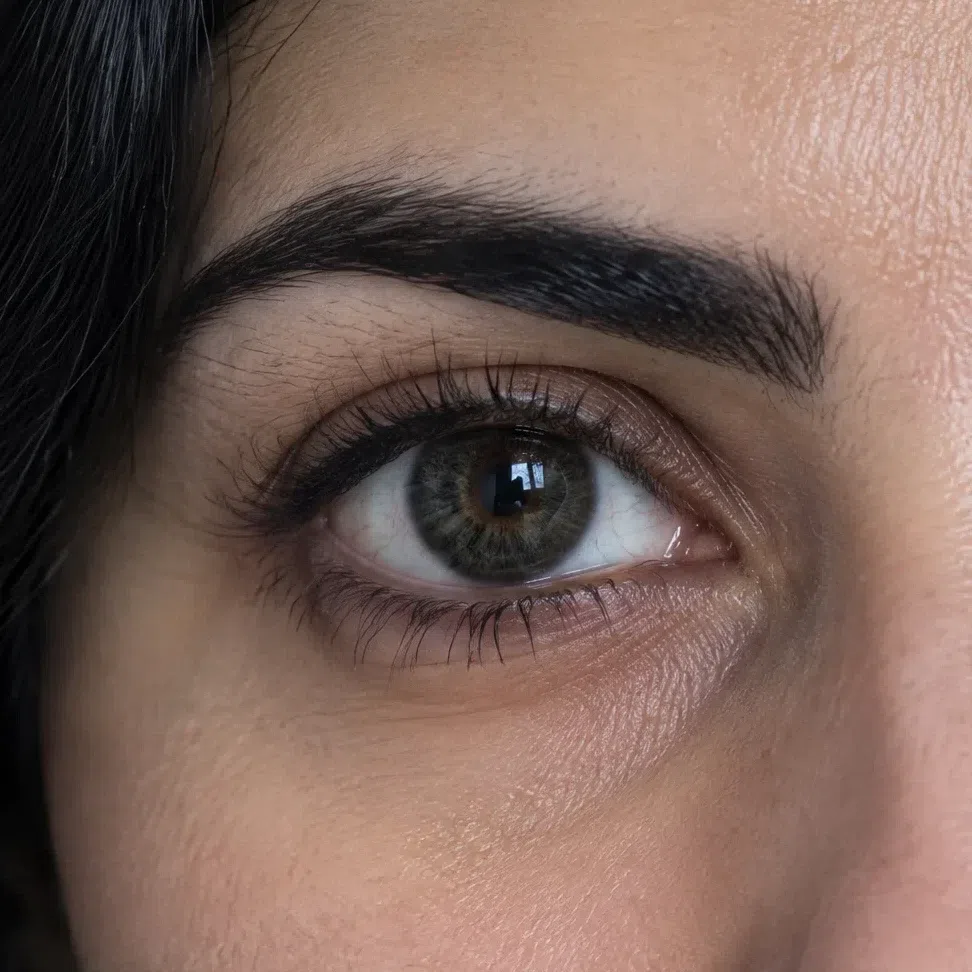
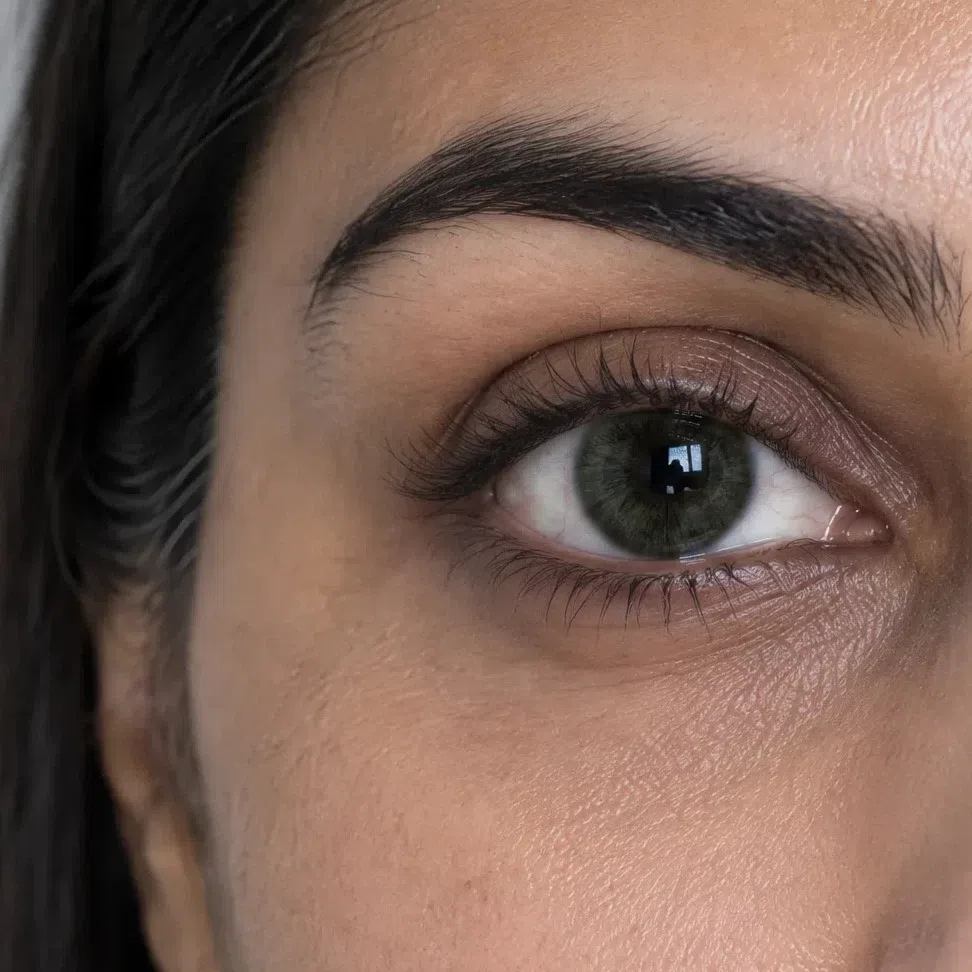
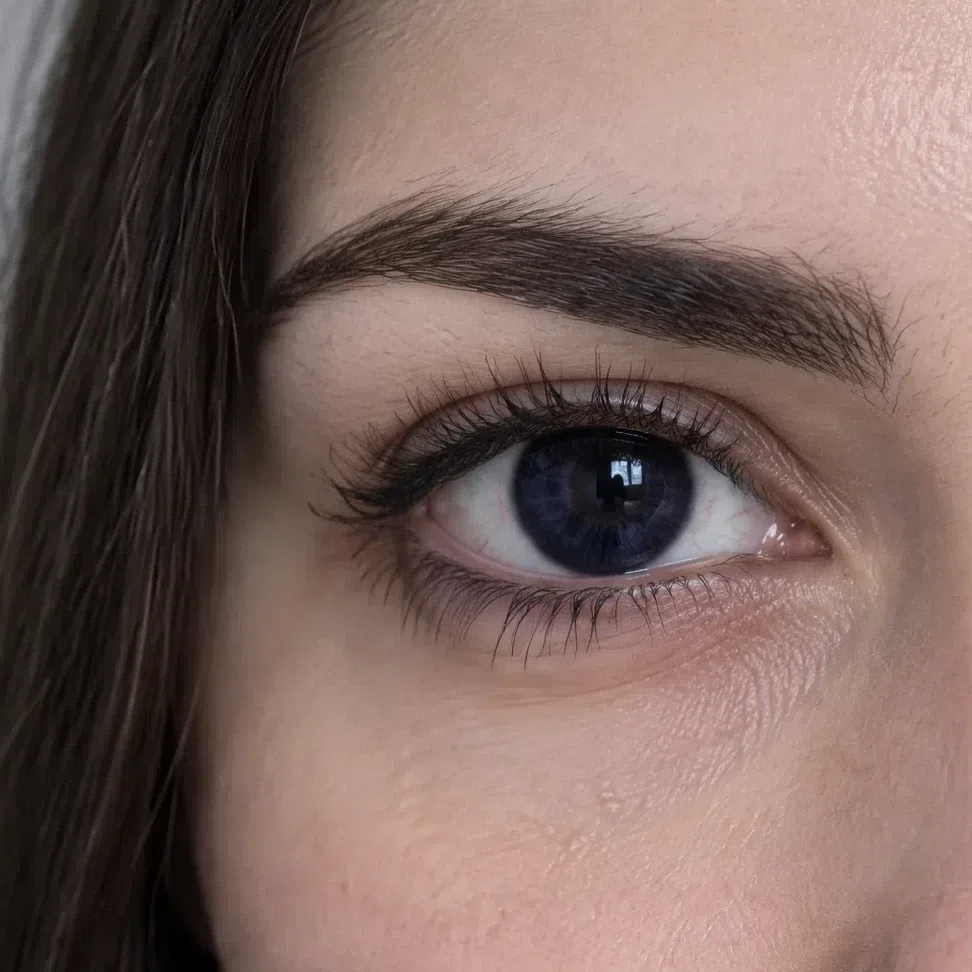
Whatever the color, the shine in these eyes looks steely or silvery in daylight rather than warm. That is worth echoing: jewel tones and silver near the face pick up that shine, while beige and camel flatten it.
Deep Winter hair: medium brown and darker
Natural Deep Winter hair covers a narrow band of depth and a wide band of texture. It starts at a dark taupe brown and runs all the way to blue-black.
The natural range, lightest to darkest
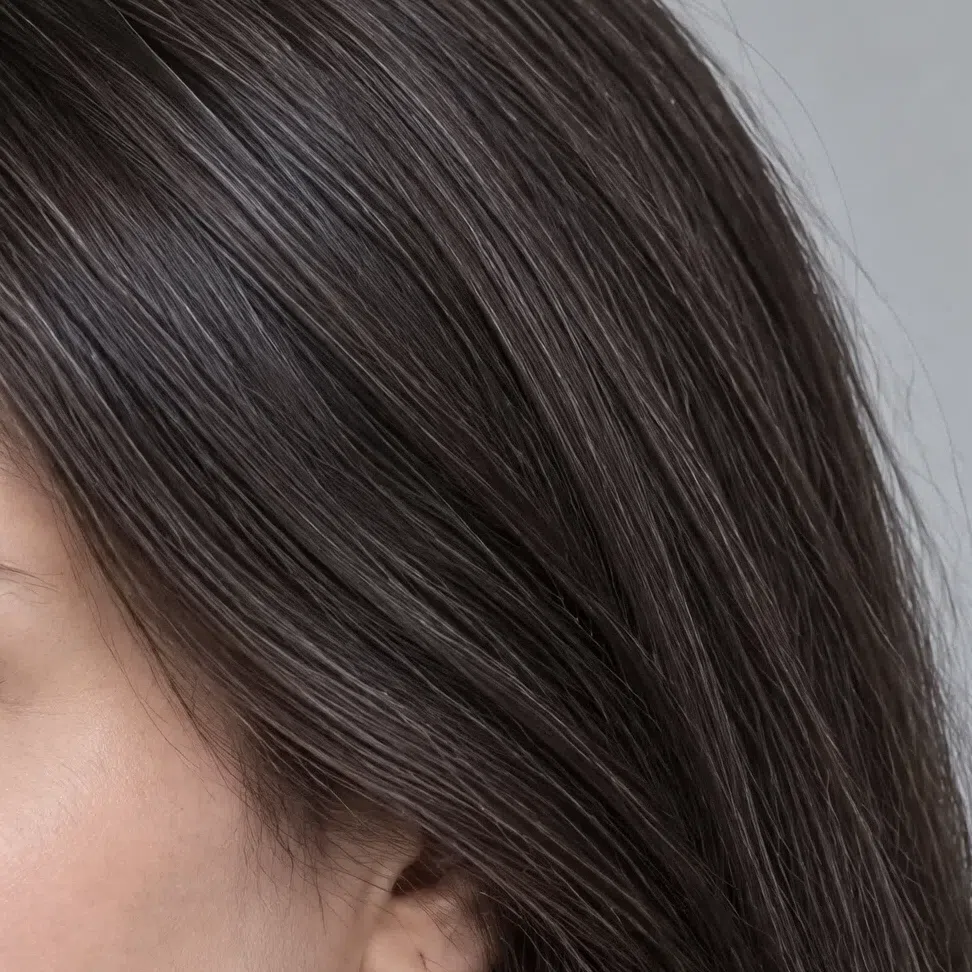
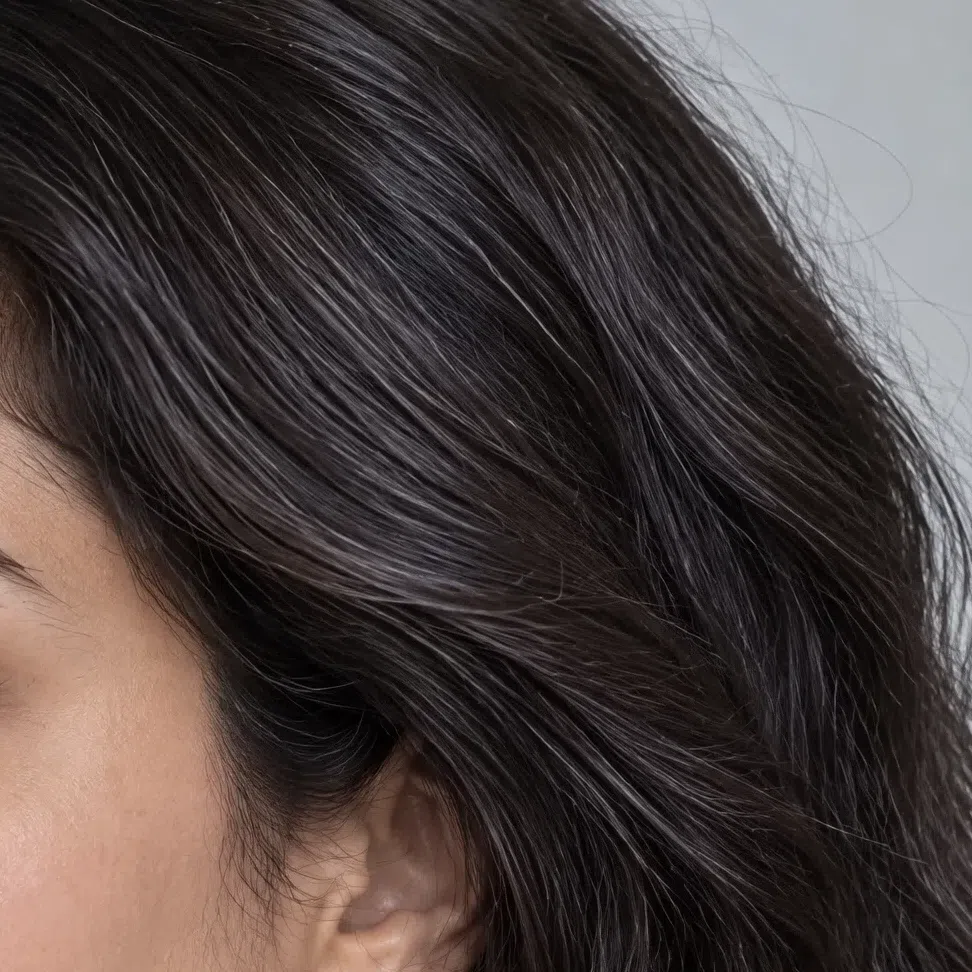
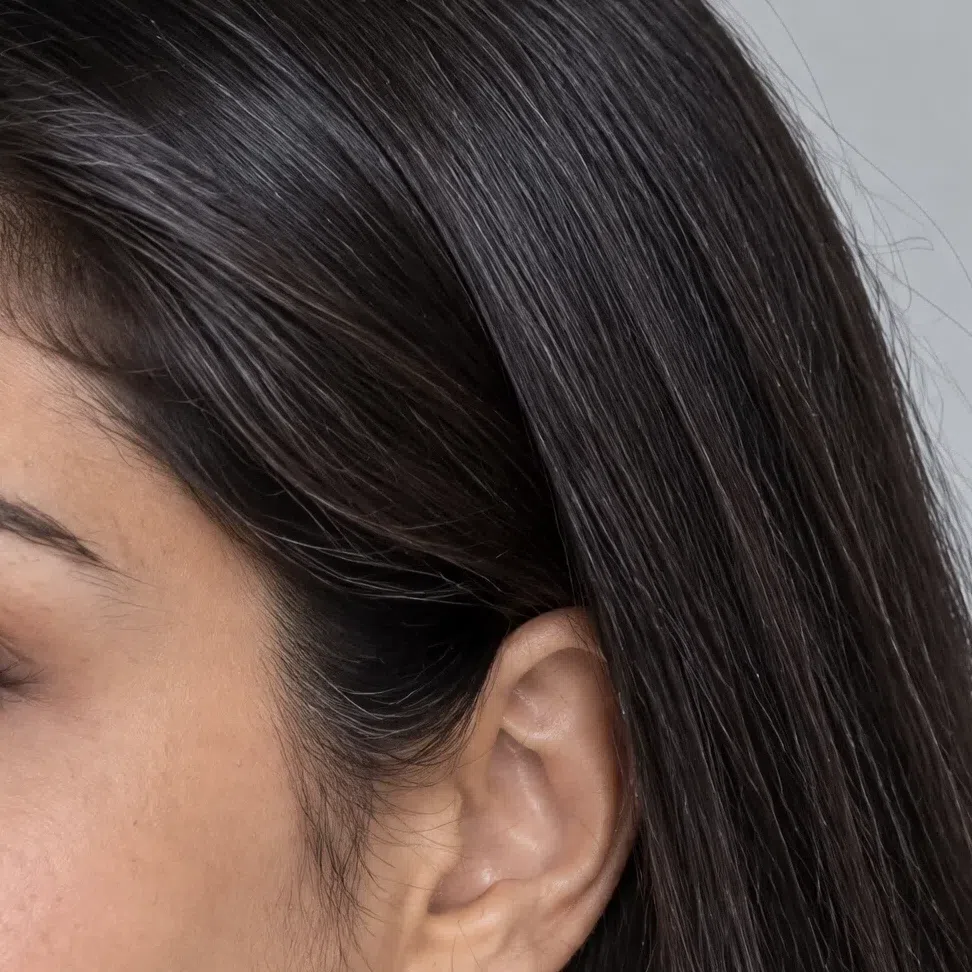

What Deep Winter hair never is
- Golden or honey-lit. This hair does not bleach to gold in summer. Where the sun lifts it, the lighter strands come out ashy or silvery.
- Red or copper. No natural ginger, auburn or red-brown - including the warm chestnut with a red glint that belongs to Deep Autumn.
- Light brown or blonde. A Deep Winter is never naturally fair-haired. The coloring starts at medium-dark brown and goes deeper.
Dense, glossy and dark, this hair works as a frame for the face. It rarely needs a dramatic change - the strongest looks keep its depth and its cool shine intact.
The Deep Winter palette, all 18 shades tried on
What each one does next to a cool, dark-haired face
The Deep Winter palette is depth, luxury and contrast in one place. This coloring sits where cold winter meets deep autumn, so depth leads and coolness follows: the shades that work are not merely cool, they are dark, saturated and clean. They deepen the eyes and freshen the skin.
Three rules run through all 18. Deep: between a lighter and a darker take on the same hue, pick the darker. Cool: blue or red sits under every shade, even the browns. Clean: rich is right, dusty is not. The mistake is rarely too dark. It is too warm, too faded or too light.
These cards are photographs, not flat swatches. It is one Deep Winter model each time, with only her top repainted to the hex printed below the card, so what you compare is the effect on her face rather than the colors side by side.
Base colors: the Deep Winter wardrobe foundation
Deep neutrals plus six saturated base shades. Together they make a wardrobe that looks expensive and sets up every accent below.
Neutrals: the six the wardrobe is built on
Dark, clean and cool, with one crisp white and one icy light gray to set against them. Can a Deep Winter wear black? Yes - at the collar, in a coat, head to toe. This is the coloring black was made for: it matches the depth of the hair and sharpens the features instead of draining them. The browns and grays here work the same way, as long as they stay deep and cool.
How to combine the neutrals
- Total black, with texture doing the work. An all-Jet black outfit in leather, silk and wool reads rich rather than flat, because each surface catches light differently.
- One light, one dark. Optic white against Jet black, Navy or Charcoal is the contrast pair this face is built around - a white shirt under a navy suit, a white knit with charcoal trousers.
- Tonal gray. Charcoal and Icy gray together give you a monochrome outfit with a lot of distance between light and dark, so it never looks flat.
- A dark ground for the accents. Navy, Charcoal and Bitter chocolate exist so a Magenta top or a Cobalt bag has somewhere to land.
Rich base shades: six colors deep enough to build on
Not accents and not pastels. These carry more personality than the neutrals and are dark enough to be the main piece - a dress, a suit, a coat. They are the core of what makes this palette look like Deep Winter rather than any other season. Your wine red and your deep greens live here: Merlot, Bottle green and Teal.
Can a whole wardrobe run on these?
- Yes, and it looks deliberate. A Merlot suit or an Ink violet coat is a statement on its own. Balance it with neutral accessories, or push it further with one bright accent - either works, as long as the piece stays the center of the outfit.
Accent colors, metals and accessories
The shades that make this face come alive, three cold metals, and four accessories you can recolor yourself.
Accents: six clear, saturated shades
Shown on a scarf over a charcoal knit, because an accent is a detail and this is roughly the dose that makes it one. These are the shades that set Deep Winter apart from its neighbors - pure and intense, where the base is deep. Your brightest pinks are Magenta and Cranberry, your pure green is Forest green, and Acid yellow is the one to ration.

Metals and jewelry
All three are cold, and that is the whole rule. Silver is the everyday metal, platinum the quieter and more expensive version of it, and white gold the one gold this coloring wears well. Scale matters too: this face carries noticeable pieces, as long as the shapes stay clean.
Stones and color
- Ruby, sapphire, emerald, amethyst, diamond. Deep, clear stones behave like the accents above and sit naturally in cold settings.
- Put color on the accessory. A Magenta bag or Cobalt shoes with a black dress is exactly the kind of contrast this palette wants.
Accessories: try the pairings
Tap a pairing and both halves change at once - the knit takes a neutral, the accessory takes a color. The further a piece sits from your face, the brighter it can go.
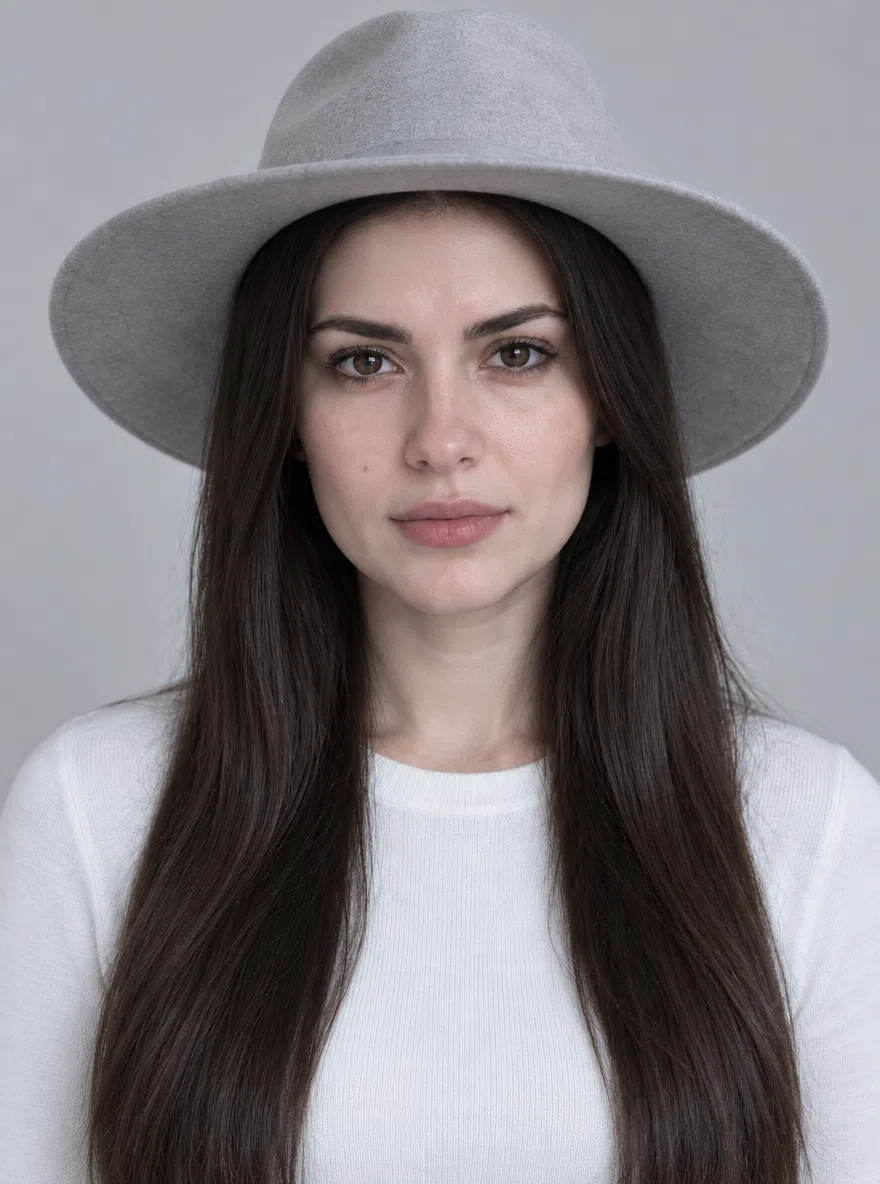
Hat
A hat sits furthest from the face, so it can take the brightest accents without competing with your eyes.
Scarf
Right at the face, where the rich base shades do their best work: they deepen the eyes without shouting over them.
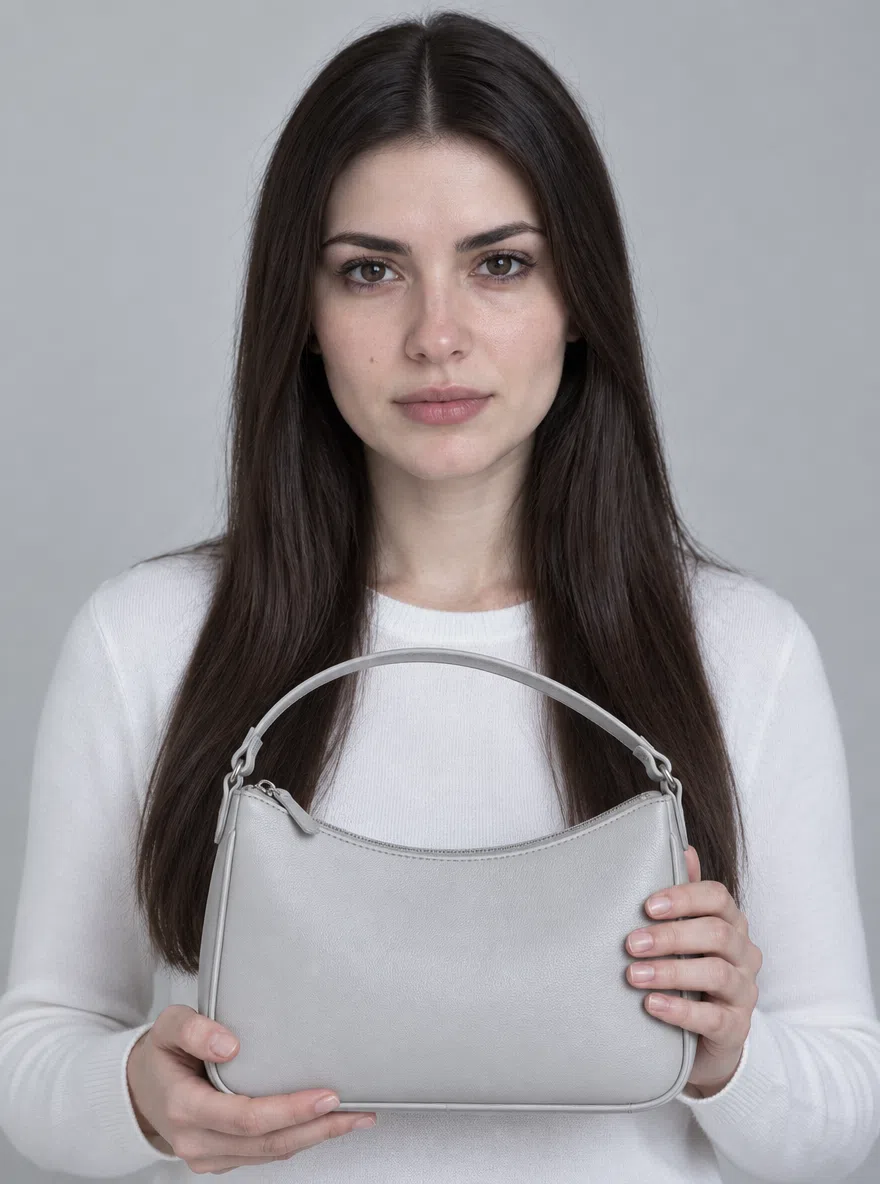
Bag
A bag hangs away from the face, which makes it the easiest place to try a shade you would not wear at the collar yet.

Neck scarf
Close to the skin and small. A jewel tone at the throat is one of the most flattering details this coloring can wear.
Shades that work against you, with a swap for each
7 shades in 2 groups, each with a swap from the palette above. The groups matter more than the individual shades: once you know why a group fails, you can judge a color that is on no list at all.
Warm and earthy shades
Some of these have exactly the right depth. What rules them out is the yellow and orange built into them.
Why these colors do not work
- They put yellow next to skin that has none. A cool or olive complexion has no golden layer to answer the warmth with, so the yellow reads as a sallow cast on the face itself.
- They argue with the hair. Blue-black and cool brown hair next to orange and mustard look ashier and flatter than they are - the two undertones pull against each other in one frame.
- Earthiness reads as tiredness. These are autumn colors. On a face built for jewel tones they make the whole look quieter and older, even when the depth is right.
Faded and dusty shades
The opposite problem. The temperature can be fine; what fails is the gray veil and the lack of depth.
Why these colors do not work
- They lower the contrast the face depends on. Dark hair and eyes next to a pale, grayed shade become the only strong thing in the frame, so the garment looks washed out and the features look heavy.
- Gray dulls the whites of the eyes. Part of this coloring's intensity is very clean eye whites. A dusty shade near the face takes the edge off them.
- Soft reads as faded here. On a muted season these look refined. Against this much natural depth the eye reads them as washed-out fabric.
Deep Winter color combinations
Five ready-made outfits built only from the shades above.
Five formulas to start from
Each formula lists its shades in dressing order, biggest piece first.
Classic drama
Jet black trousers, an Optic white shirt, and a Crimson coat - or just Crimson lipstick. The safest combination on the page and one of the most striking.
Jewel box
A Navy suit with a Forest green blouse and an Icy gray shell underneath - deep, polished and good for both an evening out and a formal workday.
Modern energy
A Charcoal suit with a Magenta top. A softer version of black paired with one strong accent, and a natural fit for creative work.
Cool elegance
A Blackberry dress with Silver jewelry and accessories. Refined and feminine, and made for a special occasion.
Winter forest
Bottle green and Merlot together - a green coat over a wine knit. Rich and complex, and at its best in the colder months.
The rule behind all five: keep the contrast high. Either light against dark, or a neutral against one clear accent. Two shades that sit too close in depth and saturation make the outfit look flat on this face.
The Deep Winter capsule wardrobe: eight pieces
Dark, clean foundations and a few jewel tones
This is where the palette turns into things to buy. Deep Winter clothes rely on quality, clear lines and deep, saturated color: Jet black, Optic white and Navy form the frame, and Merlot, Magenta and Forest green bring the drama. The eight pieces were chosen to combine freely, from a formal workday to an evening out.
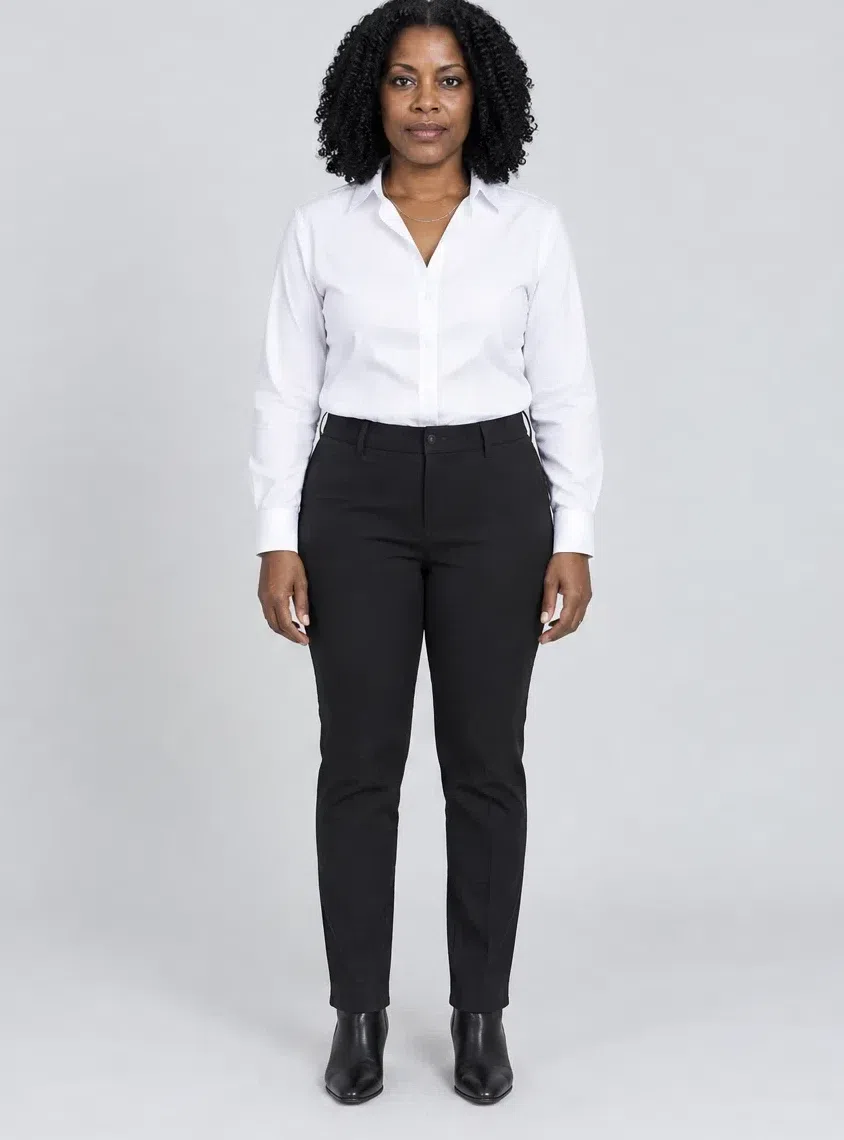
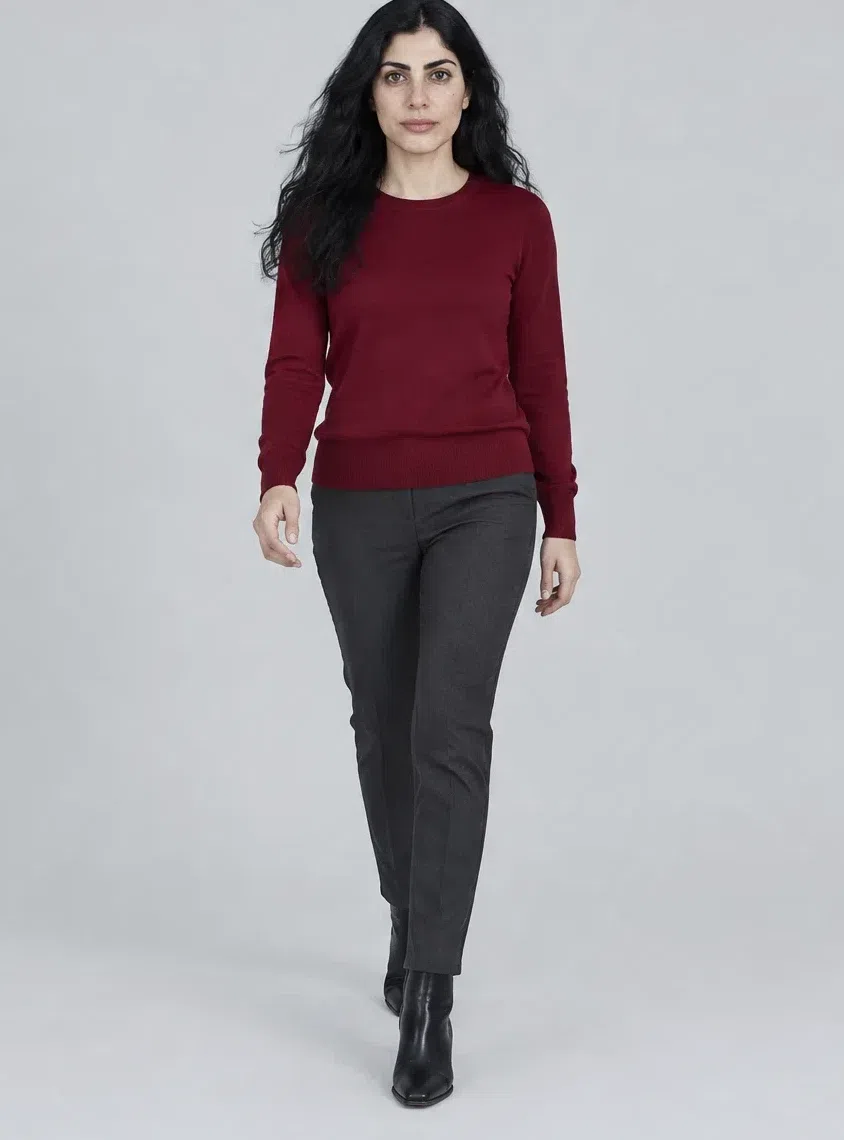
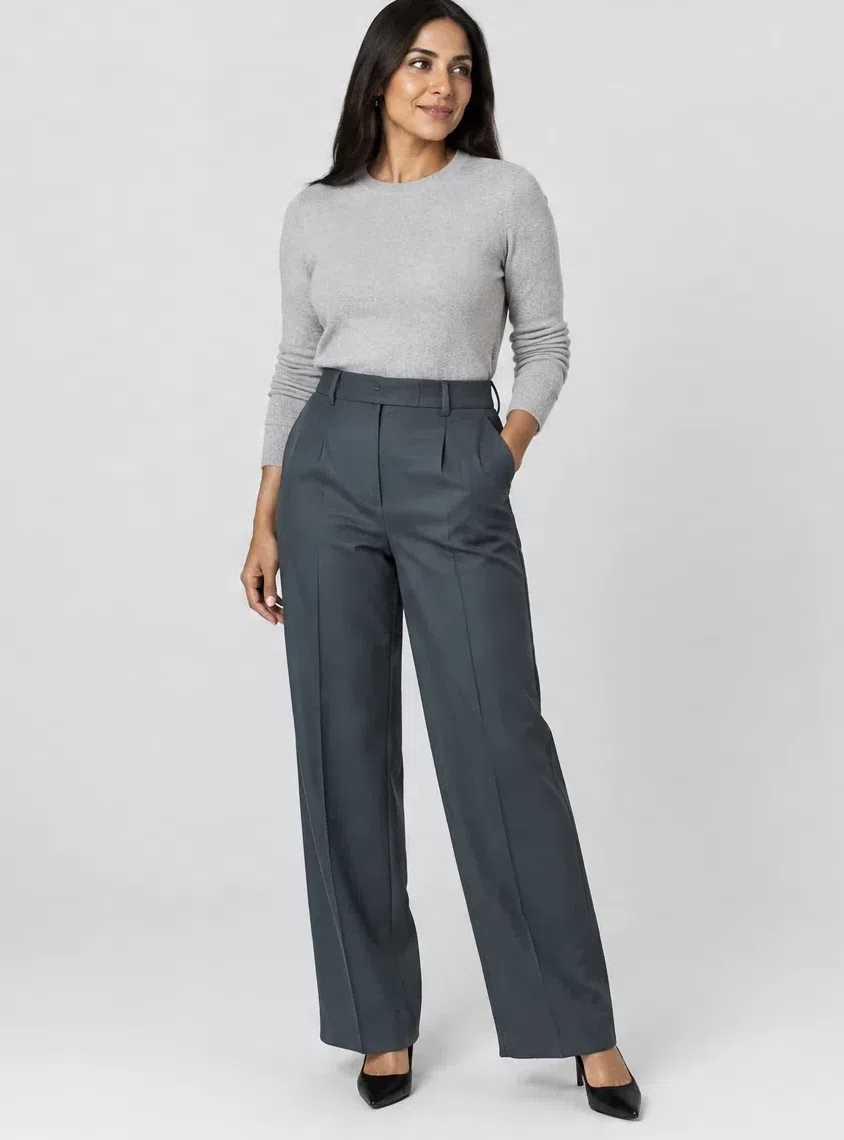
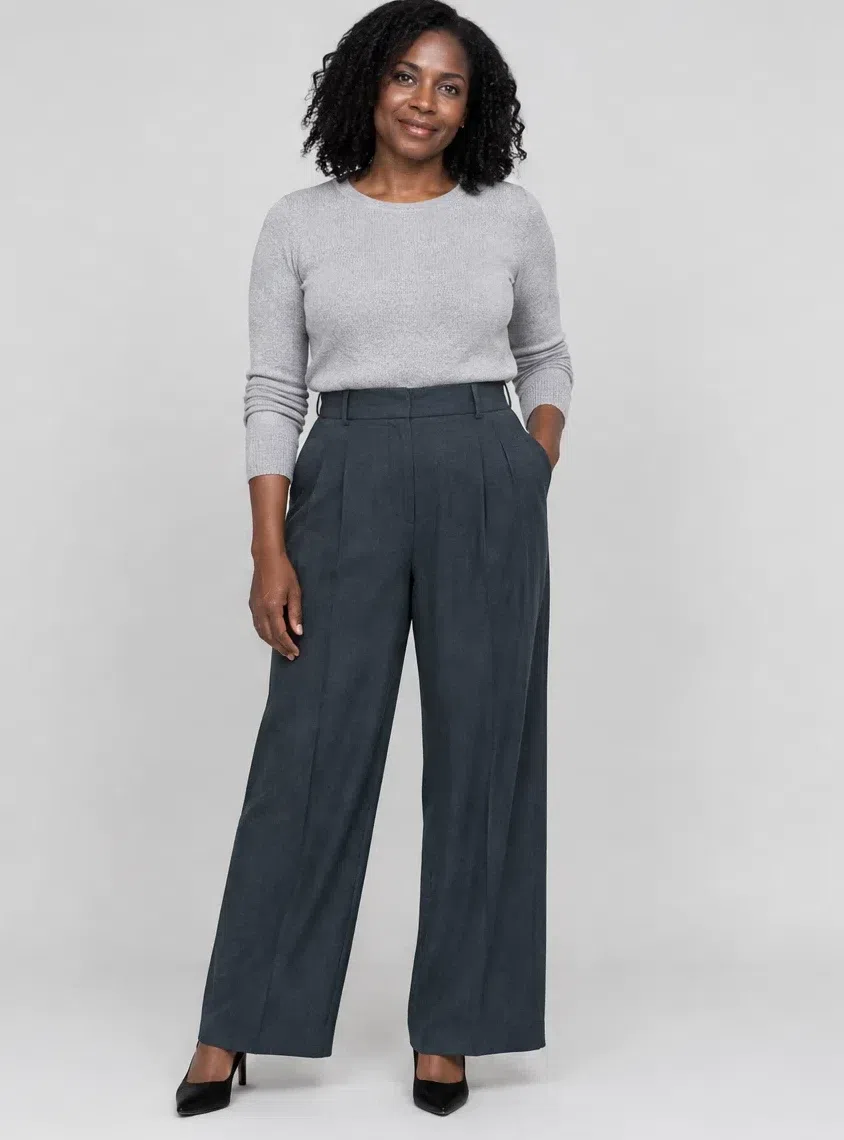
Each piece is photographed on four women of different skin depth, since a Deep Winter can be porcelain or deep brown. Shot on a single model, the capsule would look as if it only worked for one complexion.
Eight Deep Winter pieces that work together
Four foundations and four pieces that carry color, all cut cleanly. Under each one you will find the shades to look for, with hex codes, so you can check a product photo against them.
Every piece here was picked for its color, to fit the Deep Winter palette. The mechanics of capsule dressing - the right number of items, working out how many outfits they give you, what to buy first - are a topic of their own.
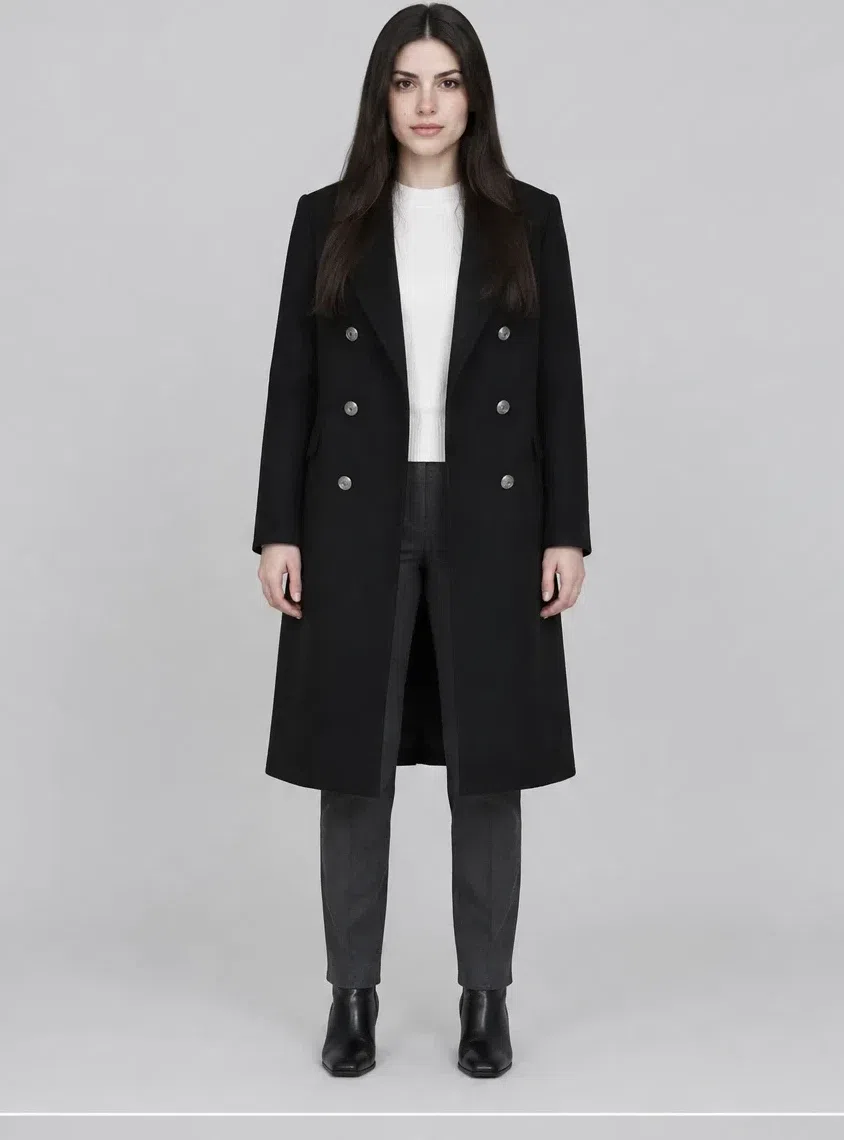
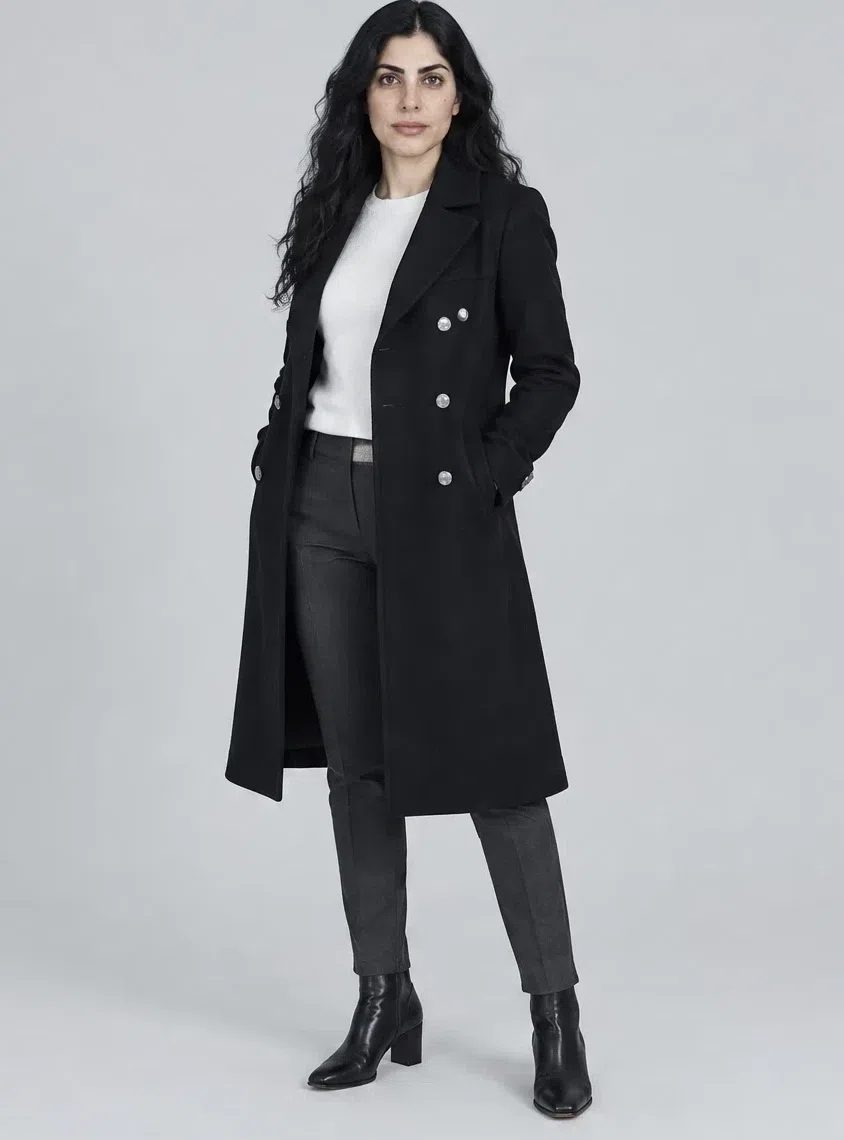
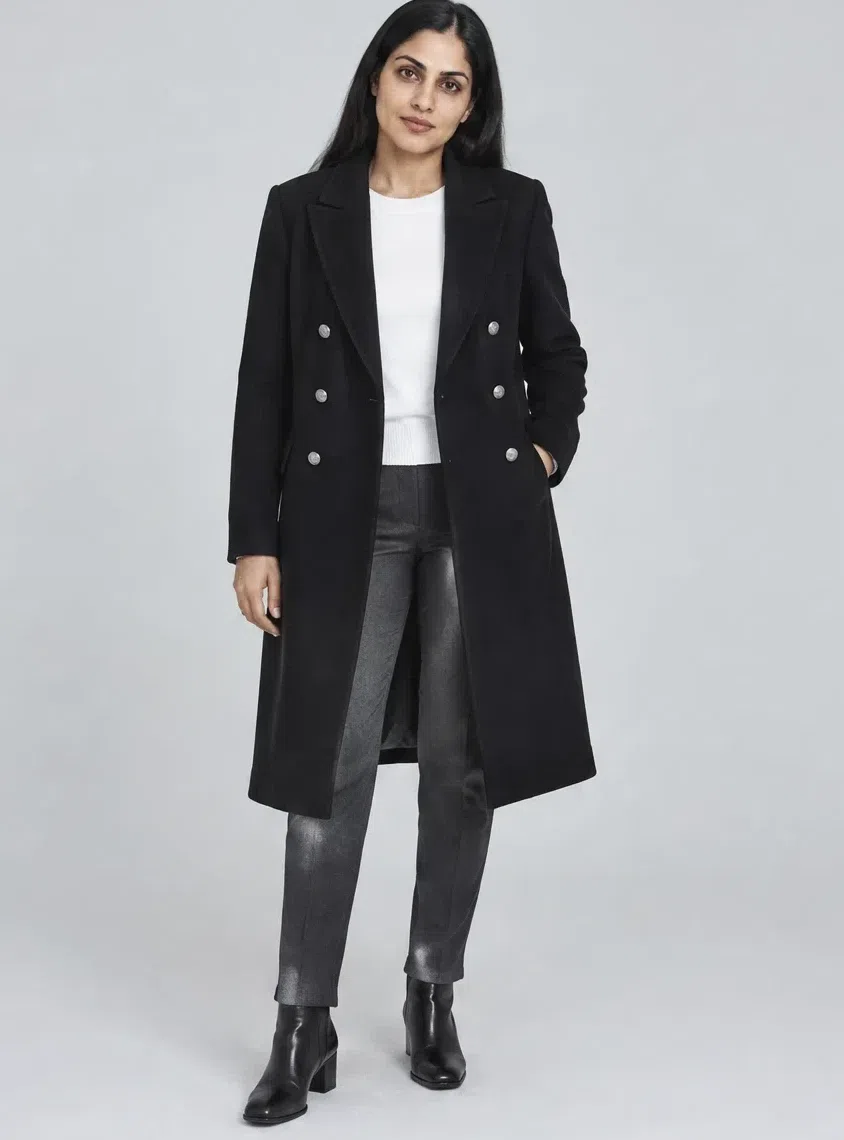
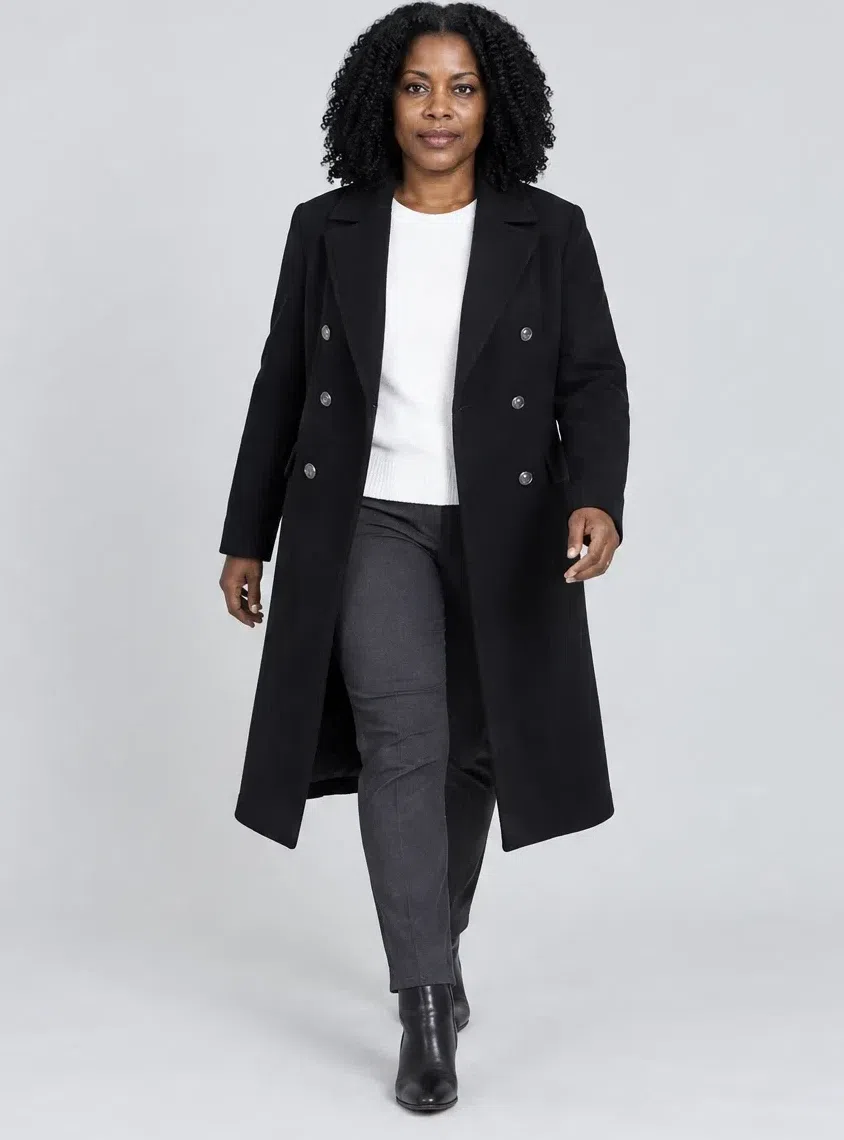
1Jet black wool coat
Black is this coloring's strongest ally, and the coat is where it earns its place first. Look for a clean line - double-breasted, or a belted wrap - in cashmere, dense wool or gabardine, at midi or mid-calf length. It works with a bright scarf and with a white shirt and dark jeans alike. Shapeless cuts and loose, fuzzy fabrics blur the sharp outline this face suits.
Tip Choose silver buttons and buckles. Cold hardware echoes the cool undertone; gold hardware fights it.
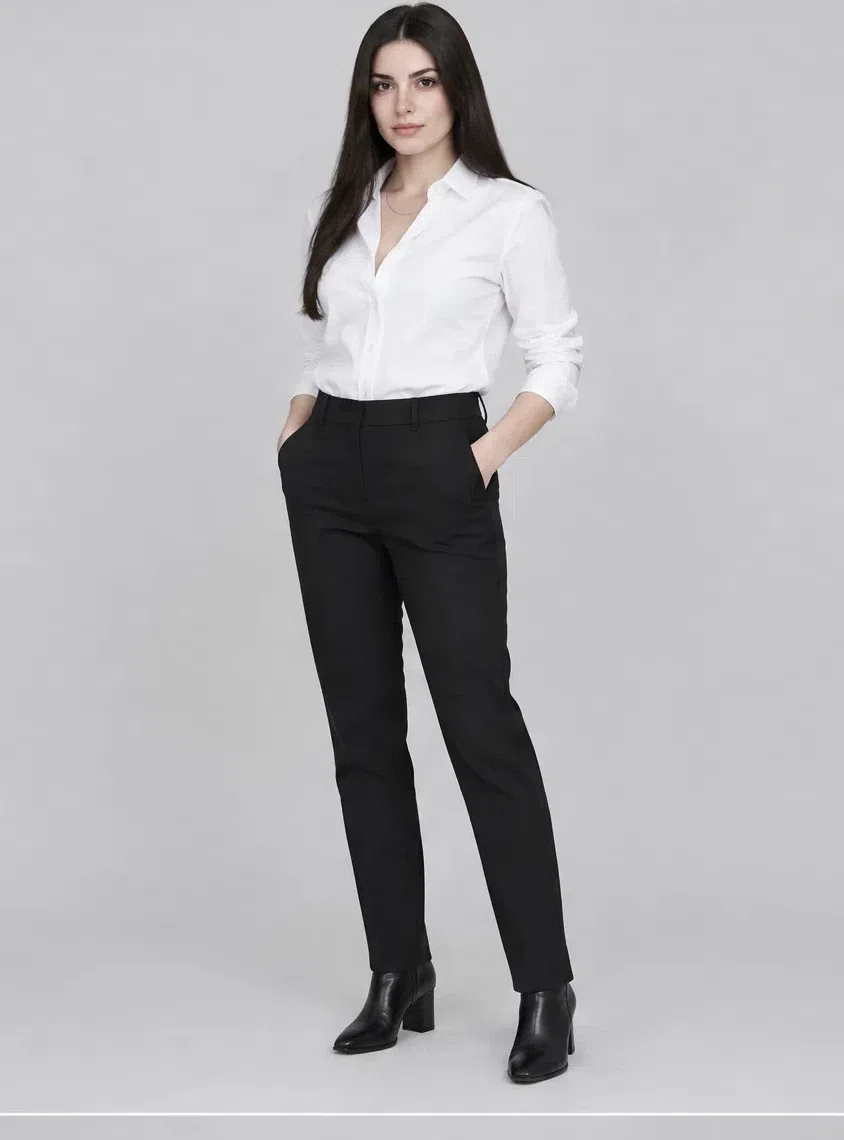
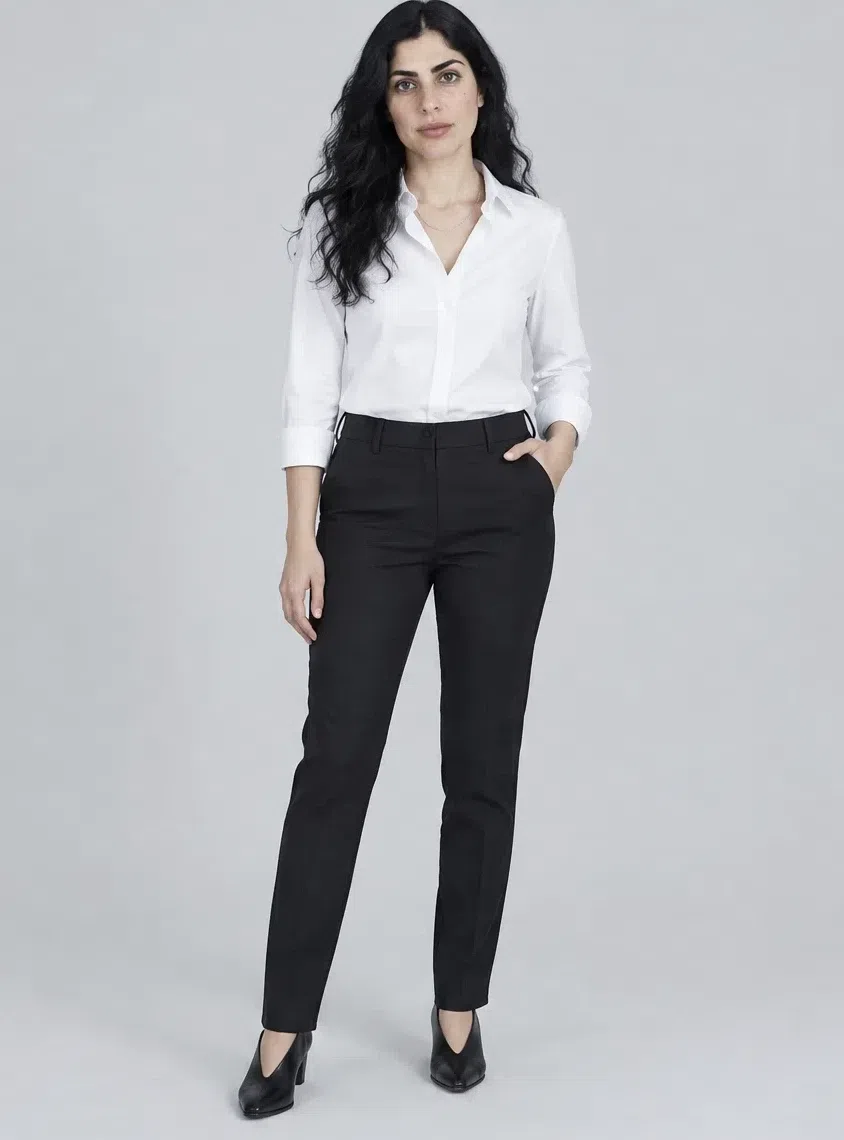
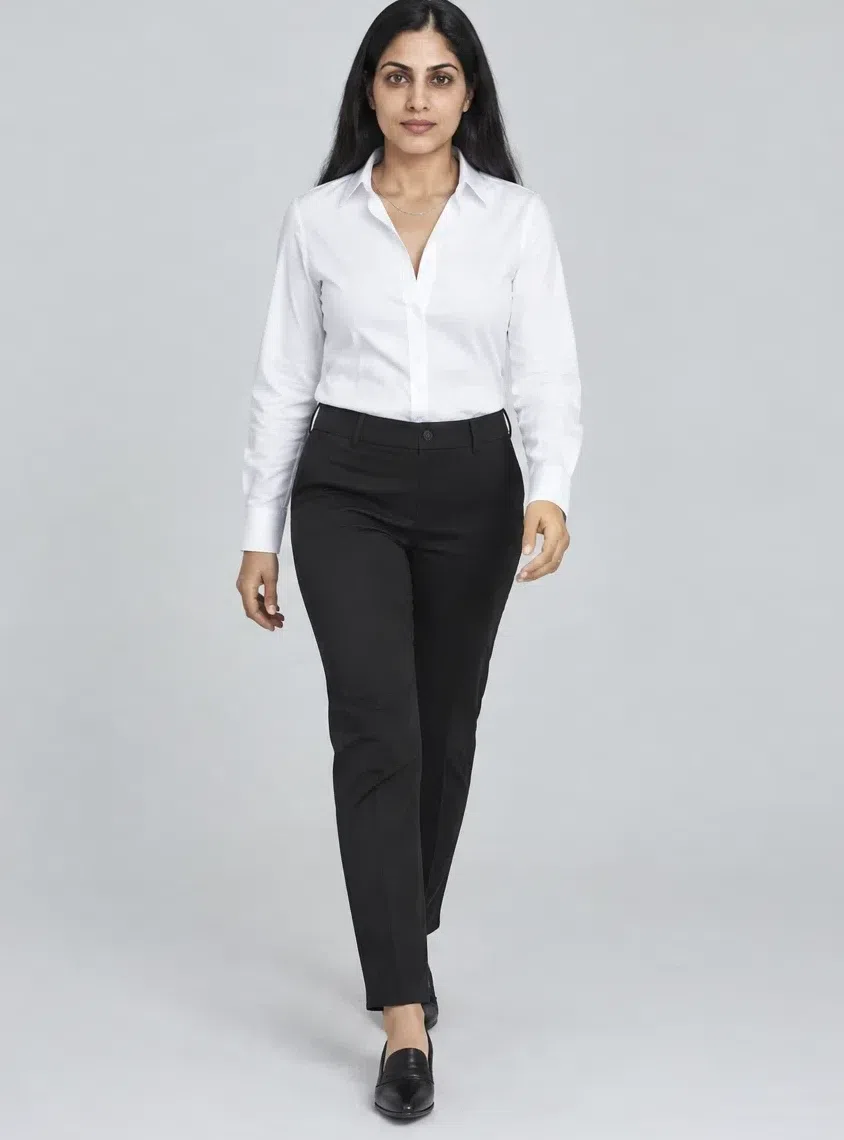
2Optic white cotton shirt
Not ivory, not cream: your white is the cold one, like fresh snow. In dense cotton or silk it gives the maximum contrast this coloring thrives on, and it pairs with black trousers, dark jeans or a wine skirt. A classic menswear cut and a softer version with volume at the sleeve both work.
Tip Leave the top buttons open and add a fine Silver chain - it draws a clean vertical line down the neck.
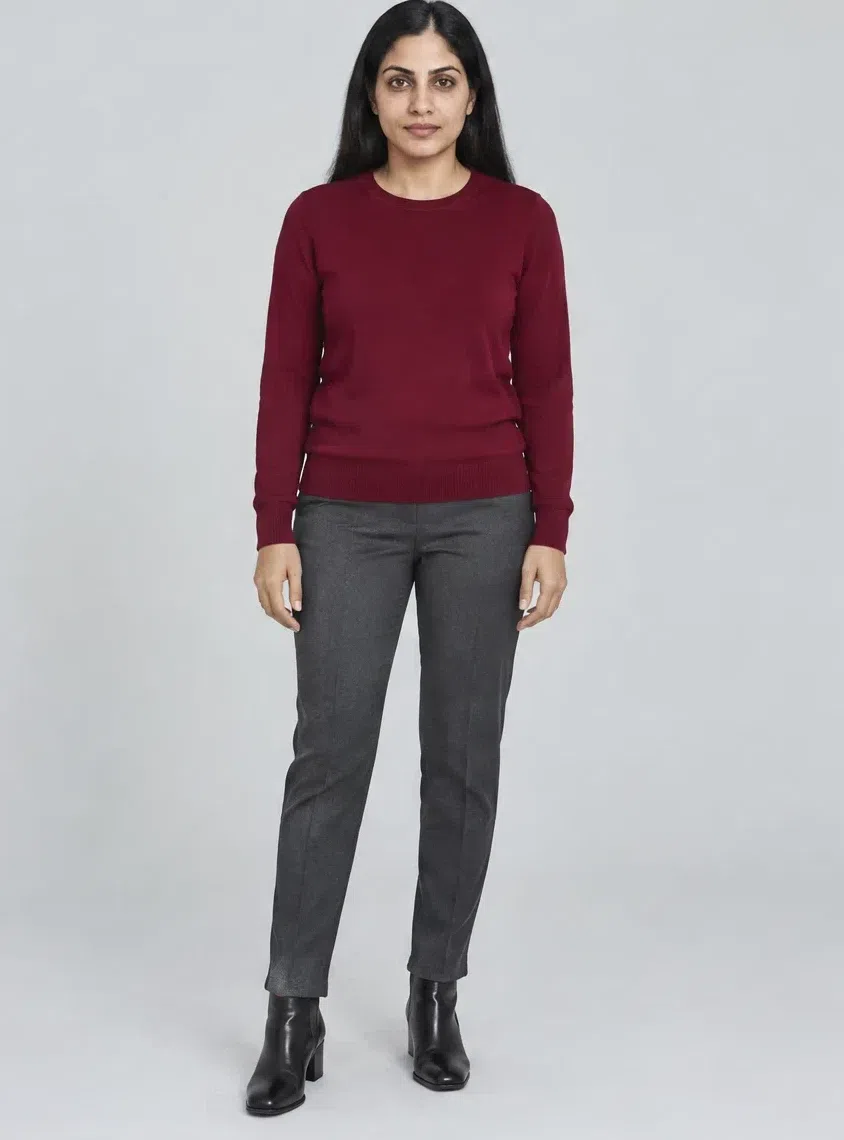
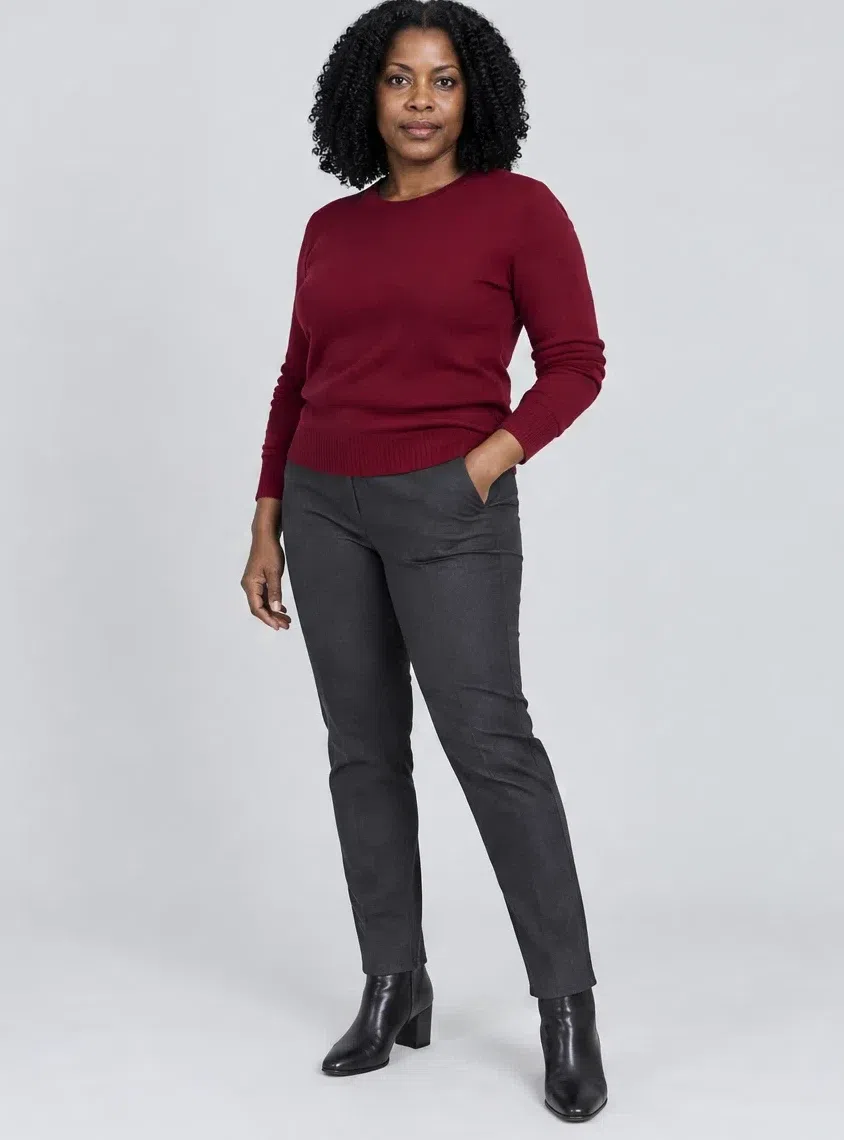
3Merlot cashmere sweater
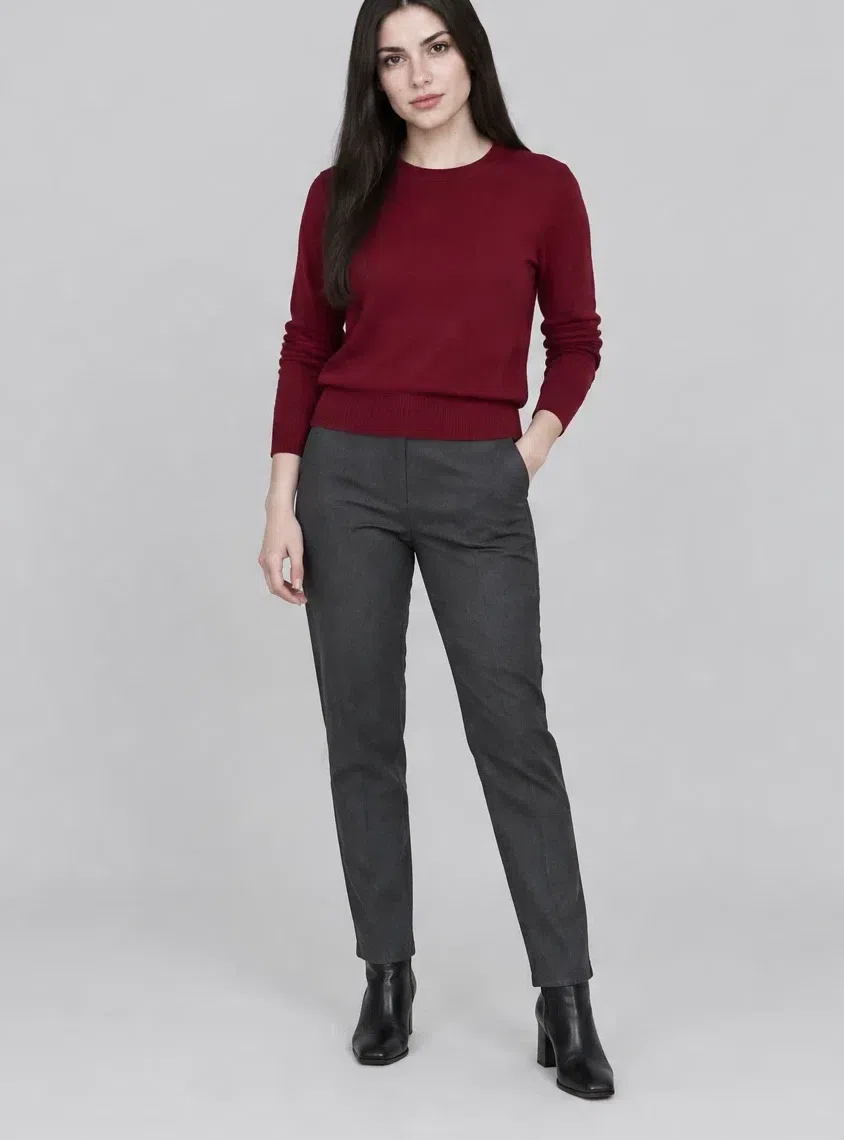
Deep wine, burgundy or ripe black cherry - the richest shades in the palette, and the easiest way to add color without losing depth. Cashmere or fine merino in a plain crew or V-neck, so the cut never competes with the color. Wear it over a white shirt, with gray trousers or with a leather skirt.
Tip Match it to a lipstick in a similar wine shade and the whole look reads finished.
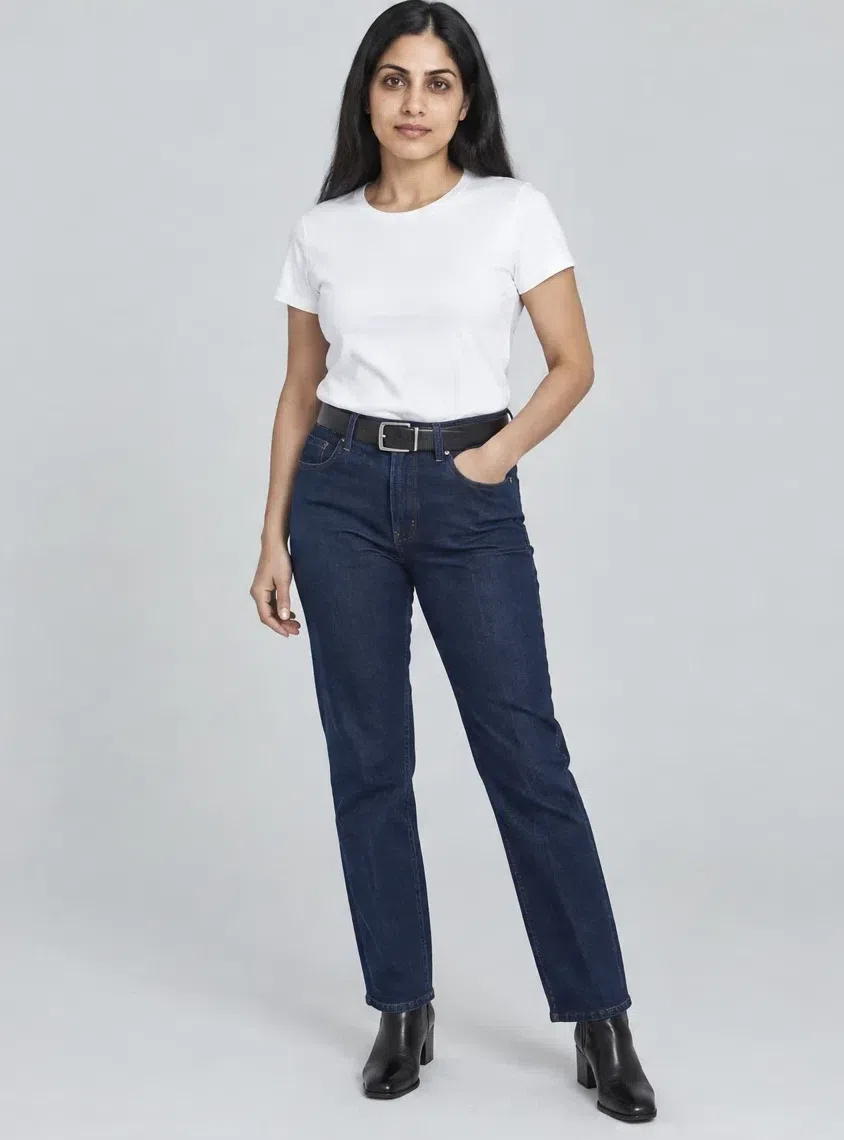
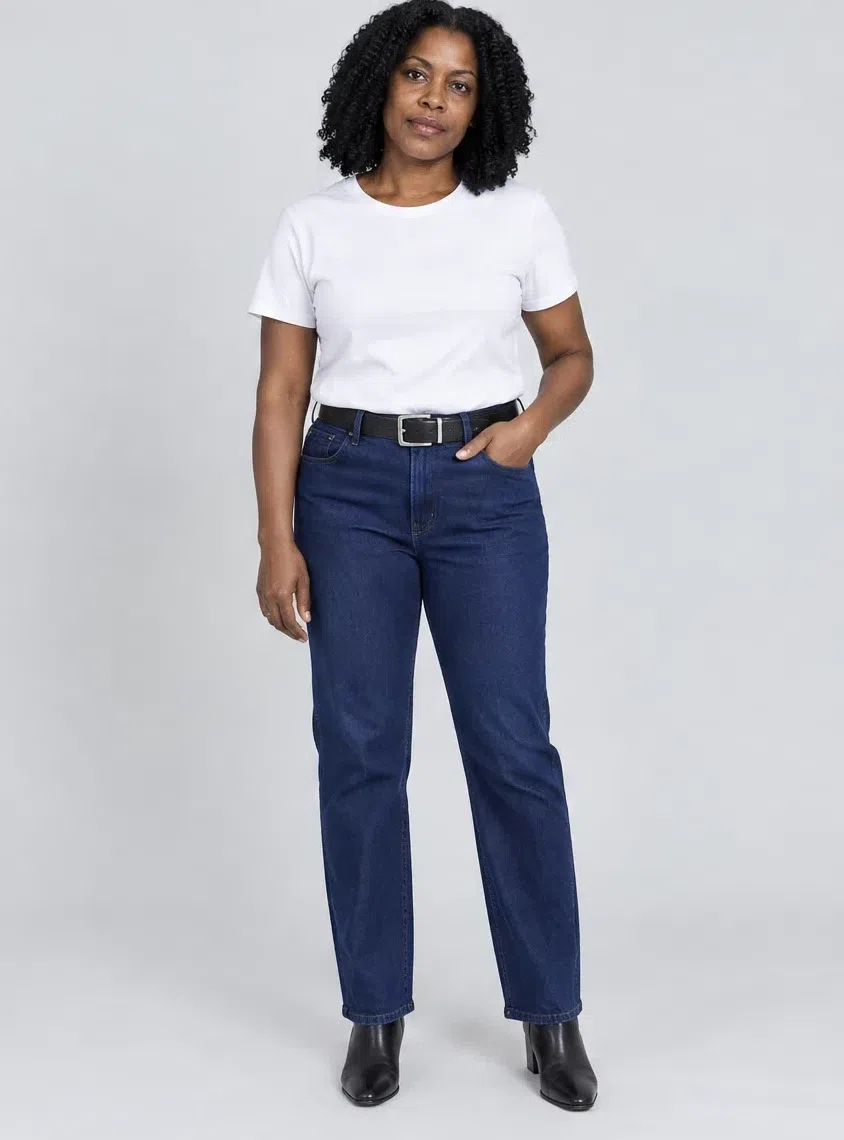
4Navy straight-leg jeans
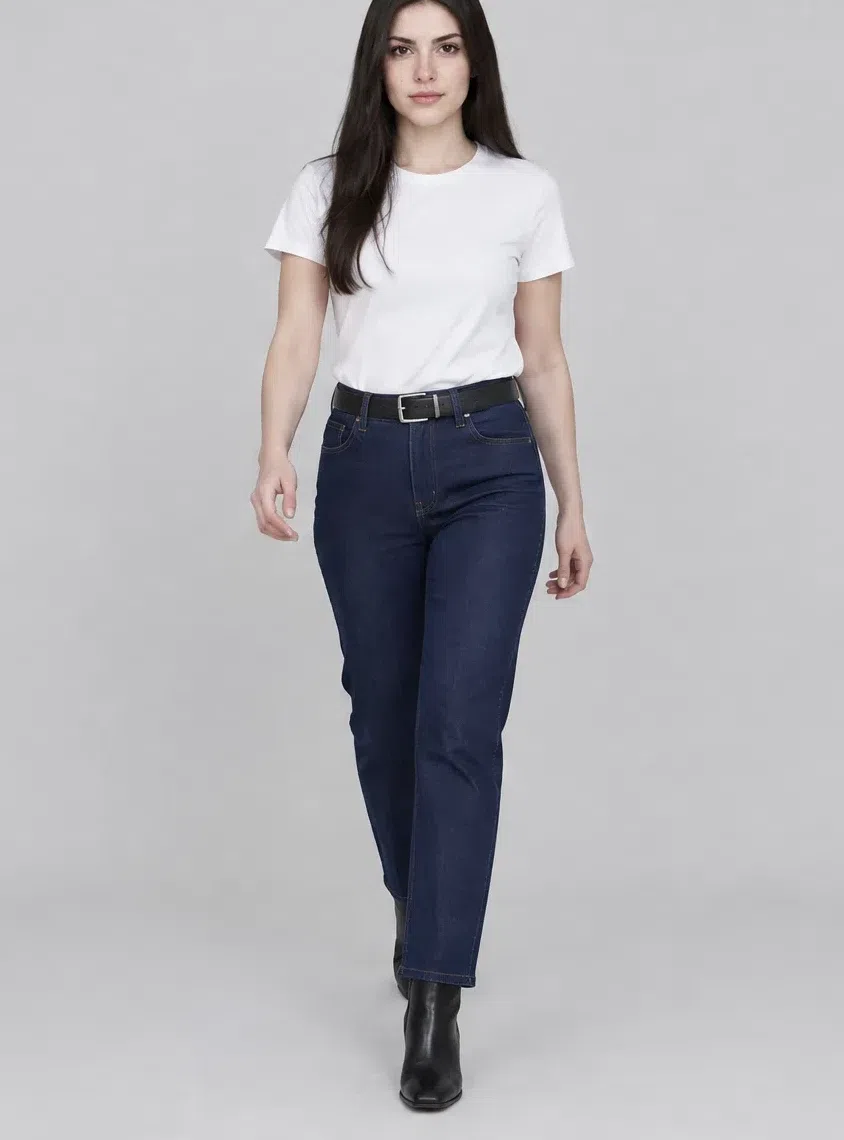
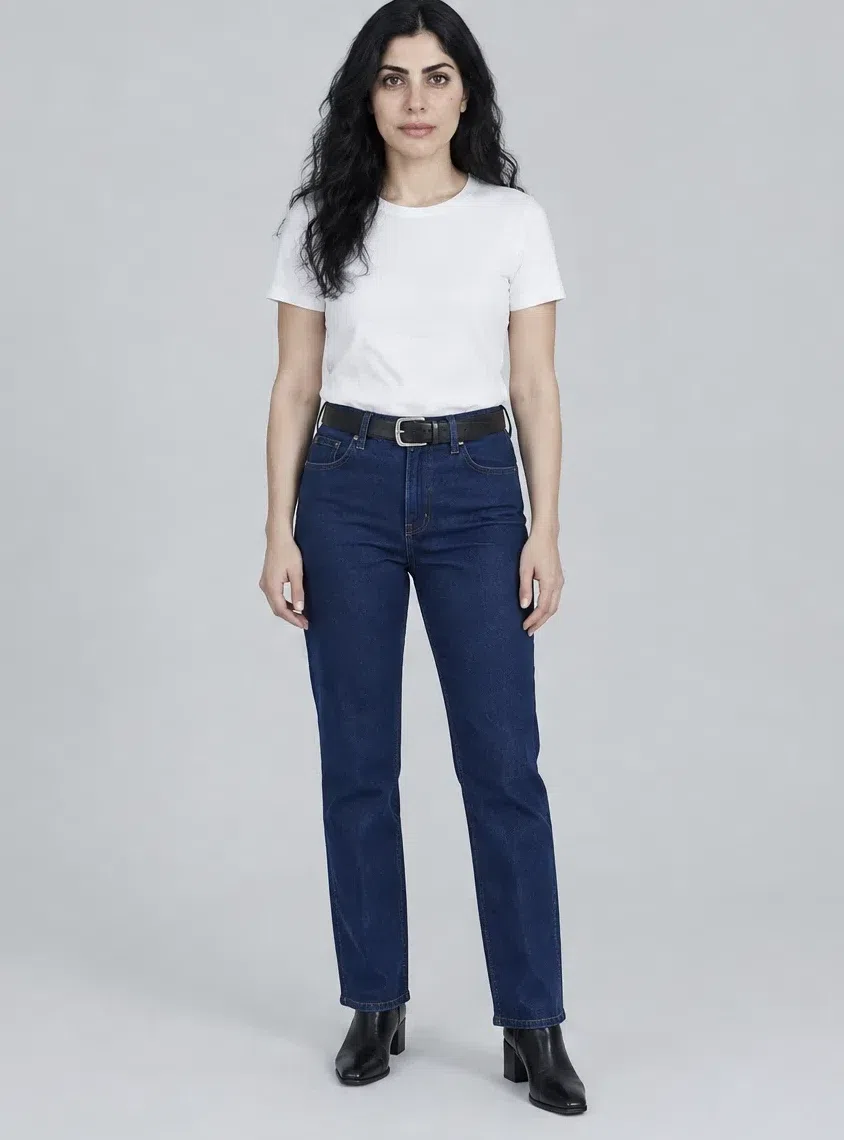
Skip faded, light-wash and distressed denim. This coloring wants dark, even, saturated indigo - or black - with no worn patches and no warm yellow fading. A straight or slightly flared leg keeps them sharp enough for smart-casual and neutral enough to carry every jewel tone.
Tip A belt with a Silver buckle keeps the cool line going all the way to the waist.
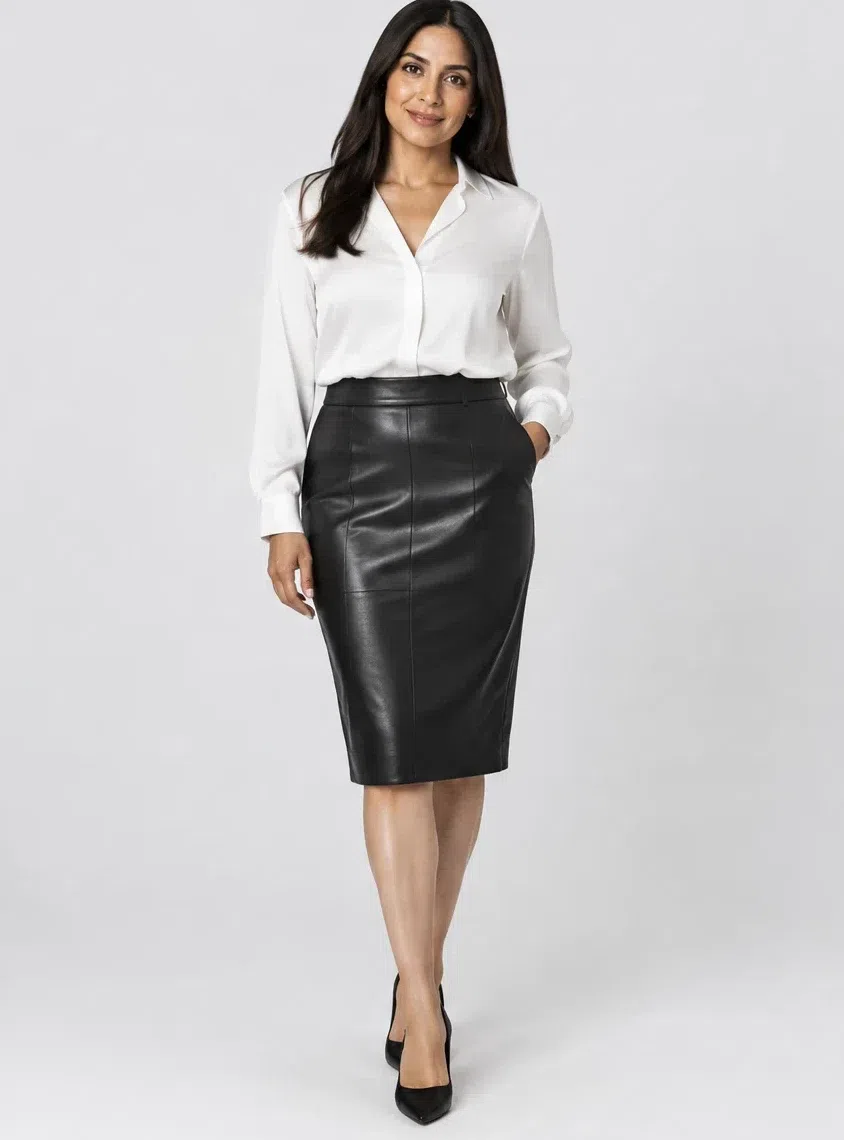
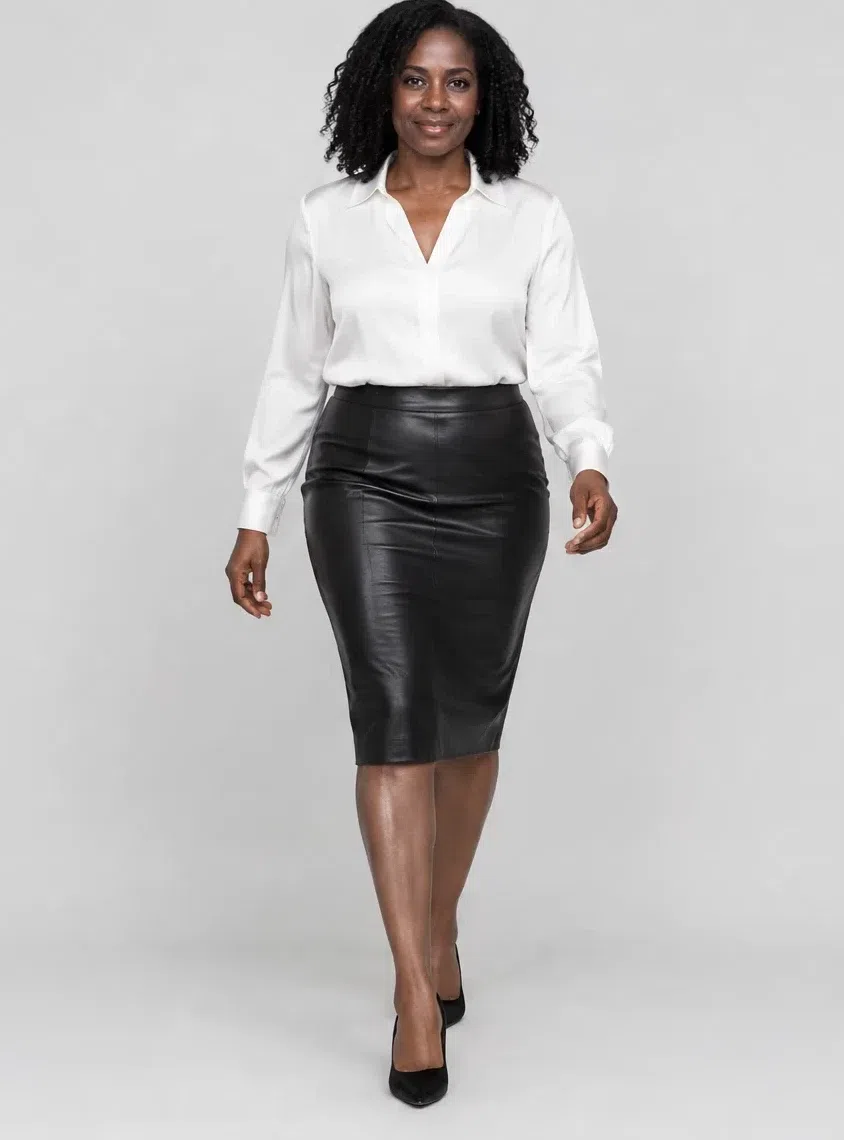
5Jet black leather pencil skirt
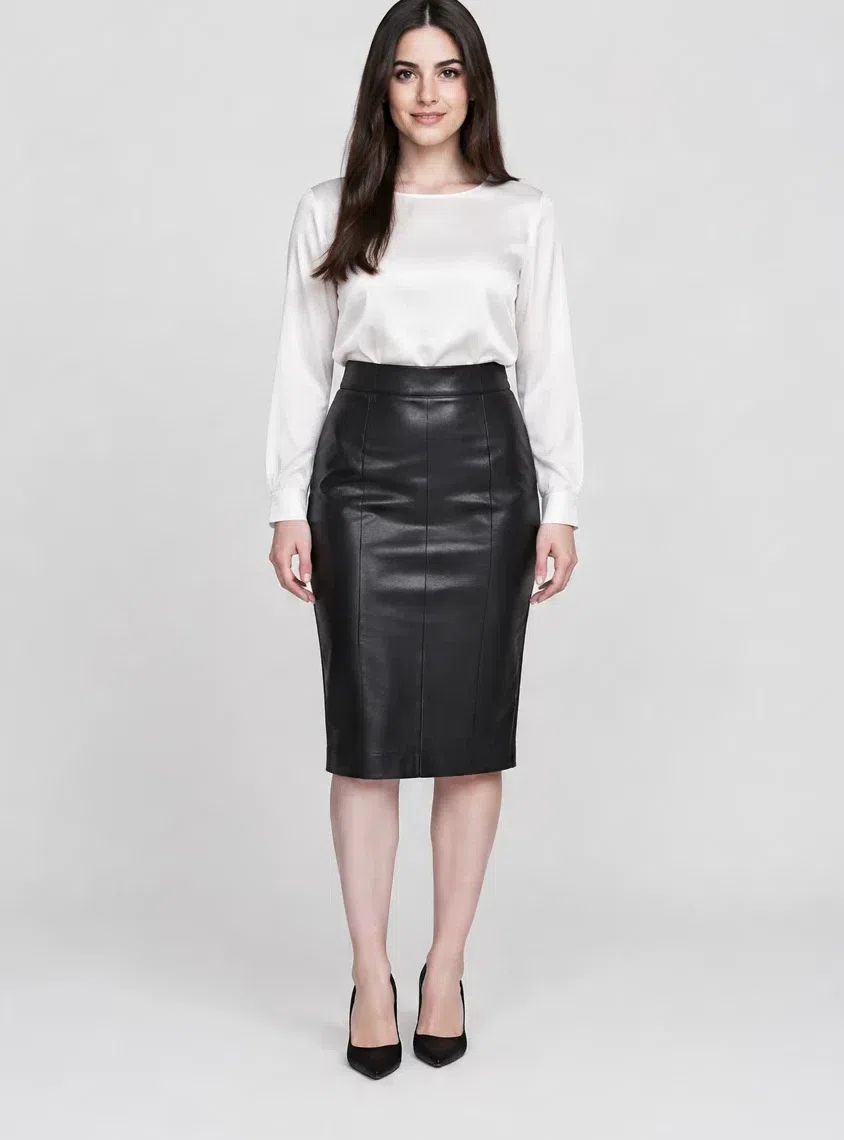
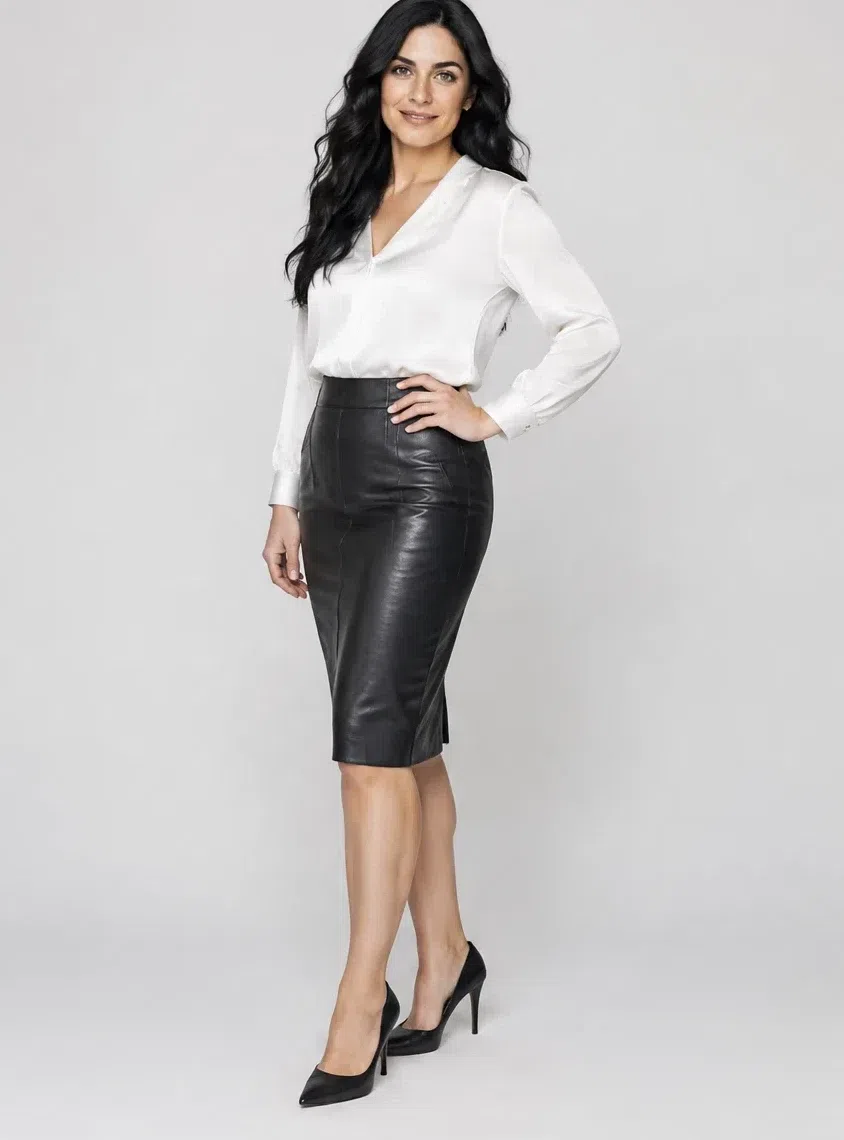
Leather is this coloring's texture: smooth, with a slight sheen that reflects light and deepens dark shades. A pencil or A-line cut goes from a chunky knit and boots by day to a silk top and heels at night. Good vegan leather works just as well, and dark green or wine versions are worth a look too.
Tip Mix it with softer surfaces - cashmere, silk, satin. Smooth against soft always looks deliberate.
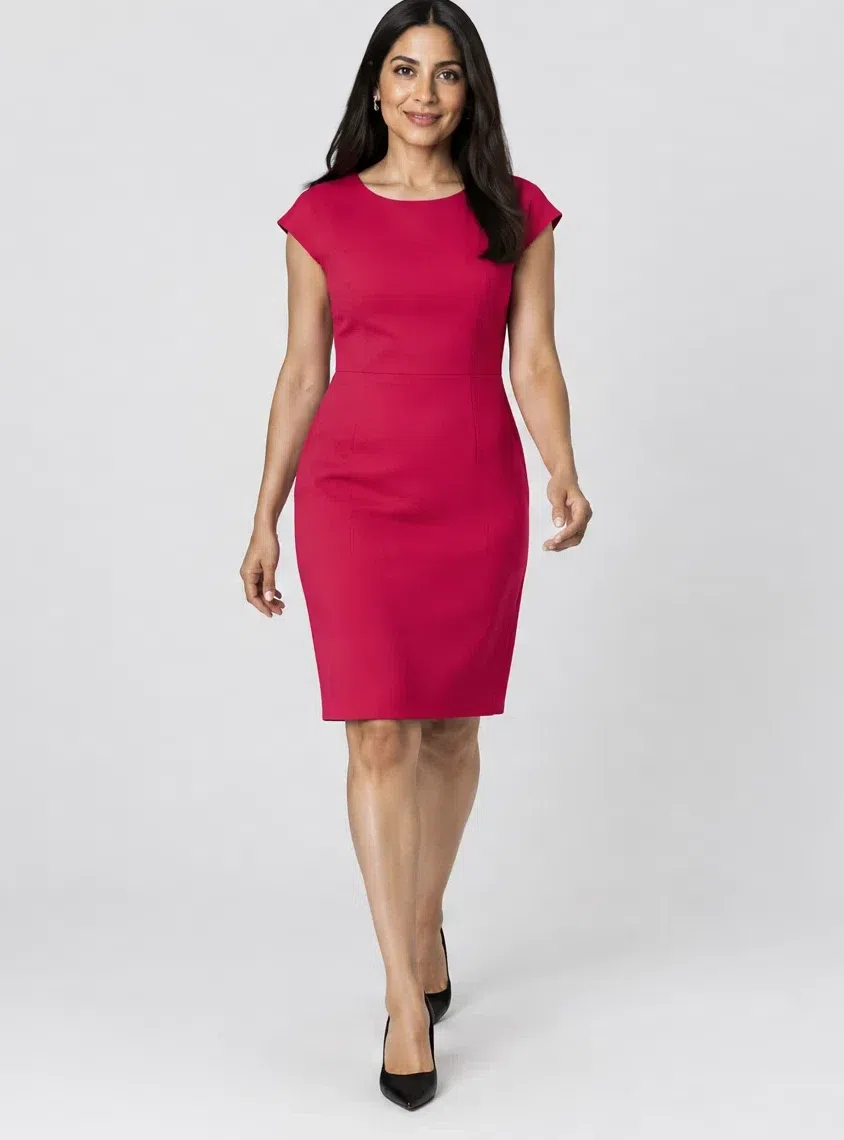
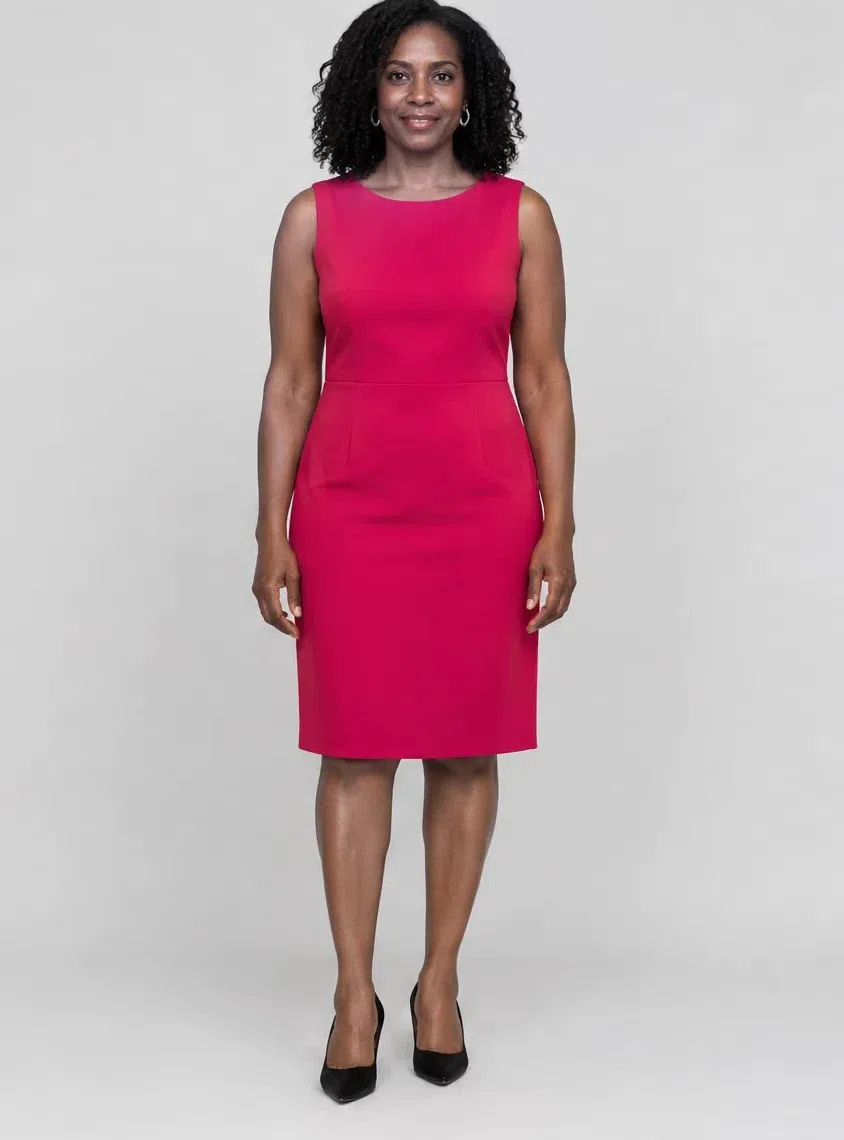
6Magenta sheath dress
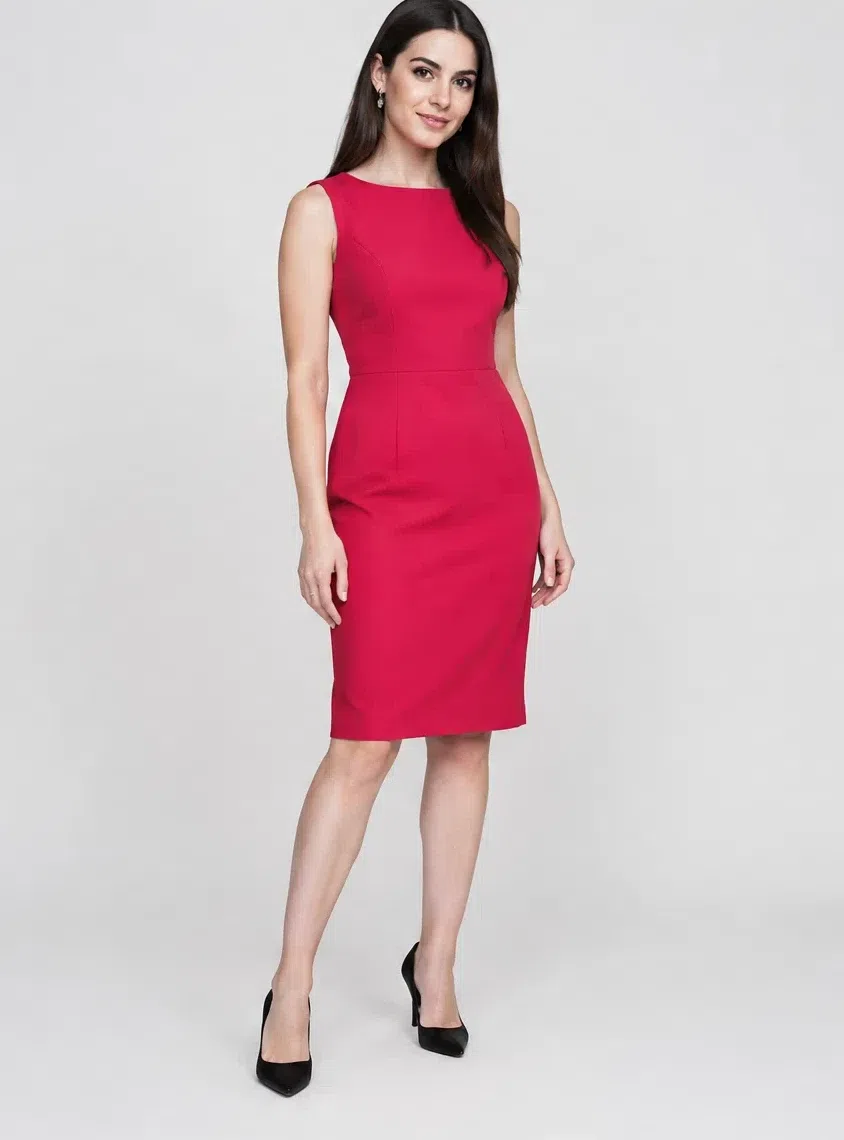
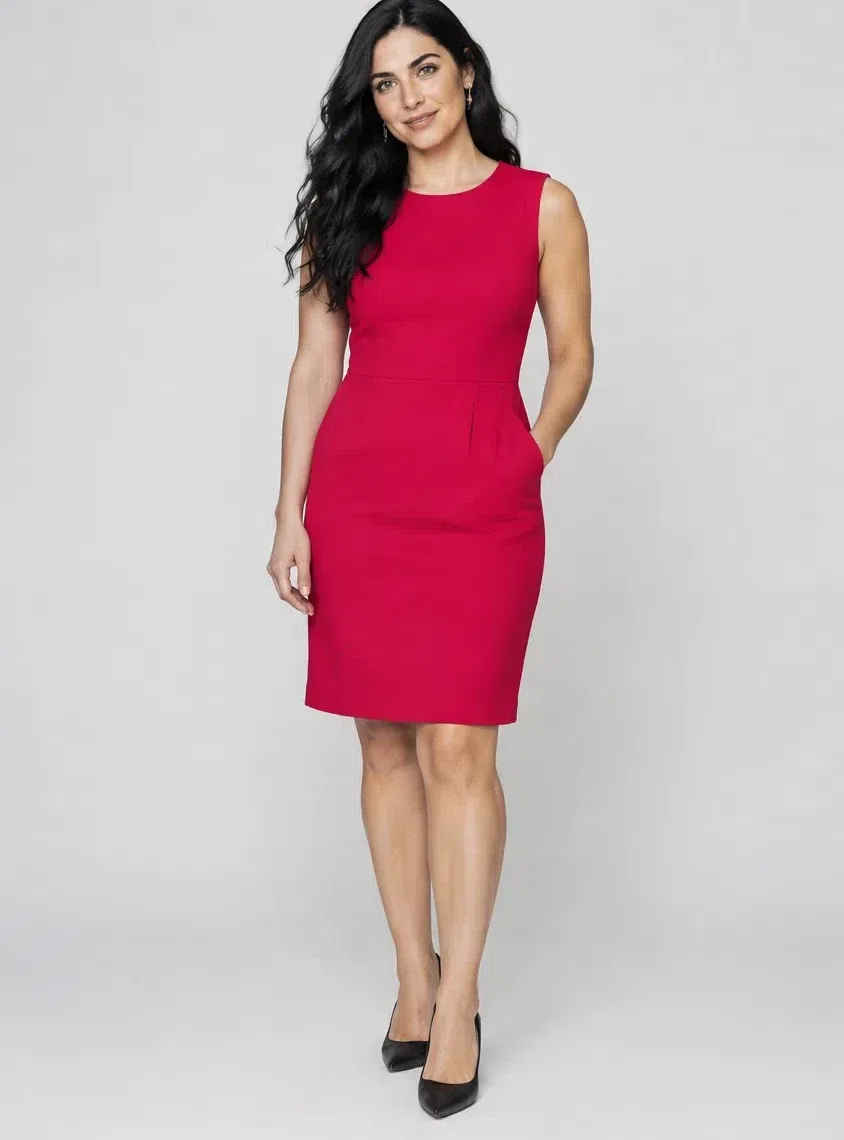
Every Deep Winter needs one power color, and this is the place for it - fuchsia, crimson or a ruby red in a plain sheath. A cool, saturated pink freshens the skin and makes the eyes look brighter, and a simple cut lets the color carry the outfit. Minimal silver jewelry and black or silver shoes finish it.
Tip Not ready for a whole dress? Start with a Magenta bag, shoes or silk scarf - the effect is the same in a smaller dose.
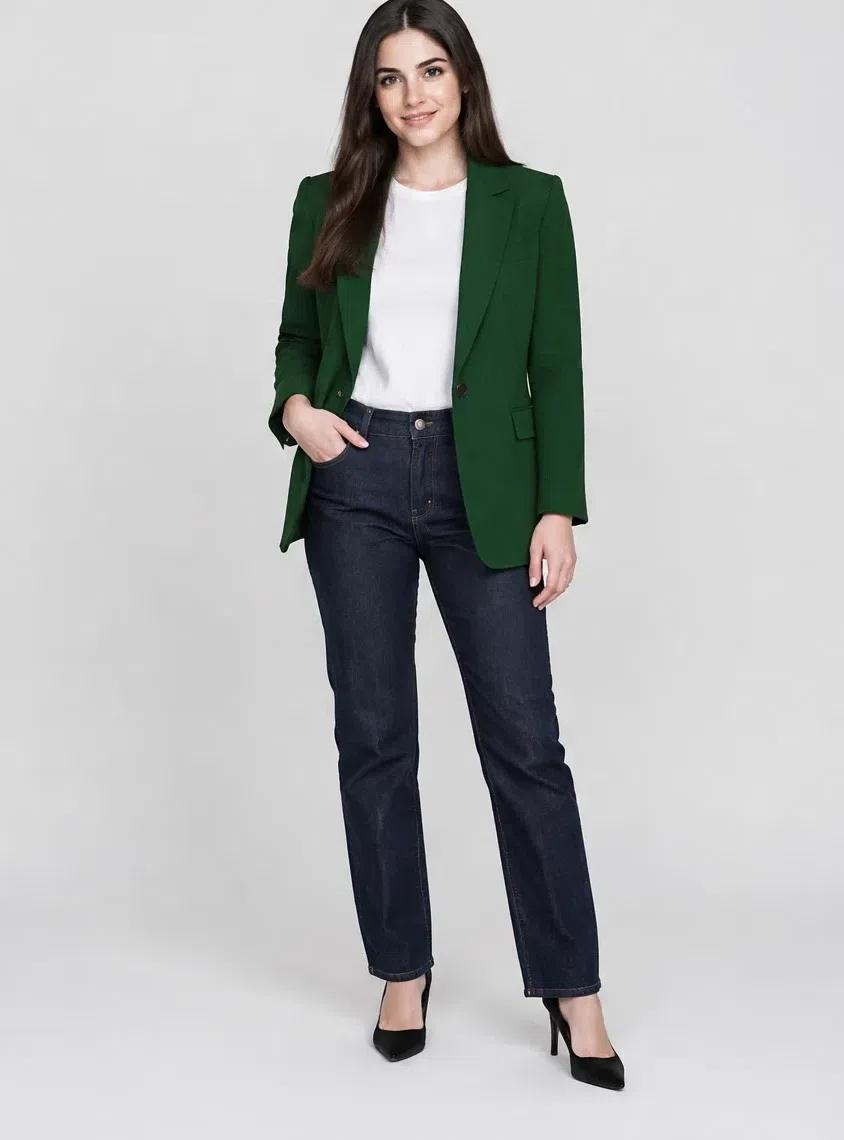
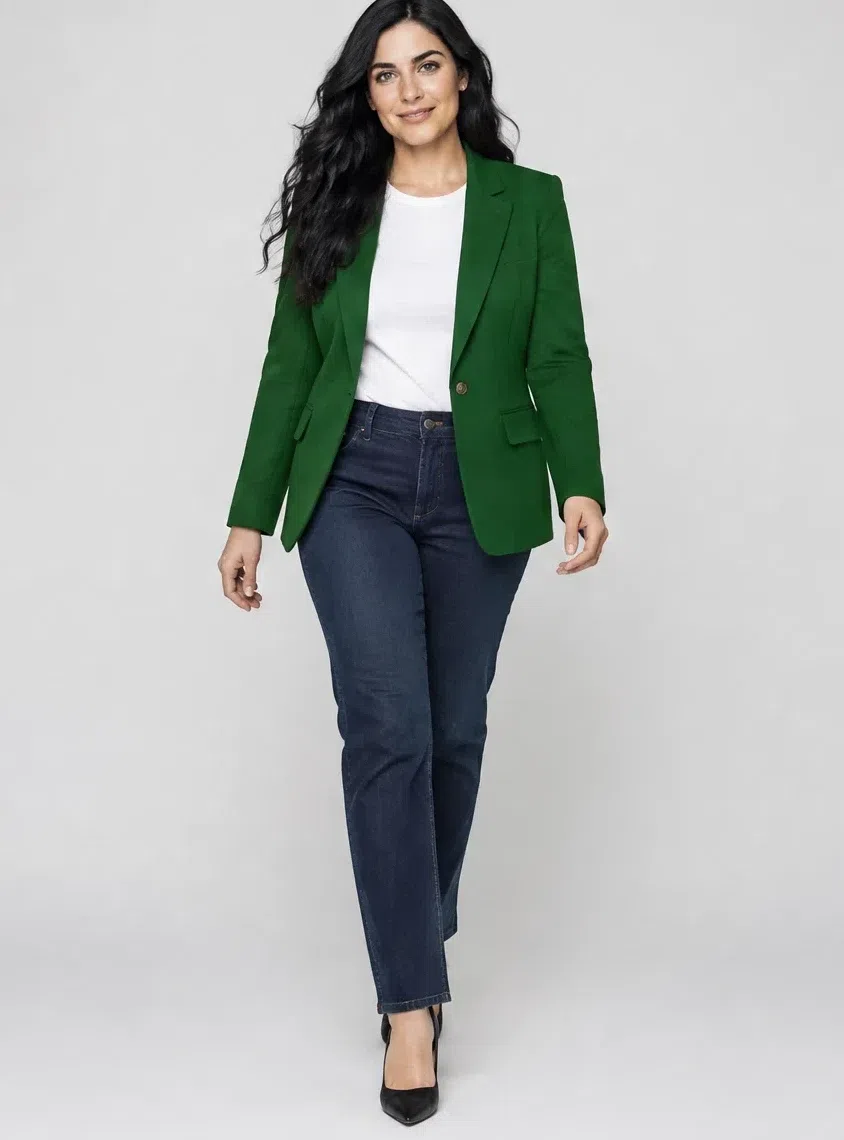
7Forest green tailored jacket
A pure deep green is one of the most flattering colors this coloring can wear, and a well-cut blazer puts it right where it matters. Crepe or gabardine holds a crisp shape. Throw it over dark jeans and a white tee, or over a black dress for evening; it also sits well with navy and plum.
Tip Try a head-to-toe green: the Forest green jacket over Bottle green trousers and a darker green top.
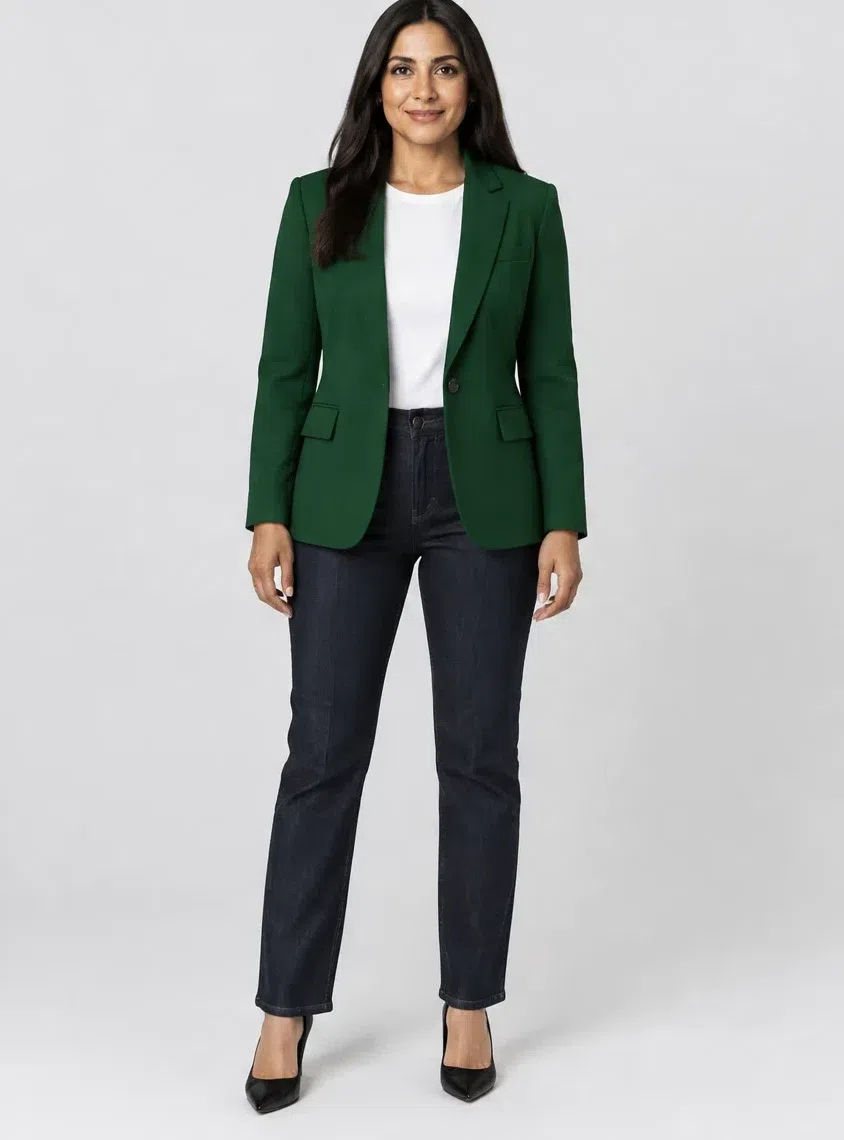
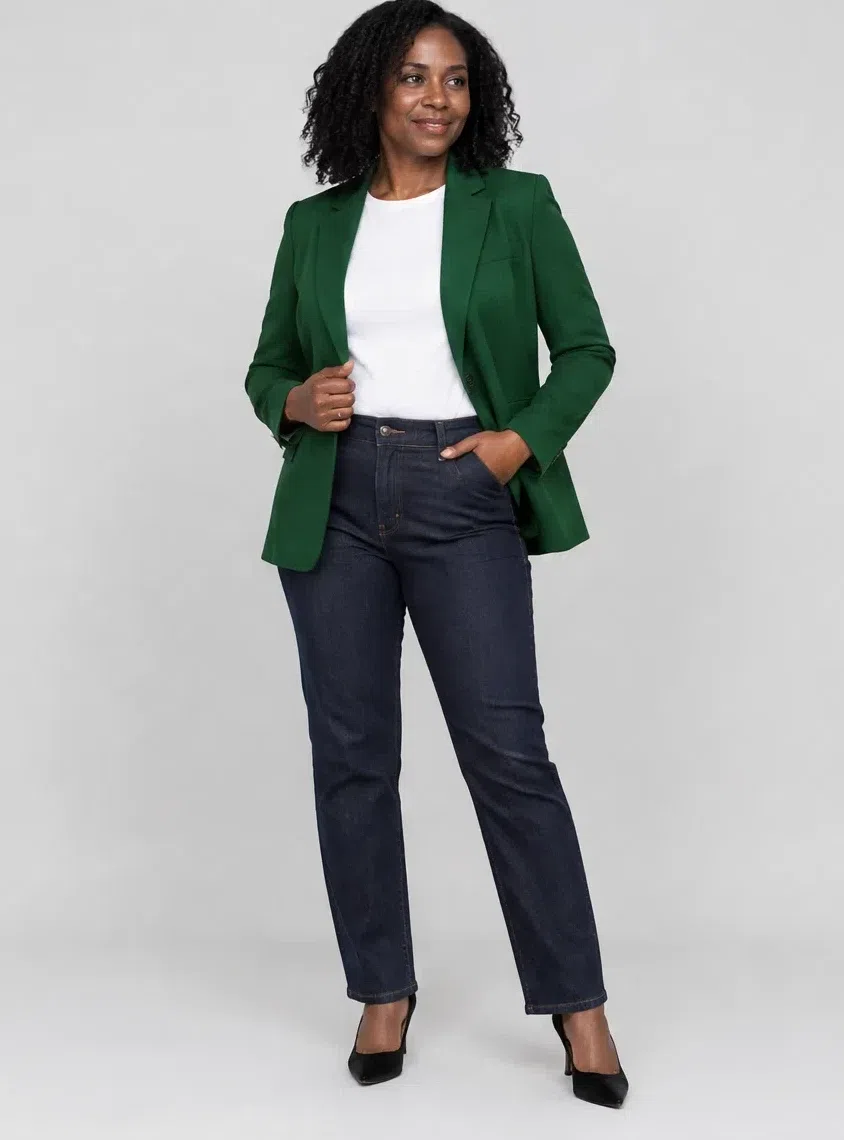
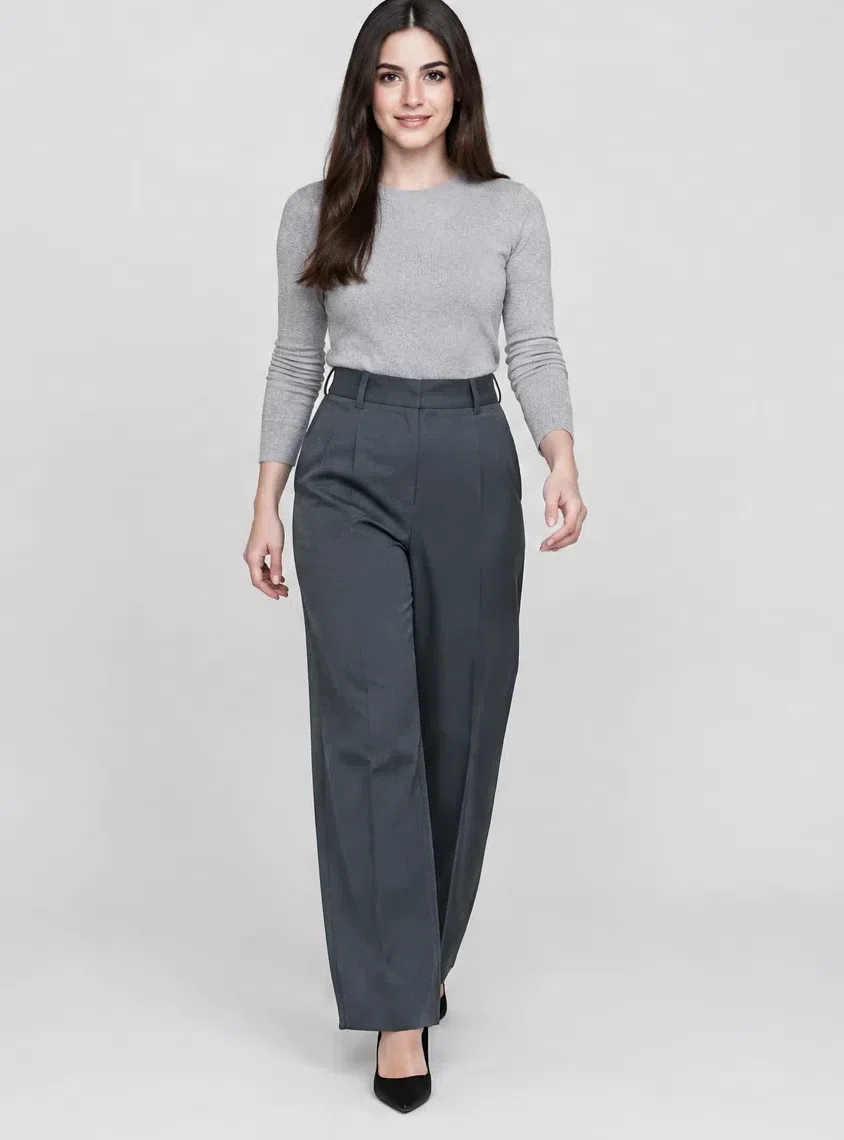
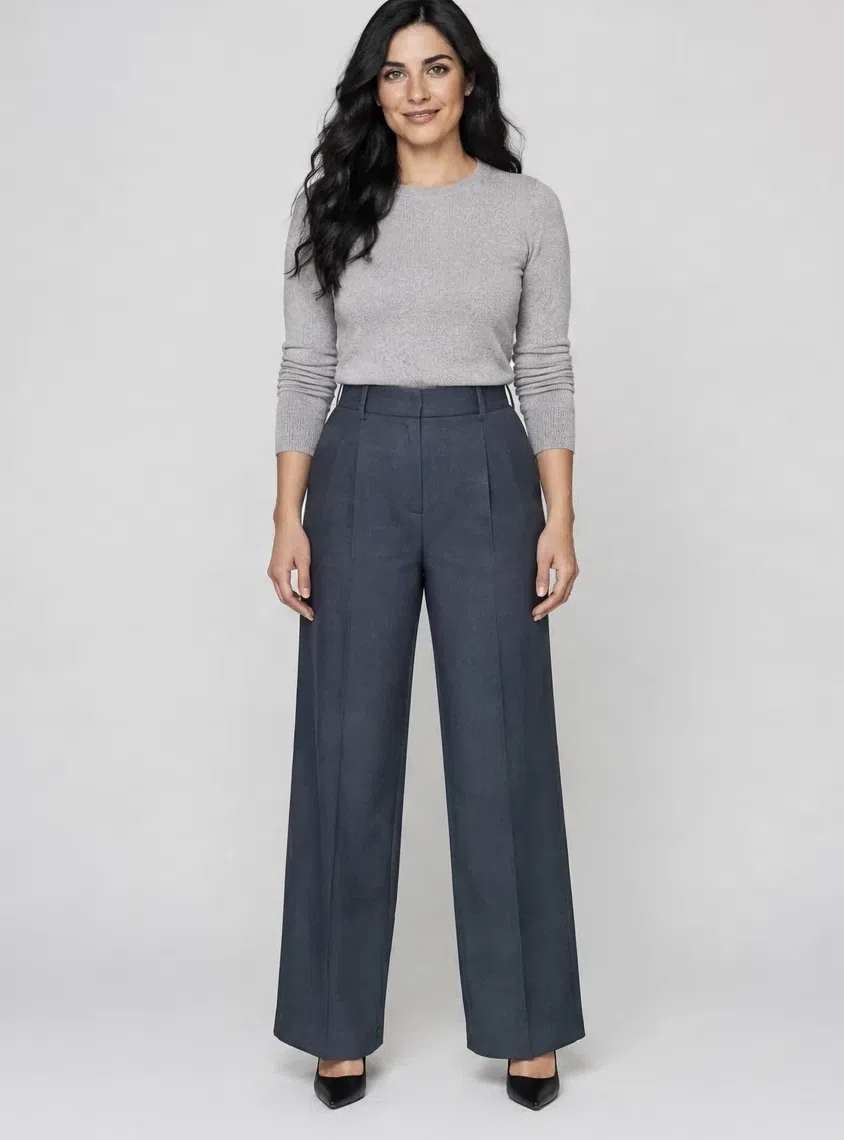
8Charcoal tailored trousers
The quietest piece in the capsule and the one that makes the loud ones easy to wear. High-waisted and wide or straight, in dense wool with a pressed crease. This is also where the cool browns and taupes belong, well away from the face.
Tip Wear them with the Merlot sweater or the Optic white shirt and let the top do the talking.
Five ways to combine the capsule
- Lightest against darkest. Put the two ends of the palette into one outfit: the Optic white shirt tucked into the Jet black leather skirt. The distance between them echoes the distance between your hair and skin.
- A dark base, one bright piece. Navy jeans and a Navy knit, then a Magenta coat or dress over them. The base stays quiet so the single strong color lands.
- One deep color, several depths. Build an outfit from a single rich hue - Merlot with Blackberry, or Forest green with Bottle green. It reads polished and expensive without a single neutral in it.
- Matte against shine. A cashmere sweater over a satin skirt, silk under leather. Smooth, dense and lustrous fabrics carry these colors best; thin, limp or rough ones make them look cheaper than they are.
- Prints: graphic, and one at a time. Crisp stripes, houndstooth, black-and-white geometrics or large flowers on a dark ground all suit this face. Tiny florals and watercolor blurs get lost on it. Wear one print per outfit and keep the rest solid.
Makeup shades
The base matched to your depth, the rest as swatches
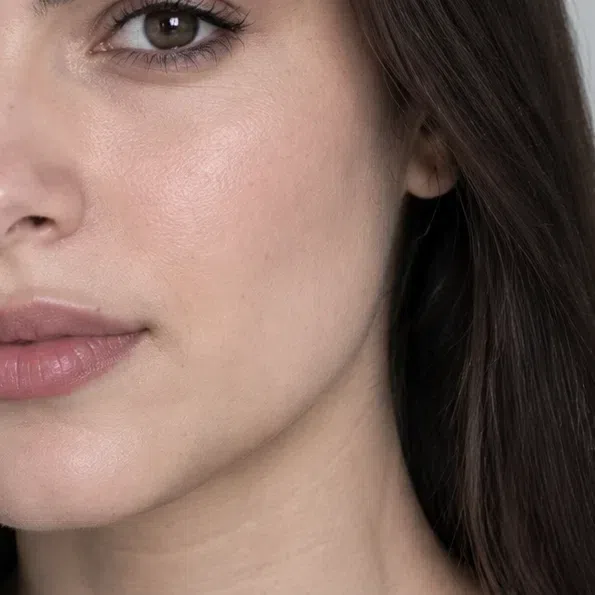
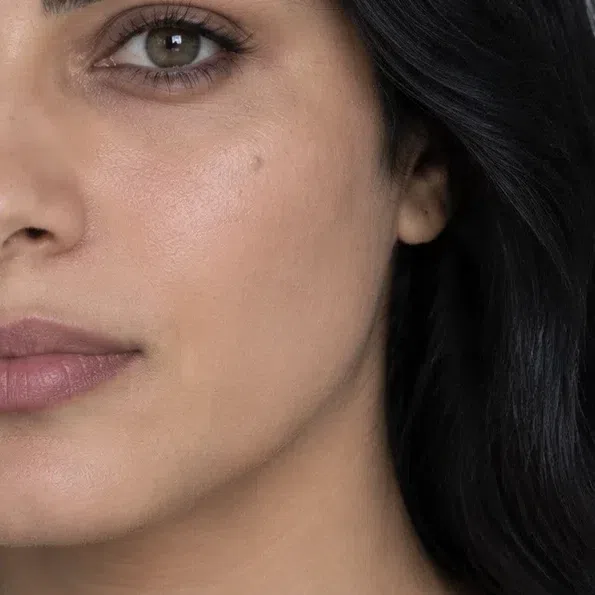
Base products depend on skin depth, which is why each one appears on four women. The rest are listed as swatches: cool, clean and deep enough to hold its own against dark brows and lashes. Warm, peachy and dusty shades are the ones to leave on the shelf.
Base: foundation, blush and glow
Foundation matched to your depth
Neutral to cool at every depth, with no yellow, orange or warm pink in it. Test it along the jaw, by a window.
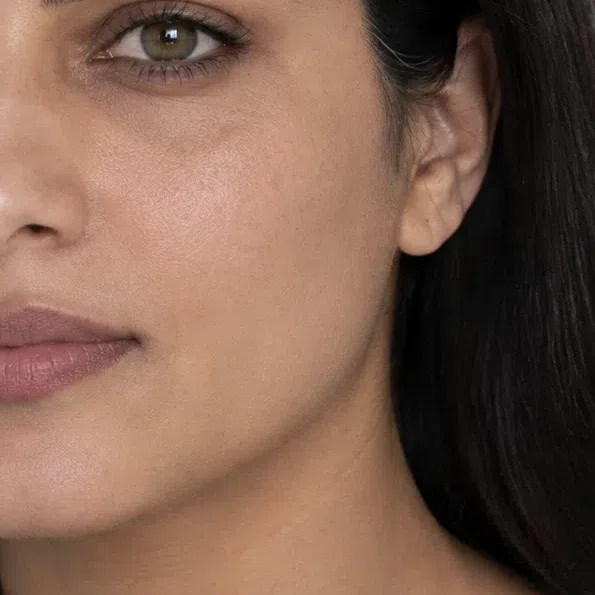

Blush
Cool rose, berry and cherry, echoing the natural flush. Peach and coral read as orange patches.
- Cool rose blush #D08094
- Raspberry #B24A6E
- Plum stain #9C6480
- Cranberry #A33050
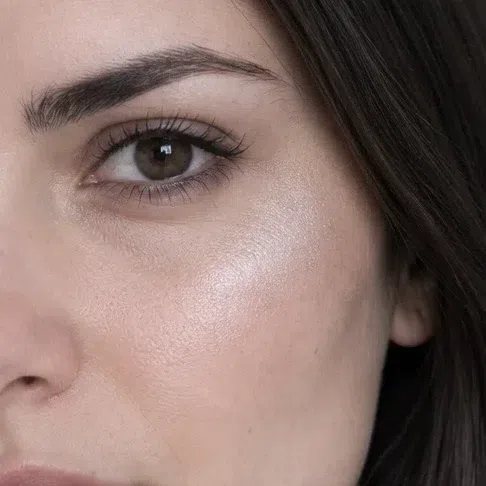
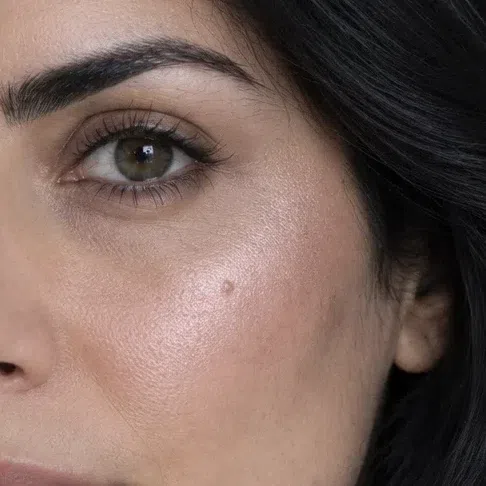
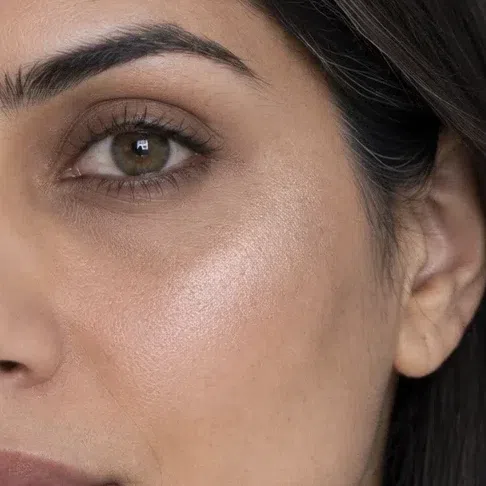
Highlighter matched to your depth
Silver, pink pearl and cool champagne. Gold and copper glow reads yellow on this skin.
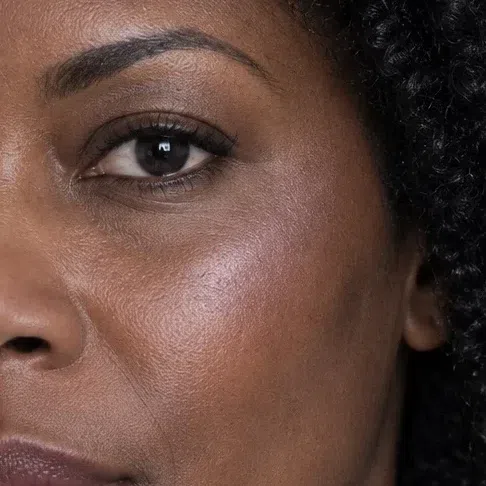
Bronzer matched to your depth
A cool taupe contour rather than a warming bronzer - it adds shape, not a tan.
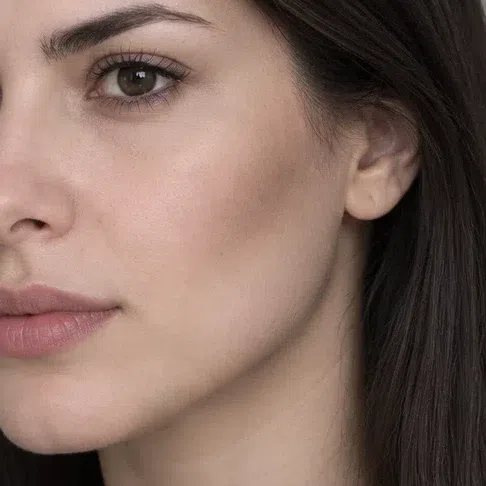

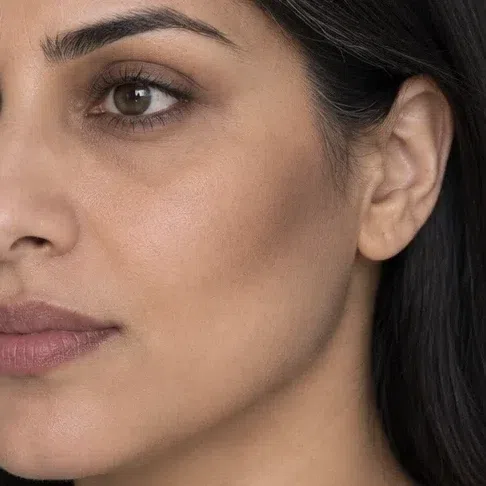
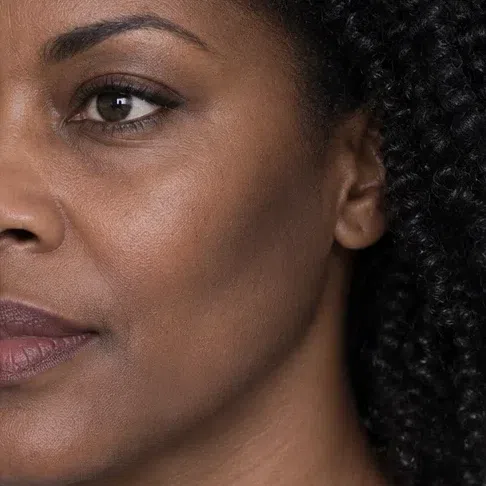
Eyes: shadow, liner, mascara
Everyday eyeshadow
Taupe, rosy mauve, graphite and a matte plum.
- Taupe shadow #8E8177
- Rosy mauve #B98F94
- Graphite #4A4A50
- Matte plum #6B4A5E
Evening eyeshadow
Jewel tones with a metallic or shimmer finish - emerald, sapphire, amethyst, silver smoke.
- Emerald shimmer #1F6B52
- Sapphire metallic #24457F
- Amethyst shimmer #6B4A8C
- Silver smoke #3A3A42
Eyeliner
Black first. Deep navy, plum and graphite for a change.
- Jet black #141414
- Midnight #1B2A4A
- Plum ink #4C2B44
- Graphite #4A4A50
Mascara
The blackest you can find. Brown mascara looks faded against this much natural depth.
- Jet black #141414
- Midnight #1B2A4A
- Plum ink #4C2B44
- Graphite #4A4A50
Brows
Cool graphite to ash brown, never red-brown.
- Dark graphite brow #2A2A30
- Cool espresso #3E2A25
- Taupe brown brow #6B5A50
- Cool ash brow #574A44
Lips: nudes and color
Nude shades
Your nude is a soft berry or rose-mauve, not beige.
- Rosy mauve #B98F94
- Berry tint #BE6A86
- Lilac nude #A87C9E
- Raspberry #B24A6E
Colored shades
The palette accents on the mouth: ruby red, fuchsia, wine and blackberry. This is the coloring that can wear them all.
- Crimson #DC143C
- Magenta #D10056
- Merlot #800020
- Blackberry #582141
Hair shades
Dark, cool and glossy - plus the shades to skip
The right color keeps this face's depth and coolness intact: dark, glossy and cool, close to your own hair or a shade deeper. Warmth and lightness are what break it.
Deep, even color
Single-process shades with a cool or neutral base.
One tone, no warmth
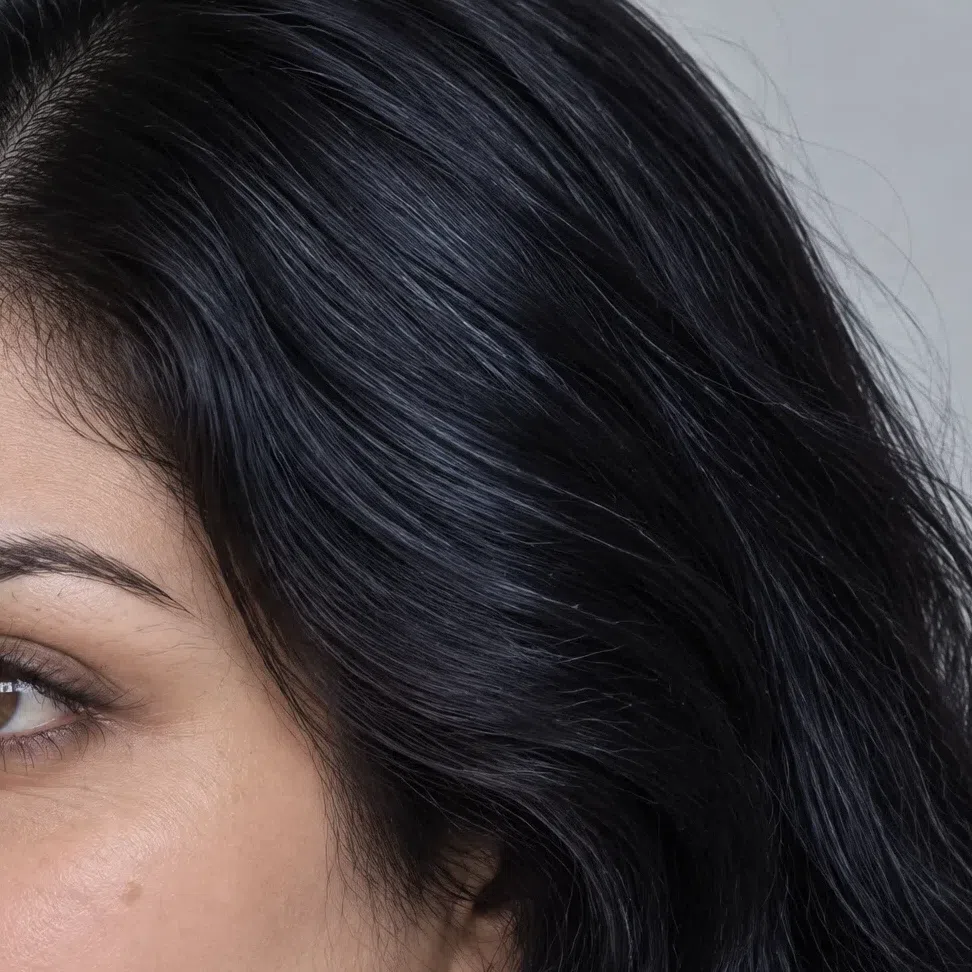
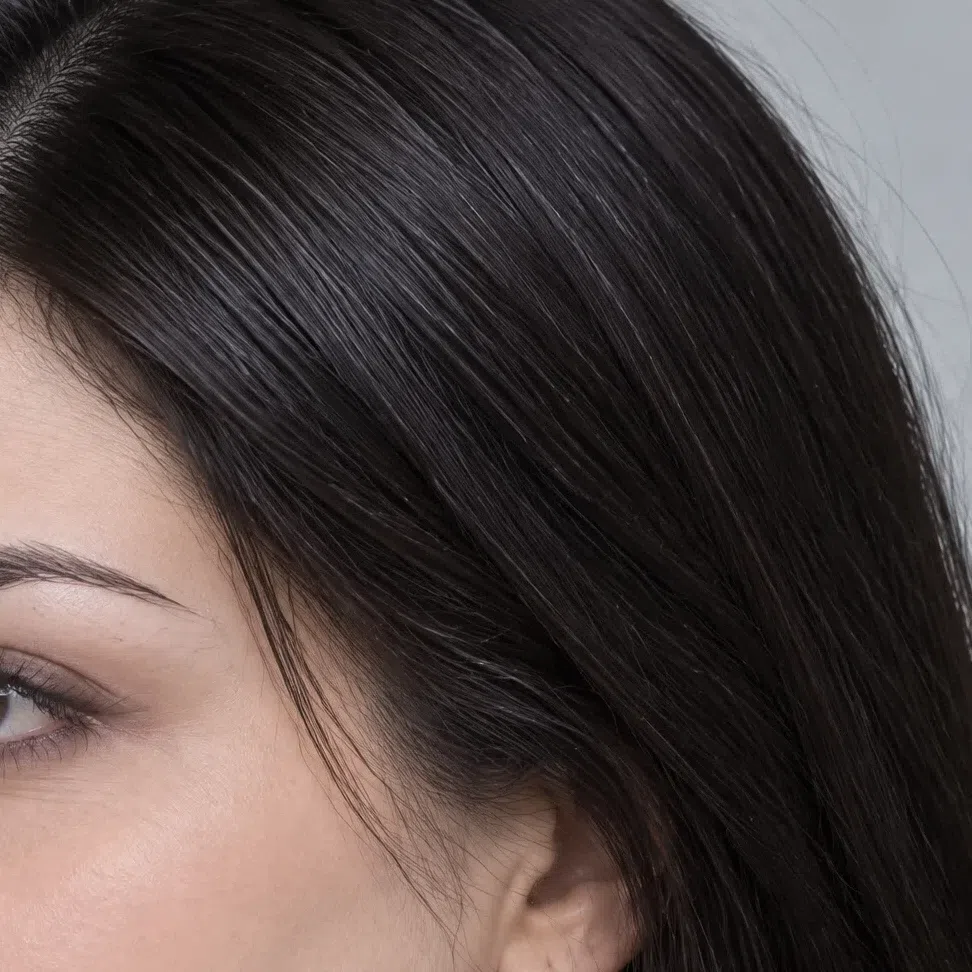
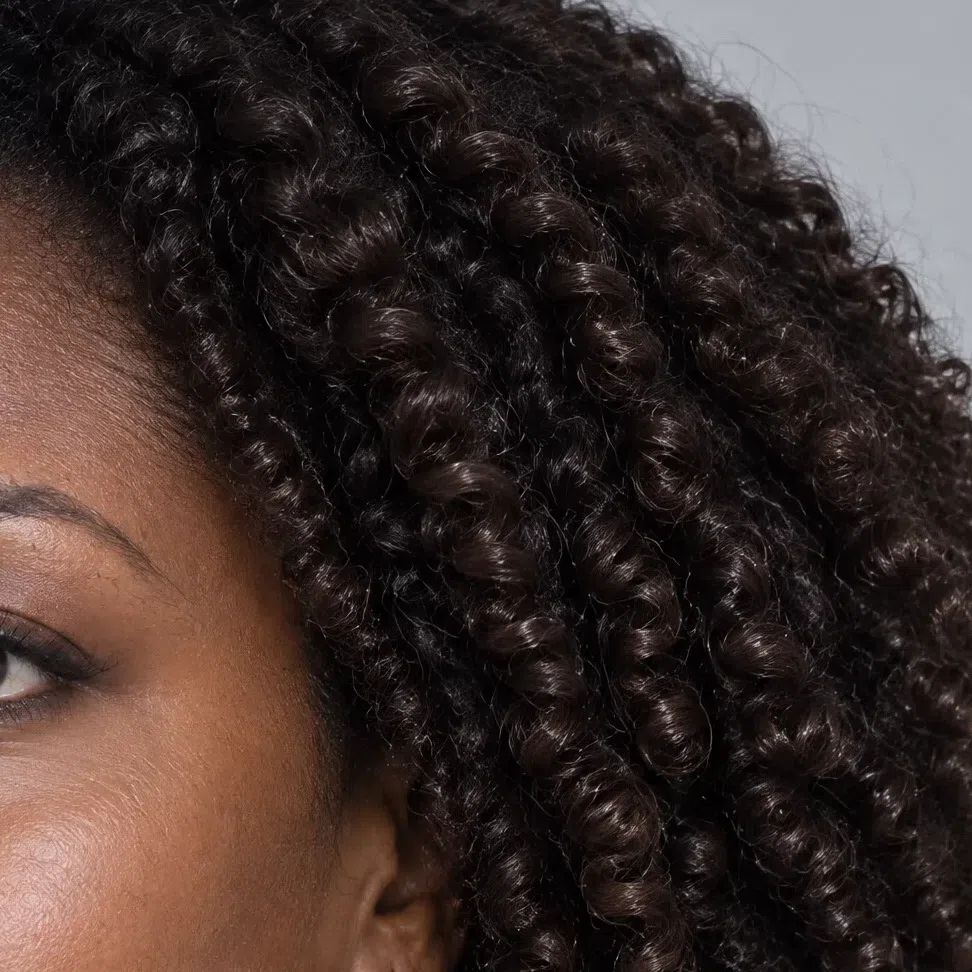
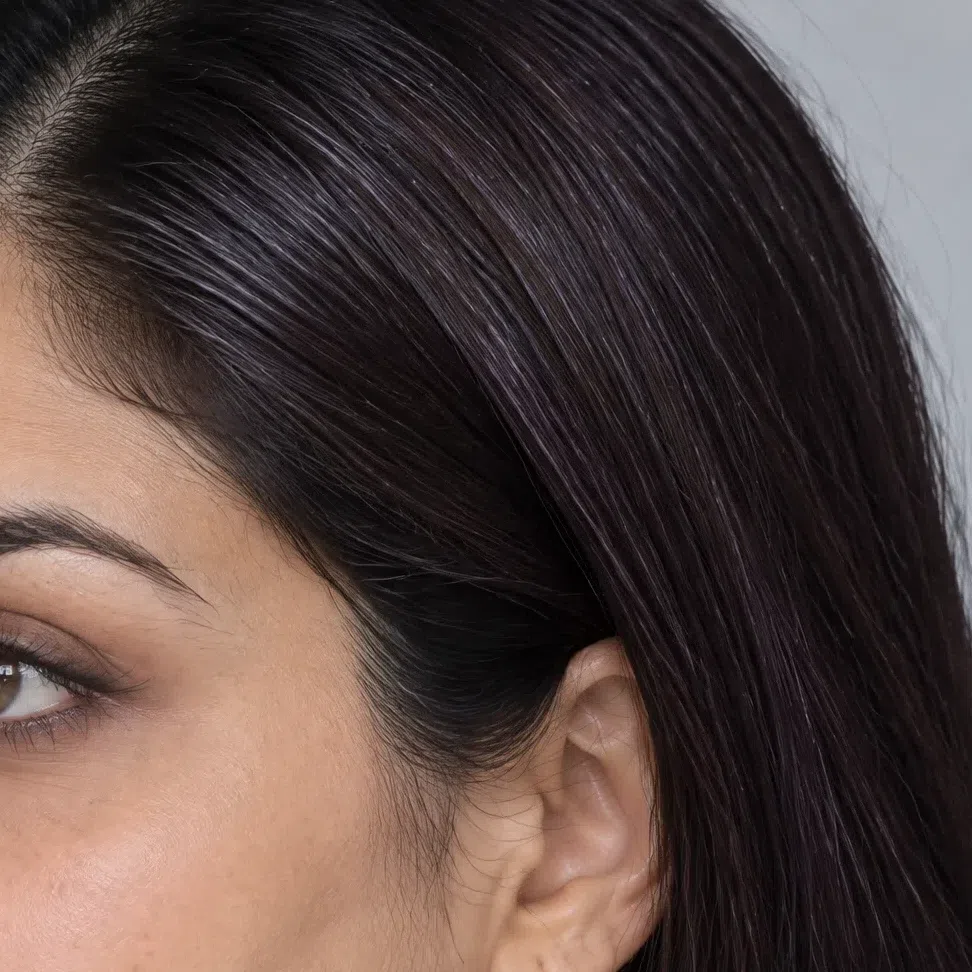
Each tone at neighboring salon levels (L1 is black), so you can name it to a colorist.
Dimension, kept cool
For movement without warmth: the base stays dark, the accent stays cold.
Dark base, cool accent
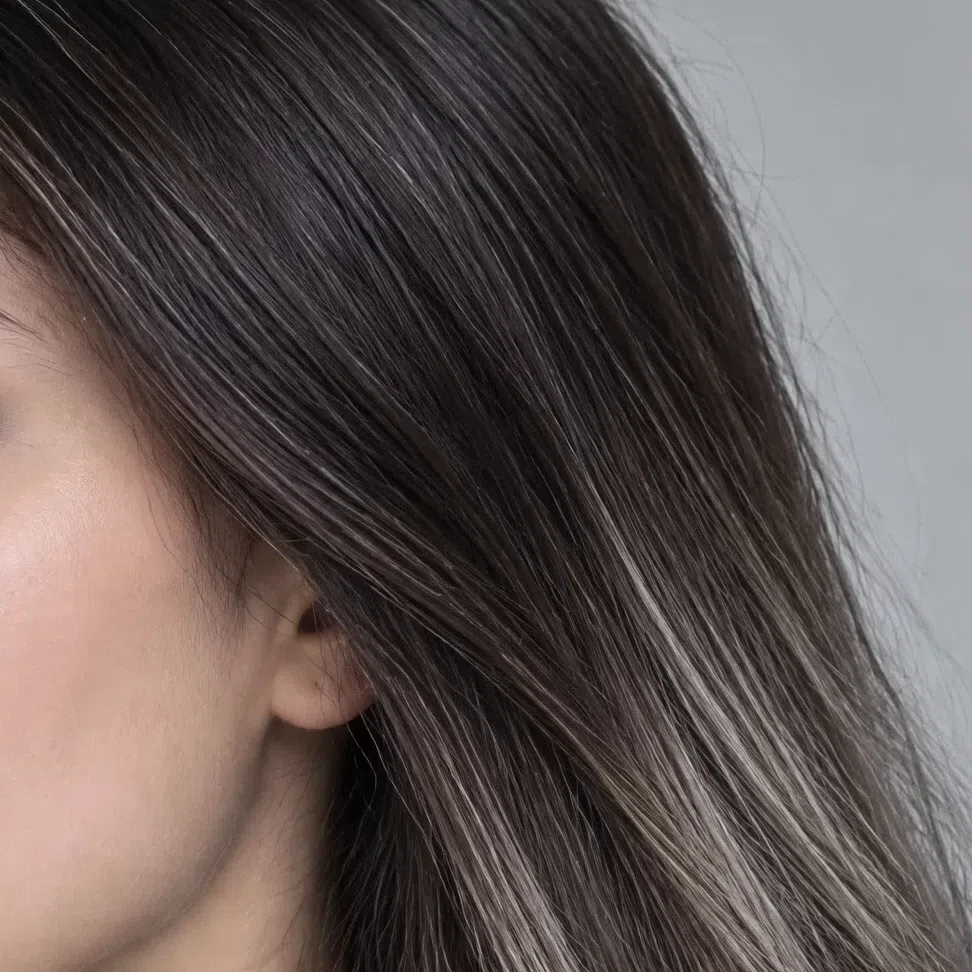
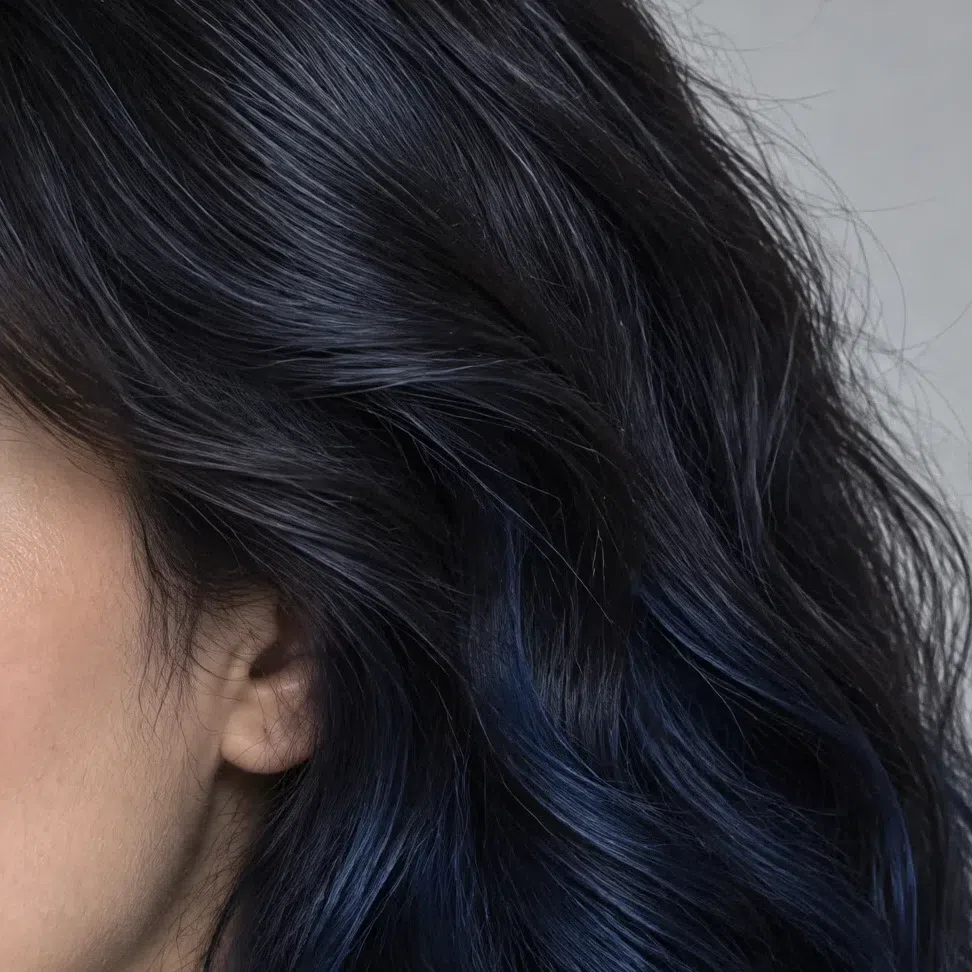
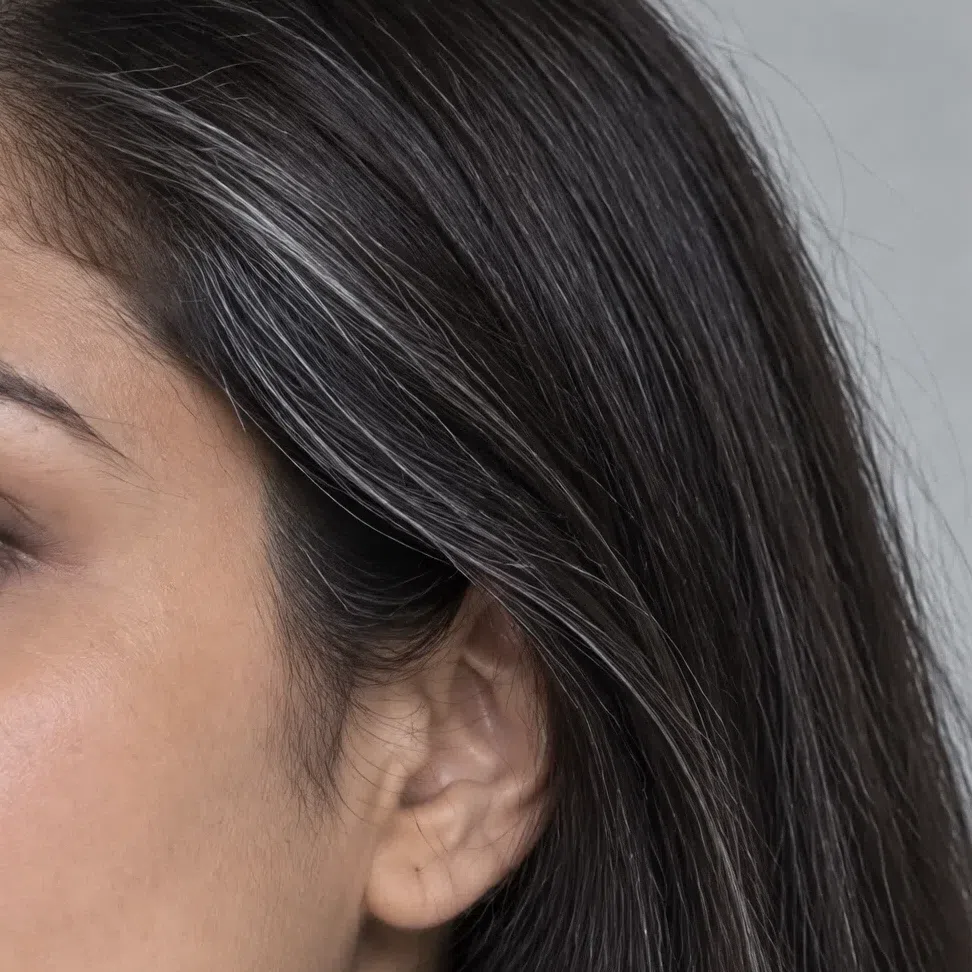
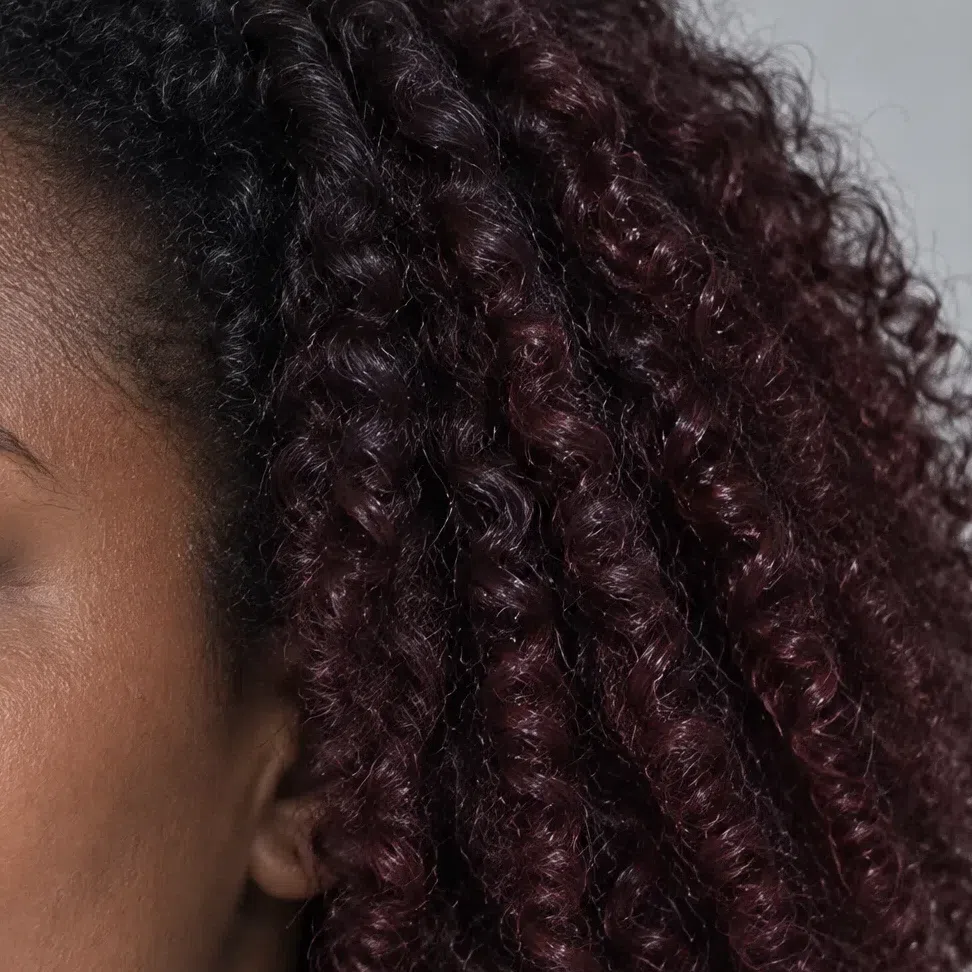
Each tone at neighboring salon levels (L1 is black), so you can name it to a colorist.
Hair colors to avoid
Warm shades clash with the cool skin; light and muted ones erase the contrast.
Warm and golden
Light and muted
Deep Winter, or one of its neighbors?
Three lookalikes, and a test you can do today for each
All three winters share a cool undertone and high contrast, but a different quality comes first in each: depth for Deep Winter, coldness for Cool Winter, clarity for Bright Winter. A color that makes a Bright Winter shine can look too loud on a Deep Winter, and a Cool Winter's icy shades can look thin on one.
The hardest confusion is outside the season. Deep Autumn is just as dark, so "does dark suit me?" settles nothing between the two - only temperature does. That comparison comes first.
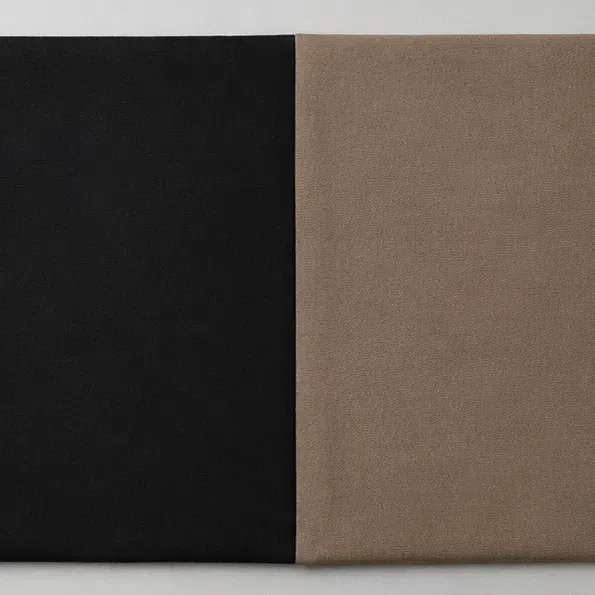
Hold pure black under your chin, then a soft gray-brown. Which one pulls your face together?
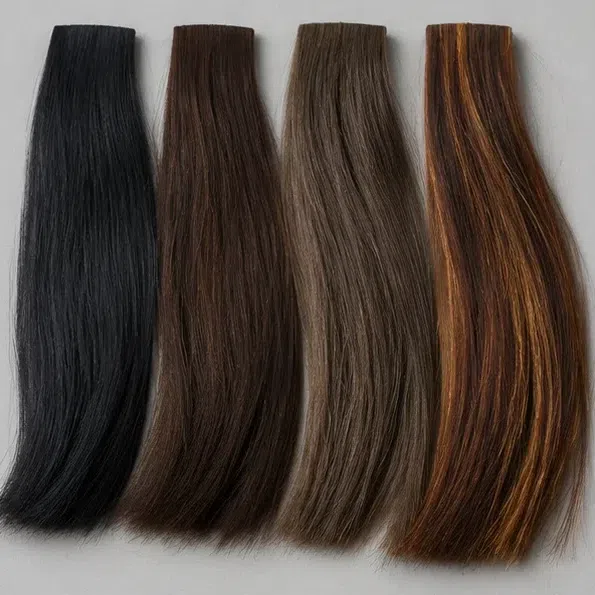
What is your natural hair color?
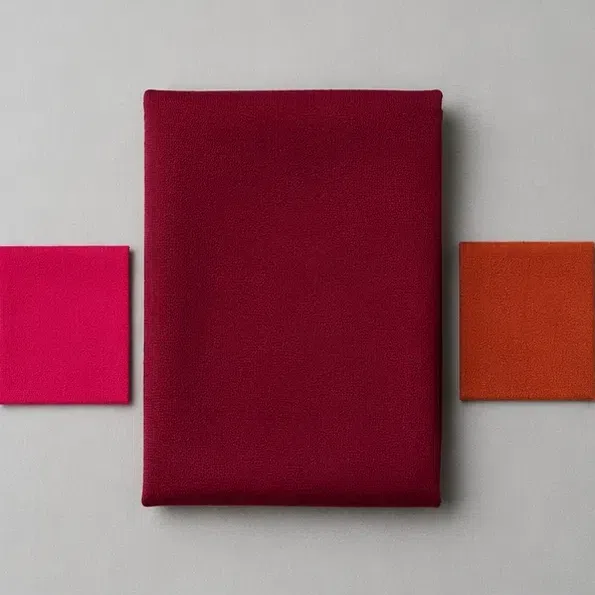
What does a saturated burgundy do for you?
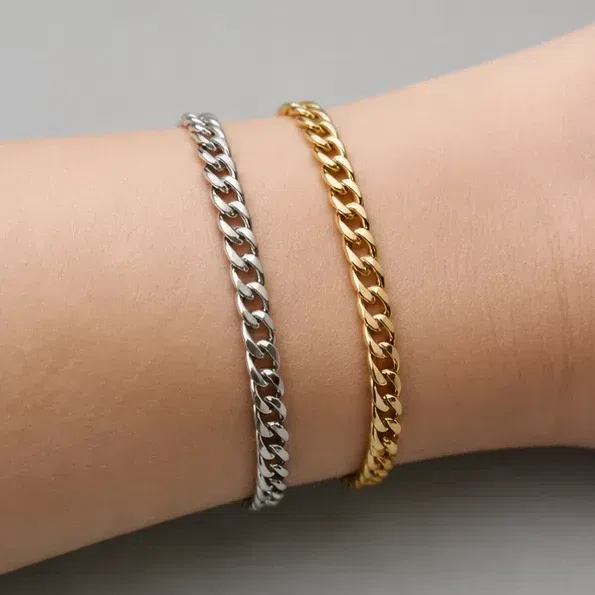
Compare silver and gold near your face in daylight.
The signs line up: cool, deep and high in contrast. You are in the right place - head down to the palette next.
Temperature leads for you rather than depth: icy shades suit you better than rich dark ones.
Read the Cool Winter pageClarity carries you, not depth: full-strength clean shades beat muted dark ones.
Read the Bright Winter pageThe same depth on the warm side of the line: gold and rich warm shades flatter you more than silver.
Read the Deep Autumn pageA quiz like this points in a direction; it does not decide. Most wrong self-diagnoses happen right at the edge of two subtypes, and the three comparisons below are written for that edge.
Deep Winter vs Deep Autumn
Deep Winter
Cool or neutral-cool. Rosy, gray-olive or blue-red underneath, never a golden glow.
Dark with a cool sheen: espresso to blue-black, lifting ashy in the sun.
Jewel tones: Merlot, Bottle green, Ink violet, Cobalt.
Black and optic white sit easily next to the face.
Silver, platinum and white gold.
Deep Autumn
Warm or neutral-warm. Golden, bronze or olive with gold in it.
Dark with warm lights: chocolate, mahogany or auburn that glints red or gold outdoors.
Spice tones: rust, olive, mustard, deep teal, brick.
Chocolate and cream instead of black and white.
Yellow gold, bronze and copper.
Settle it in two minutes Depth will not separate you - both of you wear dark colors well, so the question is only which way the temperature goes. Take two dark scarves of about the same depth, one Jet black and one a rich chocolate brown with red in it, and hold each under your chin by a window. If black sharpens your face and the brown makes it look muddy, you are a Deep Winter. If black looks harsh and the brown looks like it belongs to you, read the Deep Autumn page.
Deep Winter vs Cool Winter
Deep Winter
Deep. Rich, saturated shades with weight, never shouting.
High, built on dark hair and eyes against lighter skin.
Dark and complex: wine, plum, deep emerald, ink, bitter chocolate.
Luxurious and dramatic, with a hint of mystery.
A velvet-lined jewelry box on a winter night.
Cool Winter
Icy. The coldest, purest shades, with no warmth and no gray.
High, built on coldness and clarity.
Clean and cold: fuchsia, ice blue, ruby red, royal blue.
Elegant and strict, classic rather than dramatic.
A frosty, clear morning and fresh snow.
Settle it in two minutes Try two lipsticks in daylight: a deep wine and a classic ruby red. If the wine makes your face look expressive and expensive while the ruby looks a little plain, you are most likely a Deep Winter. If the ruby lights your face up and the wine looks heavy or ages you, your subtype is Cool Winter.
Deep Winter vs Bright Winter
Deep Winter
Deep and many-layered, built on dark shades with complexity in them.
High, carried by depth and saturation rather than dazzle.
Rich and dark: blackberry, malachite, dark indigo, burgundy.
Regal and self-possessed.
A midnight ball and rare gemstones.
Bright Winter
As bright as color gets: clean, electric, close to neon.
Extreme - no subtype carries more.
Loud and pure: shocking pink, electric blue, lime, stark white against coal black.
Bold, modern and a little avant-garde.
City neon, pop art, fireworks.
Settle it in two minutes Hold two scarves to your face: one bright fuchsia, one a ripe plum. If your face lights up in the fuchsia and your eyes start to shine, you are probably a Bright Winter. If the fuchsia feels harsh and separate from you while the plum adds depth and polish, Deep Winter is your subtype.
Still between two? Go back to the quality that leads. If someone would describe your coloring as deep before they described it as cold or bright, this is your page. For the bigger picture, start from the color analysis guide.
Deep Winter questions, answered
How do you tell if you are a Deep Winter?
What does it mean to be a Dark Winter?
What is the undertone of Deep Winter?
What colors look good on Deep Winters?
What colors should a Deep Winter not wear?
Is Deep Winter silver or gold?
Can Deep Winters wear navy blue?
Can Dark Winters wear white?
What actresses are Deep Winter?
How is Deep Winter different from Deep Autumn?
How is Deep Winter different from Cool Winter?
How is Deep Winter different from Bright Winter?
What hair color suits a Deep Winter?
What foundation should a Deep Winter look for?
Can a Deep Winter wear beige?
Can you be a Deep Winter with brown skin?
Where this came from
Only a handful of statements here are matters of fact rather than judgment. These are their sources: the origin of the season system, why veins read differently at different skin depths, and what lighting and grayscale do to what you see.
-
Carole Jackson (opens in a new tab)
Wikipedia
The lineage of the system this page belongs to: Jackson’s Color Me Beautiful seasons. The article links that scheme to Johannes Itten and, earlier, to Harriet Tilden McJimsey and Belle Northrup, who taught dress design. The twelve subtypes, Deep Winter among them, refine it.
-
Human skin color (opens in a new tab)
Wikipedia
Backs the warning, in the first of the five checks, that veins do not read on every skin. The article attributes the color of light skin largely to hemoglobin in the dermis, while melanin is the main determinant in darker skin.
-
Color temperature (opens in a new tab)
Wikipedia
Behind the instruction to run every undertone test by a window. Daylight sits near 5,500-6,500 K in its table; ordinary incandescent bulbs run about 2,400 K and warm-white LEDs 3,000 K, so indoor light tints the skin before you judge it.
-
Relative luminance (opens in a new tab)
Wikipedia
Context for the black-and-white demonstration in the contrast check. A grayscale photo keeps one weighted brightness value per pixel, called luma; the article notes luma still leans slightly on hue and saturation, so the gray ramp is a close stand-in for lightness, not an exact measure.
To be clear about what is and is not backed up: the history, the skin biology and the lighting facts above are sourced, while the eighteen shades, the seven to avoid, the line between Deep Winter and Deep Autumn, and every makeup and hair shade on this page are our own analysis. No published study covers those choices; the four links above should not be read as saying otherwise.
What is color analysis, how do you find your season, and what are the 12 types?
The main guide covers all of it - the four axes your season is built from, all twelve subtypes side by side, and a free quiz that places you in about a minute.
What is color analysis? For women and men