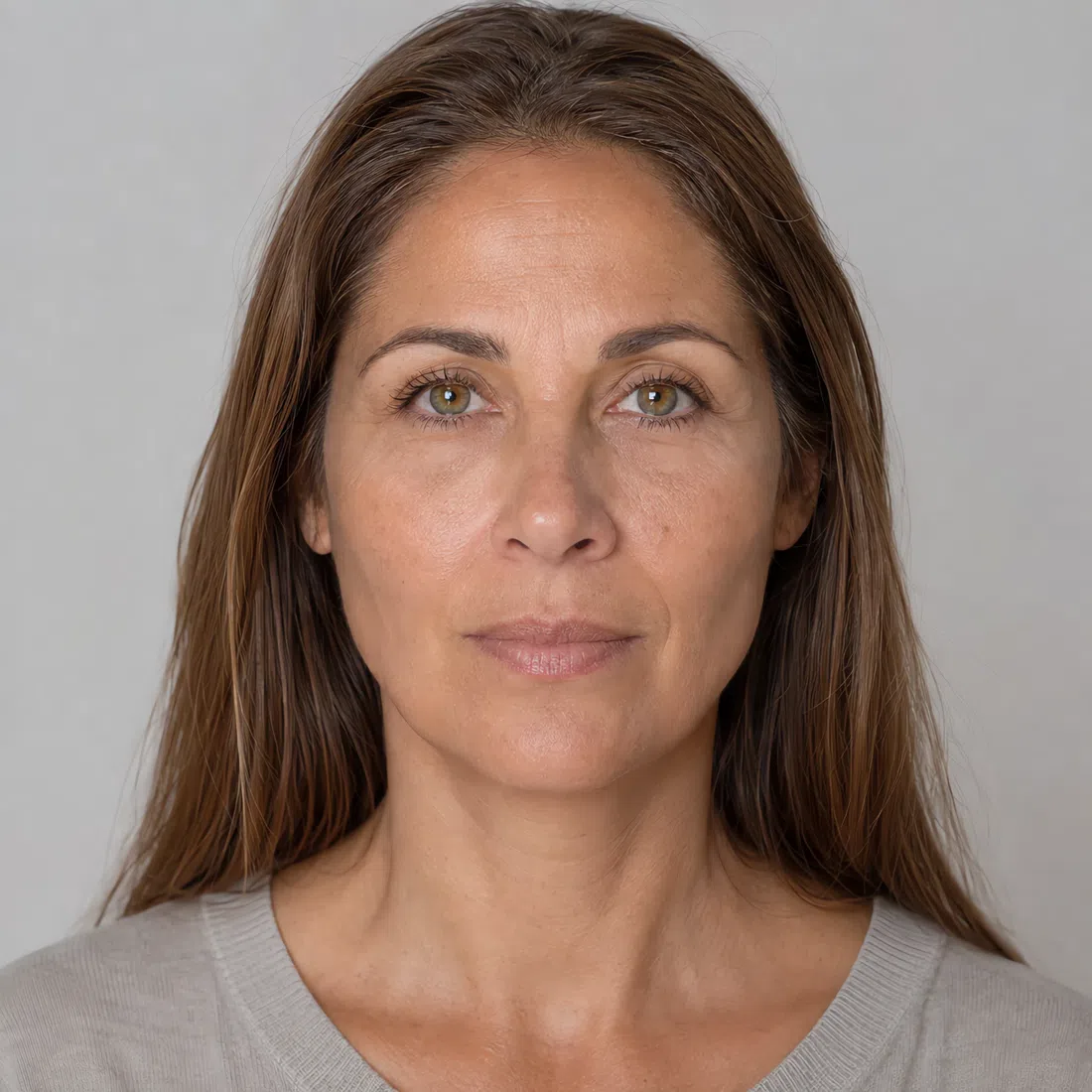
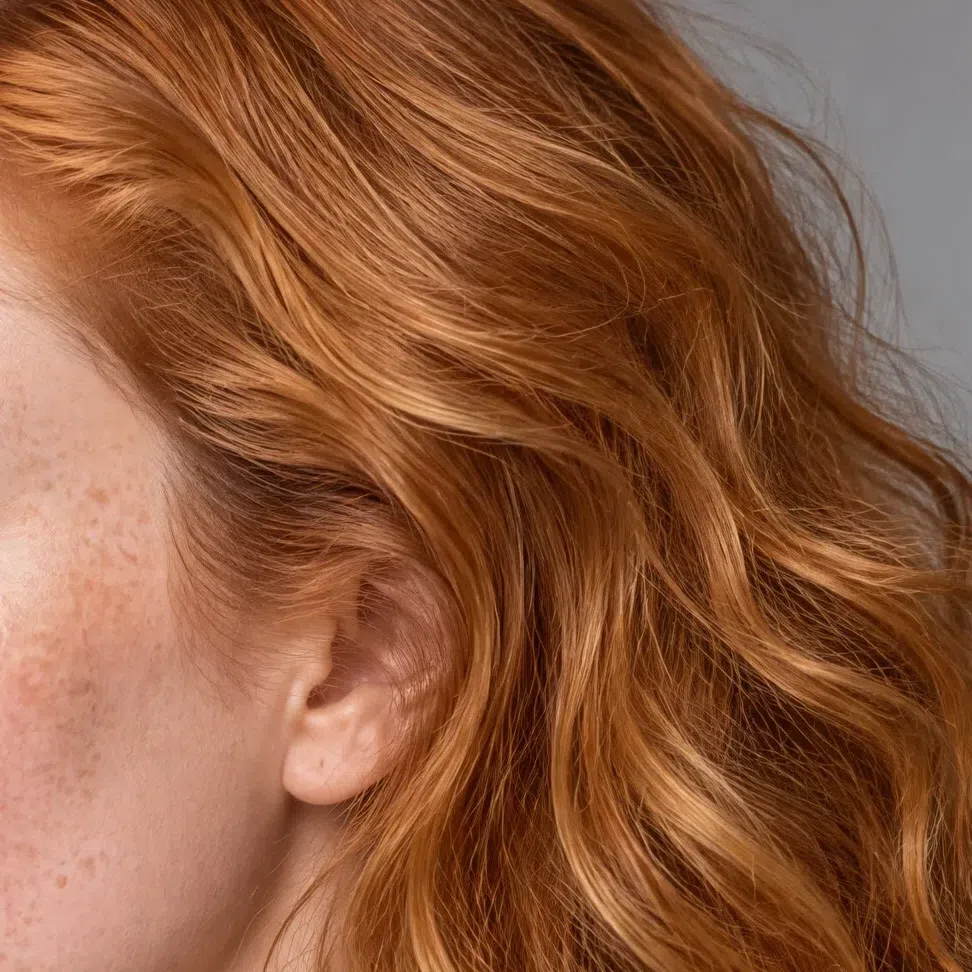
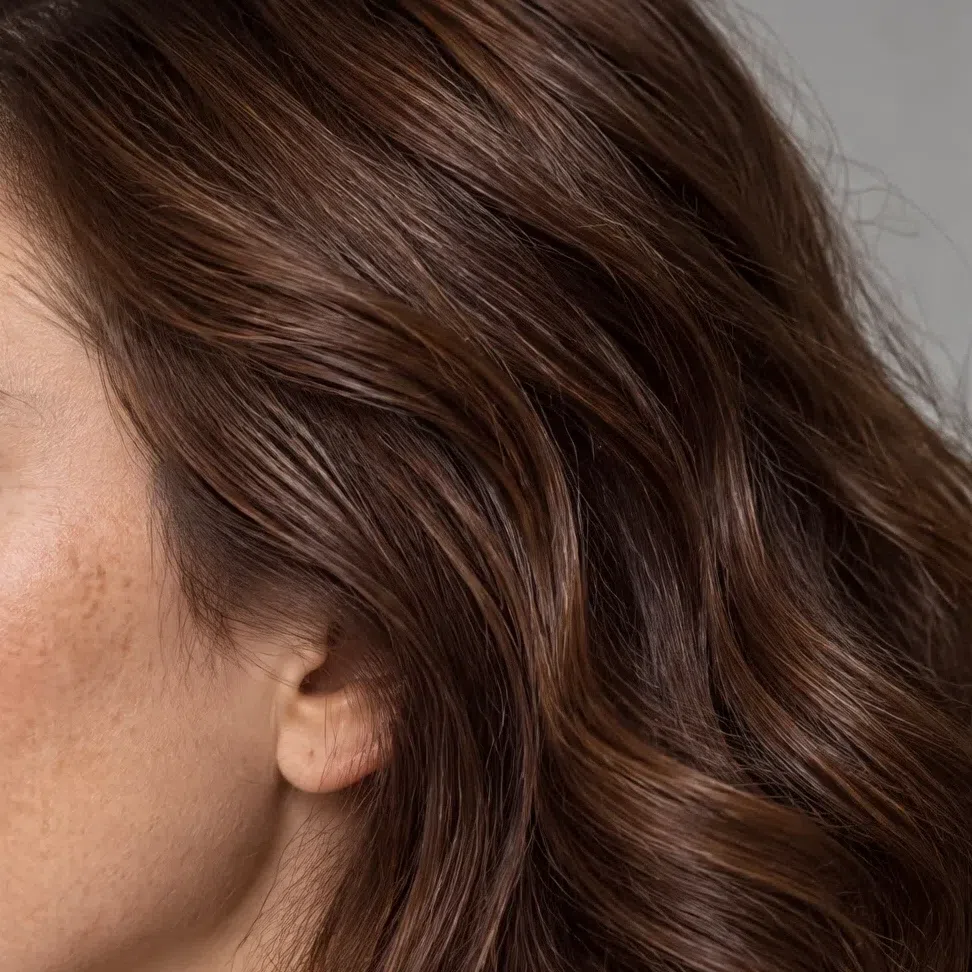
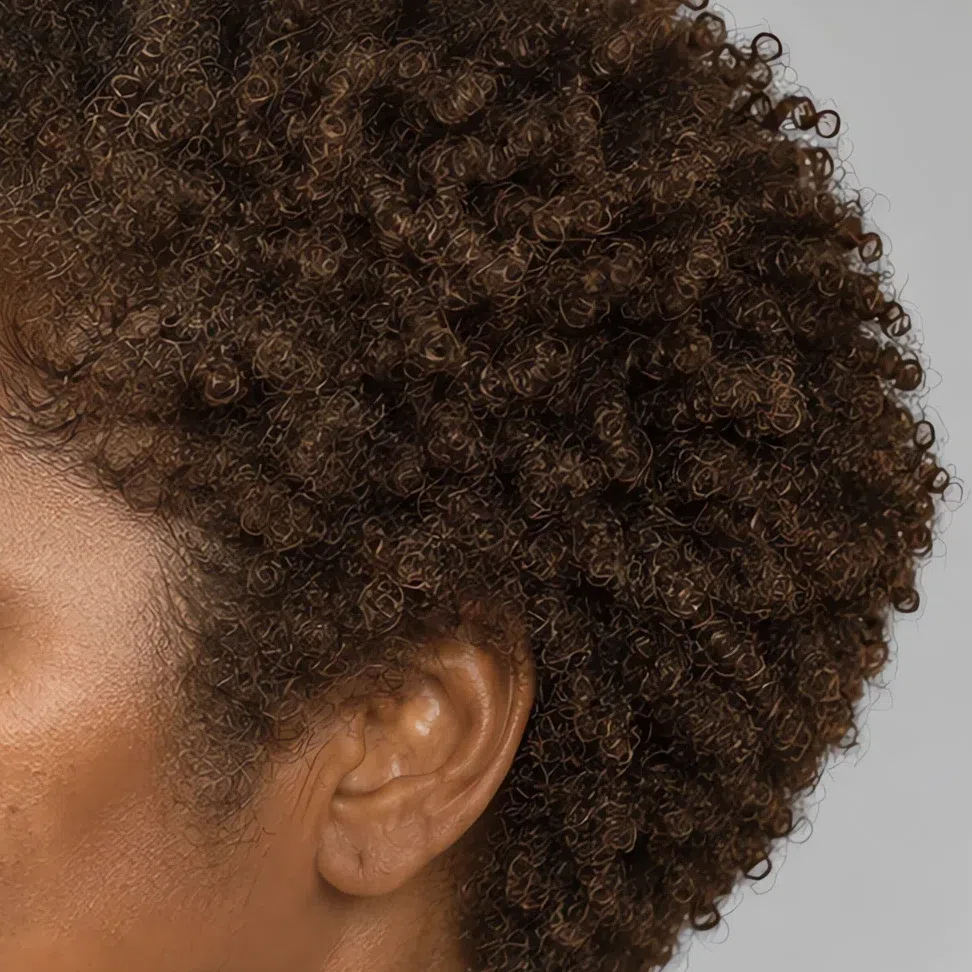
Autumn color palette: are you a Soft, Warm or Deep Autumn?
Warm and earthy, from freckled fair skin with red hair to deep bronze. The signs that settle whether you are an Autumn, which of Soft, Warm and Deep Autumn is yours, and the colors the whole season wears - and the cold ones that gray the skin - shown on a real face.
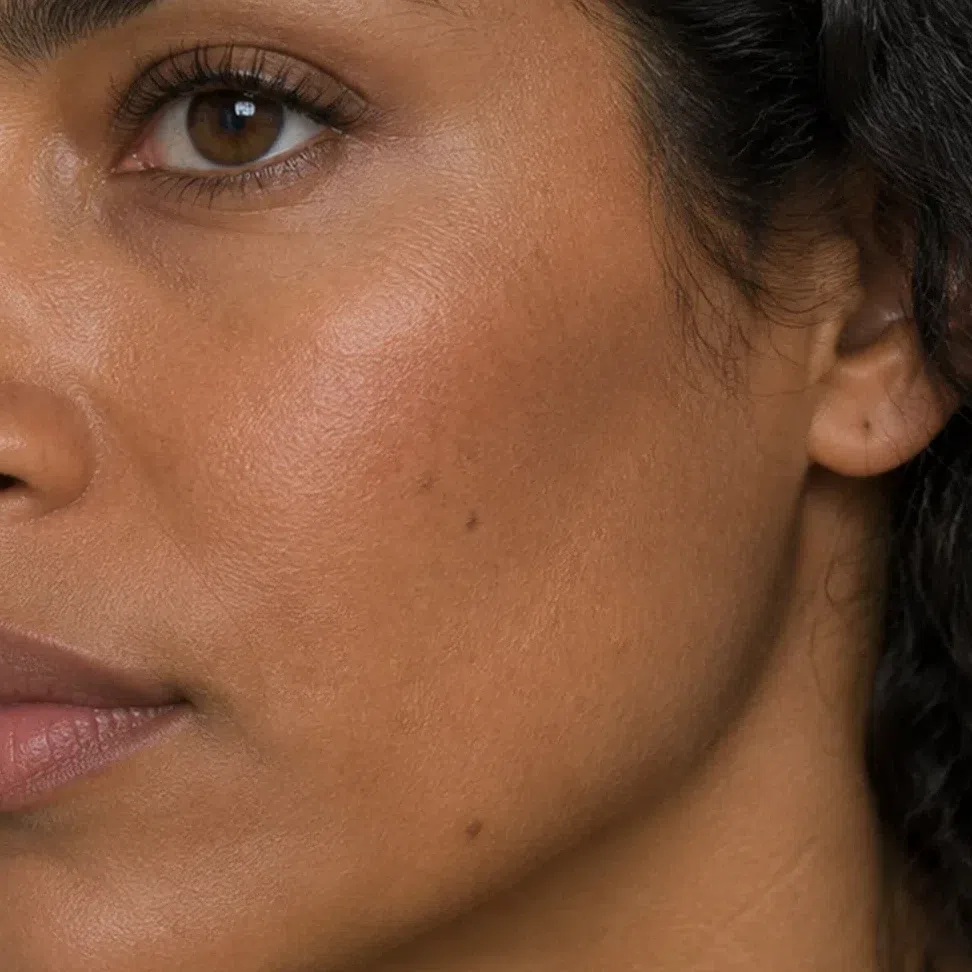
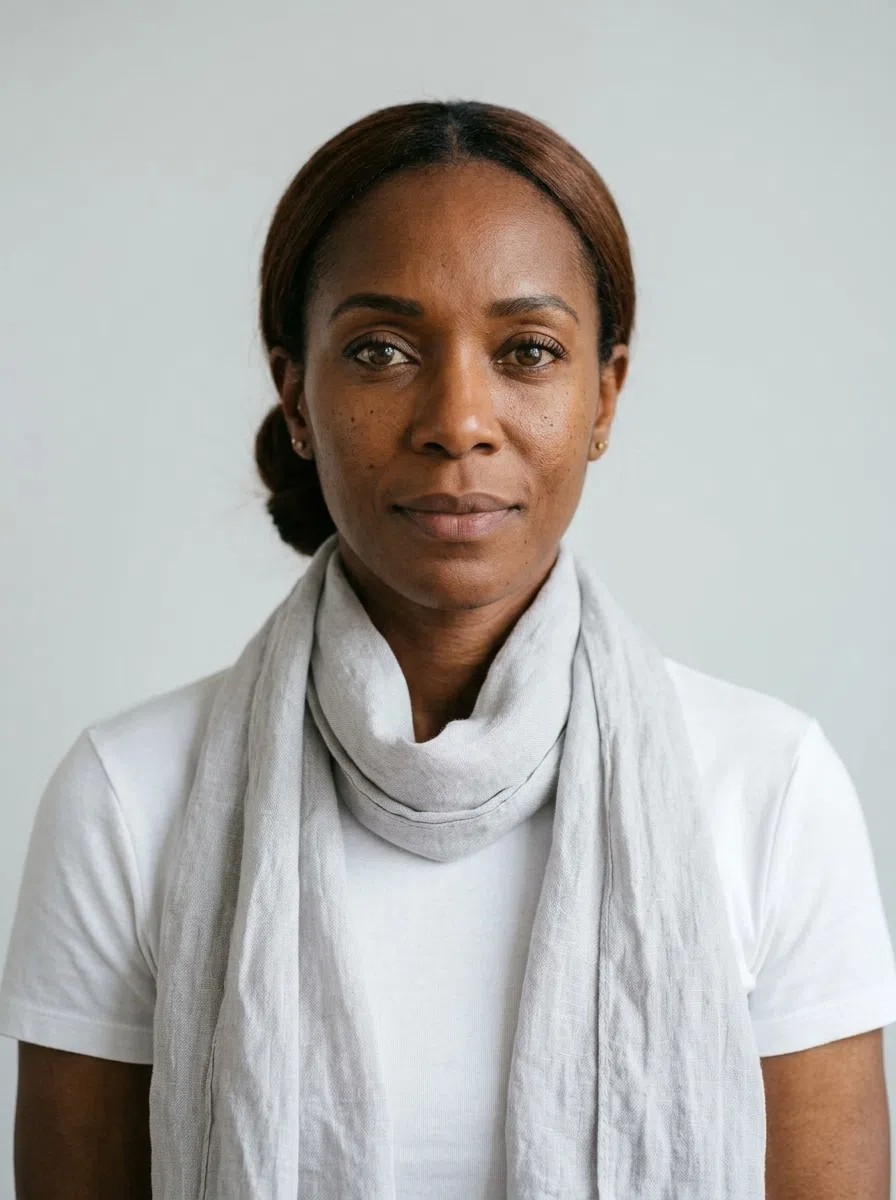
Autumn is warm and muted: color that looks blended with brown or gold, never icy and never neon. She has deep skin on purpose, and the faces beside her let you check the claim: the shades that keep her face warm and even are the same ones a medium and a fair Autumn wear. Six neutrals open the row, from Eggshell to Coffee, the Autumn way to get the weight of black without the chill. Mustard and Cinnamon follow, then four accents at full depth: Sienna, Rust, Ivy and Teal green. Tap a circle and watch the skin under her cheekbones, not the tee: a shade that belongs brings a bronze glow into it, and a cold one leaves it flat and a little ashy.
Every Autumn is warm and earthy - gold or bronze under the skin, and color that looks steeped in brown instead of lit from within or iced - while depth is the one thing left open, from freckled fair skin to deep bronze. Soft, Warm and Deep Autumn are that same coloring turned down, turned up and taken dark.
Skin
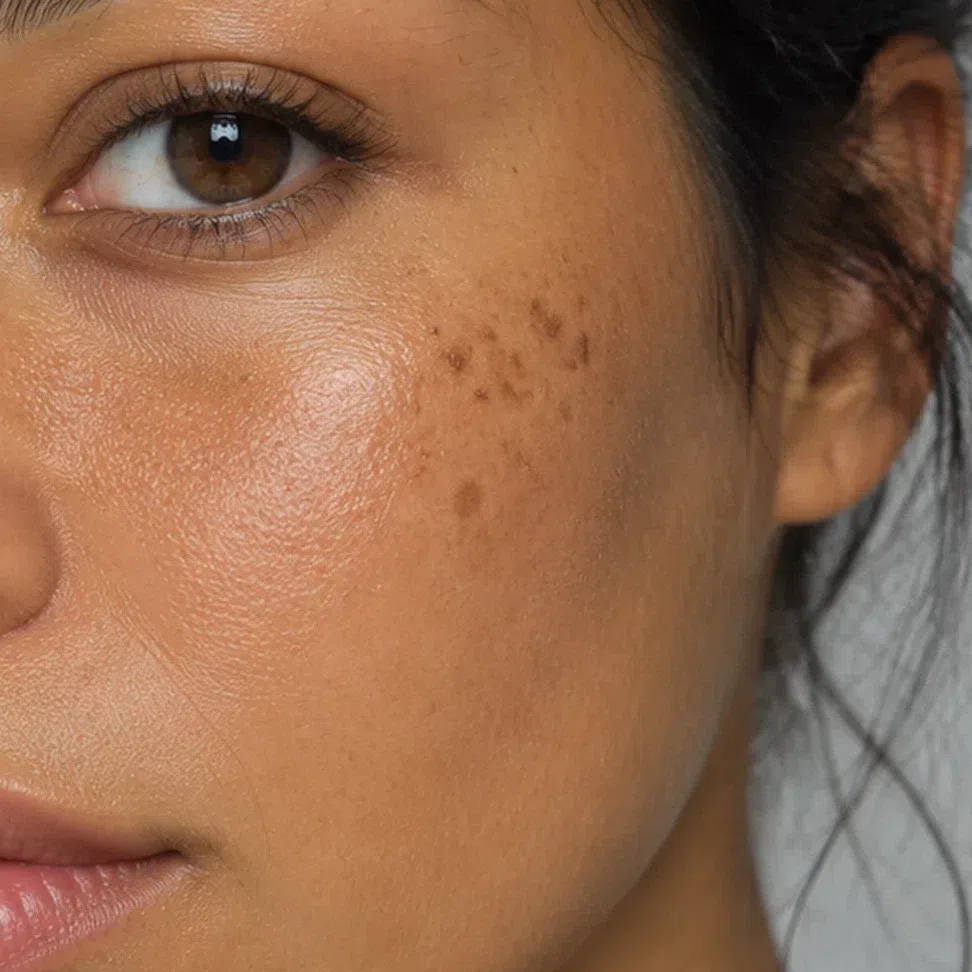
Golden, olive or bronze undertone at every depth; tans evenly, and freckles come up copper, not ash.
Eyes
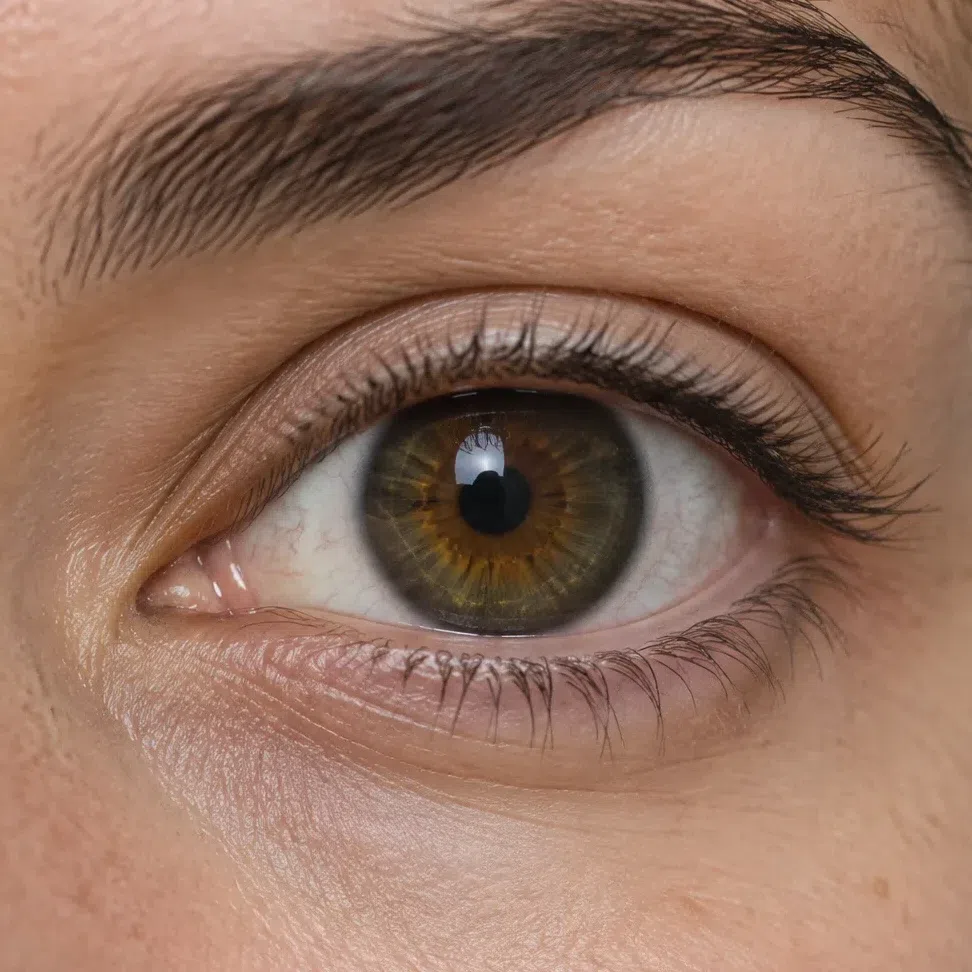
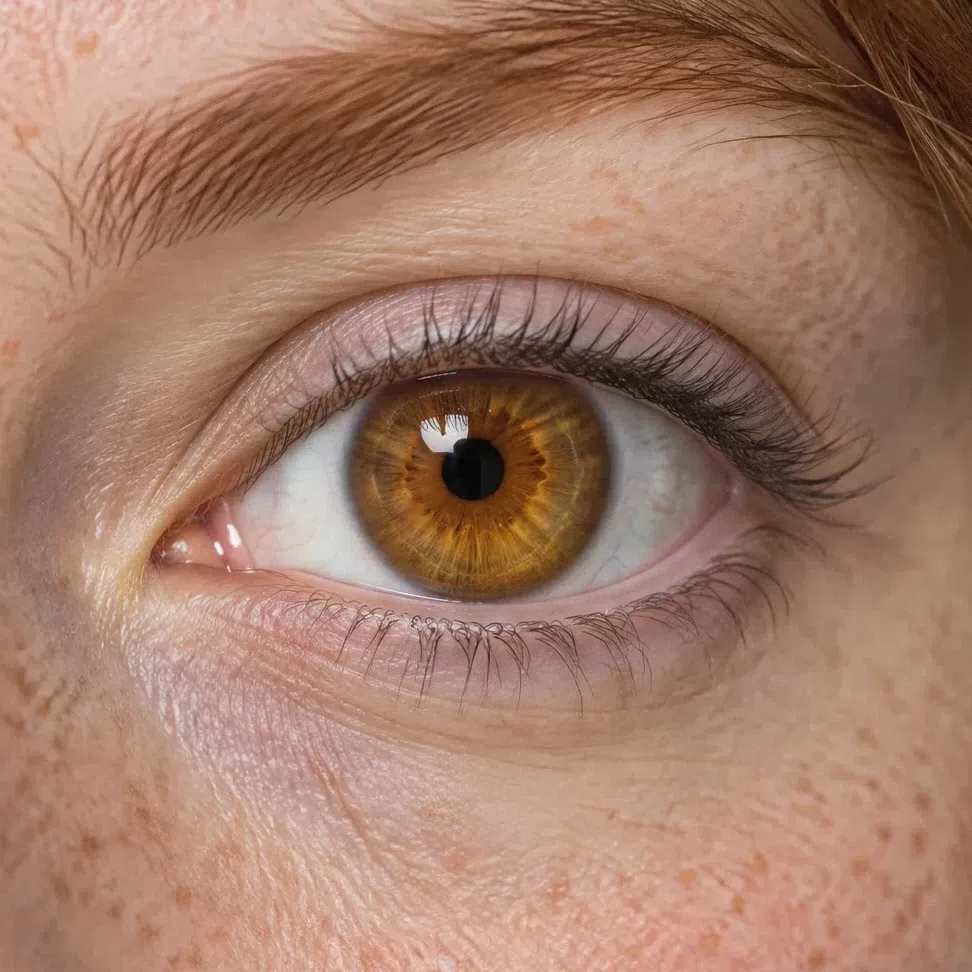
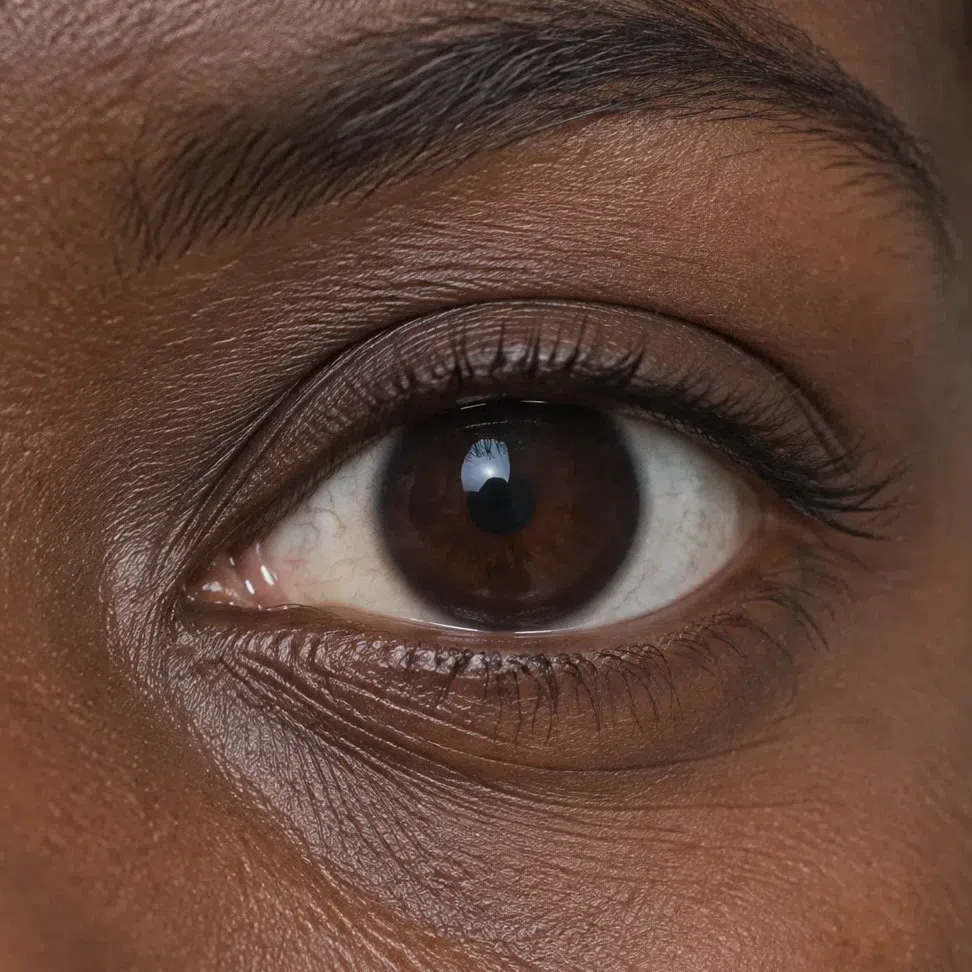
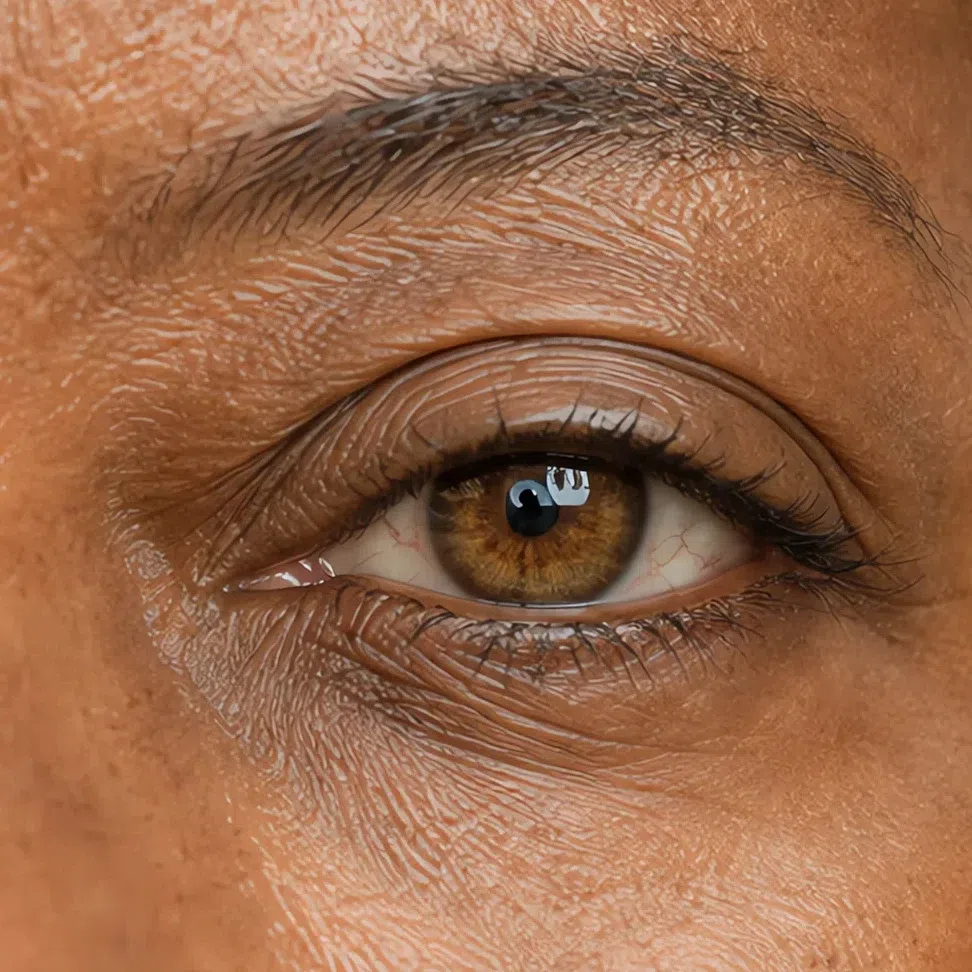
Warm and dense - chocolate, amber, hazel or khaki green, often with a copper ring at the pupil.
Hair
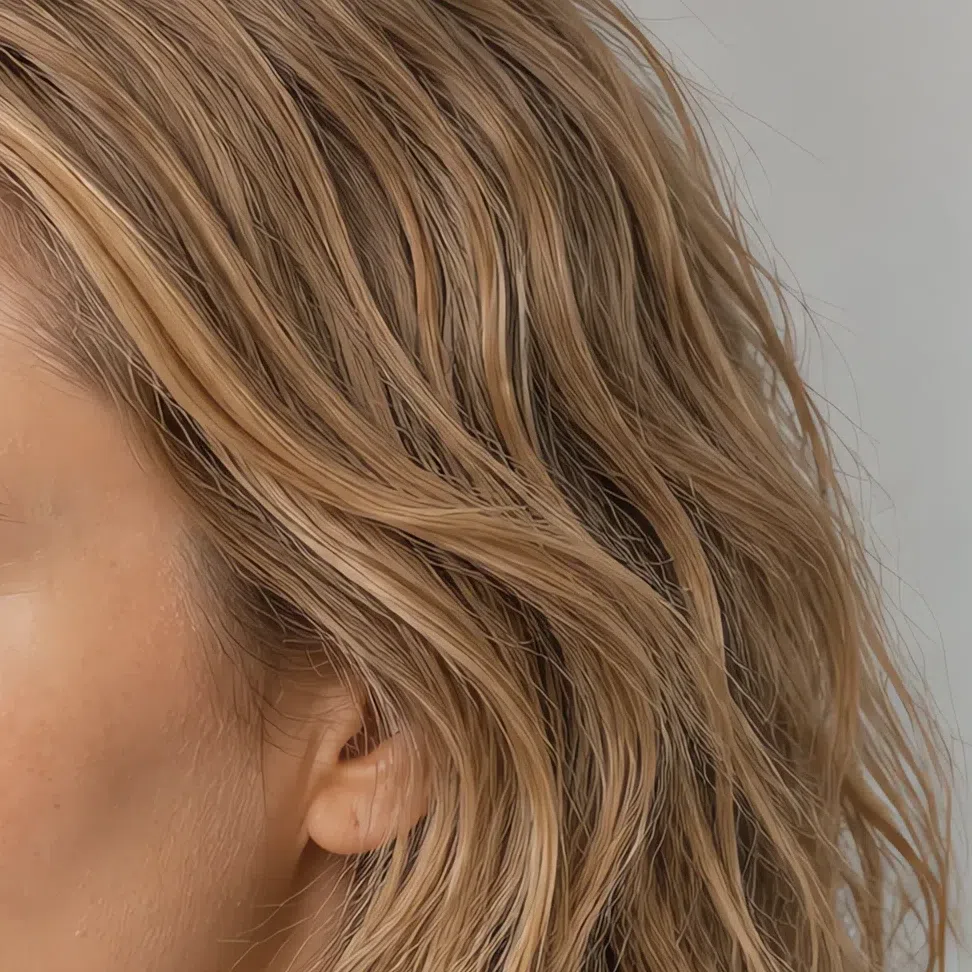
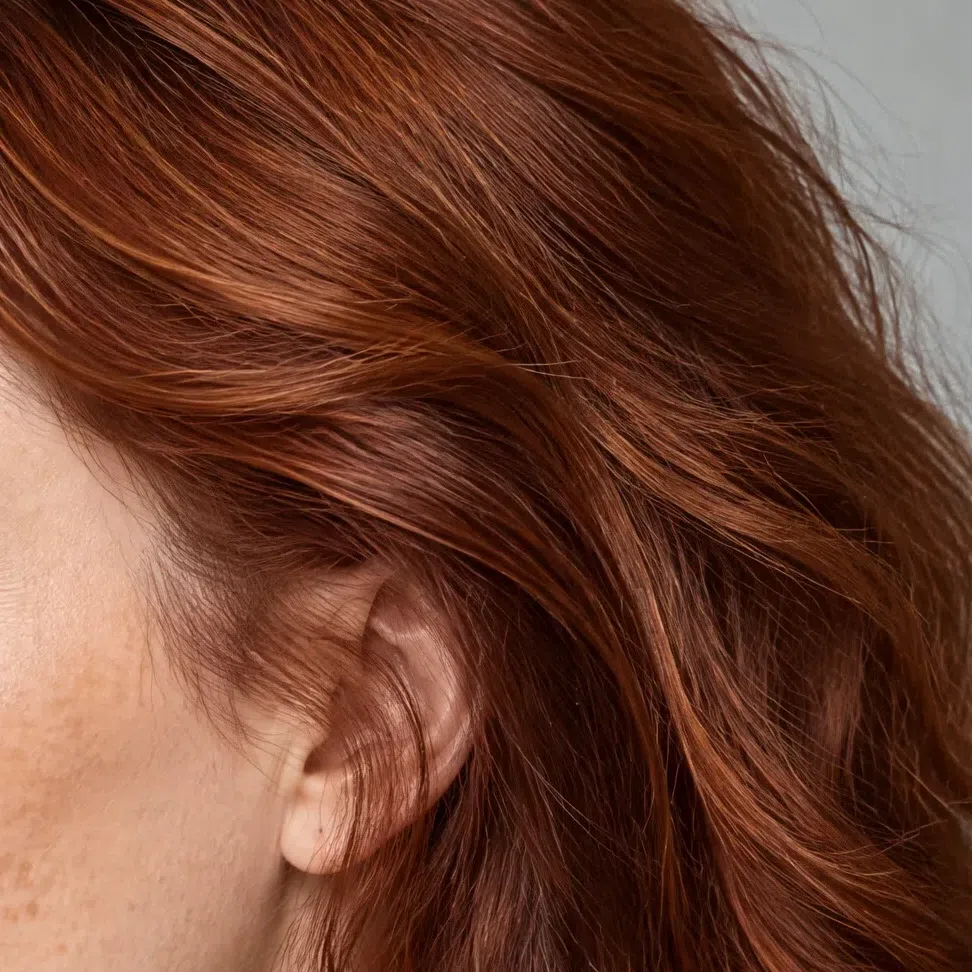
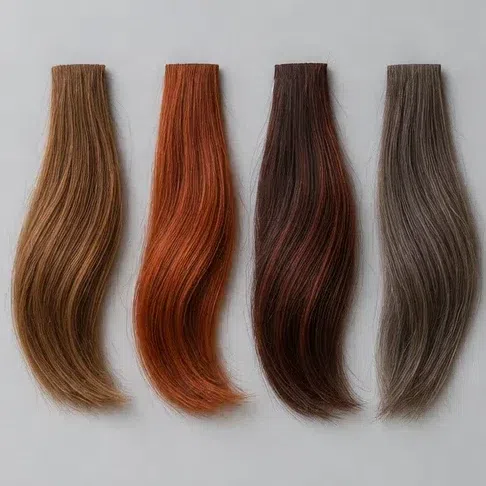
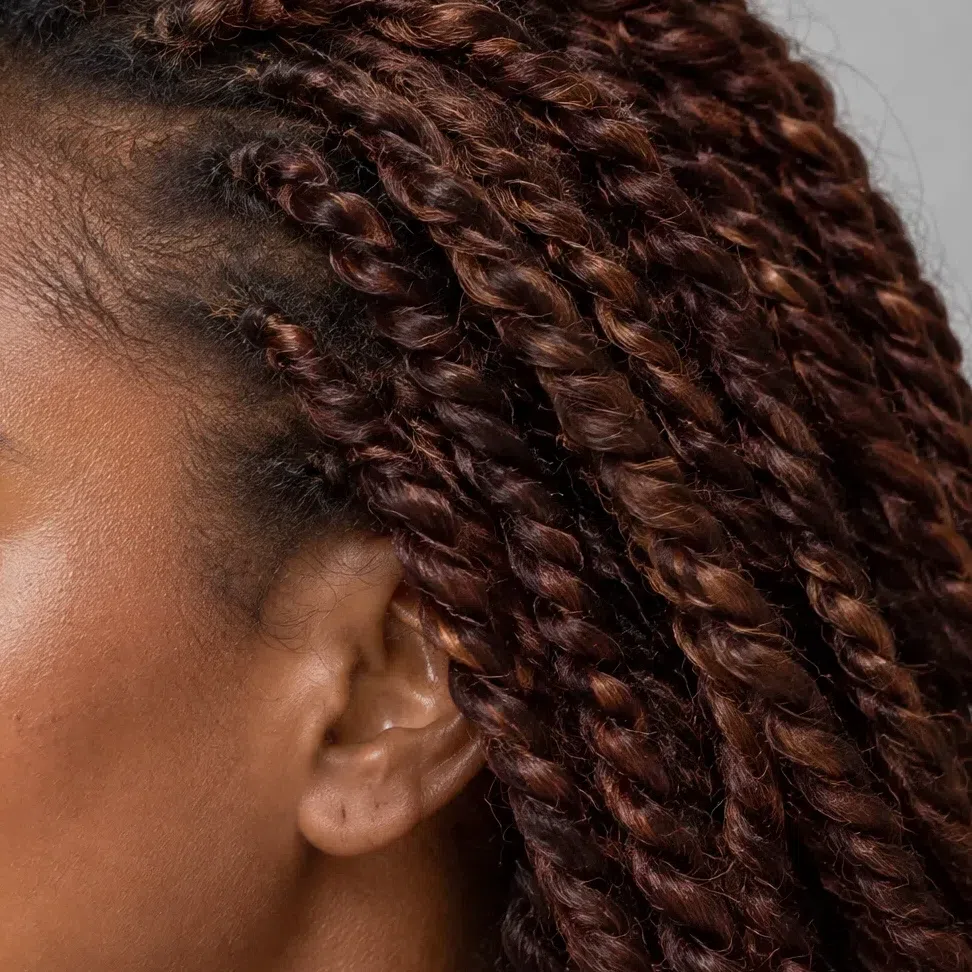
Copper, auburn, chestnut or chocolate with red or gold at any darkness; it grays toward cream, not silver.
Contrast
Soft Autumn sits low, Warm Autumn in the middle, Deep Autumn highest - warm depth, never a Winter's black-on-white snap.
Metal
Copper first, then bronze, brass and antique gold; silver, white gold and platinum go cold on this skin.
Subtypes
Soft Autumn is led by muting, Warm Autumn by warmth, Deep Autumn by depth - that axis picks yours.
Season core:
CamelCoffeeMustardRustOlive brownTeal green
Wear with care:
Jet blackStorm grayDusty blueShocking pink
The short version: what fails an Autumn is cold and icy color, not dark or strong color, and that holds on deep brown skin exactly as it does on fair, freckled skin. Your own subtype gets settled in Which Autumn? below; if you land between two, a photo analysis decides.
Am I an Autumn? Five ways to tell
Five checks for daylight and a mirror, run in this order
Two things hold for every Autumn and one does not. What holds is temperature and softness: warmth under the skin, and a coloring that looks as if brown or gold had been worked into it, never as if it were lit from behind or frosted. What does not hold is depth - an Autumn can be pale and freckled or deep bronze, and depth only decides which of the three Autumns you are, never whether you belong to the season. Autumns are seldom mistaken for a cool season. They get filed next door instead: as a Spring, because both are warm, or as a Soft Summer, because both are muted. The five checks go from the broadest filter to the final verdict.
Season is set by undertone and softness, not by how light your skin is. Autumns occur at every depth - the shared traits are a golden or bronze undertone, a muted, earthy cast, and contrast that stays warm.
11. Skin: gold, olive or bronze underneath
Look beneath the surface color. Every Autumn has warmth under the skin - honey, amber, olive-gold or bronze - whether the skin on top is freckled ivory, beige, golden brown or deep brown.
The quality is density rather than glow. Fair Autumn skin reads peach-gold and often matte, with freckles in copper or cinnamon; olive Autumn skin is the olive that looks warm, not green-gray; medium and deep Autumn skin carries a bronze sheen across the cheekbones and tans quickly and evenly, seldom burning. The natural flush is terracotta or peach. What an Autumn does not have is a rosy or bluish cast beneath the surface, or the see-through, lit-up finish of a Spring.
Olive deserves a note of its own, because it is the complexion most often filed as cool. Olive skin with gold in it is common in Autumn and rare elsewhere - the tests below separate the two kinds, and the complexions section further down shows what each looks like.
Three checks for the undertone
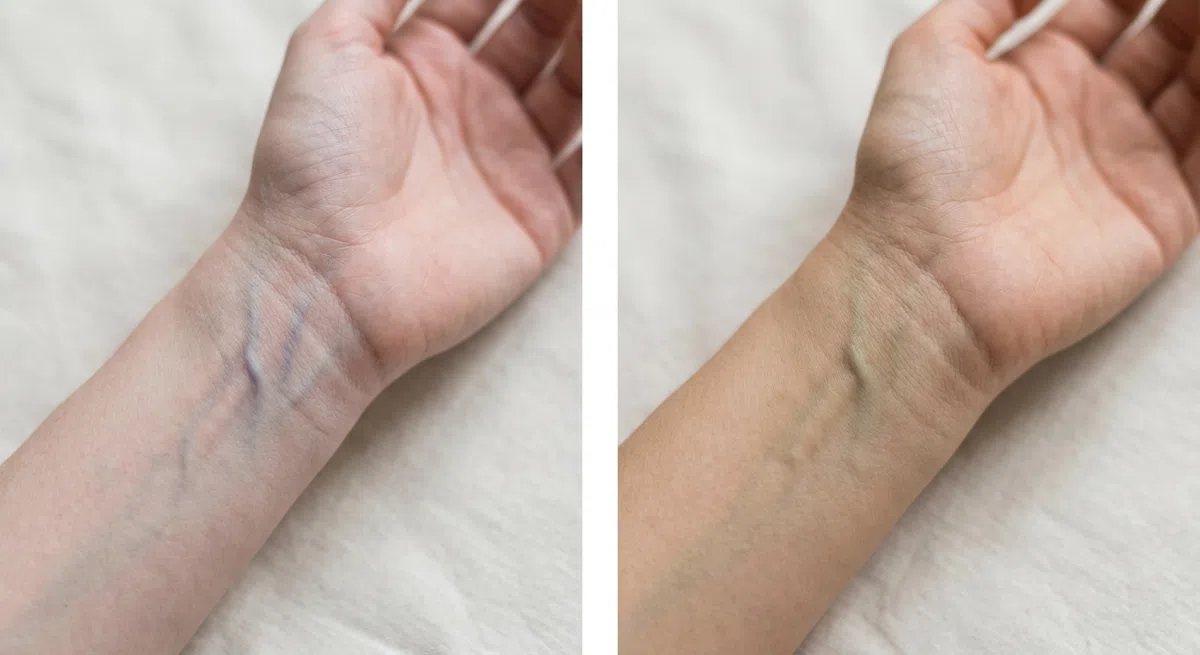
Test 1Vein color at the inner wrist
Daytime, by a window: bulbs tint the result yellow and cool LEDs tint it blue. Turn the inner wrist to the light and take the veins as a group instead of fixing on one.
Greenish or olive - a warm undertone. Autumn and Spring both remain possible.
Blue or purple - cool, so Summer and Winter move to the front.
You can't decide - probably neutral. Let the next two tests settle it.
Caveat: the least reliable of the three. On medium and deep skin the veins often barely show, while very pale, fine skin makes them look bluer than they really are. When the wrist is unclear, trust the paper.
Test 2Plain white paper at the jaw
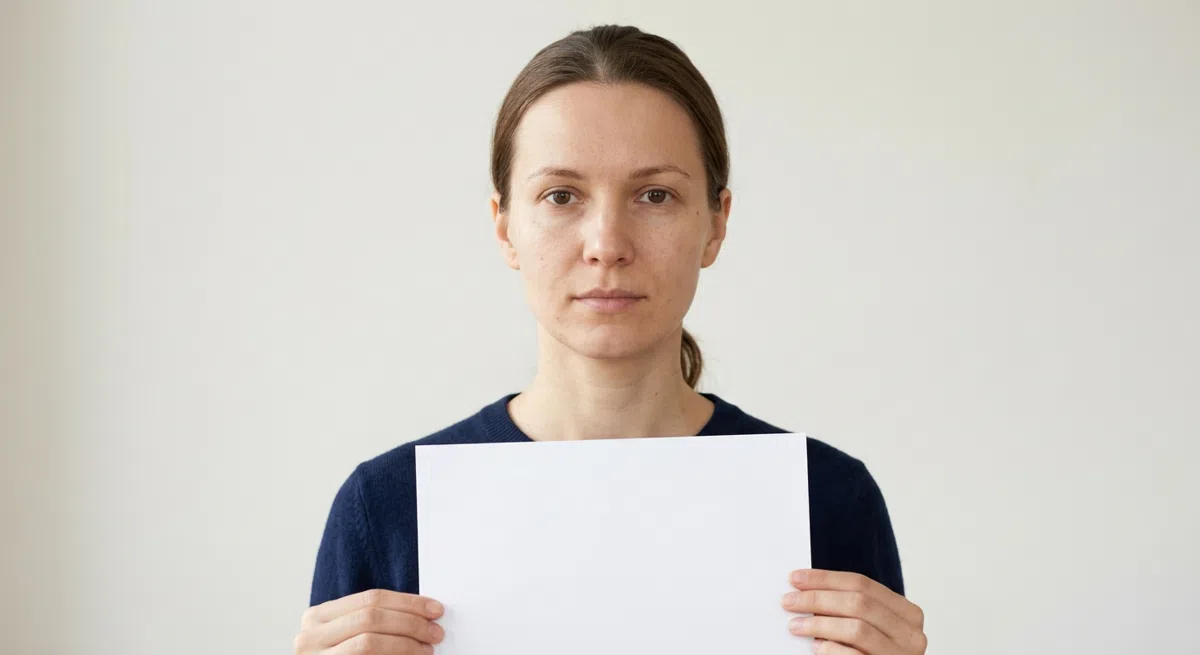
Clean face, hair pulled back, window light. Hold plain white printer paper under your chin - bright white only; cream or ivory paper is already warm and tilts every reading toward gold. Keep your eyes on the edge where the paper touches the skin, not on the whole face.
The skin looks golden, honey or olive-gold beside the white - a warm undertone, pointing to Autumn.
The skin looks pink or bluish - a cool undertone.
The skin looks grayish - often a neutral undertone with olive in it. The metals test is the tiebreaker.
Caveat: this is the one that reads the same on every complexion, so on deep skin give it the final word. Straight after a walk outside the cheeks are flushed, and that redness passes for a pink undertone - wait ten minutes first.
Test 3Gold against silver
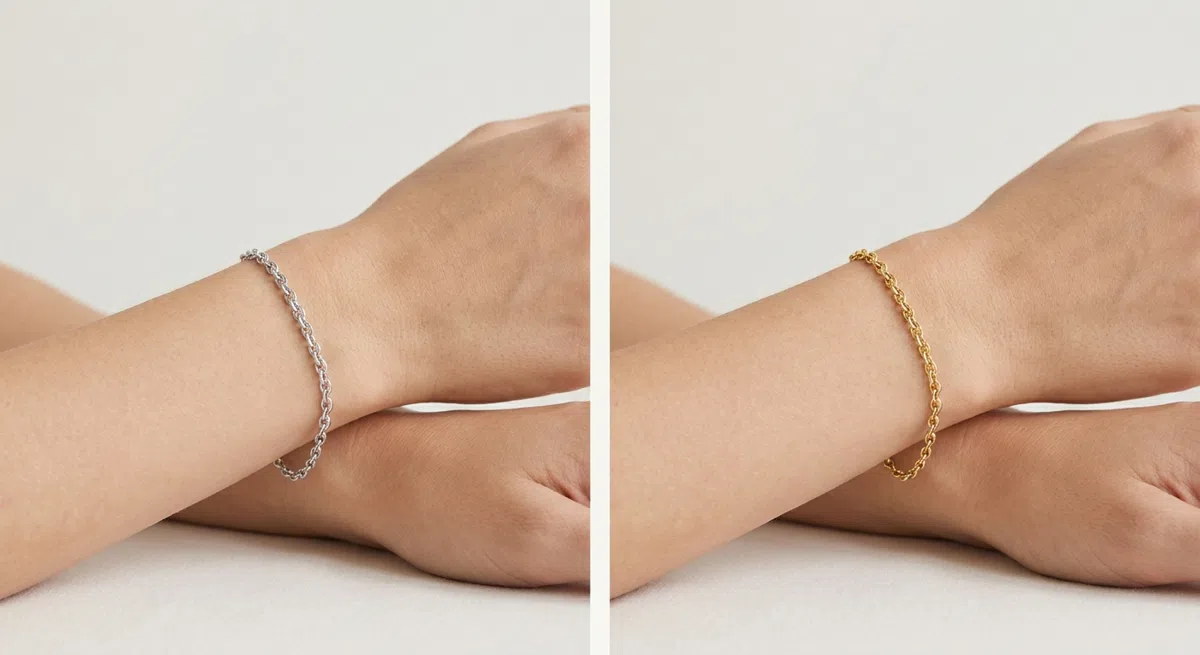
A plain yellow gold piece and a plain silver one, no stones, close in shape and width. Lay them on the wrist one after the other and study the skin next to the metal rather than the shine.
Yellow gold or bronze wins - the face looks warmed from inside. For an Autumn this is the most telling of the three tests.
Silver or platinum wins - the skin looks smoother and fresher beside it; a cool undertone.
Both look fine - neutral. Temperature is not the axis that will place you; depth or softness will.
Caveat: a chunky ring beats a fine chain on area alone, so match the pieces. On deep skin both metals can flatter at first glance - judge the skin an inch away, where gold should add warmth and silver should leave a faint gray.
When paper and metal agree on warm, Summer and Winter are finished. The four checks after this one decide between Autumn and Spring.
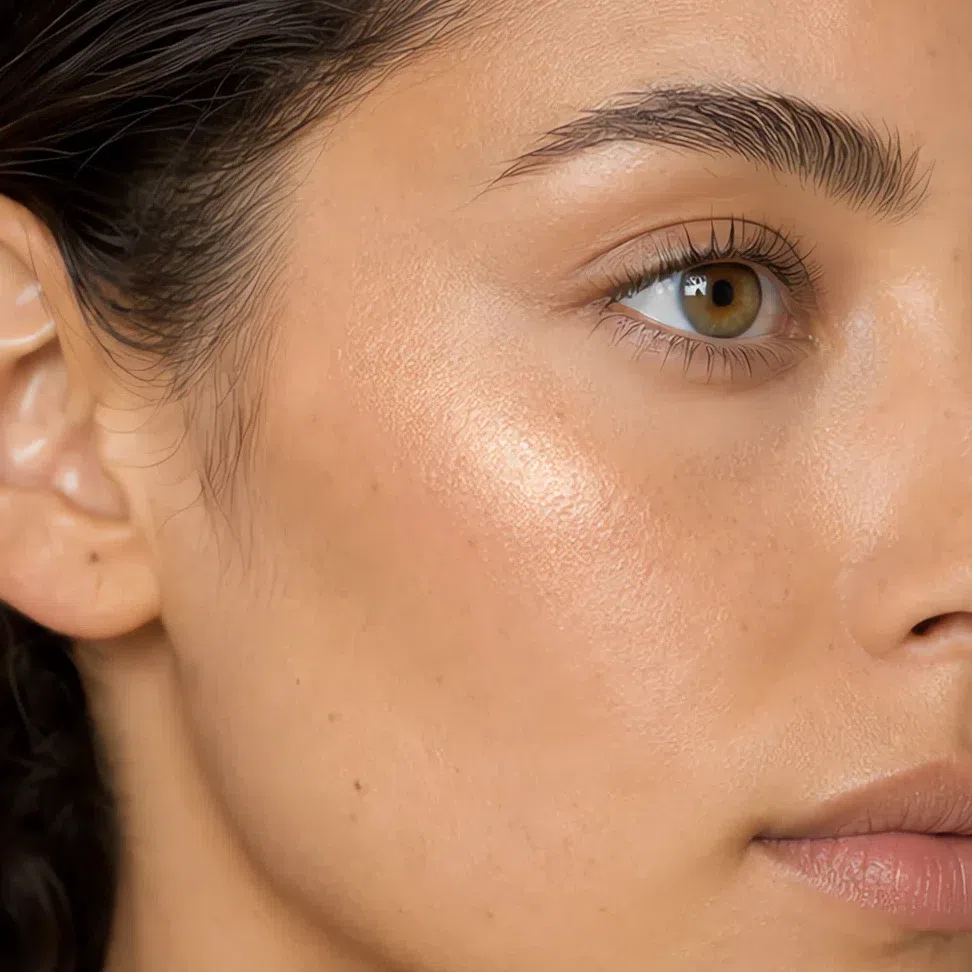
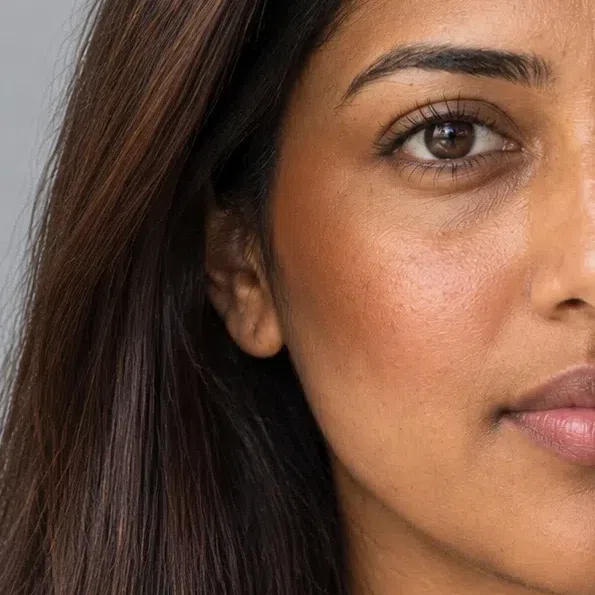
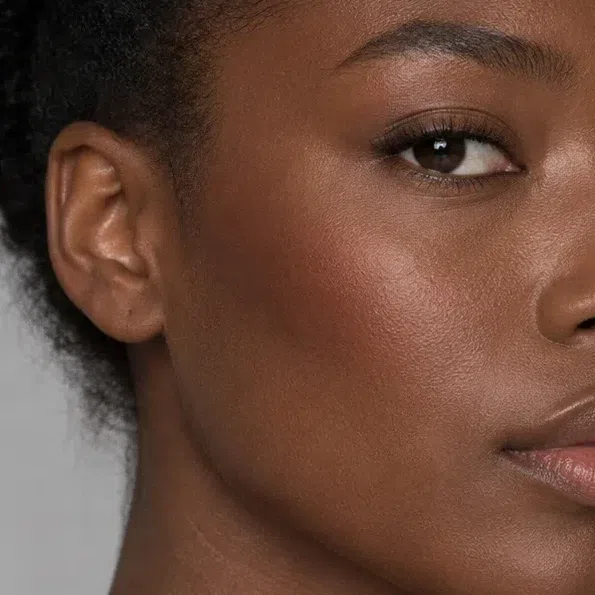
Fair - peach-gold with copper frecklesOlive - the warm kind, gold under itMedium - golden bronzeDeep - copper-brown
22. Eyes: dense color, warm flecks
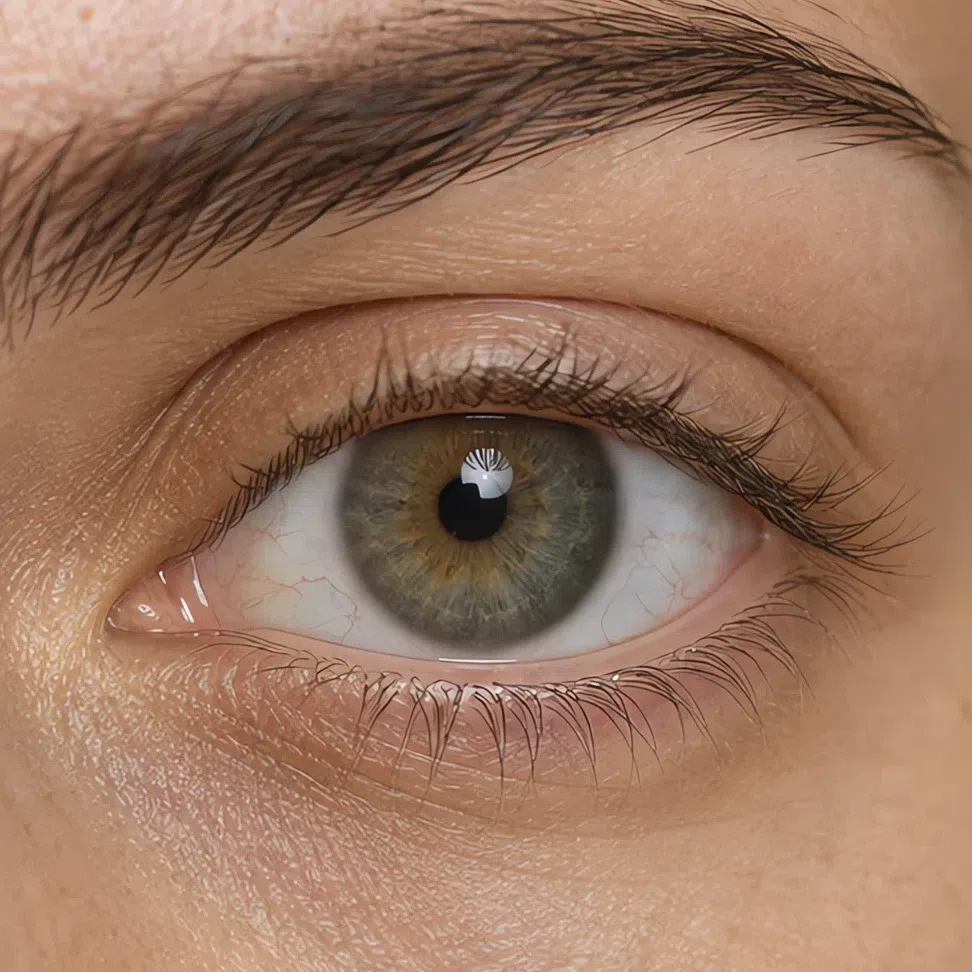
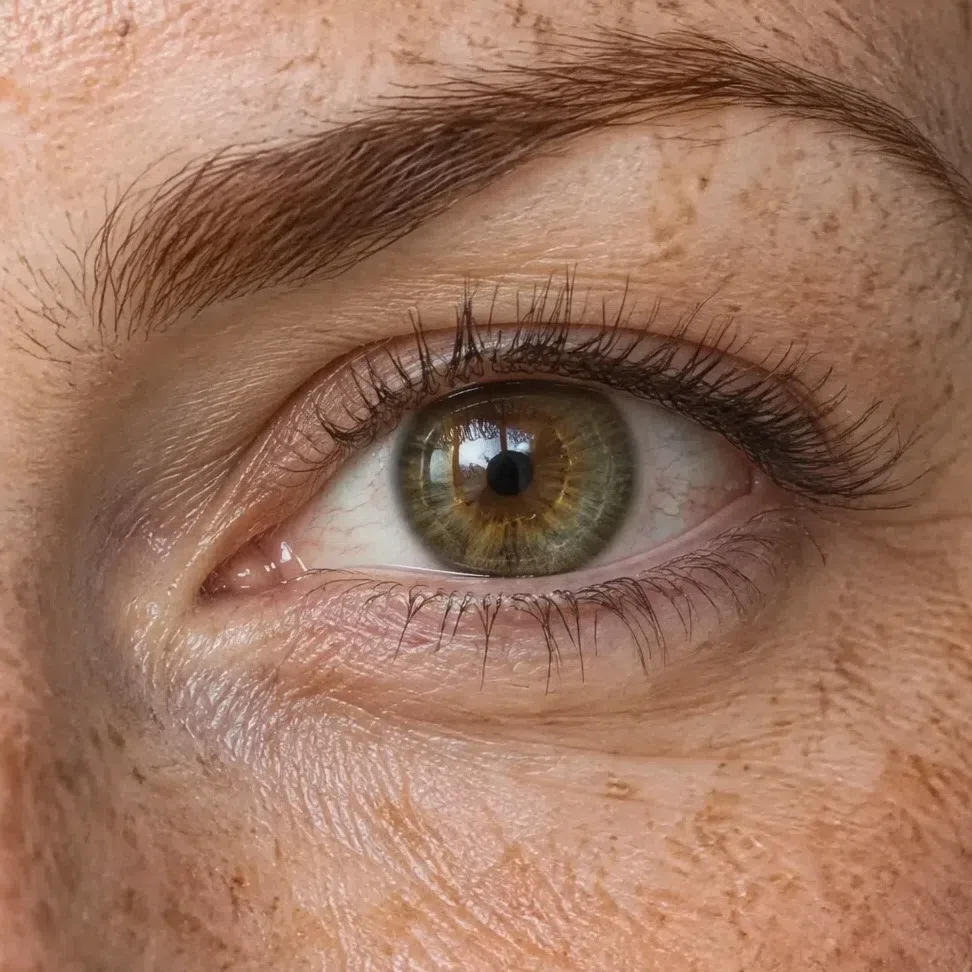
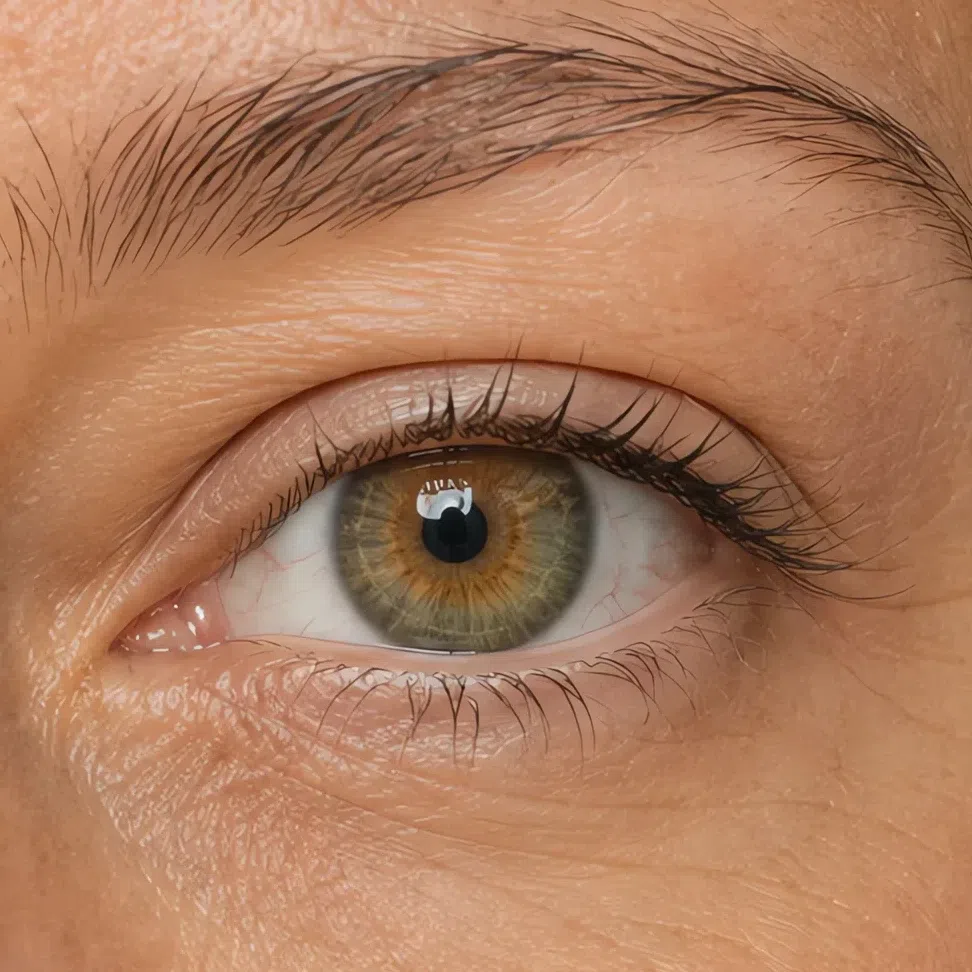
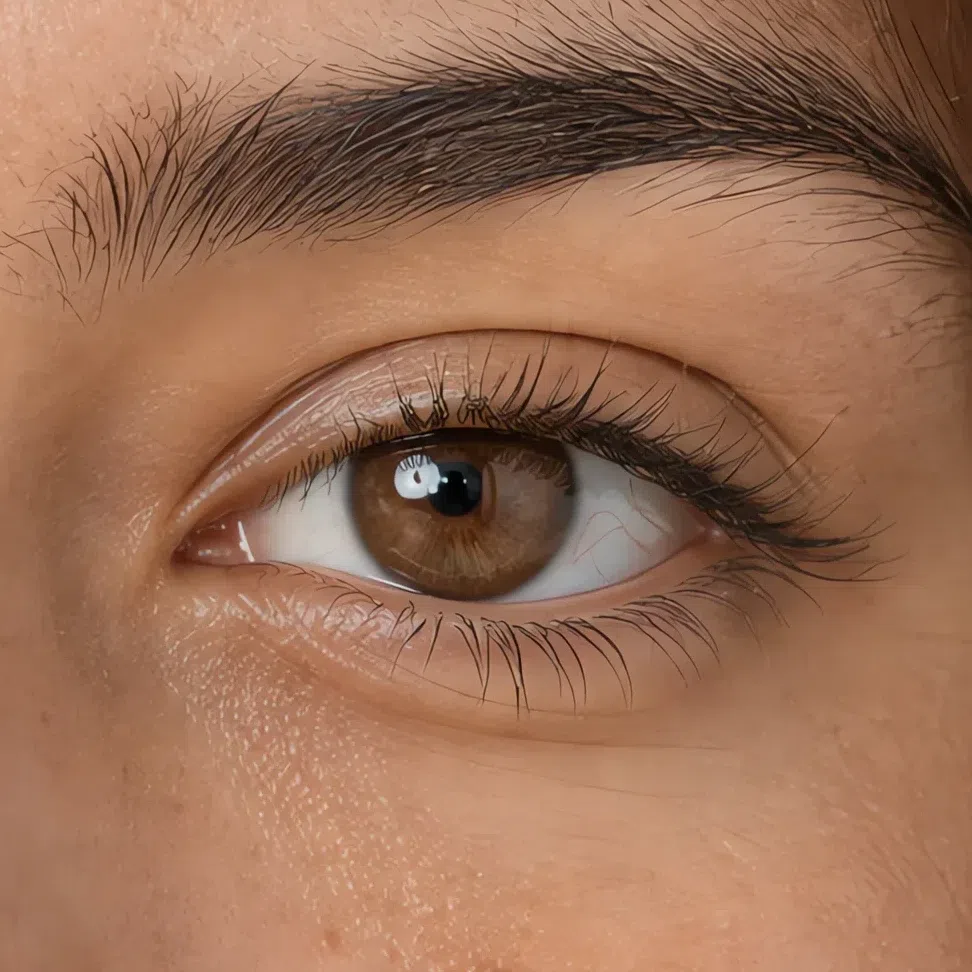
Autumn eyes are deeply pigmented and warm: chocolate from milky to bitter, amber, hazel, olive or khaki green, a warm gray-green. There is often a copper or gold ring around the pupil.
What matters is the texture of the color, not which color it is. An Autumn iris looks layered and dense - several tones mixed, with rays or flecks of gold - and it never has the see-through clarity of a Spring eye or the steely cast of a Winter one. Green is common: marsh, khaki and olive green with gold in them are Autumn greens, while a bright, cold emerald is not. The whites tend toward cream rather than blue-white.
A gray-green can go either way. With gold flecks at the pupil it is a Soft Autumn eye; with none, and a blue cast around the rim, it belongs to a Soft Summer.
Look for gold inside the pattern. A dense, multi-tone iris with warm flecks is an Autumn eye at any depth of color.
Gray-green, softly warmMarsh greenAmberNear-black brown
33. Hair: copper in it, even when it looks brown
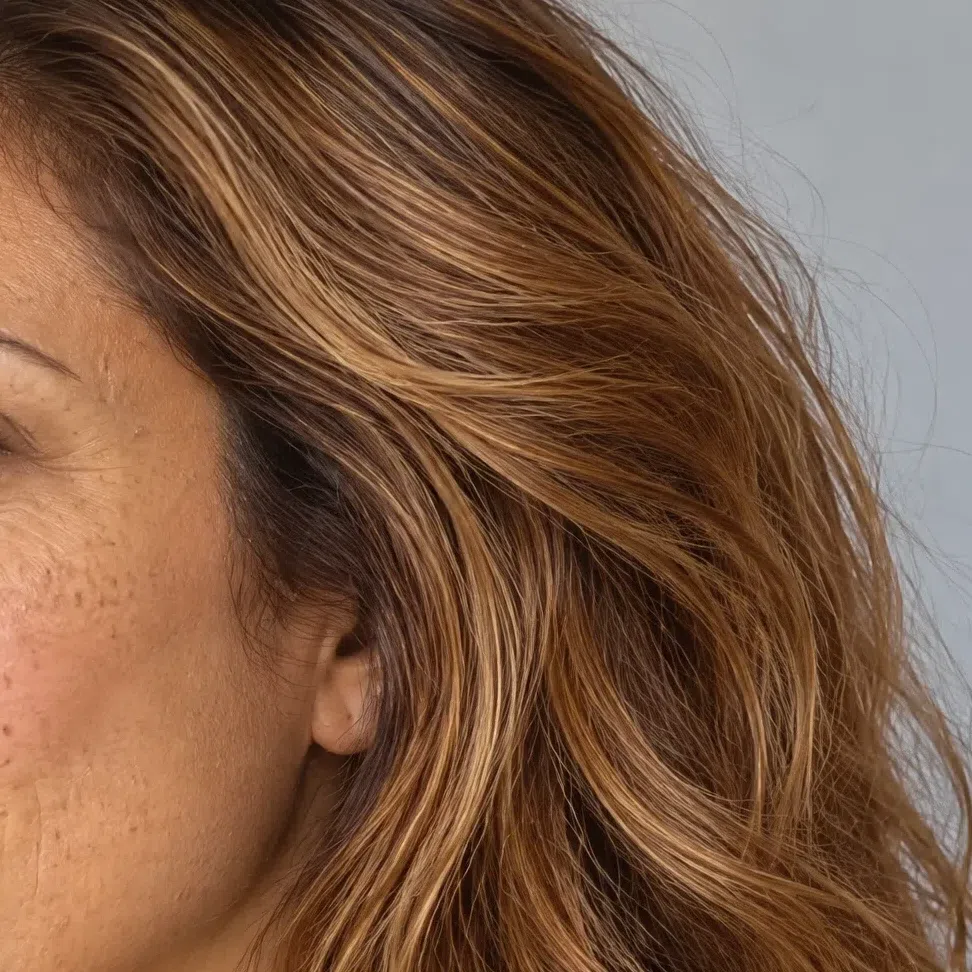
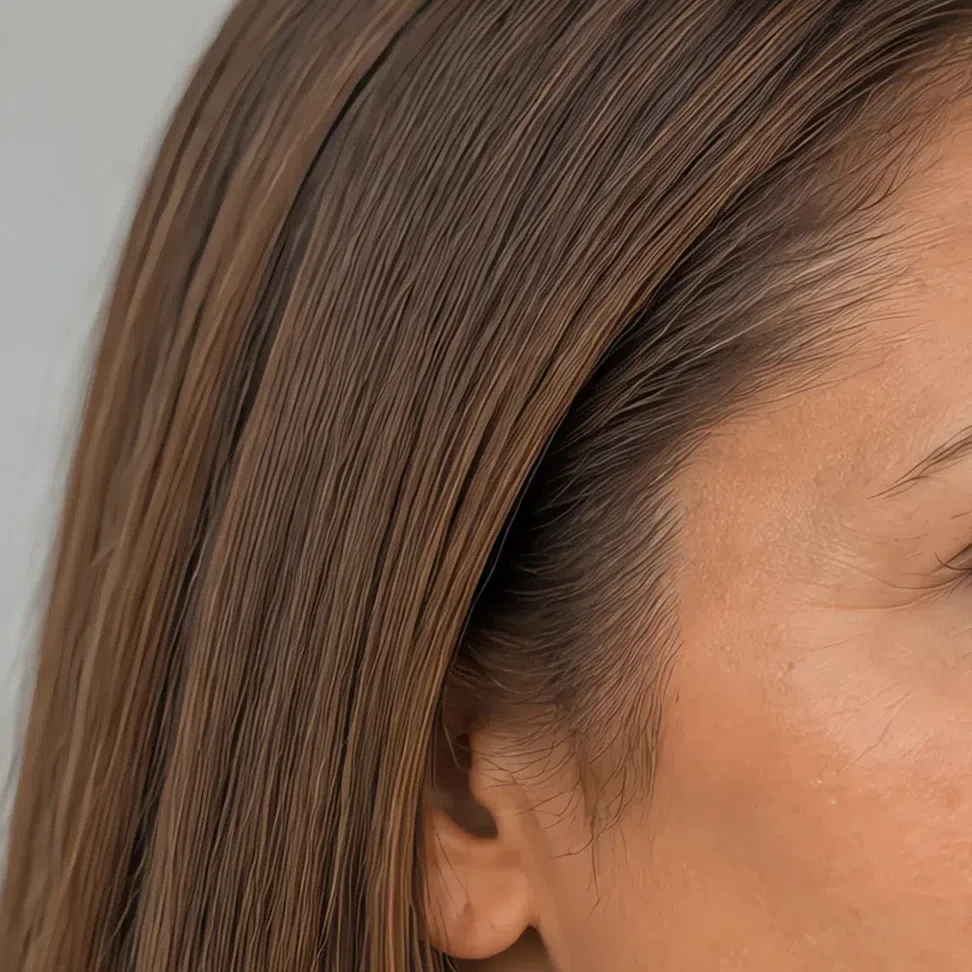
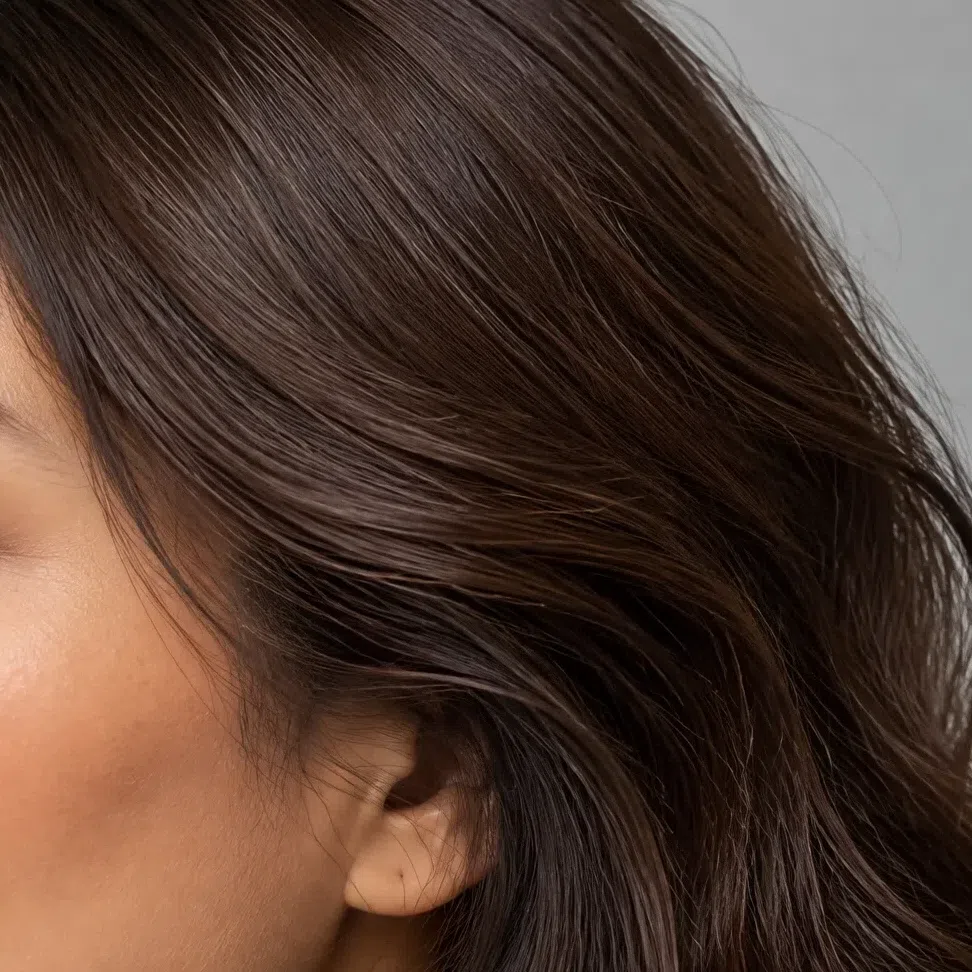
Natural Autumn hair always holds a red or golden pigment - carrot to dark copper, auburn, chestnut, warm dark blonde, chocolate or mahogany - and sunlight brings it out.
Hair that reads plain brown indoors shows copper or gold at a window, and sun-bleached ends go toward copper-gold, never toward ash. The texture is often thick with a natural sheen. What does not occur is ash or mousy gray-brown, a cool platinum, or a true blue-black; the darkest Autumn hair is a very dark brown with a warm base. When the gray arrives it tends to come in creamy or golden rather than silver.
Red hair on its own does not settle Autumn against Spring. Spring red is light and bright - carrot, strawberry, golden copper - with a fine texture. Autumn red is deep and dense: auburn, dark copper, mahogany, on skin that is less translucent and often olive.
Dyed hair tells you nothing. Judge the roots, or the color you had at twelve.
Take a strand to the window. Any shade that flashes copper qualifies; a brown that stays flat gray-brown in the sun does not.
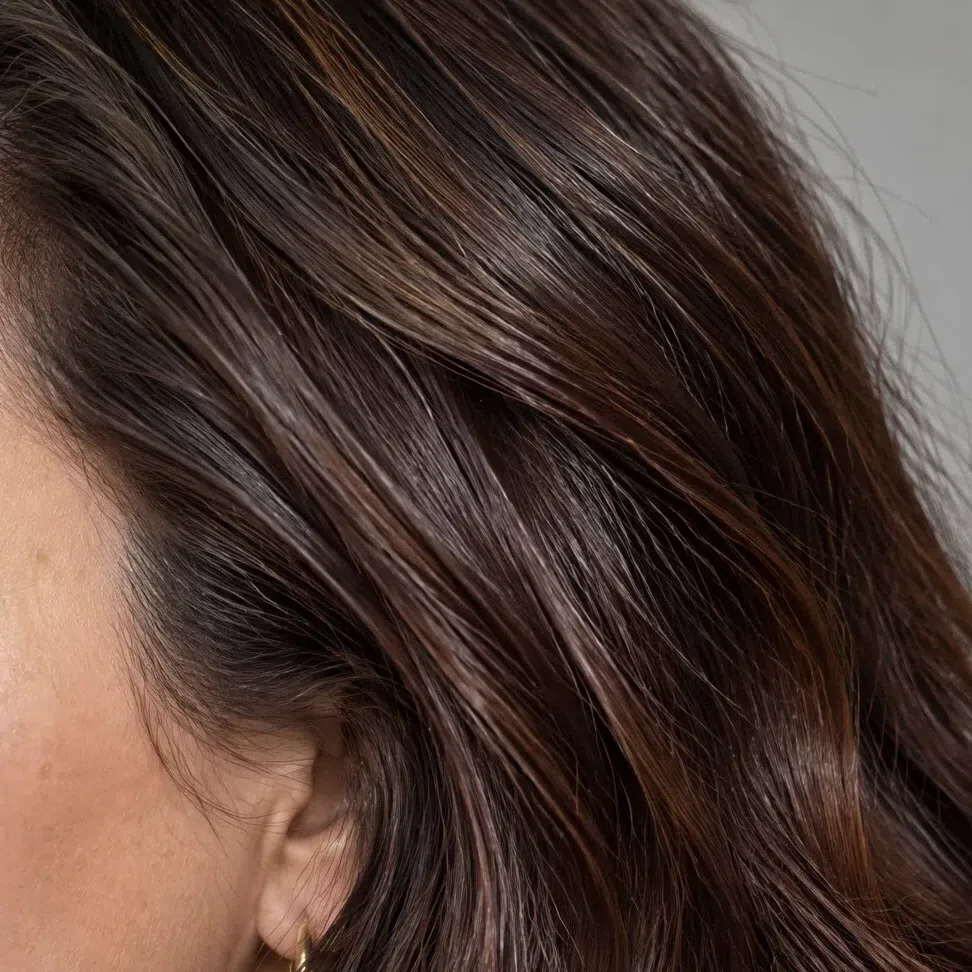
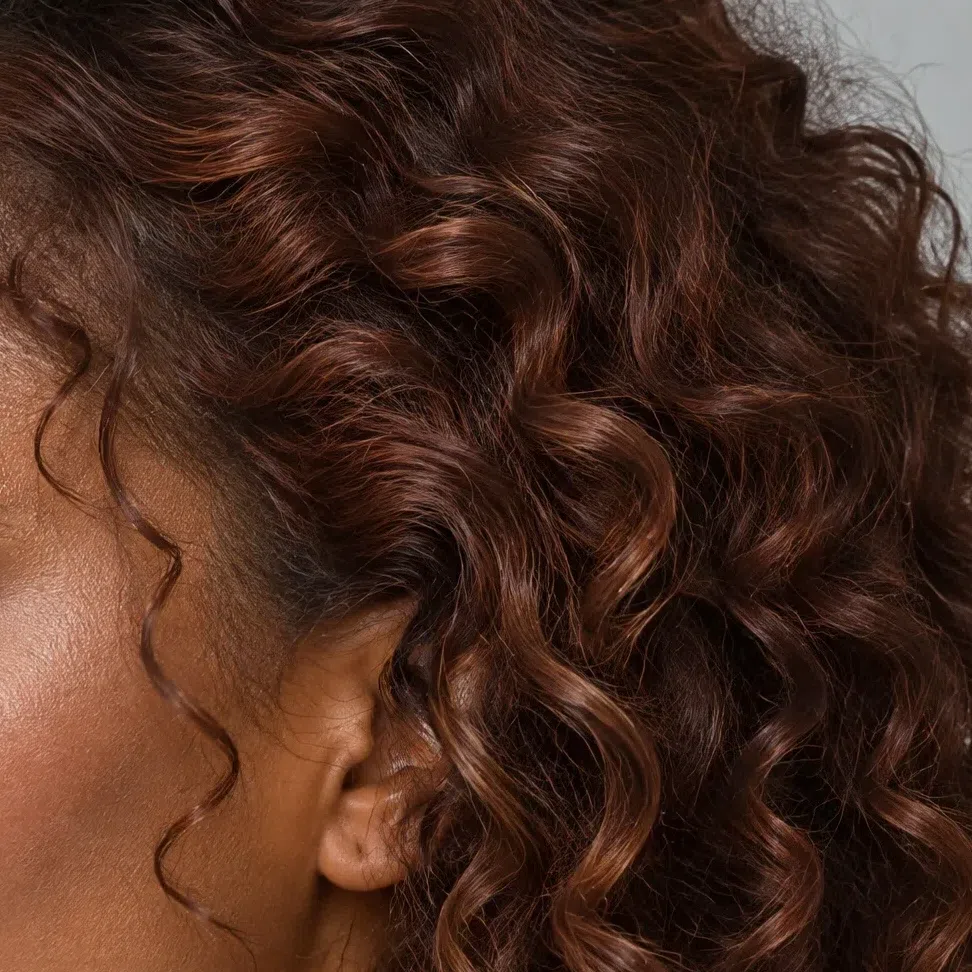
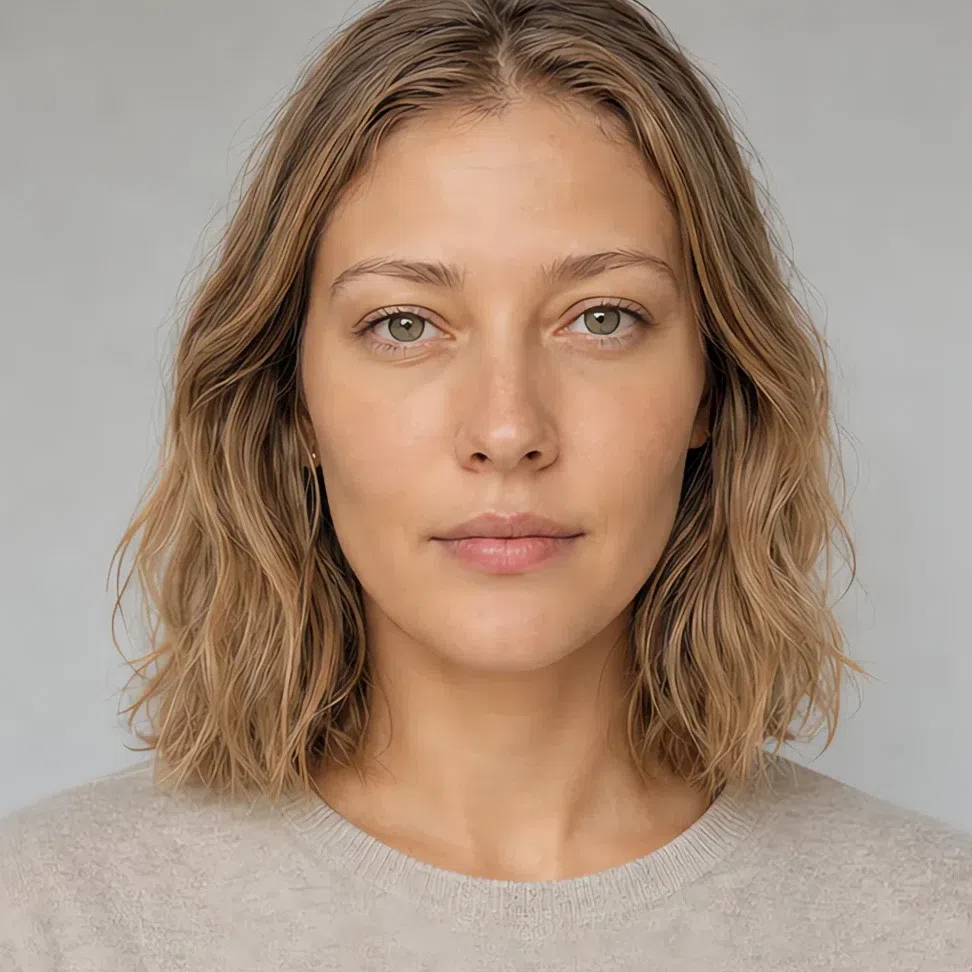
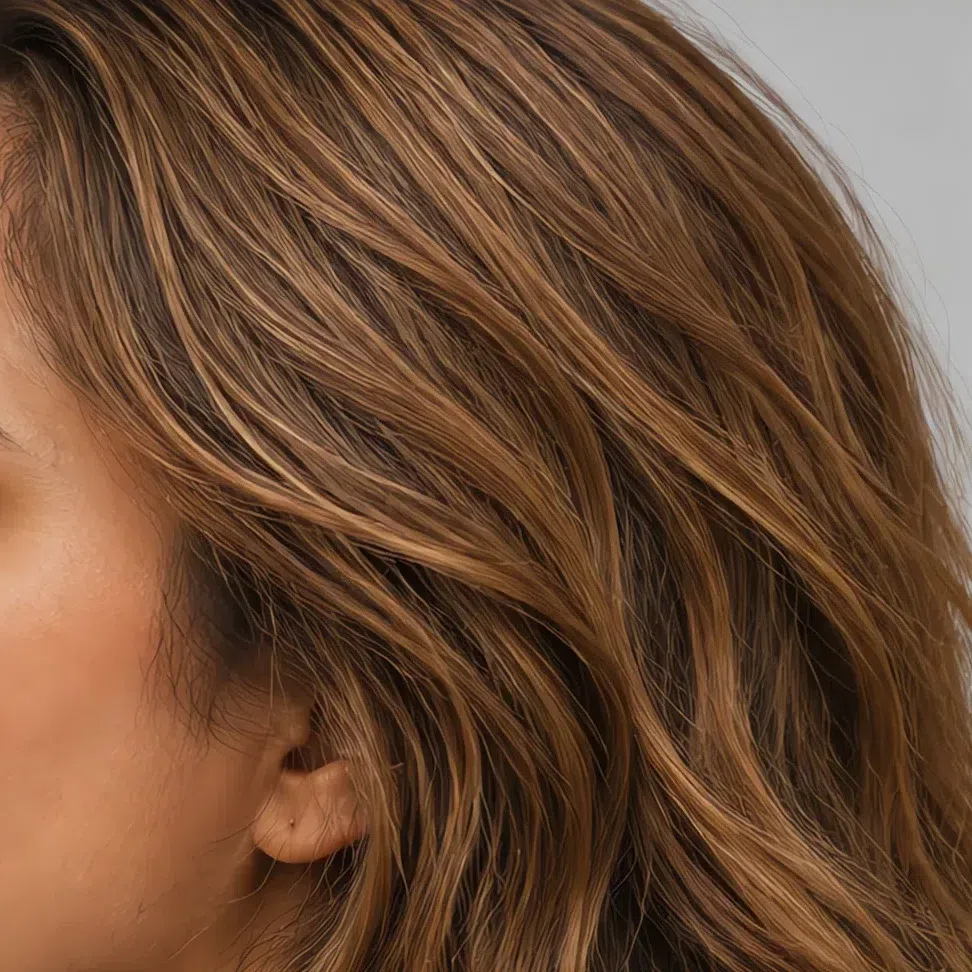
Sandy blond, warmDeep copperChocolate with mahogany lightsDark auburn curls
44. Contrast: warm, and never stark
Contrast is where the three Autumns part company, so the season-wide rule is a limit rather than a figure: hair, skin and eyes stay within one warm register at moderate distances, and no near-black feature is set against near-white skin.
A Soft Autumn is the flattest - hair, skin and eyes all in one hushed middle range. A Warm Autumn has a medium, readable step, with copper or chestnut hair a little darker than the skin. A Deep Autumn carries the most: dark hair and eyes over a lighter face, and it is the Autumn that borders a Winter. Even then the effect is warm depth, not the raven-on-alabaster cut of a Winter, whose near-black hair and brows stay far from the skin in any light.
The height of the two tones shows depth; the gap between them shows contrast. A deep Autumn sits low with a moderate gap - and is still an Autumn.
Do it with your own photo
Take a bare-faced selfie by a window, then turn it grayscale. An Autumn becomes a set of middle and darker grays that stay in touch with one another. If your hair and brows drop to black while the skin stays pale, look at Winter; if everything fades to one soft gray and the warmth was the only thing holding it together, compare Soft Summer.
Low - a Soft AutumnMedium - a Warm AutumnHigher - a Deep AutumnDeep - low on the ramp, same gap
Grayscale, side by side
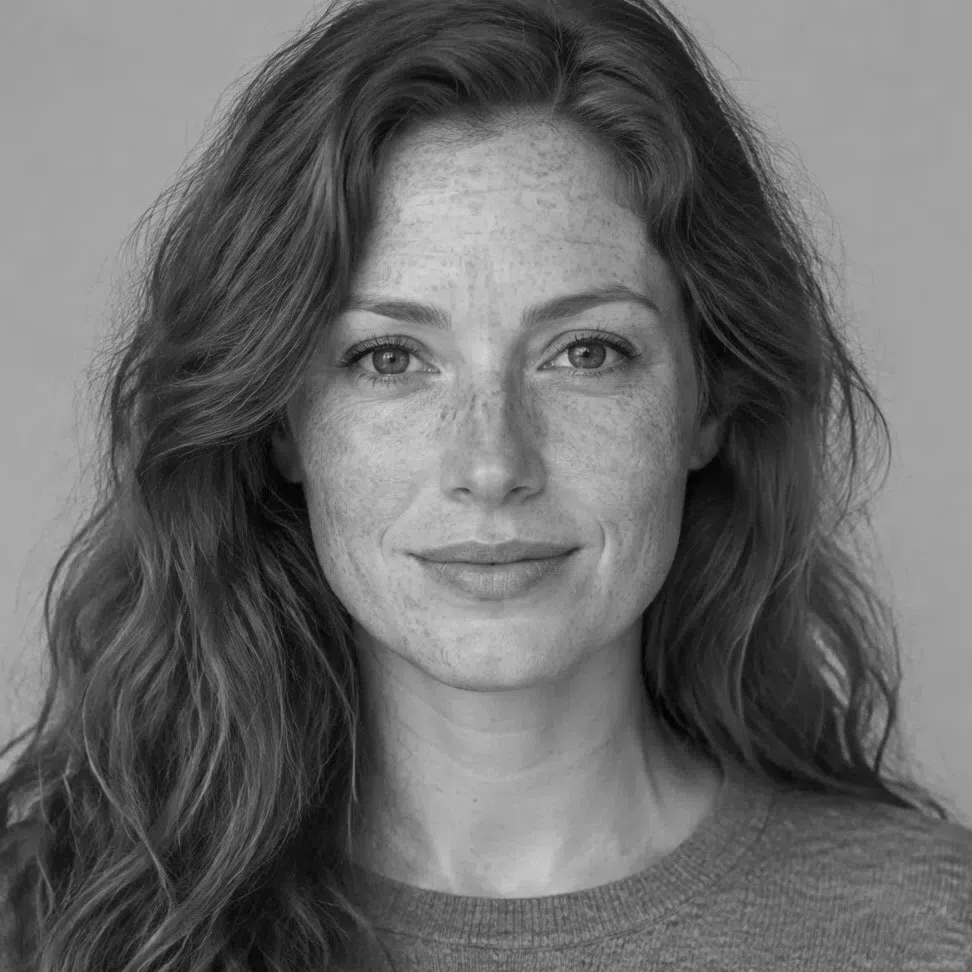
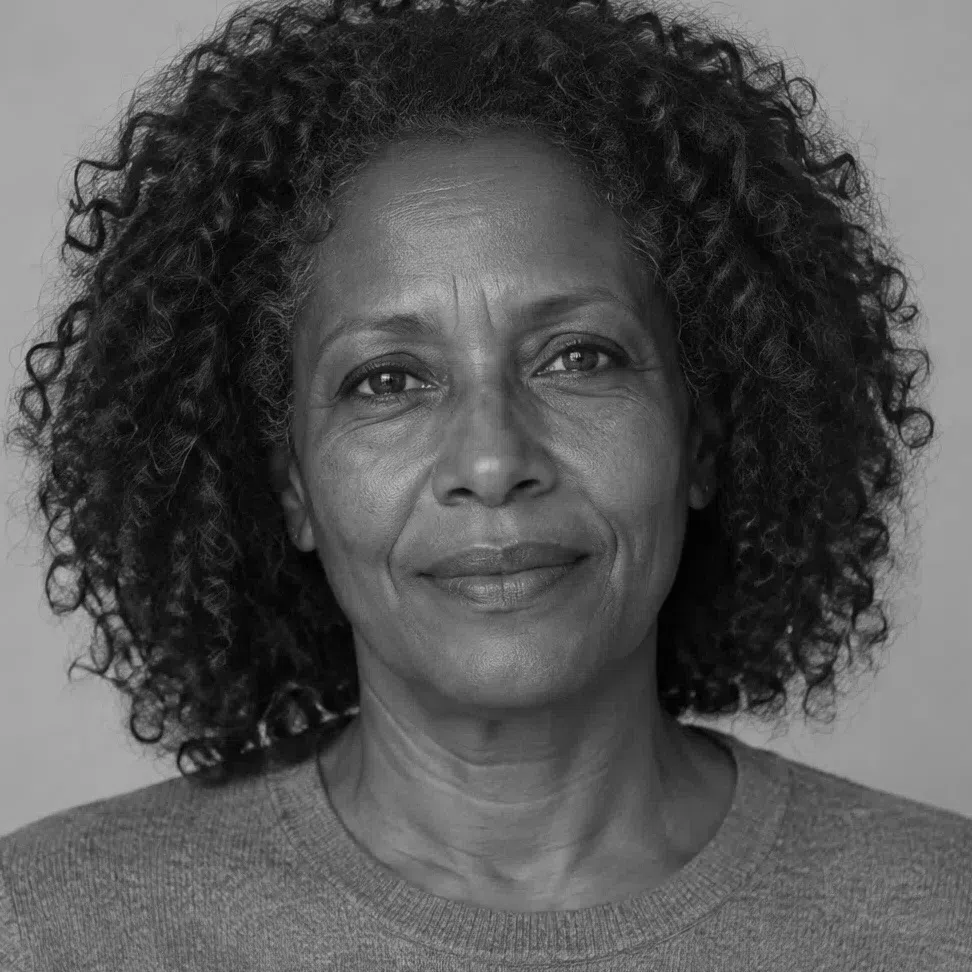
A copper-haired Autumn on the left in full color, and on the right the very same frame drained of hue. Once the color is gone you are judging lightness alone - and her hair sits a moderate step under her skin, nowhere near the black end.
In colorThe same frame, hue removed
Autumn, fairCopper hair a moderate step under light skinAutumn, deepThe whole face lower down, the gap about the sameDeep WinterNear-black hair, pale skin, far apart
HairSkinRamp runs black to white
Judge the gap between the markers, not their height. Height is depth; the gap is contrast - a reading of one face, never a ranking of several. The deep Autumn's curls print darker still than the Winter's, and the faces are opposites all the same, since her skin sits low as well, close to her hair. The Winter's skin stays high on the scale and her hair falls far below it - that long drop is what no Autumn has.
55. The drape test: color at the jaw
The surest check, and the one that splits Autumn from Spring. Bare-faced and in daylight, bring one color at a time up to the jaw and read what happens to the skin and eyes; ignore the cloth.
An Autumn shade warms and evens the skin and gives the eyes depth. On the same face, a Spring shade - coral, clear turquoise, butter yellow - looks thin and slightly too sweet, and a Summer shade turns it gray and tired. Scarves and tees are fine as drapes; try several from both groups before deciding. Black is the exception: laid flat against the skin it stops reading as fabric, so try it as an actual garment in front of a mirror, and expect it to take the warmth out of any Autumn face.
Shades that warm the face up
If these warm the skin and give the eyes depth, you are in the right season:
Sienna
Rust
Mustard
Olive brown
Camel
Teal green
Coffee
Cinnamon
Shades that gray it out
If the skin turns ashen and shadows settle under the eyes, these are telling you the same thing - cold and icy color does not suit an Autumn:
Cold violet
Shocking pink
Dusty blue
Storm gray
Silver
Ice pink
Autumn vs Spring vs Summer vs Winter
Two axes sort the four seasons. Temperature puts Autumn and Spring (warm) on one side and Summer and Winter (cool) on the other; clarity puts Autumn and Summer (soft) on one side and Spring and Winter (clear) on the other. Start with those two rows - everything below them follows.
Stuck between two columns? Go back to Temperature, then to Clarity - Autumn is the only season that is both warm and soft. The next section splits the season into its three Autumns.
Three Autumns
Which Autumn are you: Soft, Warm or Deep
One warm, earthy season - three different leading traits
Autumn has the widest spread of any season. At one end sits a hushed, almost neutral Soft Autumn; at the other, a Deep Autumn dark enough to be taken for a Winter. A rust sweater that makes one of them glow will overpower the second and flatten the third. All three are warm and all three are muted next to a Spring - what separates them is the trait that leads: softness, warmth or depth. Name yours and every list further down this page reads as one column, not three.
Light to mid brown with a muted warm cast, no open red
Copper, golden red, warm chestnut
Dark chocolate, chestnut, mahogany
Metal
Antique gold, bronze, rose gold - brushed, not polished
Yellow gold, bronze, burnished copper
Antique gold, bronze, copper
The test color
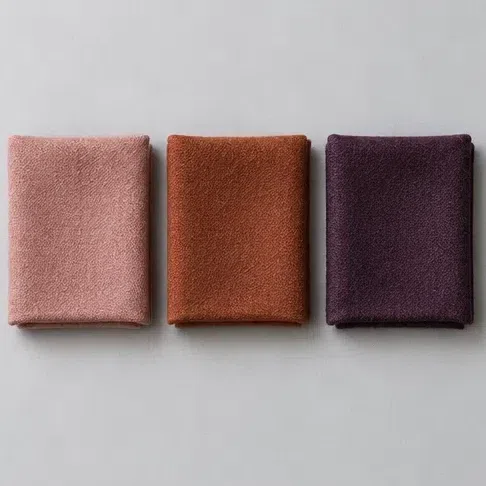
Dusty rose - the skin evens out
Warm terracotta - the skin lights up
Deep eggplant - the features sharpen
What misses
Clean, bright color talks over the face
Anything cool or bluish turns the skin gray
Light pastels look washed out and accidental
Torn between two columns? Skip the details and ask what a friend would say about your coloring first - soft, golden, or dark. That word names your subtype.
The quietest Autumn, and the one nearest to Soft Summer. Temperature is only just on the warm side; what leads is low saturation. A clean, bright color is louder than her face, while complex, slightly dusted shades sit on it evenly.
Skin neutral-warm, often with a little olive; a tan comes up soft and even
Eyes muted - soft hazel, gray-green, smoky brown, with no sharp pattern in the iris
Hair light to mid brown with a warm, slightly ashen cast and no open red
SandAntique roseMossSea glassTerracottaFig
The one rule: Softness leads. Pick shades with a complex, lightly dusted base - that base is what pulls the face together.
The warmest Autumn, and the one nearest to Spring. Neither depth nor muting decides here - temperature does. Gold and copper run through her features, so a single cool note - bluish, lilac or silvery - turns the skin gray straight away.
Skin golden-peach or warm beige, tanning easily and evenly
Eyes amber, warm hazel, or green shot through with gold
Hair copper, golden red or warm chestnut - the red is plain without any test
CamelCantaloupeGolden ochrePumpkinRustTeal green
The one rule: Temperature leads. Ask whether a shade has gold in it, not how dark it is - gold means yes, a blue cast means no.
The darkest Autumn, bordering Deep Winter - and the same subtype some systems call Dark Autumn. Depth leads: dense, saturated color holds the face, and a light pastel looks faded and random against it.
Skin dense golden-olive or warm brown; tans evenly and holds the tan
Eyes dark brown, deep hazel or deep green
Hair dark chocolate, chestnut or mahogany - always a warm glint, never ash
EcruDark chocolateCurryHunter greenMallardMerlot
The one rule: Depth leads. Don't lighten the palette to soften it; making everything paler is the mistake this subtype makes most often.
Each question checks one trait. Answer by a window with a clean face, and read the result as a pointer, not a ruling - home checks are least reliable exactly on the line between two Autumns.
Question 1 of 4
Hold three fabrics under your chin - a dusty rose, a warm terracotta and a deep eggplant. Which works best?
Your hair color as it grows, before dye:
How far apart are your hair and eyes from your skin in lightness?
What does a light pastel do for you - a soft peach, say?
Your likely subtype
Looks like Soft Autumn
What leads for you is neither warmth nor depth but muting: complex, dusted shades beat clean ones.
Ash hair with no gold and no red usually means a cool coloring, and all three Autumns are warm. Compare Autumn with the other seasons below, or start from the four-season overview at color analysis.
Four questions point you in a direction; they can't measure your coloring. The photo analysis can, and it is where borderline cases are settled.
Other names for the Autumns
Different color systems name the Autumns differently, and a couple of the names people search for describe colorings that are not Autumns in the twelve-season system used here. This is where each one points.
True AutumnWarm Autumn palette
The older name for Warm Autumn, the Autumn led by temperature. Torn between the two labels? You are both at once: one coloring, one palette.
Warm Autumn →
Dark AutumnDeep Autumn palette
Another name for Deep Autumn, where depth leads and the contrast outstrips the other two Autumns. Whichever name you found it under, the coloring and the palette do not change.
Deep Autumn →
Muted AutumnSoft Autumn palette
Soft Autumn under a second name, used by several analysts; Color Me Beautiful's Gentle Autumn describes the same low-saturation, low-contrast coloring.
Soft Autumn →
Bright AutumnDeep Autumn + Bright Spring
Also Clear Autumn. Most systems don't treat it as a separate type; the name usually describes the most saturated Autumn, which is Deep Autumn. If your best colors read clear and vivid instead of rich, check Bright Spring.
Deep Autumn →
Cool AutumnSoft Autumn + Soft Summer
Also Cold Autumn. There is no cool Autumn in a twelve-season system - warmth is what makes an Autumn. The name usually describes a muted coloring on the cool side, which is Soft Summer; if the warmth is faint but real, it is Soft Autumn.
Soft Autumn →
Light AutumnSoft Autumn + Light Spring
Not a standard type either. A warm coloring that is light and muted belongs to Soft Autumn at its lightest; if the light colors look clear rather than dusted, the match is Light Spring.
Soft Autumn →
This site splits Autumn into three because that is what drapes reliably tell apart - one leading trait each, and every warm, muted coloring falls into one of them.
Autumn on every complexion
Fair, olive, medium and deep - the same warm, earthy coloring at four depths
The picture most people carry of an Autumn is a single face: fair, freckled, with red hair. She is an Autumn, and so is every woman further down this section. What the four depths have in common is warmth under the skin and a muted, earthy richness in the coloring; the variable is the amount of depth laid over it. Each block pairs a portrait with a close look at skin, eyes and hair at that depth, drawn from all three Autumns so that no depth belongs to one subtype. Every photograph here is of a woman. For men the same reading is done at the brows, the beard and the hairline, and nothing about the palette changes.
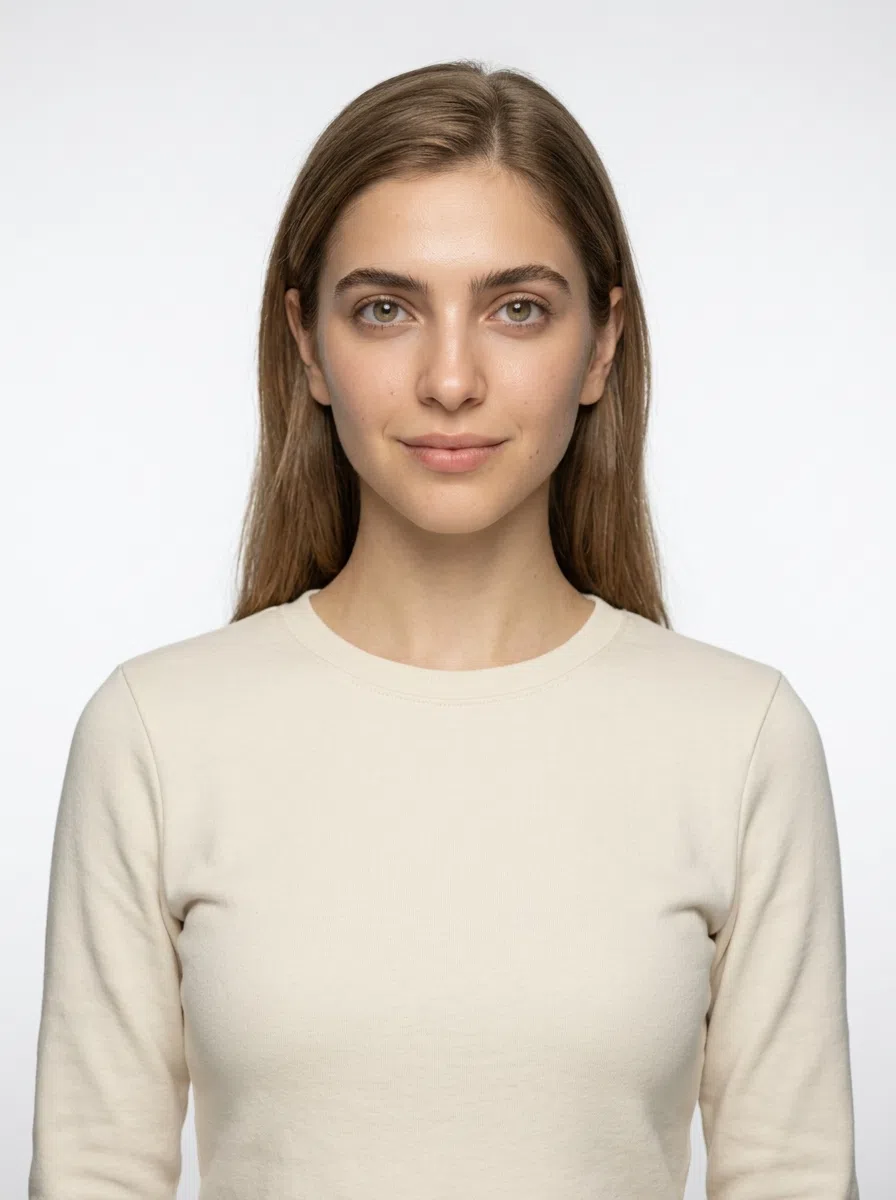
Fair: peach-gold with copper freckles
On fair skin the warmth is easy to spot. The skin reads peach-gold or warm ivory, usually with a matte finish, and the freckles are the first clue - they come in cinnamon and copper.
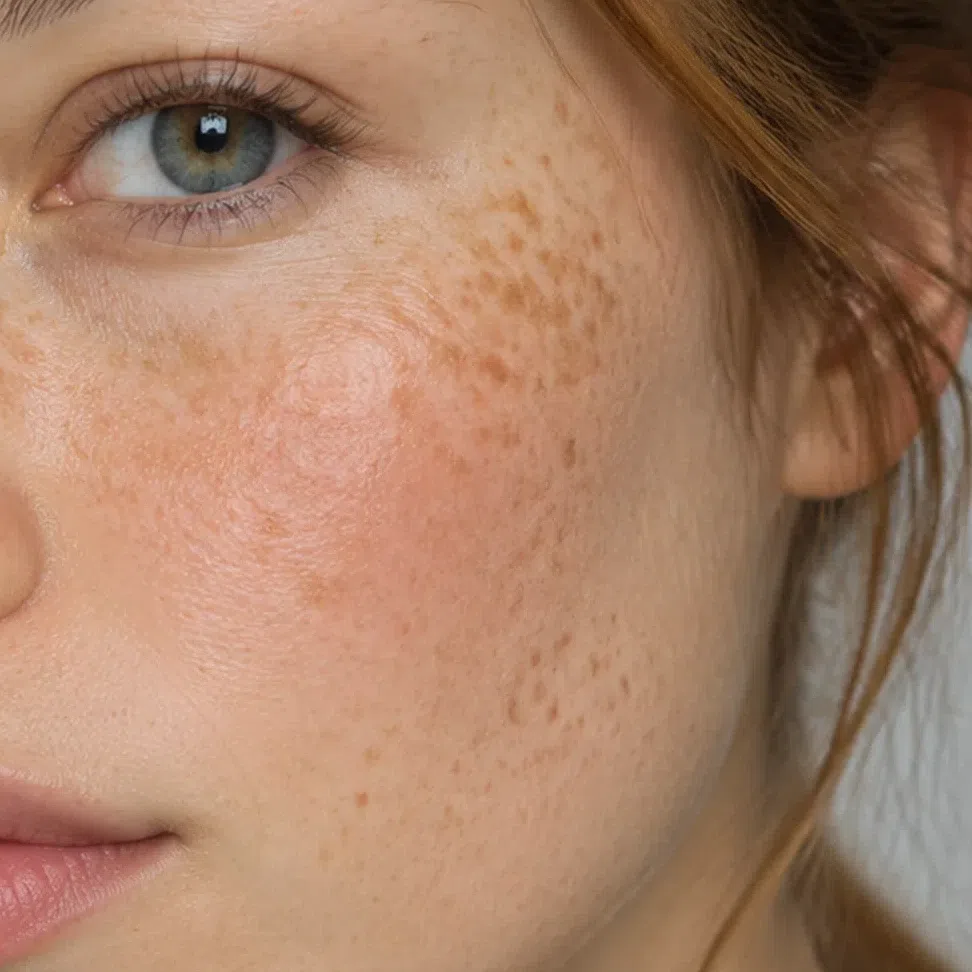
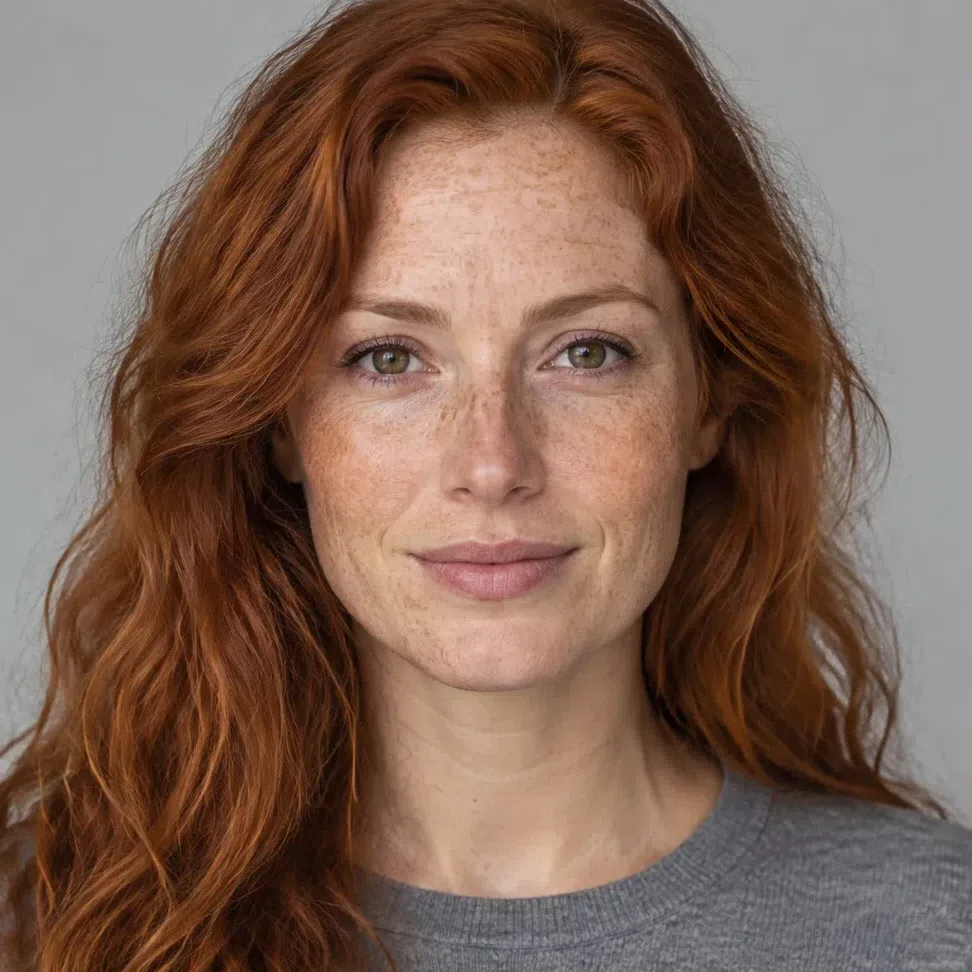
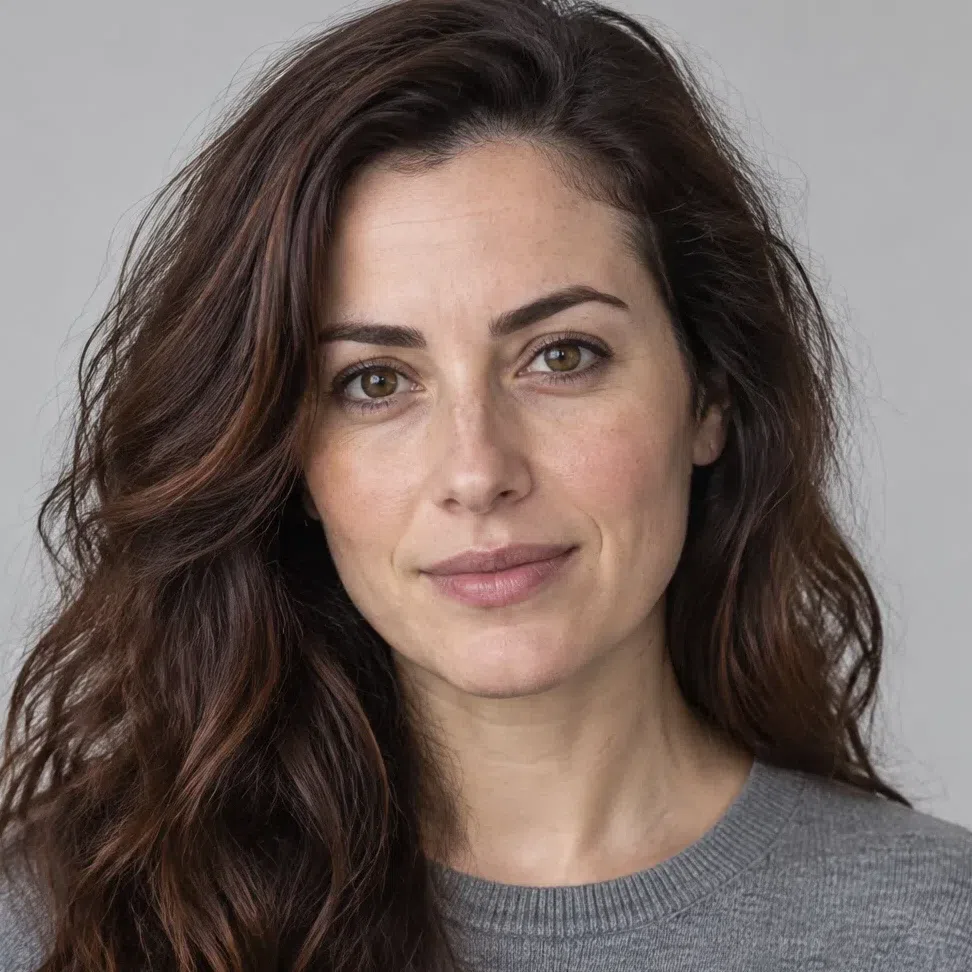
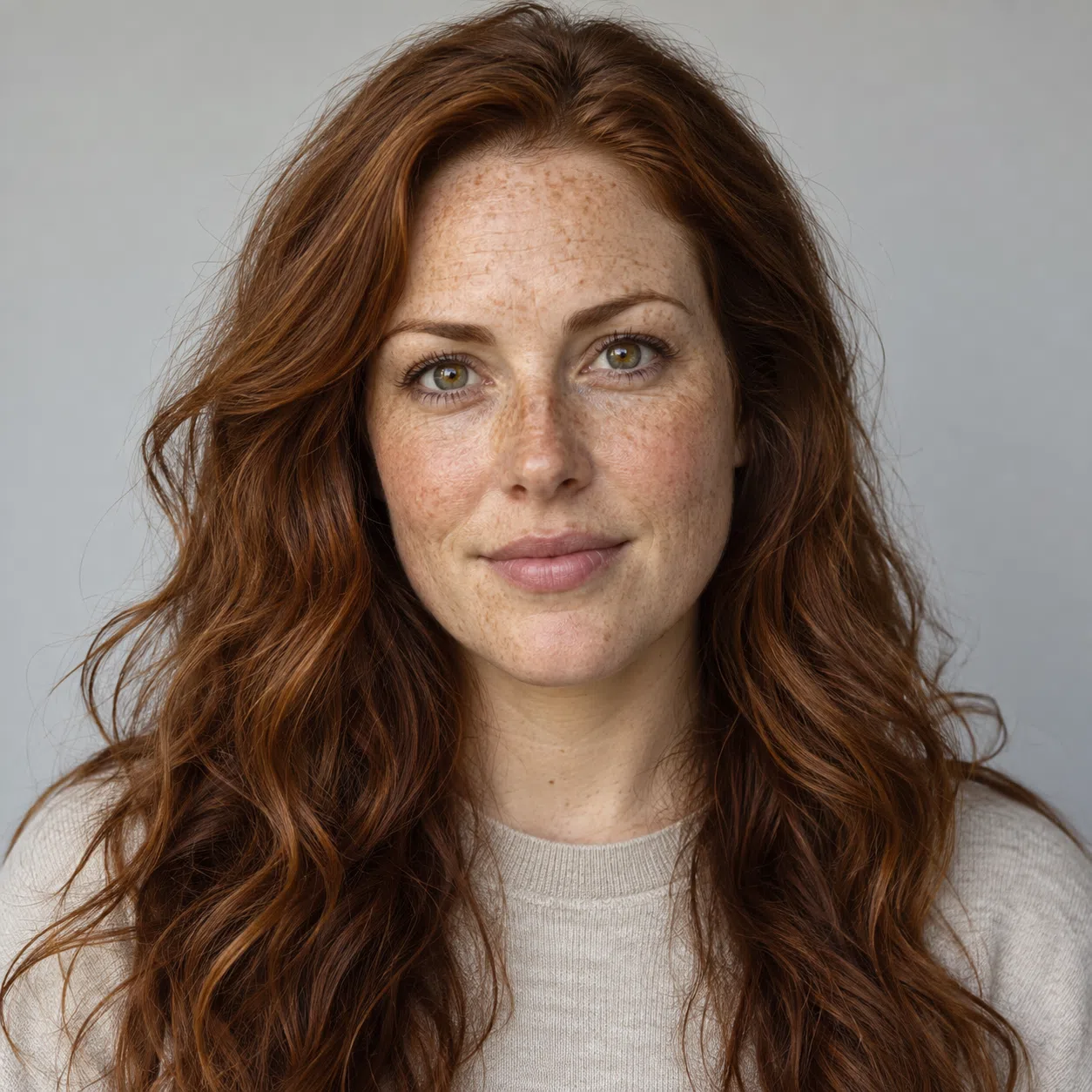
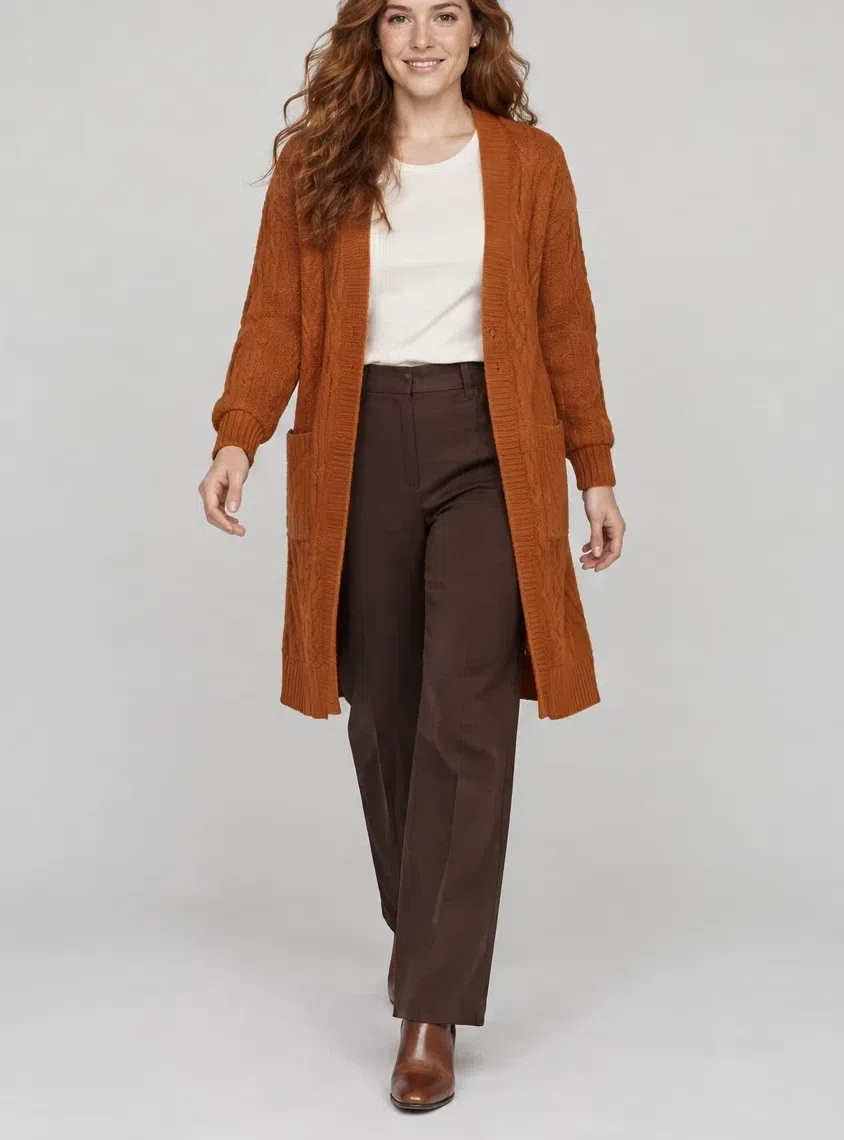
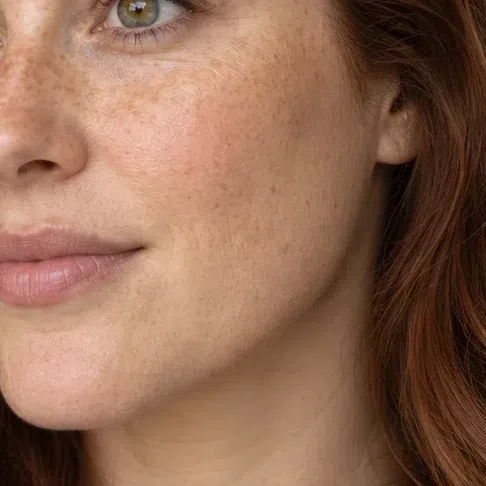
The portraitA Warm Autumn: fair freckled skin, long copper-red hair and green-hazel eyes. This is the face people imagine when they hear the word Autumn.SkinWarm ivory with a neutral-beige cast rather than a pink one. Fair Autumn skin often burns once each summer, then settles into a light golden tan.EyesMoss green shot with flecks of brown and gold - a layered green, not a bright one.HairHoney blonde with a red-gold cast. Fair Autumns run from this through strawberry and ginger to full copper.
Does red hair make me an Autumn?
Not by itself - Springs have red hair too. The difference is in the kind of red and in what surrounds it. A bright, light carrot or strawberry red on translucent skin with clear eyes points to Spring; a deeper copper, auburn or ginger-brown on denser skin with layered green or brown eyes points to Autumn. The Autumn vs Spring comparison has a quick test for exactly this.
Fair Autumns land most often in Warm Autumn when the hair is openly copper, and in Soft Autumn when the hair is a quieter sandy or light brown and the whole face sits in one gentle register.
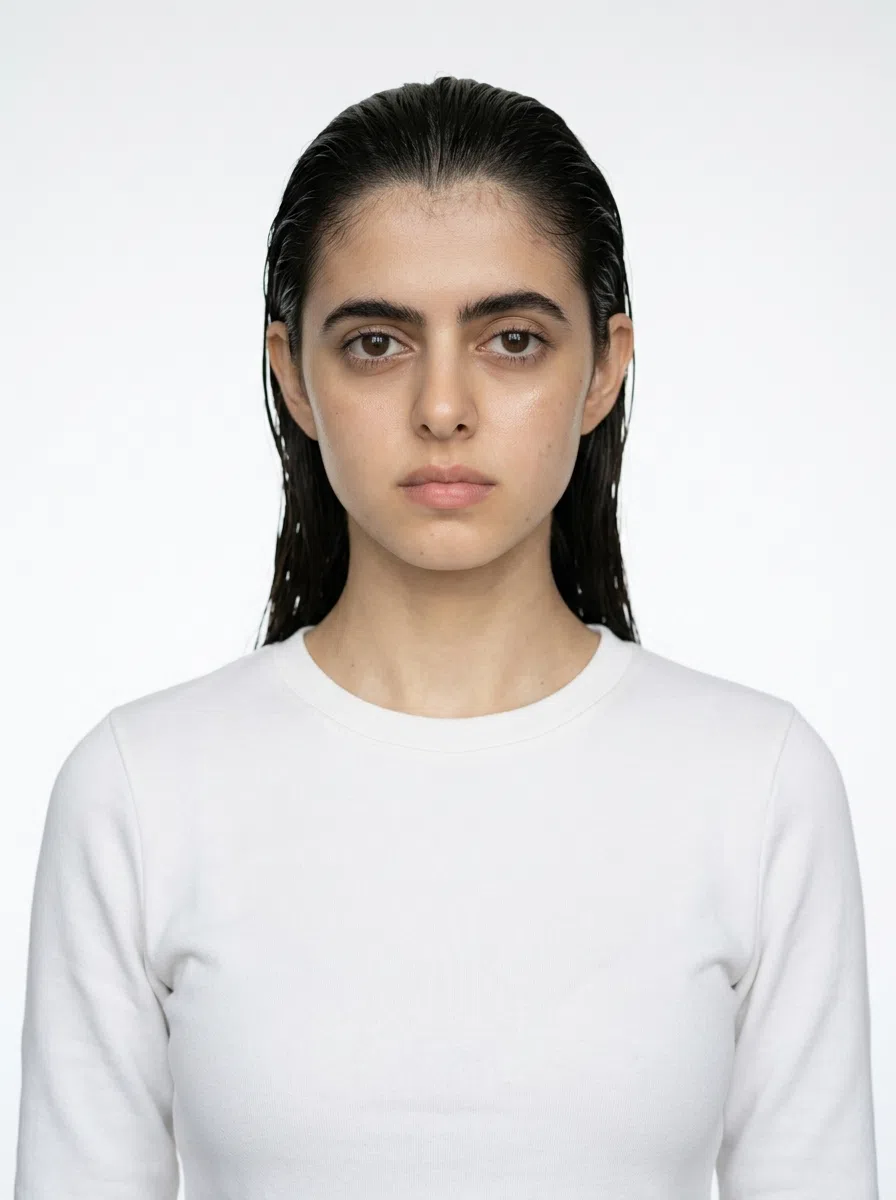
Olive: the warm olive
Olive is the complexion Autumn gets lost in. The green-beige surface persuades people they must be cool or neutral, while underneath it the undertone is gold - and olive skin with gold under it is more common in Autumn than in any other season.
The portraitA Soft Autumn with light olive skin, soft brown hair and gray-green eyes. Nothing in her face is loud, and nothing in it is cold.SkinWarm olive, smooth and even. Next to rust or olive brown it deepens and warms; next to icy pink it turns sallow.EyesA soft hazel that mixes green and light brown. Olive Autumns often have eyes that read as one blended color from a distance.HairLight brown with a mousy softness and a faint warm sheen - the hair people call 'nothing color', which on an Autumn is exactly right.
Is olive skin ever warm?
Often. Olive names the green-gray surface cast, and that cast can sit over a warm or a cool undertone. Warm olive comes alive in terracotta, camel and olive brown and looks drawn in silver and icy pastels; cool olive does the reverse. If rust and mustard light your olive skin up, you are looking at an Autumn - most often a Soft one.
Olive Autumns land most often in Soft Autumn, because the surface cast already mutes the coloring. With dark hair and dark eyes the same skin reads as a Deep Autumn.
Medium: golden bronze and warm brown
At medium depth an Autumn looks sun-warmed all year. The skin carries honey, caramel or golden-bronze color, and the signal is that it stays rich and slightly matte instead of turning clear and glowing like a Spring's.
The portraitA Deep Autumn with golden-brown skin, very dark brown hair and dark eyes. The depth is obvious; so is the warmth running through it.SkinMedium skin after a summer outdoors: a deep, even golden bronze with no red in it. Medium Autumn skin darkens readily and seldom burns.EyesTea brown with an amber cast - warm and transparent at the center, deepening toward the rim.HairWarm chocolate with a soft, even shine. In daylight the brown shows a red-copper undertone rather than a gray one.
Are brown hair and brown eyes enough to make me an Autumn?
No - brown hair and brown eyes occur in every season. What makes them Autumn is warmth and density: a brown that glints copper or red in sunlight, and eyes with amber or gold in them. Cool, ashy brown hair and flat, charcoal-brown eyes point to Summer or Winter instead, however dark they are.
Medium Autumns spread across all three subtypes: Deep Autumn when the hair and eyes are much darker than the skin, Warm Autumn when chestnut or copper hair keeps the contrast moderate, and Soft Autumn when everything sits close together.
Deep: bronze with a terracotta glow
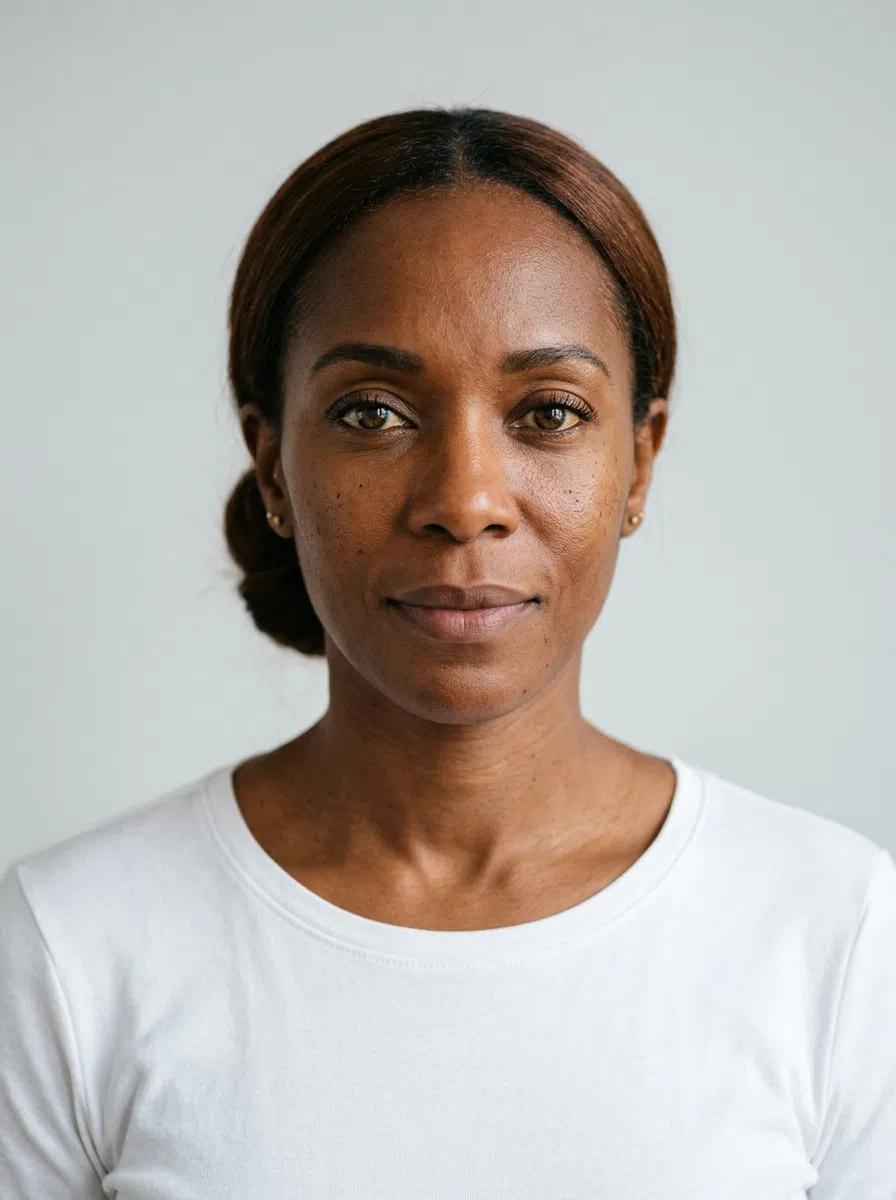
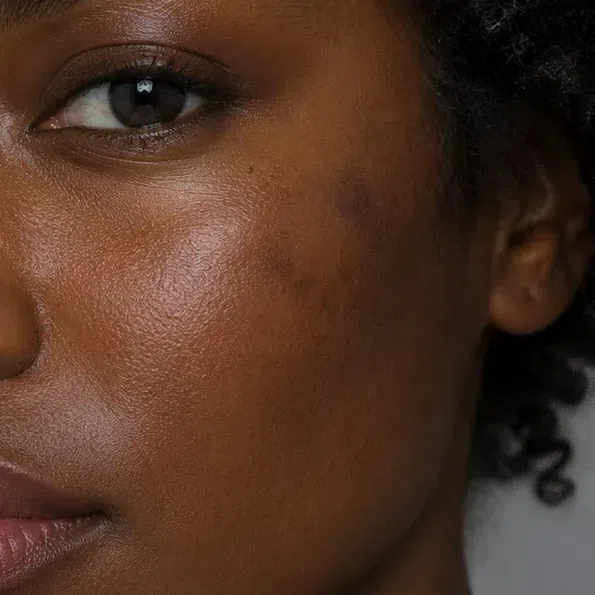
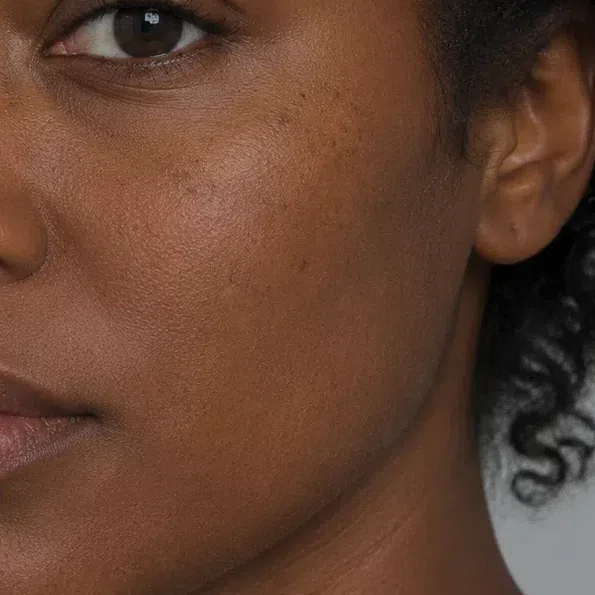
On a deep complexion Autumn warmth shows as a bronze or terracotta glow over the cheekbones and forehead. It is as much an Autumn signature as copper freckles on ivory - and deep skin is where the season's rich, saturated colors look most at home.
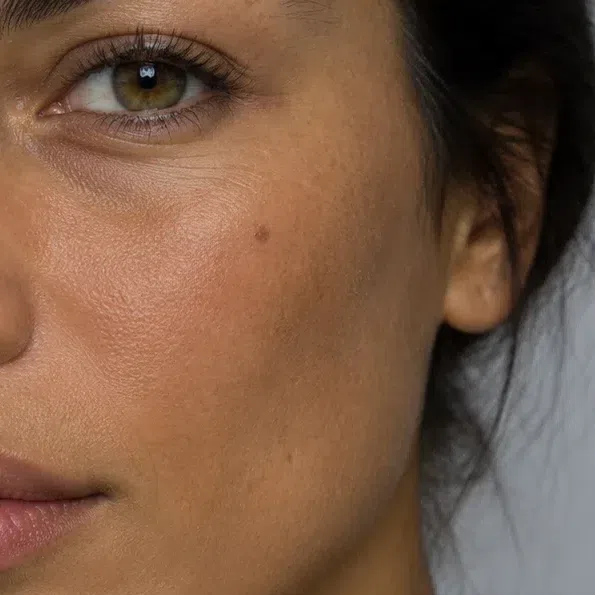
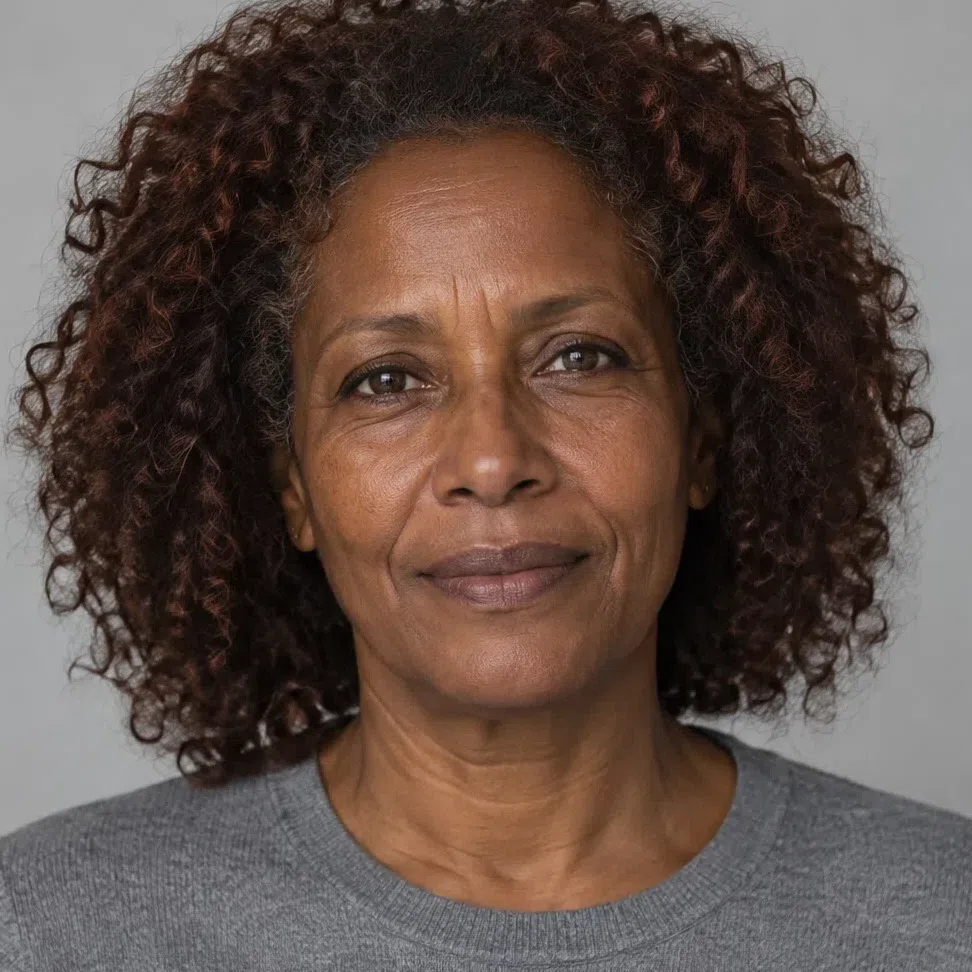
The portraitA Warm Autumn with deep brown skin, auburn-brown curls and amber-flecked eyes. Warm from hairline to jaw, with contrast that stays moderate.SkinDeep brown, with a few soft freckles and a hint of terracotta across the cheekbone. In daylight it keeps that warmth and never goes ashy.EyesAmber-brown, muted and warm, lighter than the skin around it.HairDeep auburn twists - dark brown that turns red-copper wherever the light catches it.
Can you be an Autumn with dark skin?
Yes, and often. Undertone and softness set the season, and skin depth plays no part in either. Deep skin with a bronze or golden undertone, warm brown or amber eyes and hair with red or copper in it is an Autumn, and the palette behaves the same way on it: rust, mustard and teal green make it glow, while icy pastels and cold gray make it look dull. The woman you recolored in the first section is an Autumn at exactly this depth.
Deep Autumns land most often in Deep Autumn when the hair and eyes are very dark, and in Warm Autumn when auburn or copper in the hair keeps the contrast moderate. A deep Soft Autumn exists too, usually with softer, graying hair and eyes close to the skin in tone.
The Autumn palette on a real face
21 shades to wear and 9 to avoid, each one photographed on a person
Twenty-one shades that hold for Soft, Warm and Deep Autumn alike, in the order a wardrobe gets built: six neutrals for the structure, six warm muted shades for everyday color, and nine accents for coats, dresses and anything that should draw the eye. Then nine shades that fight the coloring, each with a swap, and five outfits worth copying.
Narrowed down to three, the top 3 Autumn colors are Sienna, Mustard and Olive brown - terracotta, mustard and olive, the earth tones the whole season is recognized by. Sienna is the color that warms Autumn skin fastest, mustard is the yellow that no cool season can wear, and olive brown replaces both gray and black. All three suit every Autumn, at different strengths, which the three-portrait strips below make visible.
This is the shared core. Each subtype has more on top of it - quieter on one, darker on another - and the complete lists live on their own pages: the Soft, the Warm and the Deep Autumn palette.
Each card is the same photograph of the woman from the color widget at the top, with nothing changed but her top. Her skin, hair and face stay exactly as shot, so a card is not showing a shade on its own - it shows the effect of that shade on a deep bronze complexion. Most groups open with a strip of three: one shade on a Soft, a Warm and a Deep Autumn, where the subtypes start to part.
Base colors: what an Autumn wardrobe stands on
Twelve shades carry the everyday load. The neutrals are the investment pieces - coats, trousers, boots, knitwear - and the warm muted shades bring the color that makes a closet read as Autumn.
Neutrals: six that replace black, white and gray
Black, optic white and cool gray are all missing from this list, and swapping them for warm versions is most of what an Autumn wardrobe does differently. Can an Autumn wear black? It can, below the waist: trousers, skirts and boots in black cause no trouble, because there is fabric and distance between them and the skin. A black turtleneck or a black collar is a different matter: next to warm, muted coloring it looks severe, and the face looks tired beside it. Coffee gives the same depth without the chill.
Camel on the three Autumns
Soft AutumnEven and calm on her, though a dustier camel would sit closer still.Warm AutumnHer own neutral: the gold in the wool and the gold in her skin match.Deep AutumnA sound base, but it wants a denser color next to it.
Camel suits every Autumn. Soft Autumn does better with a dustier version, Deep Autumn with a strong accent beside it.
Eggshell
#F4E9DAThe Autumn white: creamy rather than stark, so a shirt stays fresh without a cold line at the chin.
Sand
#C4B59DPale enough to sit under anything, and Autumn's replacement for light gray.
Camel
#C79E67The season's main neutral - coat, trench, knitwear. The first piece worth buying.
Mushroom
#A99182For anyone who lives in gray: a gray with warmth in it, and the only gray this season keeps.
Tan
#A67C52A latte brown that does black's job in bags, belts and shoes.
Coffee
#4A3728The darkest Autumn neutral and the real stand-in for black: deep, and still warm.
Six neutrals, four ways to pair them
In place of black and white. Eggshell with Coffee keeps the sharpness of that classic pairing and drops its coldness.
All-brown dressing. Sand, Tan and Coffee worn light to dark look expensive, because every step is the same temperature.
Neutral plus one. Build on any of these and add a single earth tone - Sienna, Mustard, Olive brown - and that is the intended use of this palette.
When you miss gray. Mushroom with Eggshell suits a longtime gray-wearer: equally calm, and kind to the skin.
Warm muted shades for every day
These are the heart of the season: colors that look steeped in brown rather than bright, for sweaters, shirts and dresses. The Autumn pink is Antique rose, a muted pink on a warm base and the only pink the season really wears. The Autumn green here is Wormwood, a soft gray-olive that works almost like a neutral; the deeper greens, Ivy and Teal green, are with the accents.
Mustard on the three Autumns
Soft AutumnRight family, a little loud - a calmer, more complex mustard suits her.Warm AutumnAt full strength: the warmth of the yarn and of her skin add up.Deep AutumnGood, and better still in a thicker version leaning toward ochre.
Mustard works across the season - softened for a Soft Autumn, taken denser for a Deep one.
Apricot
#FAB481The light warm shade for a top or blouse - it brightens the face without talking over it.
Cantaloupe
#F5A05ADenser than Apricot, with gold underneath. Good right at the neckline.
Antique rose
#D8AFA0A muted, warm-based pink. The skin looks rested next to it.
Mustard
#E1AD01The Autumn yellow: thick, slightly earthy, never lemony.
Cinnamon
#8E5A39A warm mid brown with red in it; a background for almost anything else here.
Wormwood
#8A8667A complex gray-olive that behaves like a neutral on an Autumn.
Accent colors: depth and richness
Nine saturated shades, then the metals. An Autumn can carry a lot of color; what it can't carry is color that is cold or clean. What colors should an Autumn wear when it wants to stand out? These - rust, sienna, ivy, teal, wine - at full depth.
Nine accents, shown on a scarf
The color is on the scarf and the top stays Eggshell, deliberately: spread from collar to hem, an accent turns into the whole look and nothing is accented any more. Sienna, Rust and Tomato red run from brown-orange to red; Redwood and Cordovan are the wines; Ivy, Olive brown and Teal green are the Autumn greens; Currant is the season's purple.
Sienna on the three Autumns
Soft AutumnWorks, though a dustier, more faded sienna is closer to her register.Warm AutumnHer color in its pure state - the face gathers and the skin warms.Deep AutumnSuits her, and beside her depth it could go darker yet.
Sienna is the season's common denominator. The three Autumns agree on the hue and differ only on how saturated it should be.
Sienna
#8B4513The calling card - burnt terracotta. A jacket in it does more for the face than blush.
Rust
#C85A17Orange-brown at full strength; an Autumn accent by definition.
Tomato red
#D95D39The red an Autumn owns: orange underneath, never blue.
Redwood
#6A3830Deep red-brown that holds the face with nothing bright beside it.
Cordovan
#842B2BA warm wine - what an Autumn wears instead of a blue-based burgundy.
Ivy
#395D33Warm, muted forest green that no cool coloring can wear.
Olive brown
#735F3DOlive with brown in it, for trousers and outerwear in place of gray and black.
Teal green
#2E6E63Green-leaning teal: the blue-green that keeps Autumn skin warm.
Currant
#483248A deep warm purple. On an Autumn it is an accent, not a mistake.
Metals: copper, bronze, brass, antique gold
Do Autumns wear gold or silver? Gold - and copper, bronze and brass with it. Warm metals repeat the gold already in Autumn skin; silver, white gold and platinum leave a gray cast beside it. Brushed, matte and antiqued finishes suit the season better than a mirror polish. The discs are gradients so they read as metal, not as flat paint.
CopperThe lead Autumn metal. Copper at the ear or throat reads as part of the coloring rather than an addition to it.
BronzeSofter than copper and easy to wear every day - buckles, clasps, the hardware on bags and boots.
BrassA matte yellow metal, and the most direct swap for silver jewelry an Autumn already owns.
Antique goldDark, slightly dulled gold. Yellow gold works too; the older-looking finish sits more naturally.
Using the metals
Jewelry. Copper or antique gold for everyday pieces, bronze and brass when you want less shine. If silver appears at all, keep it at the wrist, well away from the face.
Stones. Amber, tiger's eye and smoky quartz - warm, clouded stones that match the season's softness better than clear, sparkling ones.
Bags and shoes. Tan and Coffee leather instead of black; Camel suede when the weather allows.
Glasses. Tortoiseshell, horn, olive and bronze frames. Thin black frames cut across the face as sharply as a black collar.
Autumn colors to avoid
What colors should Autumns not wear? Nine, in two groups that fail for different reasons: seven are too cold or too clean, and two are too dark and hard for the face. Every one has a warm swap listed beside it.
Cold and clear
The bigger group, and the commoner mistake. An Autumn rarely goes wrong by wearing something too dark; it goes wrong by wearing something too icy and too clean. Pastel pink, gray-blue, silver and cool gray sit on every store rail and look harmless on the hanger.
Dusty blue on the three Autumns
Soft AutumnThe worst case of the three: the whole face slides into gray.Warm AutumnThe cold shows immediately - the gold in her skin stops reading.Deep AutumnFights her depth; the color looks like it wandered in from another palette.
Hold this beside Teal green in the accents: the same blue family on a warm base, and the face comes back. It was never the color - it was the temperature.
Dusty blue
#B0C4DEAn icy gray-blue that dulls the skin and deepens every shadow under the eyes. A blue with warmth in it works; this one has none.Wear insteadTeal green#2E6E63
Cold violet
#B19CD9Lilac with no warmth in it pulls the face toward gray. The deep, warm purple is the one to keep.Wear insteadCurrant#483248
Ice pink
#F7C8DCA cold pastel pink that cancels the natural warmth of the skin.Wear insteadAntique rose#D8AFA0
Shocking pink
#E5007DCold, bright and blue-based - it argues with a warm undertone and wins.Wear insteadTomato red#D95D39
Storm gray
#767A85The most common 'safe' choice and the most damaging one: plain cool gray leaves Autumn skin looking unwell.Wear insteadMushroom#A99182
Silver
#C0C0C0Cold and metallic; beside golden skin it looks borrowed. As jewelry, swap it for a warm metal.Wear insteadBronze#CD7F32
Optic white
#FFFFFFToo sharp beside warm skin. On the hanger it barely differs from Eggshell; on a face the difference is plain.Wear insteadEggshell#F4E9DA
Why cold and clear fails
Blue underneath. Each of these has blue or icy gray at its base. Laid against a gold undertone the two cancel, and what is left looks sallow.
Too clean for muted coloring. Autumn coloring has brown and gold worked into it. Pure, uncut color next to it makes the face look dusty by comparison instead of rich.
They don't look wrong in a store. That is exactly why they end up in the closet - the damage only shows at the collar, in daylight.
Too dark and hard at the face
Here the problem is weight, not temperature alone. Both put more distance in lightness between fabric and face than Autumn's moderate contrast can bridge.
Jet black
#000000Adds a hard contrast an Autumn doesn't have; next to black the face looks tired. It is fine below the waist.Wear insteadCoffee#4A3728
Midnight navy
#191970Cold and heavy at once - the features sink into it.Wear insteadCurrant#483248
Why dark and hard fails
A gap the face can't match. Even a Deep Autumn's contrast is warm and moderate. Next to a near-black garment, the fabric grabs attention and the face looks washed out.
Cold depth reads as shadow. Dark, cool color right under the chin settles into the hollows of the face - under the eyes and along the jaw - instead of looking elegant.
The warm dark version fixes it. Both have an Autumn equivalent at the same depth - Coffee for black, Currant or Teal green for navy - so the gravity stays and only the chill goes.
Autumn color combinations
Five outfits built from this page, chips in the order you get dressed.
Five outfits
Almost every one follows the same pattern: two warm neutrals and one earth tone, or two earth tones held together by a metal. Once you have seen it, you can build the rest of the closet on your own.
Eggshell
+
Camel
+
Sienna
Office neutral
An Eggshell shirt under a Camel blazer, with a Sienna scarf or bag. Polished and warm.
Wormwood
+
Mustard
+
Tan
Layered earth tones
A Wormwood cardigan over a Mustard top, with Tan trousers or boots.
Sienna
+
Olive brown
The everyday classic
A Sienna sweater with Olive brown trousers - the pairing most people picture when they think of Autumn.
Teal green
+
Camel
Evening, green
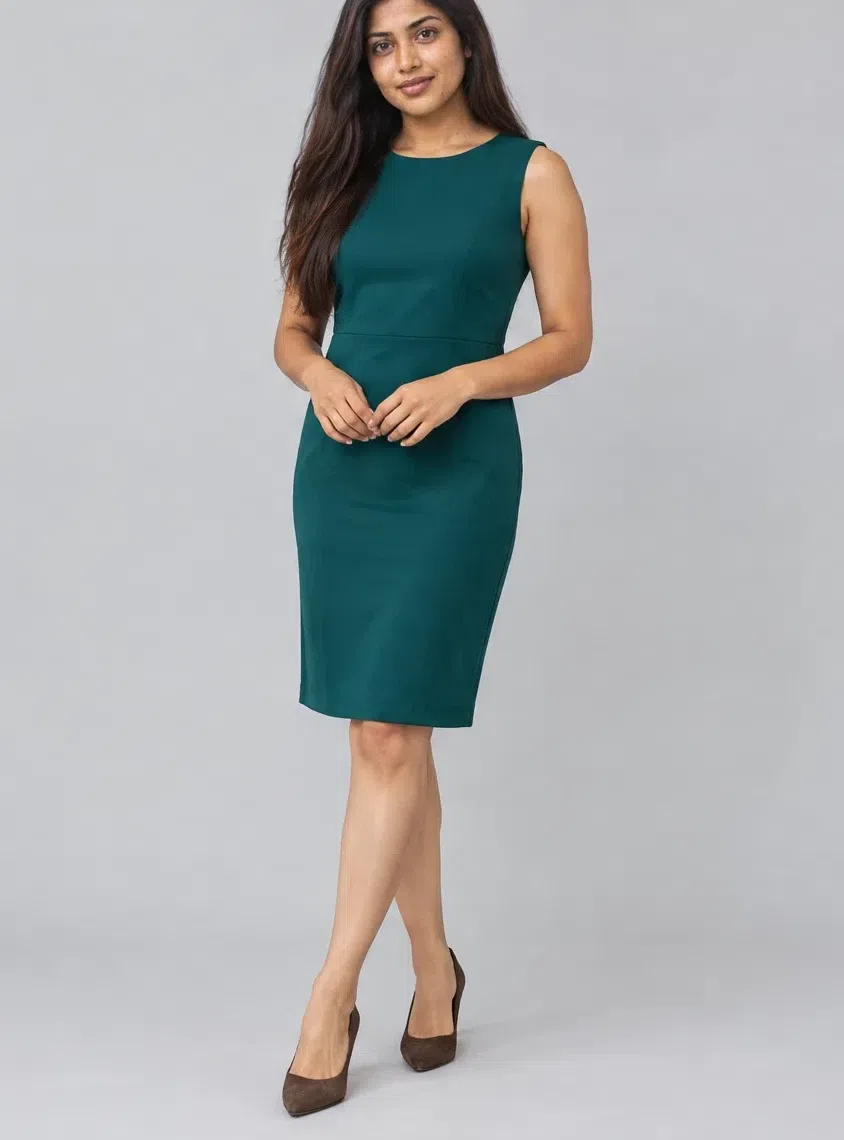
A Teal green dress under a Camel trench. Rich without a single cold note.
Cordovan
+
Bronze
Evening, wine
A Cordovan dress with bronze jewelry: the warm answer to a black dress and silver.
What ties the five together: an Autumn builds impact from depth and richness, not from contrast or brightness. Two earth tones of similar weight give an Autumn outfit its punch - the job black and white perform on a Winter. One icy or silver piece breaks the outfit; a warm metal or a brown leather holds two colors together.
Wardrobe, makeup and hair color: the Autumn rules
One rule for each, and where the three Autumns take it in different directions
This page works at the level of the whole season. The detail lives on each Autumn subtype's own page: a capsule wardrobe photographed on four complexions, makeup shade by shade, and dyed hair colors shown on real hair. What follows is the single rule underneath each of those, plus a direct link to your subtype's version.
Men can apply the wardrobe and hair rules word for word.
Wardrobe
The rule: Build on warm browns and camel instead of black and gray, and wear the earth tones closest to the face.
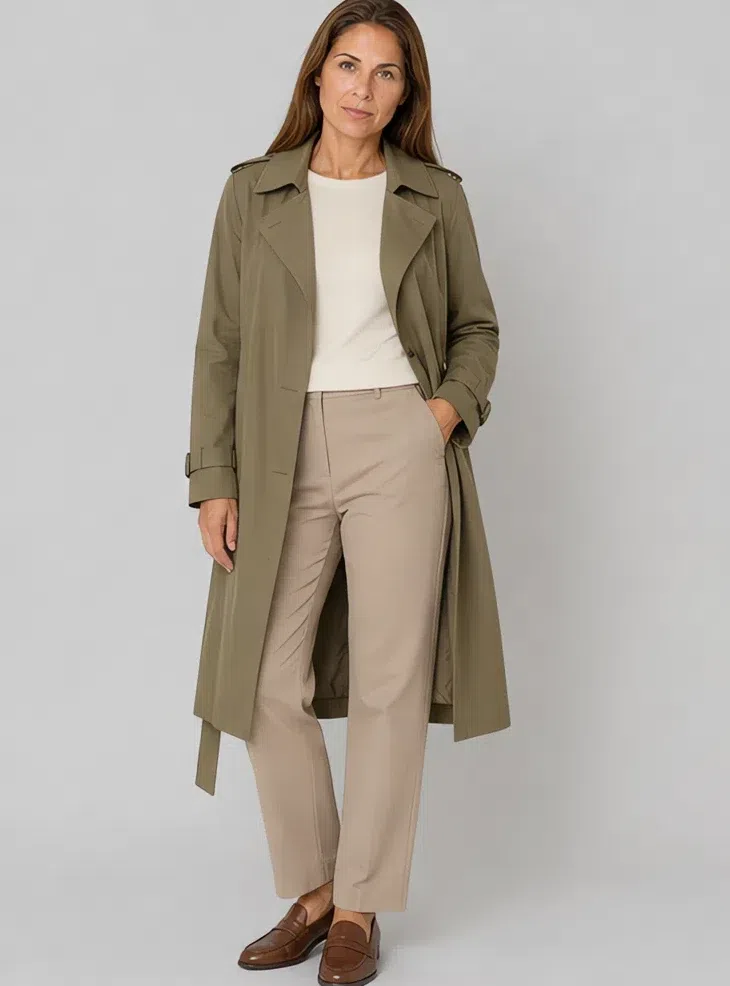
Camel, tan, coffee and olive brown take over the work black, navy and gray usually do, so the base layer of the wardrobe suits a golden or bronze undertone before a single color comes in. Rust, mustard, sienna and teal green then belong up top - a sweater, a blouse, a dress - where they reflect straight onto the skin. Texture helps too: wool, suede, corduroy and leather carry earth tones better than shiny synthetics. The four looks below apply the rule at four depths.
Each Autumn bends it a little. A Soft Autumn keeps everything muted and close in value - sand, wormwood, antique rose - and lets no single piece shout. A Warm Autumn goes the most golden, with camel, rust and mustard at full warmth. A Deep Autumn wears the darkest end of the palette: chocolate, forest and mallard green, wine, with a light shade for relief.
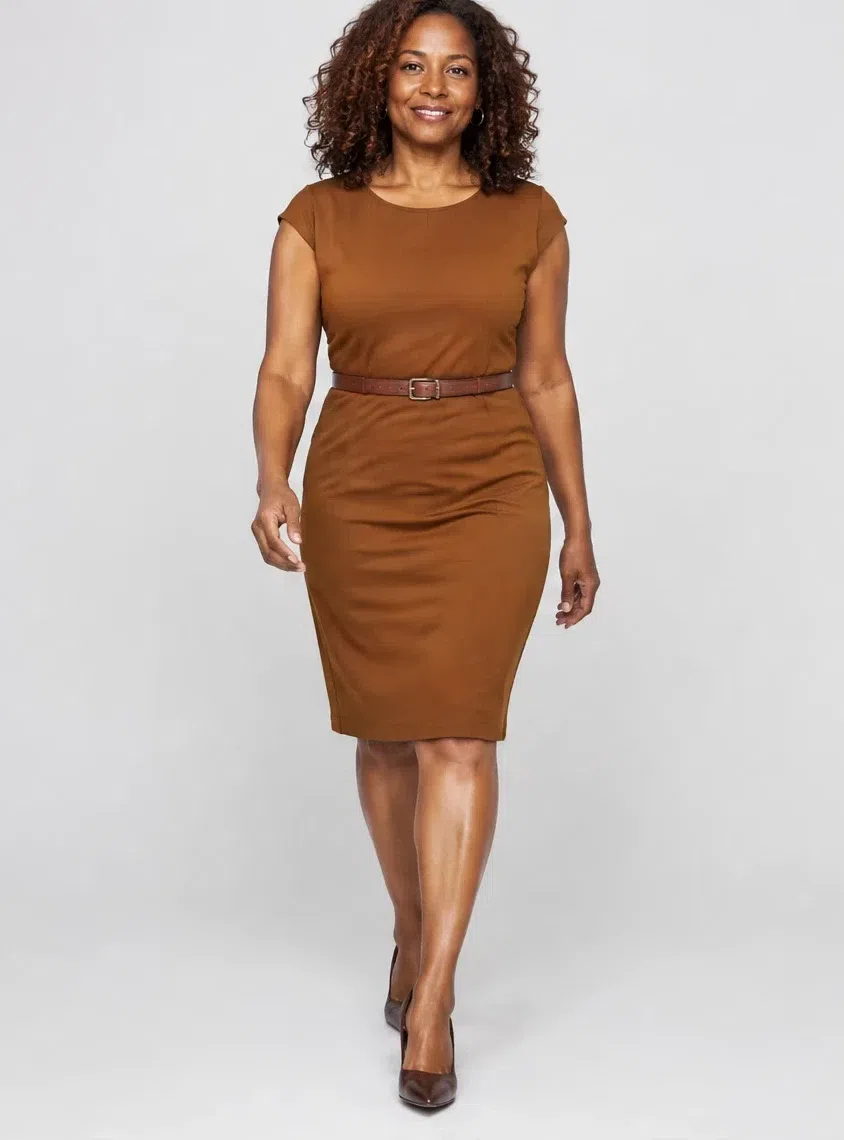
Warm Autumn, fair: a rust cardiganSoft Autumn, olive: a wormwood trenchDeep Autumn, medium: a mallard sheath dressWarm Autumn, deep: a sienna sheath dress
The rule: A golden base, terracotta and brick warmth, a bronze glow - nothing pink-toned, frosty or icy.
The foundation has to match the gold or olive in the skin at every depth; a pink-leaning base turns an Autumn face gray and chalky, especially in daylight. Cheeks and lips sit in peach-brown, terracotta, brick and spiced rose. Bronzer and highlighter run golden, copper or bronze - never a silvery or pearly white shimmer. Eyes take bronze, olive, copper and warm brown; a coffee-brown liner does what black liner does on a Winter, without the hard edge.
The subtypes differ in strength. A Soft Autumn wears it all sheer and blended, with nothing glossy or sharp. A Warm Autumn pushes the warmth: copper lids, terracotta cheeks. A Deep Autumn can carry the richest end - a brick or wine lip, dark bronze on the lids - that would look heavy on the other two.
The rule: Keep the warmth in: copper, caramel, chestnut or mahogany. Never ash, platinum or blue-black.
Whatever depth you dye to, an Autumn's hair should show red or gold in daylight: caramel and honey at the lighter end, copper and auburn in the middle, chestnut, chocolate and mahogany at the deep end. Ash and icy blondes drain warmth from the whole face, not just the hair, while a flat blue-black brings a severity this coloring never had. Covering gray? Warm golden or copper tones blend it more kindly than a cool brown.
Each subtype has its own lane. A Soft Autumn does best with low-contrast, blended color - caramel, hazelnut, soft babylights - because strong copper overwhelms her. A Warm Autumn owns the reds: golden copper, ginger, auburn. A Deep Autumn stays dark and rich, bitter chocolate through mahogany, and lifts it with a few amber or copper lights rather than going lighter overall.
Soft Autumn: caramelWarm Autumn: golden copperDeep Autumn: rich chestnutSoft Autumn: chocolate on coils
One idea sits under all three rules: earth in, ice out - whether you are choosing a coat, a lipstick or a dye. Still unsure which Autumn you are? The comparison and quiz higher up will point you to one, and the photo analysis confirms it.
Autumn vs Spring, Summer and Winter
What each neighbor has in common with Autumn, and the one axis that tells them apart
Every other season shares one trait with Autumn, and that shared trait is why it gets confused. Spring is just as warm but clear instead of muted. Summer is just as soft but cool. Winter can be just as deep but is cool and high in contrast. Each comparison below isolates that single difference, and each finishes with a test that holds everything else still.
Light to medium - a lighter register, with honey, strawberry or golden hair.
Overall impression
Early morning light: fresh, clean and lively.
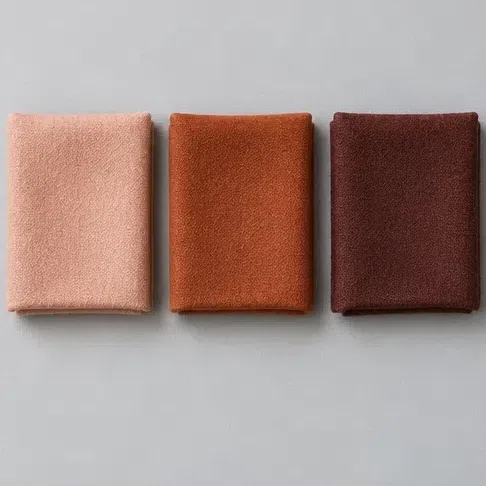
The test: coral against terracotta Warmth can't split these two, so this test keeps it equal: both fabrics are warm orange-reds of similar strength, one clear and one earthy. Put a clean coral against your jaw first, and a terracotta second. On an Autumn the terracotta pulls the face together and makes the skin look rich, while the coral looks sugary and slightly cheap against it. On a Spring the coral lights the face up and the terracotta makes it look heavier and older. The only thing that changed between the two fabrics is clarity - so that is what you just measured.
The test: terracotta against dusty rose Both colors are soft and of similar depth, so neither brightness nor darkness can tip the result - only temperature can. By a window, try a muted terracotta at the jaw, and after it a dusty rose. An Autumn's face looks fresher and warmer in the terracotta, and the rose leaves the skin faintly gray and the eyes tired. A Summer sees it the other way: the rose looks natural, and the terracotta makes her sallow. This is the test for the Soft Autumn and Soft Summer border, where the two seasons come closest.
Both can be deep, opposite temperature and contrast
Autumn vs Winter
Autumn
Temperature
Warm. Even the darkest Autumn has gold or bronze under the skin.
Contrast
Low to medium-high, and always warm - features blend into one register.
Colors
Redwood, Ivy, Currant, Rust - deep and warm.
Neutrals
Coffee, Camel, Olive brown, Eggshell; black kept away from the face.
Overall impression
Rich and warm, never stark.
Winter
Temperature
Cool. A pink, blue or cool-olive undertone, even at great depth.
Contrast
High. Near-black hair and brows over light skin, or striking eyes set in a dark frame.
Colors
Emerald, royal blue, fuchsia, true red - deep and cold.
Neutrals
Black, snow white, charcoal and navy all sit well at the face.
Overall impression
Graphic and dramatic, like ink on paper.
The test: black against coffee brown Depth is held constant here: both fabrics are nearly as dark as each other, so what you see is temperature and hardness. Hold a true black under your chin, then a very dark coffee brown. A Winter looks sharper and more striking in the black, and the brown makes her look muddy. An Autumn looks heavier, paler and grayer in the black - the face seems to recede - while the brown keeps all the depth and brings the warmth back. This is the check for the Deep Autumn and Deep Winter border, where the two can share the same dark hair and eyes.
Still torn after all three? Notice which test was hardest to call - it names the border you sit on, and the subtype page for that border goes further. The photo analysis reads the same axes from your own face.
FAQ
Autumn color season: questions people ask
How do I tell if I'm an Autumn?
Check for warmth first, then softness. In daylight and without makeup, hold plain white paper under your chin: a golden, honey or olive-gold cast at the edge means a warm undertone. Then compare yellow gold with silver against your wrist - on an Autumn, gold clearly wins. Finally, look at the quality of your coloring: Autumn hair shows copper or red in sunlight, the eyes are dense and flecked, and nothing about the face looks icy or crisp. Am I an Autumn? runs all five checks in order.
Which Autumn color palette am I?
Ask which trait is strongest in your coloring. Autumn has three palettes, named after the trait that leads. If your face is gentle and blended, with nothing standing out, you are likely a Soft Autumn. If gold and copper are the first thing people notice, a Warm Autumn. If dark hair and eyes dominate, a Deep Autumn. A dusty rose, a terracotta and an eggplant held to the face usually confirm it. Which Autumn? has the table and a four-question quiz.
What colors should an Autumn wear?
Warm, muted earth tones. Start from camel, coffee and olive brown as neutrals; mustard, cinnamon and antique rose for everyday color; and rust, sienna, ivy green, teal green and warm wine for accents. If you want just three, pick Sienna (#8B4513), Mustard (#E1AD01) and Olive brown (#735F3D) - every Autumn wears them, at different strengths. Anything that looks like it has a little brown or gold mixed in is on the right track. The palette shows all 21 on a face.
What colors should Autumns not wear?
Cold, icy and very clean colors near the face. The worst offenders are cool gray, icy pastel pink, gray-blue, lilac, blue-based hot pink, silver and optic white, plus black and dark navy at the collar. They all carry blue or an uncut brightness that fights a warm undertone and turns the skin sallow. Each has a warm replacement - Mushroom for gray, Eggshell for white, Coffee for black. Autumn colors to avoid lists every swap.
Do Autumns wear gold or silver?
Gold - along with copper, bronze and brass. Warm metals repeat the gold in Autumn skin and make the face look warmer; silver, white gold and platinum tend to leave it looking gray, most visibly at the ears and throat. Matte, brushed and antiqued finishes usually suit the season better than high polish. If you love a silver piece, wear it low - a ring or a bracelet - rather than as earrings or a necklace.
How can I tell if I'm a True Autumn or a Warm Autumn?
You can't, because they are the same thing. Different analysts simply use different labels: "True" was the original word, "Warm" is the one that says what leads - gold and copper in every feature, contrast in the middle. Same people, same colors, whichever label you meet. What is worth checking is the neighbor on each side: are you Warm, or are you really Soft, Deep, or a Warm Spring? The name map covers every alternative name.
Is there a Bright, Cool or Light Autumn?
Not as separate seasons in a twelve-season system. Bright or Clear Autumn tends to mean a Deep Autumn - the richest-colored of the three - or a Bright Spring when the colors look vivid instead of rich. Cool or Cold Autumn is a contradiction - warmth defines Autumn - and most people searching it turn out to be Soft Summer. Light Autumn is normally Soft Autumn at its lightest, or Light Spring. Other names for the Autumns maps each one.
Am I an Autumn or a Spring?
Both are warm, so look at clarity instead. Spring warmth looks bright and see-through; Autumn warmth looks rich, earthy and a little muted. Spring reds are light and golden, Autumn reds deep and coppery. The quickest check is two fabrics of equal warmth: a clear coral and a terracotta. If the terracotta makes you look finished and the coral looks sugary, you are an Autumn. Autumn vs Spring explains the test.
Am I a Soft Autumn or a Soft Summer?
Temperature - they are equally muted. Soft Autumn's softness comes from warm brown and gold, Soft Summer's from cool gray, which is why the two are the most commonly confused pair across seasons. A Soft Autumn looks better in camel, mustard and gold jewelry; a Soft Summer in cocoa-gray, dusty rose and silver. Try a terracotta and a dusty rose of the same depth under your chin: the one that freshens your face names your season. Autumn vs Summer has more.
Is Autumn only for people with red hair?
No - red hair is only one version of it. Copper and auburn hair are most typical of a Warm Autumn, but a Deep Autumn has dark chestnut, chocolate or near-black warm brown hair, and a Soft Autumn often has a light or mid brown with only a faint warm glint. What they share is warmth in the hair when sunlight hits it, not a particular color. Plenty of Autumns have never had a red strand.
Do Autumns come in deep skin tones?
Yes, and very often. How dark the skin is has no say in the season; what counts is whether the warmth underneath reads gold or bronze and whether the coloring is soft rather than icy. Deep-skinned Autumns are most often Deep or Warm Autumns, and rust, mustard and teal green flatter them just as they flatter fair ones. The model you can recolor at the start of this page is one; Autumn on every complexion shows four depths side by side.
Does color analysis work the same for men?
Yes - undertone, softness and contrast have nothing to do with gender. On a man, read them in the skin, the brows, the beard and the hair. An Autumn man gets the same results as an Autumn woman: camel, olive and coffee brown in place of black and gray, earth tones such as rust or teal green in a shirt or knit, and brown leather with bronze or gold for a watch and belt buckle. The Autumn rules apply unchanged.
Does an Autumn stay an Autumn as you get older?
Your season stays; the way it looks shifts. Undertone is lifelong, but hair lightens or grays and contrast usually softens. Many Autumns find the deepest, strongest shades start to feel heavy and move toward the softer part of the palette - camel, antique rose, wormwood. Autumn hair tends to gray toward cream or gold rather than silver, and warm tones keep blending it well. When a favorite shade starts to look off, run the daylight checks again instead of assuming a new season.
Is Autumn a rare color season?
Nobody has reliable figures. Color analysis has no population survey behind it, so claims that one season is rarest usually reflect the clients a particular analyst happens to see. Autumn is certainly not rare in any practical sense: its three subtypes stretch from pale, freckled complexions to very deep ones, a wide span of people. Whether a season is rare or common has no bearing on how its palette works on you.
What is an Autumn personality?
There isn't one - a color season describes coloring, not character. The idea of seasonal personalities comes from style-typing systems that attach moods and traits to each season, and nothing links a warm undertone to temperament. Being an Autumn tells you what earth tones and warm metals do to your face in daylight. It says nothing about how you think or behave, and it shouldn't limit the clothes you choose for any other reason.
Is the Autumn color palette the same as the fall 2026 trend colors?
No, the two are unrelated. In color analysis, Autumn (or Fall) labels a type of coloring, and an Autumn wears the same palette in April as in October. Runway and store forecasts reset each year and ignore individual coloring entirely. If this year's big shade is warm and muted - a rust, a mustard, a deep olive - an Autumn is in luck; if it is icy or neon, being in fashion won't make it flattering.
Sources
This page is mostly judgment about color, and judgment can't be footnoted. The few statements it makes about light, skin, photographs and the history of the season system are sourced below, each with a note naming the sentence it supports and where that support ends. Nothing here is cited from memory: each page was fetched and checked during this build.
Supports the starting point of Am I an Autumn?: according to the article, Color Me Beautiful placed Autumn with Spring on the yellow-undertone side of its four seasons. It also lists her original Autumn advice as brown, burnt orange, olive green, deep teal and maroon. That describes the system's history, not proof that those colors suit anyone.
Stands behind Other names for the Autumns and the FAQ answer on Bright, Cool and Light Autumn. The article notes that approaches vary greatly between schools, that a person can sit between two seasons, and that Jackson herself called the season names a convenient artifice - so a name on one site need not match a type on another.
Backs the instruction to do every paper, metal and fabric check - in Am I an Autumn? and in the three tests under Autumn vs Spring, Summer and Winter - beside a window. Its table puts overcast daylight at 6,500 K and standard incandescent bulbs at 2,400 K, so a lamp pushes skin toward yellow before the test starts.
Explains the caveat on the vein test in Am I an Autumn?. The article says light skin takes its color mainly from bluish-white connective tissue and hemoglobin in the dermis, while melanin dominates darker skin - which is why veins can look bluer than the undertone on fair skin and barely show on deep skin.
Backs the grayscale side-by-side in Am I an Autumn?. The article defines a grayscale image as one where each pixel carries a single light-intensity value, so once the hue of copper hair and golden skin is removed, lightness is all that is left to compare.
Supports the FAQ answer that contrast usually softens as an Autumn gets older. The authors measured the contrast between facial features and skin falling with age in adult women, and found faces with reduced contrast were perceived as older. The sample was Caucasian women, and the study says nothing about color seasons.
None of these sources shows which colors suit an Autumn. The 21 shades and 9 to avoid, the Soft, Warm and Deep split and its borders, the name map, the rules for metals, makeup and hair color, and the coral, terracotta and black-against-coffee tests are our own analysis, built from testing fabrics against faces; color analysis schools draw these lines differently, and there is no shared standard to cite.
What is color analysis, how do you find your season, and what are the 12 types?
The main guide covers all of it - the four axes your season is built from, all twelve subtypes side by side, and a free quiz that places you in about a minute.